

Binus Edupark Semarang: A Sustainable Architectural Marvel by Denton Corker Marshall
Binus Edupark Semarang blends modern architecture with sustainability, featuring seashell-inspired design, natural ventilation, and eco-friendly materials promoting green learning.


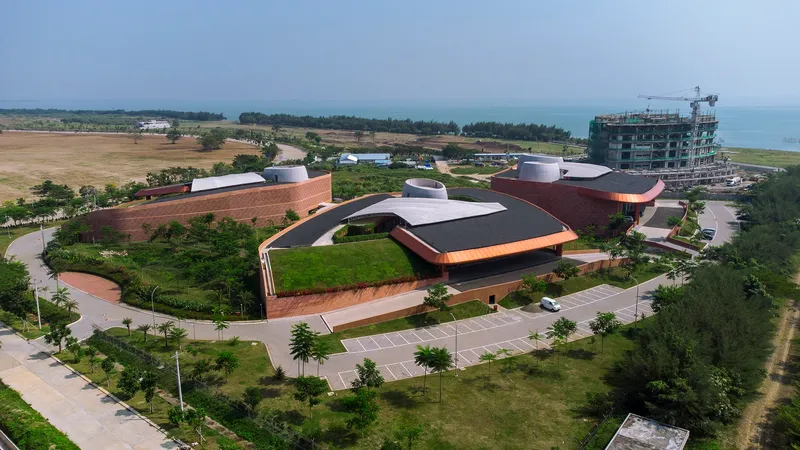
Binus Edupark Semarang, designed by Denton Corker Marshall, is a state-of-the-art educational facility located in POJ – Pearl of Java, Indonesia. The project spans 15,000 m² and was completed in 2021. As the first public facility in this newly developed town, the school serves as a seed development for future inhabitants and includes facilities for Binus University, which is set to fully operate in 2024.

Architectural Concept and Design
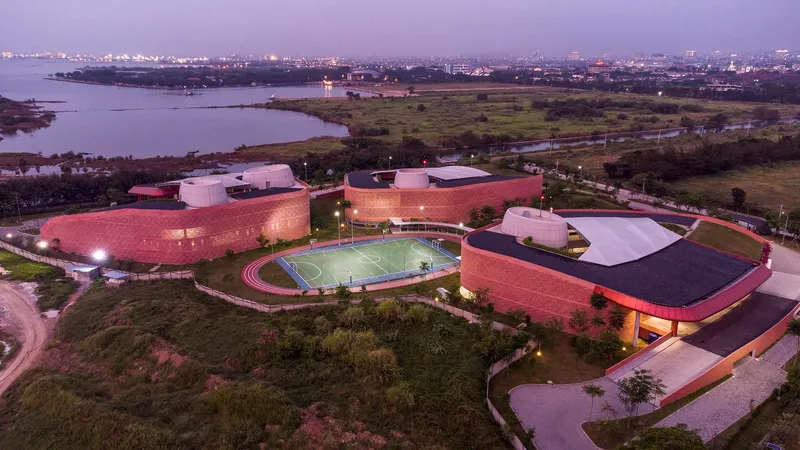
The design of Binus School draws inspiration from the natural movement of seashells carried ashore by waves. The campus is conceptualized as a cluster of shell-like forms scattered across an elevated sandy platform near the coast and flood canal. This unique architectural concept integrates the built environment with natural surroundings, fostering a harmonious balance between functionality and aesthetic appeal.

Sustainable and Eco-Friendly Design
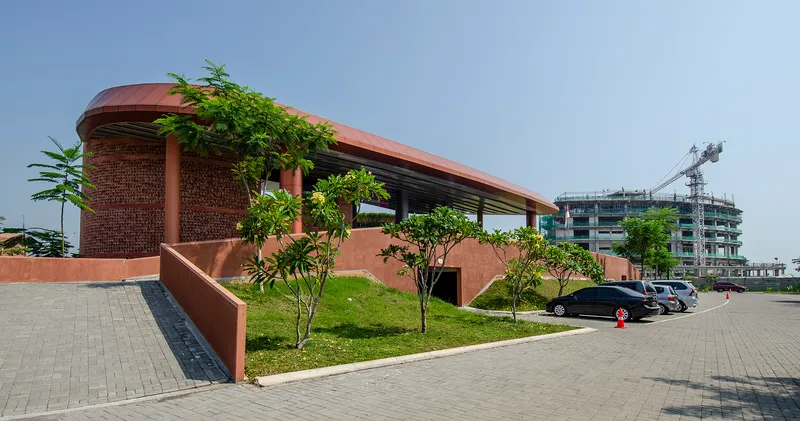
A hallmark of Binus Edupark’s design is its emphasis on sustainability and environmental harmony. The campus is surrounded by coastal gardens that provide natural shading while encouraging the return of native birds and wildlife. These gardens contribute to the ecological balance of the region, making the campus a green oasis within the urban landscape.
Innovative Use of Materials
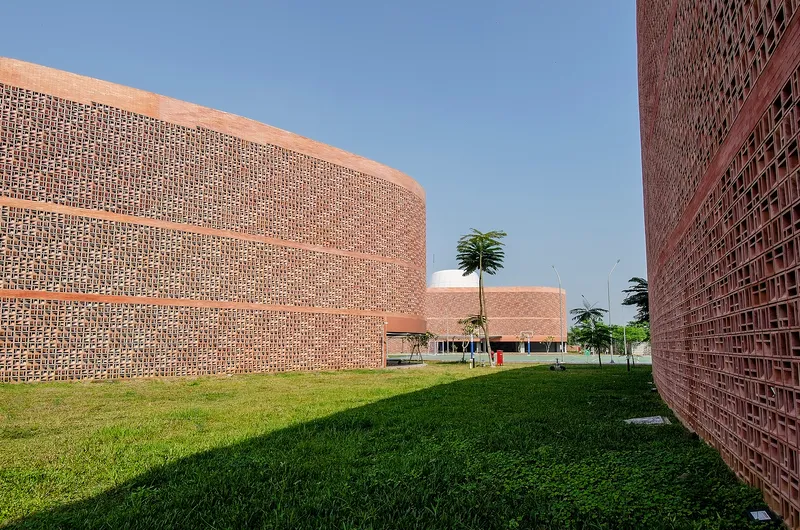
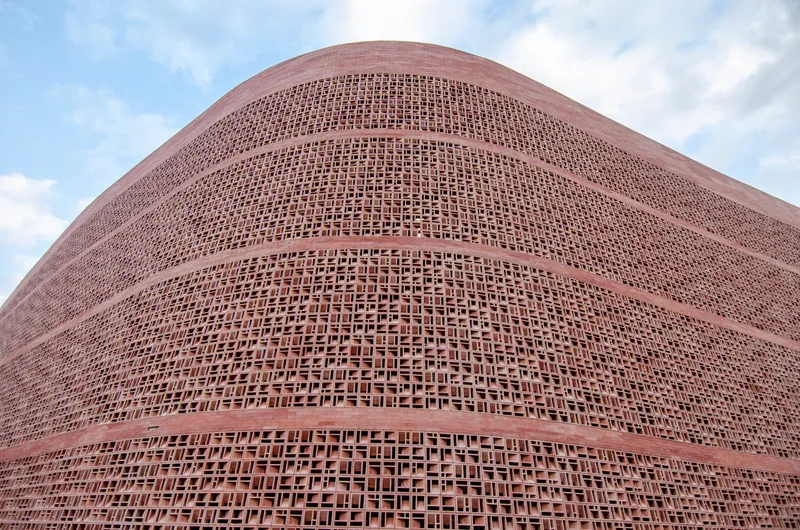
The campus’s façade is crafted using red terracotta breeze blocks, a traditional material from Java. This secondary skin not only enhances the aesthetic appeal but also facilitates natural ventilation, reducing the need for artificial cooling. The curved shell-like structures streamline sea breezes through the classrooms, ensuring optimal air circulation.

Natural Ventilation and Climate Control
To further enhance thermal comfort, the buildings incorporate openable windows that allow for cross ventilation on cooler days. The terracotta breeze block skin reduces heat absorption, allowing for smaller BTU air conditioning systems to efficiently regulate indoor temperatures. This passive cooling strategy minimizes energy consumption, making the campus eco-friendly and cost-effective.

Challenges and Solutions
Initially, the roofs of the school buildings were intended to be fully covered with greenery. However, due to the marshy soil conditions, the structural foundation could not support extensive green roofing. Instead, a smaller portion of the campus was equipped with green roofs, maintaining a balance between sustainability and structural integrity.

Master Plan and Facilities
The master plan envisions Binus Edupark as a multifaceted educational hub with open-air sports facilities that capitalize on the coastal breeze. The campus includes flexible learning spaces, communal areas, and state-of-the-art infrastructure to support a dynamic learning environment. Binus University currently utilizes parts of the high school building to cater to older age groups, while a dedicated university campus is under construction.

Environmental Impact and Future Potential
Though the school has only recently opened, its design promises a significant reduction in energy consumption. The combination of natural ventilation, insulated building materials, and limited use of air conditioning positions Binus Edupark as a model for sustainable school architecture in Indonesia.



Popular Articles
Popular articles from the community


David Ortega Stacks a Two-Story Mexico City Penthouse Around a Steel Stair and a Pergola-Shaded Roof Terrace
In Colonia Roma, a 300 m² penthouse uses oak joinery, a planted steel stair and a slatted roof pergola to make a new-build apartment feel like a house.

Cube Design Draws an Ecological Corridor Between Two Shenzhen Hills with the Nankai Building
Beside Shenzhen's container docks, the Nankai Building pairs stacked balconies with a climbing green screen to connect two hillsides across its height.

longwave studio Reorganizes a 112 m² Tainan Apartment Around the Daily Routines of a Family and Two Cats
In Tainan, Taiwan, birch plywood, rust-red furniture and a freestanding plaster wall link arrival, storage, work and family life in one apartment.

GROUP A Strips a 1969 Rotterdam Harbor Headquarters to Its Frame and Wraps It in Timber Louvers
In Rotterdam's M4H harbor district, Ferro Offices reuses a 1969 frame, adds one timber storey and reaches BREEAM-NL Outstanding.

Similar Reads
You might also enjoy these articles


Hodi-Mandai Geram
Project Function: Preservation and revitalization of the Intangible heritage and socio-spatial identity of the Hodi by Housing, Cultural Memory Center, Sacred Grove, landscape, local tourism economy


Olio Towers: A Mid-Rise for Performers That Fuses Housing, Rehearsal, and Stage
Located blocks from Houston's Theater District, this modular tower stacks living units around a central performance atrium.

Oasis: Modular Green Housing Carved into Dhaka's Urban Fabric
A shortlisted Plugin Housing entry reclaims unauthorized settlements in Dhaka with stepped concrete volumes, green roofs, and ventilation-driven design.

Black Hole: A Floating Megastructure for the Post-Physical Era
Emiliano Mazzarotto envisions a spherical, self-scaling arena where e-sports, digital hotels, and holographic stadiums replace traditional public space.

Explore Educational Building Competitions
Discover active competitions in this discipline

Challenge to design public laboratory

Challenge to reimagine the Iron Throne

Photograph architecture without architects

Illustrate the lost glory of Angkor Wat - Render Challenge
Comments (0)
Please login or sign up to add comments
No comments yet. Be the first to comment!