
BIRDWATCHERS' NEST
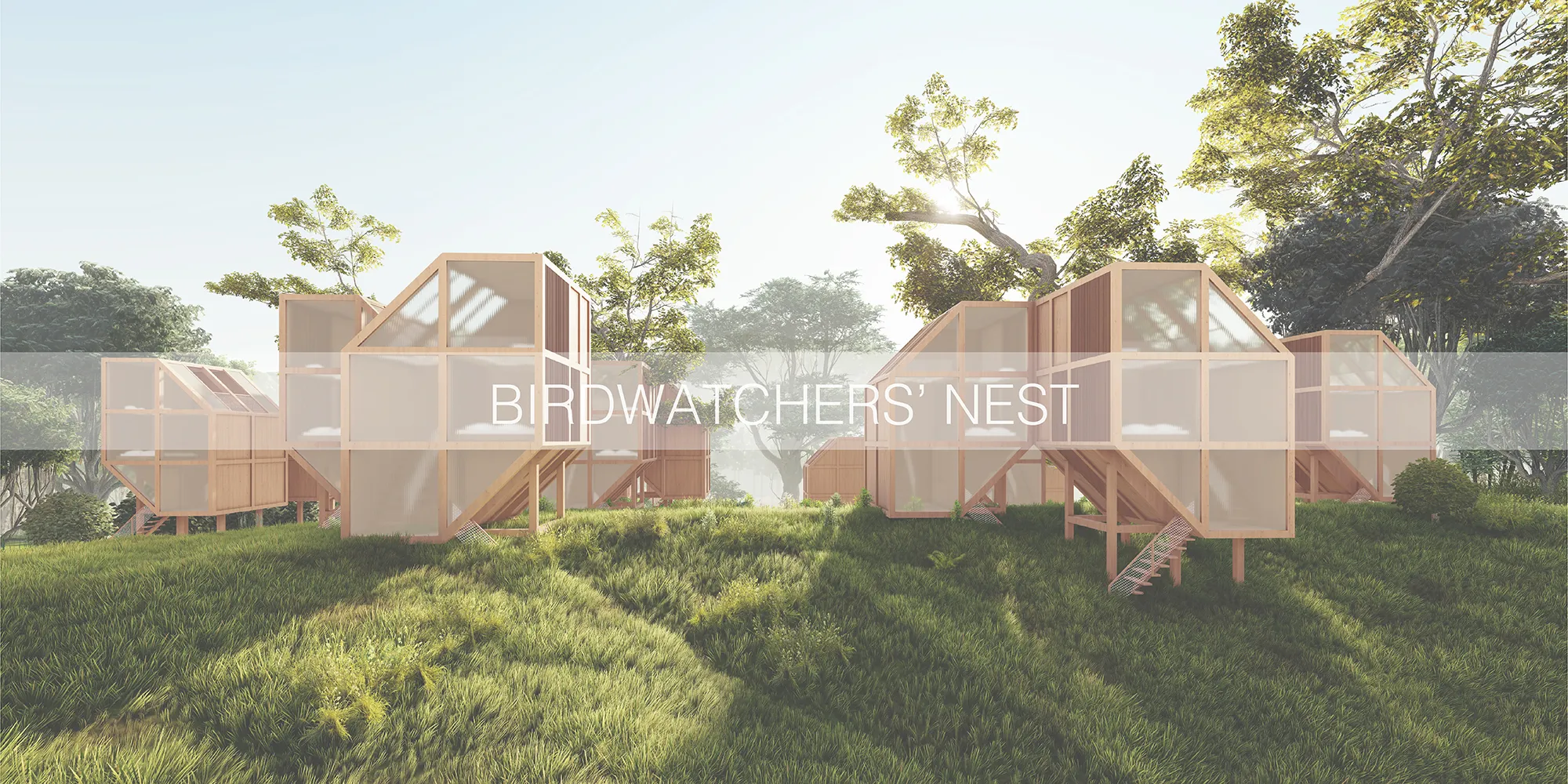
A complex of 20 hotel cabins located in Manú National Park, designed for avian enthusiasts.

The main idea of the project is to create a space for the visitor that will maintain balance
between contact with nature, comfort, sense of privacy and safety - hence the name:
“Birdwatchers’ Nest”. As people in the reserve are visitors, while looking for suitable project
solutions, we gave priority to the neutrality of the solutions for the environment and the good
of the avian inhabitants.
Our motto during the designing process was: people, birds, climate.
Taking into consideration the basic assumptions of the project, already in the initial phases of
the form development, we considered it important to provide a multifunctional, condensed
area with a possibility to change the degree of its privacy. The modularity was supposed to
clearly determine the zones, out of which the most important one was designed for rest,
allowing to observe the birds as well. The interior was supposed to be simple and to draw
attention to what is outside.
With a thought of the birds’ good, we wanted to apply solutions which do not pose a threat of
collision, disturb the flight paths or the colour of the space.
Taking into account the climate and environment, we wanted to use moisture-resistant
materials, easy to transport and quiet to assemble as well as solutions providing proper
ventilation and shading. It has led to the creation of a group of 20 boxes, which respect all the
above aspects.
FORM AND MODULARITY
The main module of the form is a 2.2m cube, outlined by an exposed wooden structure. The
fields have been filled with wooden or polycarbonate elements, depending on the interior’s
needs. We wanted the little boards to be easy to assemble/disassemble and transport and the
process not to make noise. A simple geometrical division and the presence of floors allow to
easily determine the zones.
On the highest floor, there is a slant, which adapts the form to frequent rainfall during the
rainy season. Because the warm air goes up, there is a pair of diagonal sliding windows,
which allow efficient airflow. The parallel slant, applied for aesthetic reasons, has been
repeated on the first floor. In order to use the whole space available, it functions as a kitchen
and a storeroom.
In spite of the height of 2.2m, resulting from the module, the floors in the form of piled-up
mezzanines and openwork solutions double the height of the ceiling.
In order to maintain lightness and the impression of living among the branches of trees, the
massing has been mounted on a construction made of beams and posts. Its form follows the
rhythm of the upper part of the construction. The change of the height of this floor allows to
maintain the same levels of the first floor for each of the lines of the boxes, which are placed
perpendicularly to the direction of the slope. It allows to reveal the relation between the
elevations. The distance from the ground positively affects the wood ventilation and does not
block the vegetation growth. In addition, the posts hide the essential installations.
ARRANGEMENT
Thinking about the shape and elevation of the form, we took into account the effect which we
would achieve by multiplying it. A simple massing, depending on the way it is placed, offers
different views. The modularity of the form allows its modular placement.
The basic module is a 5m square, which limits the area of the projection of the box. The ways
of placement respond to the inhabitants’ needs, depending on their relationship, for example
families or groups of tourists. On the graticule, there are pairs of boxes placed in different
ways. The single boxes follow their rhythm.
The terraces are positioned in such a way that they overlook different sides. The distances
between the terraces are always bigger than between the walls. The paths organise the space
and communication, themselves creating a network with three main axes, out of which the
most important one leads to the main road.
MATERIALS
The materials are adapted to the requirements of the climate and form.
We chose cedar wood to be our dominant building material. It is light, easy to process and
durable (durability increases with age). It is distinguished by its high moisture-resistance. It
has been used even for ship construction, therefore we are not afraid of using it in wet
conditions. It has a red-brown colour, which grows darker with age. A delicate scent of
cedrus is pleasant for people, being at the same time a good insect repellent. Due to the
export restrictions imposed by IUCN, cedar wood is gladly used locally. Such a choice
reduces costs and pollution connected with transport, which is difficult in this location.
Instead of glass, we use cellular polycarbonate. It is cheaper, light and resistant to damage
during transport. In case of destruction, it is easy to replace and the worn out component can
be melted down and used again. The semi-transparent material lets light in, provides privacy
and, most importantly, its structure is visible for birds, preventing collisions. Neither does the
material heat up, nor isolate us entirely from the sounds of nature.
The material net appears in the rest zone on the balustrades. This solution improves
ventilation, light transmission, and also opens up the space without creating optical barriers.
INTERIOR
The main concept of the interior was not to furnish the box, but to create a system of
elements functionally connected with each other, each having its own place, which is fixed
and justified by the shape of the massing. The box as a whole is a piece of furniture to be
assembled using simple components rather than a building to construct.
The interior is simple and subtle. The minimalistic functional spaces have been hidden
behind the door (bathroom) or blinds (kitchen, storeroom), which were faced together with
the wall. Such a solution draws attention to the stairs, which lead spirally through the floors
to the largest attraction, which is the resting net.
FUNCTIONAL SOLUTIONS
We wanted the particular elements of the elevation to be movable and changeable according
to the user’s preferences. Initially, we thought about sliding panels, but eventually we chose a
system of rotating wooden blinds. This solution increases significantly the ease of use and is
more durable than the assembly of large, heavy elements. It serves three purposes at once:
provides shading, opens up the view and improves airflow. The blinds appear in the kitchen
and in the sleeping area, ensuring bed ventilation.
The rooms which demand the use of artificial lighting most frequently, have been placed
downstairs and all sources of that light are directed downwards. It aims at minimising the
disorientation of birds.
Cabin walkthrough: https://www.youtube.com/watch?v=AqAotATbKd0&ab_channel=Birdwatchers%27nest


Popular Articles
Popular articles from the community


The Ocean Hive: Sustainable Architecture for a Self-Sufficient Civilization at Sea
The Ocean Hive imagines sustainable architecture at sea, where modular habitats, algae, wave power and ocean waste sustain a growing colony.

Co-life: Sustainable Architecture for Age-Friendly Community Living
Co-life reimagines sustainable architecture for seniors through courtyards, rammed earth, shared gardens, and spaces designed for belonging.

Hill & Cross Opera: Sculptural Opera House Architecture Shaped by Tallinn’s Landscape and Identity
Hill & Cross Opera reimagines opera house architecture in Tallinn through its sculptural hill, civic plaza, glass wave and a luminous cross.

Riyadh For All: Intergenerational Urban Design for Active Aging in Rabat
Riyadh For All reimagines urban design in Rabat with intergenerational co-living, adaptive courtyards, and Moroccan cultural exchange today.
Similar Reads
You might also enjoy these articles
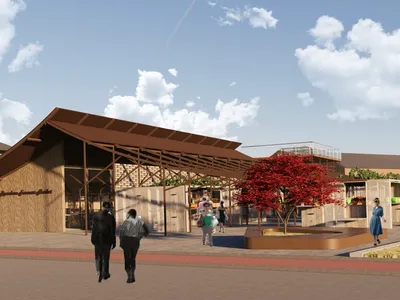
The Rhythm of Seasons
A Farmers' Market Connecting Nature and the City
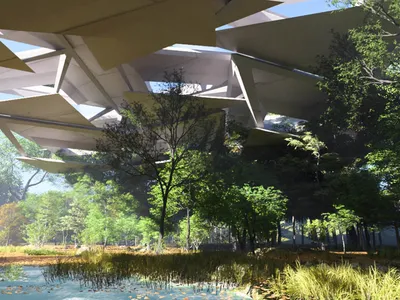

More Than a Building-Designing a Living System
More Than a Building-Designing a Living System
Base Beyond
DESERT COMPOUND ARID: TOURISM OF ABSENCE AND ABUNDANCE


Explore Bird Watching Competitions
Discover active competitions in this discipline




Challenge to reimagine the Iron Throne


Photograph architecture without architects


Illustrate the lost glory of Angkor Wat - Render Challenge


Design challenge to reuse E-waste
Comments (0)
Please login or sign up to add comments
No comments yet. Be the first to comment!