
Blank Canvas: Turning Madrid's Stone Plaza into an Oversized Drafting Table
A pale stone surface, scaled drafting tools, and curving edges recast a Madrid plaza as a space where the city itself becomes the drawing.

What if the city itself were the sketchpad? Blank Canvas takes a Madrid plaza and strips it back to its most literal potential: a vast, pale surface scored with oversized drafting instruments, where the act of design becomes public spectacle. The project refuses the common urge to fill public space with objects and instead empties it, turning absence into an invitation. Pedestrians become figures in an unfinished drawing, their shadows doing the rendering that architecture deliberately leaves undone.
Designed by Anthony Ramirez for the Madrid Art Bioscope competition, the project intervenes in one of the city's existing plazas, reimagining the ground plane as a conceptual workspace. The entry sits at the intersection of architecture, urban performance, and land art, proposing that a public square needs no pavilion or sculpture to become culturally charged. It only needs a provocative reading of what is already there: stone, light, and the daily choreography of city life.
Reading the Site Through Layered Memory
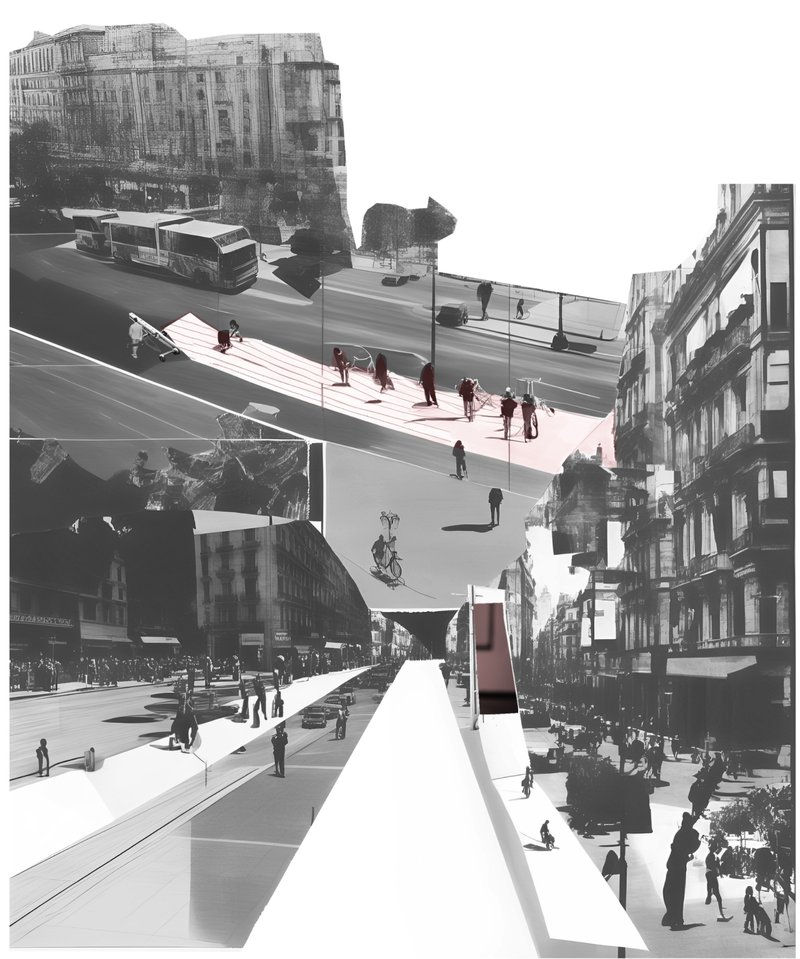
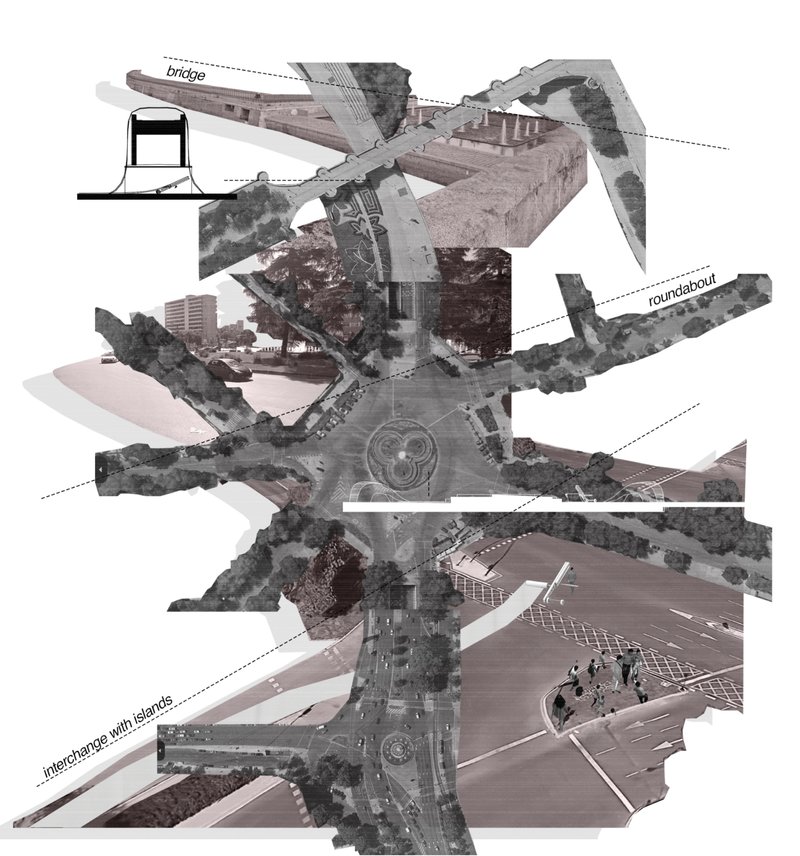
Before proposing anything new, Ramirez dissects what already exists. A collage of street views, pedestrian desire lines, and archival photographs reveals the plaza not as a fixed object but as a palimpsest of overlapping uses and eras. Adjacent diagrams map a roundabout and bridge intersection, annotating circulation flows that the final design either amplifies or deliberately interrupts. The analytical work here is honest; it treats the site as a document to be read rather than a problem to be solved.
This kind of layered site reading pays dividends in the design itself. By understanding where crowds naturally gather, where shadows fall at different hours, and how vehicular and pedestrian paths weave around each other, the project can calibrate its interventions with precision. The blank canvas is not truly blank. It is informed by everything that came before.
The Plaza as Drawing Surface
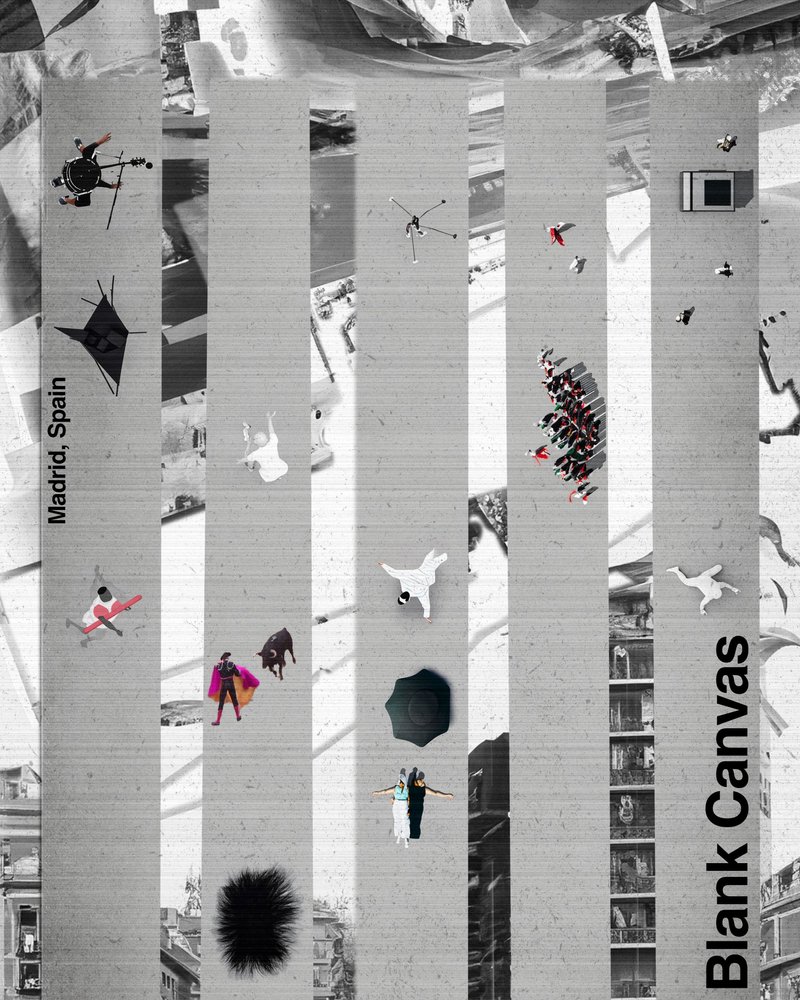
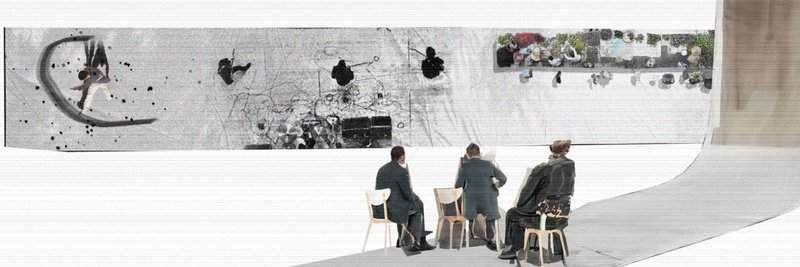
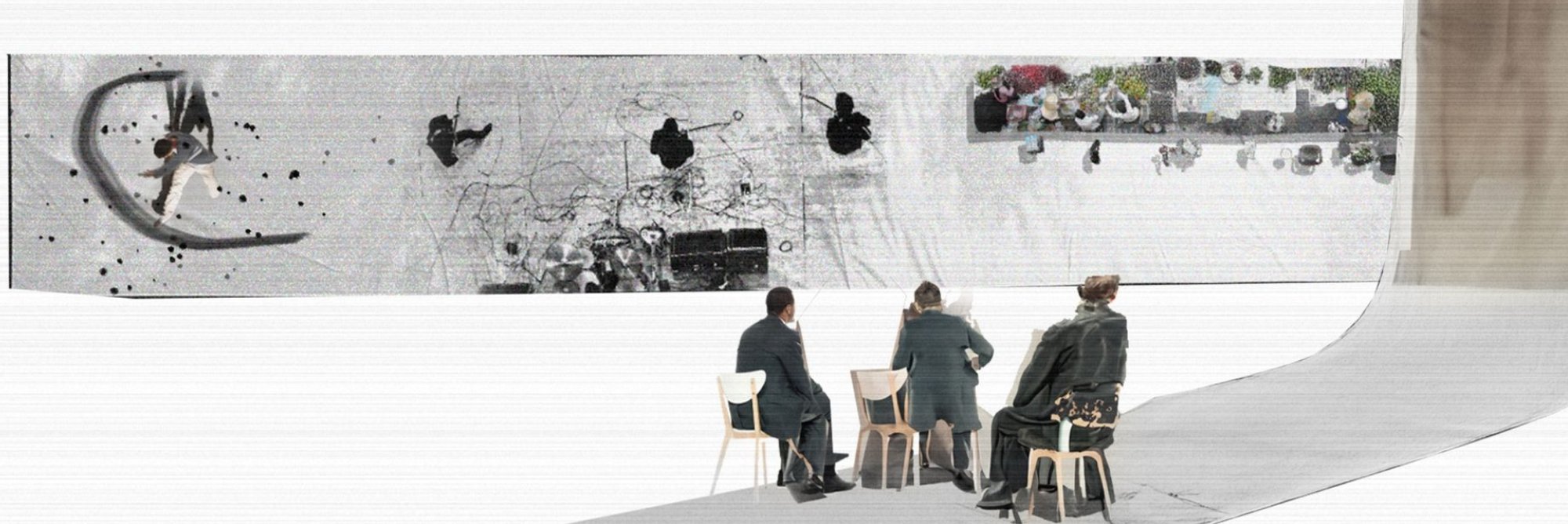
From above, the plaza reads as a sheet of pale stone, almost monochromatic, with pedestrians scattered across it like figures placed on a rendering for scale. Shadows thrown by surrounding buildings become the primary graphic element, shifting the composition hour by hour. At the curving edge of the surface, three people sit casually in bright sunlight, their bodies resting against a soft, white lip that traces an organic boundary between the plaza and its surroundings. The curve does not fence anyone in or out; it simply articulates a threshold, the way a pencil line suggests a wall without building one.
The restraint is the point. Where many competition entries would introduce canopies, water features, or digital installations, Blank Canvas trusts its material austerity. The pale stone absorbs and reflects light differently throughout the day, giving the space a slow, evolving character that no fixed installation could match.
Scaled Instruments and the Body as Reference
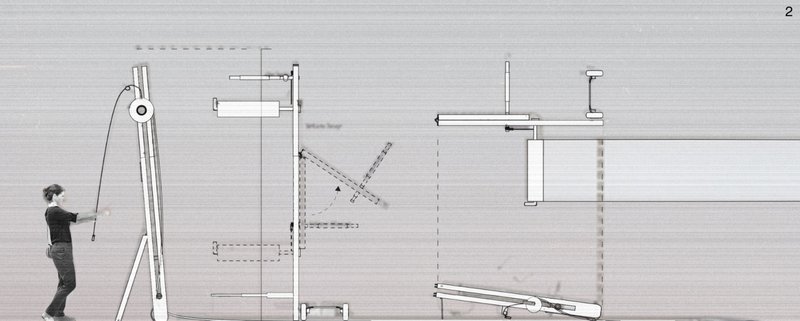
An elevation drawing reveals the project's most playful conceit: oversized drafting tools, rendered at architectural scale, embedded in or hovering above the plaza surface. A human figure stands among them for reference, and the effect is disorienting in the best way. The tools of the architect's trade, normally hidden in the studio, are blown up and placed in public view. It is a meta-architectural gesture that asks passersby to consider how the spaces they walk through are conceived, measured, and drawn before they ever become real.
The technical detailing in this elevation is careful, with line weights and annotations that reinforce the project's central metaphor: the plaza is a drawing, the drawing is the plaza, and the distinction between representation and reality collapses.
Street Edge as Public Stage
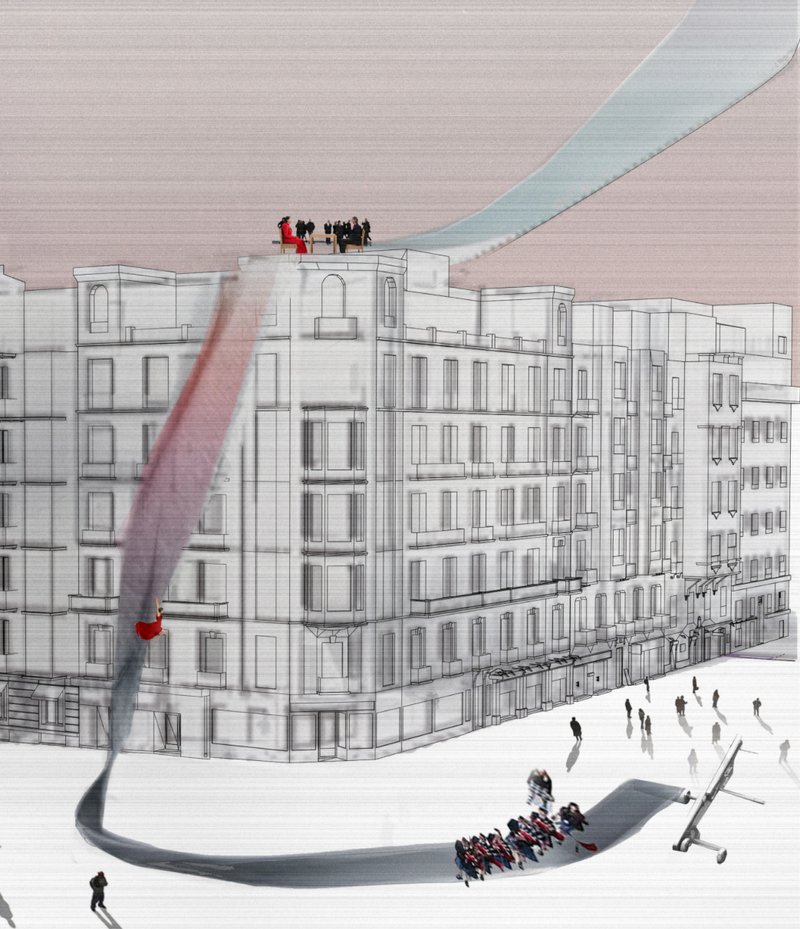
A street-level elevation shows crowds gathering along a facade where the plaza meets the city's built edge. A curving pavement line sweeps outward, pulling pedestrians into the open space like a stage apron extending into an auditorium. The drawing captures a moment of collective occupation: people clustered in conversation, leaning, watching. There is no programmed event here, just the spatial generosity of a well-shaped edge that gives people a reason to pause.
This is where the project's urban intelligence shows most clearly. The curve is not decorative. It negotiates the transition between the narrow, shaded street and the wide, sunlit plaza, creating a gradient of comfort that lets individuals choose their own level of exposure. It is a small move with outsized social consequences.
Why This Project Matters
Blank Canvas operates in a territory that many competition entries avoid: extreme restraint. In a field where entries often compete for visual complexity, Ramirez bets on emptiness as a design strategy, arguing that the most powerful public space is the one that refuses to prescribe behavior. The plaza becomes a mirror for the city, reflecting its rhythms rather than imposing new ones.
More importantly, the project's self-referential framing, turning the tools of design into public furniture, opens a genuine conversation about who architecture is for and how it is made. By making the drafting process visible at urban scale, Blank Canvas demystifies design without dumbing it down. It trusts the public to engage with abstraction, and that trust is itself a radical architectural position.
View the Full Project
About the Designers
Designer: Anthony Ramirez
Enter a Design Competition on uni.xyz
uni.xyz runs architecture and design competitions year-round that reward proposals with spatial conviction and real site intelligence.
Project credits: Blank Canvas by Anthony Ramirez Madrid Art Bioscope (uni.xyz).




Popular Articles
Popular articles from the community

Takeshi Hosaka Architects Suspends a Concrete Cross Above a Yokohama Cemetery
A 28-square-meter burial renovation in Yokohama lifts the symbol of resurrection into the sky so mourners see it against heaven.
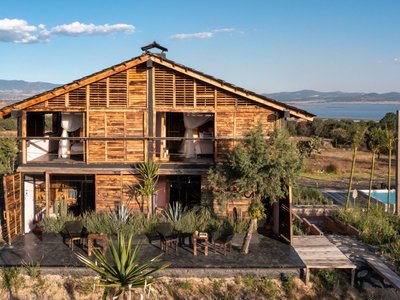
Fausto Terán and Toro Fuse Japanese Craft with Mexican Tradition in a Lakeside Retreat
Nakamura House pairs Shou-Sugi-Ban charred pine with handmade clay tile at the foot of Atlangatepec Lagoon in Mexico.
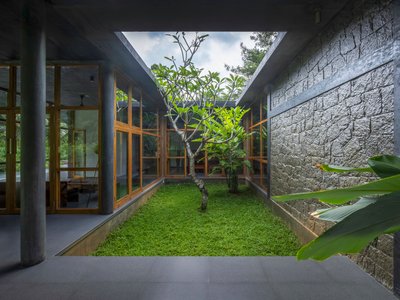
3dor Concepts Wraps a Kerala Home in Mirrored Concrete Arcs Around a Courtyard Tree
In the Western Ghats foothills of Thamarassery, a 270 m² single-story house uses two curved volumes to frame nature as its center.
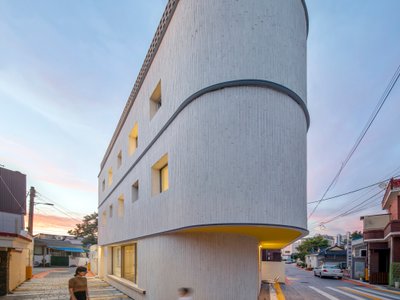
YOAP Architects Round a Corner in Yeongcheon with a Cylindrical Community Hub
A 197-square-meter brick and ribbed-clad tower turns a forgotten alley corner in South Korea into a public garden with a low threshold.

Similar Reads
You might also enjoy these articles

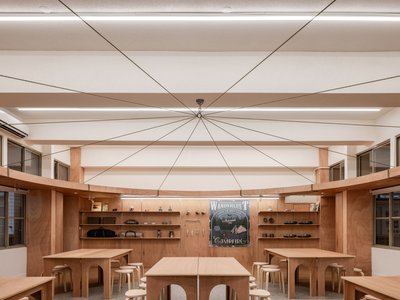
317studio Turns an 87 m² Classroom into a Forest Clearing for Scouts in New Taipei City
A rope canopy, student-made specimens, and campfire geometry replace rows of desks in this Scouting classroom in Xizhi District.
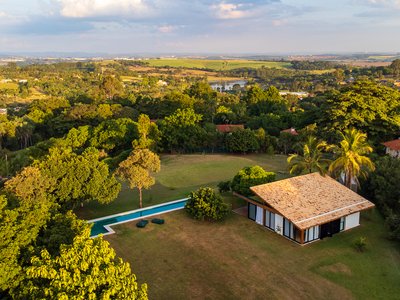
24 7 Arquitetura Builds a Timber Pavilion as a Family's First Act on a 5,000 m² Brazilian Plot
In Jaguariúna, a prefabricated glulam house nestles among mature trees as the opening move of a larger residential masterplan.
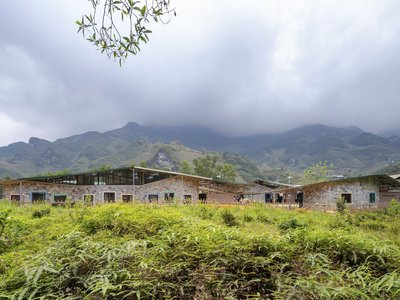
1+1>2 Architects Build a School from 900 Blocks of Hmong Stone on Vietnam's Rocky Plateau
On a barren valley in Ha Giang province, a community quarried its own stone to raise a kindergarten and primary school rooted in Hmong identity.
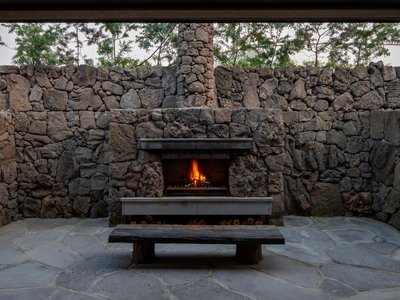
100A Associates Builds a Volcanic Stone Retreat on Jeju Island Rooted in Ritual and Restraint
Watarstay [Wa:Tar] in Bongseong-ri channels Jeju's basalt, reed, and hemp into a 150 m² hospitality space shaped by contemplation.

Explore Street Art Competitions
Discover active competitions in this discipline




The Global Benchmark for Architecture Dissertation Awards


The Global Benchmark for Graduation Excellence


Challenge to design an urban locus of culture and heritage
Comments (0)
Please login or sign up to add comments
No comments yet. Be the first to comment!