

Blue Bottle Coffee Toyosu Park Cafe Architecture: A Seamless Blend of Design and Nature
Discover how the Blue Bottle Coffee Toyosu Park Cafe redefines architectural harmony by blending indoor and outdoor spaces in urban Tokyo.


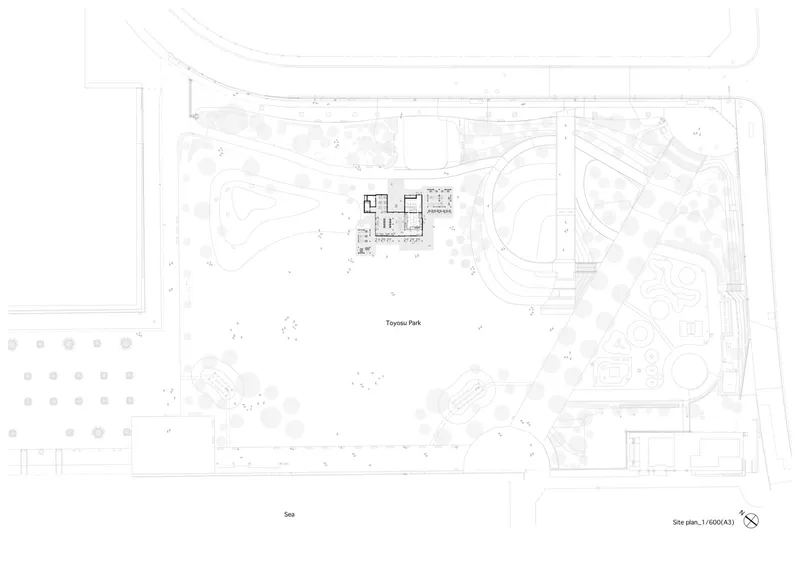
Blue Bottle Coffee Toyosu Park Cafe, designed by Jo Nagasaka and Schemata Architects, exemplifies innovative architecture that harmonizes urban design with natural landscapes. Located in Toyosu Park overlooking Tokyo Bay, this cafe redefines how built spaces can blend with their environment while providing a relaxed and inviting atmosphere.

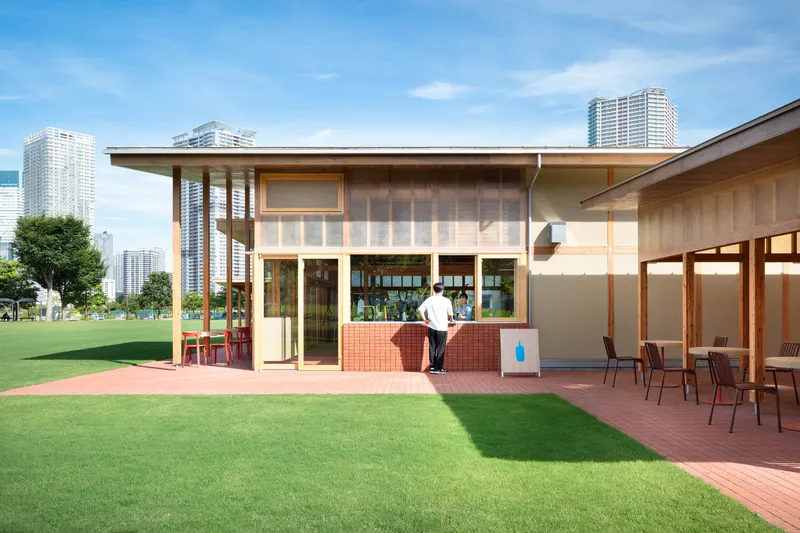
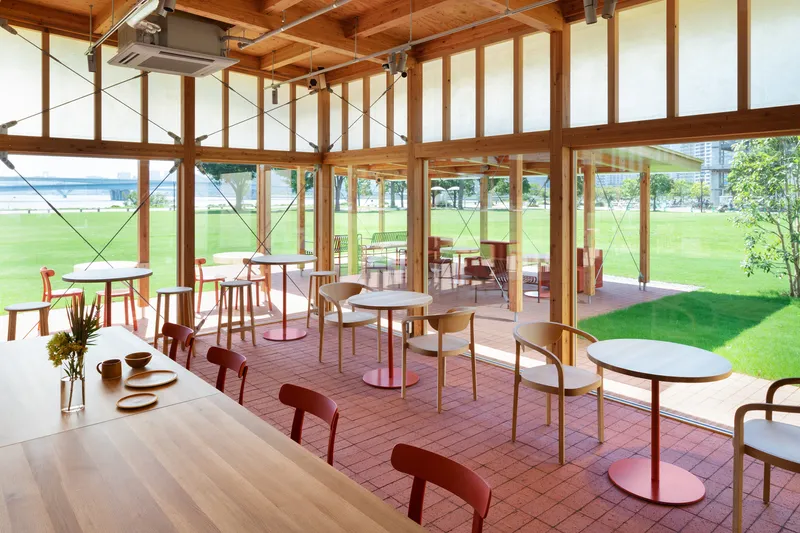
Introduction to Blue Bottle Coffee Toyosu Park Cafe Architecture
The Toyosu Park Cafe by Blue Bottle Coffee is more than just a coffee shop; it is a case study in architectural design that prioritizes integration with its surroundings. The project, spearheaded by Jo Nagasaka and Schemata Architects, embraces a vision of creating seamless transitions between indoor and outdoor spaces. The result is a human-scale structure that fosters relaxation and community interaction within the serene setting of Tokyo’s Toyosu Park.

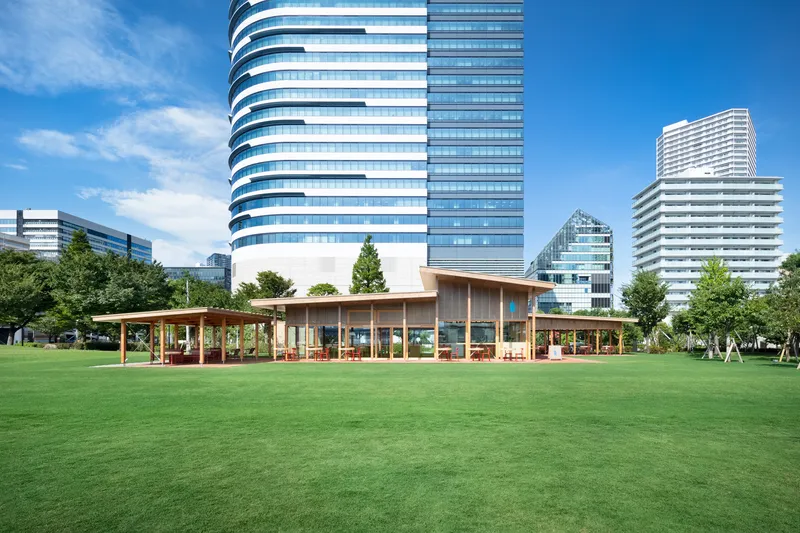

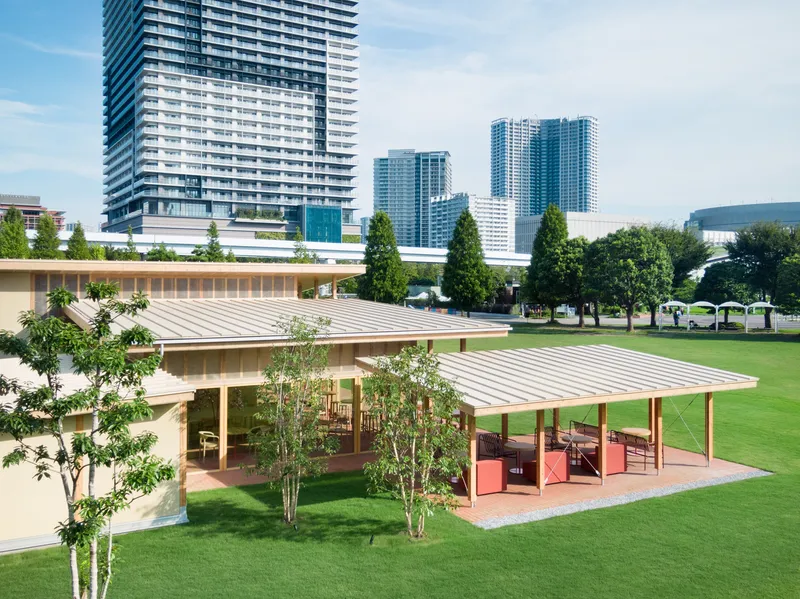
Architectural Concept: A Gradation of Spaces
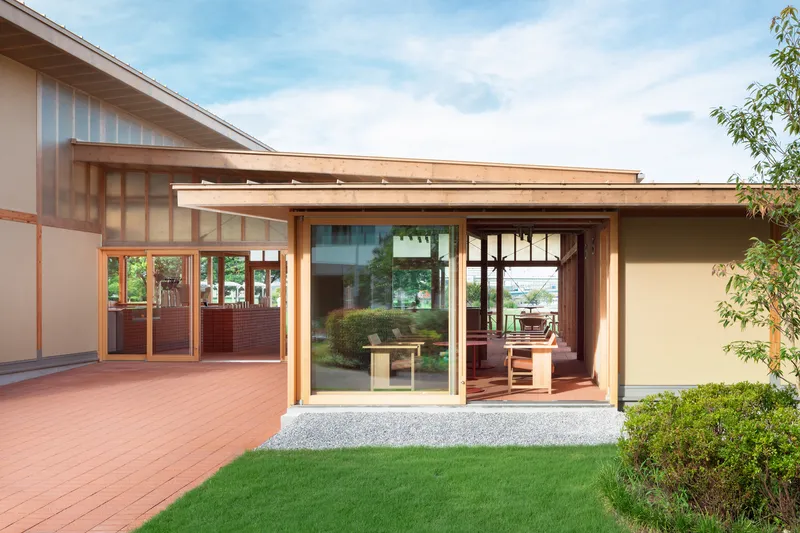
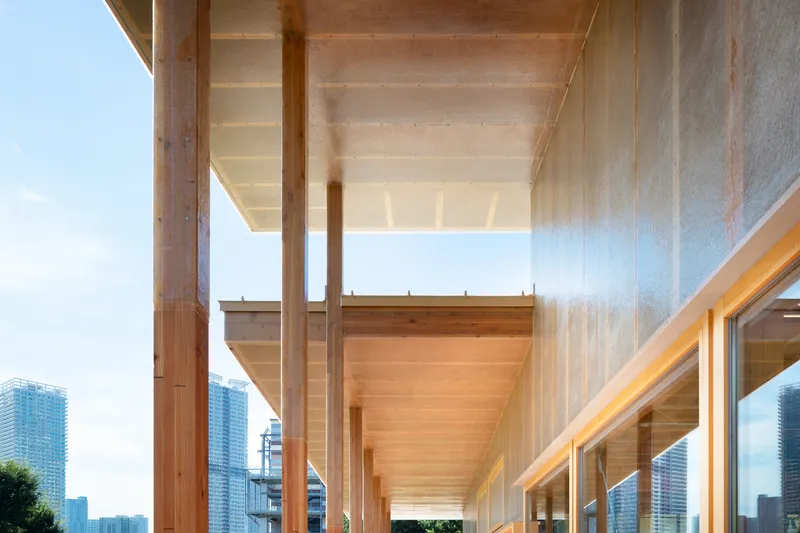
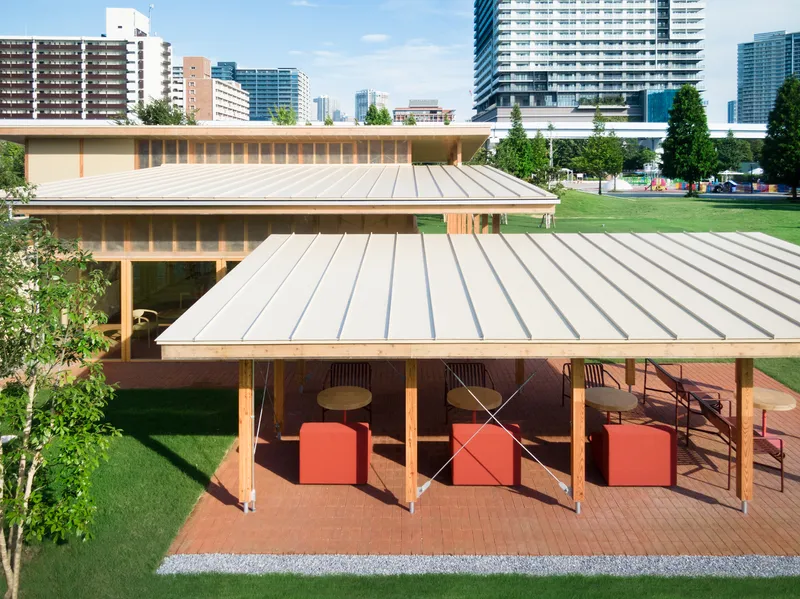
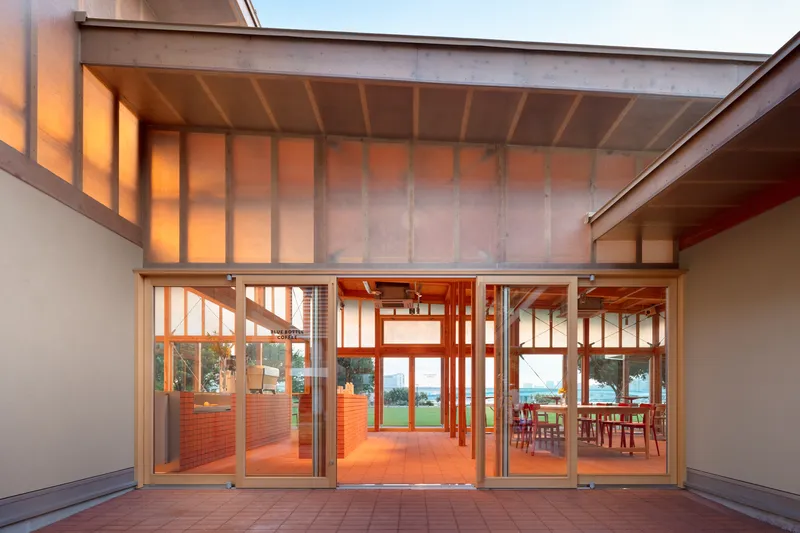
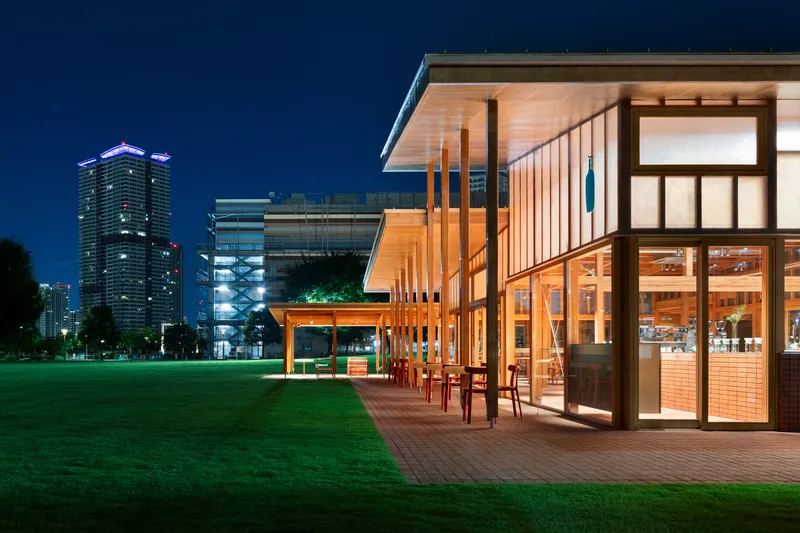
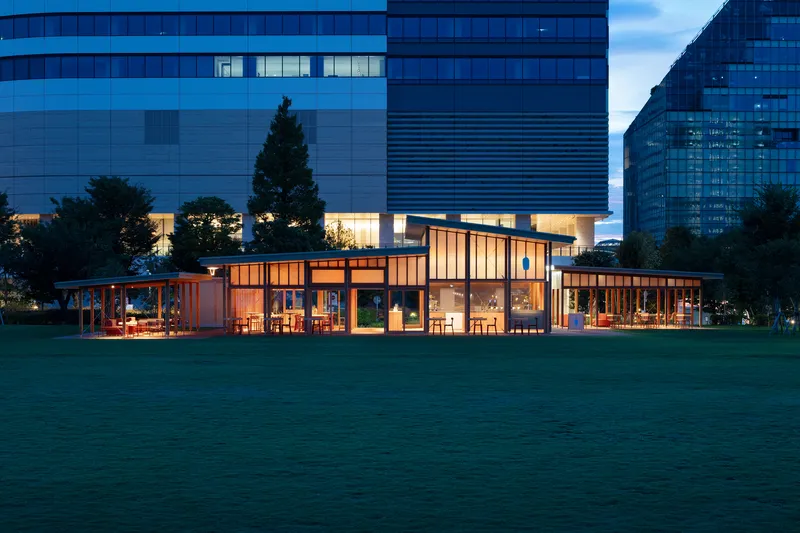
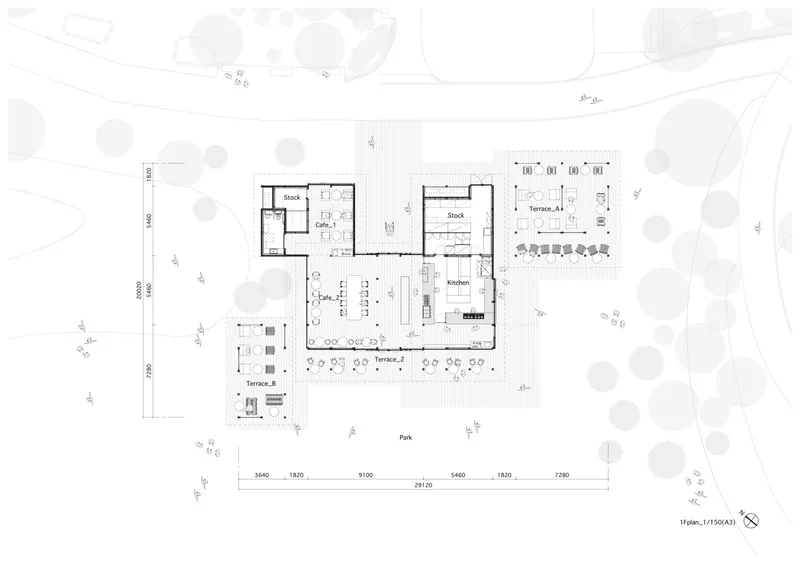
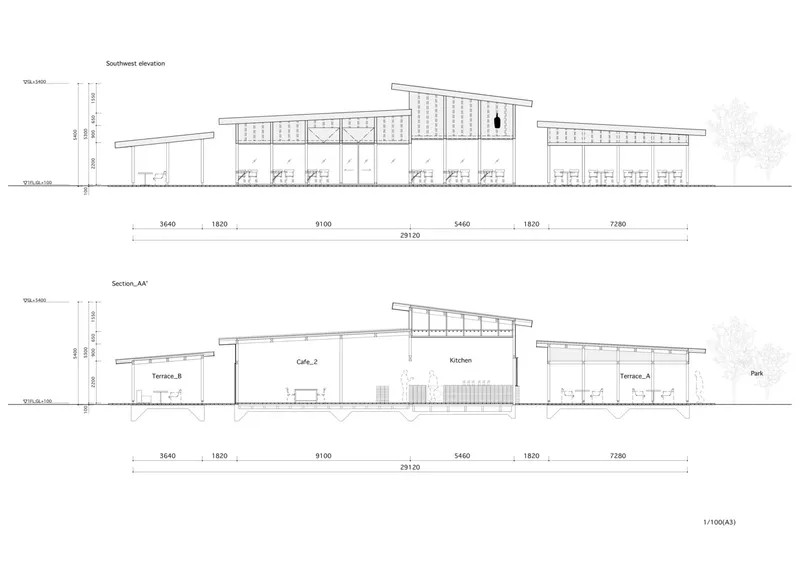
At the core of the Toyosu Park Cafe’s design is the concept of gradational spaces. Instead of constructing a singular, imposing building, the architects chose to design a cluster of smaller, interconnected huts. These structures blur the lines between the park's natural environment and the cafe, offering a spectrum of spaces from fully open outdoors to semi-outdoor areas under expansive eaves, and finally to enclosed interiors.
This spatial progression encourages visitors to experience a gradual transition, maintaining the park's open and welcoming vibe.


Connecting Indoors and Outdoors
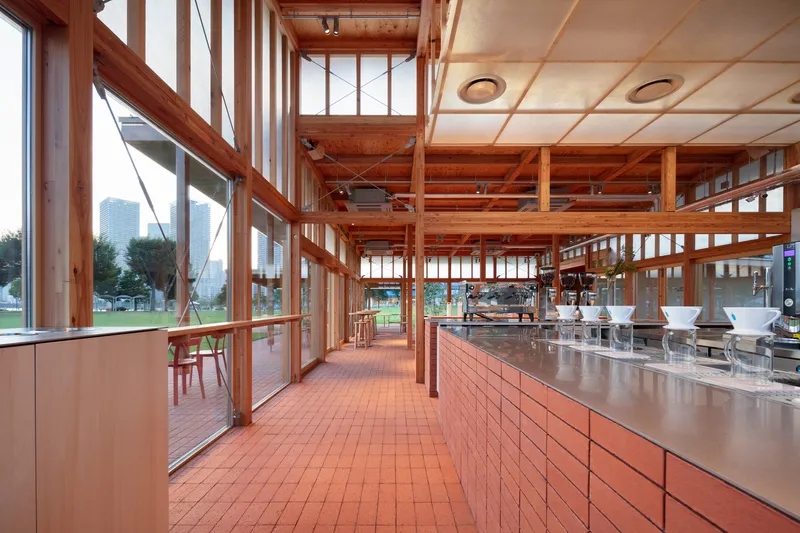
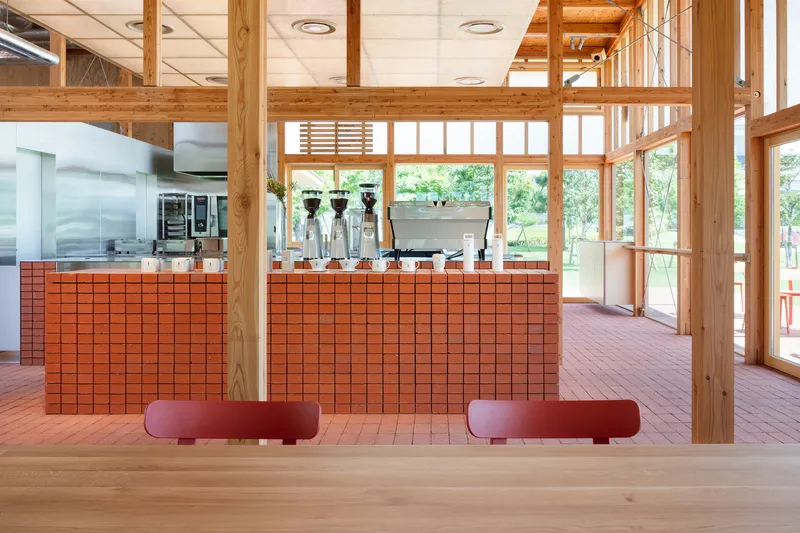
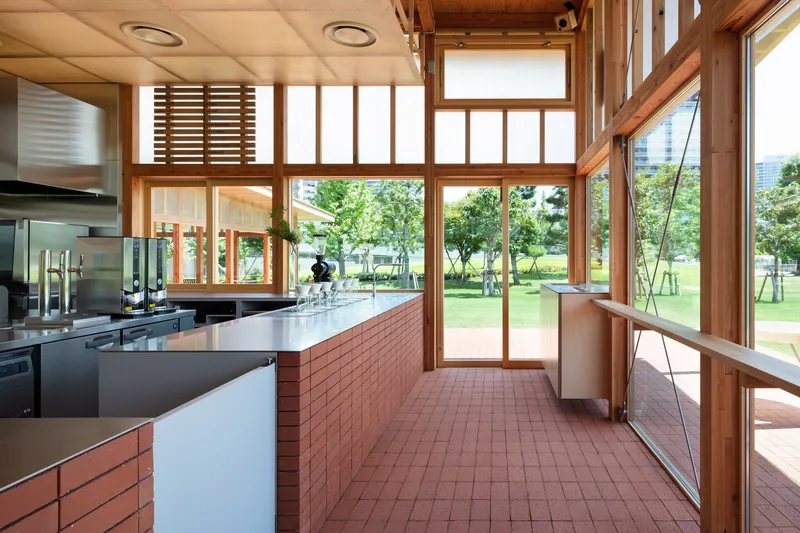
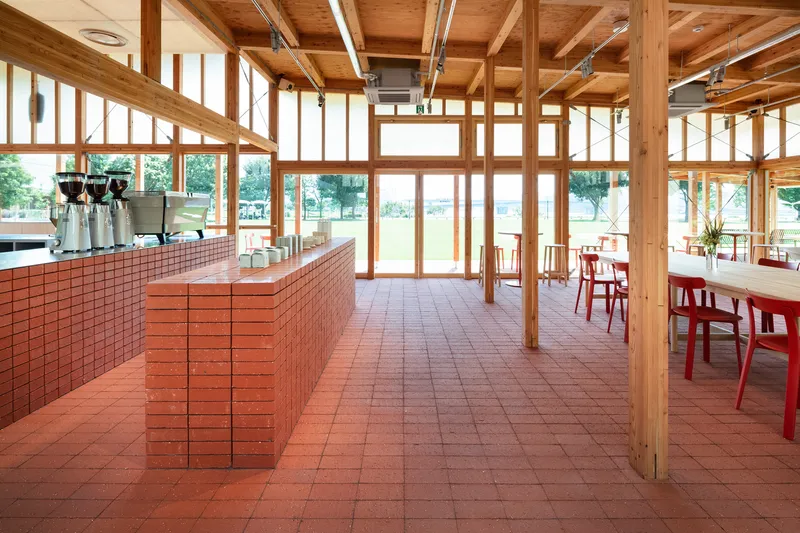
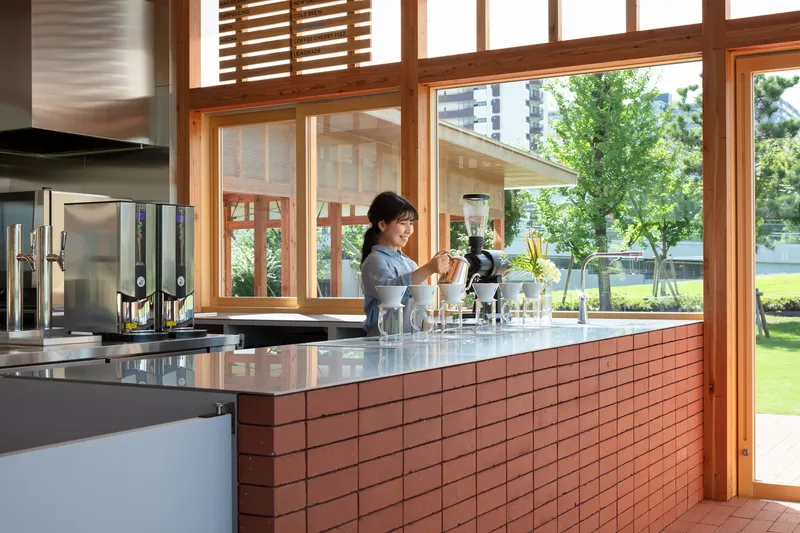
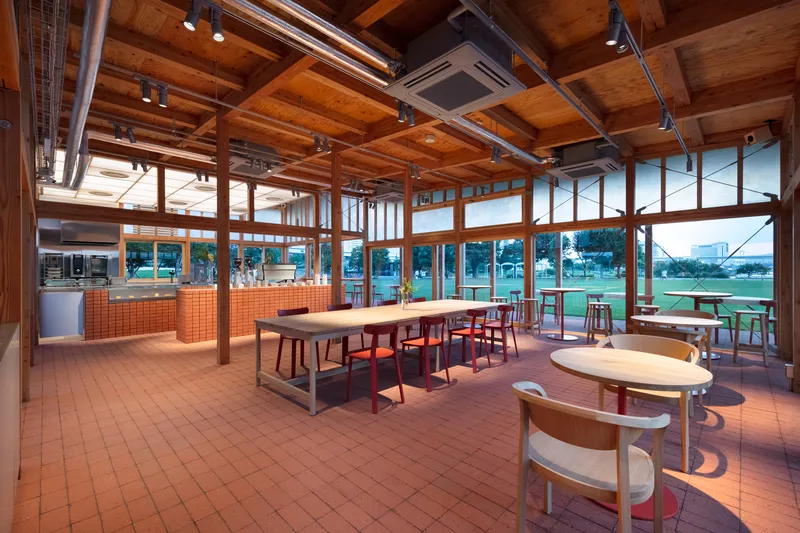
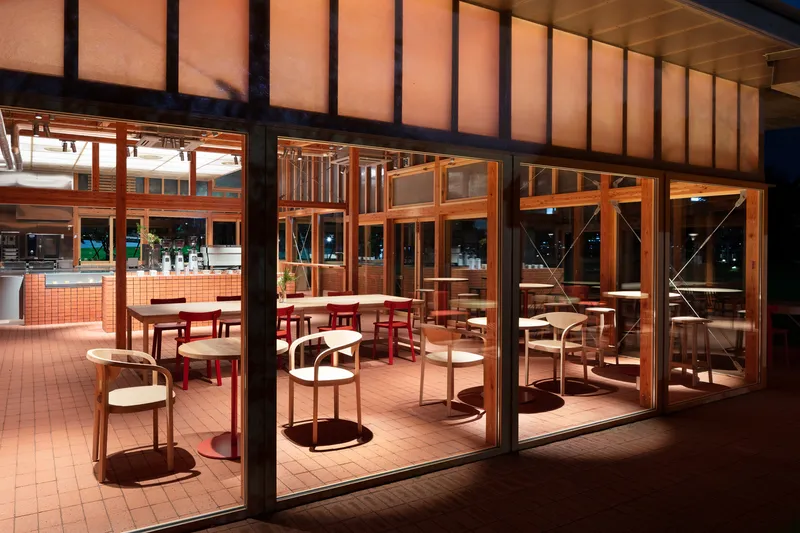
To further integrate the cafe with the park, the design utilizes materials like FRP (Fiber Reinforced Plastic) and glass. The FRP-covered facades create a diffused lighting effect that softens the boundaries between indoor and outdoor spaces, while large glass walls provide uninterrupted views of the Tokyo Bay skyline. Bricks extend from the interiors to the exteriors, dissolving floor plan boundaries and creating a unified visual experience.


Functional Design Elements
Seating for Versatility and Comfort
The cafe offers a diverse range of seating arrangements tailored for different uses. Outdoor areas are shaded under expansive eaves, providing sofa-like comfort that invites visitors to linger and socialize. Inside, varied ceiling heights distinguish functional zones: high-ceilinged spaces house community tables to promote lively interaction, while lower ceilings create cozy nooks with lounge chairs for quiet relaxation.



Integrated Furniture Design
Furniture plays a key role in the architectural cohesion of the space. Collaborating with Karimoku, the architects developed cantilevered tables attached to structural columns. These elements seamlessly connect the cafe’s interior with its furniture, ensuring that the design language flows consistently throughout.



Sustainability and Urban Context
Beyond aesthetics, the Toyosu Park Cafe exemplifies sustainable urban design. Its small-scale clustered buildings minimize environmental impact, while the integration with existing park features, such as benches and open lawns, avoids unnecessary construction. This approach underscores a commitment to creating eco-friendly spaces that enhance public areas rather than dominate them.

Visual Appeal and Photographic Excellence
Takumi Ota’s photography captures the essence of the cafe’s architectural beauty. The images highlight its harmonious integration with the park, the play of natural light, and the thoughtful balance between private and communal spaces.


A Blueprint for Urban Architecture
The Blue Bottle Coffee Toyosu Park Cafe stands as a testament to thoughtful, human-centric architecture. By prioritizing integration with the natural environment, it serves as an exemplary model for future urban design projects. The seamless blend of indoors and outdoors, coupled with functional and aesthetic excellence, makes this cafe not just a place for coffee but a cornerstone of community and relaxation.


All Photographs are work of Takumi Ota


Popular Articles
Popular articles from the community


David Ortega Stacks a Two-Story Mexico City Penthouse Around a Steel Stair and a Pergola-Shaded Roof Terrace
In Colonia Roma, a 300 m² penthouse uses oak joinery, a planted steel stair and a slatted roof pergola to make a new-build apartment feel like a house.

Architekt Andreas Gruber Scatters 23 Dark Timber Chalets Across a South Tyrolean Forest Edge
In Molini di Tures, Amonti Chalets breaks a resort into a hamlet of gabled timber houses, with parking, storage and services pushed into the slope.

David Macias Steps a Doorless Stone and Plaster House Down a Tropical Colombian Hillside
In the humid hills of Colombia, Threshold House replaces the front door with an open void and terraces its 850 m² down the slope instead of fighting it.

Cube Design Draws an Ecological Corridor Between Two Shenzhen Hills with the Nankai Building
Beside Shenzhen's container docks, the Nankai Building pairs stacked balconies with a climbing green screen to connect two hillsides across its height.

Similar Reads
You might also enjoy these articles


Hodi-Mandai Geram
Project Function: Preservation and revitalization of the Intangible heritage and socio-spatial identity of the Hodi by Housing, Cultural Memory Center, Sacred Grove, landscape, local tourism economy


Olio Towers: A Mid-Rise for Performers That Fuses Housing, Rehearsal, and Stage
Located blocks from Houston's Theater District, this modular tower stacks living units around a central performance atrium.

Oasis: Modular Green Housing Carved into Dhaka's Urban Fabric
A shortlisted Plugin Housing entry reclaims unauthorized settlements in Dhaka with stepped concrete volumes, green roofs, and ventilation-driven design.

Black Hole: A Floating Megastructure for the Post-Physical Era
Emiliano Mazzarotto envisions a spherical, self-scaling arena where e-sports, digital hotels, and holographic stadiums replace traditional public space.

Explore Architecture Competitions
Discover active competitions in this discipline

Challenge to reimagine the Iron Throne

Photograph architecture without architects

Illustrate the lost glory of Angkor Wat - Render Challenge

Design challenge to reuse E-waste
Comments (0)
Please login or sign up to add comments
No comments yet. Be the first to comment!