
Blue Hour at Spreepark by Modulorbeat – Transforming an Abandoned Landmark into a Cultural Park Installation in Berlin
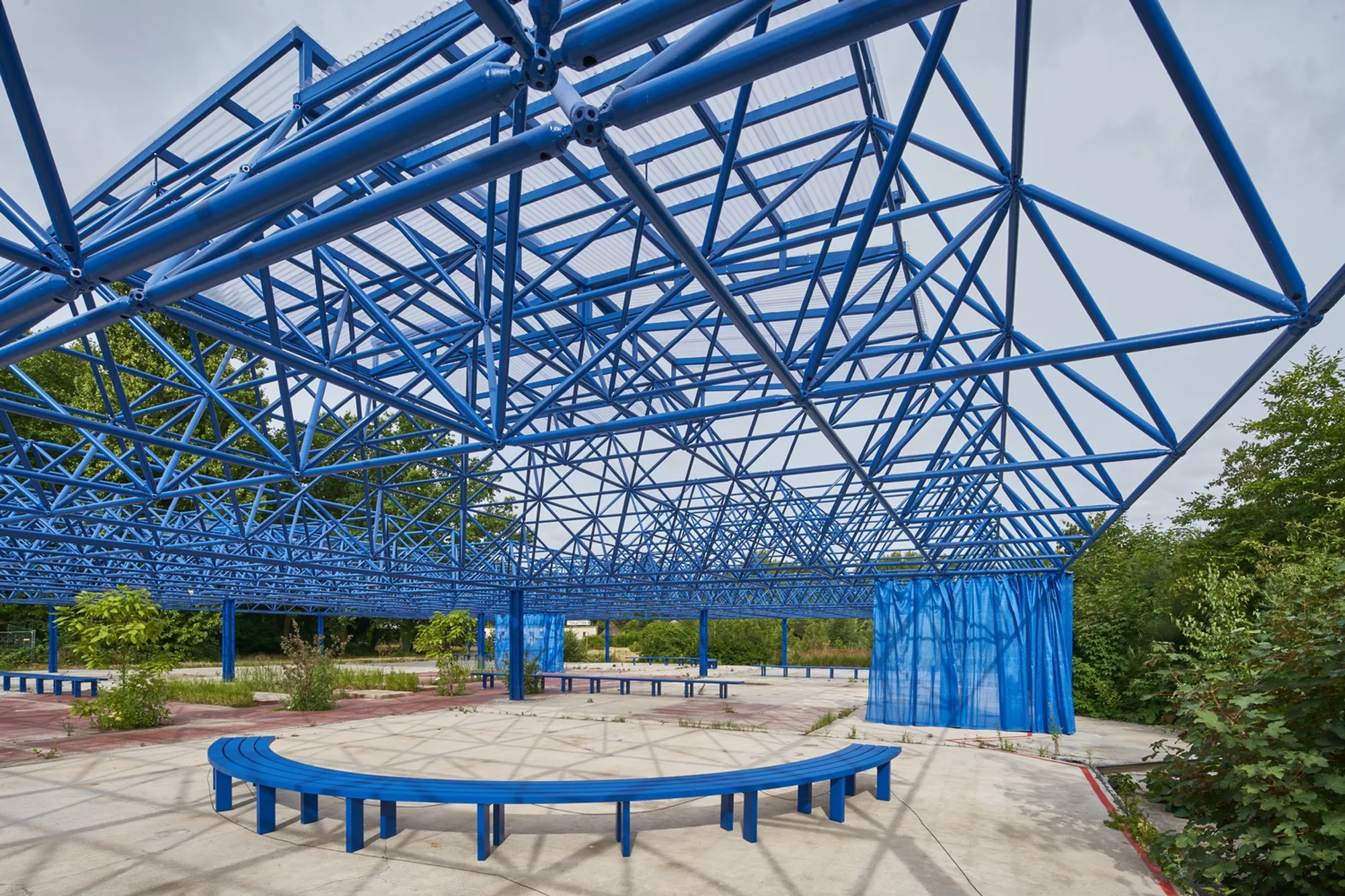
Blue Hour at Spreepark transforms Berlin’s abandoned Mero-Halle into a vibrant blue steel installation blending art, architecture, and nature."


Berlin’s historic Spreepark, once a thriving amusement park in the GDR era, is undergoing a remarkable transformation into a public green space. Among the first interventions to mark this renewal is the “Blue Hour” installation by German architecture studio Modulorbeat, a poetic example of adaptive reuse, site-specific art, and experimental park architecture.

From Forgotten Landmark to Open Cultural Landscape
Located in the Plänterwald forest, Spreepark has a layered past. It opened as East Germany’s only amusement park and later fell into disuse after the political shift and the operator’s insolvency. For decades, it stood as an urban relic — silent, overgrown, and sealed from public life. Now, the city is reimagining the site as an inclusive green destination for citizens, blending history, art, and nature.
As part of this revival, Modulorbeat was invited to explore the potential of the park’s former fast-food restaurant and entertainment venue, the Mero-Halle. The project is both an architectural intervention and an artistic research experiment, using the “blue hour” — the twilight moments between day and night — as a metaphor for transformation and change.
Design Concept – Twilight as a Metaphor for Transition
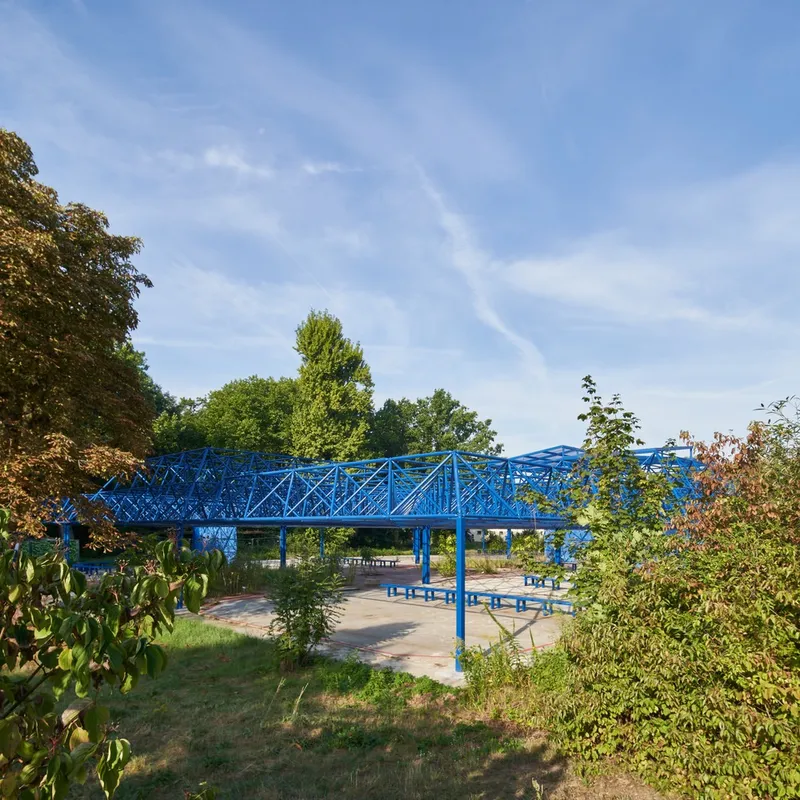
The “blue hour” represents the shift between two states — light and darkness, past and future, inactivity and renewal. Similarly, the installation bridges the park’s dormant state and its future public life.
Working with the existing MERO steel structure, Modulorbeat reinforced and enhanced it with a gentian blue corrosion-protection coating — a vibrant color rarely found in nature, making the structure stand out against the greenery. This intervention preserves the building’s industrial heritage while giving it a contemporary identity.
Spatial Experience – Hybrid Between Structure and Nature
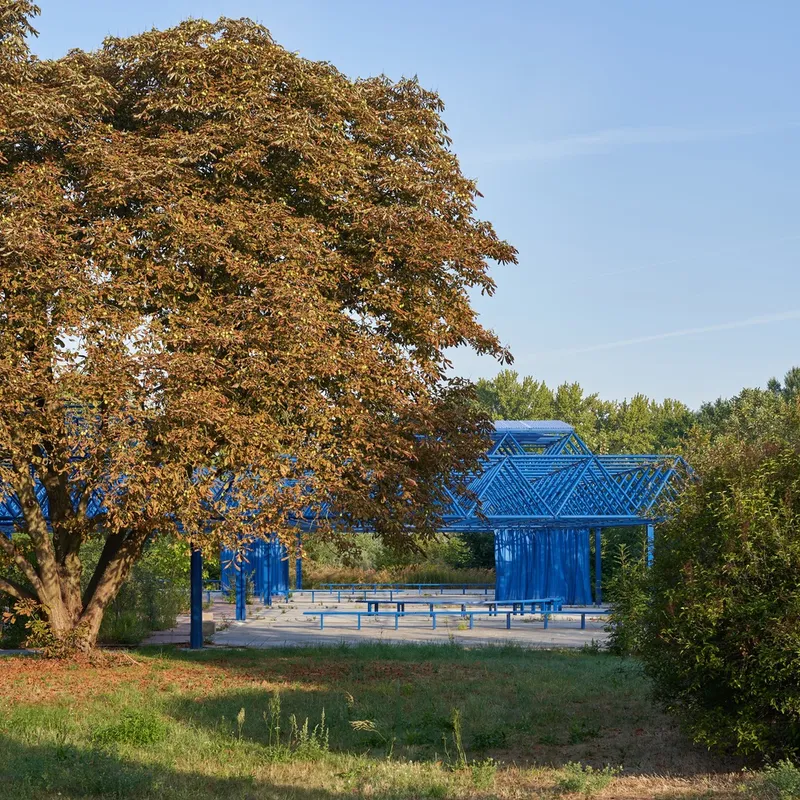
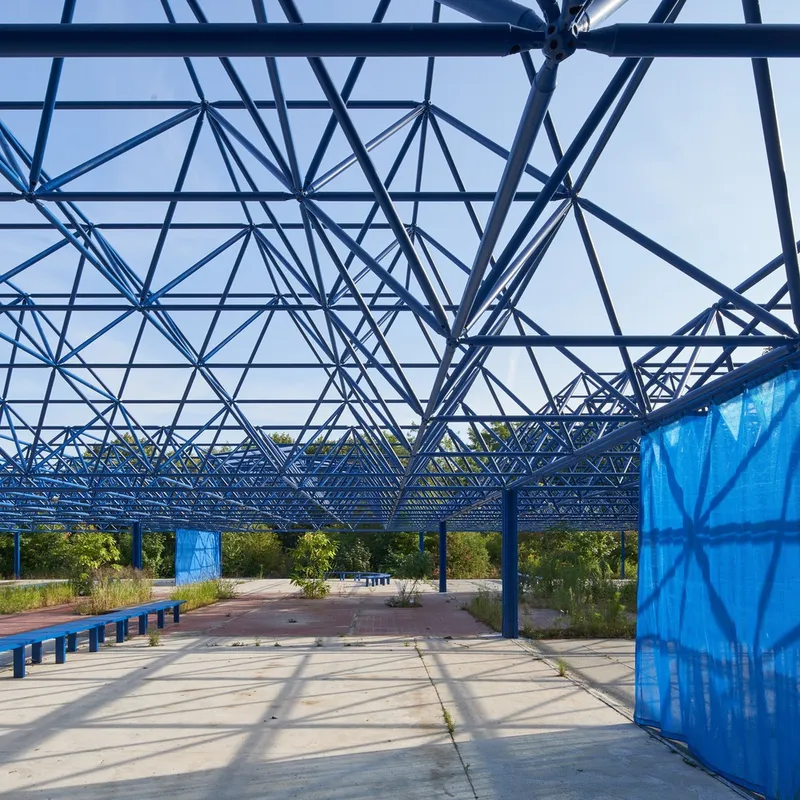
The installation is not a conventional building but an open, adaptable framework for encounters, performances, and leisure. The preserved roof structure and its cast shadows inspired new design elements such as partial canopies, which provide shelter from rain or sun while framing shifting views of the sky.
Curtain partitions create flexible zones within the open hall, blurring the boundaries between inside and outside. Openings in the existing floor slab allow planting to grow through, merging architecture and landscape into a unified environment. Benches invite visitors to rest, observe, and engage, while the open plan encourages a range of spontaneous and programmed activities.
A Living Test for the Future Spreepark
Initially conceived as a temporary test installation, “Blue Hour” proved so successful in fostering public engagement that it will now remain as a permanent feature in the redeveloped Spreepark. Its design demonstrates how minimal, resource-conscious interventions can activate disused urban spaces without erasing their historical layers.
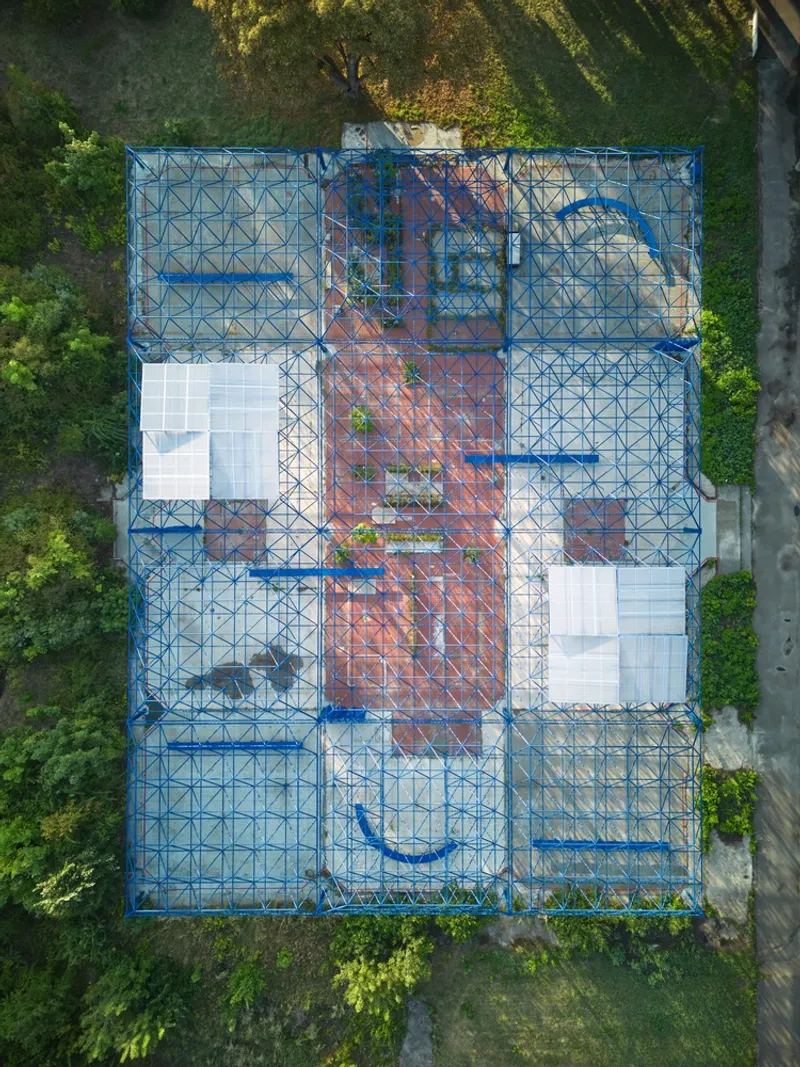
All photographs are works of Jan Kampshoff




Popular Articles
Popular articles from the community


The Musturak Paradise: Senior Living Architecture for a Connected Future in Temara, Morocco
The Musturak Paradise reimagines senior living architecture in Temara via private homes, social spaces, culture, community, and shared care.

Conexión: Biophilic Design Reimagines High-Rise Living in Hong Kong
Conexión reimagines high-rise living in Hong Kong through biophilic design, green facades, shared spaces, daylight, water and nature within.

The Earth Pod: 3D Printed Homes for Resilient Refugee Communities
The Earth Pod reimagines refugee housing through 3D printed homes made from clay, combining resilience, self-sufficiency, and rapid shelter.
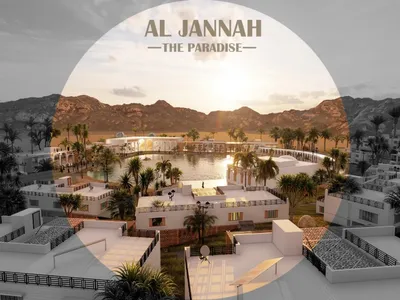
AL-JANNAH: Sustainable Architecture and Permaculture for Afghan Widows
AL-JANNAH uses sustainable architecture and permaculture to create resilient oasis of housing, learning, work and renewal for Afghan widows.


Similar Reads
You might also enjoy these articles


Hodi-Mandai Geram
Project Function: Preservation and revitalization of the Intangible heritage and socio-spatial identity of the Hodi by Housing, Cultural Memory Center, Sacred Grove, landscape, local tourism economy


Olio Towers: A Mid-Rise for Performers That Fuses Housing, Rehearsal, and Stage
Located blocks from Houston's Theater District, this modular tower stacks living units around a central performance atrium.

Oasis: Modular Green Housing Carved into Dhaka's Urban Fabric
A shortlisted Plugin Housing entry reclaims unauthorized settlements in Dhaka with stepped concrete volumes, green roofs, and ventilation-driven design.

Black Hole: A Floating Megastructure for the Post-Physical Era
Emiliano Mazzarotto envisions a spherical, self-scaling arena where e-sports, digital hotels, and holographic stadiums replace traditional public space.

Explore Architecture Competitions
Discover active competitions in this discipline


Challenge to design a portable theatre

Challenge to design a portable music platform

Challenge to design an open learning module for the elderly


Challenge to reimagine the Iron Throne
Comments (0)
Please login or sign up to add comments
No comments yet. Be the first to comment!