

Bois Canal Footbridge by Oatmeal Studio: Blending Heritage, Innovation, and Structural Elegance Along the Saône
Elegant UHPC footbridge in France blending heritage masonry with modern engineering, uniting durability, minimal design, and local craftsmanship along the Saône.


Situated in Cormoranche-sur-Saône, France, the Bois Canal Footbridge designed by Oatmeal Studio redefines the relationship between engineering, landscape, and heritage. Completed in 2025, this pedestrian and cycling bridge is more than a crossing—it is a delicate architectural gesture reconnecting two banks of history, integrating modern material innovation with the century-old charm of the Saône region.
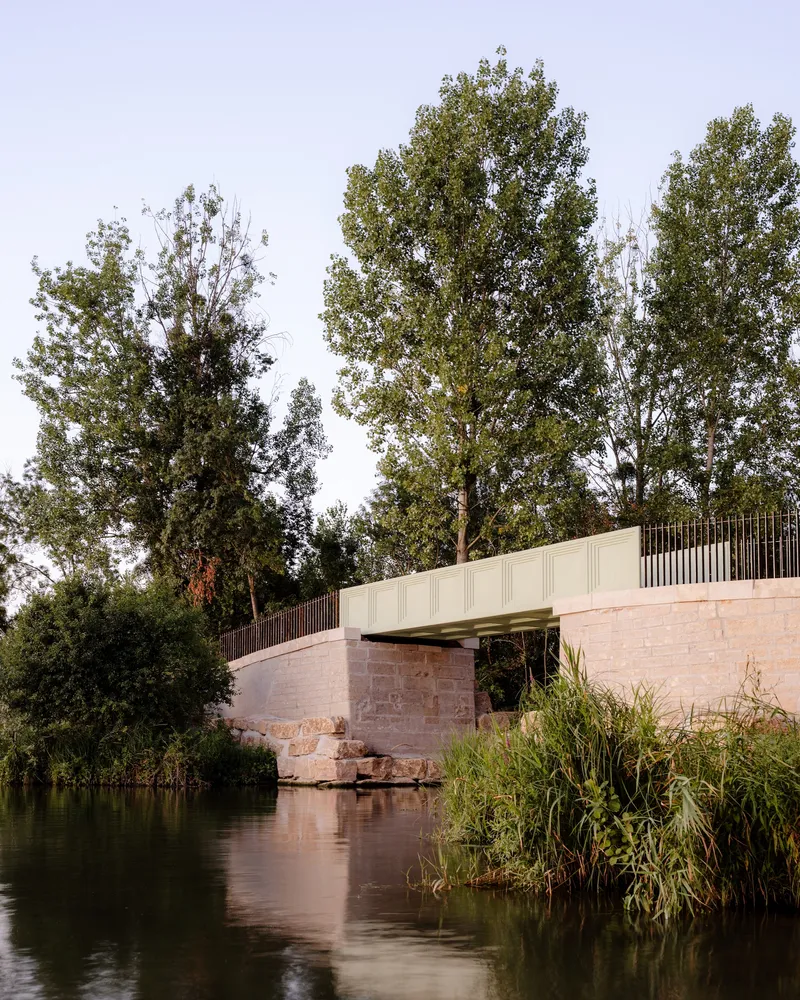
Set along the Voie Bleue, a scenic route tracing the Saône River from Lyon to Épinal, the bridge underscores how infrastructure can become poetry in concrete—where efficiency, sustainability, and culture coexist naturally.
Context: Rehabilitating the Past to Serve the Future
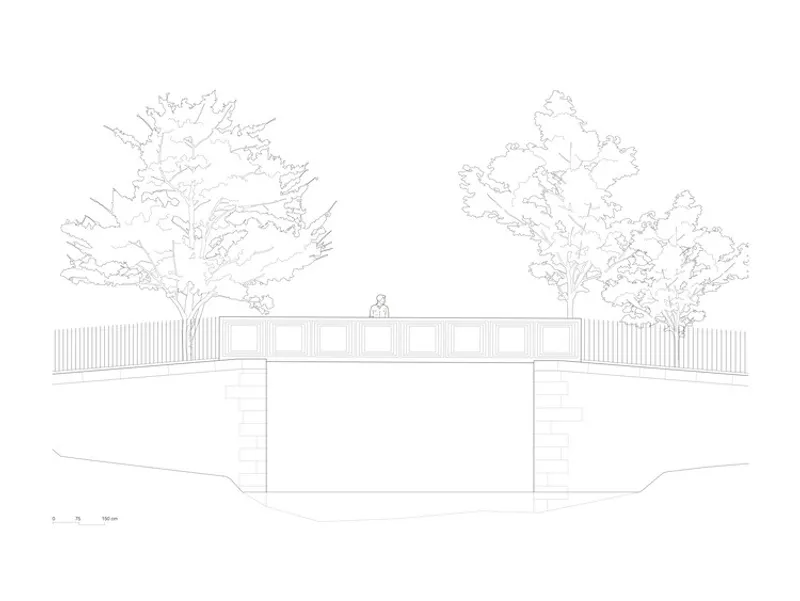
The project takes place at the Bois Canal crossing, where early 20th-century masonry abutments mark an age of craftsmanship in regional construction. Rather than replacing these structures, Oatmeal Studio sought to preserve and integrate them, ensuring the continuity of both place and narrative.


While not a grand intervention in scale, the project’s importance lies in its sensitivity. By combining heritage preservation with technological precision, the architects transformed an overlooked infrastructural site into a small but significant landmark of contemporary French design.
Design Strategy: A Monolithic Gesture in UHPC
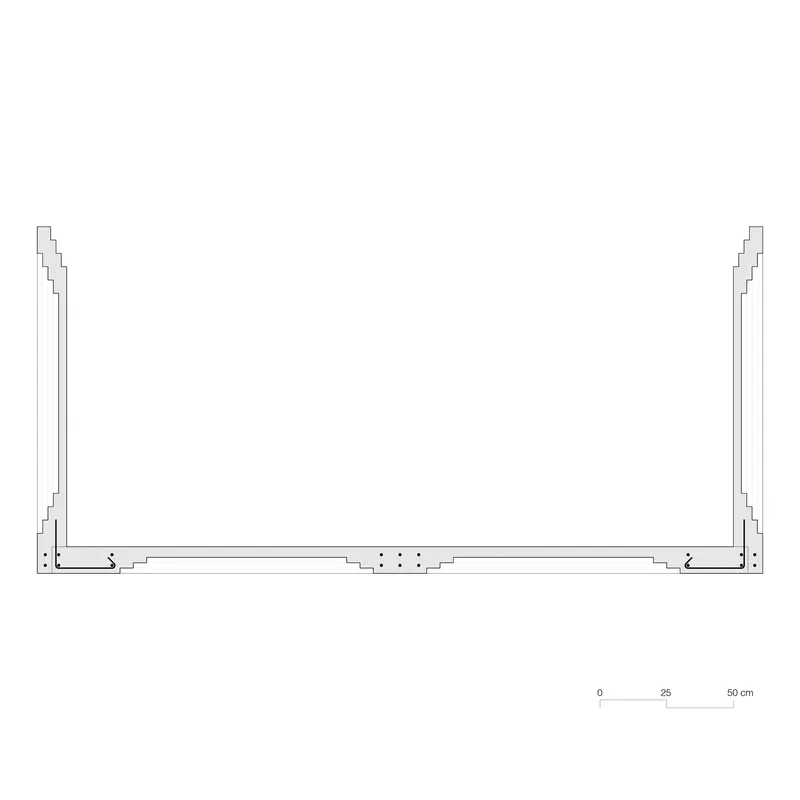
The new structure rests gently upon its restored stone abutments—a monolithic bridge formed with lateral girders in integrally pigmented Ultra-High Performance Concrete (UHPC). Measuring 11 meters long and 2.7 meters wide, the bridge embodies lightness through strength, precision through simplicity.

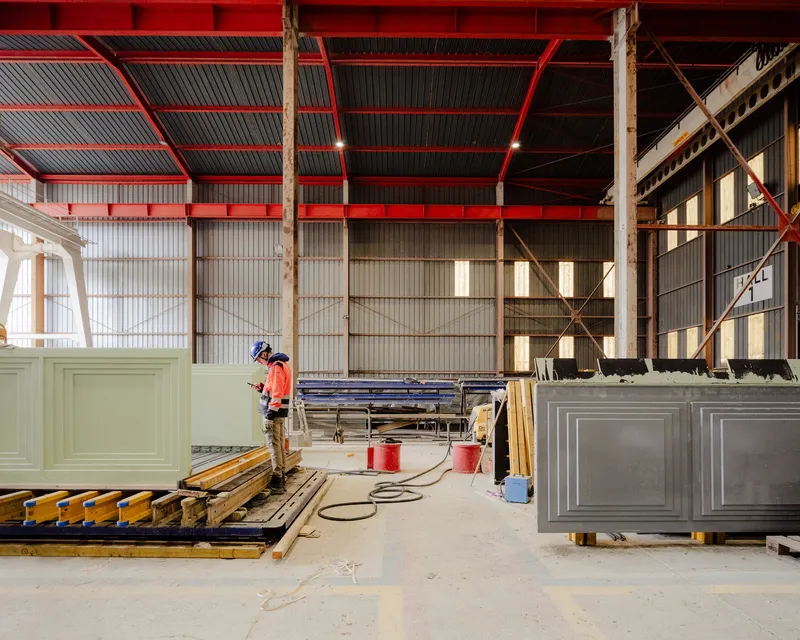
The use of UHPC represents a strategic choice: it offers high compressive performance, slenderness, and durability without the need for multiple structural layers. The bridge was entirely prefabricated in a workshop before being transported and set into place in a single lift. This process minimized environmental disruption and ensured surgical precision in the installation phase.

The integration of structure, texture, and color was achieved without additional surface treatments. The pigmented concrete reveals the fineness of its casting, celebrating the craft of form and the language of fabrication.
Reviving Craftsmanship Through Formwork Innovation
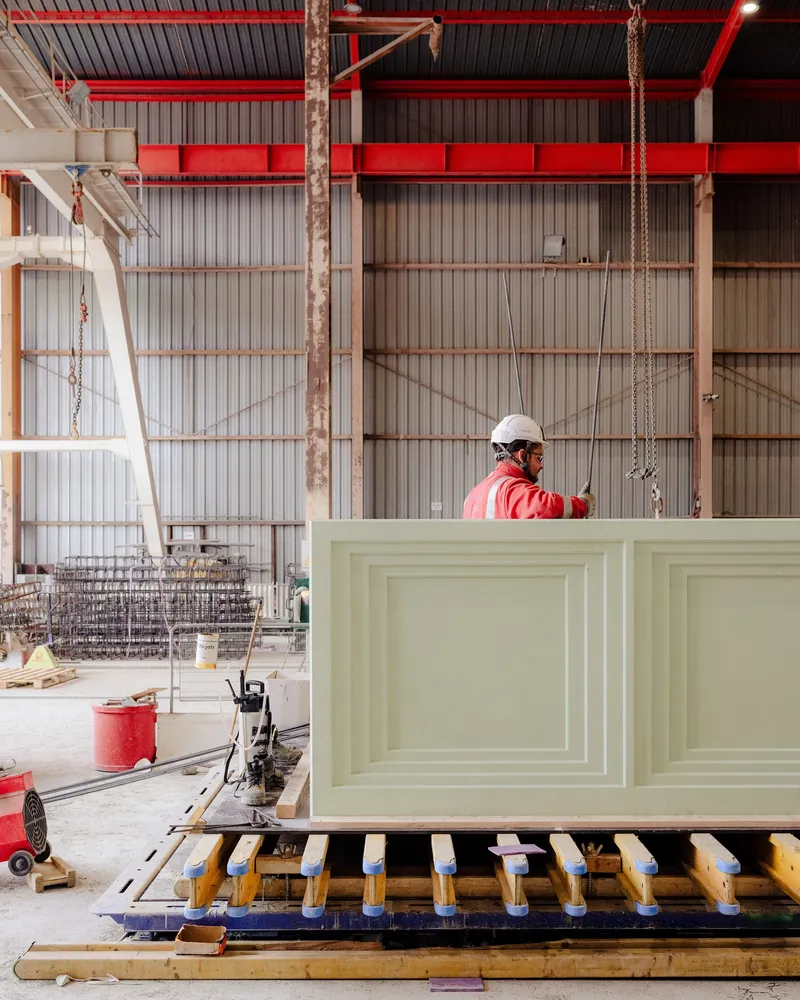
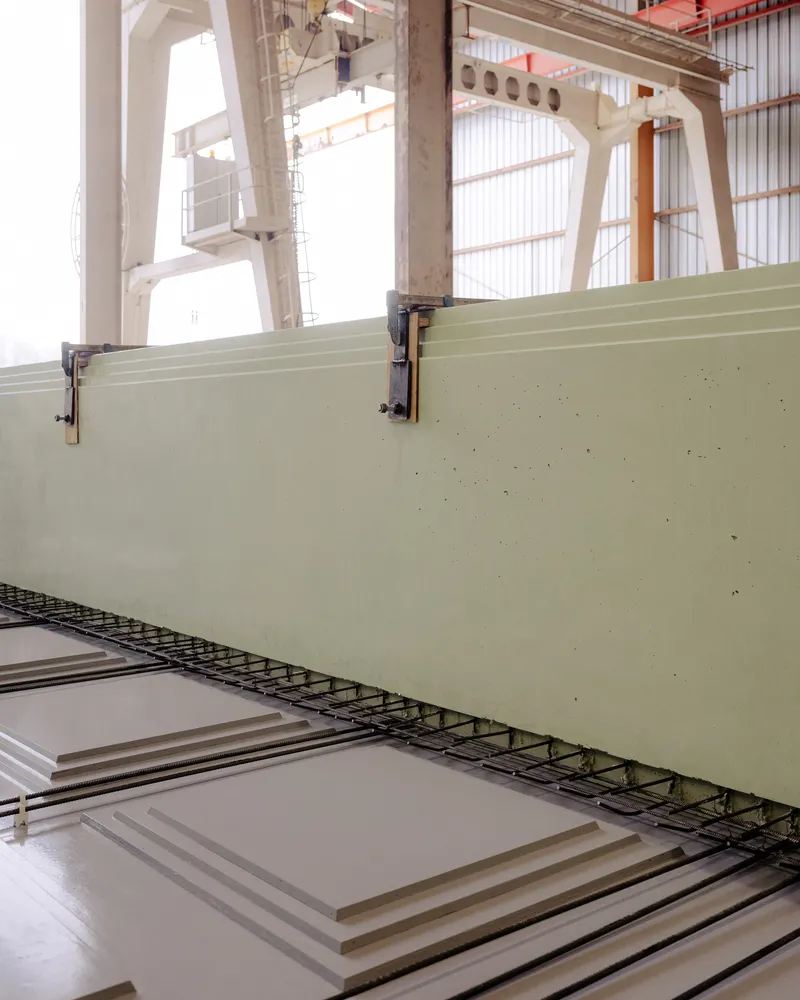
Despite strict budgetary boundaries, Oatmeal Studio turned constraints into creativity. A standard wall formwork system was reimagined to include reusable plywood “punches,” creating delicate, modular reliefs reminiscent of the Art Deco bridges in neighboring Pont-de-Veyle Park.
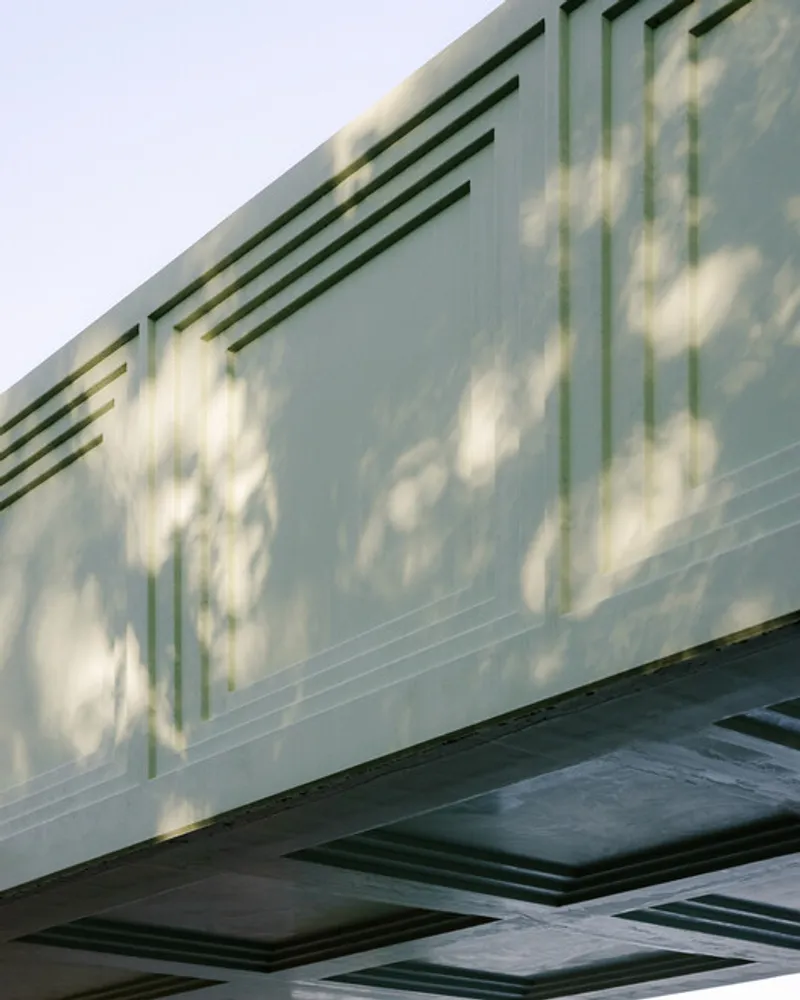
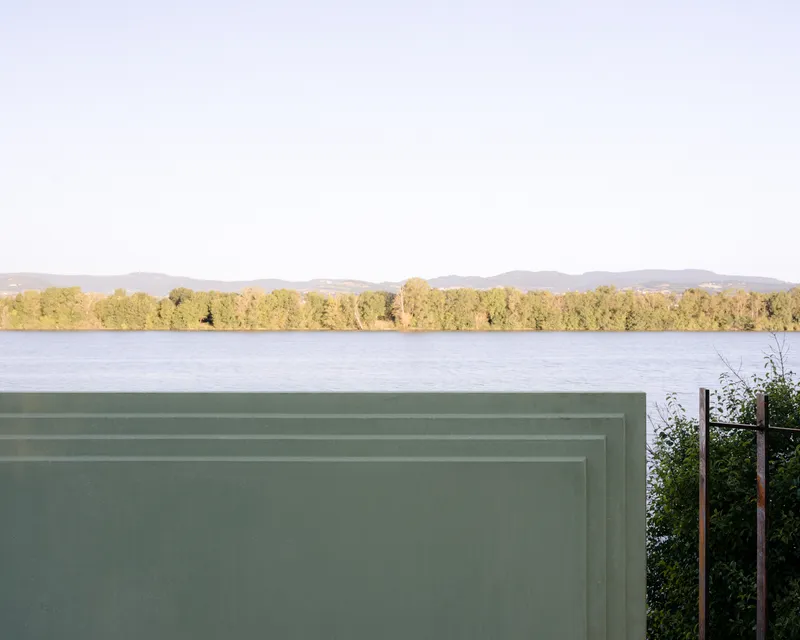
This subtle ornamentation pays tribute to the hand-crafted legacy of regional artisanship while adding a tactile dimension to an otherwise minimal structure. The design reflects how constraint can foster ingenuity—resulting in an object deeply rooted in its cultural and aesthetic landscape.
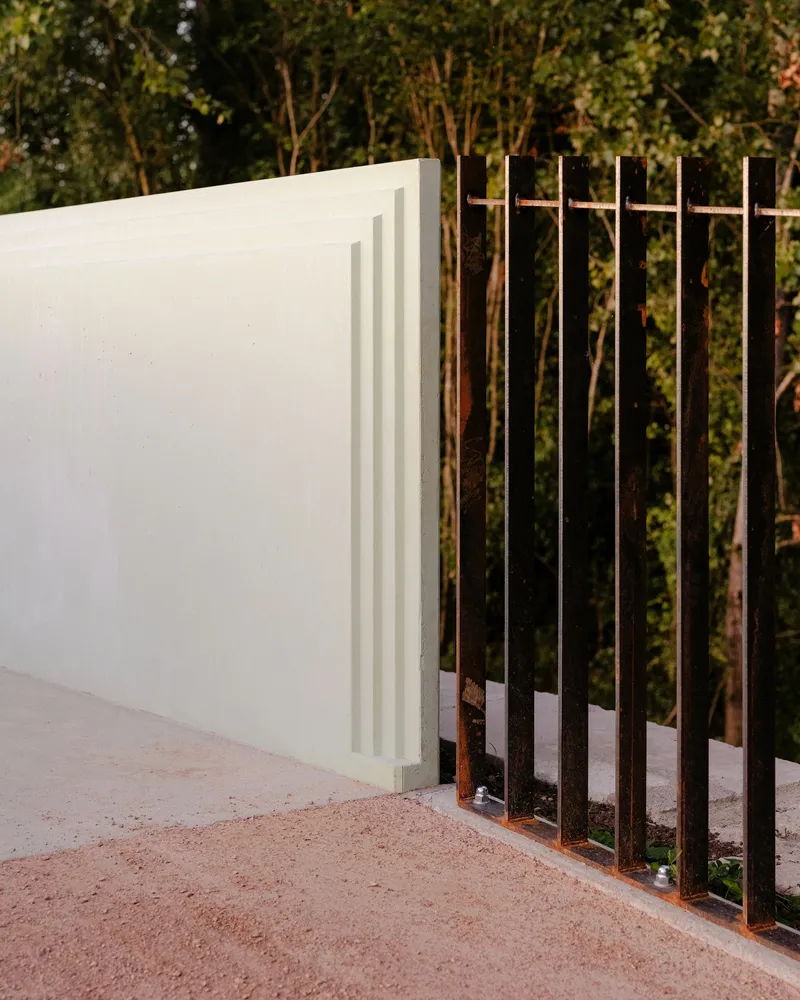
Detailing and Design Continuity
The handrail design extends the bridge’s thoughtful precision. Curving seamlessly at the ends, it connects with vertical weathering steel guardrails that continue the linear rhythm of the Saône riverside promenade. This gesture links the bridge visually and physically to the château parkand beyond, ensuring a continuous and cohesive public journey.
Every curve and joint reinforces the idea of architectural continuity through material honesty. The steel’s patina, the concrete’s texture, and the water’s reflection together form a composition that changes with light, season, and movement.

Material Efficiency and Durability
Through parametric modeling, the architects and engineers optimized the UHPC structure’s geometry, reducing wall thicknesses to as little as 3 centimeters in key areas. This hybrid design process—merging digital precision with handcrafted understanding—allowed maximum efficiency with minimal material use.
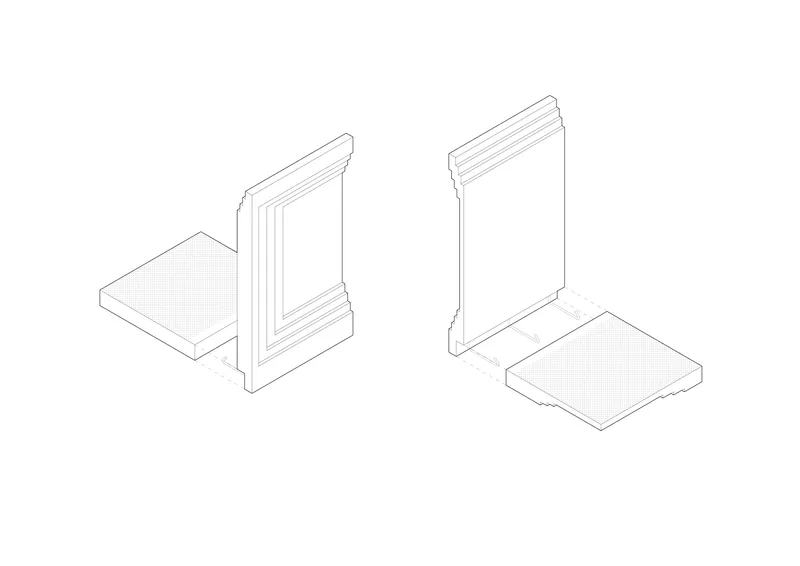
Importantly, the bridge’s monolithic UHPC shell eliminates the need for traditional secondary elements such as waterproof membranes or decking. The seamless form resists weathering, flooding, and erosion, ensuring exceptional longevity with nearly zero maintenance—a model of sustainable infrastructure for flood-prone rural landscapes.
A Contemporary Icon for Cormoranche-sur-Saône
The Bois Canal Footbridge captures the quiet ambition of Oatmeal Studio’s architecture: a design language that is contextual yet forward-looking, technical yet deeply human. By bridging history and modernity, it demonstrates how innovation can enrich heritage rather than replace it.
Against the backdrop of the Saône River, the bridge stands as both infrastructure and experience—a place for movement and contemplation, engineering and emotion.

All the photographs are works of François Baudry


Popular Articles
Popular articles from the community


Architekt Andreas Gruber Scatters 23 Dark Timber Chalets Across a South Tyrolean Forest Edge
In Molini di Tures, Amonti Chalets breaks a resort into a hamlet of gabled timber houses, with parking, storage and services pushed into the slope.

David Macias Steps a Doorless Stone and Plaster House Down a Tropical Colombian Hillside
In the humid hills of Colombia, Threshold House replaces the front door with an open void and terraces its 850 m² down the slope instead of fighting it.

Jaramillo Van Sluys Arquitectura and Urbanismo Turn a Demolished Registry Lot in Quito into an Orchard Plaza
In Quito's Centro Histórico, a 2,800 m² plaza exposes the San Agustín convent wall and redraws its lost Augustinian orchard in volcanic stone.

GROUP A Strips a 1969 Rotterdam Harbor Headquarters to Its Frame and Wraps It in Timber Louvers
In Rotterdam's M4H harbor district, Ferro Offices reuses a 1969 frame, adds one timber storey and reaches BREEAM-NL Outstanding.

Similar Reads
You might also enjoy these articles


Hodi-Mandai Geram
Project Function: Preservation and revitalization of the Intangible heritage and socio-spatial identity of the Hodi by Housing, Cultural Memory Center, Sacred Grove, landscape, local tourism economy


Olio Towers: A Mid-Rise for Performers That Fuses Housing, Rehearsal, and Stage
Located blocks from Houston's Theater District, this modular tower stacks living units around a central performance atrium.

Oasis: Modular Green Housing Carved into Dhaka's Urban Fabric
A shortlisted Plugin Housing entry reclaims unauthorized settlements in Dhaka with stepped concrete volumes, green roofs, and ventilation-driven design.

Black Hole: A Floating Megastructure for the Post-Physical Era
Emiliano Mazzarotto envisions a spherical, self-scaling arena where e-sports, digital hotels, and holographic stadiums replace traditional public space.

Explore Cycling Bridge Competitions
Discover active competitions in this discipline

Challenge to reimagine the Iron Throne

Photograph architecture without architects

Illustrate the lost glory of Angkor Wat - Render Challenge

Design challenge to reuse E-waste
Comments (0)
Please login or sign up to add comments
No comments yet. Be the first to comment!