

Bonlad Residence: Modern Residential Architecture by Mohat Office in Ilam, Iran
Bonlad Residence by Mohat Office in Ilam features innovative semi-open spaces, family-focused design, brick detailing, and sustainable, visually private modern architecture.


Contextual Design Meets Modern Living
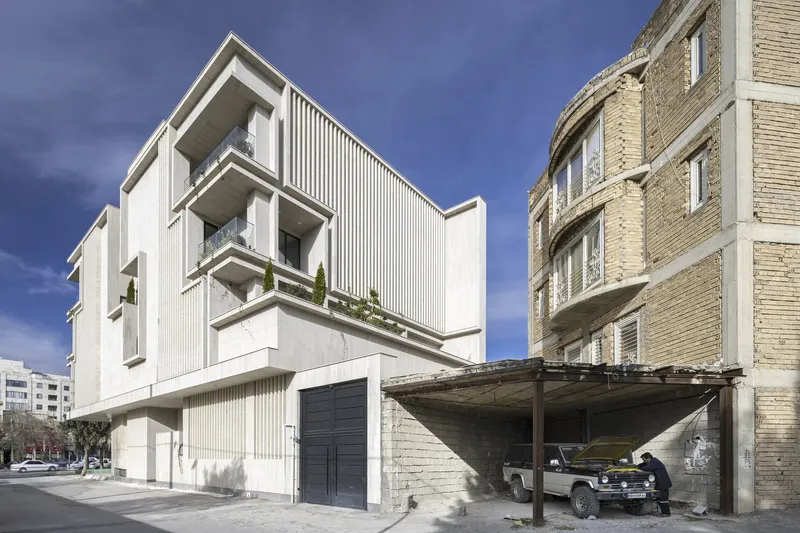
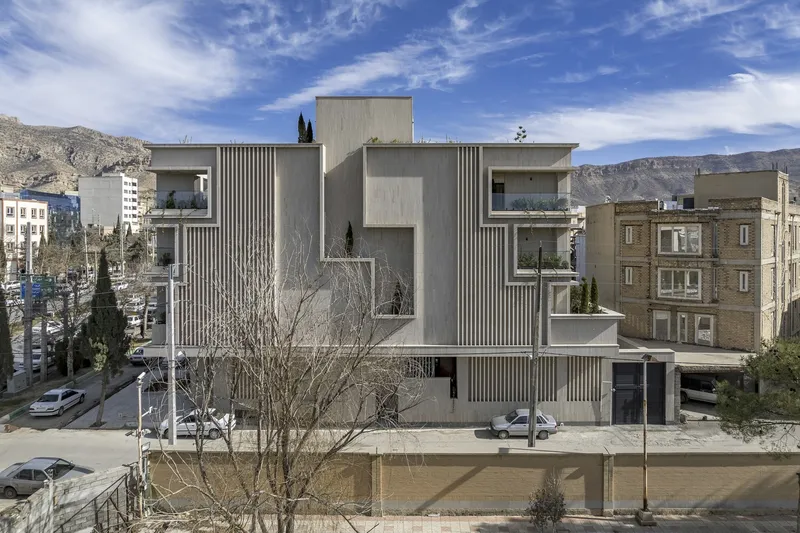
The Bonlad Residence, designed by Mohat Office, stands as a benchmark in contemporary residential architecture in Ilam, Iran. Facing the challenge of integrating a large-scale project within a western neighborhood constrained by urban regulations, the architects focused on resolving the contextual limitations while addressing the needs of a multi-generational family. One of the major challenges was the prohibition of direct sightlines toward a government building, combined with the prevalence of low-quality, fully covered lots that offer almost no semi-open or livable space.
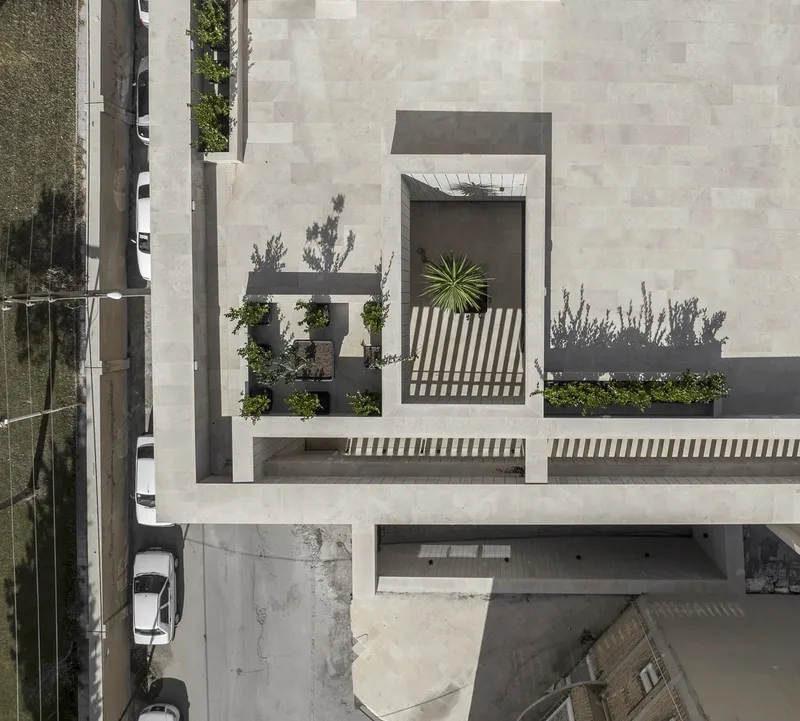
Mohat Office approached this challenge with a critical lens, rejecting conventional dense apartment structures and instead envisioning a residence that embraces active semi-open spaces. Central to the design is the innovative concept of a “Spatial Border,” which transforms the idea of confined urban living into an expansive, flexible environment.
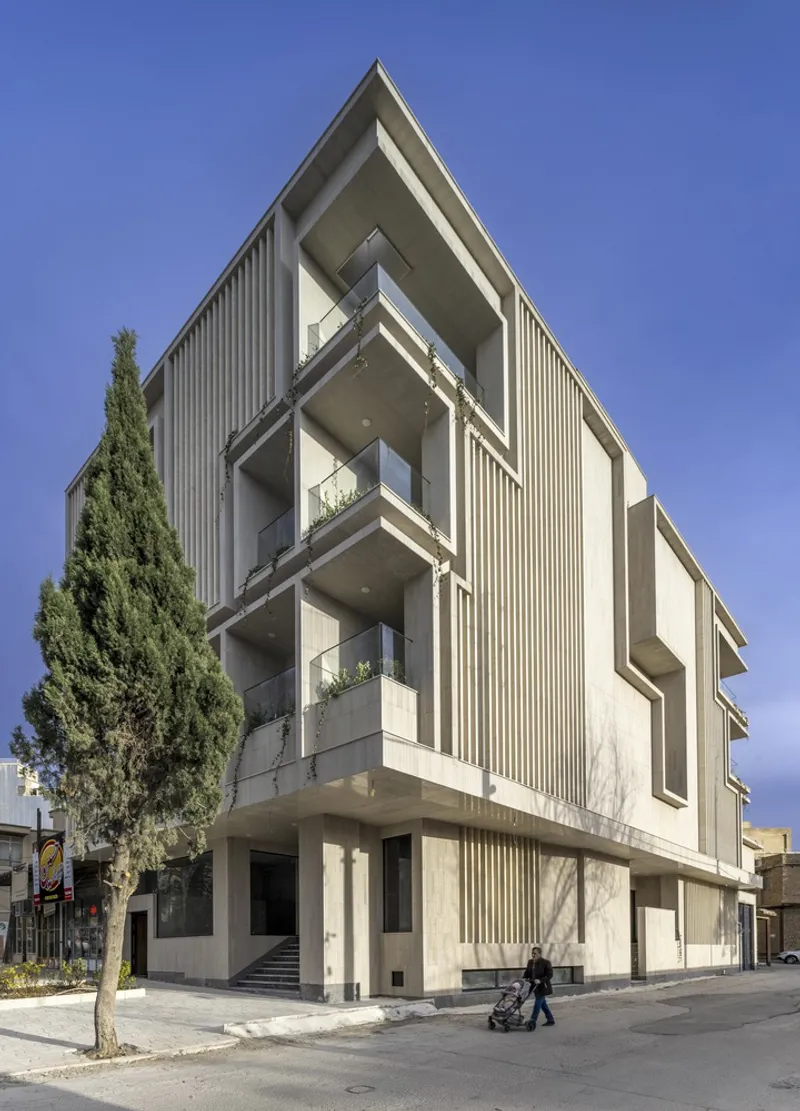
Spatial Organization & Family-Centered Design
The residence follows a dual and contradictory spatial logic – discrete versus continuous – carefully balancing contextual constraints, client needs, and economic efficiency.
- Basement & Ground Floors: Designed for commercial and office use, these levels feature dense, directional arrangements with independent access points and spatial separation.
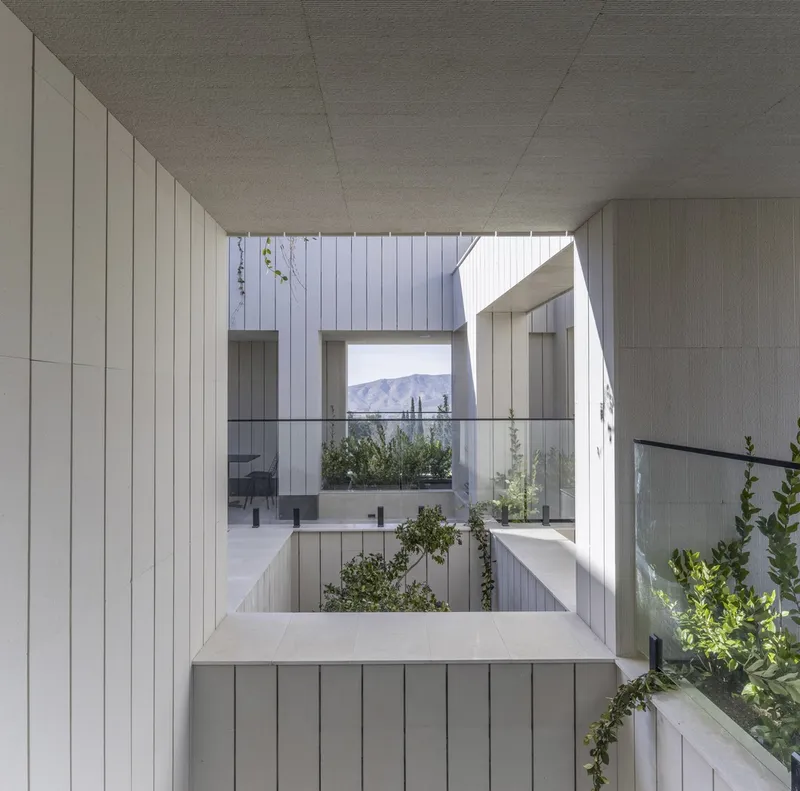
- Upper Floors: Intended for two brothers to live independently, these levels foster horizontal and vertical continuity, linking separate apartments through voids that reveal the building’s familial core.
- Roof Level: Open to the sky, the rooftop creates shared natural spaces for both units while reinforcing the building’s pixel-like role within the urban fabric, symbolizing a forward-thinking vision for city living.
Innovative Semi-Open Spaces & Hedonistic Sustainability
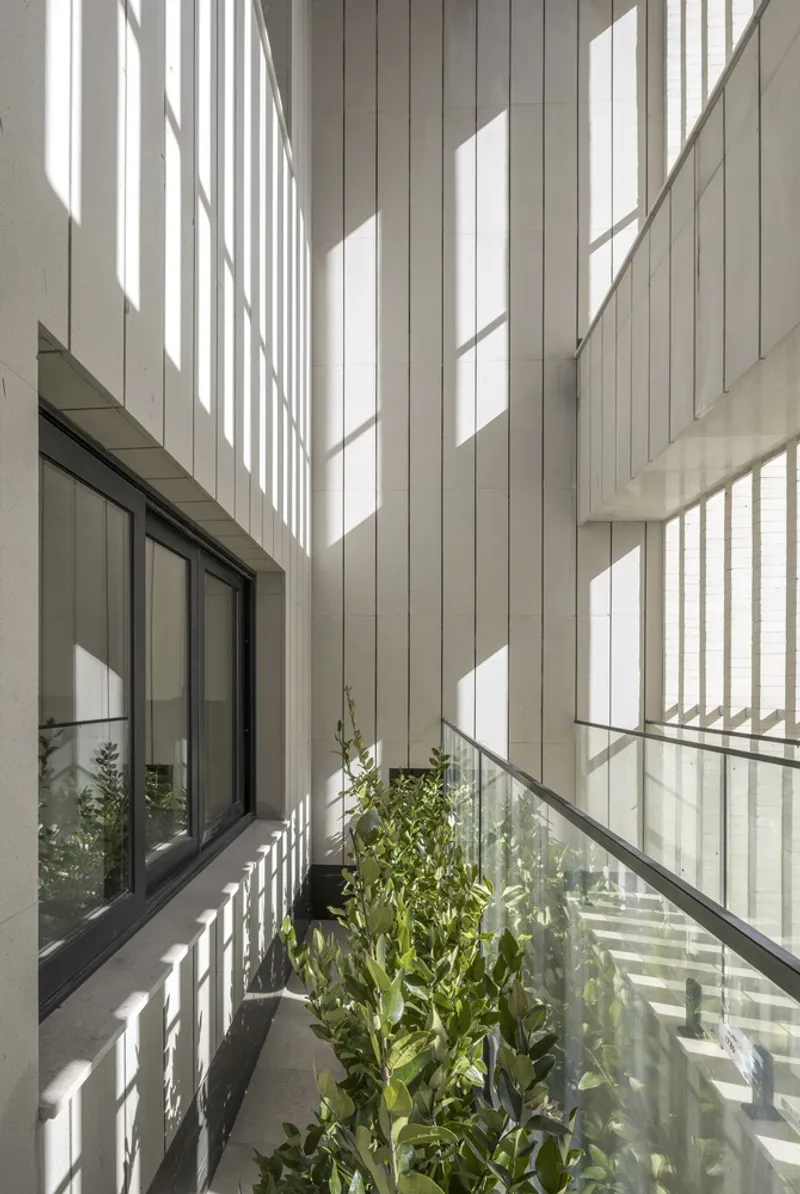
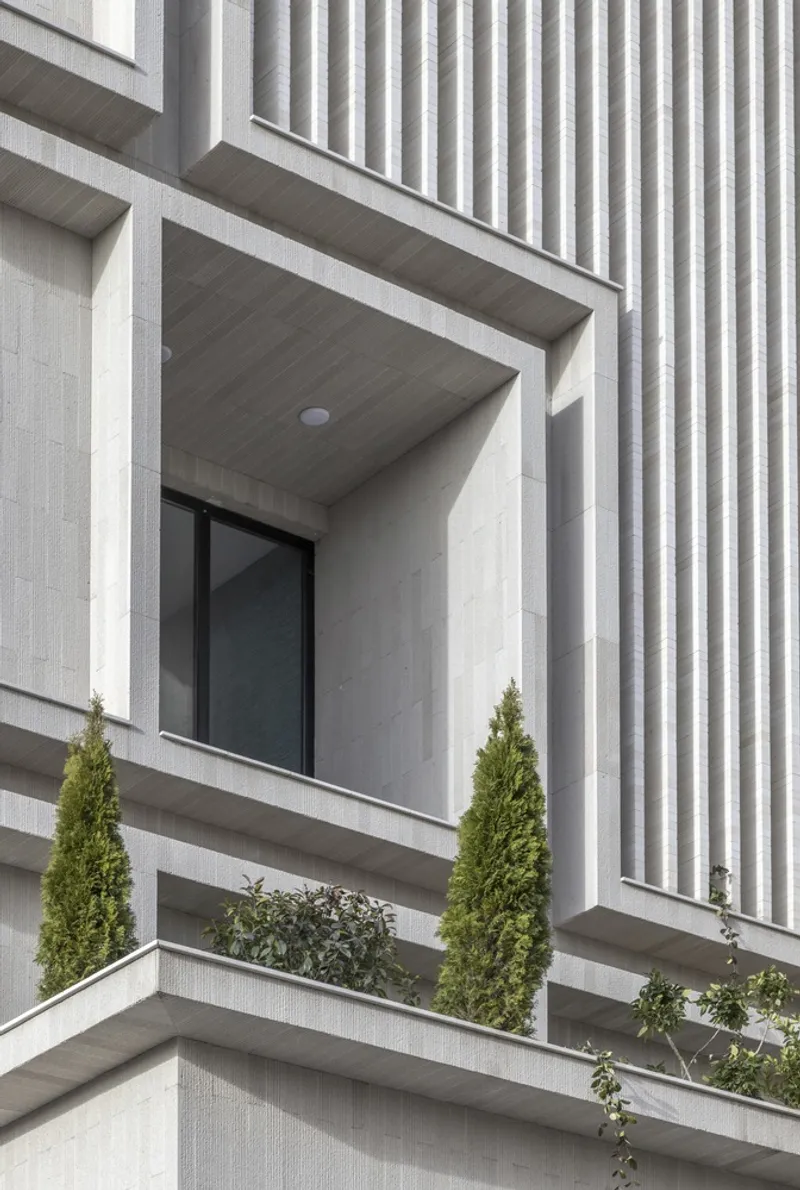
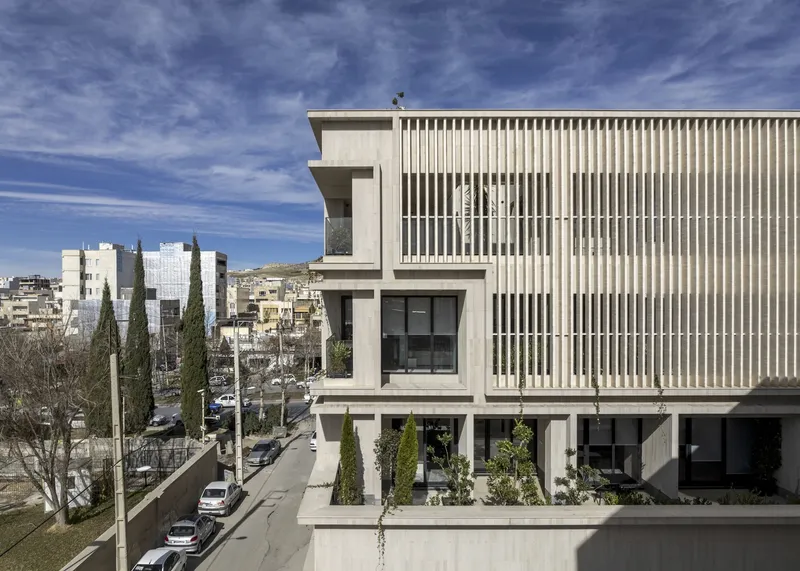
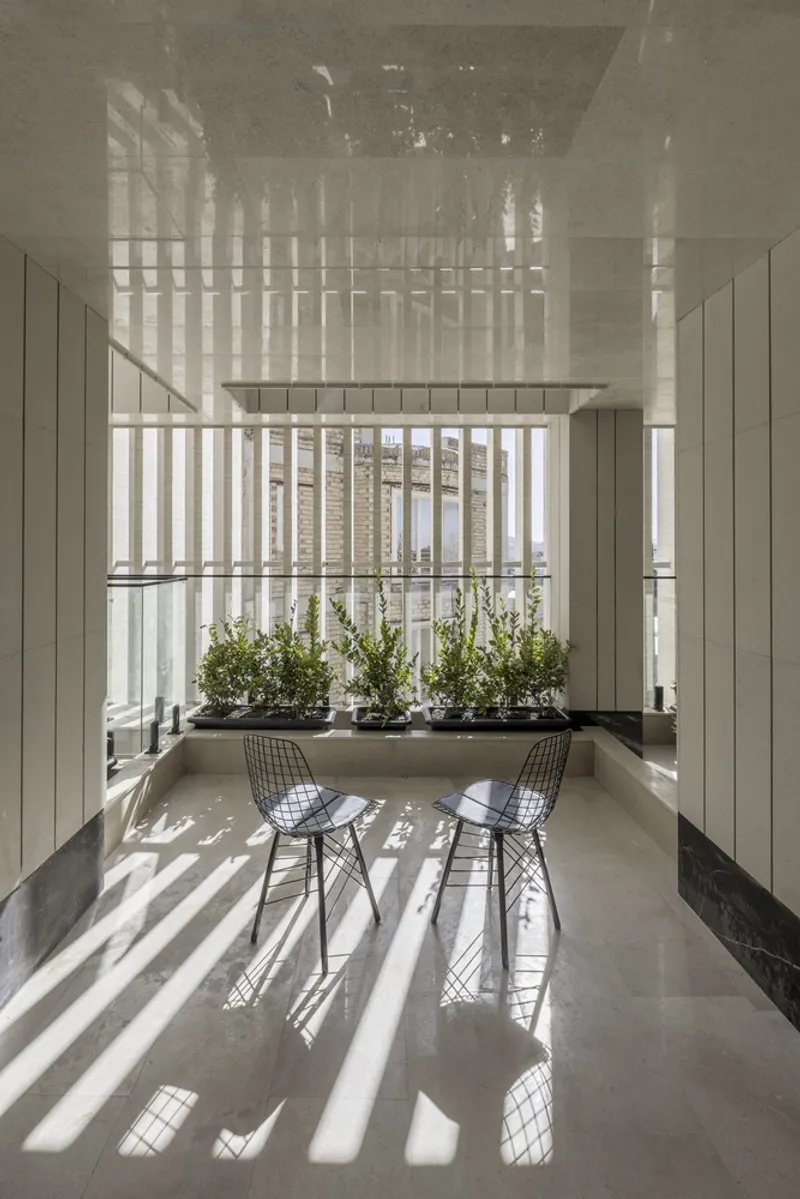
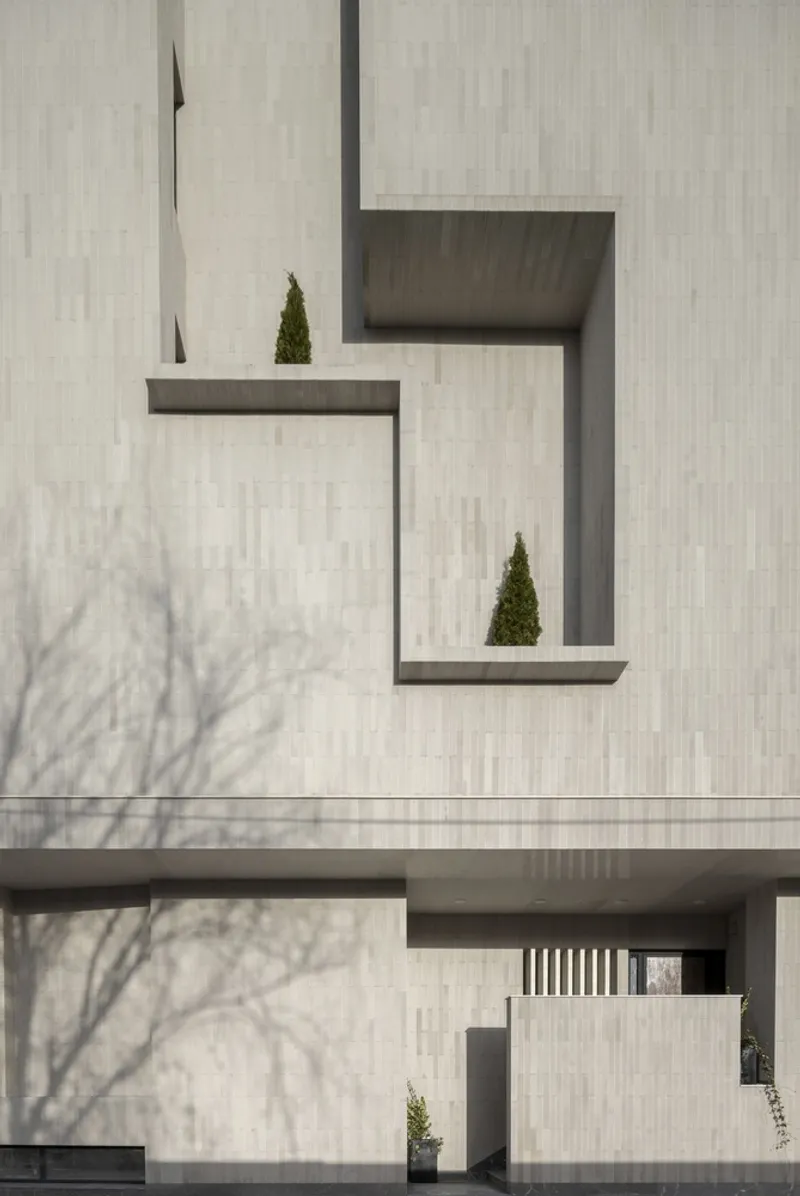
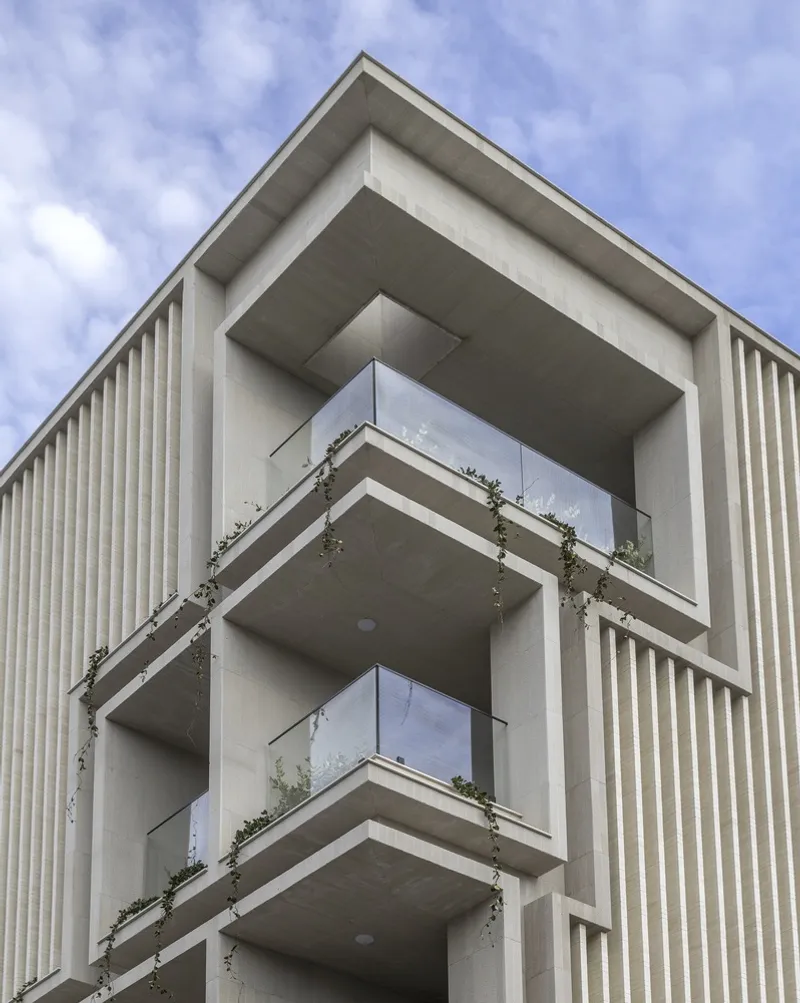
The project emphasizes green terraces and semi-open courtyards, achieved by varying terrace scales and dimensions up to 7 meters deep. Vertical porosities in the peripheral grid create private, non-centralized green spaces around the residential core. Inspired by Persian architectural traditions, these semi-open areas establish a spatial dialogue between interior and exterior, encouraging active apartment life and embodying hedonistic sustainability – a design approach that blends comfort, pleasure, and environmental consciousness.
Additionally, vertical louvres complement the large windows, ensuring visual privacy while fostering social interaction, a critical requirement in Ilam’s urban context.
Tectonic Precision & Material Innovation
Beyond spatial and contextual solutions, Bonlad Residence showcases meticulous attention to materiality and detailing:
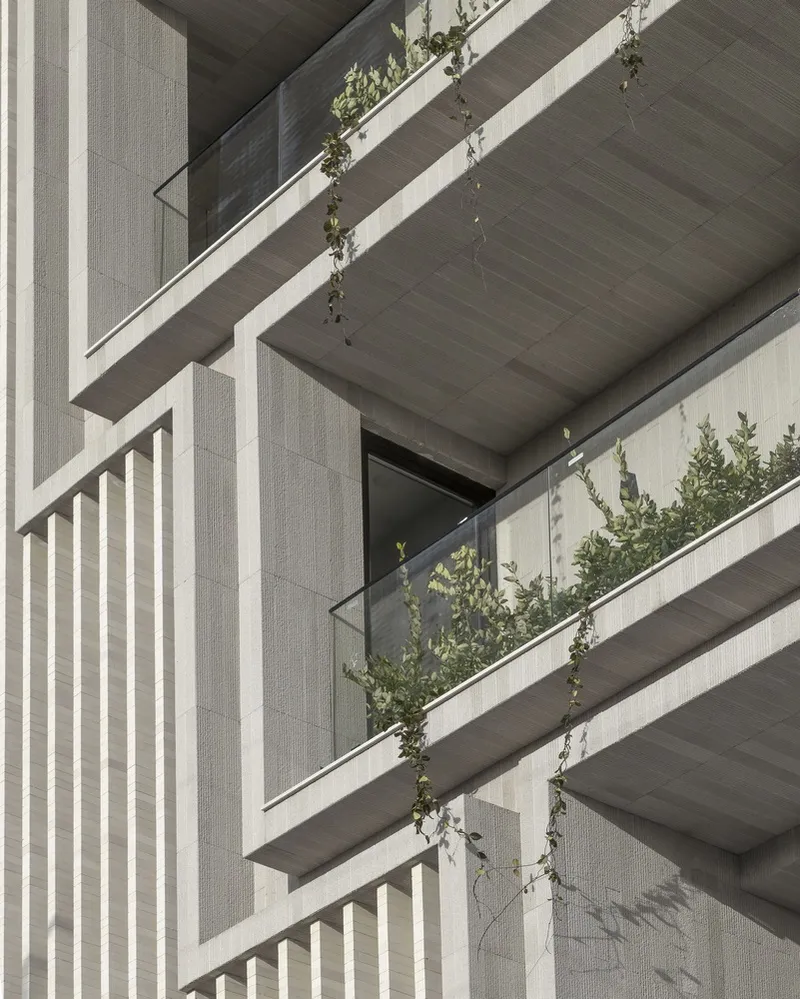
- Brick Facade & Vertical Louvres: The precise use of drilling tools and grooved brick patterns creates material duality and perceptual depth, encouraging tactile interaction.
- Visual & Tactile Experience: The design invites residents and visitors to engage with the building’s surfaces, enhancing both visual perception and sensory experience.
This combination of innovative architecture, sensitive urban integration, and material sophistication makes Bonlad Residence a leading example of modern residential design in Iran.
Features:
- Large semi-open terraces with integrated greenery
- Horizontal-vertical continuity connecting independent living units
- Dual-purpose ground and basement floors for commercial and residential use
- Vertical louvres for privacy and visual comfort
- Elegant brickwork with precise tactile detailing
- Rooftop connectivity offering natural light and shared outdoor space
All photographs are works of
Parham Taghioff


Popular Articles
Popular articles from the community


Architekt Andreas Gruber Scatters 23 Dark Timber Chalets Across a South Tyrolean Forest Edge
In Molini di Tures, Amonti Chalets breaks a resort into a hamlet of gabled timber houses, with parking, storage and services pushed into the slope.

GROUP A Strips a 1969 Rotterdam Harbor Headquarters to Its Frame and Wraps It in Timber Louvers
In Rotterdam's M4H harbor district, Ferro Offices reuses a 1969 frame, adds one timber storey and reaches BREEAM-NL Outstanding.

Juan García Correa, John González and Claudia Rueda Sink a Circular Amphitheater into a Manizales Engineering Building
On the La Nubia campus in Manizales, Colombia, the S1 Building folds labs and offices into a hillside of ramped lawns that double as a campus route.

LT2A and OPEN Architectes Thread a Brick and Glass High School Through a Wooded Belgian Campus
In Braine-l'Alleud, a 3,000 m² wing for Collège Cardinal Mercier pairs pale brick with a glazed colonnade, deferring to a small chapel and a dense wood.

Similar Reads
You might also enjoy these articles


Hodi-Mandai Geram
Project Function: Preservation and revitalization of the Intangible heritage and socio-spatial identity of the Hodi by Housing, Cultural Memory Center, Sacred Grove, landscape, local tourism economy


Olio Towers: A Mid-Rise for Performers That Fuses Housing, Rehearsal, and Stage
Located blocks from Houston's Theater District, this modular tower stacks living units around a central performance atrium.

Oasis: Modular Green Housing Carved into Dhaka's Urban Fabric
A shortlisted Plugin Housing entry reclaims unauthorized settlements in Dhaka with stepped concrete volumes, green roofs, and ventilation-driven design.

Black Hole: A Floating Megastructure for the Post-Physical Era
Emiliano Mazzarotto envisions a spherical, self-scaling arena where e-sports, digital hotels, and holographic stadiums replace traditional public space.

Explore Architecture Competitions
Discover active competitions in this discipline

Challenge to reimagine the Iron Throne

Photograph architecture without architects

Illustrate the lost glory of Angkor Wat - Render Challenge

Design challenge to reuse E-waste
Comments (0)
Please login or sign up to add comments
No comments yet. Be the first to comment!