

Borgloon Fruit Station: Revitalizing Belgium’s Historic Railway into a Cultural Gateway by Burolandschap
Borgloon Fruit Station transforms a historic railway into a cultural gateway, blending heritage, landscape design, and community along Belgium’s Fruit Route.


The Borgloon Fruit Station, designed by Burolandschap in collaboration with A2o architects, is a transformative public space project in Tongeren-Borgloon, Belgium. Completed in 2024, this redevelopment breathes new life into the historic railway site, reimagining it as a cultural hub and gateway to the Fruit Route, a cycling and walking path that celebrates the rich heritage of Belgium’s fruit industry.
Historical Background: From Railway to Fruit Route
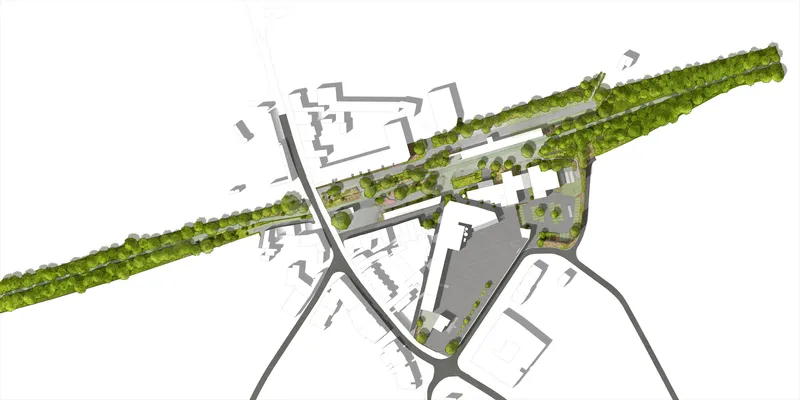
The origins of the Fruit Route trace back to railway line 23, built in 1879 to transport fruit and sugar beets between Sint-Truiden and Tongeren. After the dismantling of the tracks in 1971, the line was repurposed into a cycling route that today links Sint-Truiden, Borgloon, and Tongeren through a scenic green corridor.
For decades, the former station area served only as a functional storage site for city services. Recognizing its cultural and historical importance, Borgloon began redevelopment efforts in 2007, envisioning the site as both a heritage landmark and a recreational hub for the community.
Transformation into a Cultural Public Space
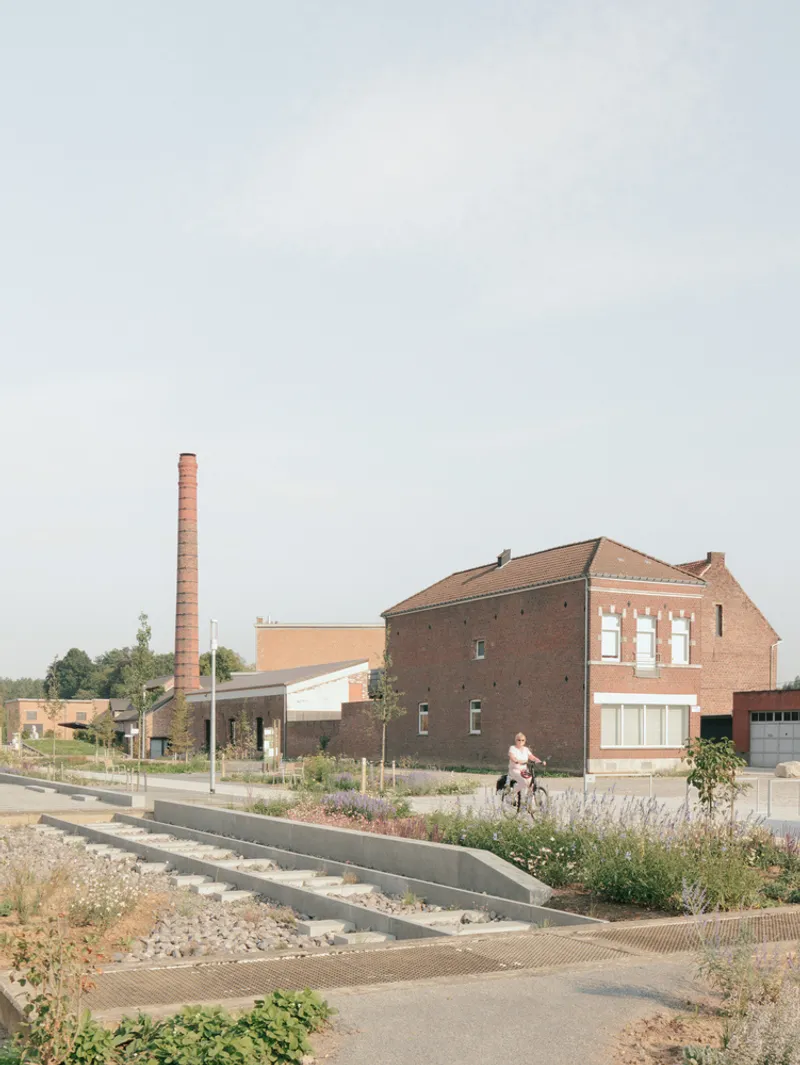
The renewed Borgloon Fruit Station stands as a vibrant meeting place, connecting visitors with the story of fruit cultivation and rail history. Designed with a mix of historical preservation and modern interventions, the station square reflects the legacy of the region while inviting contemporary use.
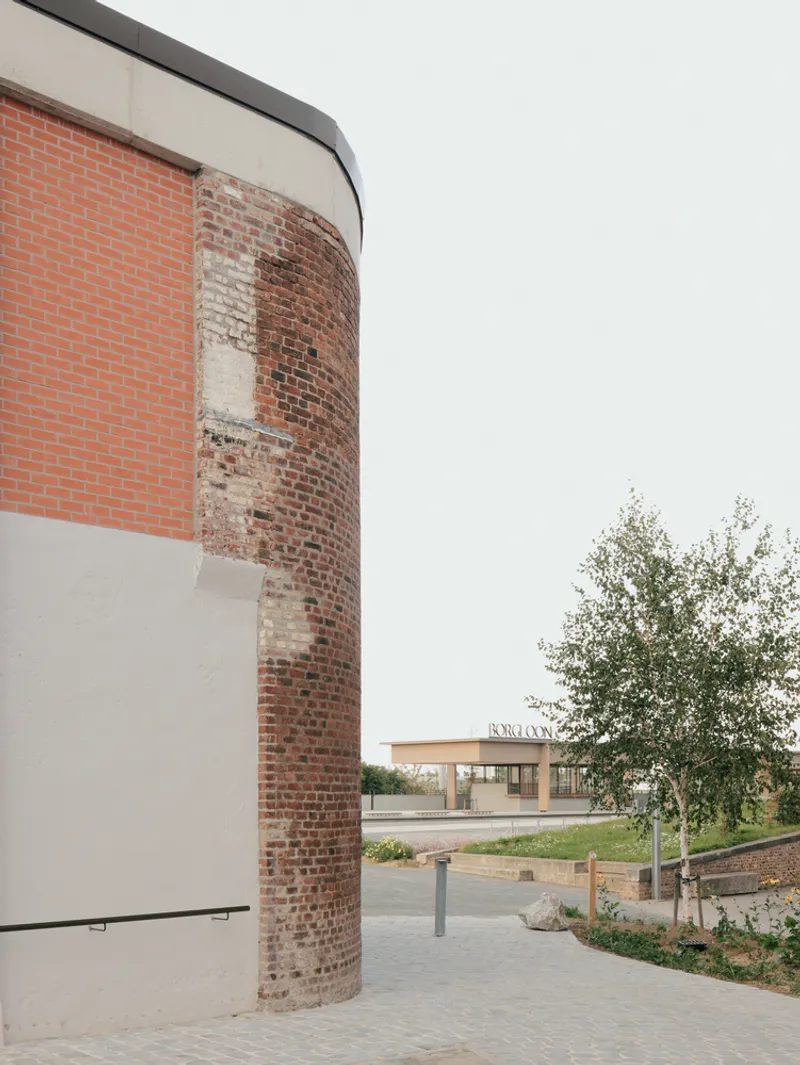
A newly designed pavilion by A2o architects recalls the silhouette of the old station building. Its elongated form incorporates covered, semi-covered, and open zones, resembling platforms where travelers once gathered. This versatile structure houses a reception area, a bicycle repair station, resting areas, and adaptable event spaces.
Landscape and Planting Concept
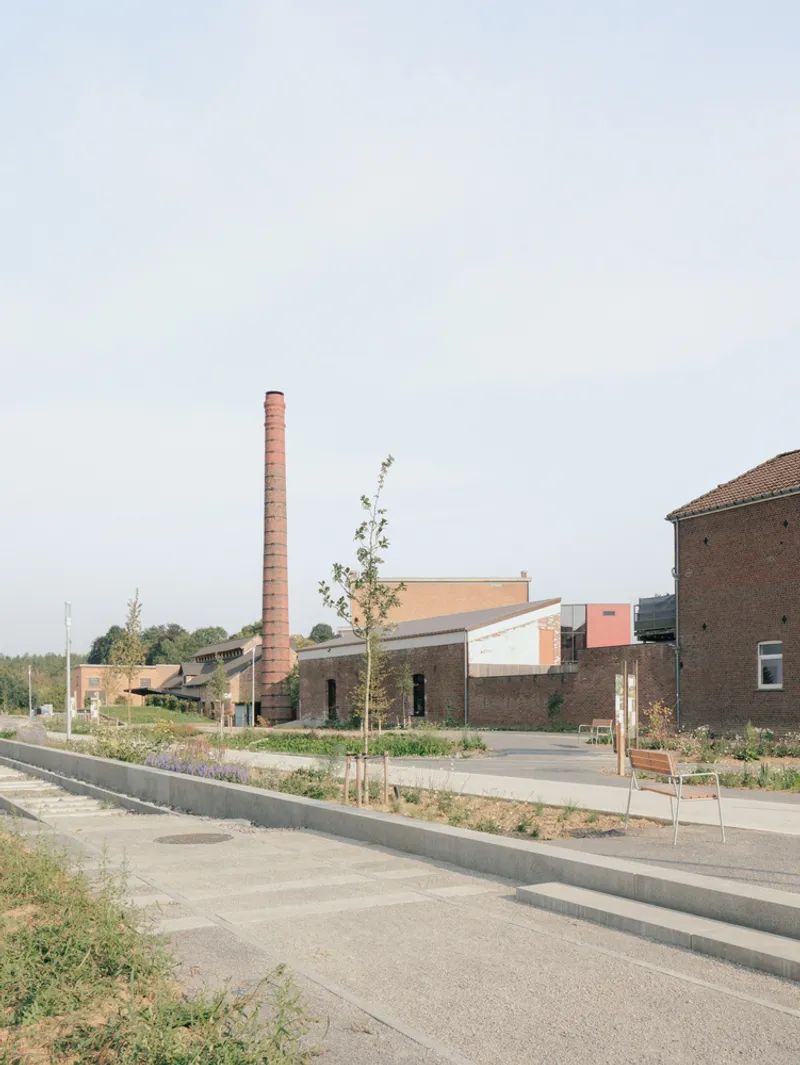
The station’s unique planting strategy celebrates the biodiversity of the Haspengouw region. Native perennials, biodiverse herbs, shrubs, wild roses, and fruit-bearing trees are carefully layered to evoke the region’s agricultural traditions. Visitors are immersed in a lush environment that simultaneously honors the past and promotes ecological sustainability.
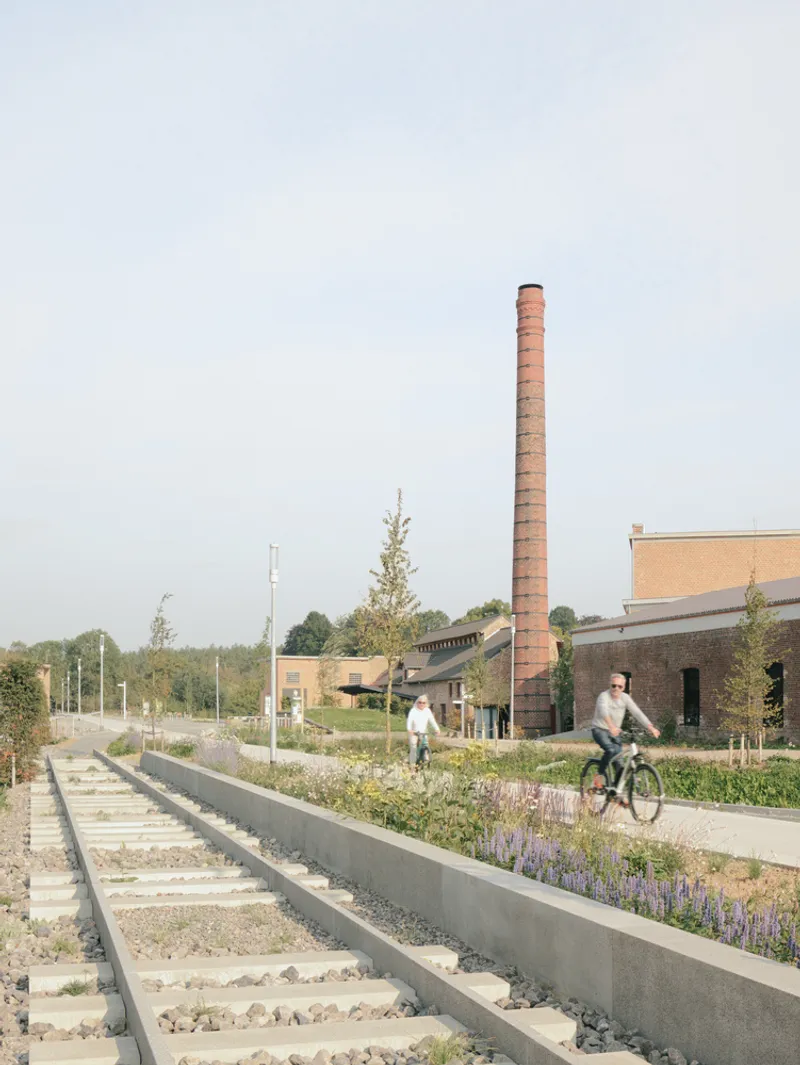
Original cobblestones have been reinstalled to preserve the authentic character of the square, while historic train tracks are both reinstated and reinterpreted. Some are set in their original alignment, while others are recast in modern concrete elements, creating modular linear patterns across the site—a subtle nod to the railway’s enduring presence.
Materiality and Heritage References
Local limestone, historically used throughout the site’s heyday, forms the foundation of the paving and prefabricated elements. Loose stones of varying sizes are incorporated in designated zones, encouraging the growth of flora and fauna and enriching biodiversity. This material-driven approach roots the station firmly in its geographical and cultural context.
A Gateway to the Fruit Route
The Borgloon Fruit Station is more than an architectural project—it is a symbolic threshold to the Fruit Route. From here, cyclists and walkers begin their journey into the rolling landscapes of Haspengouw, experiencing a dialogue between history, culture, and nature.
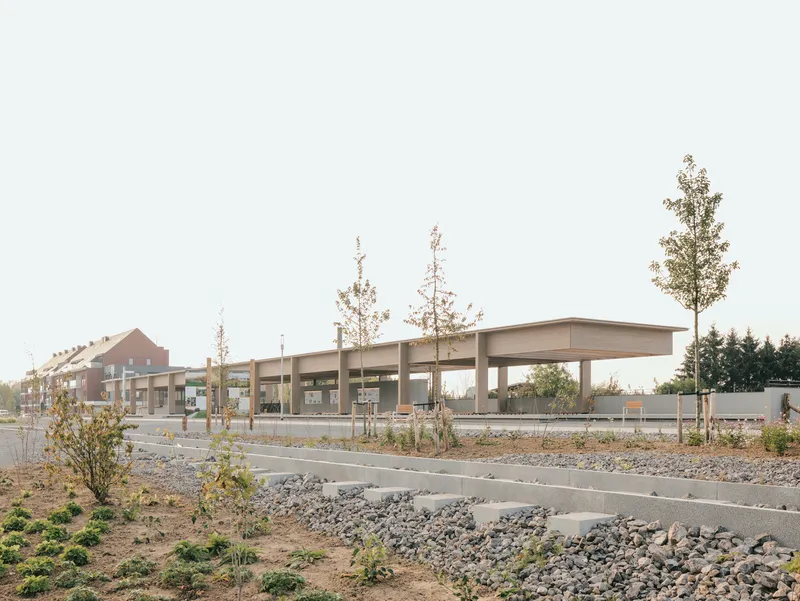
By transforming a disused railway station into a cultural public space, Burolandschap and A2o architects have created a living heritage site that bridges the past and future. The Borgloon Fruit Station is a celebration of Belgium’s fruit-growing legacy, a hub for sustainable tourism, and a timeless gateway into the landscapes of the Fruit Route.
All photographs are works of Pieter Rabijns


Popular Articles
Popular articles from the community


David Ortega Stacks a Two-Story Mexico City Penthouse Around a Steel Stair and a Pergola-Shaded Roof Terrace
In Colonia Roma, a 300 m² penthouse uses oak joinery, a planted steel stair and a slatted roof pergola to make a new-build apartment feel like a house.

Architekt Andreas Gruber Scatters 23 Dark Timber Chalets Across a South Tyrolean Forest Edge
In Molini di Tures, Amonti Chalets breaks a resort into a hamlet of gabled timber houses, with parking, storage and services pushed into the slope.

U.GA Architects Wraps an Oval Rooftop Pool in Curved Board-Formed Concrete on Busan's Jeollidan-gil
In Busan's Jeonpo-dong, a 454 m² mixed-use block stacks a neighborhood facility, guest rooms and an oval rooftop pool inside spiraling concrete walls.

Jaramillo Van Sluys Arquitectura and Urbanismo Turn a Demolished Registry Lot in Quito into an Orchard Plaza
In Quito's Centro Histórico, a 2,800 m² plaza exposes the San Agustín convent wall and redraws its lost Augustinian orchard in volcanic stone.

Similar Reads
You might also enjoy these articles


Hodi-Mandai Geram
Project Function: Preservation and revitalization of the Intangible heritage and socio-spatial identity of the Hodi by Housing, Cultural Memory Center, Sacred Grove, landscape, local tourism economy


Olio Towers: A Mid-Rise for Performers That Fuses Housing, Rehearsal, and Stage
Located blocks from Houston's Theater District, this modular tower stacks living units around a central performance atrium.

Oasis: Modular Green Housing Carved into Dhaka's Urban Fabric
A shortlisted Plugin Housing entry reclaims unauthorized settlements in Dhaka with stepped concrete volumes, green roofs, and ventilation-driven design.

Black Hole: A Floating Megastructure for the Post-Physical Era
Emiliano Mazzarotto envisions a spherical, self-scaling arena where e-sports, digital hotels, and holographic stadiums replace traditional public space.

Explore Architecture Competitions
Discover active competitions in this discipline

Challenge to reimagine the Iron Throne

Photograph architecture without architects

Illustrate the lost glory of Angkor Wat - Render Challenge

Design challenge to reuse E-waste
Comments (0)
Please login or sign up to add comments
No comments yet. Be the first to comment!