
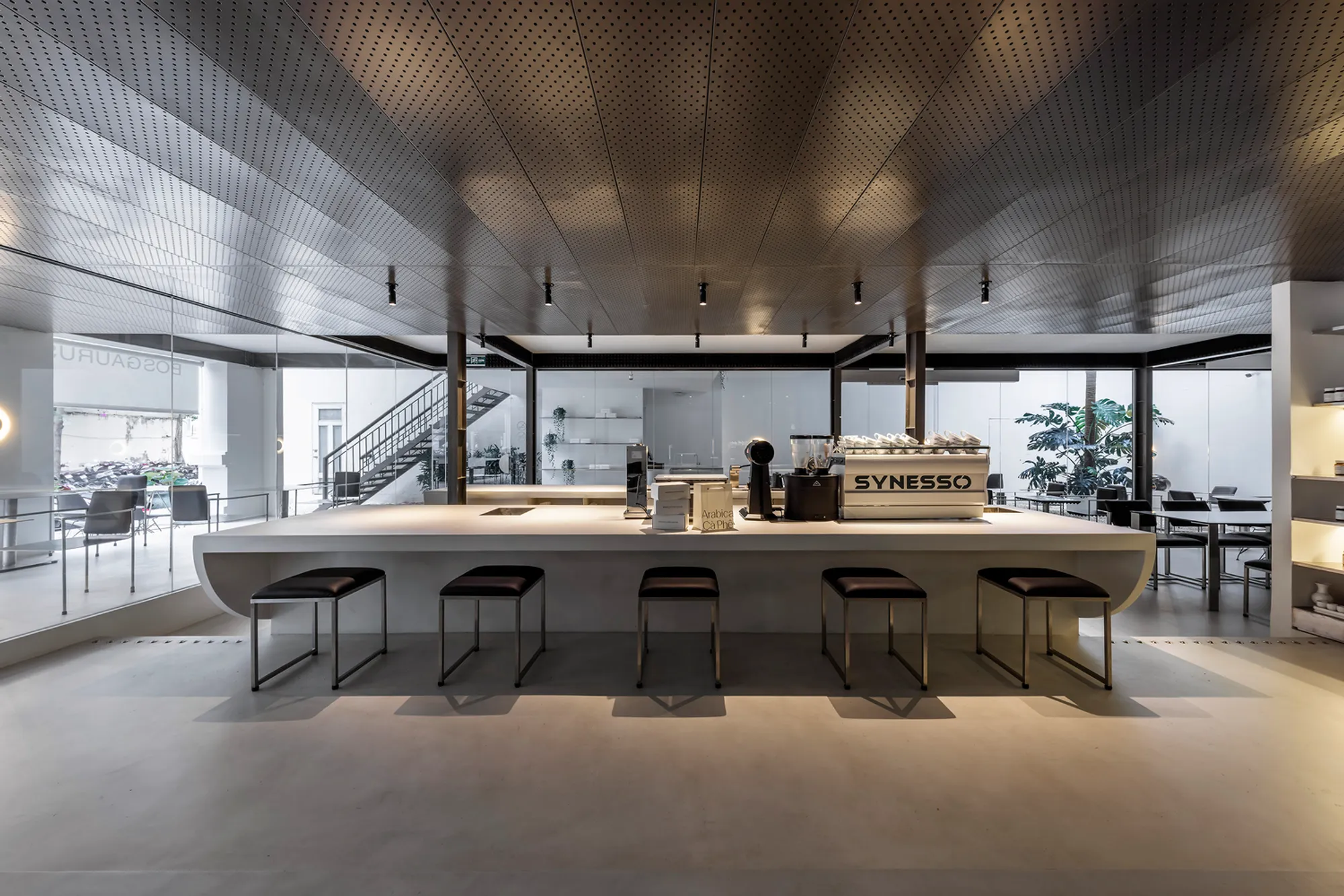
Bosgaurus Coffee Roasters by NU Architecture & Design: A Minimalist Stage for Vietnamese Coffee Craftsmanship
A minimalist café in Ho Chi Minh City, blending performance-inspired design, sustainability, and Vietnamese coffee culture by NU architecture.


Located in the heart of Ho Chi Minh City, Bosgaurus Coffee Roasters unveils its flagship store designed by NU architecture & design as a bold tribute to Vietnamese specialty coffee culture. Spanning 300 square meters, the space seamlessly blends minimalism, performance-inspired spatial planning, and sustainable material choices to create an immersive experience that celebrates the artistry of coffee-making.


A Cultural and Architectural Homage
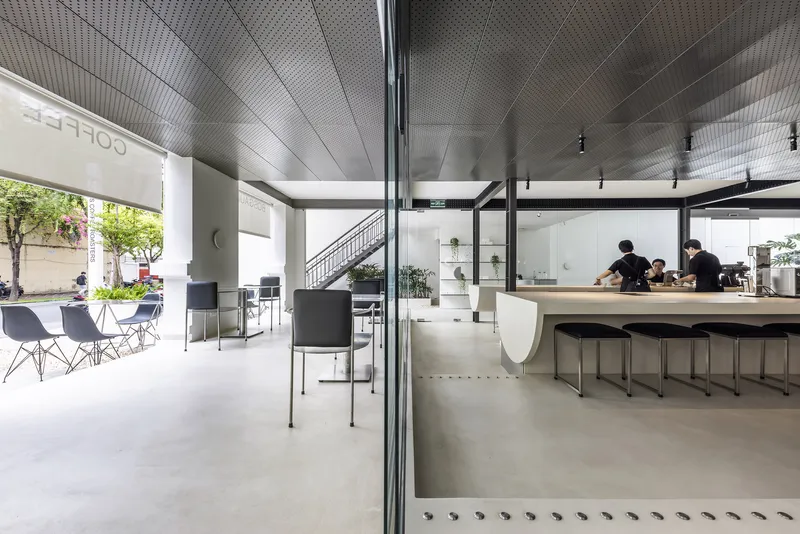
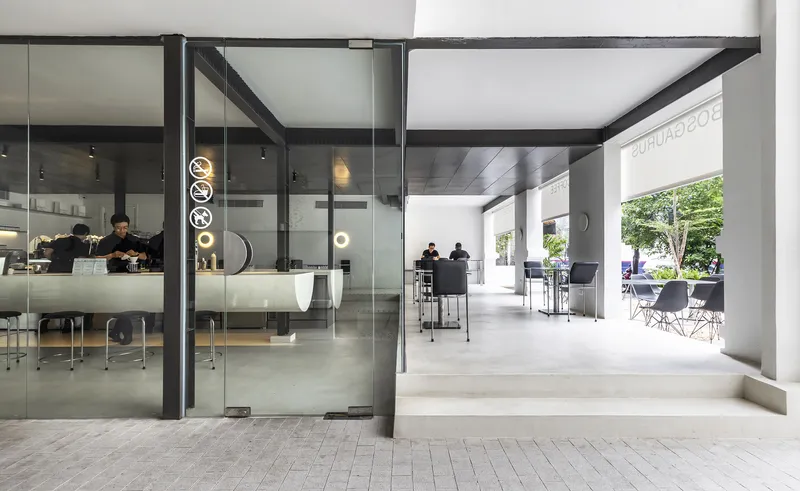
Rooted in the brand’s slogan, “Keeping dreams awake,” Bosgaurus Coffee Roasters continues to elevate Vietnamese coffee to a global standard. Their new space sits near the iconic Saigon Opera House, whose Art Deco architectural legacy played a pivotal role in shaping the design concept. Rather than imposing a new identity, the architects embraced the original façade, refurbishing it with neutral tones that reflect the operatic landmark’s grandeur and elegance.
This preservation strategy also speaks to the studio’s sensitivity to cultural context and urban continuity, giving the coffee shop an inviting and familiar street presence while subtly hinting at the extraordinary experience within.

Coffee as Performance: A Barista’s Stage
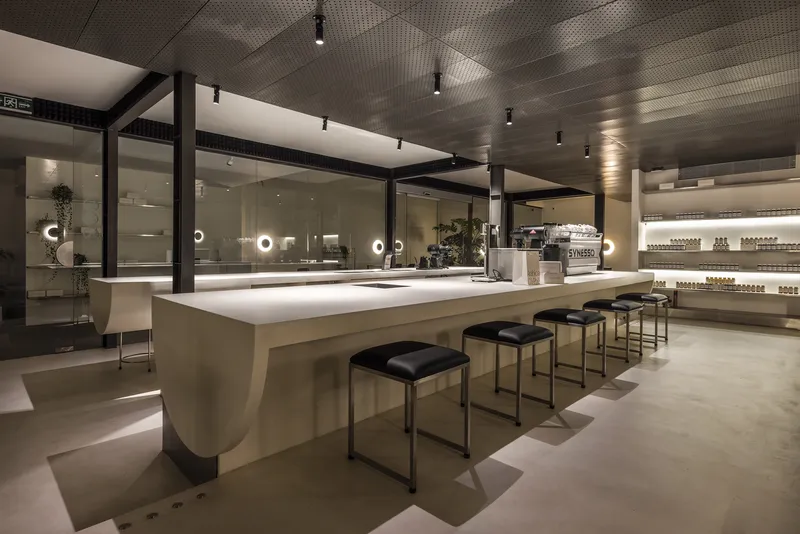
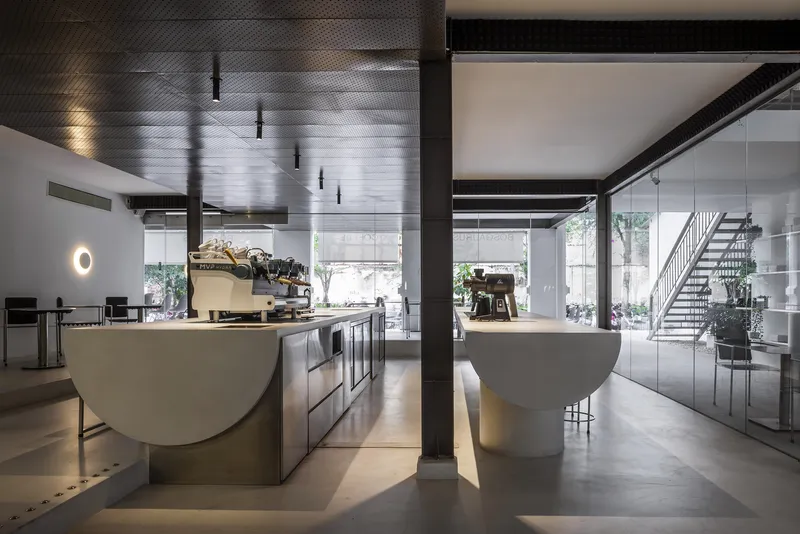
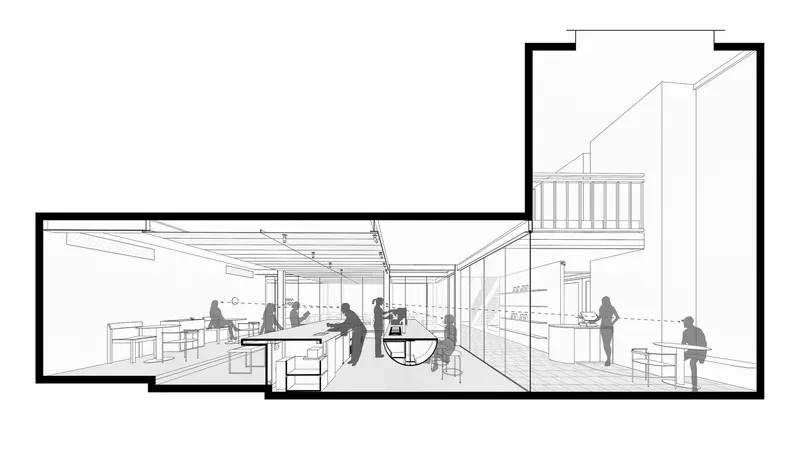
At the core of the design is a powerful metaphor—coffee as live performance. The entire café operates like a theatrical stage, where baristas are the performers and customers the audience. Spatial planning prioritizes visual transparency and interaction, with the central bar acting as the focal stage.
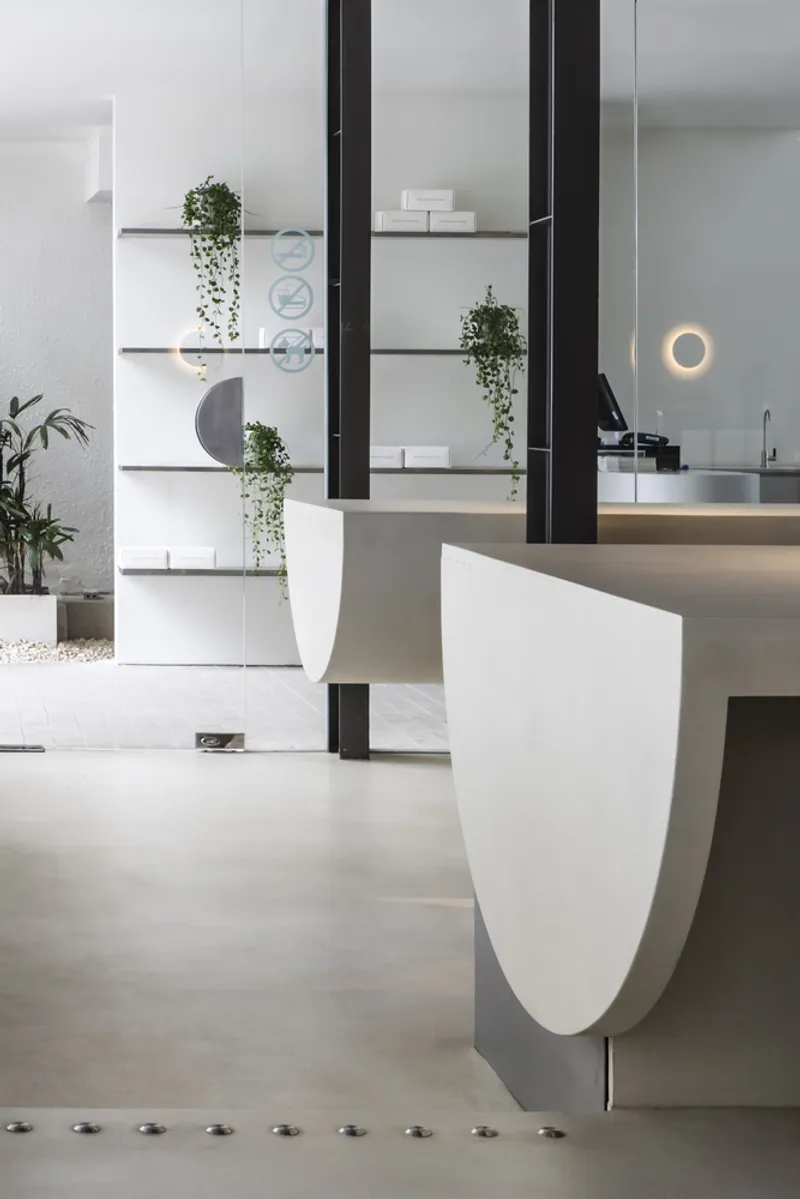
The layout features a two-part bar concept: a grounded, solid bar structure and the signature “fly bar,” which appears to float effortlessly, cantilevered from a singular concrete support weighing two tonnes. This engineered illusion enhances the performative character of the space, offering dynamic vantage points from which patrons can admire the precision and artistry of coffee preparation.
By manipulating floor levels and seating heights, the architects ensured varied eye-level interactions between staff and guests, reinforcing the theatrical essence while creating an inclusive and engaging social space.
Seamless Transitions and Visual Connectivity
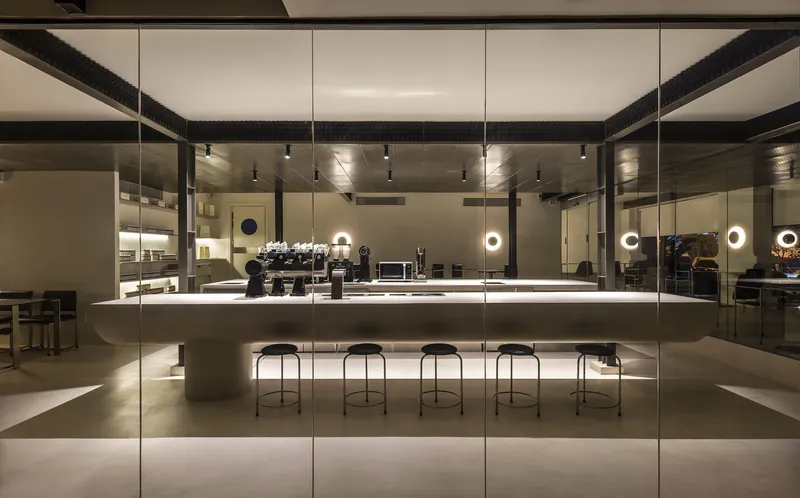
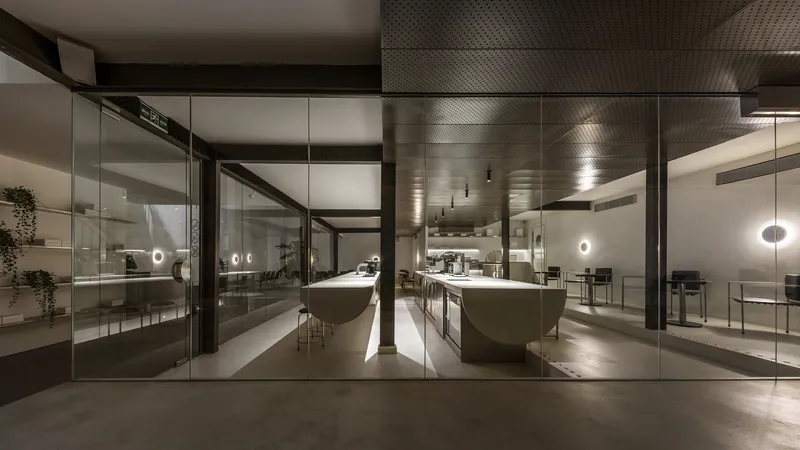
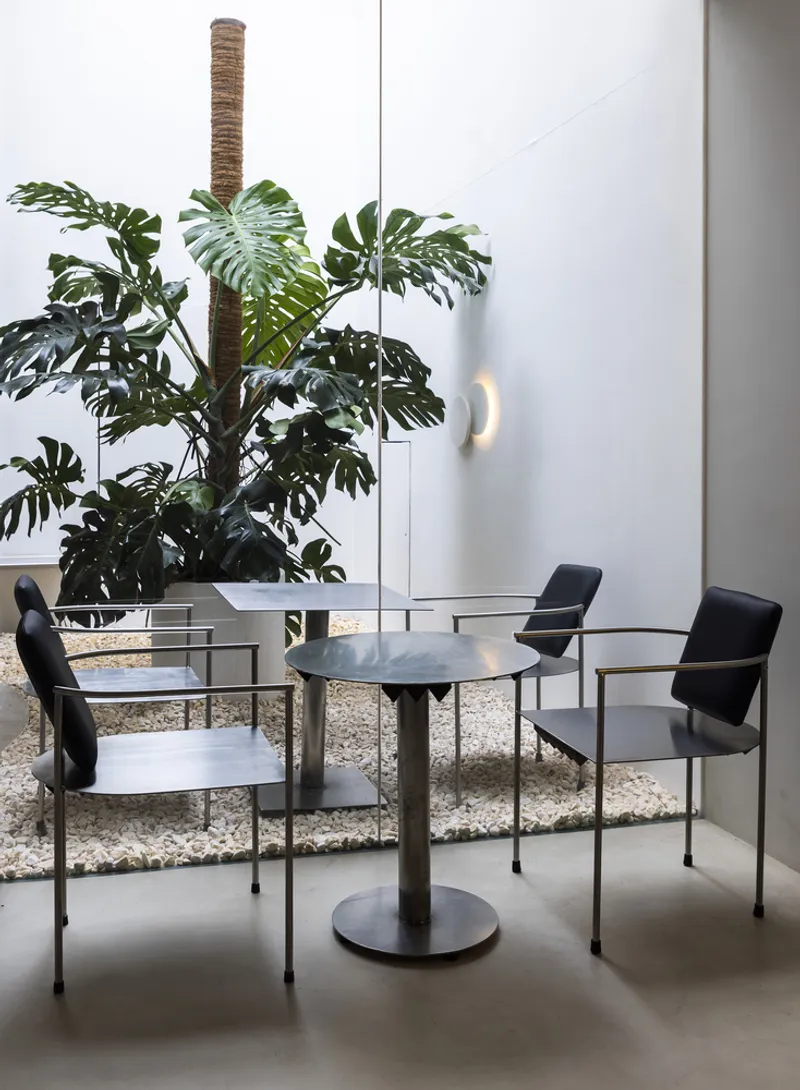
The design emphasizes transparency and openness, principles closely aligned with the brand’s values. Full-height frameless glazing dissolves the boundaries between indoor, semi-outdoor, and outdoor zones, maintaining uninterrupted visual flow. The spatial arrangement supports natural ventilation and establishes an ongoing dialogue between the built environment and nature.
Lightweight, custom stainless steel furniture further enhances the sense of openness. Their sleek silhouettes counterbalance the mass and solidity of the central bar, bringing visual harmony and flexibility to the interior layout.
Sustainable and Climate-Responsive Design
Sustainability is a cornerstone of the project. The flooring and bar finishes use eco-friendly water-based materials supplied by Nora Design Italiano, reflecting the brand’s commitment to environmentally responsible sourcing. Meanwhile, the semi-outdoor areas reduce dependence on mechanical air conditioning, encouraging passive cooling strategies.
A skylight void functions as a solar chimney, drawing hot air upward and releasing it efficiently while flooding the interior with daylight. This bioclimatic feature minimizes energy consumption, providing a comfortable environment throughout the day.
Layered Lighting: Day-to-Night Transformation
Lighting design is critical in achieving the atmosphere of a performance space. Carefully placed spotlights illuminate the “fly bar”, reinforcing its centrality. In contrast, diffused wall lights create a relaxed mood in the seating areas. The use of 4000K lighting transforms the space throughout the day—from a bright, energizing café during daylight hours to a warm, luxurious lounge atmosphere in the evening.
Community and Coffee Culture
More than just a coffee shop, Bosgaurus Coffee Roasters acts as a community hub, inviting guests to witness, appreciate, and engage with the craft of Vietnamese coffee making. Its architecture celebrates performance, transparency, and sustainability—showcasing how thoughtful design can elevate not only space but also tradition and craft.
All Photographs are works of Hiroyuki Oki




Popular Articles
Popular articles from the community

EW PARK: Sustainable Architecture Reimagines the Future of Urban Parking
EW PARK reimagines city parking as a modular wooden tower combining automation, solar energy, electric mobility, and adaptable urban design.

The Ocean Hive: Sustainable Architecture for a Self-Sufficient Civilization at Sea
The Ocean Hive imagines sustainable architecture at sea, where modular habitats, algae, wave power and ocean waste sustain a growing colony.

The Musturak Paradise: Senior Living Architecture for a Connected Future in Temara, Morocco
The Musturak Paradise reimagines senior living architecture in Temara via private homes, social spaces, culture, community, and shared care.

Hill & Cross Opera: Sculptural Opera House Architecture Shaped by Tallinn’s Landscape and Identity
Hill & Cross Opera reimagines opera house architecture in Tallinn through its sculptural hill, civic plaza, glass wave and a luminous cross.


Similar Reads
You might also enjoy these articles


Hodi-Mandai Geram
Project Function: Preservation and revitalization of the Intangible heritage and socio-spatial identity of the Hodi by Housing, Cultural Memory Center, Sacred Grove, landscape, local tourism economy


Olio Towers: A Mid-Rise for Performers That Fuses Housing, Rehearsal, and Stage
Located blocks from Houston's Theater District, this modular tower stacks living units around a central performance atrium.

Oasis: Modular Green Housing Carved into Dhaka's Urban Fabric
A shortlisted Plugin Housing entry reclaims unauthorized settlements in Dhaka with stepped concrete volumes, green roofs, and ventilation-driven design.

Black Hole: A Floating Megastructure for the Post-Physical Era
Emiliano Mazzarotto envisions a spherical, self-scaling arena where e-sports, digital hotels, and holographic stadiums replace traditional public space.


Explore Architecture Competitions
Discover active competitions in this discipline



Challenge to reimagine the Iron Throne


Photograph architecture without architects


Illustrate the lost glory of Angkor Wat - Render Challenge


Design challenge to reuse E-waste
Comments (0)
Please login or sign up to add comments
No comments yet. Be the first to comment!