
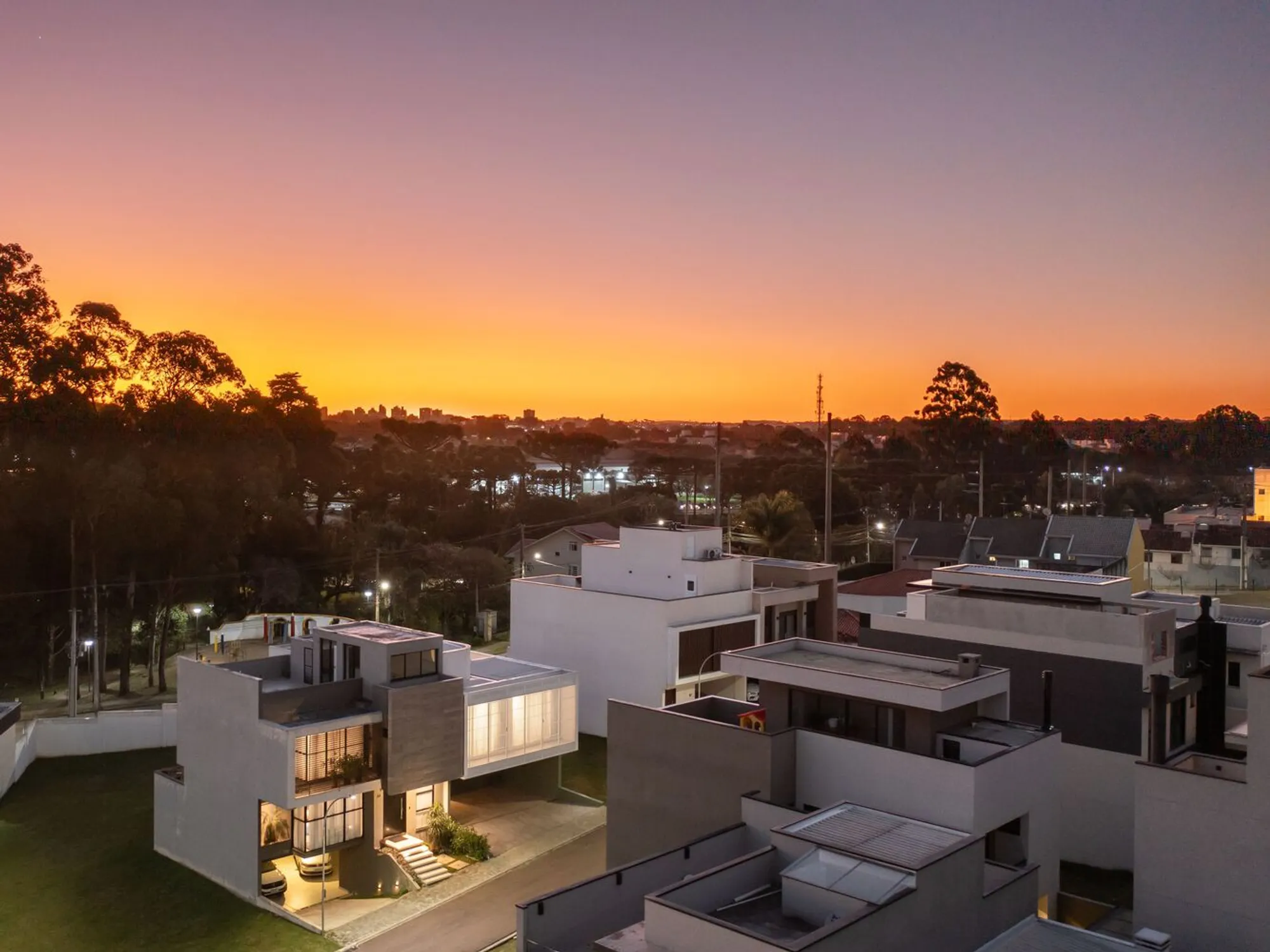
Bosque House by Nommo Arquitetos and BOSCARDIN CORSI: A Minimalist Forest-Facing Residence in Curitiba
A minimalist white volume home in Curitiba offering forest views, essentialist interiors, a perforated metal façade, and calm, light-filled living spaces.


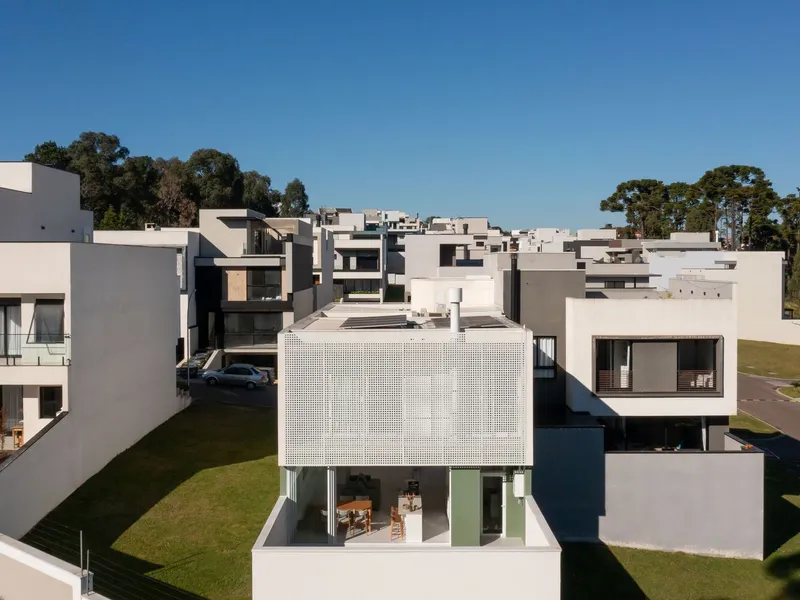
Bosque House by Nommo Arquitetos and BOSCARDIN CORSI stands as a striking minimalist residence in Curitiba, Brazil, defined by its sculptural white volume and strong visual connection to the surrounding forest. Designed in 2023 on a narrow plot within a horizontal condominium, the 224-square-meter house reinterprets contemporary residential architecture through essentialist design, controlled openings, and a powerful contrast between enclosure and openness.
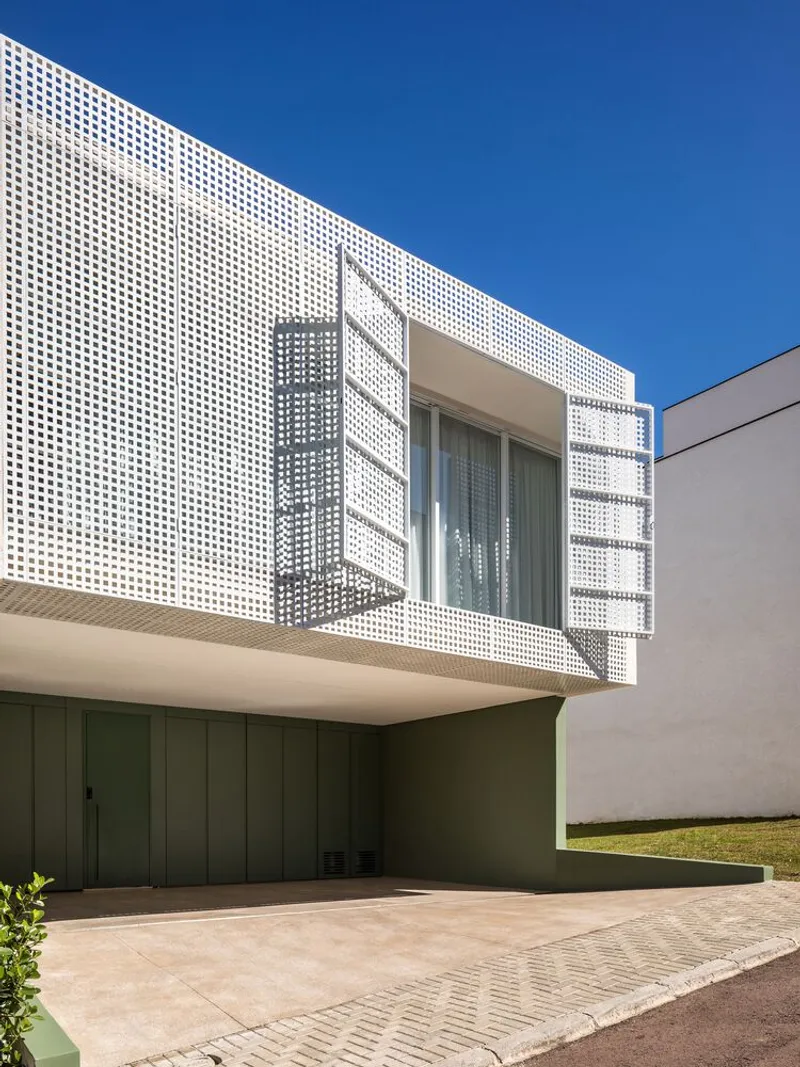
The project’s concept begins with a pure white geometric mass that intentionally avoids resembling the traditional image of a house. This monochromatic canvas creates a neutral backdrop that enhances shadows, textures, and subtle material transitions. Inspired by artist Robert Ryman, who emphasized white as a means of revealing other elements, the architects use the façade as an abstract volume that invites an uninterrupted reading of form. Without ornamental distractions, the house becomes a unified architectural gesture where space, light, and internal flow define the experience.
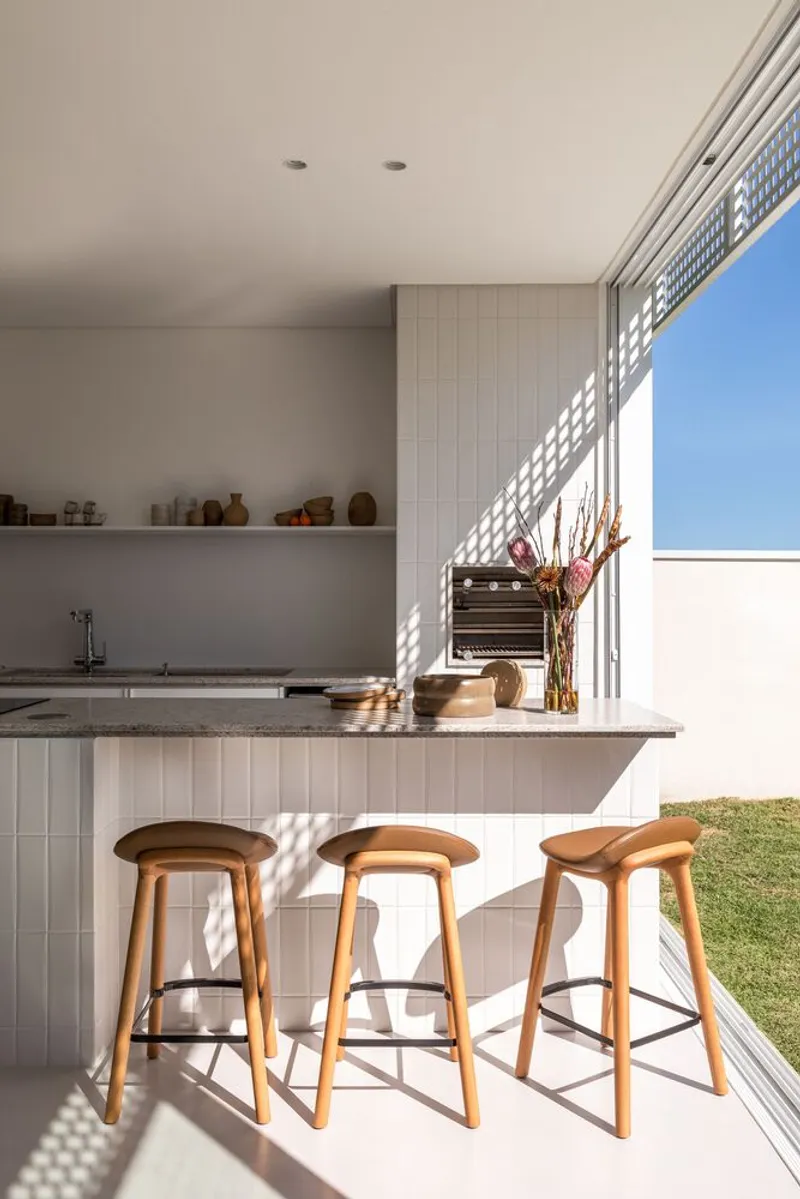
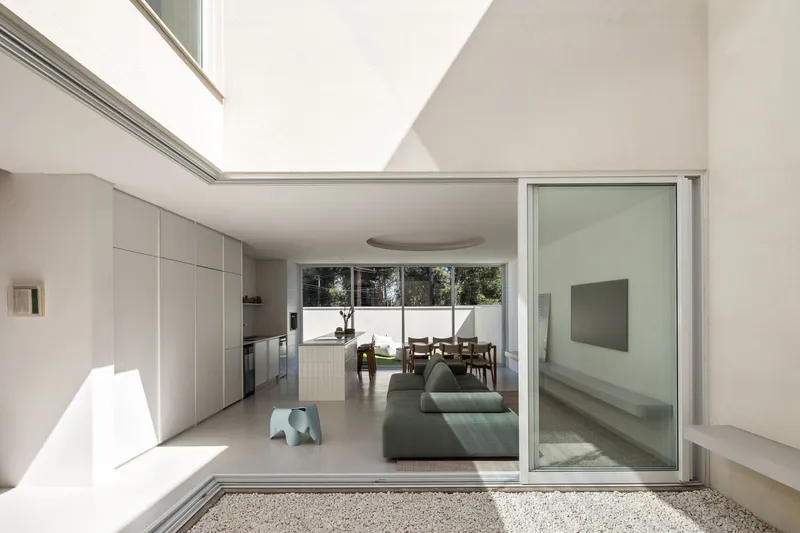
The family’s primary request was for uninterrupted views of the dense forest behind the property. In response, the architects organized the program on two levels. The ground floor contains the entrance, social areas, and service spaces, all oriented toward the trees. Large openings frame the landscape, transforming the forest into a living backdrop for everyday activities. The upper floor hosts the private family areas, including the children’s bedrooms, a home office, and the master suite, each positioned to capture serene forest views. This vertical arrangement ensures that nature remains the protagonist throughout the home.
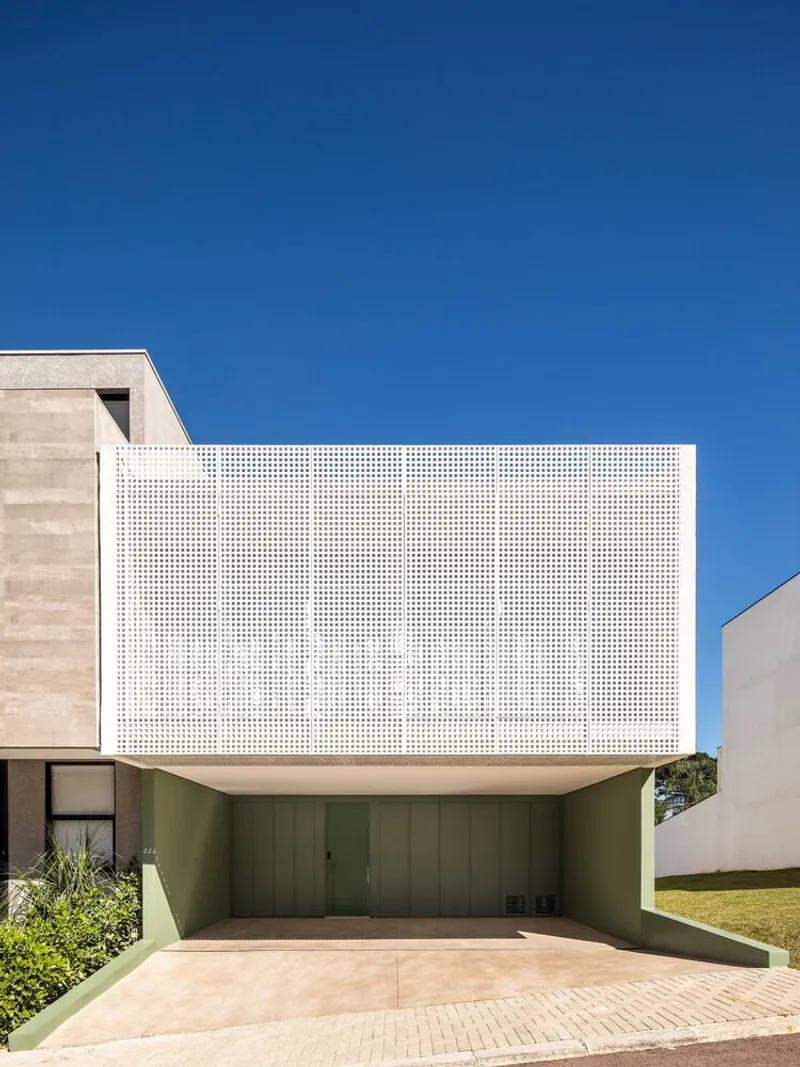
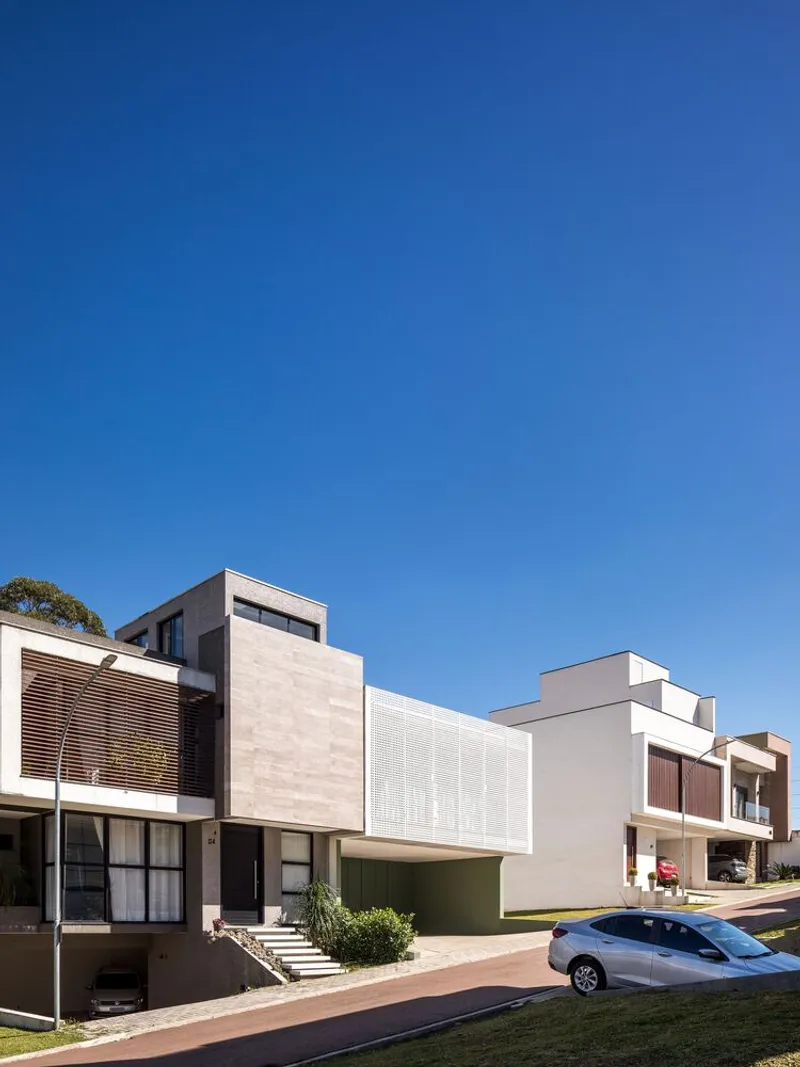
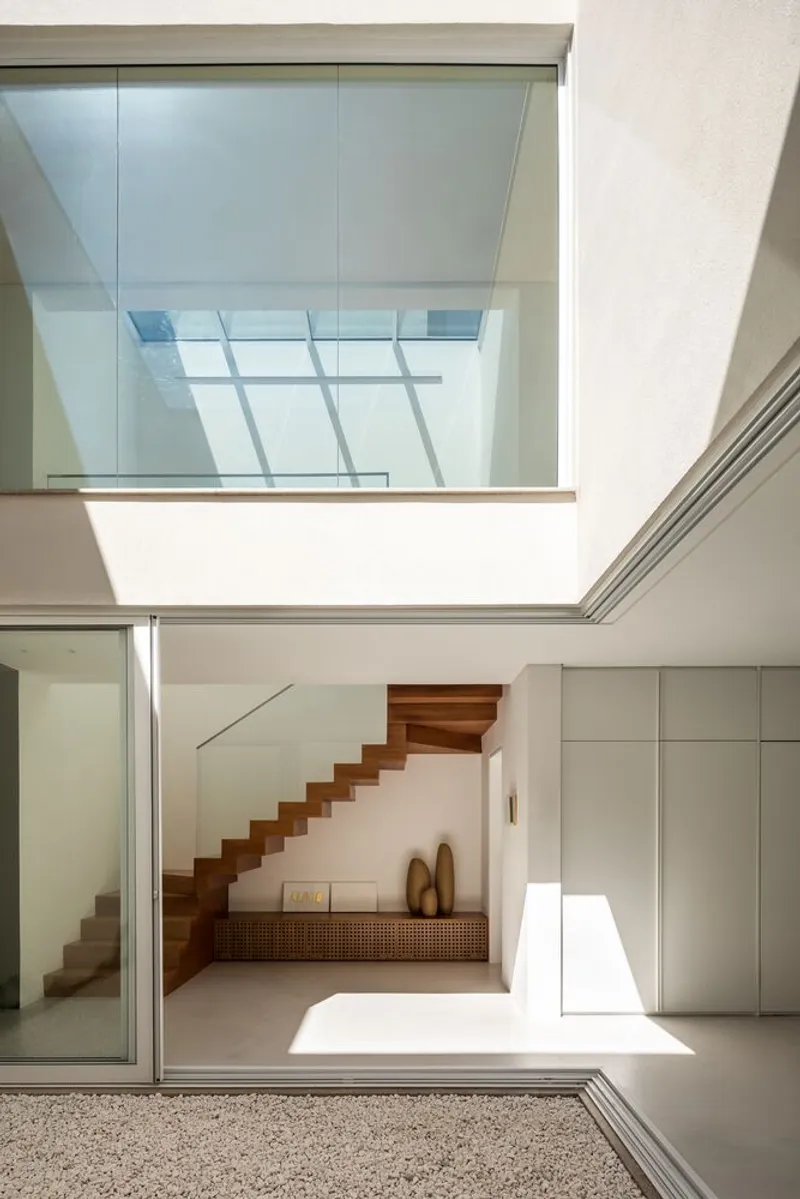
The architectural language reinforces the functional division of spaces. While the upper volume remains entirely white, the ground floor is treated in a deep green tone that roots the structure in the landscape and strengthens its dialogue with the natural surroundings. Due to the limitations of the narrow lot, lateral openings were restricted. To solve this, the architects introduced an internal courtyard that brings daylight into the social areas and circulation spaces while promoting natural cross-ventilation throughout the home. This strategy ensures thermal comfort and a sense of openness despite the compact plot.
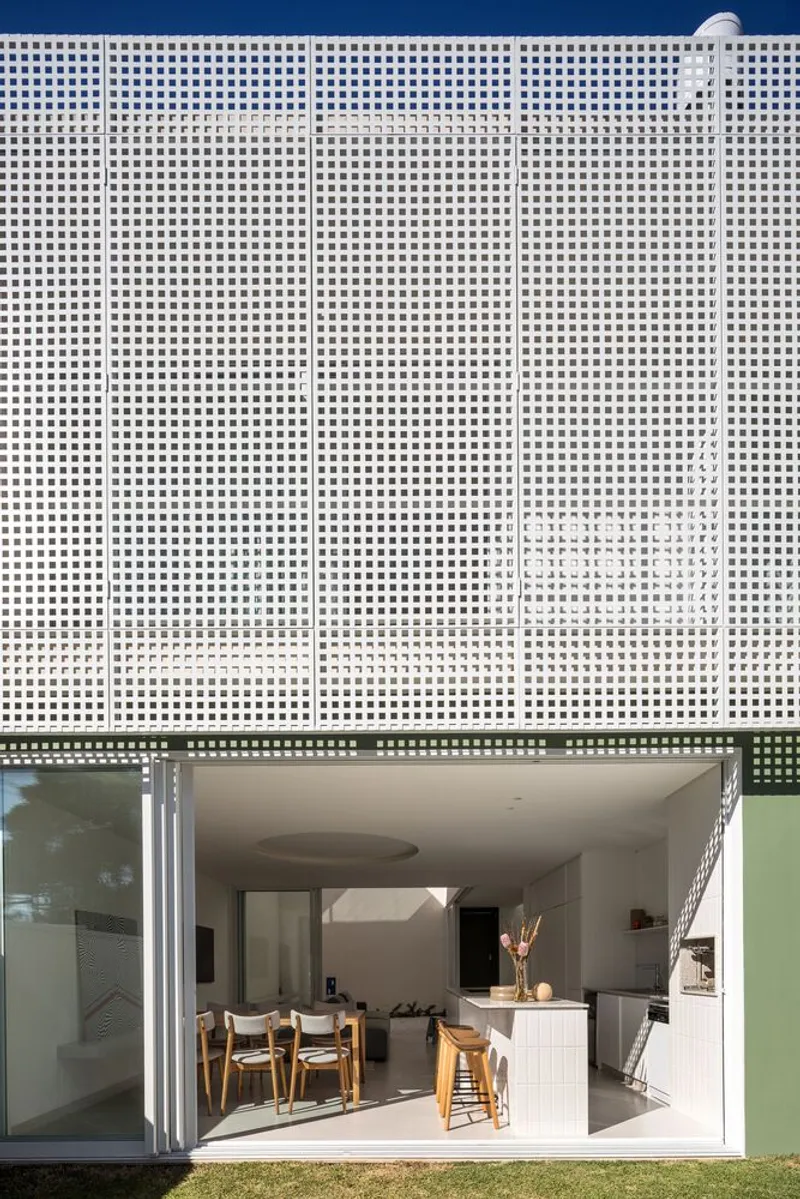
Inside, the design follows a philosophy of essentialism. White cabinetry blends seamlessly into walls, concealing handles and door divisions to preserve a sense of continuity and clean geometry. The absence of decorative elements strengthens the clarity of the architectural lines, while select materials add warmth and texture. Wood flooring defines the private upper level and the staircase, offering a tactile counterbalance to the crisp white surfaces. Every detail contributes to a serene, uncluttered environment that accentuates natural light and shadow play.
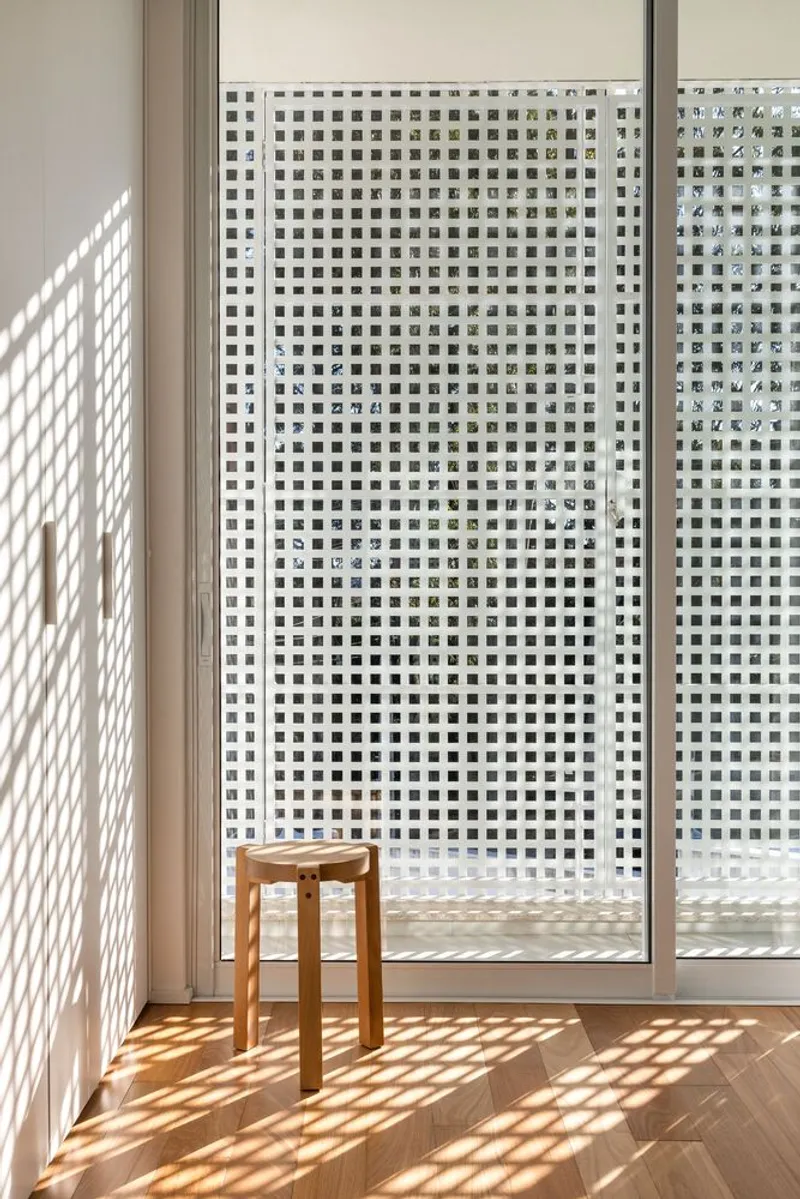
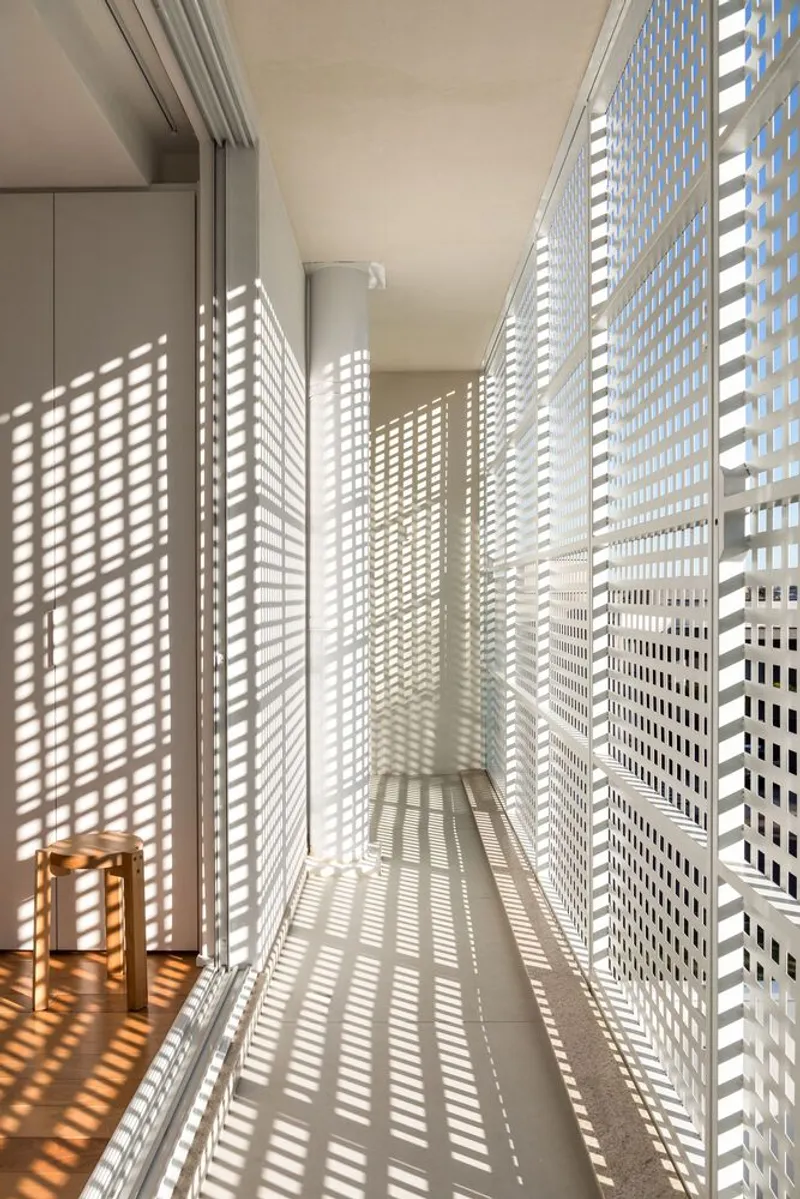
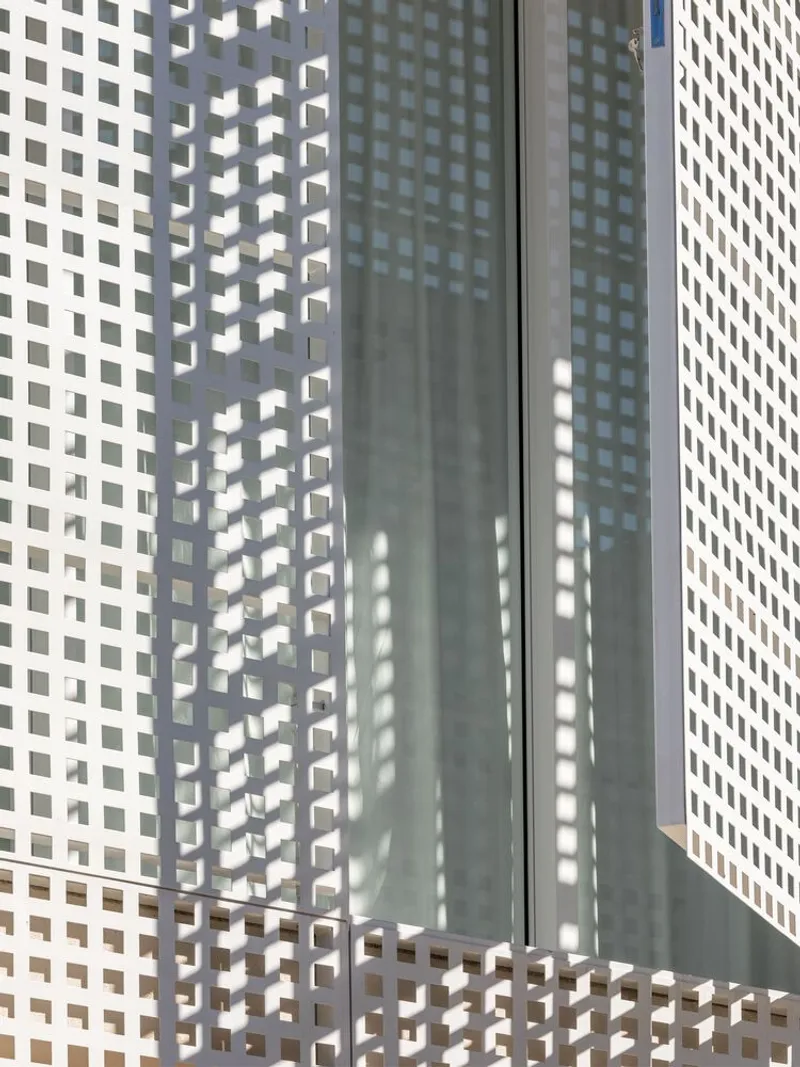
A defining feature of Bosque House is its metallic brise-soleil, which acts as a skin that mediates between privacy and transparency. The perforated metal screen provides solar protection for the east- and west-facing façades and introduces an organic softness to the composition. Its tiny perforations resemble pores, allowing light to filter through in a subtle, ever-changing pattern. From the exterior, the brise dematerializes the volume as light interacts with the façade over the course of the day. At night, the process reverses: the house glows softly from within, transforming the screen into a luminous veil that reveals the silhouettes of interior activity.
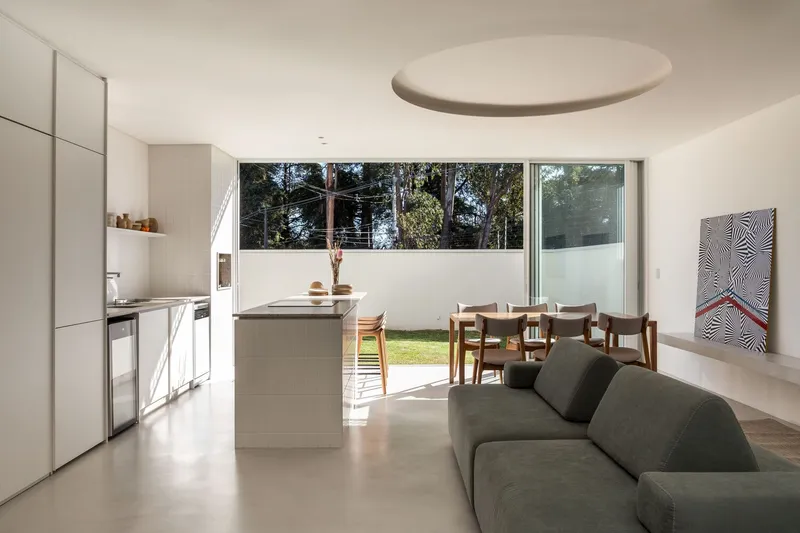
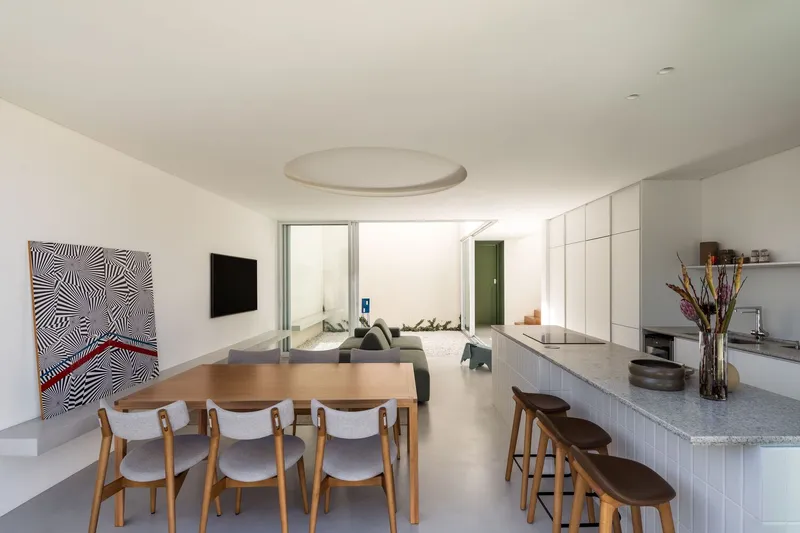
The architects describe this dynamic interaction: shifting shadows from trees, reflections of movement from the residents, and the play of light through the brises, as the element that brings phenomenological depth to the project. Bosque House becomes not a static object but a living architecture where form, nature, and human presence continuously shape one another.
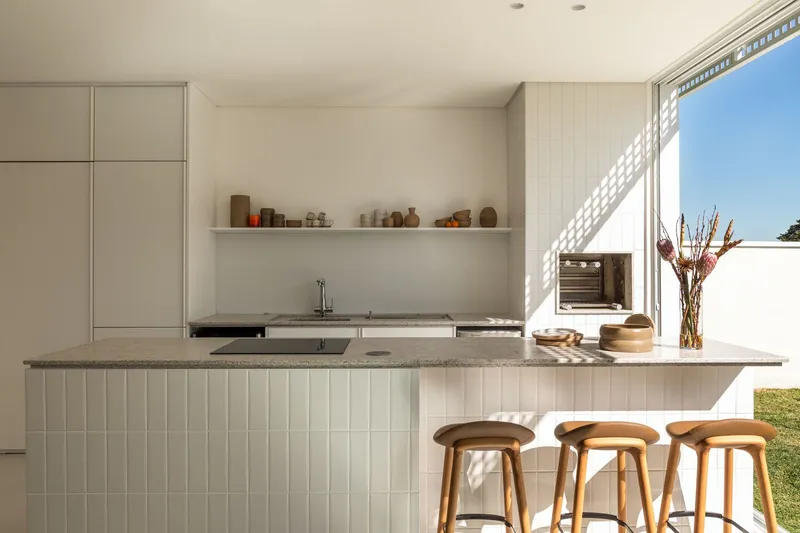
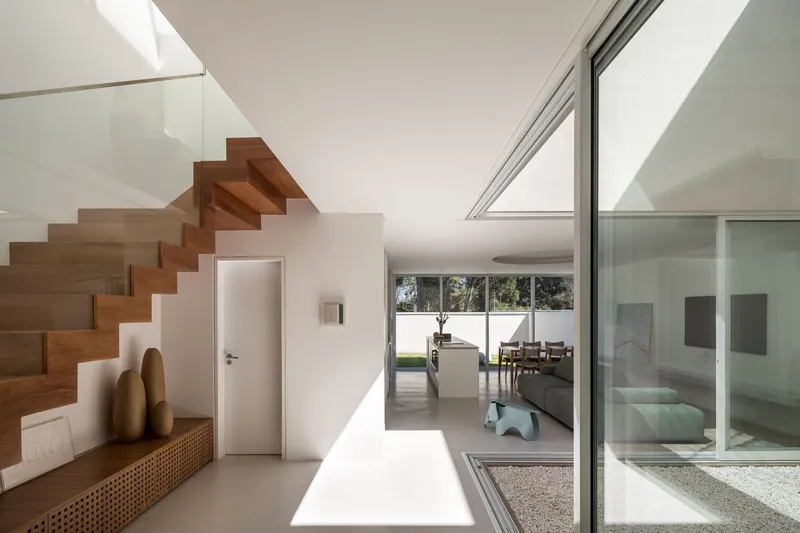
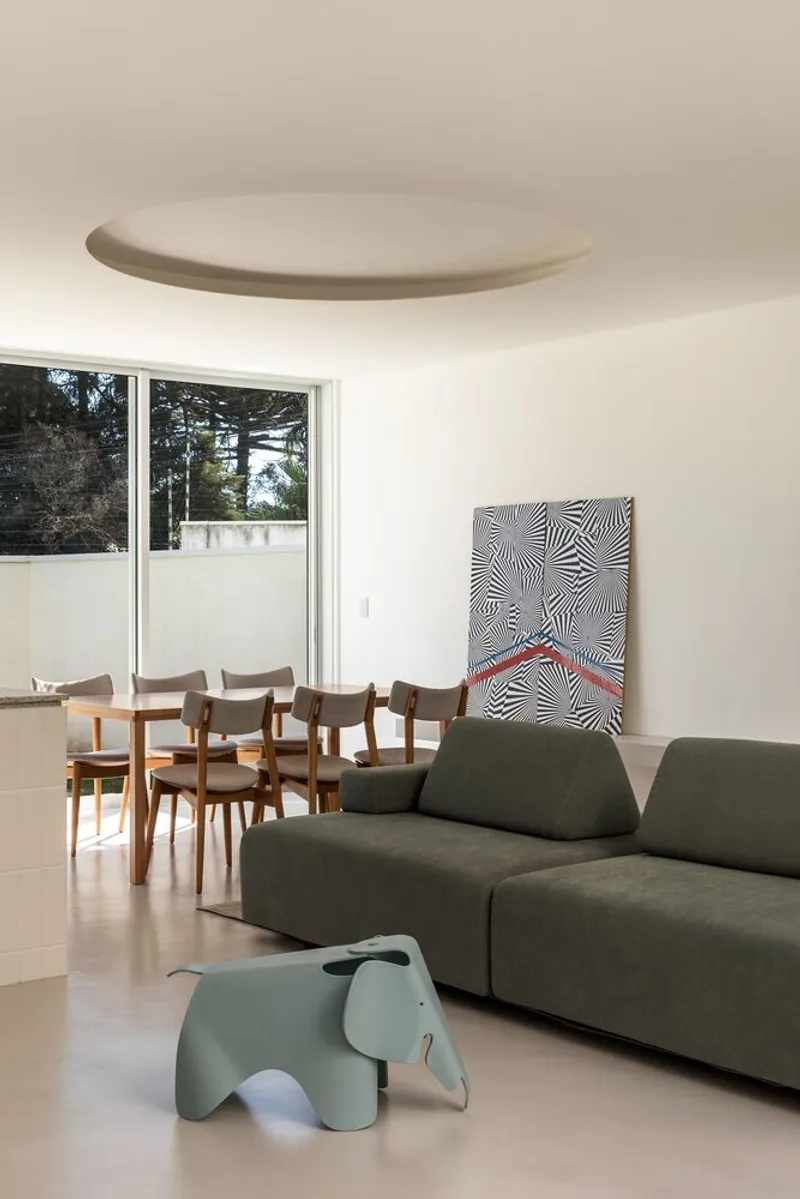
Through minimalist expression, strategic use of color, and a profound respect for its natural surroundings, Bosque House demonstrates how thoughtful design can transform a narrow urban lot into a poetic, light-filled home directly connected to the forest beyond.
A
Select an Image



Popular Articles
Popular articles from the community


The Earth Pod: 3D Printed Homes for Resilient Refugee Communities
The Earth Pod reimagines refugee housing through 3D printed homes made from clay, combining resilience, self-sufficiency, and rapid shelter.

Hill & Cross Opera: Sculptural Opera House Architecture Shaped by Tallinn’s Landscape and Identity
Hill & Cross Opera reimagines opera house architecture in Tallinn through its sculptural hill, civic plaza, glass wave and a luminous cross.

The Musturak Paradise: Senior Living Architecture for a Connected Future in Temara, Morocco
The Musturak Paradise reimagines senior living architecture in Temara via private homes, social spaces, culture, community, and shared care.

The Ocean Hive: Sustainable Architecture for a Self-Sufficient Civilization at Sea
The Ocean Hive imagines sustainable architecture at sea, where modular habitats, algae, wave power and ocean waste sustain a growing colony.

Similar Reads
You might also enjoy these articles


Hodi-Mandai Geram
Project Function: Preservation and revitalization of the Intangible heritage and socio-spatial identity of the Hodi by Housing, Cultural Memory Center, Sacred Grove, landscape, local tourism economy


Olio Towers: A Mid-Rise for Performers That Fuses Housing, Rehearsal, and Stage
Located blocks from Houston's Theater District, this modular tower stacks living units around a central performance atrium.

Oasis: Modular Green Housing Carved into Dhaka's Urban Fabric
A shortlisted Plugin Housing entry reclaims unauthorized settlements in Dhaka with stepped concrete volumes, green roofs, and ventilation-driven design.

Black Hole: A Floating Megastructure for the Post-Physical Era
Emiliano Mazzarotto envisions a spherical, self-scaling arena where e-sports, digital hotels, and holographic stadiums replace traditional public space.

Explore Residential Building Competitions
Discover active competitions in this discipline


Challenge to design mud housing for contemporary communities


Challenge to reimagine the Iron Throne


Photograph architecture without architects


Illustrate the lost glory of Angkor Wat - Render Challenge
Comments (0)
Please login or sign up to add comments
No comments yet. Be the first to comment!