
Bowentown Bach House by Edwards White Architects: A Charred Driftwood-Inspired Retreat Along New Zealand’s Rugged Coastline
A driftwood-inspired coastal retreat blending charred timber exteriors with warm interiors, offering serene refuge amid New Zealand’s rugged dunes.


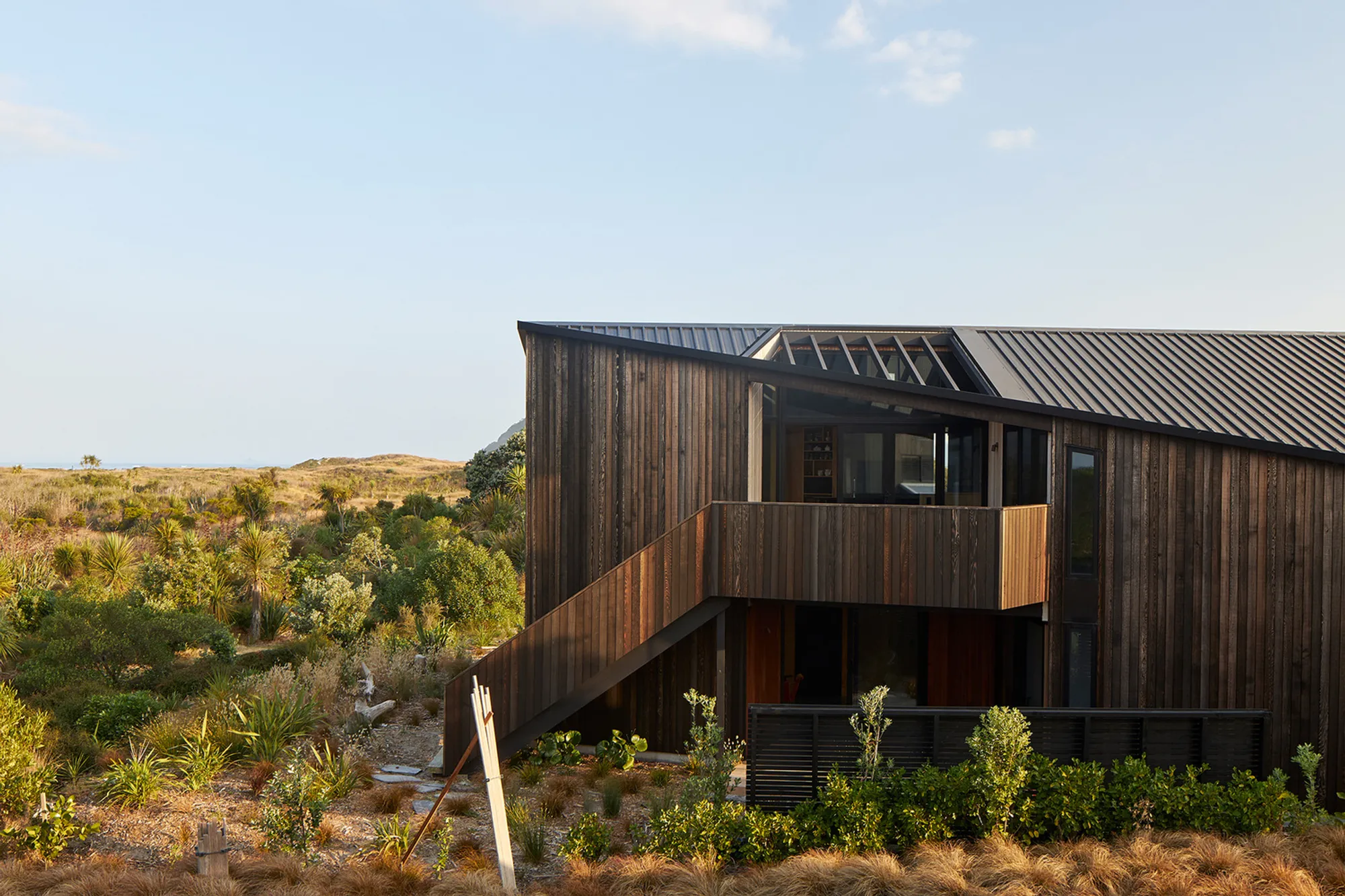
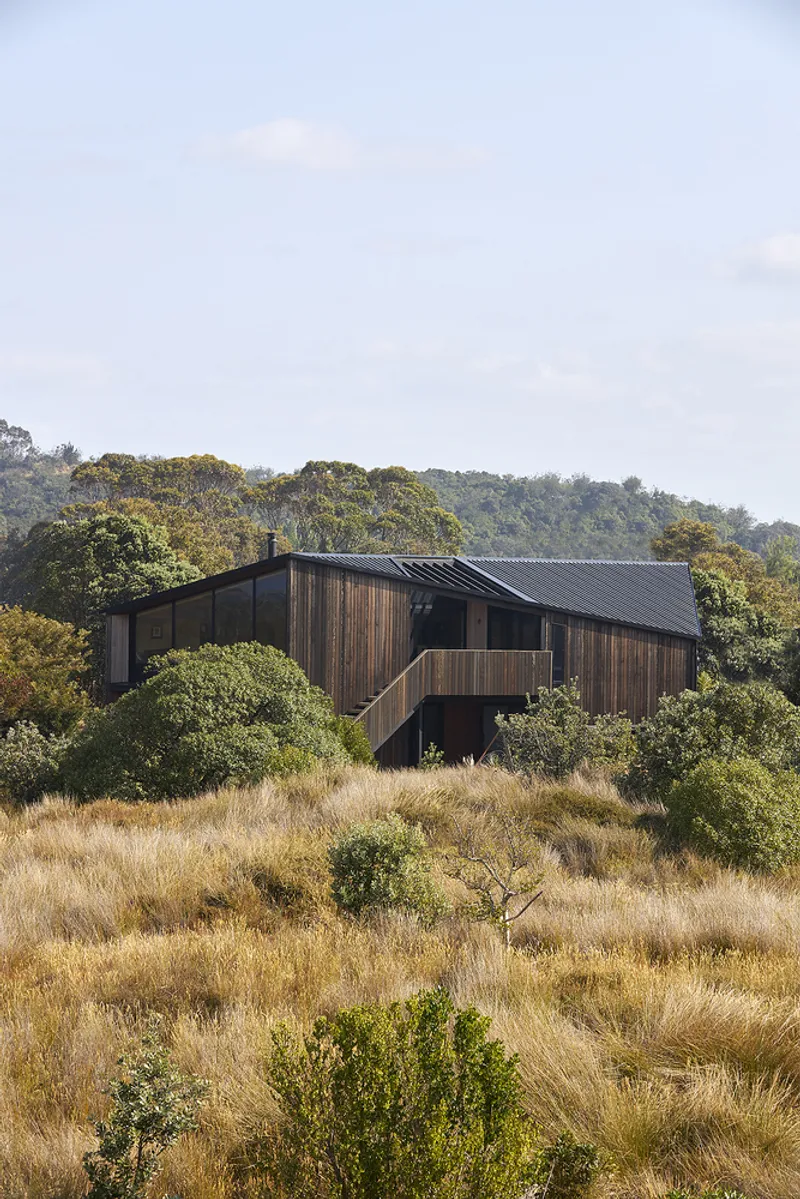
Nestled in the secluded seaside community of Bowentown, near Waihi Beach on the North Island of New Zealand, the Bowentown Bach House by Edwards White Architects stands as a poetic architectural response to the surrounding coastal wilderness. Completed in 2019 and spanning 195 square meters, this bespoke beach house draws direct inspiration from the sculptural beauty of a piece of driftwood—weathered, charred, and embedded in the landscape.
Coastal Context and Conceptual Narrative
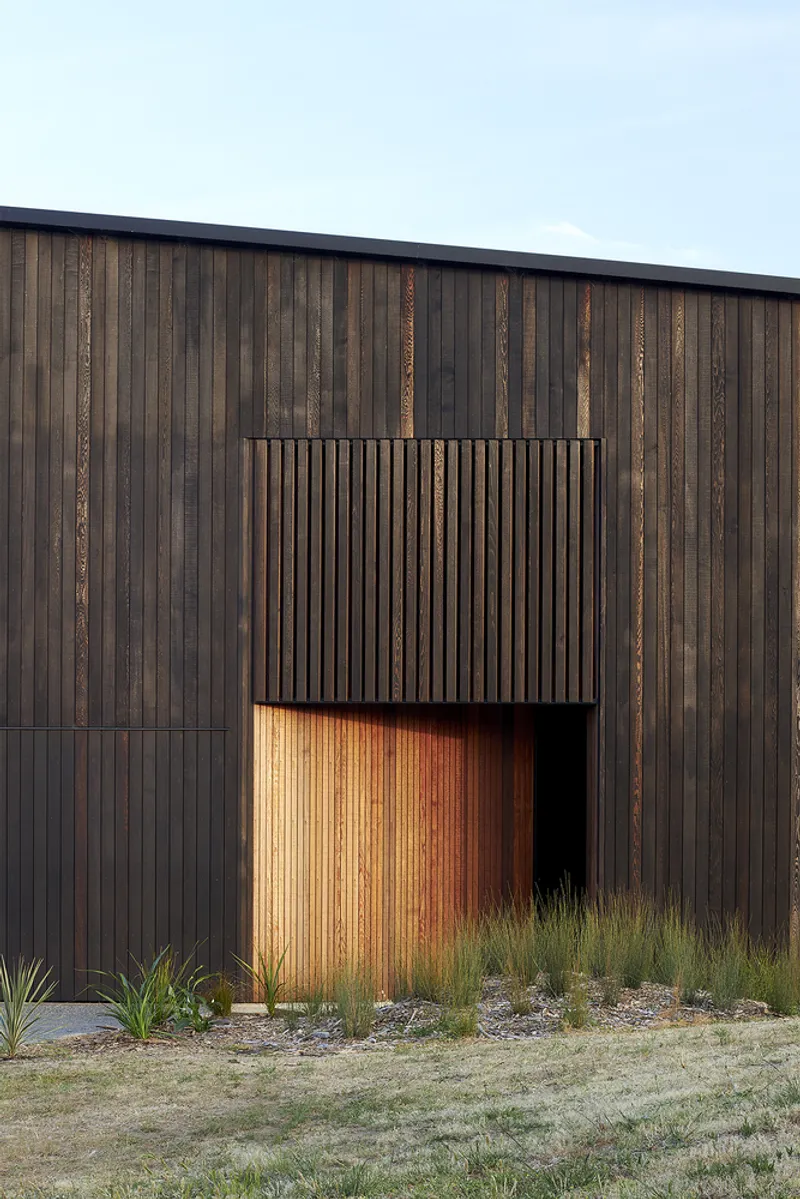
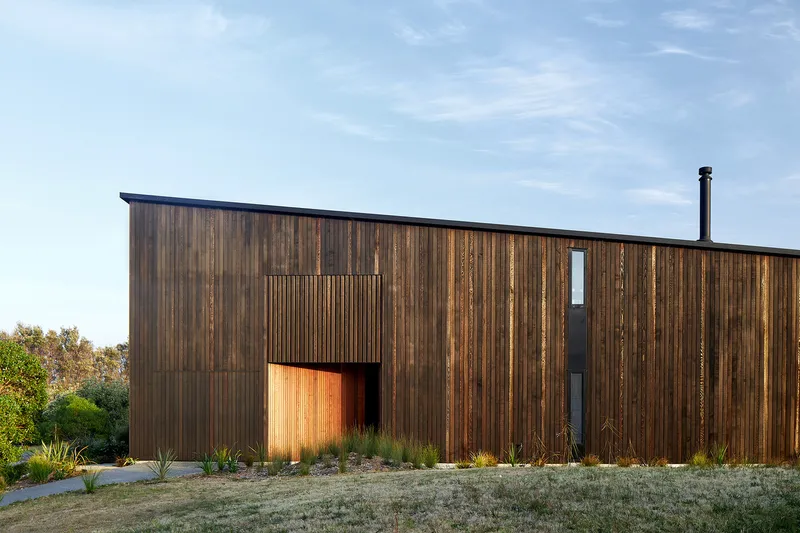
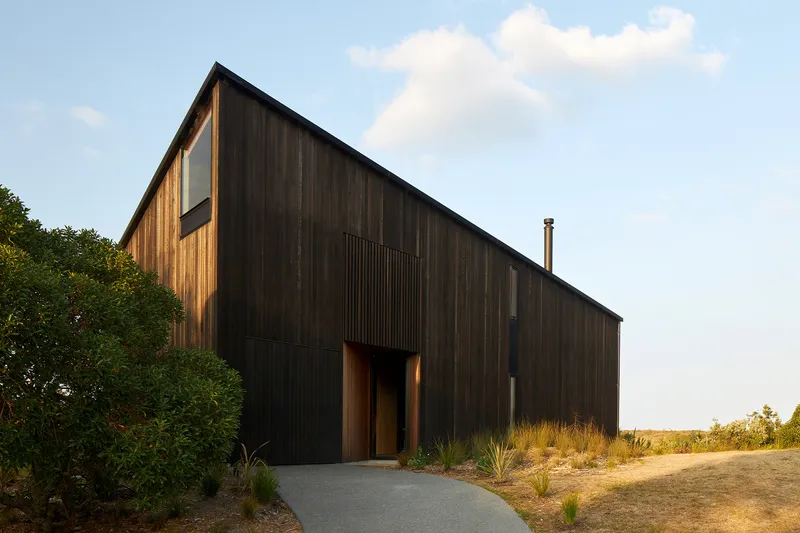
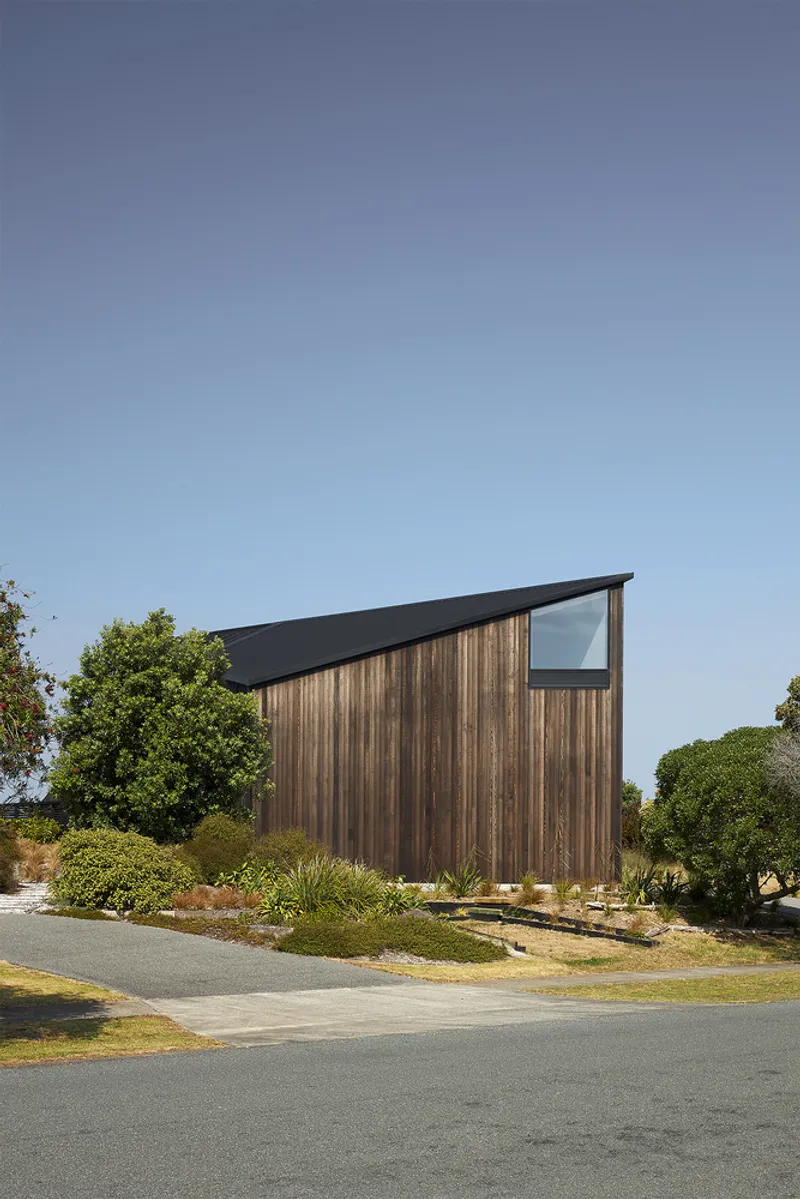
Positioned at the edge of a residential subdivision and the untouched dune ecology, the Bowentown Bach marks the threshold between human habitation and the vast coastal expanse. Its bold, eroded form references a blackened piece of driftwood—its outer skin burnt and worn, gradually succumbing to the sands, while golden inner layers remain protected within. This narrative becomes the architectural foundation for a residence that speaks of refuge, elemental contrast, and natural resilience.
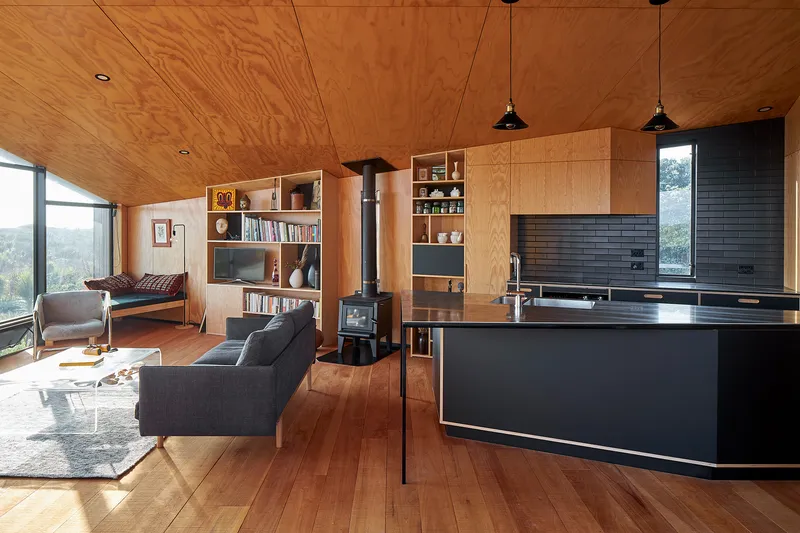
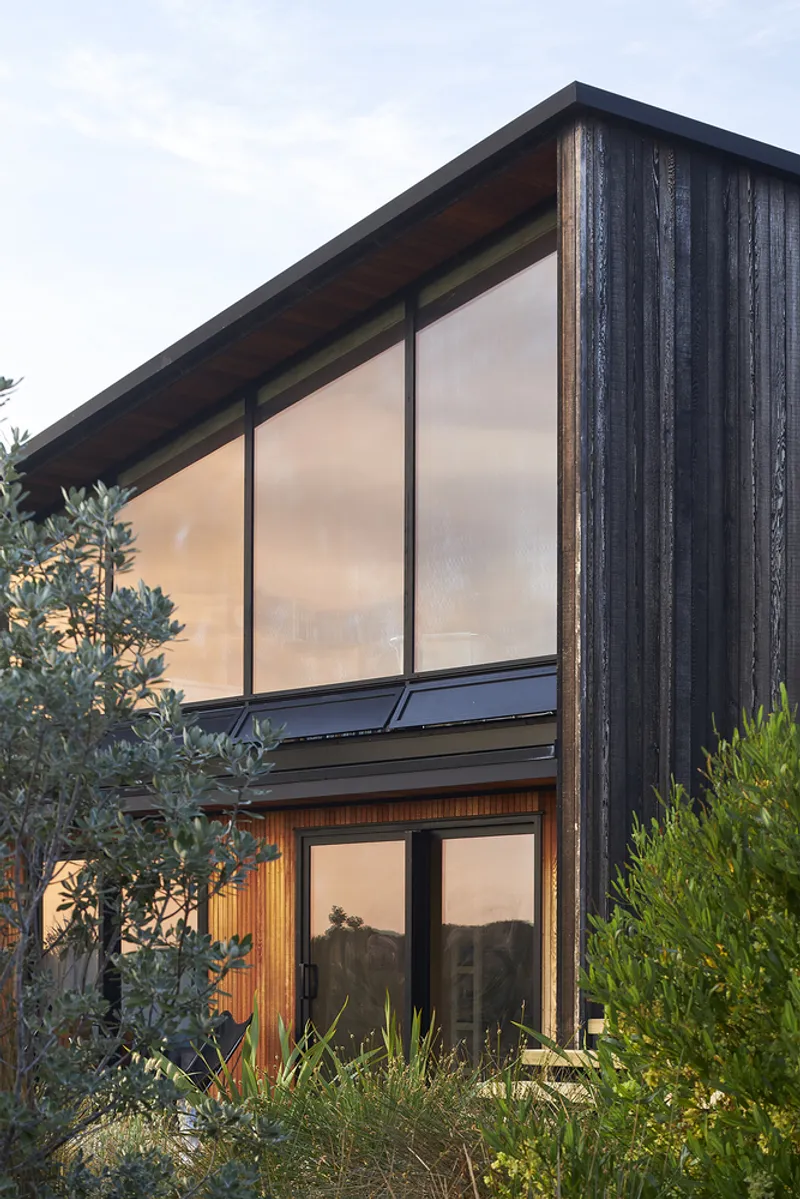
The weathered black façade, cloaked in timber and charred in tone, forms a striking presence against the sandy landscape. As visitors move through the darkened exterior, the experience transforms—the stark outer shell gives way to a warm, golden timber interior, designed to feel both inviting and intimate.
Spatial Experience and Interior Design
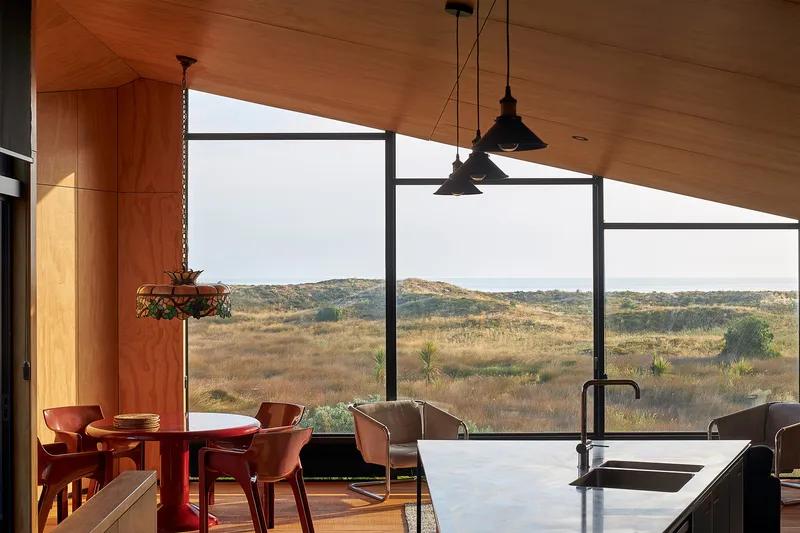
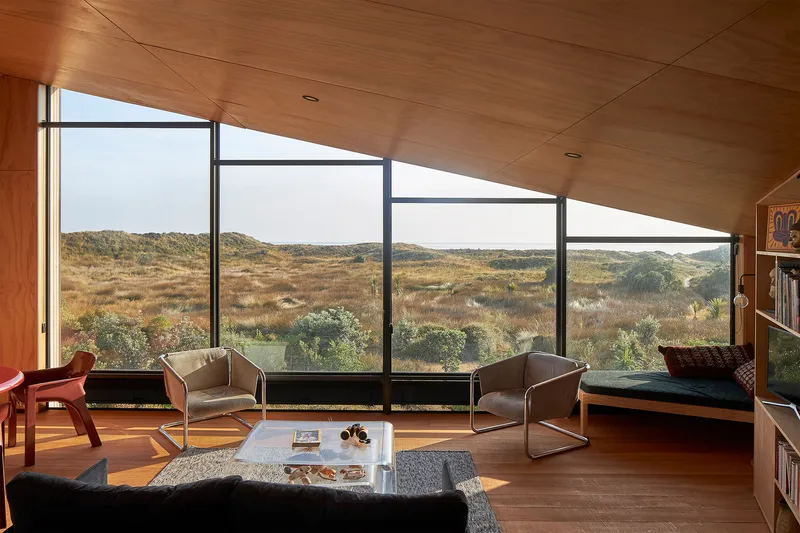
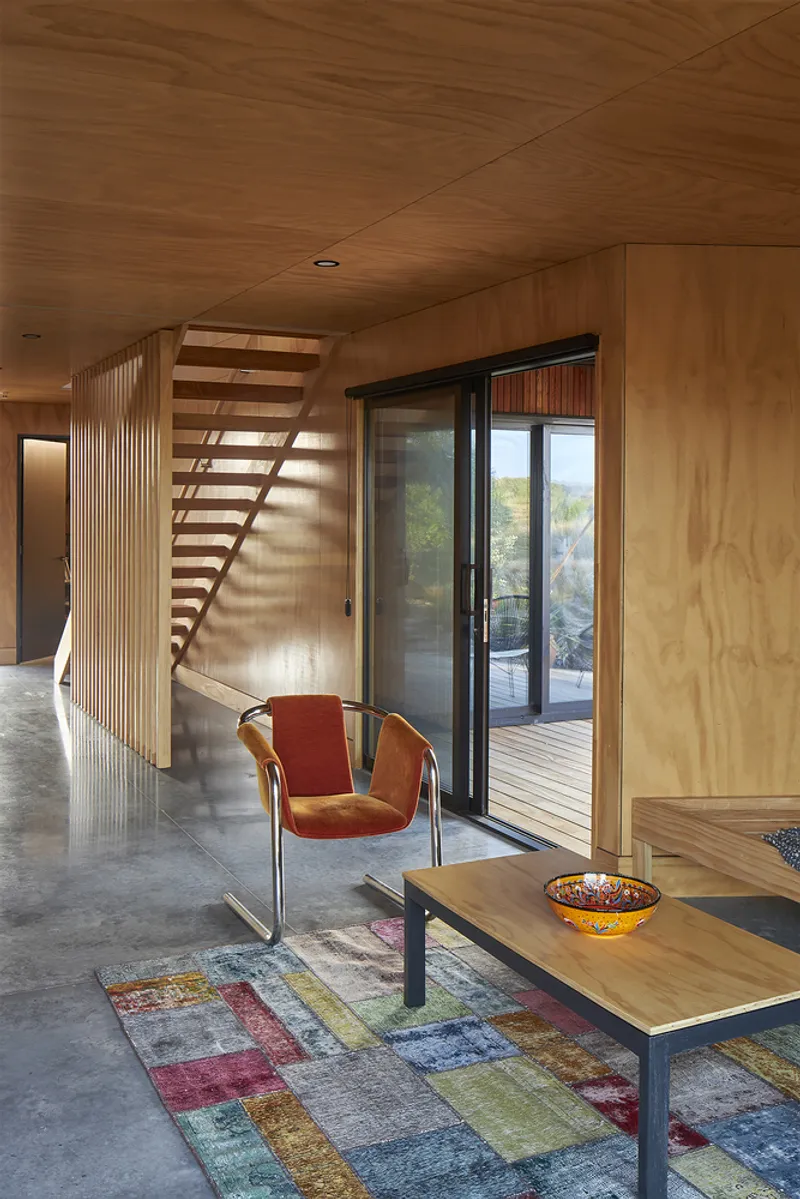
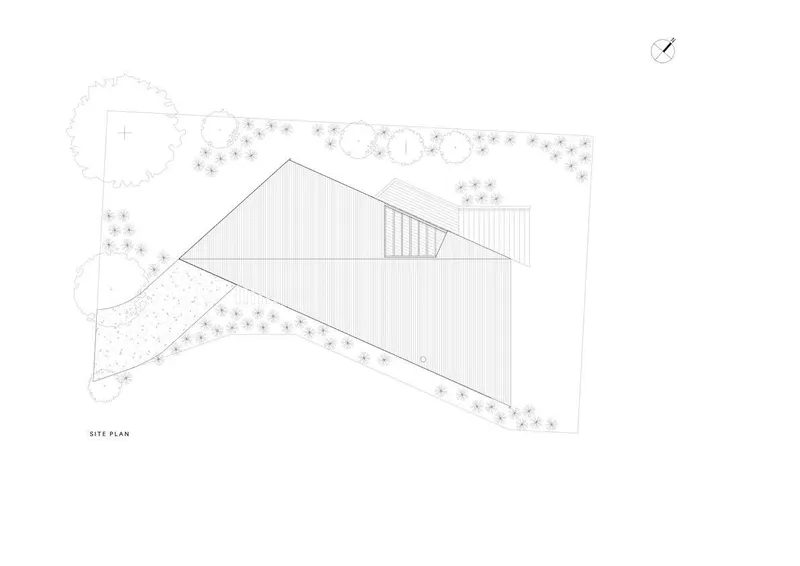
Inside, a diagonal circulation spine intersects the plan, revealing a carefully placed stairwell that guides visitors upward into the elevated living spaces. This elevation offers uninterrupted views of the windswept foredunes and the ocean beyond, allowing the dwelling to fully embrace its surrounding environment.
The architecture plays with spatial tension, transitioning between lofty, open volumes and low, cocooning zones that encourage rest and reflection. Custom-designed joinery—from bookshelves and window seats to kitchen shelves—neatly fits into the angular geometry of the floor plan, enhancing functionality while reinforcing the crafted aesthetic.
Windows are strategically placed to frame nature, drawing the eye toward the coastal panorama and away from neighboring structures. Meanwhile, solid walls create a sense of privacy and protection, reinforcing the home’s narrative of retreat and introspection.
Material Palette and Sensory Warmth
The materiality of the Bowentown Bach House is grounded in natural, tactile finishes. Rough-sawn timber flooring adds textural richness underfoot, while the interior’s earthy, neutral tones mirror the hues of the surrounding dunes. This subtle palette ensures that the landscape remains the central focus, allowing nature to act as both backdrop and centerpiece.
With an emphasis on thermal comfort, visual serenity, and material honesty, the home creates an atmosphere of coastal calm. The architecture avoids overt coastal clichés, instead embracing a subdued, contemplative elegance that elevates the everyday beach retreat into something timeless and sculptural.
A Unique Interpretation of the Kiwi Bach
Unlike many Coromandel Peninsula homes that emphasize seamless transitions between indoor and outdoor living, the Bowentown Bach takes a more curated, introspective approach. Here, the architecture speaks of protection, stillness, and thoughtful immersion in the environment rather than exposure. It’s a contemporary take on the traditional Kiwi bach—reimagined as a sanctuary rooted in story, material, and place.
All Photographs are works of Simon Wilson.




Popular Articles
Popular articles from the community


Riyadh For All: Intergenerational Urban Design for Active Aging in Rabat
Riyadh For All reimagines urban design in Rabat with intergenerational co-living, adaptive courtyards, and Moroccan cultural exchange today.

The Ocean Hive: Sustainable Architecture for a Self-Sufficient Civilization at Sea
The Ocean Hive imagines sustainable architecture at sea, where modular habitats, algae, wave power and ocean waste sustain a growing colony.

Co-life: Sustainable Architecture for Age-Friendly Community Living
Co-life reimagines sustainable architecture for seniors through courtyards, rammed earth, shared gardens, and spaces designed for belonging.

Hill & Cross Opera: Sculptural Opera House Architecture Shaped by Tallinn’s Landscape and Identity
Hill & Cross Opera reimagines opera house architecture in Tallinn through its sculptural hill, civic plaza, glass wave and a luminous cross.


Similar Reads
You might also enjoy these articles


Hodi-Mandai Geram
Project Function: Preservation and revitalization of the Intangible heritage and socio-spatial identity of the Hodi by Housing, Cultural Memory Center, Sacred Grove, landscape, local tourism economy


Olio Towers: A Mid-Rise for Performers That Fuses Housing, Rehearsal, and Stage
Located blocks from Houston's Theater District, this modular tower stacks living units around a central performance atrium.

Oasis: Modular Green Housing Carved into Dhaka's Urban Fabric
A shortlisted Plugin Housing entry reclaims unauthorized settlements in Dhaka with stepped concrete volumes, green roofs, and ventilation-driven design.

Black Hole: A Floating Megastructure for the Post-Physical Era
Emiliano Mazzarotto envisions a spherical, self-scaling arena where e-sports, digital hotels, and holographic stadiums replace traditional public space.


Explore Architecture Competitions
Discover active competitions in this discipline



Challenge to reimagine the Iron Throne


Photograph architecture without architects


Illustrate the lost glory of Angkor Wat - Render Challenge


Design challenge to reuse E-waste
Comments (0)
Please login or sign up to add comments
No comments yet. Be the first to comment!