

BRAID HUB
Description of the modular base on Mars

We create stories. Already what we did days ago, hours ago, or even minutes ago. We wish we could go back, but it's impossible. The past tends to interest people. We like to watch old movies, photos, old building techniques and listen to stories of grown people. All of this is already upon us, so it's time for new things! We already know all this, and now we want to start with you, creating an amazing future that is yet to come.
The main idea of our project was to create a base with a view to further colonization of the planet. We designed a multi-purpose shape which, when superimposed on a grid of hexagons, creates a modular solid. Our initial module is a "slice", we got it by superimposing circles on a grid of hexagons.
Mars is a fascinating, new, unexplored place for humans. The diverse topography of the planet inspired us to fit into the landscape by introducing hills and levels to our solid. We can obtain the desired shape quickly and easily using a 3D printer. Thanks to this technique we have the possibility to adjust to the environment. The material will be concrete from Martian soil, the pigments contained in it will give it the color of the area in which it will be located.
On the planet there are extremely harsh atmospheric conditions, there are strong winds, high cosmic radiation, also we have less sunlight than on Earth. Thus, the volume of the building had to be adjusted to them. Openwork form set on supports allows free flow of winds limiting the pressure of forces. Closed form without openings results in cutting off from dangerous for health radiation. Necessary access to light, which green zones need, was provided by the use of skylights.
We were also guided by the idea of the golden ratio. It refers to the three planes of life, imposed by the daily cycle of the day. As a result, our project has three levels connected to each other in a non-obvious way. Each module is responsible for different functions. The second floor is dedicated to work, which is particularly important there. It provides space for individual as well as group work. There are also rooms to maintain the self-sufficiency of the entire colony. From this level we can go to the surface of Mars exploring the planet. On the second floor there are living units providing privacy and a place of rest for each of the residents. The third floor allows recreation, self-development and integration by maintaining open spaces for public access. These include green spaces and gyms. In each such module there is a transmission, which connects through ergonomically arranged communication lines. According to the adopted idea of adapting the solid to the external terrain, we received a number of functional solutions. Horizontal communication is based on the idea of adapting the natural terrain to the interior. On the whole surface of the base a half-meter difference in height between the levels was assumed. The ramps extend the width of the corridors, seamlessly connecting the interiors. Vertical communication is provided by spiral ramps on a circular plan, connecting all the floors. We divided the building into levels and zones, thanks to which we obtained a functional space friendly to the colonizers. We focused on the well-being of the community as a whole. We realized this by separating zones in the obtained space in relation to the level of congestion and their loudness. These are incrementally privacy, communal rest and social zones. From the facility, we don't look outside but turn to the interior green spaces that are in each zone.
An important role of colonization is self-sufficiency, independent operation of the base. The use of solar panels known to us will enable the supply of the necessary electricity. It is extremely important to ensure appropriate conditions for the development and proper functioning of the organisms residing there. Greenhouse is an area designed for growing plants. It is responsible for producing food for the entire colony. This area is public, which means that each resident of the colony can harvest the crops for their own use. The plants that are planted are placed in pots separated from each other, which creates corridors where botanists can move freely. The Greenhouse is the heart of our colony.
It will be a great step into the future. The desire to colonize Mars has been with us for many years, but we have never been so close to realizing it. Successive generations of new ideas constantly provide innovative applications of technology. They broaden the horizons of knowledge, enabling the development of terrestrial and extraterrestrial civilization. Thanks to such great commitment we can leave the zone of dreams, enter new territories, live on Mars. We create history, let us dare to create the future.

Popular Articles
Popular articles from the community

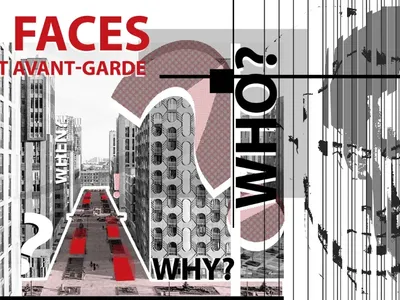
Faces of the Soviet Avant-Garde: Turning Moscow's Street Names into an Open-Air Museum
A network of sculptural installations across a Moscow residential district transforms forgotten architect names into spatial encounters with cultural memor
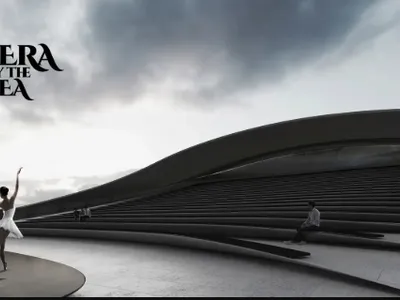
Opera by the Sea Estonia: Three Shells Dissolving Architecture into Tallinn's Coastline
A winning opera house proposal replaces monumental form with interconnected shells that blur the boundary between building, park and Baltic Sea.

Manzana Morphosis: Stretching Barcelona's Grid into a Living Landscape for 2050
A radical reworking of the Eixample manzana turns density into a tool for generous public space, vertical ecology, and environmental performance.

Extended Shell: Retrofitting Kolkata's Balconies as Living Urban Thresholds
A modular retrofit system recovers the social and environmental intelligence of Kolkata's historic verandas for contemporary Park Street residents.

Similar Reads
You might also enjoy these articles

Shakur's House: Exposed Brick as an Interior Organiser in a 168 m² Mashhad Residence
Brick moves indoors in this Mashhad residence, where masonry walls, glass partitions and teal planes sequence a compact home without closing it off.

Day and Night Park: A Time-Based Urban Newsstand in Beijing
A temporary urban newsstand in Beijing blending travel, light, and reading through poetic colors, compact form, and community-focused design.

Modernist Patio Renovation in El Masnou, Barcelona by Oliver Segura Arquitectura + Cebrià Arquitectura
Modernist patio renovation blending tradition and innovation with a movable pool, leveled floors, and Catalan materials in El Masnou.

Alto Residencial Coop: Cooperative Housing Development in Santiago de Compostela by Carbajo Barrios Arquitectos
A linear cooperative housing complex blending white volumes and perforated metal façades, enhancing community living, natural light, privacy, and urban integration.

Comments (0)
Please login or sign up to add comments
No comments yet. Be the first to comment!