
Brazilian Slope House: Grecov House by ARQBR Blends Architecture with Landscape
A modern Brazilian slope house designed by ARQBR that harmonizes with its natural forested site through material, form, and light.


Architecture Rooted in Topography and Nature
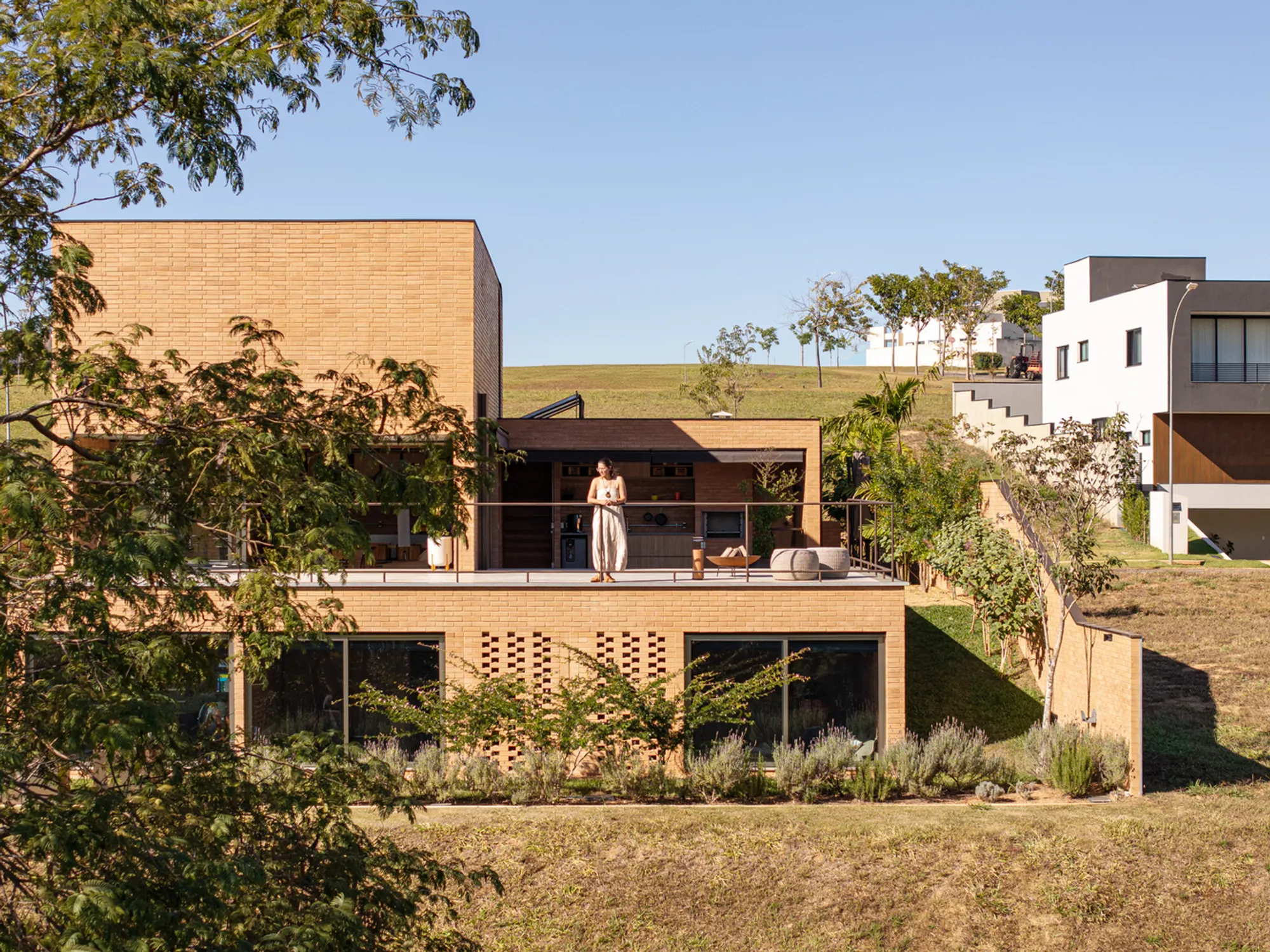
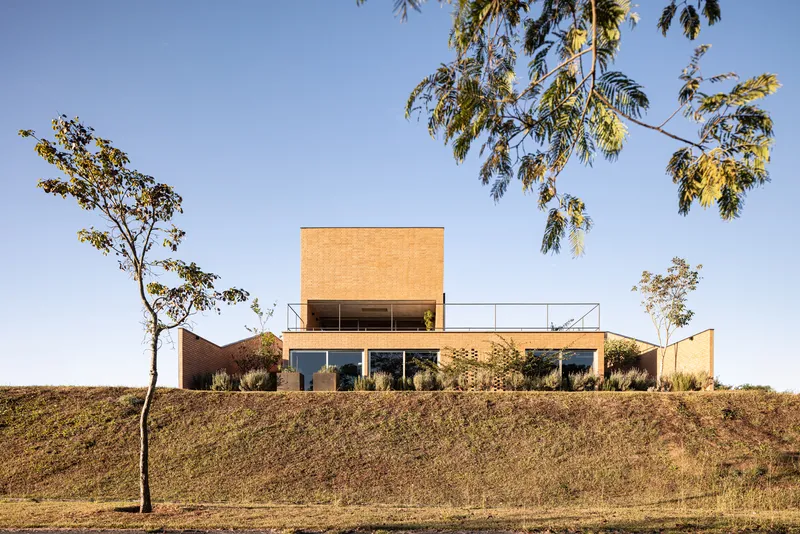
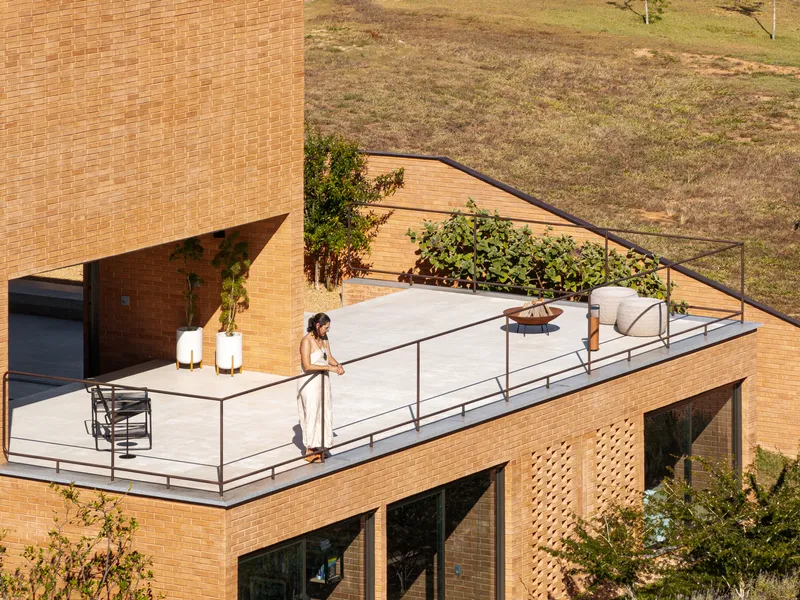
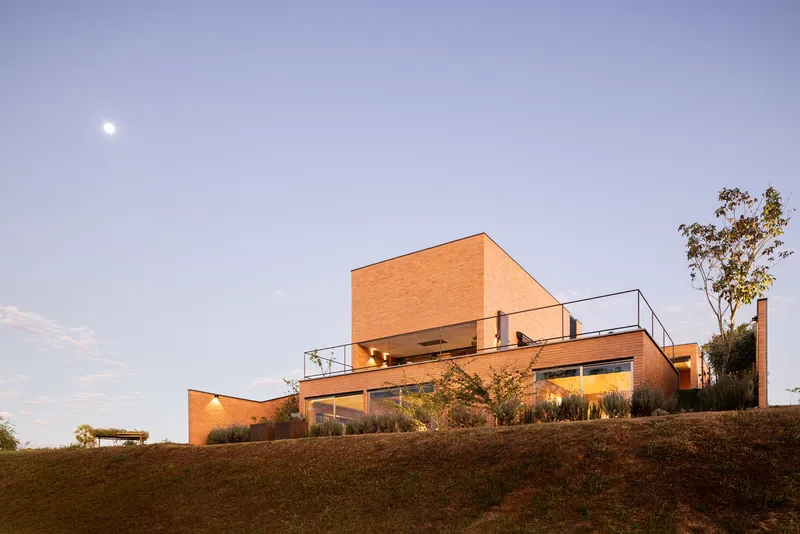
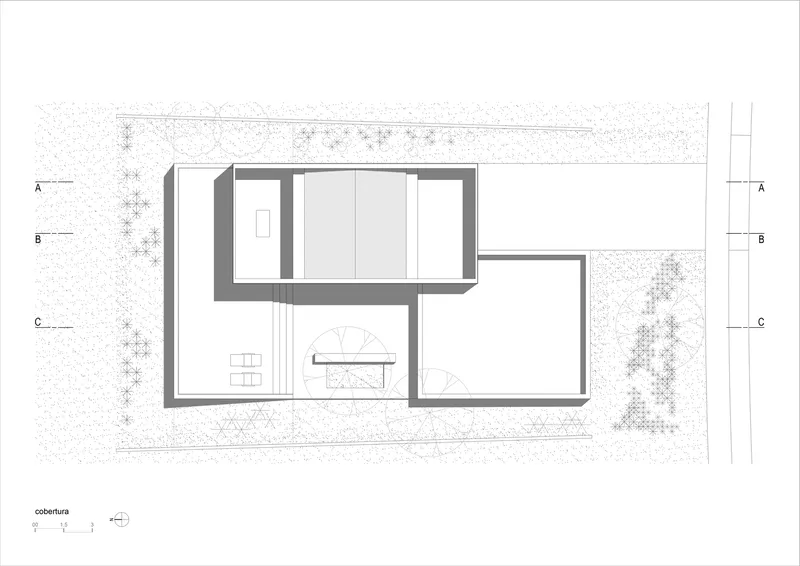
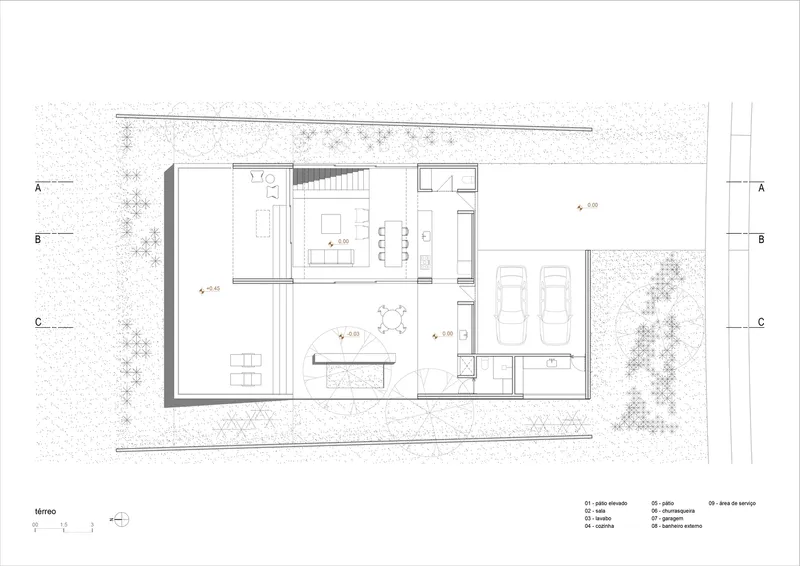
Grecov House by ARQBR Arquitetura e Urbanismo exemplifies a contemporary Brazilian slope house that seamlessly integrates with its natural surroundings. Situated in the Residential Alphaville II condominium, just off DF-140 on the outskirts of Brasília, the 3423 ft² home utilizes the natural terrain to sculpt an immersive living experience. Designed by architects Eder Alencar and André Velloso, the house is a bold yet respectful intervention that engages with the native riparian forest, transforming a sloped site into a layered architectural narrative.
Entrance as Spatial Connector
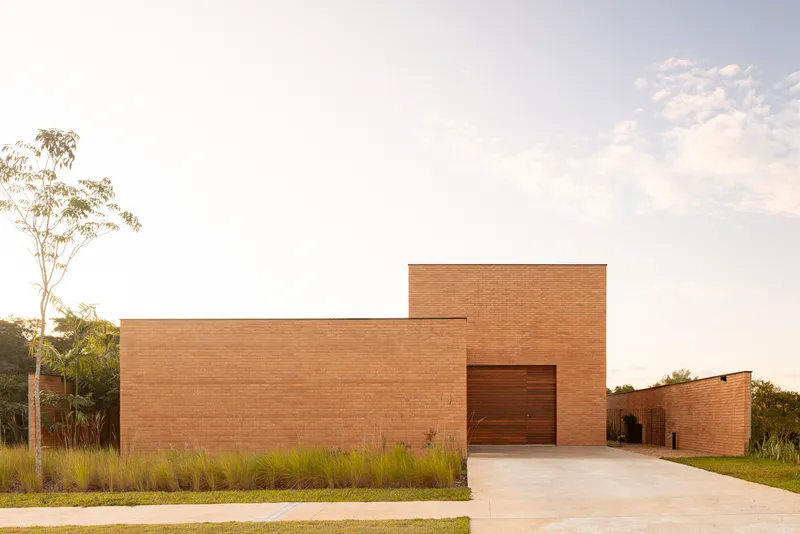
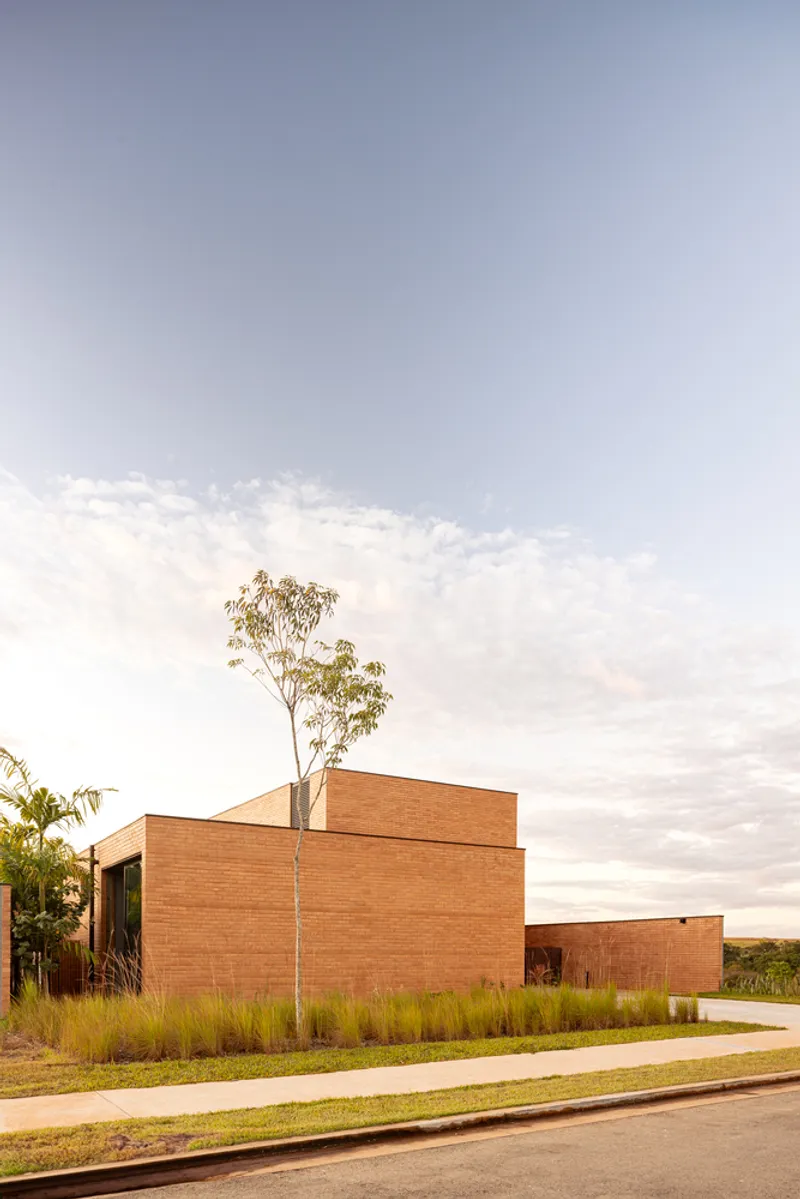
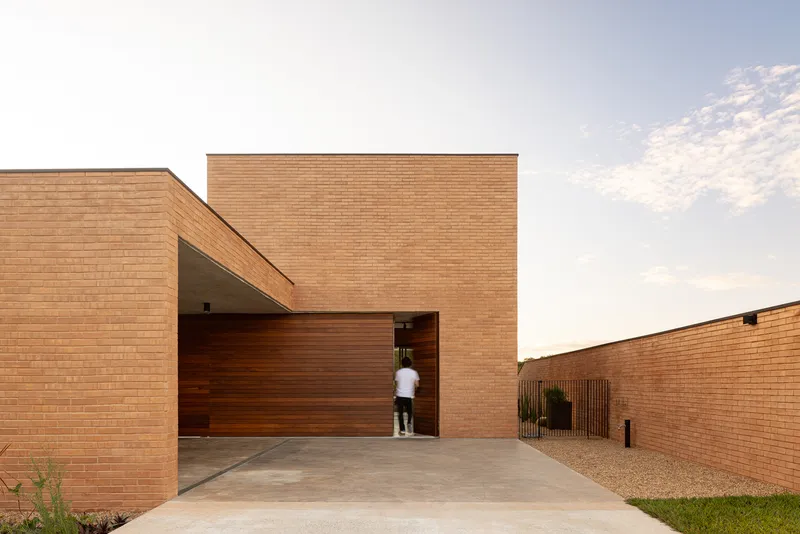
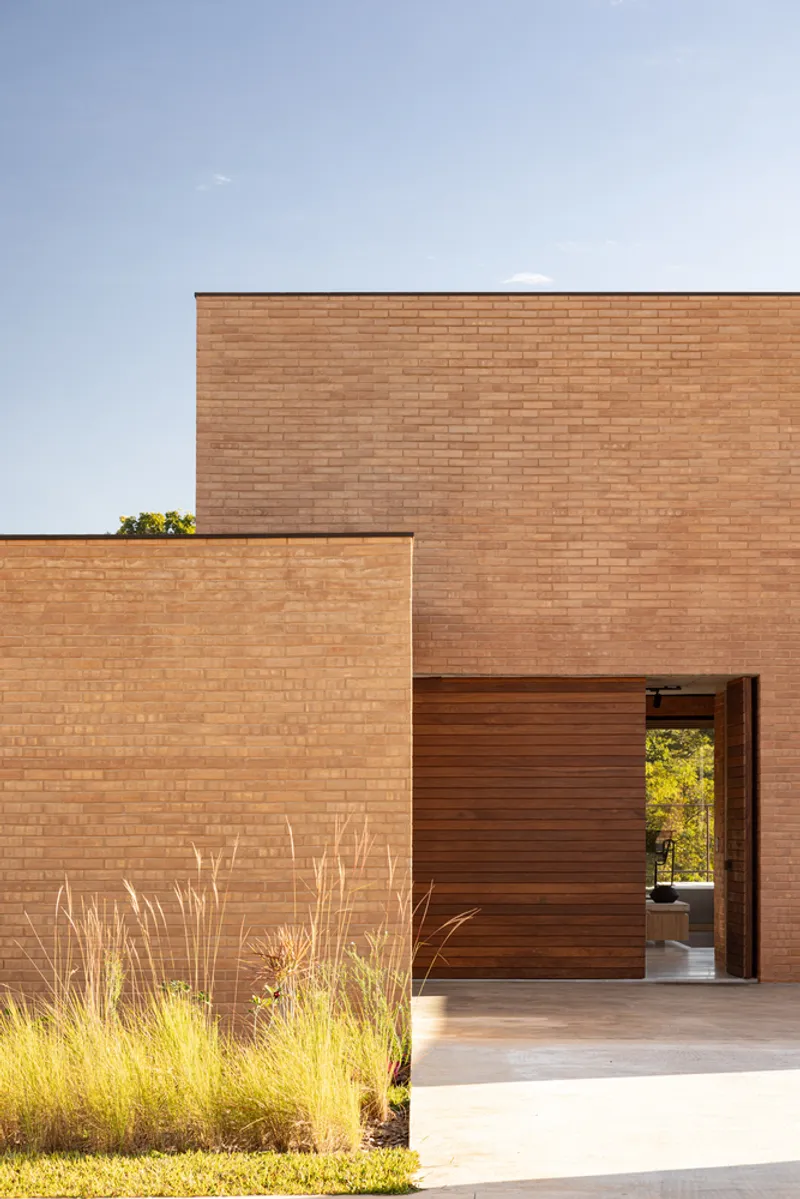
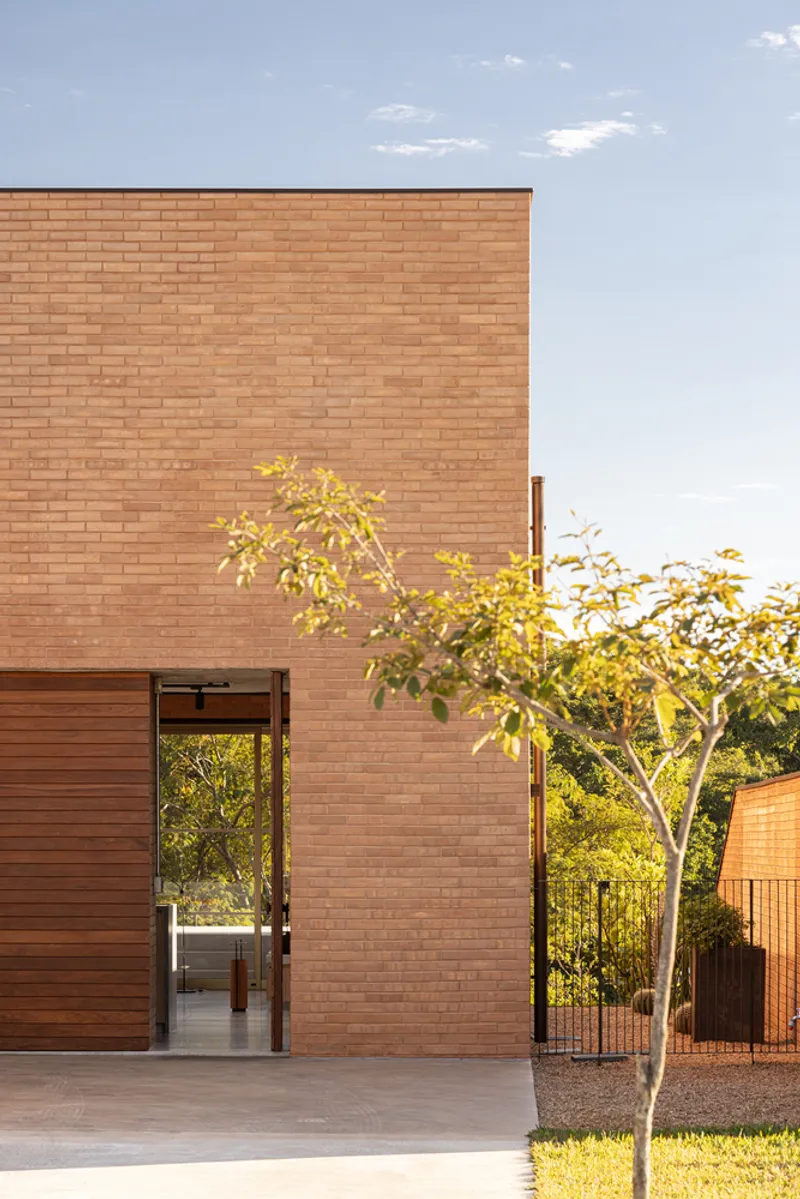
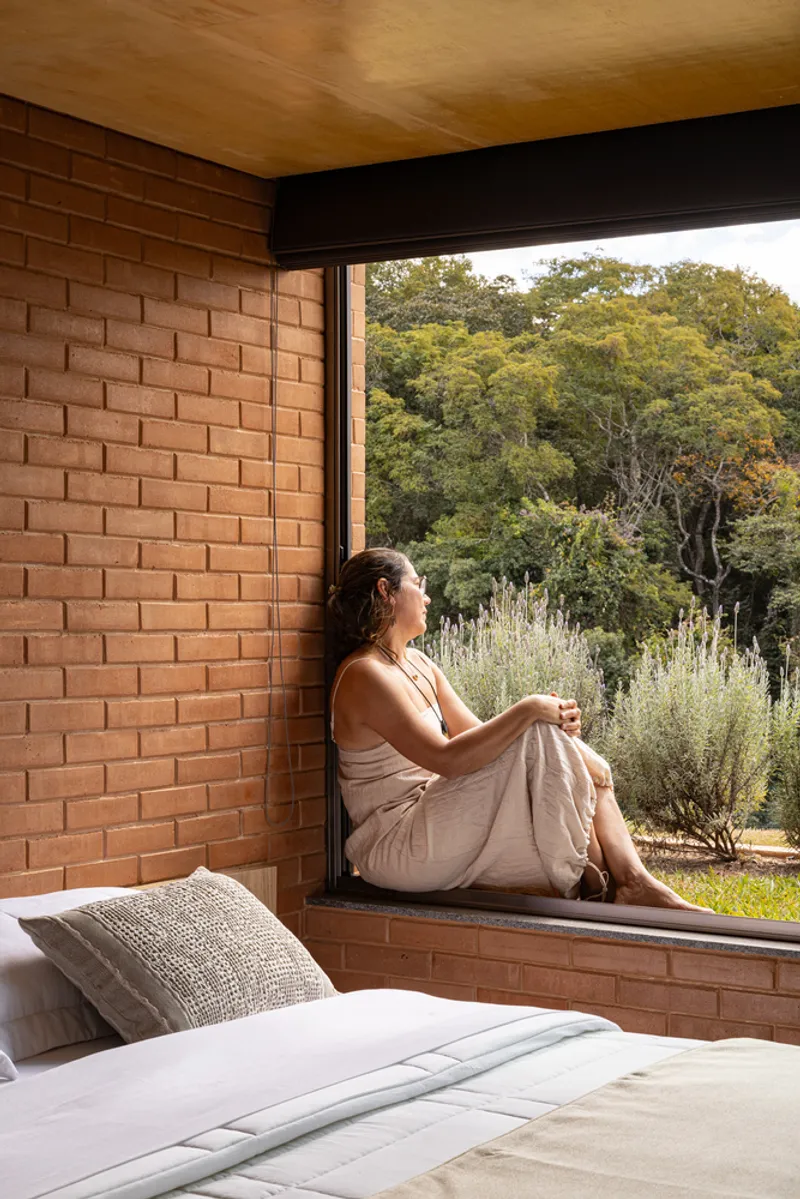
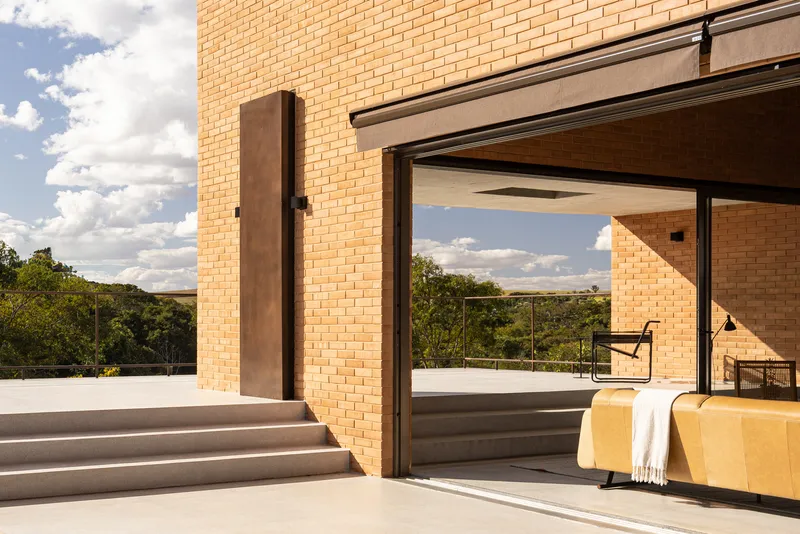
The architectural composition introduces two interlocking volumes unified by a large wooden panel at the entrance, which faces the inner side of the residential community. This gesture creates a welcoming front that contrasts with the north-facing rear façade, where carefully placed openings frame expansive views of the forest. These apertures serve not only as sources of daylight but also as meditative portals that dissolve the boundary between interior life and nature.
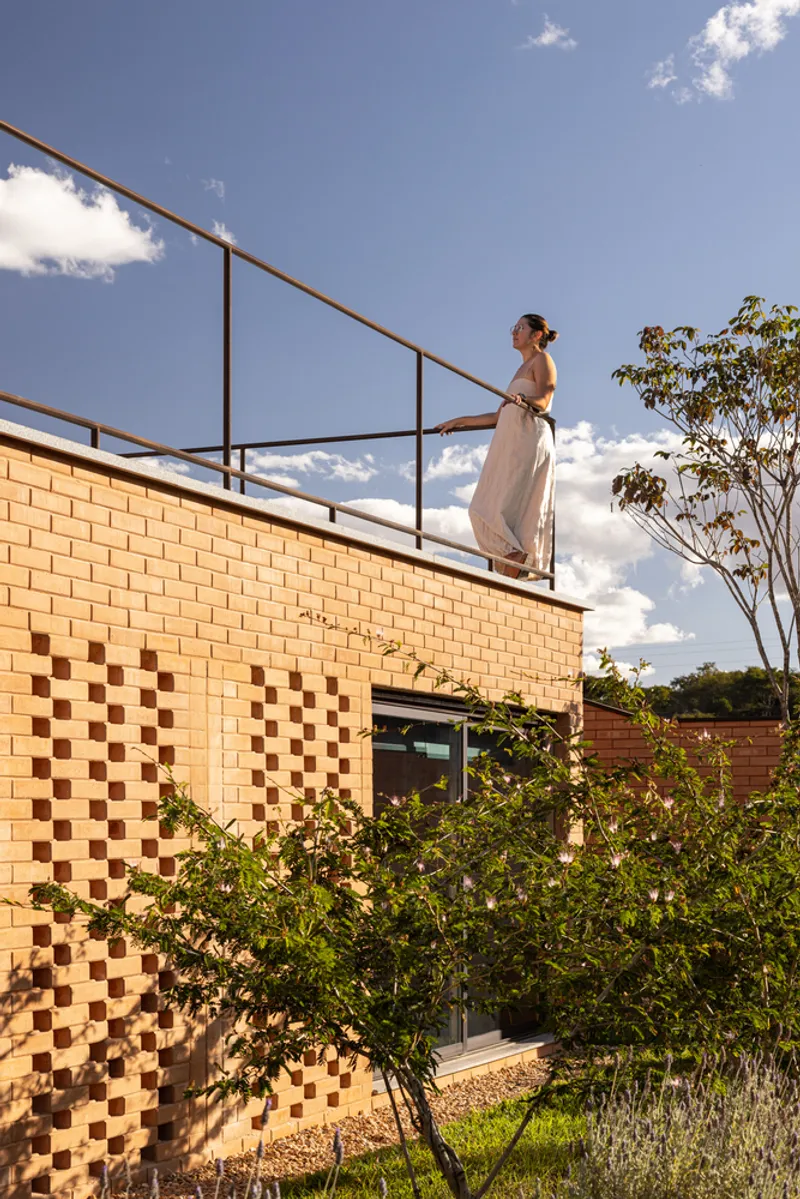
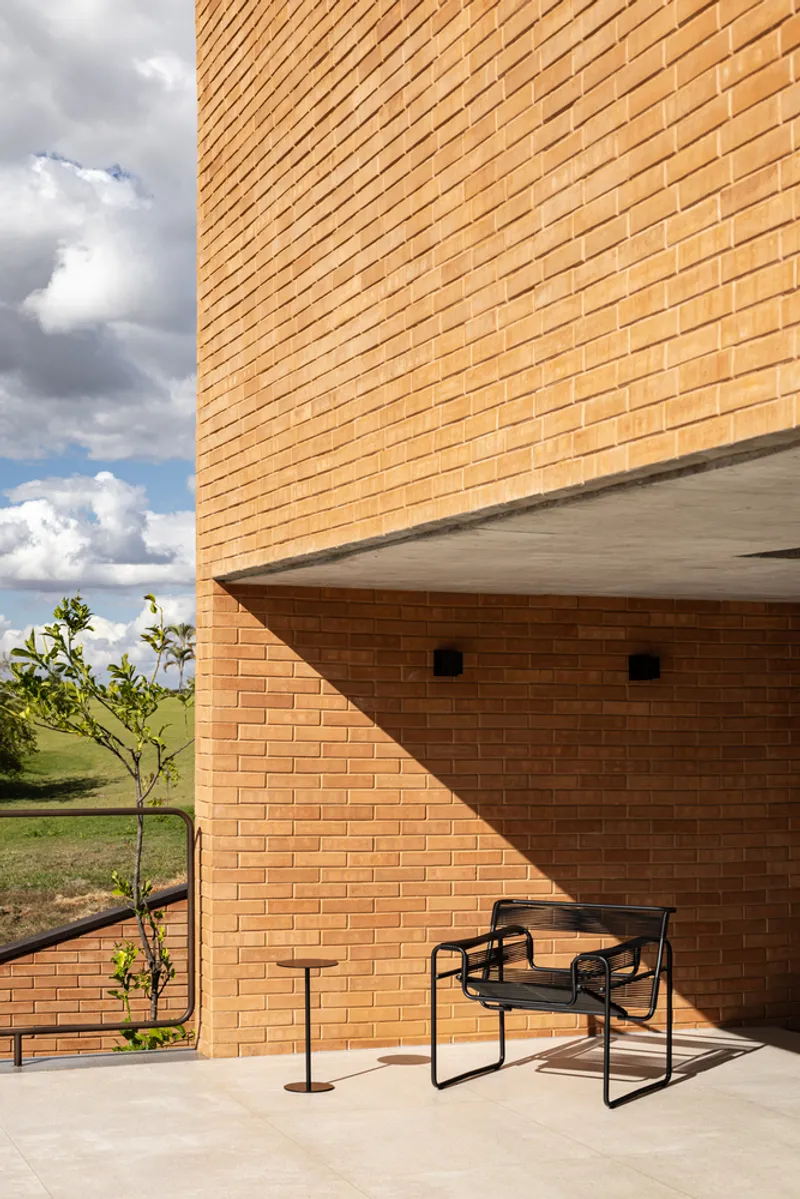
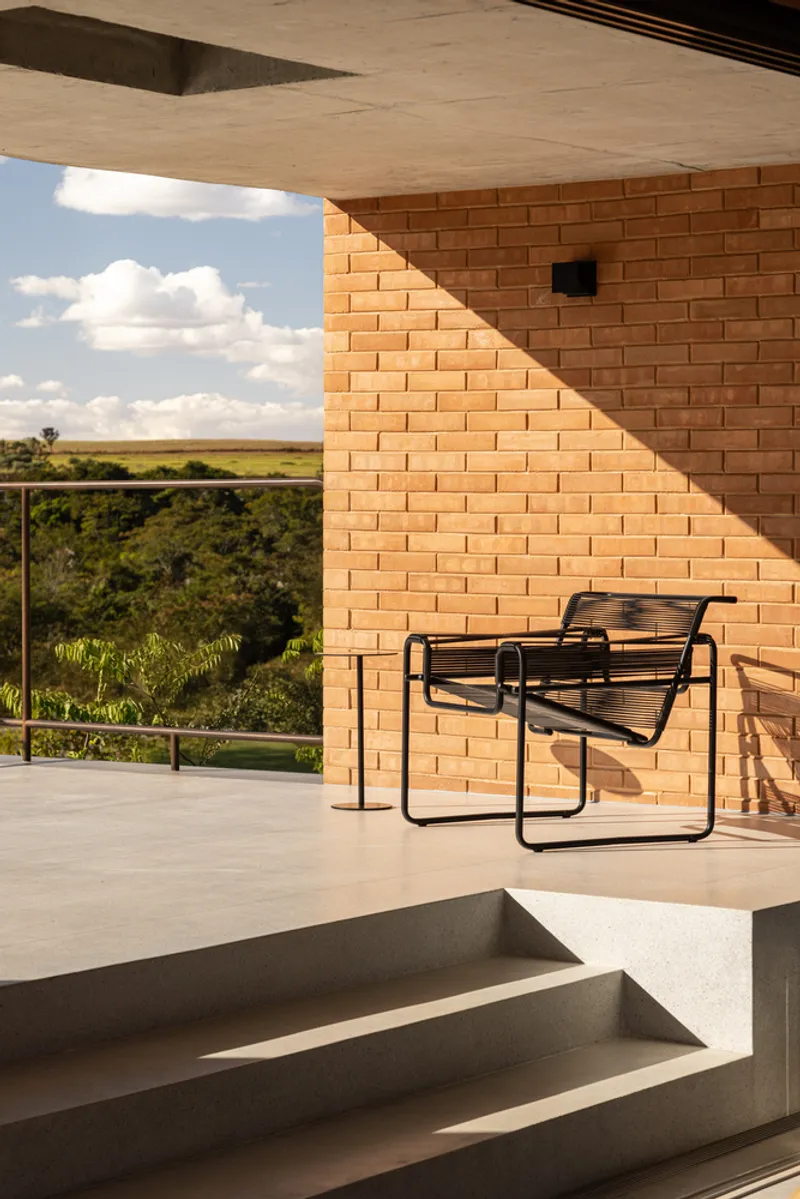
Ground Floor Social Core
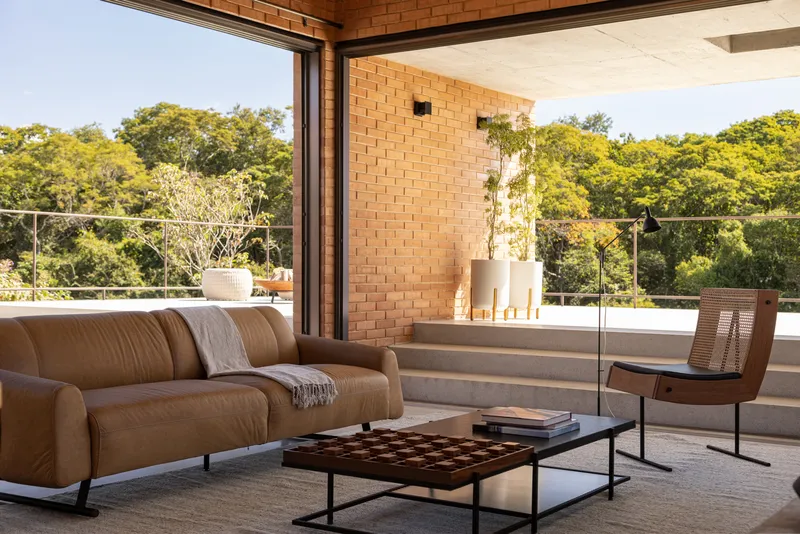
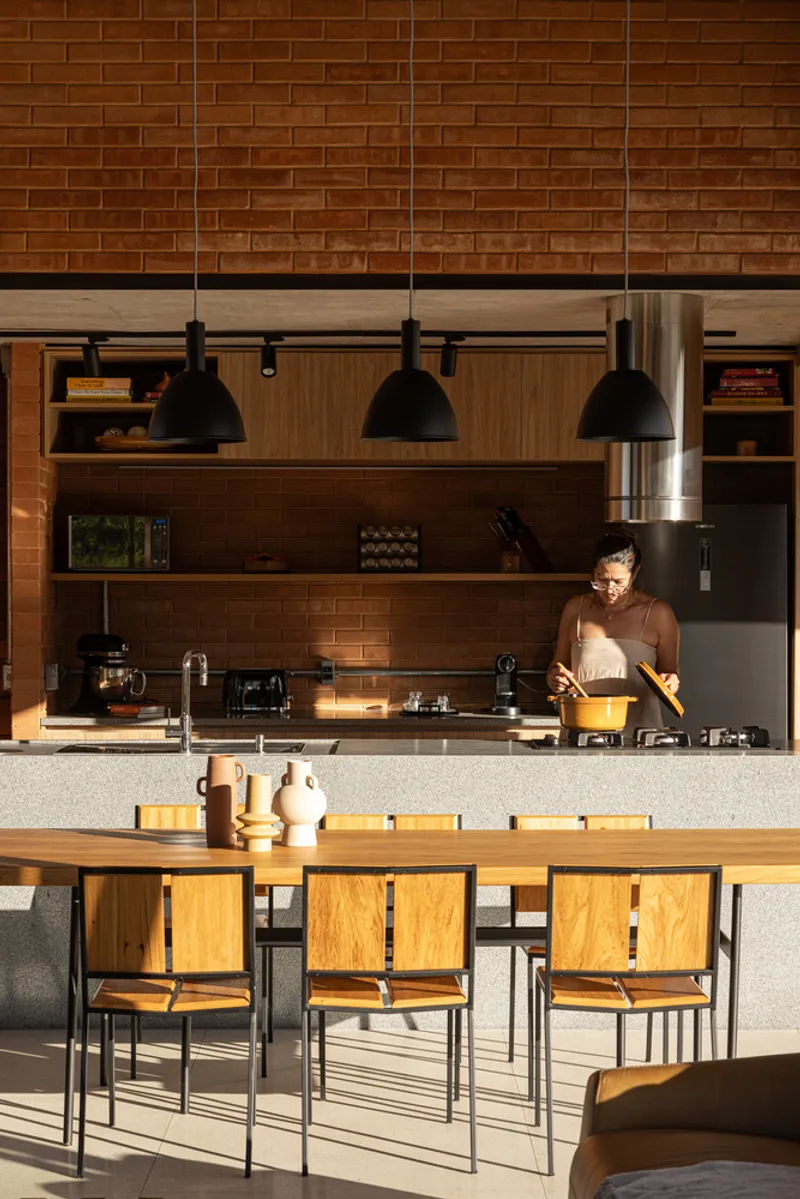
The primary living spaces are located on the ground floor, where the layout encourages fluid interaction among the living room, dining area, kitchen, guest bathroom, and barbecue space. These elements are orchestrated around a central patio, which functions as both a visual overlook and a vibrant social hub. The patio design not only links the interiors but also opens them up to the landscape, enhancing cross-ventilation and framing shifting views of the forest.
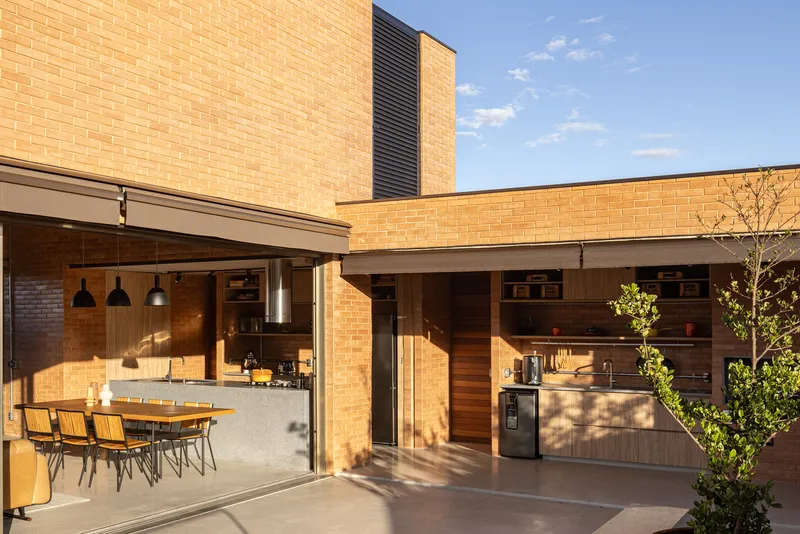
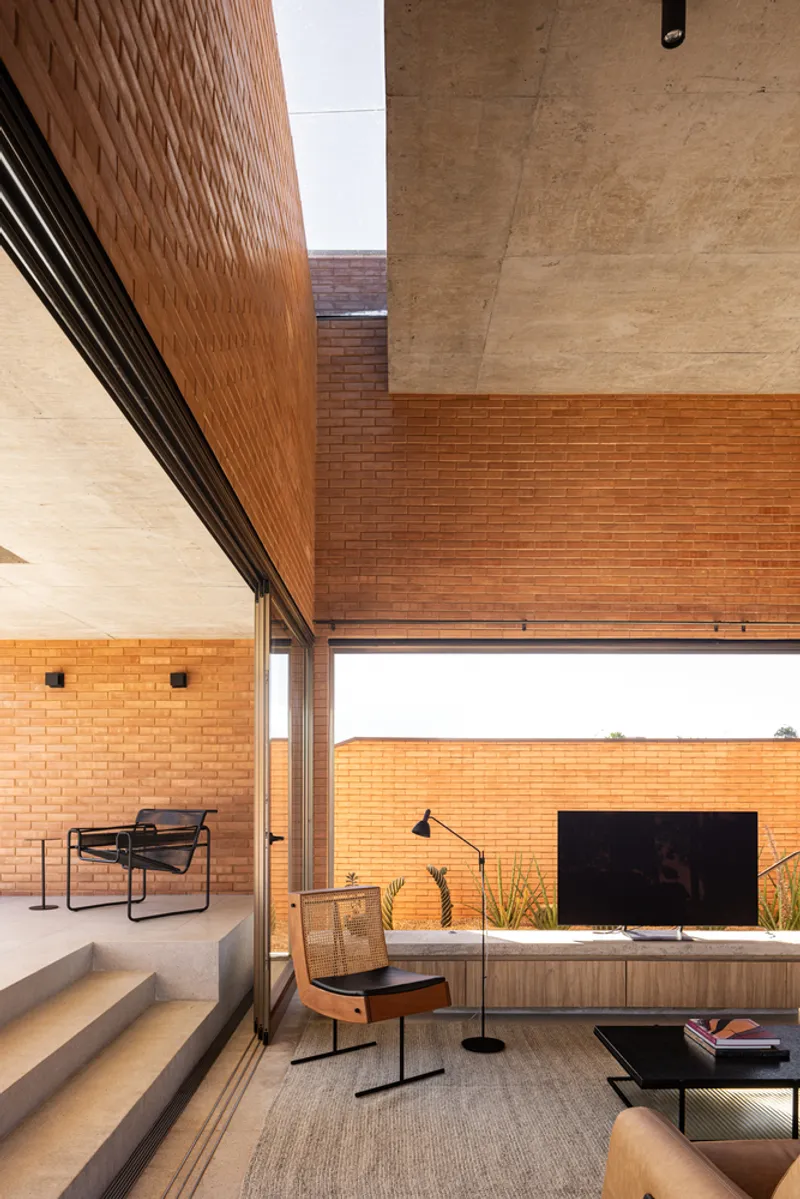
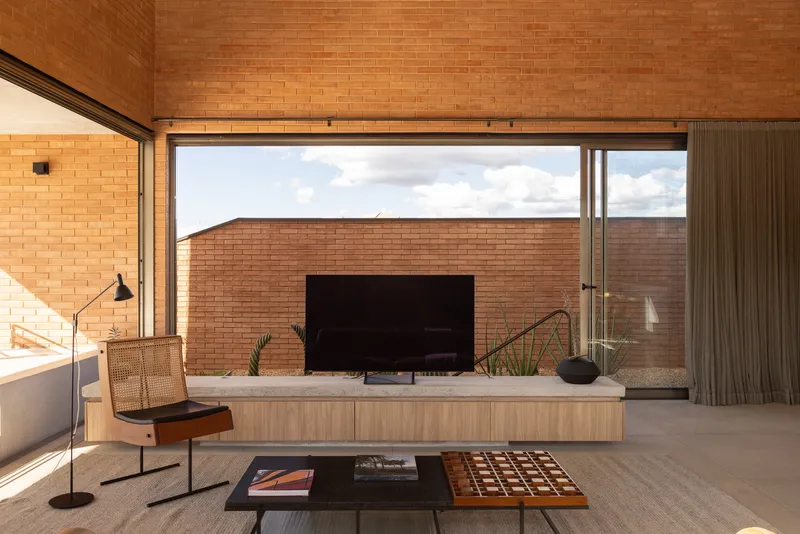
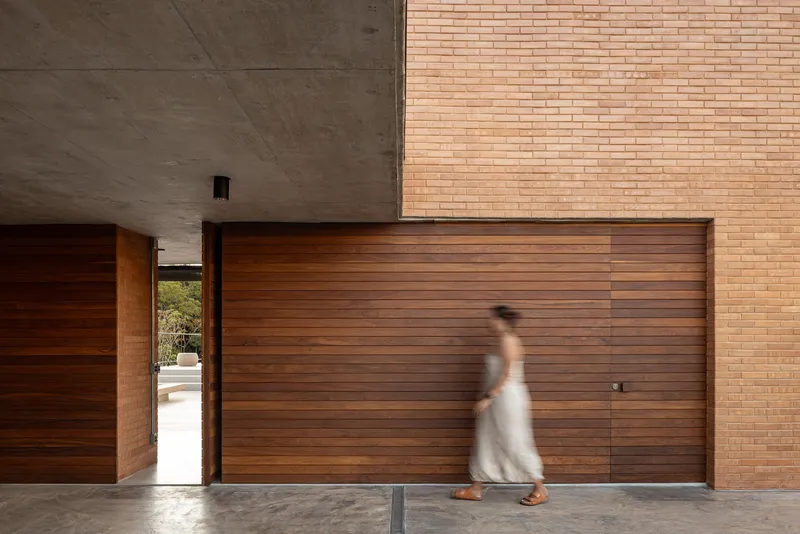
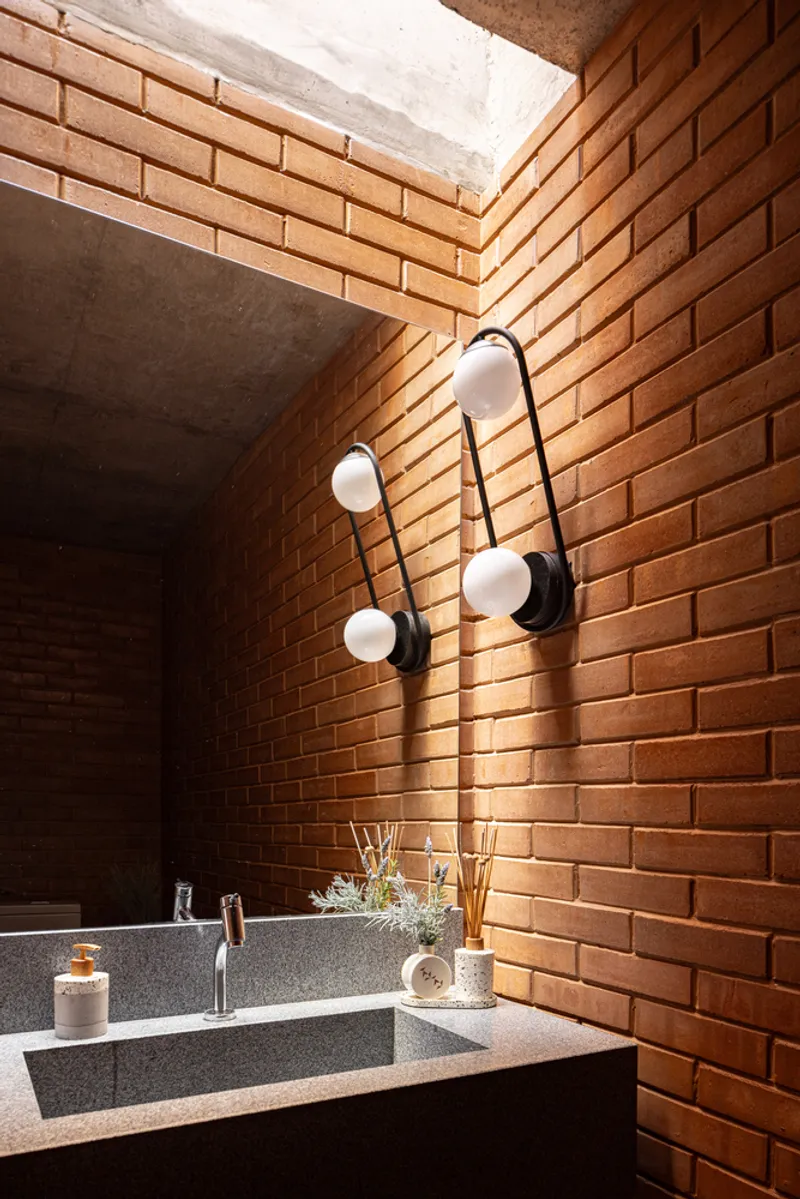
A monolithic floor stretches throughout the shared living areas, anchoring the design in visual and material continuity. The use of in-situ concrete and eco-bricks introduces a tactile authenticity to the construction, reflecting ARQBR’s dedication to handcrafted materials and sustainable design.
Semi-Underground Intimate Zone
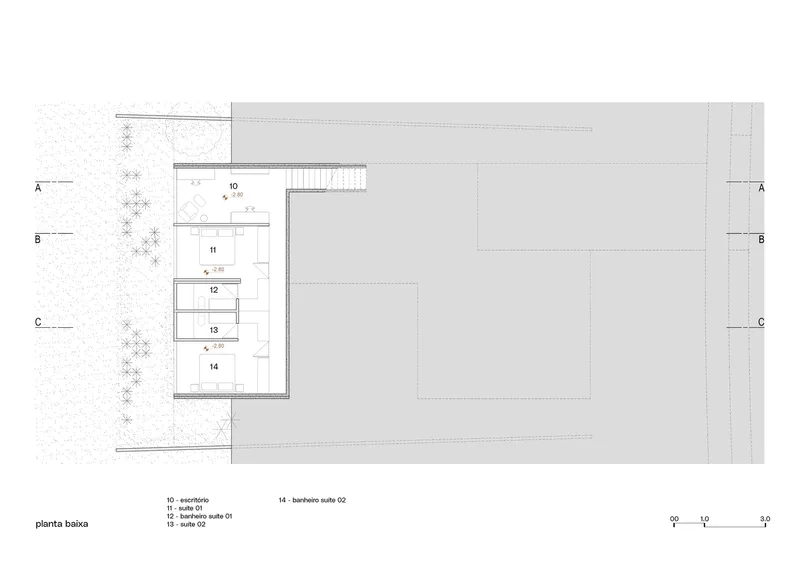
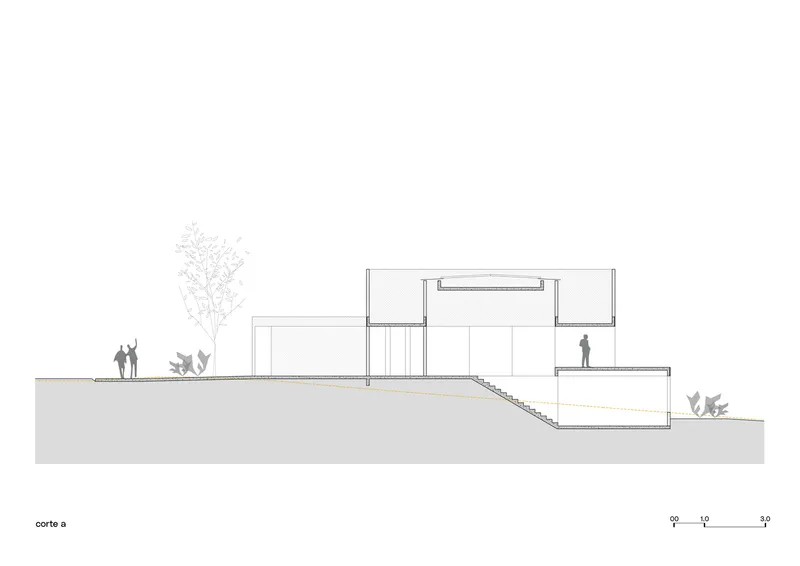
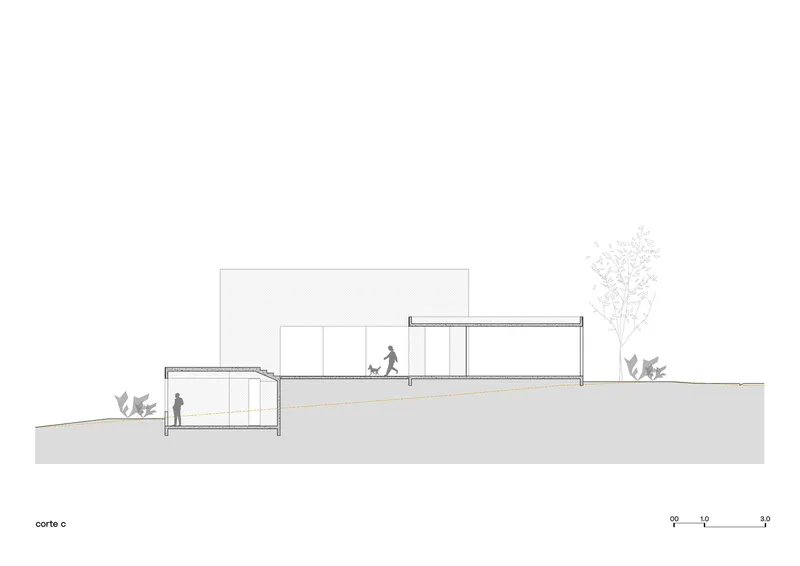
Beneath the main living spaces, the semi-underground level houses the private quarters of the home. By lowering this tier below the natural ground level, the design achieves a grounded visual connection with the surrounding garden. This level includes an office and bedroom suites, offering quietude and privacy while maintaining a direct relationship with the outdoor landscape at eye level.
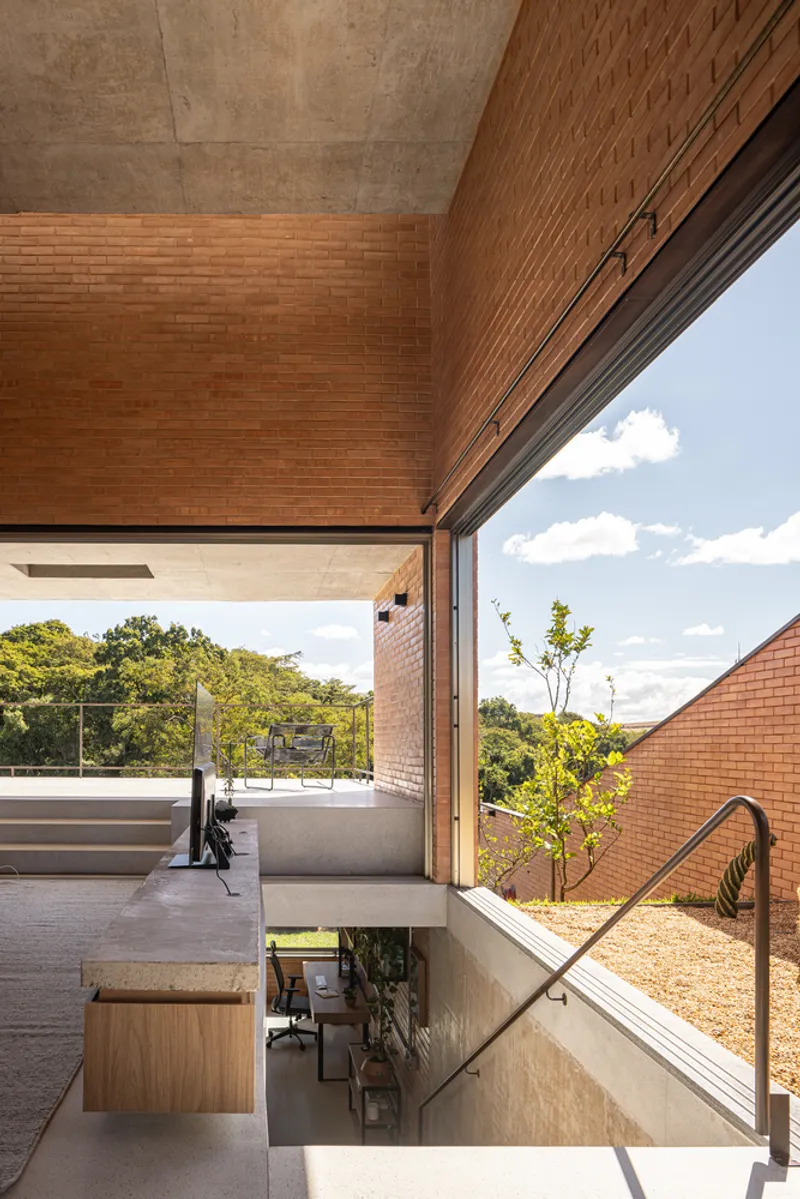
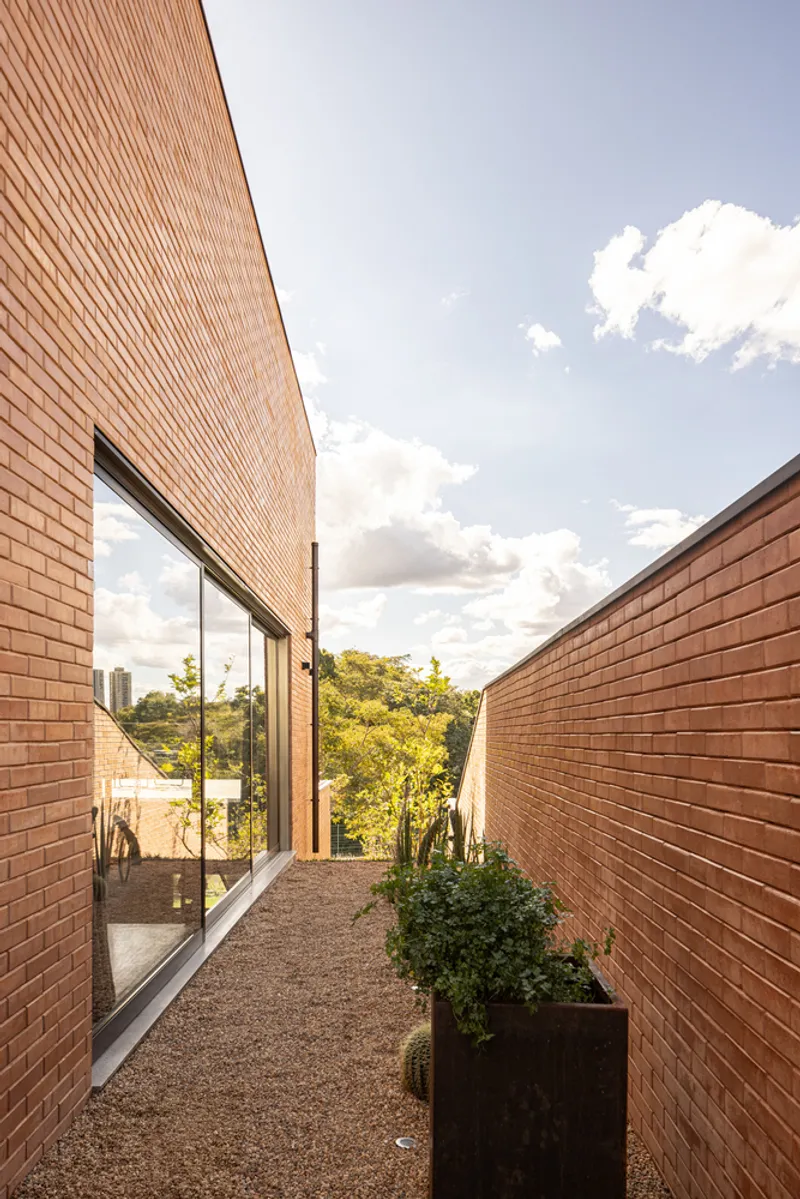
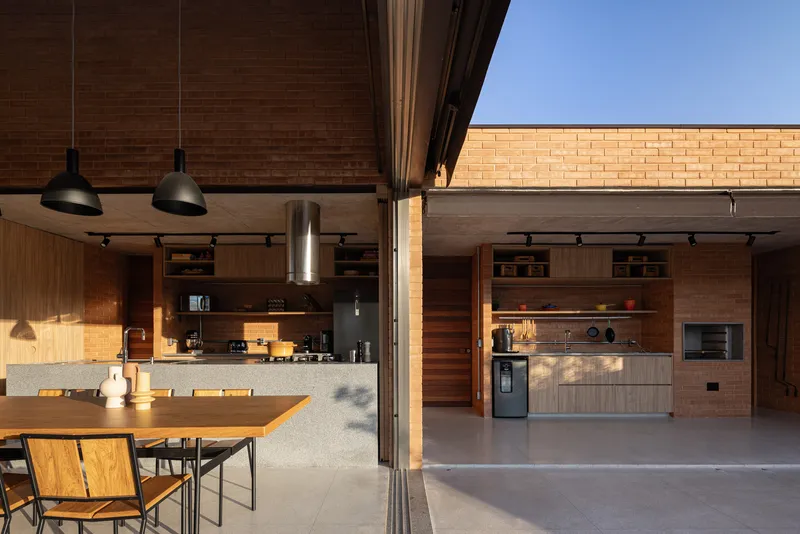
This section of the house is strategically embedded into the terrain, creating thermal benefits while fostering an introspective spatial atmosphere. Despite its recessed location, the use of expansive glazing ensures that daylight and nature remain central themes in every room.
Daylight as an Architectural Element
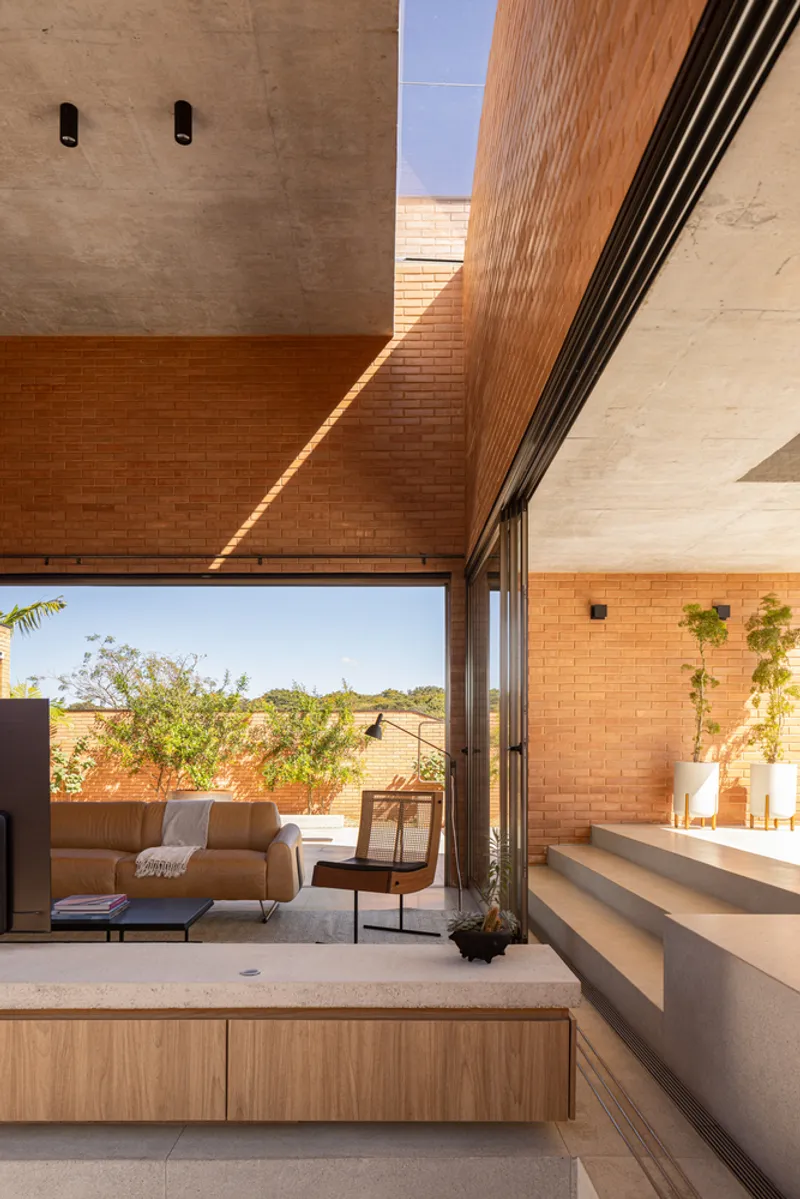
In the living room, lateral skylights allow shafts of natural light to filter through the ceiling, creating the illusion of a floating concrete slab. This poetic interplay between light and mass elevates the architectural language of the house, emphasizing volume, depth, and time.
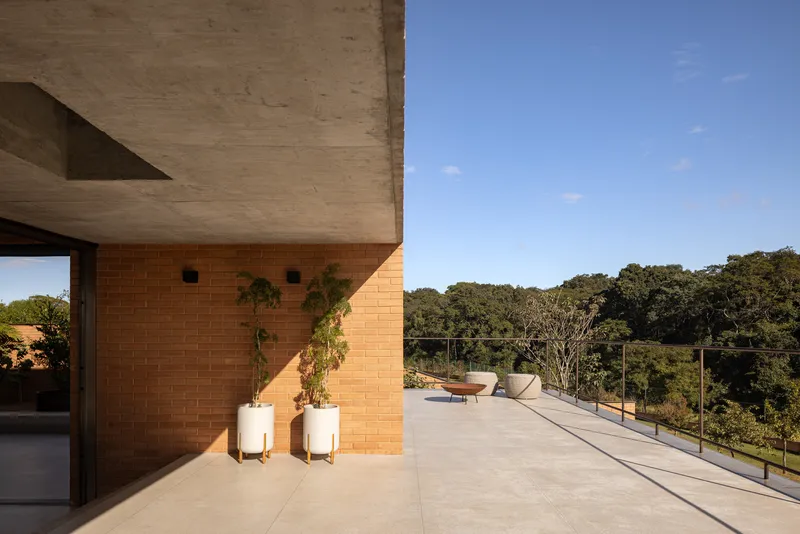
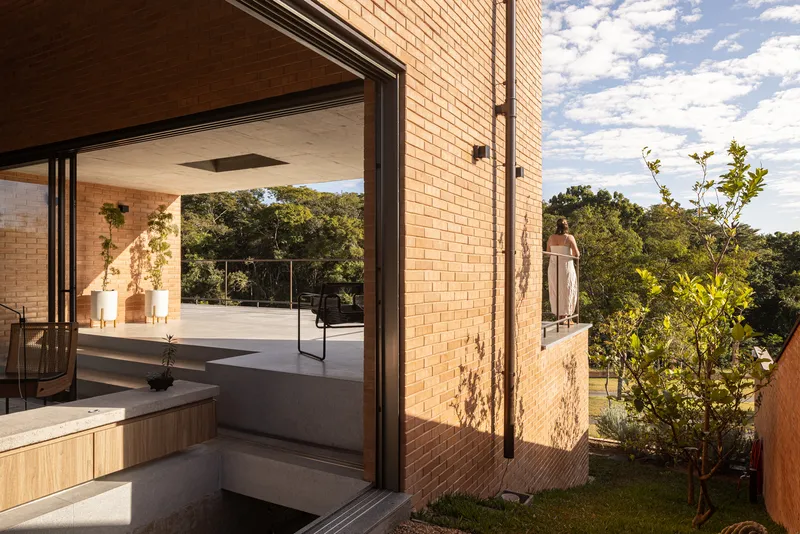
The use of natural light across the day transforms interior experiences—mornings are characterized by diffused serenity, while afternoons invite a richer warmth that dances across wood, brick, and stone.
A Dialogue Between Structure and Site
Grecov House stands as a refined example of how modern Brazilian architecture can engage responsibly and expressively with the landscape. The project’s slope-responsive design avoids excessive excavation or leveling. Instead, it allows the house to rest gently along the topography, letting architecture and earth coalesce.
The residence is not just a place of shelter, but a platform for contemplation—a Brazilian slope house that offers an evolving dialogue between domestic life and the wild textures of nature.



Popular Articles
Popular articles from the community


Riyadh For All: Intergenerational Urban Design for Active Aging in Rabat
Riyadh For All reimagines urban design in Rabat with intergenerational co-living, adaptive courtyards, and Moroccan cultural exchange today.

The Ocean Hive: Sustainable Architecture for a Self-Sufficient Civilization at Sea
The Ocean Hive imagines sustainable architecture at sea, where modular habitats, algae, wave power and ocean waste sustain a growing colony.

Lunar Spiral: Space Architecture Shaped by the Mathematics of the Universe
Lunar Spiral reimagines space architecture through Fibonacci geometry, lunar regolith, levitating habitats, and self-sustaining Moon living.

Play: Fragments of Their World
Familiar architecture becomes modular playground design, creating safe spaces where displaced children can learn, connect, imagine and play.


Similar Reads
You might also enjoy these articles


Hodi-Mandai Geram
Project Function: Preservation and revitalization of the Intangible heritage and socio-spatial identity of the Hodi by Housing, Cultural Memory Center, Sacred Grove, landscape, local tourism economy


Olio Towers: A Mid-Rise for Performers That Fuses Housing, Rehearsal, and Stage
Located blocks from Houston's Theater District, this modular tower stacks living units around a central performance atrium.

Oasis: Modular Green Housing Carved into Dhaka's Urban Fabric
A shortlisted Plugin Housing entry reclaims unauthorized settlements in Dhaka with stepped concrete volumes, green roofs, and ventilation-driven design.

Black Hole: A Floating Megastructure for the Post-Physical Era
Emiliano Mazzarotto envisions a spherical, self-scaling arena where e-sports, digital hotels, and holographic stadiums replace traditional public space.


Explore Architecture Competitions
Discover active competitions in this discipline



Challenge to reimagine the Iron Throne


Photograph architecture without architects


Illustrate the lost glory of Angkor Wat - Render Challenge


Design challenge to reuse E-waste
Comments (0)
Please login or sign up to add comments
No comments yet. Be the first to comment!