
Breathing Beach House by Karm Architecture Lab: A Sustainable Desert Retreat Along Egypt’s Red Sea
Breathing Beach House by Karm Architecture Lab is a sustainable, climate-responsive desert home using passive cooling and local limestone materials.


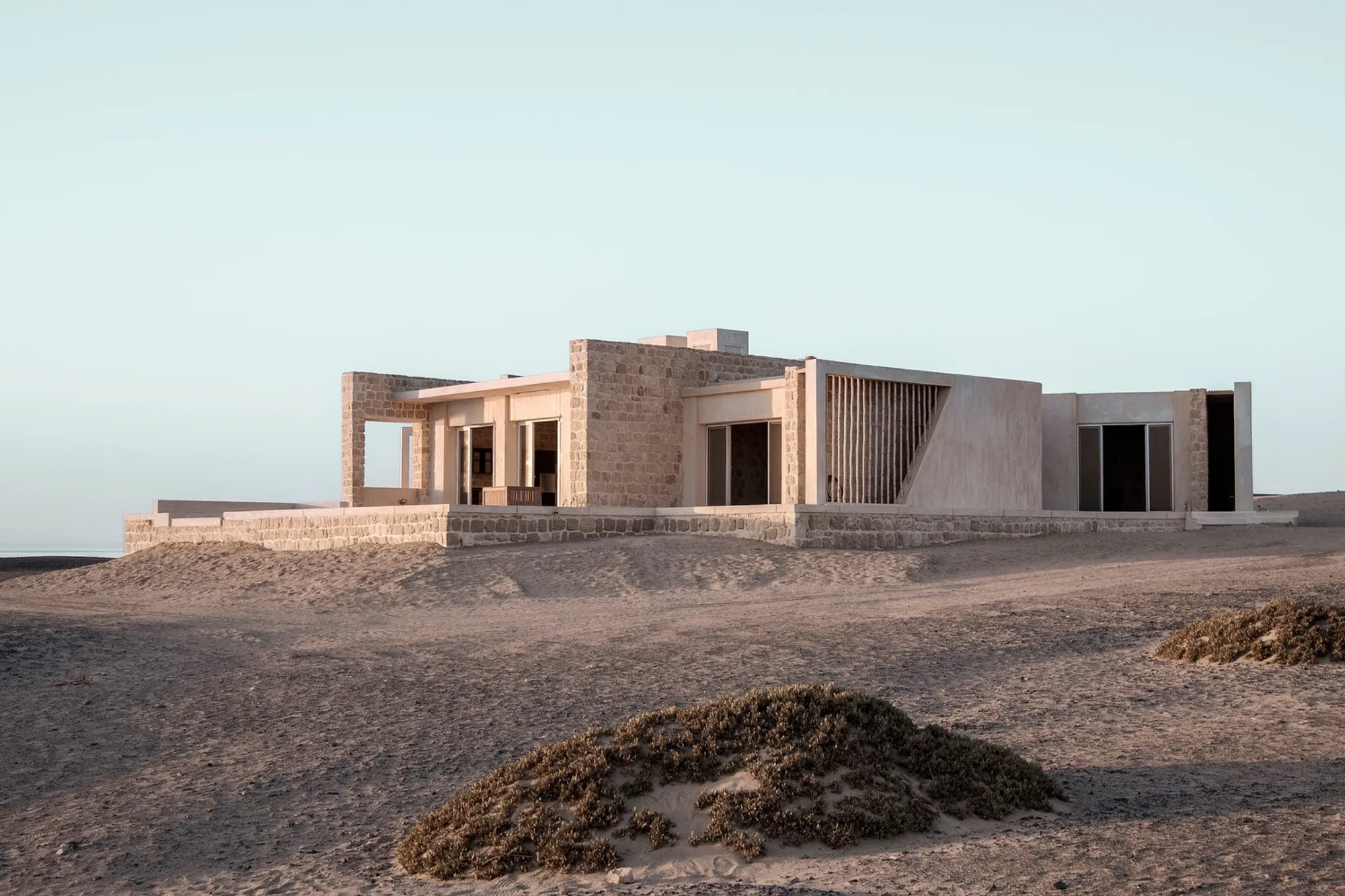
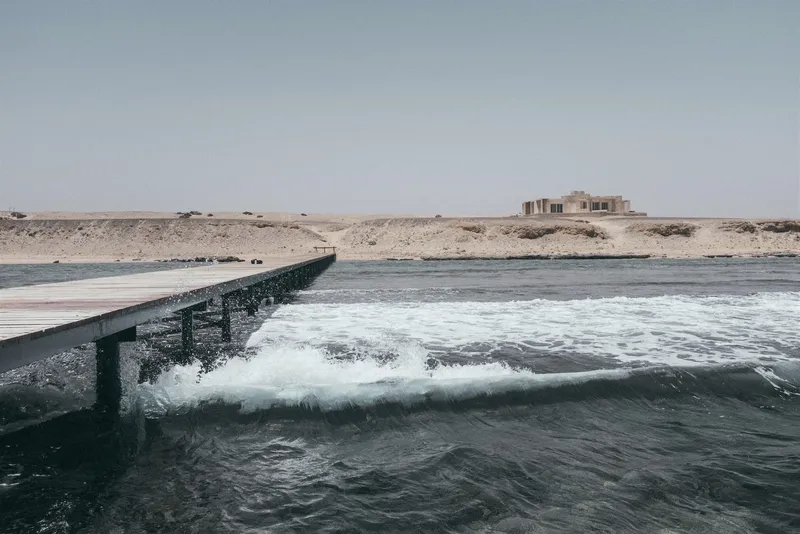
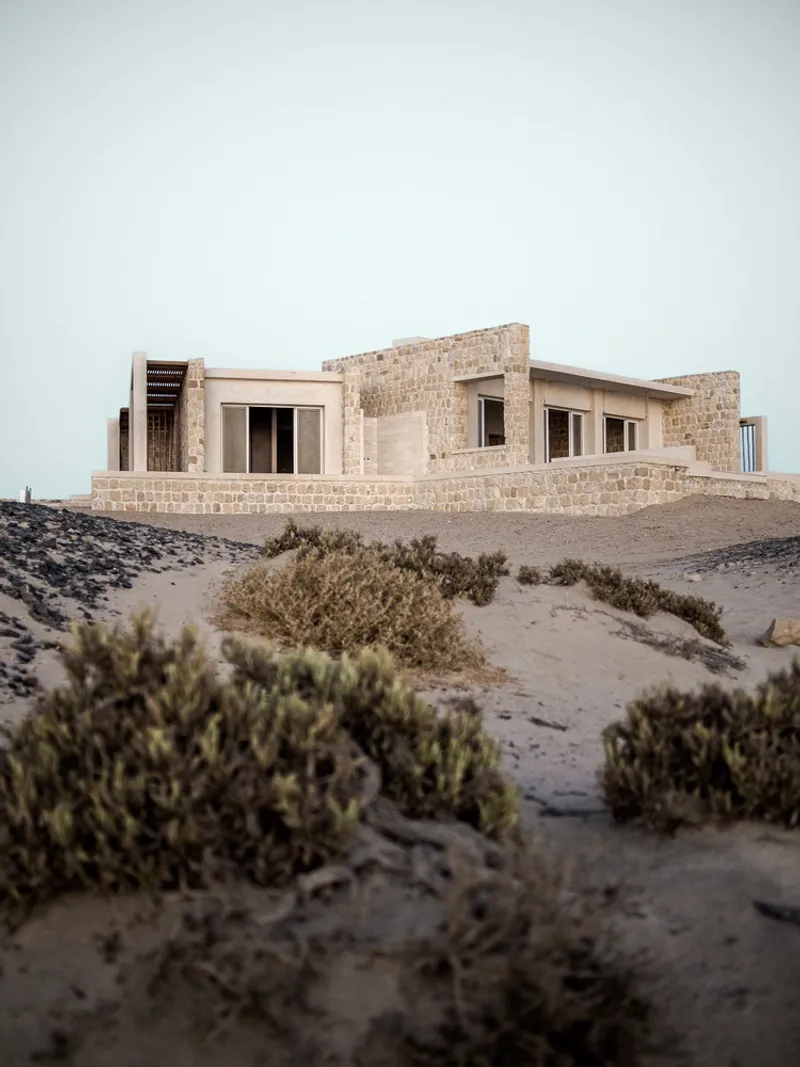
The Breathing Beach House, designed by Karm Architecture Lab (KAL), stands as a striking example of sustainable residential architecture, blending vernacular materials, passive cooling strategies, and biophilic design to create a one-of-a-kind family retreat. Located in the sun-drenched coastal setting of Marsa Alam, Egypt, this 255 m² single-story beach house is a masterful response to its harsh desert climate and stunning seafront views.
Completed in 2021 under the lead of architect Farah Faheem, the Breathing Beach House transforms the extreme conditions of Egypt’s Eastern Desert into an opportunity for architectural innovation. With summer temperatures soaring to 50°C, the house was conceived as a living, breathing organism, embracing biomimicry and biophilic principles to regulate indoor comfort naturally and minimize mechanical interventions.
Materiality: Fossilized Coral Limestone as a Sustainable Foundation
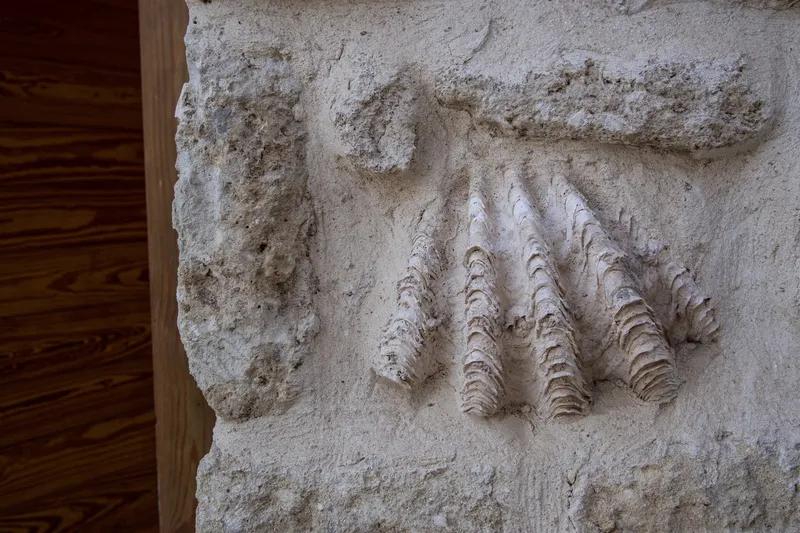
At the heart of the design is a deep respect for local materials and ancient landscapes. The home’s thick load-bearing walls, constructed from fossilized coral limestone, not only anchor the structure visually but also thermally. This locally sourced material, reclaimed from nearby excavation rubble, carries the fossilized imprints of ancient marine life, turning the walls themselves into geological artworks.
The limestone’s thermal mass helps stabilize indoor temperatures, absorbing heat during the day and releasing it at night, reducing reliance on artificial cooling. Moreover, the porous nature of the stone allows the walls to “breathe,” sometimes forming droplets of condensation on interior surfaces — a natural cooling mechanism that mirrors the way human skin perspires.
Passive Cooling Design: Wind Catchers, Solar Chimneys, and Second-Skin Walls
The home’s standout architectural feature is its pair of ventilation towers, which rise like antennas from the central roofline. One acts as a wind catcher, channeling cool air into the living spaces, while the other operates as a solar chimney, drawing warm air up and out. These dual towers alternate their functions throughout the day, mimicking the lungs of a living creature and maintaining a continuous cycle of natural ventilation.
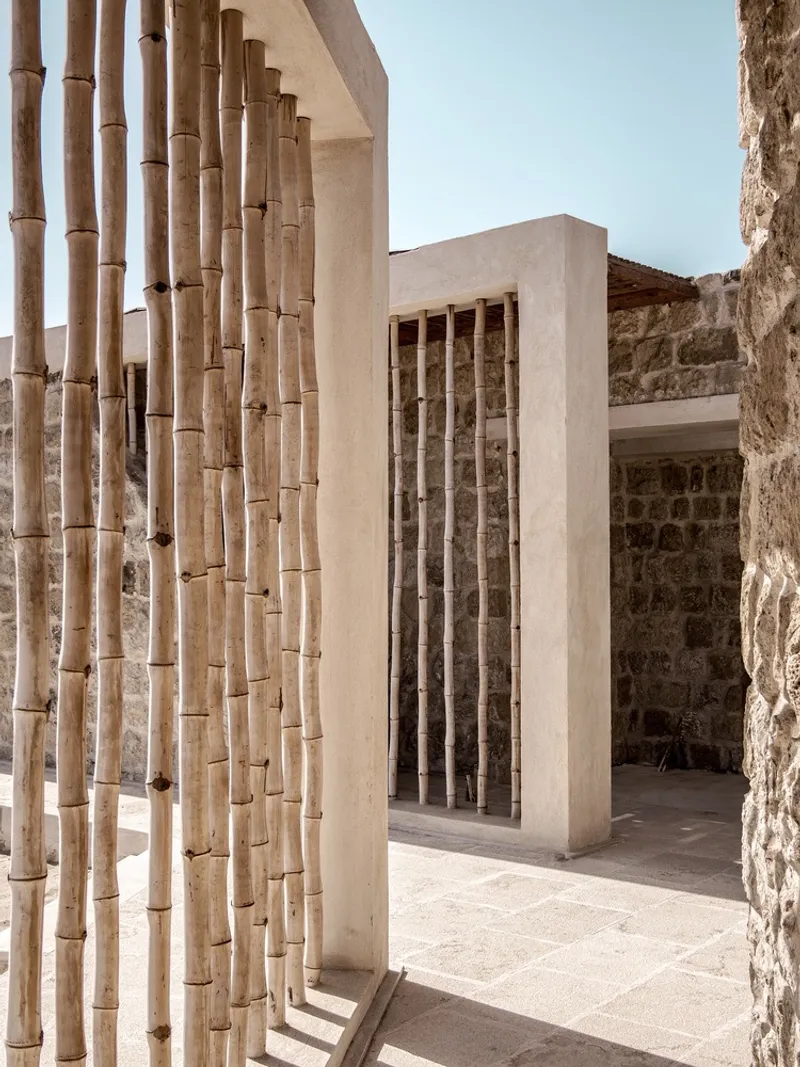
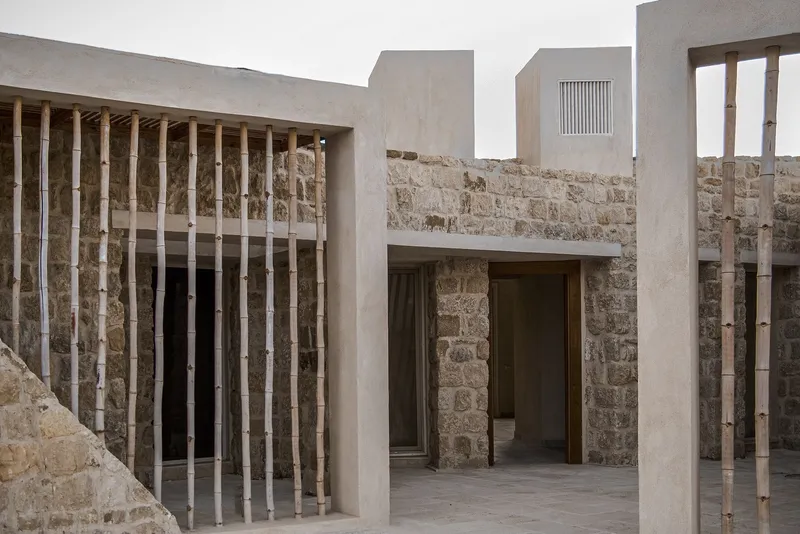
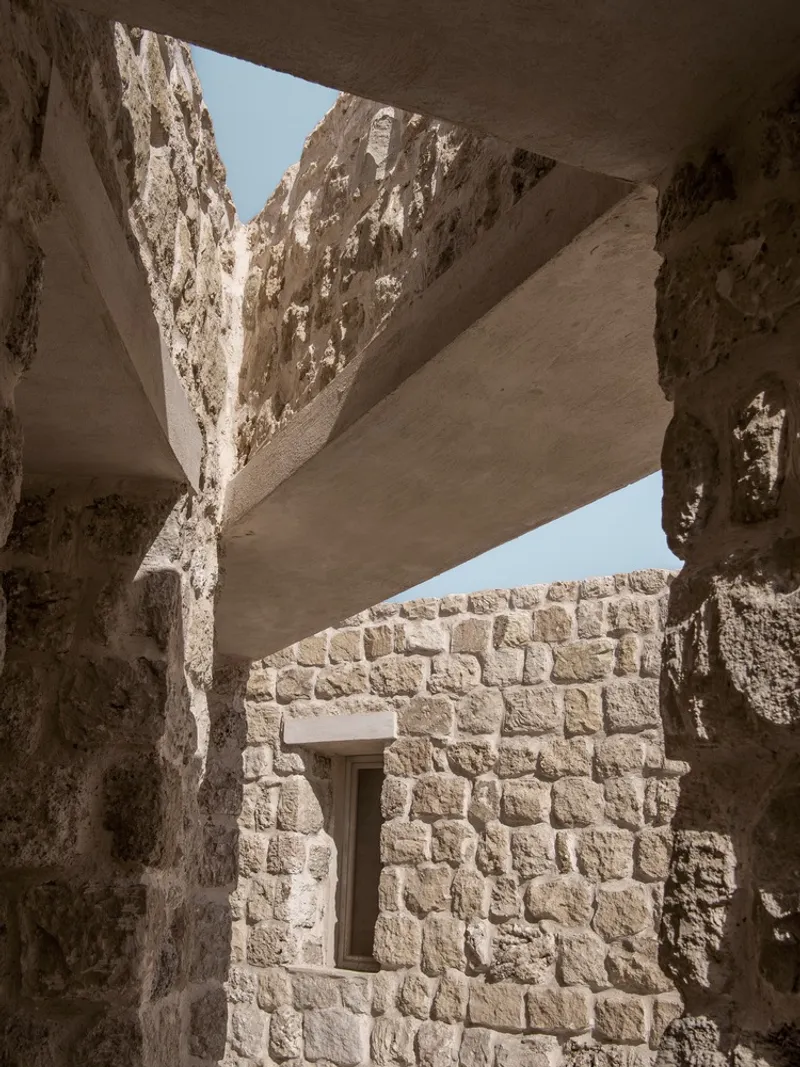
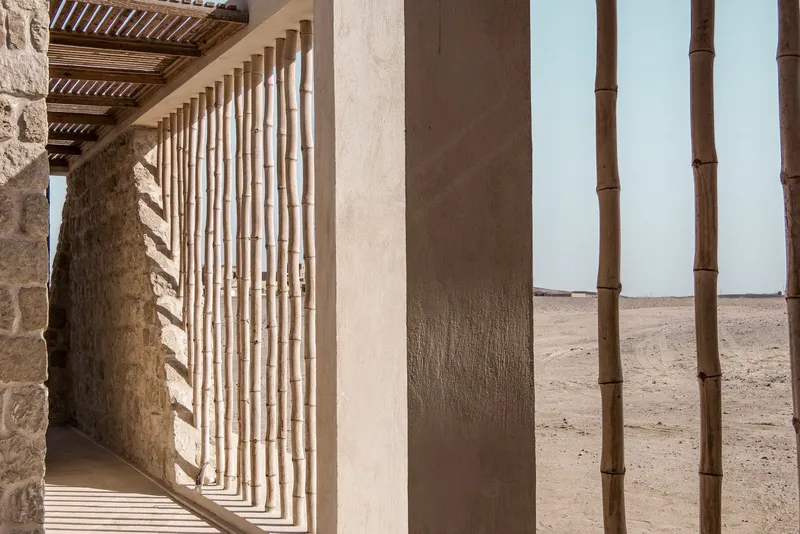
The design also incorporates second-skin walls made from coral limestone and bamboo, wrapping the southern elevations like a protective shell. This layered envelope shields the interior from direct sunlight, reducing heat gain during peak daylight hours. On the northern, sea-facing side, cantilevered roof slabs and recessed openings further buffer the home from excessive solar exposure, all while capturing refreshing prevailing sea breezes.
Crab-Like Floor Plan: Maximizing Views, Ventilation, and Outdoor Living
The floor plan adopts a compact, crab-like form, ensuring that every room — from the three bedrooms to the open-plan living area — enjoys uninterrupted 180-degree views of the Red Sea. This compressed yet porous layout encourages natural cross-ventilation, aided by carefully placed inlets and outlets in each space. Outdoor terraces and green pockets (soon to be planted with native vegetation) extend the living area beyond the walls, creating shaded microclimates and inviting connections to the surrounding landscape.
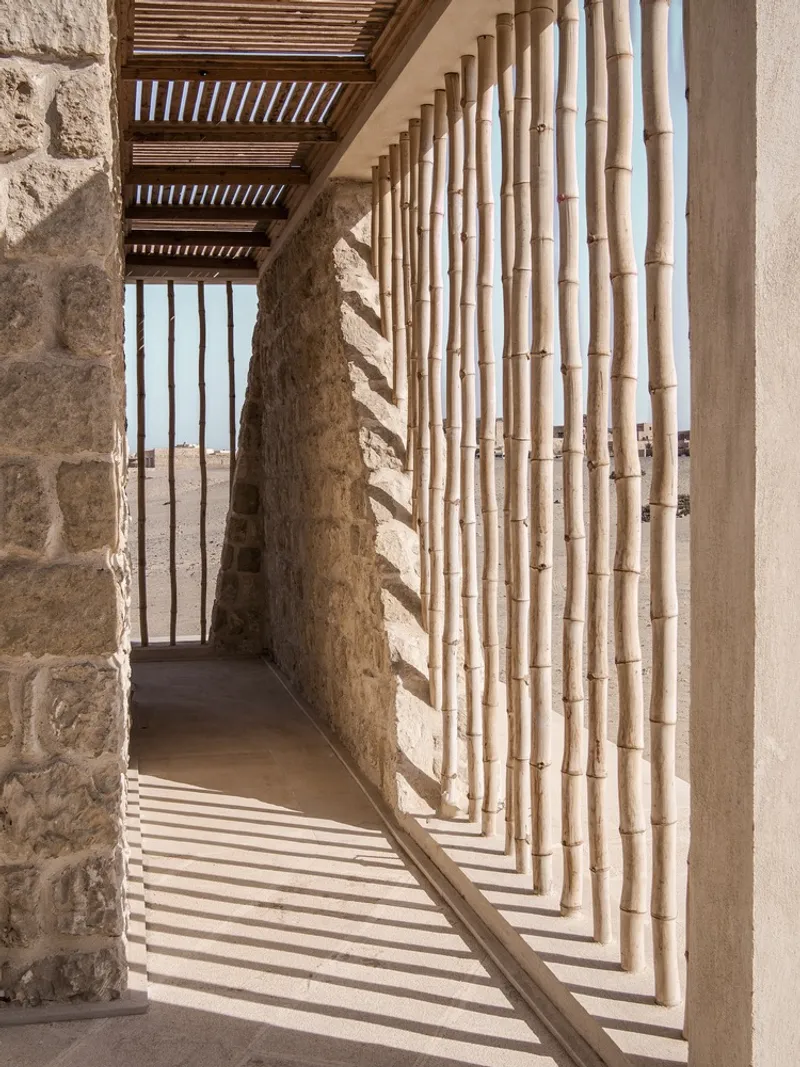
A Celebration of Vernacular Craftsmanship and Environmental Sensitivity
More than just a luxurious retreat, the Breathing Beach House is a celebration of vernacular craftsmanship and environmental stewardship. By employing locally sourced materials, reclaimed stone, and experienced artisans from the remote region, the project not only reduced construction costs by 40% but also honored the cultural and ecological context of its site.
In every detail, the house reflects a commitment to sustainability, resilience, and poetic connection with its desert-sea environment — a living testament to how contemporary architecture can learn from nature and the past to design for a climate-challenged future.
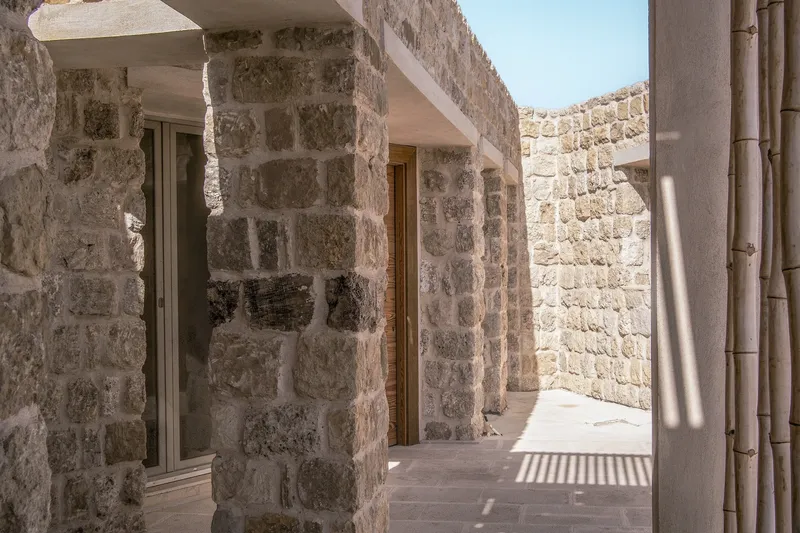
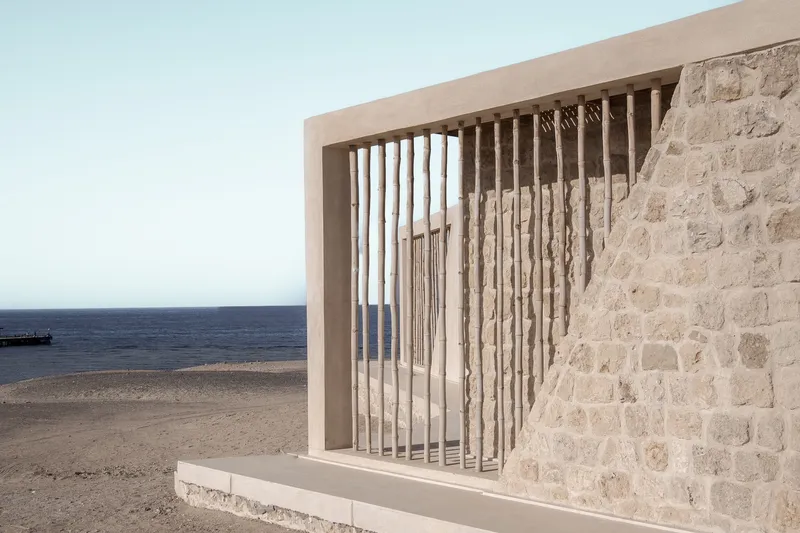
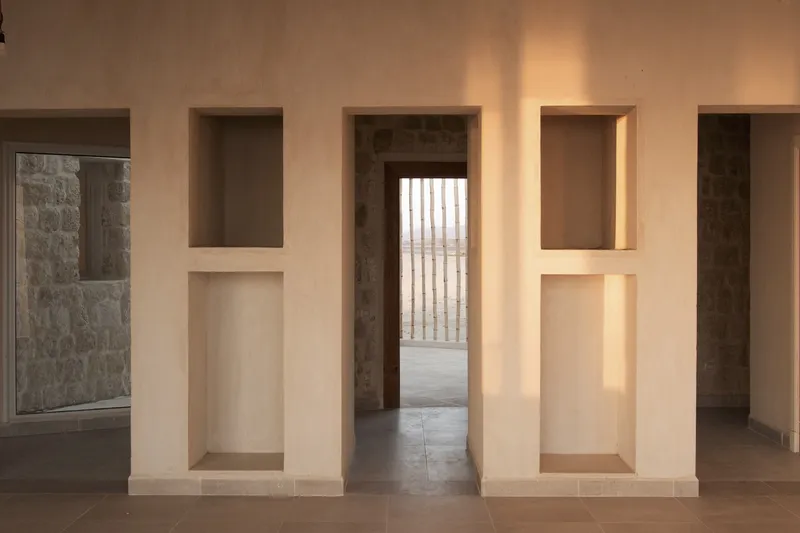
All Photographs are works of Farah Faheem, Hala Makhlouf




Popular Articles
Popular articles from the community


The Ocean Hive: Sustainable Architecture for a Self-Sufficient Civilization at Sea
The Ocean Hive imagines sustainable architecture at sea, where modular habitats, algae, wave power and ocean waste sustain a growing colony.

Co-Life: Senior Housing Design That Reconnects Older Adults With the City
Co-Life reimagines senior housing design through healing gardens, shared streets, workshops, and a sustainable community across generations.

Co-life: Sustainable Architecture for Age-Friendly Community Living
Co-life reimagines sustainable architecture for seniors through courtyards, rammed earth, shared gardens, and spaces designed for belonging.

The Musturak Paradise: Senior Living Architecture for a Connected Future in Temara, Morocco
The Musturak Paradise reimagines senior living architecture in Temara via private homes, social spaces, culture, community, and shared care.

Similar Reads
You might also enjoy these articles


Hodi-Mandai Geram
Project Function: Preservation and revitalization of the Intangible heritage and socio-spatial identity of the Hodi by Housing, Cultural Memory Center, Sacred Grove, landscape, local tourism economy


Olio Towers: A Mid-Rise for Performers That Fuses Housing, Rehearsal, and Stage
Located blocks from Houston's Theater District, this modular tower stacks living units around a central performance atrium.

Oasis: Modular Green Housing Carved into Dhaka's Urban Fabric
A shortlisted Plugin Housing entry reclaims unauthorized settlements in Dhaka with stepped concrete volumes, green roofs, and ventilation-driven design.

Black Hole: A Floating Megastructure for the Post-Physical Era
Emiliano Mazzarotto envisions a spherical, self-scaling arena where e-sports, digital hotels, and holographic stadiums replace traditional public space.


Explore Desert Architecture Competitions
Discover active competitions in this discipline



Challenge to reimagine the Iron Throne


Photograph architecture without architects


Illustrate the lost glory of Angkor Wat - Render Challenge


Design challenge to reuse E-waste
Comments (0)
Please login or sign up to add comments
No comments yet. Be the first to comment!