
BREWED: A Sustainable Café Architecture Inspired by Viennese Coffee Culture and Nature
A sustainable café architecture concept blending Viennese coffee culture, nature, heritage, and contemporary social experiences.


Coffee houses have served as social, cultural, and intellectual hubs since the seventeenth century. More than places to enjoy a beverage, they have historically fostered conversation, creativity, and community engagement. BREWED reinterprets this legacy through a contemporary sustainable café architecture proposal that celebrates both human interaction and environmental connection.
Designed by Shruti Malu, Srishti Ladha, and Hinal Patel, the project explores how architecture can bridge the relationship between people, culture, and nature. Drawing inspiration from the rich traditions of Viennese coffee houses while responding to contemporary lifestyles, BREWED creates an immersive destination where visitors can experience coffee, architecture, and landscape as a unified whole.

Understanding Vienna's Coffee House Heritage
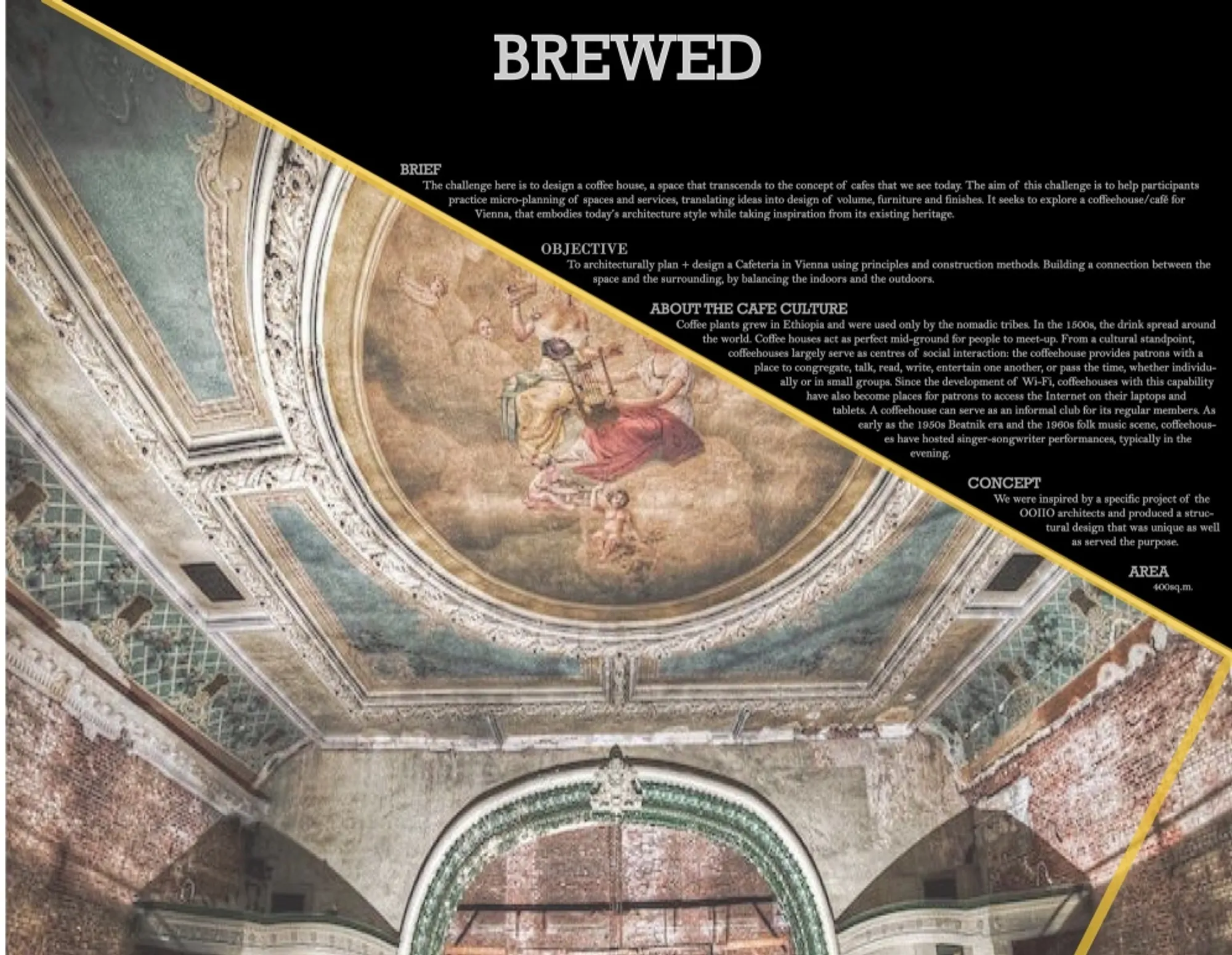
The design process began with extensive research into Vienna's renowned coffee culture. For centuries, Viennese cafés have functioned as public living rooms where people gather to read, write, discuss ideas, and spend extended periods of time. These spaces are deeply woven into the cultural identity of the city and are recognized as important social institutions.
Rather than replicating historical cafés literally, BREWED extracts the essence of the Viennese coffee house experience. The project embraces hospitality, prolonged social engagement, intellectual exchange, and architectural elegance while adapting these values to a contemporary setting surrounded by nature.
The result is a coffee house that encourages visitors to slow down, connect with others, and appreciate their environment.
Site Strategy: Connecting Architecture and Landscape
The selected site benefits from strong accessibility and proximity to recreational amenities, public transportation, and green spaces. Analysis revealed a unique opportunity to create a destination that blurs the boundaries between indoor and outdoor environments.
One side of the site opens toward natural greenery and parks, inspiring the design team to maximize visual and physical connections with nature. Rather than treating landscape as a backdrop, the project integrates it into the daily experience of visitors.
Large openings, outdoor seating areas, elevated walkways, rooftop spaces, and gardening zones create multiple points of engagement with the surrounding environment. These interventions transform the coffee house into a place where architecture actively encourages people to reconnect with the outdoors.
Concept and Vision
The primary design challenge was establishing a meaningful relationship between architecture and nature while simultaneously merging traditional and contemporary influences.
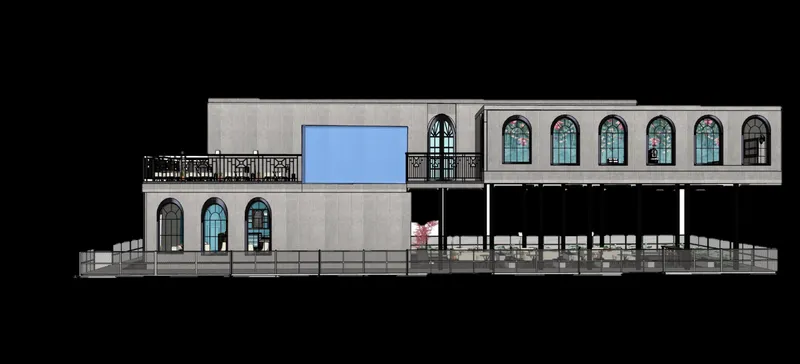
The concept takes inspiration from the work of OOOOX Architects and develops a composition of interconnected rectilinear volumes. These architectural forms vary in scale, height, and function while remaining visually connected through circulation pathways and shared spatial experiences.
The project also incorporates architectural references from Mughal architecture, particularly through its use of arches, symmetry, ornamental detailing, and carefully framed openings. These elements are reinterpreted within a modern architectural language, creating a unique fusion of Eastern and European design traditions.
The result is an architecture that feels both familiar and innovative, rooted in history while responding to contemporary lifestyles.
Architectural Form and Spatial Organization
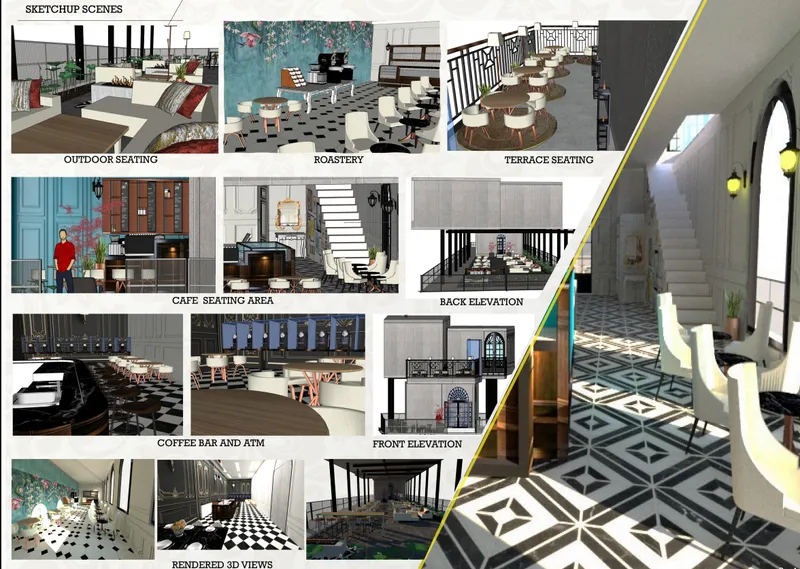
BREWED is organized into three primary architectural volumes, each assigned a specific function.
Entrance and Café Lounge
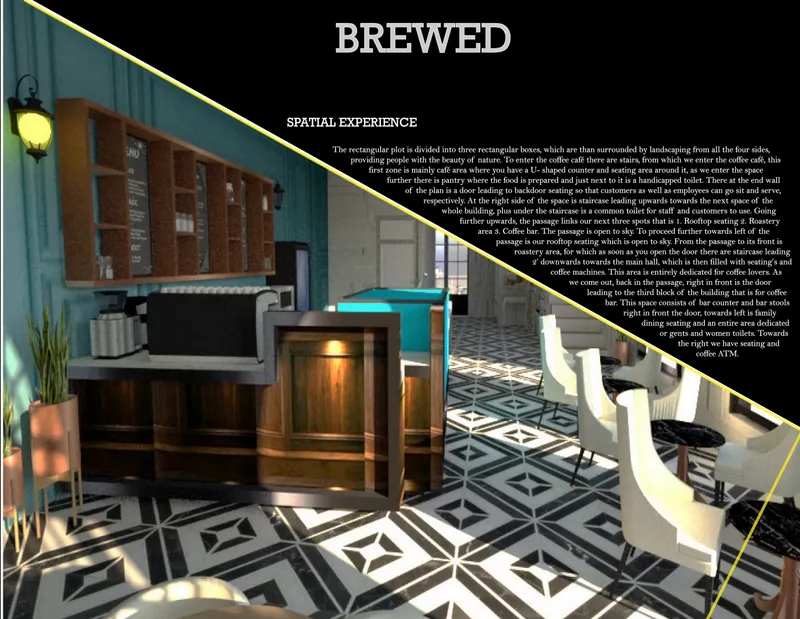
The first volume serves as the arrival experience and main café area. Visitors enter through a welcoming environment designed to encourage social interaction and relaxation. The use of generous glazing, natural light, and visual connections to surrounding landscapes creates an inviting atmosphere.
Coffee Roastery
The second volume houses the coffee roasting functions. This dedicated space allows visitors to observe aspects of coffee production while enhancing the sensory richness of the project. The aroma, activity, and craftsmanship associated with roasting become part of the overall architectural experience.
Coffee Bar and Community Hub
The third volume contains the coffee bar and supporting social spaces. Here, visitors can engage in conversations, work independently, or participate in community-oriented activities. Flexible seating arrangements accommodate different forms of interaction and occupancy throughout the day.
Creating a Seamless Indoor-Outdoor Experience
A defining feature of BREWED is its commitment to dissolving traditional boundaries between interior and exterior environments.
Outdoor seating terraces extend the social life of the building into the landscape. Elevated walkways connect different programmatic zones while providing unique perspectives of the site. Rooftop seating areas offer opportunities for gathering under open skies, reinforcing the project's connection to nature.
Gardening spaces introduce an additional layer of participation. Visitors can engage directly with planting activities, transforming passive observation into active involvement. These interventions create a richer and more meaningful relationship between people and their surroundings.
Through these strategies, BREWED promotes well-being, environmental awareness, and social engagement.
Materiality and Architectural Character
The architectural language balances simplicity with ornamentation. Clean geometric forms establish a contemporary identity, while arched openings and decorative details reference historical architectural traditions.
The material palette emphasizes durability, elegance, and sensory comfort. Neutral surfaces provide a timeless backdrop, allowing natural light, vegetation, and human activity to animate the spaces.
Large windows frame landscape views and maximize daylight penetration. Carefully proportioned openings create visual rhythm across the façades while enhancing connections between indoor and outdoor environments.
The resulting architectural expression feels sophisticated yet approachable, making the coffee house accessible to a wide range of users.
Spatial Experience and User Journey
The visitor experience is carefully choreographed through a sequence of interconnected spaces.
Upon arrival, guests are welcomed into the primary café zone. From there, circulation pathways lead toward outdoor terraces, rooftop seating, and specialty coffee areas. Each transition introduces a new spatial atmosphere while maintaining visual continuity throughout the project.
The coffee roastery provides moments of sensory engagement, while elevated connections create opportunities for discovery and exploration. Rooftop spaces offer panoramic views and encourage visitors to spend extended periods within the environment.
This layered spatial journey transforms a simple coffee visit into a memorable architectural experience.
Sustainability Through Social and Environmental Design
While BREWED incorporates environmental awareness through its integration with nature, its sustainability extends beyond technical considerations.
The project promotes social sustainability by encouraging community interaction, cultural exchange, and long-duration occupancy. Flexible gathering spaces support diverse user groups, from individual visitors and remote workers to larger social gatherings.
Environmental sustainability is addressed through natural lighting, outdoor integration, reduced dependence on enclosed spaces, and landscape-oriented planning strategies. The architecture encourages occupants to engage with natural conditions rather than remain isolated from them.
This holistic approach demonstrates how sustainable café architecture can simultaneously support environmental responsibility and human well-being.
A Contemporary Interpretation of Coffee House Culture
BREWED demonstrates how architecture can reinterpret historical traditions for contemporary audiences. Inspired by the enduring legacy of Viennese coffee culture, the project creates an environment where social interaction, cultural identity, and nature coexist harmoniously.
By combining architectural heritage, sustainable design principles, and immersive spatial experiences, BREWED transforms the coffee house into more than a commercial venue. It becomes a destination for conversation, creativity, reflection, and community.
As cities increasingly seek meaningful public spaces, projects like BREWED illustrate the potential of sustainable café architecture to enrich everyday life while fostering deeper connections between people, culture, and the environment.



Popular Articles
Popular articles from the community


The Earth Pod: 3D Printed Homes for Resilient Refugee Communities
The Earth Pod reimagines refugee housing through 3D printed homes made from clay, combining resilience, self-sufficiency, and rapid shelter.
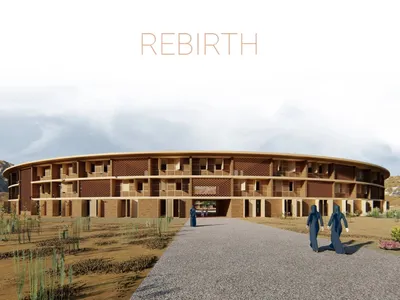
REBIRTH: Sustainable Architecture Shaped by Community, Resilience and Renewal
REBIRTH uses sustainable architecture, circular design, local materials and shared spaces to restore community, dignity and hope for widows.

Riyadh For All: Intergenerational Urban Design for Active Aging in Rabat
Riyadh For All reimagines urban design in Rabat with intergenerational co-living, adaptive courtyards, and Moroccan cultural exchange today.
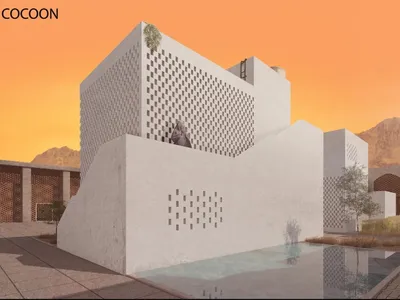
A Reinforced Cocoon: Vernacular Architecture for Security, Healing and Community in Qandahar
A Reinforced Cocoon reimagines Afghan vernacular architecture as secure community space for widowed women, families, healing and resilience.

Similar Reads
You might also enjoy these articles

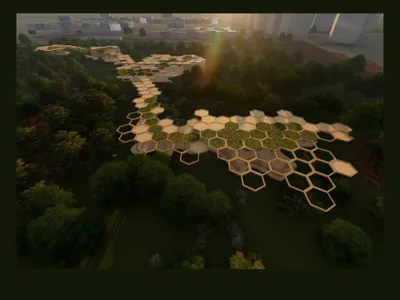
Eco Chapel: A Green Architecture Pavilion Designed in Symbiosis with the Forest
Eco Chapel uses green architecture to weave prayer, learning and reuse into a forest pavilion shaped by modular hexagonal canopies for life.
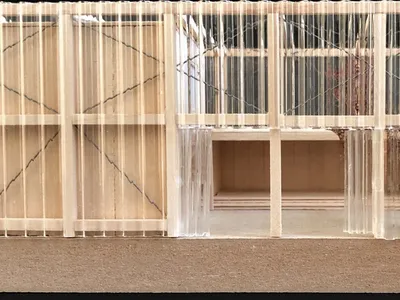
Kaffeebühnen: Coffee Shop Architecture Designed as a Civic Stage Between Vienna’s City and Park
Kaffeebühnen turns coffee shop architecture into a civic stage, linking Vienna’s park edge, urban life, warm timber yards, and coffee craft.
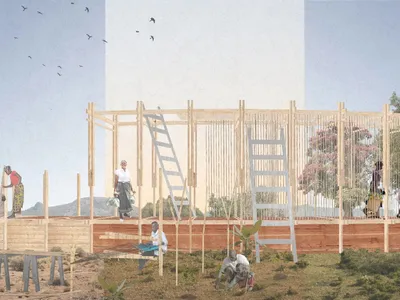
Healing Façade: Sustainable Architecture for Reforestation, Community, and Sacred Ecology in Ethiopia
Healing Façade reimagines sustainable architecture as a living wall that restores soil, catches water and renews Ethiopia's forest churches.


Urban Forest: A Vertical Ecosystem for 5,000 Workers in Singapore's Changi Business Park
Radially stacked pods and layered green decks turn a 7-acre plot into 47 acres of ecological workspace projected for 2040.
Explore Conceptual Architecture Competitions
Discover active competitions in this discipline



The Global Benchmark for Architecture Dissertation Awards


Challenge to design luxury tourism on rails


VR headsets Storefront design competition

Designing a staircase for a client
Comments (0)
Please login or sign up to add comments
No comments yet. Be the first to comment!