
Bridge Plaza by KILD: A Landmark Urban Connection in Kaunas, Lithuania
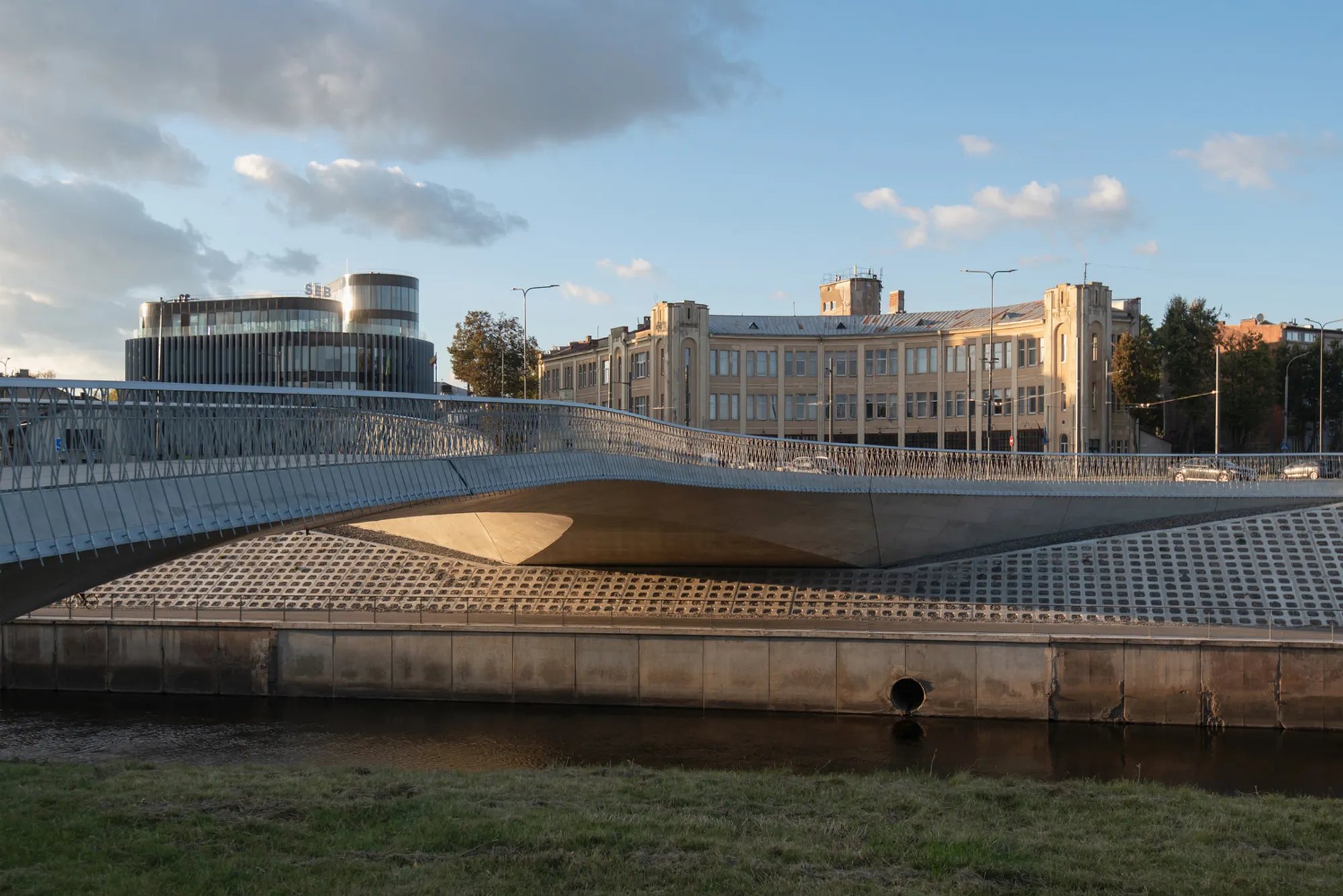
Bridge Plaza by KILD is a hybrid pedestrian bridge and public plaza connecting Kaunas’ historic center with Nemunas Island Park.


Bridge Plaza, designed by the visionary architects at KILD, is a newly completed architectural marvel in Kaunas, Lithuania, seamlessly blending urban infrastructure with public space. Completed in 2023, the pedestrian and cyclist bridge serves as a vital connector between Kaunas’ historic old town and the iconic Nemunas Island Park, transforming not only mobility but also the urban experience.
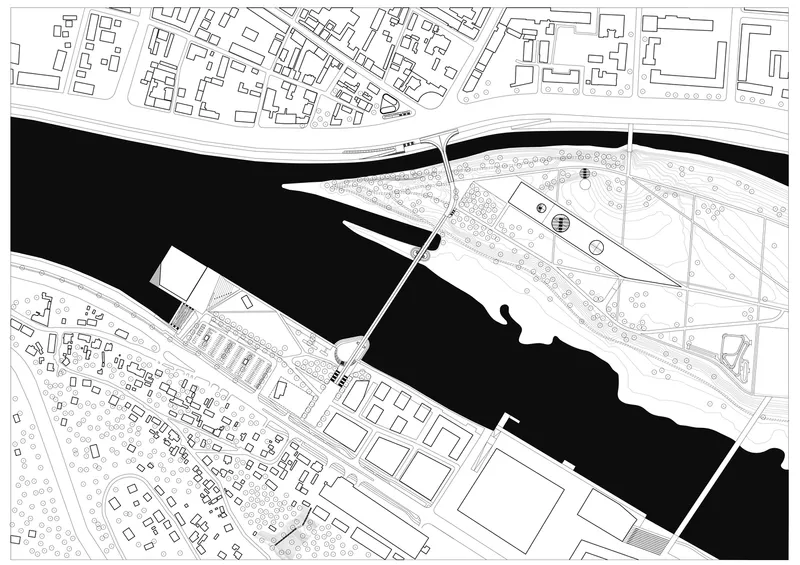
This innovative project is part of a broader Kaunas city master plan that extends to the Aleksotas industrial zones and the Freda district. Alongside upcoming landmarks like the future pedestrian bridge, the National Science and Innovation Centre, and the M.K. Čiurlionis Concert Hall, Bridge Plaza acts as a crucial node, uniting Kaunas’ historical core, its green recreational spaces, and its emerging urban developments.
Architectural Vision: More Than a Bridge
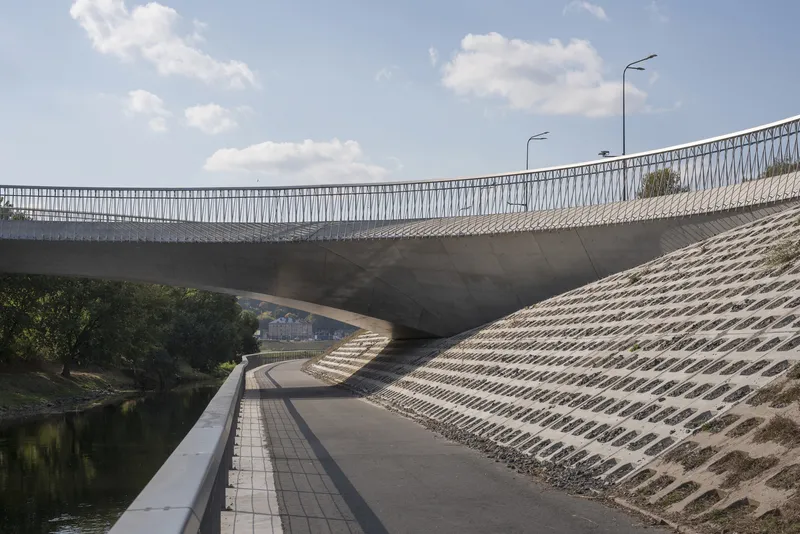
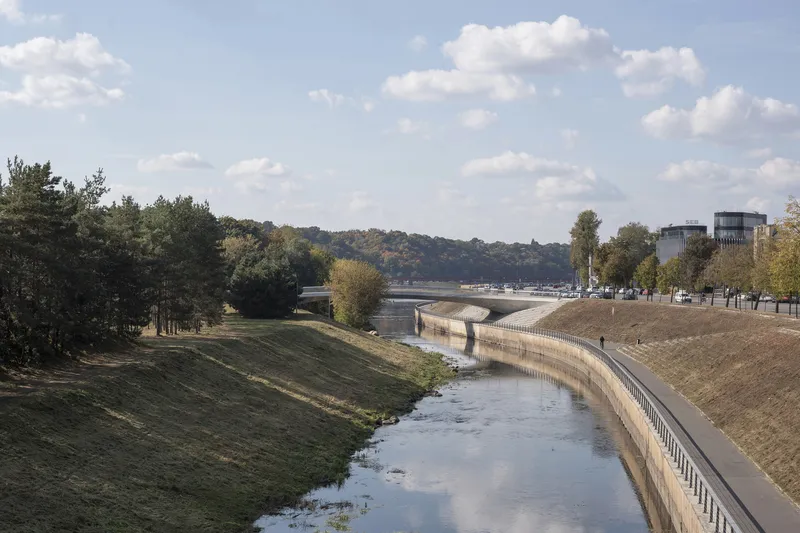
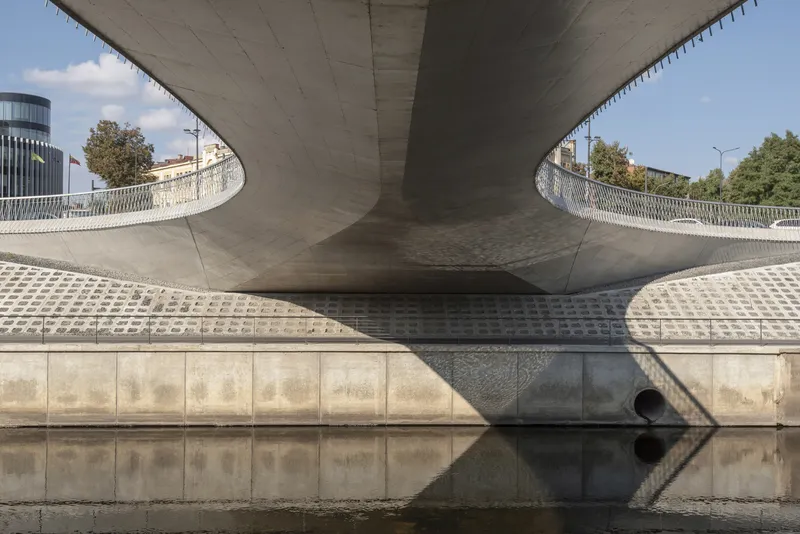
Unlike conventional infrastructure, Bridge Plaza is conceived as a hybrid structure — it is simultaneously a bridge and a public plaza. This dual identity shapes it not merely as a connector across the Nemuno Canal, but as a dynamic gathering space that integrates the built and natural environments. With its elegant curved arches and minimalist footprint, the design enhances the landscape, respecting the authenticity and non-urbanized character of Nemunas Island.
The bridge’s landing points are central to its design strategy, functioning as gateways that merge the old town’s medieval street patterns with the 19th-century promenades of the new town. Visitors are naturally guided toward the lush island park, where the historic urban fabric and modern intervention converge.

Design Features and Materials
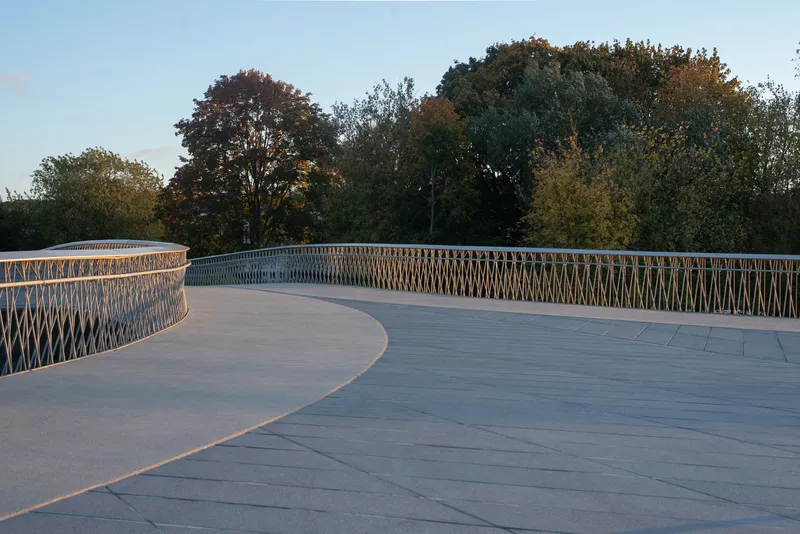
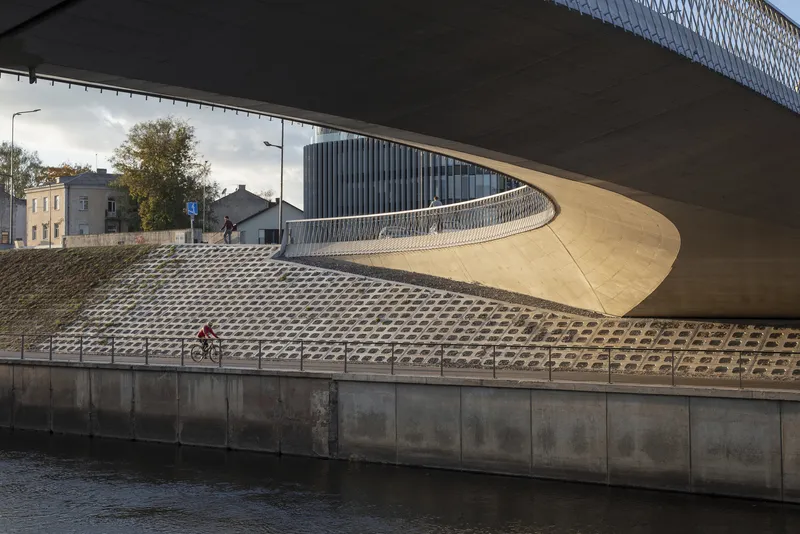
Spanning 75 meters in length and 7 meters in width, the bridge accommodates mixed-use circulation, offering dedicated lanes for pedestrians and cyclists. The primary structure is constructed from reinforced concrete, providing strength and durability, while the walkways feature an epoxy base with micro granite gravel and dark granite stone slabs for a textured, tactile surface.
The woven railing system is a standout detail — crafted for longevity, it combines galvanized metal poles, anodized aluminum armrests, and stainless-steel accents. Integrated lighting within the railings adds both safety and atmosphere, creating an inviting glow that enhances the bridge’s nighttime presence.

Urban Integration and Public Impact
The design intentionally extends the urban footprint from King Mindaugas Avenue, forming a generous open plaza that serves as a symbolic public gateway to the island park and the future riverfront complex. The bridge’s narrowing middle section acts as a subtle transition, leading visitors from the bustling urban edge into the calm of the natural landscape.
Importantly, the bridge highlights a key modernist landmark: the curving façade of a 20th-century interwar building, which becomes the visual centerpiece of the newly activated plaza. This interplay of past and present, of solid architectural gestures and fluid public spaces, redefines the city’s relationship with its riverfront.

Sustainable Urban Future
Bridge Plaza represents more than a crossing; it embodies a sustainable urban vision that prioritizes human-scale connections, pedestrian and cyclist accessibility, and the enhancement of public life. As Kaunas continues to evolve, projects like this reinforce its commitment to integrating cultural heritage, innovative architecture, and green infrastructure.
All Photographs are works of Lukas Mykolaitis




Popular Articles
Popular articles from the community


The Earth Pod: 3D Printed Homes for Resilient Refugee Communities
The Earth Pod reimagines refugee housing through 3D printed homes made from clay, combining resilience, self-sufficiency, and rapid shelter.

Co-life: Sustainable Architecture for Age-Friendly Community Living
Co-life reimagines sustainable architecture for seniors through courtyards, rammed earth, shared gardens, and spaces designed for belonging.

Co-Life: Senior Housing Design That Reconnects Older Adults With the City
Co-Life reimagines senior housing design through healing gardens, shared streets, workshops, and a sustainable community across generations.

Conexión: Biophilic Design Reimagines High-Rise Living in Hong Kong
Conexión reimagines high-rise living in Hong Kong through biophilic design, green facades, shared spaces, daylight, water and nature within.


Similar Reads
You might also enjoy these articles


Hodi-Mandai Geram
Project Function: Preservation and revitalization of the Intangible heritage and socio-spatial identity of the Hodi by Housing, Cultural Memory Center, Sacred Grove, landscape, local tourism economy


Olio Towers: A Mid-Rise for Performers That Fuses Housing, Rehearsal, and Stage
Located blocks from Houston's Theater District, this modular tower stacks living units around a central performance atrium.

Oasis: Modular Green Housing Carved into Dhaka's Urban Fabric
A shortlisted Plugin Housing entry reclaims unauthorized settlements in Dhaka with stepped concrete volumes, green roofs, and ventilation-driven design.

Black Hole: A Floating Megastructure for the Post-Physical Era
Emiliano Mazzarotto envisions a spherical, self-scaling arena where e-sports, digital hotels, and holographic stadiums replace traditional public space.

Explore Pedestrian Bridge Competitions
Discover active competitions in this discipline



Challenge to reimagine the Iron Throne


Photograph architecture without architects


Illustrate the lost glory of Angkor Wat - Render Challenge


Design challenge to reuse E-waste
Comments (0)
Please login or sign up to add comments
No comments yet. Be the first to comment!