
Broche Coffee Shop by NAAW: A Sustainable Mycelium Renovation in Oxford
Compact Oxford coffee shop renovation using mycelium panels, warm beige tones, sliding wooden windows, and sustainable public space design approach.

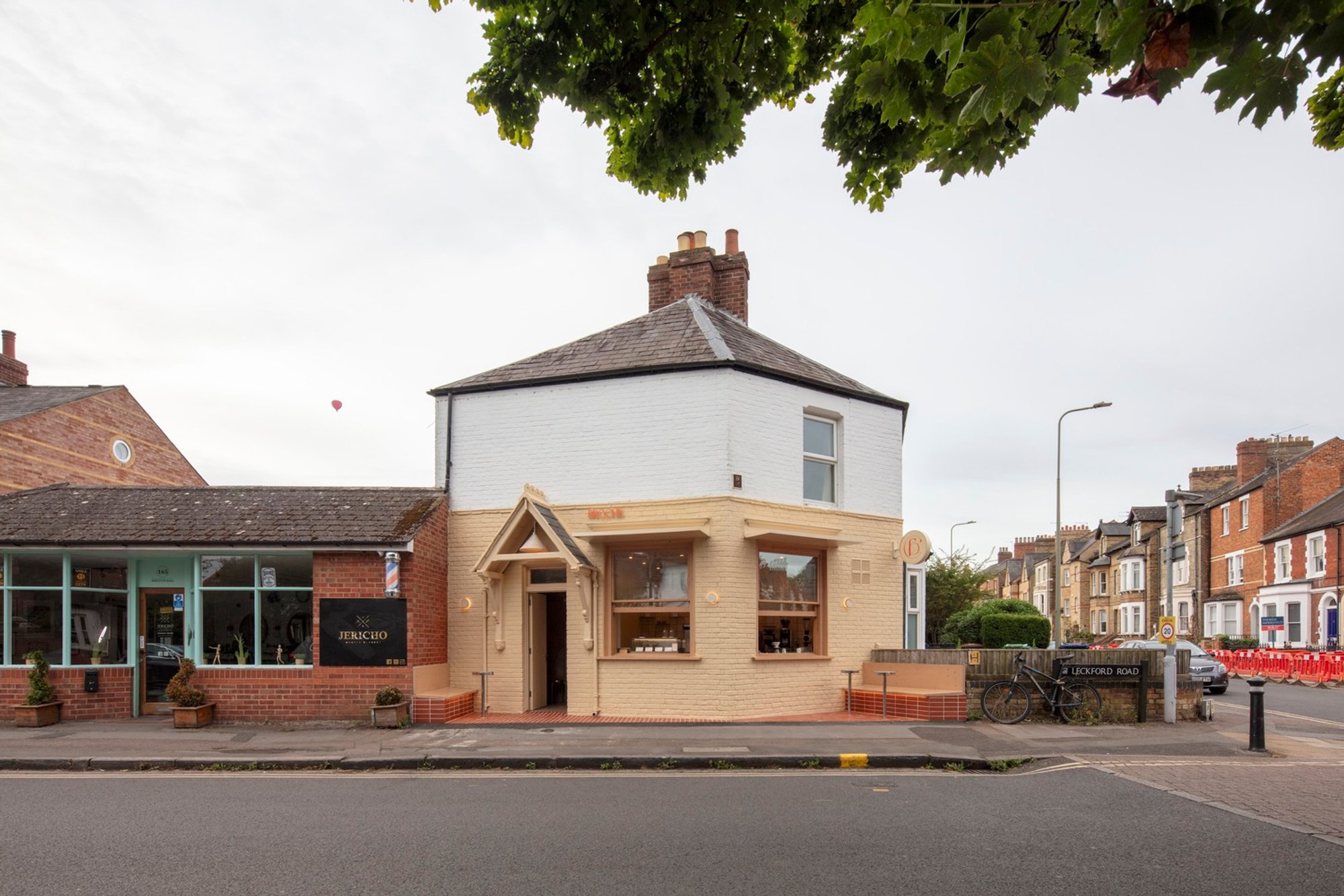
Broche Coffee Shop, designed by NAAW, is a compact yet conceptually ambitious renovation project located at a quiet intersection within one of Oxford’s historic residential neighborhoods. Completed in 2024, the project explores how emerging bio-based materials can be thoughtfully integrated into protected urban contexts, balancing architectural restraint with material innovation.
Situated within a conservation area, the coffee shop occupies a modest corner plot where architectural intervention needed to be subtle, respectful, and contextually sensitive. Rather than pursuing visual dominance, the design focuses on atmosphere, tactility, and sustainability, transforming an understated structure into a welcoming community-oriented space.
Building with Mushrooms: Introducing Mycelium in Everyday Architecture
One of the defining aspects of Broche Coffee Shop is the use of mycelium panels, marking NAAW’s first architectural application of this material. Discovered by the practice at the Venice Architecture Biennale, mycelium was selected for its low environmental impact, biodegradability, and warm, organic appearance.
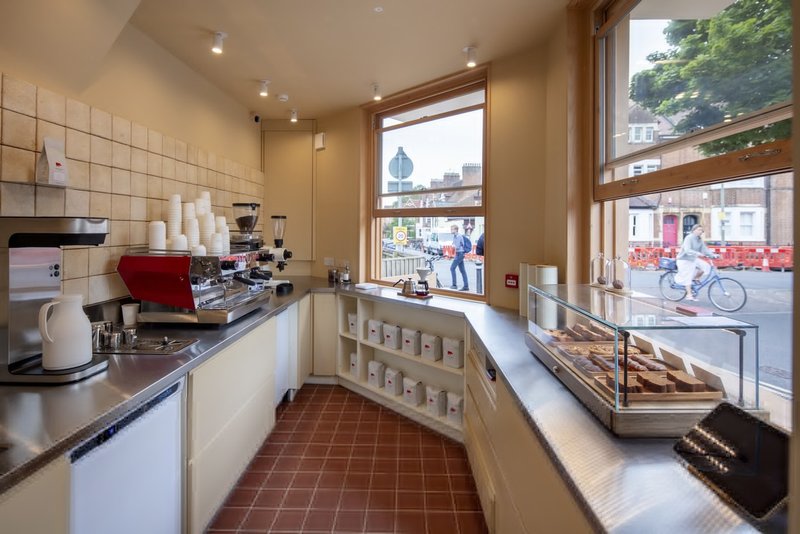
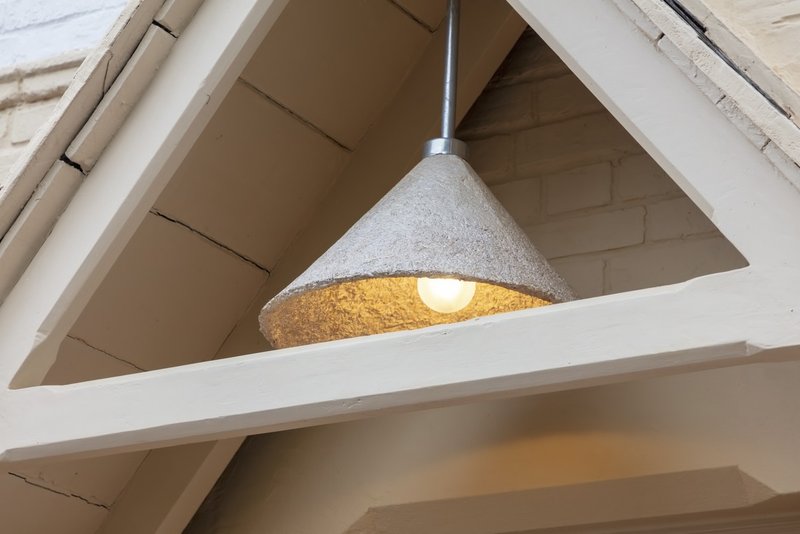
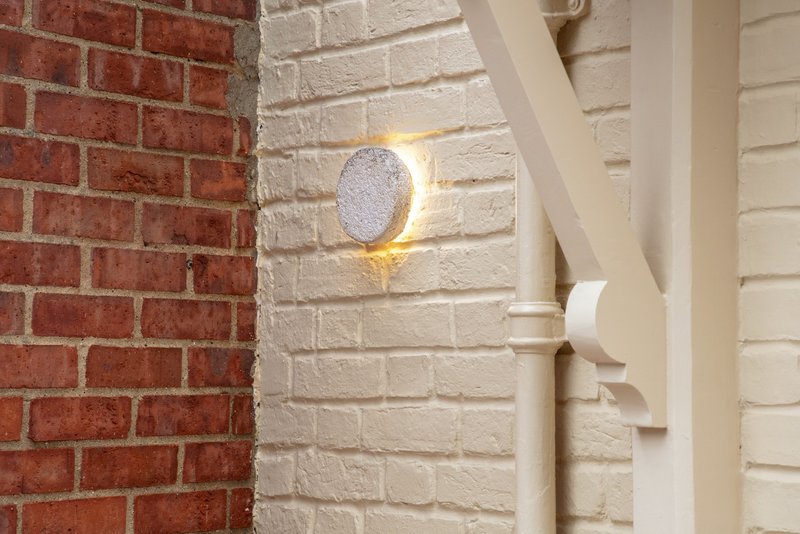
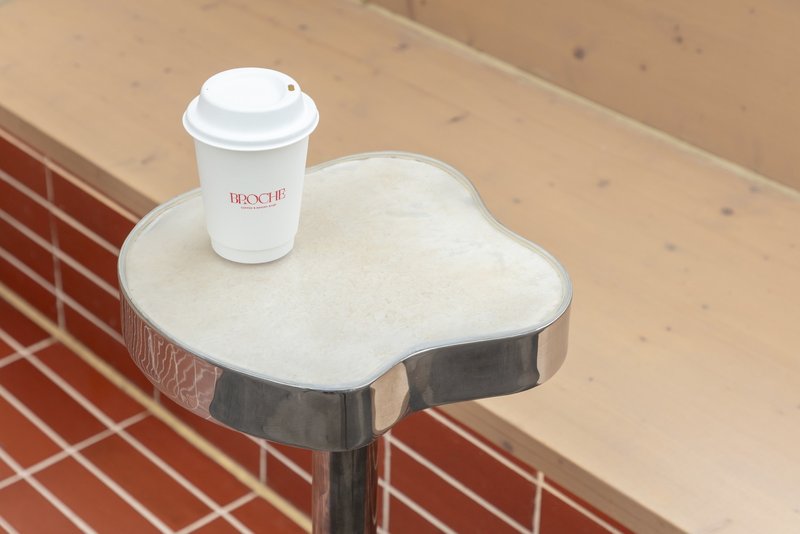
The softly textured beige panels line the interior walls above the kitchen counter, immediately shaping the spatial experience through material softness and visual calm. Beyond wall finishes, mycelium becomes a central design language: custom mushroom-inspired tabletops and street lamps were fabricated from the same bio-based material, reinforcing a cohesive narrative between furniture, lighting, and interior architecture.
To realize this ambition, NAAW collaborated with Grown Bio, a Netherlands-based pioneer in mycelium construction, previously recognized for the Growing Pavilion at Dutch Design Week 2019. The partnership ensured that experimental material use met functional and durability requirements for a public hospitality space.
Interior Warmth Within a Compact Footprint
Given the coffee shop’s limited size, the interior design prioritizes clarity, comfort, and material efficiency. The neutral tones of the mycelium surfaces are complemented by restrained detailing, allowing texture and light to take precedence over visual clutter. This approach enhances the sense of intimacy while maintaining a contemporary aesthetic aligned with sustainable design values.
The project demonstrates how small-scale commercial interiors can become testing grounds for innovative construction materials without sacrificing usability or visual coherence.
Minimal Exterior Intervention with Urban Impact
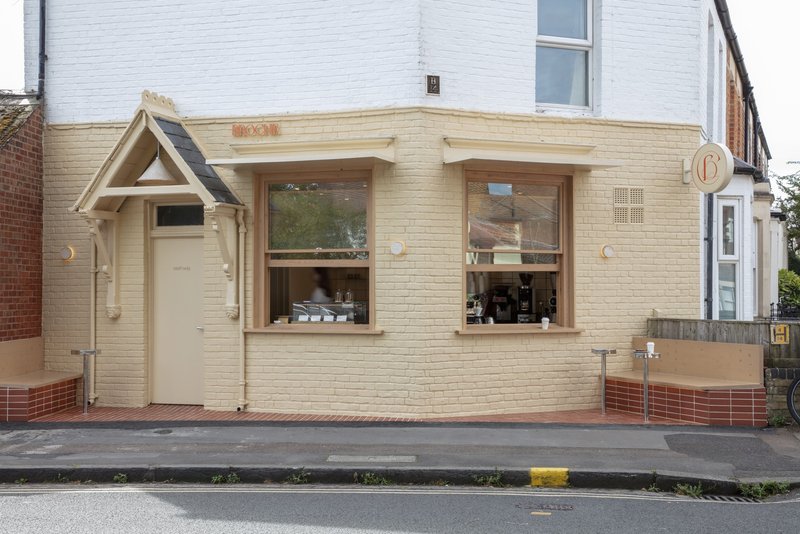
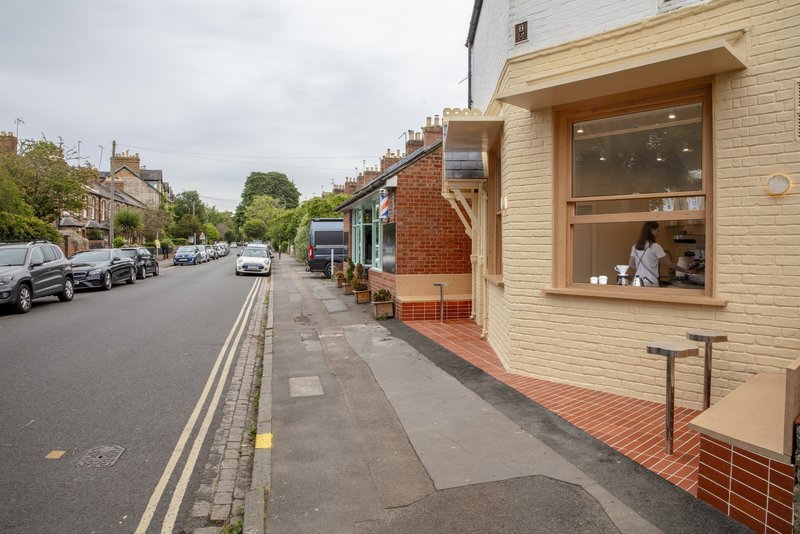
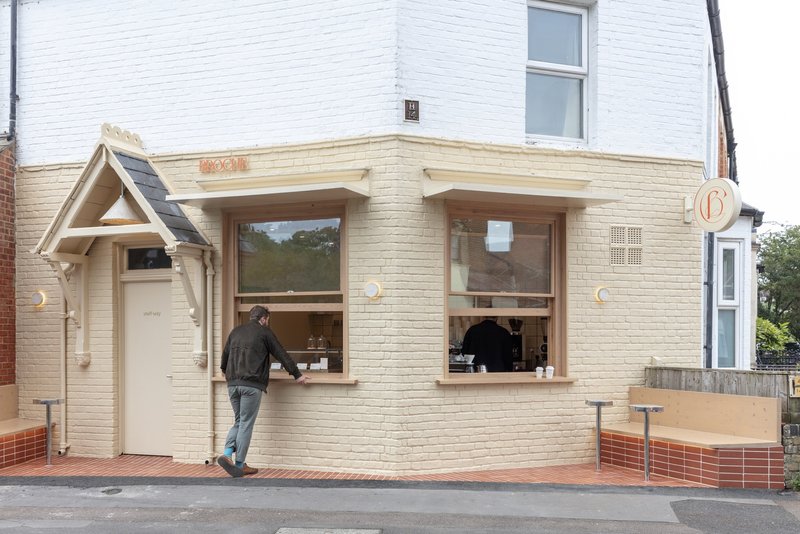
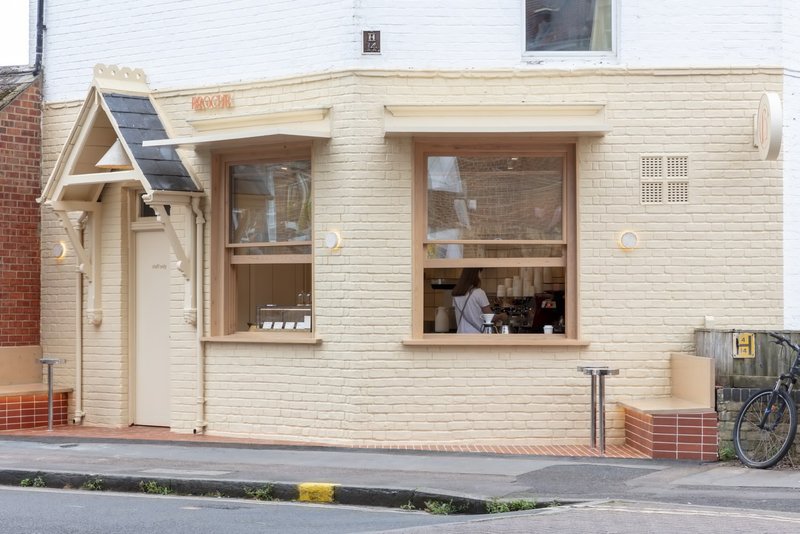
Externally, the renovation adopts a deliberately light touch. The original windows were replaced with sliding wooden windows, framed with wide casings that enable seamless takeaway service and stronger interaction between interior and street. This move reinforces the coffee shop’s role as a neighborhood hub rather than an enclosed destination.
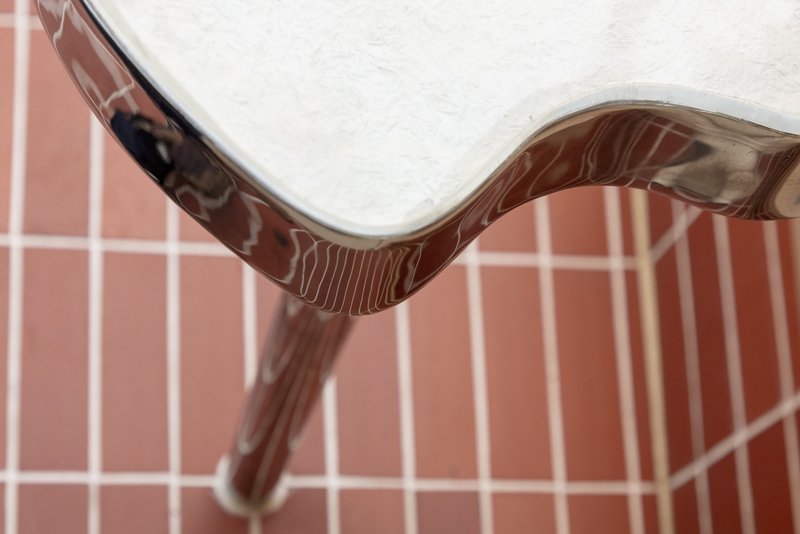
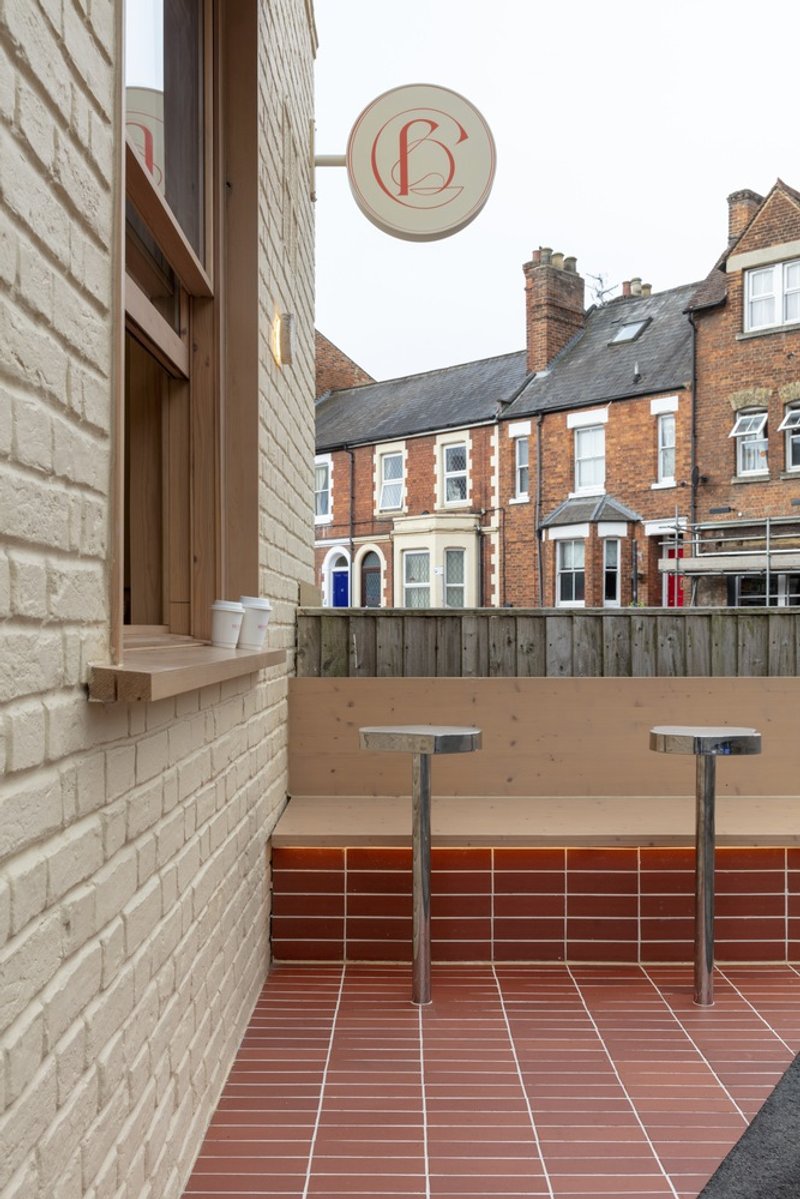
The surrounding public realm was subtly enhanced using clinker tiles, carefully selected to complement the existing terracotta brick facades typical of the area. Benches and three small coffee tables were added, encouraging informal gathering and extending the café’s presence into the pedestrian intersection.
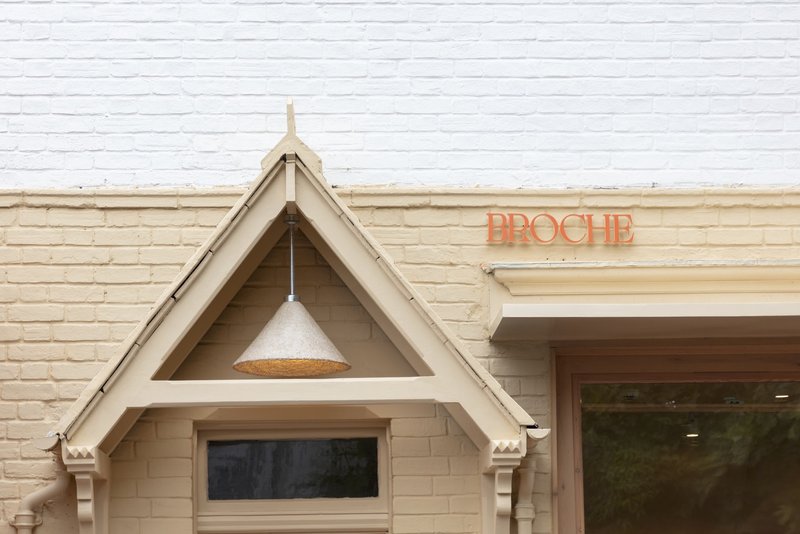
Both the façade and the original porch were painted in a warm beige tone, visually linking the exterior to the mycelium-dominated interior and creating a calm, cohesive identity that sits comfortably within the historic streetscape.
Rethinking Sustainable Materials in Public Design
Broche Coffee Shop is not positioned as a temporary experiment or conceptual installation. Instead, it serves as a real-world case study demonstrating how mycelium can function as a durable, expressive material in everyday public architecture. The project challenges the perception of bio-materials as short-lived or purely experimental, presenting them as viable alternatives for future renovation and hospitality projects.
This ethos is shared by the café’s owners, who reinforce the sustainability narrative through the use of biodegradable packaging and cups, ensuring that architectural intent extends beyond the building envelope into daily operation.
A Modest Project with Broader Architectural Implications
Through careful renovation, material innovation, and contextual sensitivity, Broche Coffee Shop by NAAW illustrates how sustainable architecture, heritage preservation, and contemporary design can coexist at a small scale. The project stands as a thoughtful example of how emerging materials like mycelium can be meaningfully integrated into urban life: quietly reshaping how we build, renovate, and inhabit public spaces.
All photographs are works of Luke Hayes



Popular Articles
Popular articles from the community

20 Most Popular Furniture Design Projects of 2025
Modular street systems, parametric benches, and insect hotels: the furniture design projects that captivated architects on uni.xyz in 2025.

1-1 Architects Builds a Nagoya House and Office from Decades of Stockpiled Timber
A 69-square-meter tower in dense residential Nagoya transforms surplus lumber into a home and workplace for a construction company.

Biophilic Architecture and Regenerative Stadium Design: Biophilia Lagos by Rachel George
A regenerative stadium in Lagos transforms landfill into a living ecosystem through biophilic architecture, waste reuse, and environmental healing.
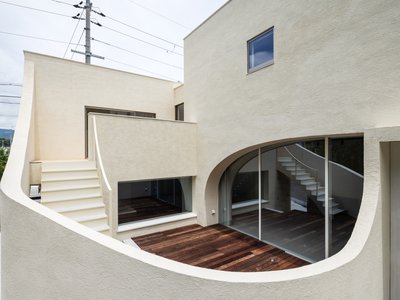
Daisuke Ibano and Ryosuke Fujii Shape an Osaka Family Home Around Spline Curves and Forest Views
On a triangular plot left empty since the 1970 Expo, a looping timber-and-stucco house in Osaka opens every room to the adjacent woods.

Similar Reads
You might also enjoy these articles
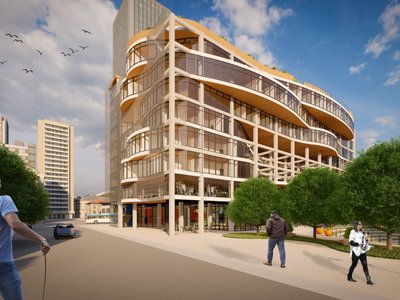
Olio Towers: A Mid-Rise for Performers That Fuses Housing, Rehearsal, and Stage
Located blocks from Houston's Theater District, this modular tower stacks living units around a central performance atrium.

Oasis: Modular Green Housing Carved into Dhaka's Urban Fabric
A shortlisted Plugin Housing entry reclaims unauthorized settlements in Dhaka with stepped concrete volumes, green roofs, and ventilation-driven design.

Black Hole: A Floating Megastructure for the Post-Physical Era
Emiliano Mazzarotto envisions a spherical, self-scaling arena where e-sports, digital hotels, and holographic stadiums replace traditional public space.
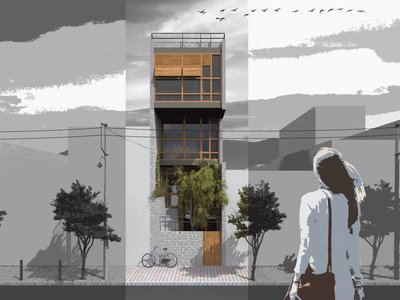
Compact & Sustainable Living in Piraeus: A Four-Level Family Home Built Around Light and Air
A narrow townhouse in one of Greece's densest port cities uses a central atrium and passive strategies to house three generations under one roof.


Explore Architecture Competitions
Discover active competitions in this discipline




The International Standard for Design Portfolios


The Global Benchmark for Architecture Dissertation Awards


The Global Benchmark for Graduation Excellence


Challenge to reimagine the Iron Throne
Comments (0)
Please login or sign up to add comments
No comments yet. Be the first to comment!