
Bruce Museum Expansion by EskewDumezRipple: A Contemporary Transformation of Cultural Space
The Bruce Museum expansion by EskewDumezRipple enhances visitor experience with modern galleries, sustainable design, and improved community engagement in Greenwich, Connecticut.


A Landmark Cultural Renovation in Greenwich, Connecticut
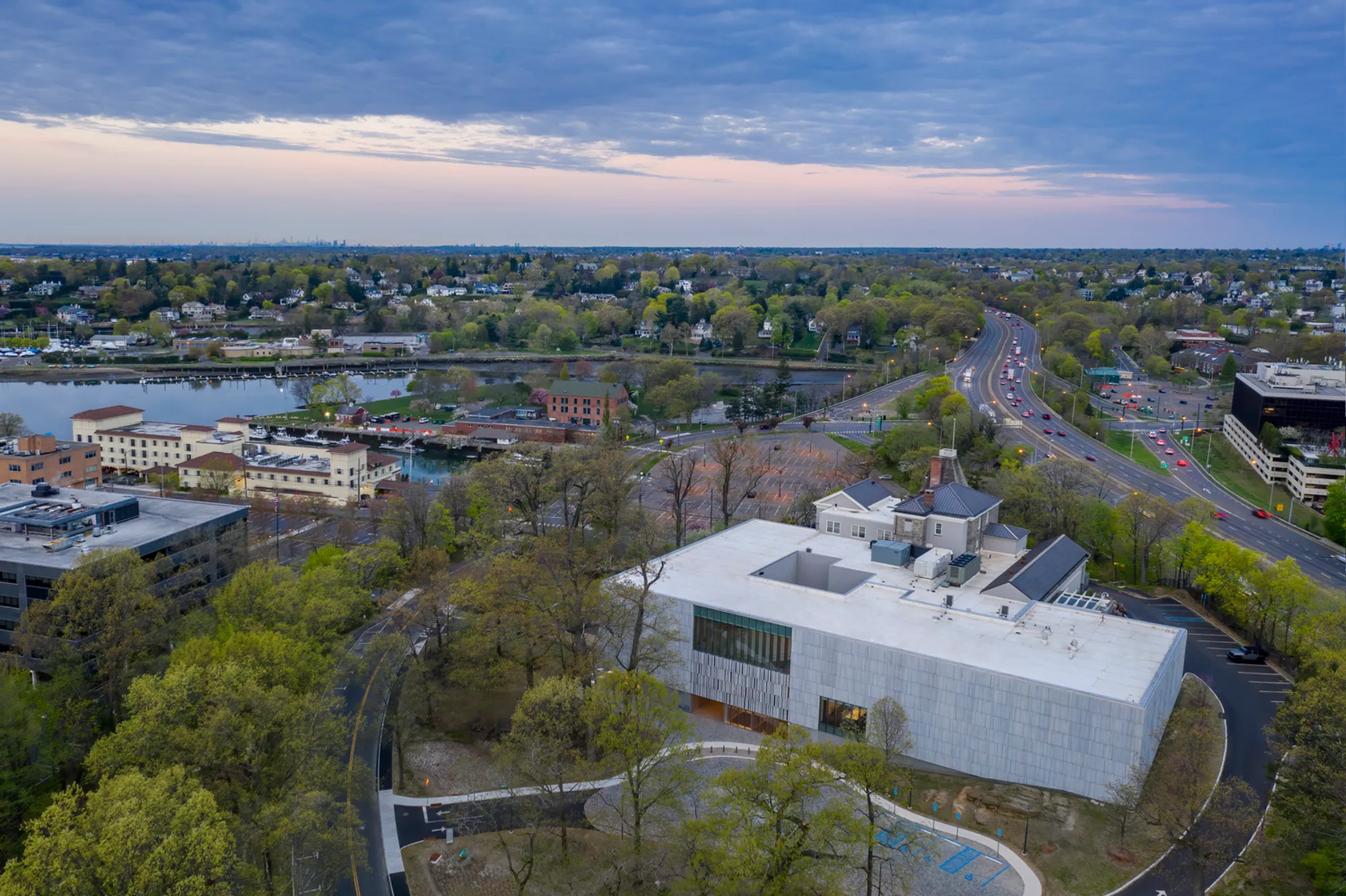
The Bruce Museum, a renowned cultural institution in Greenwich, Connecticut, has undergone a remarkable transformation led by EskewDumezRipple. Originally established as a multidisciplinary museum focusing on art, science, and natural history, the museum embarked on an ambitious expansion to enhance its visitor experience and solidify its role as a dynamic community resource.
A Vision for the Future: Expanding the Bruce Museum
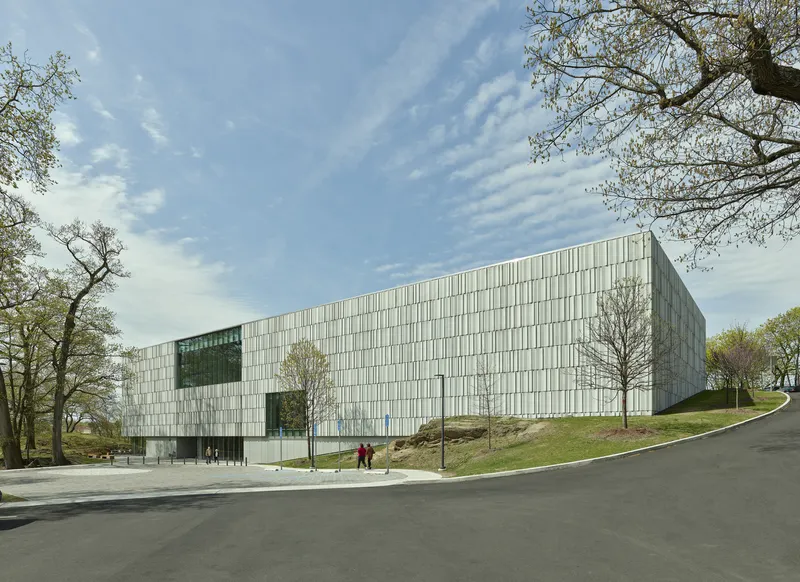
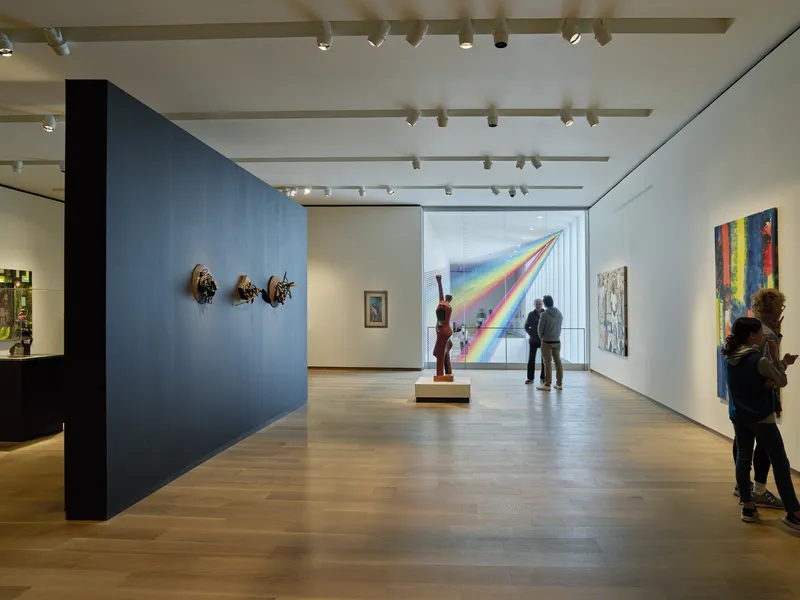
Following a national design competition in 2014, EskewDumezRipple spearheaded a comprehensive master plan to revitalize the museum. The project included an extensive renovation of the existing 32,500-square-foot structure and the construction of a new 42,000-square-foot addition. This expansion more than doubled the museum's size, introducing state-of-the-art gallery spaces, enhanced collection storage, and a redesigned public entrance with a modern lecture hall.
Architectural Innovation & Sustainable Design
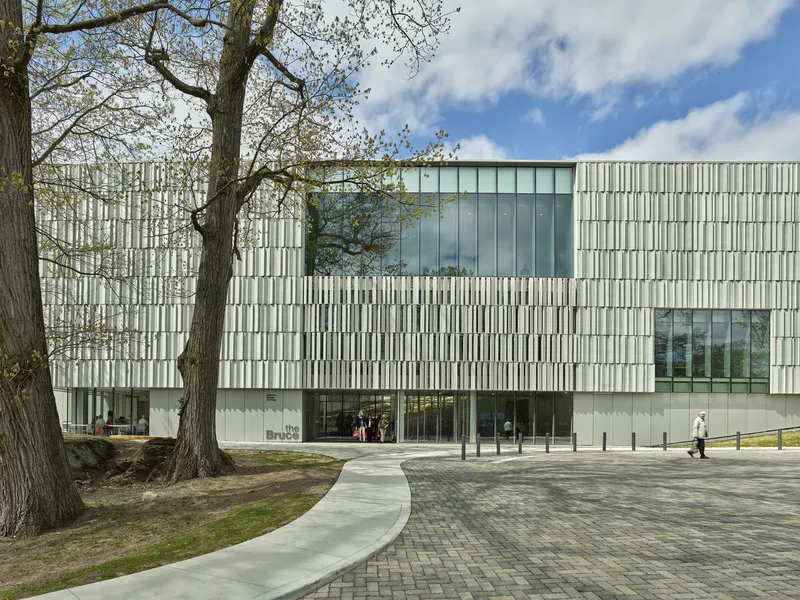
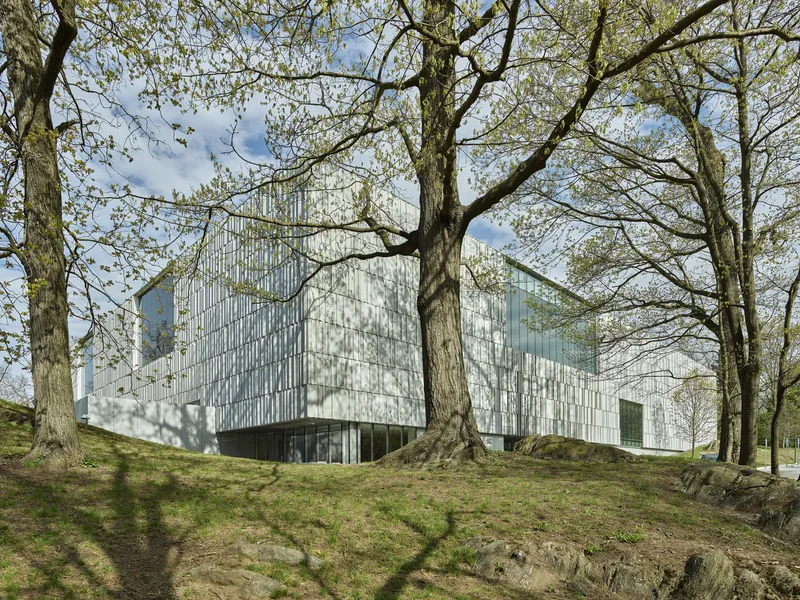
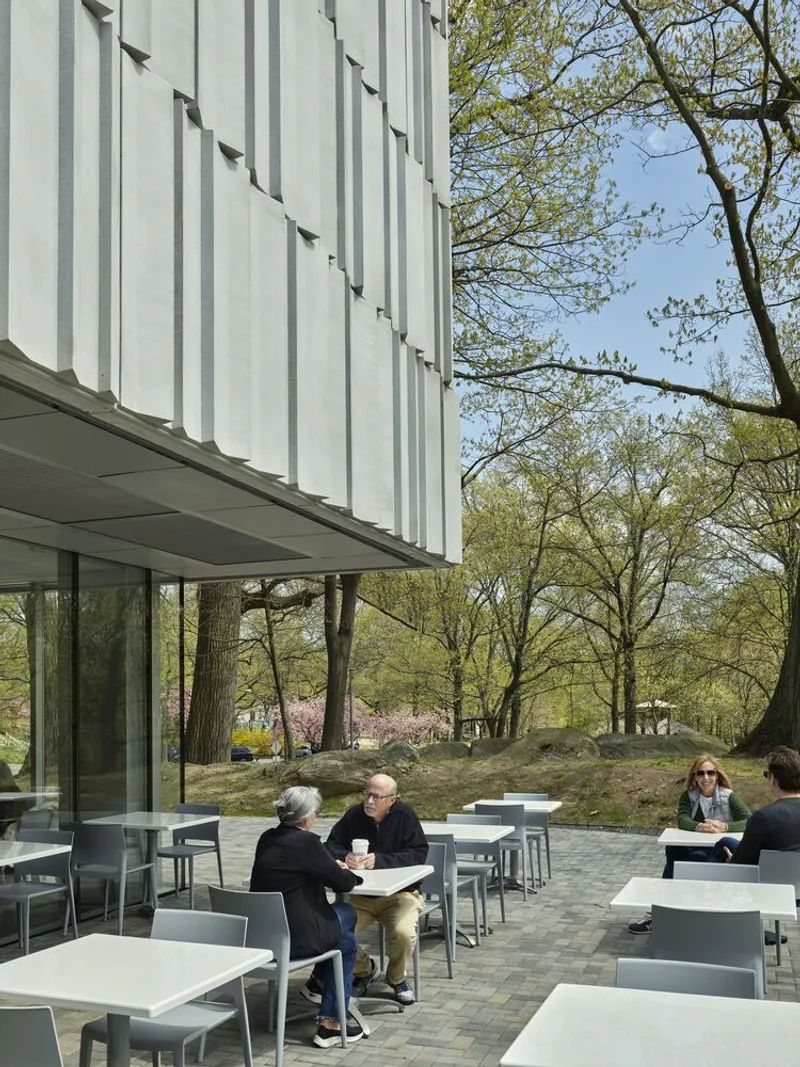
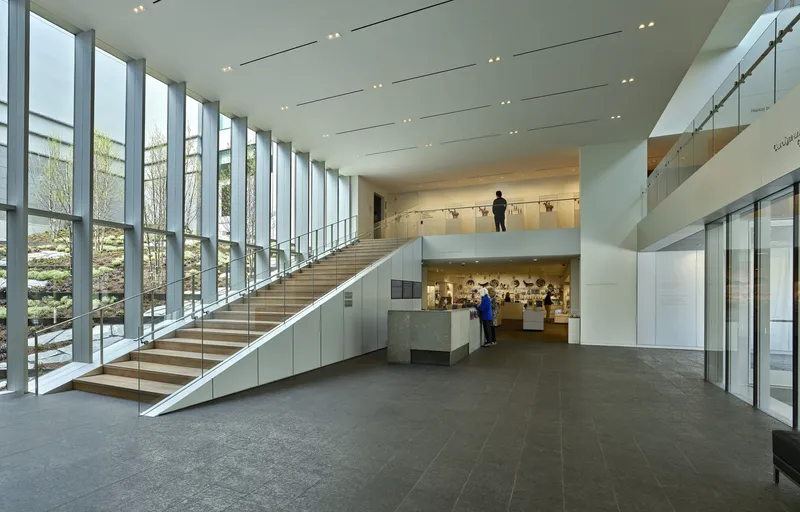
A key aspect of the redesign was addressing visitor circulation and wayfinding challenges. The previous museum entrance faced a high-traffic freeway, creating a disconnected arrival experience. The new design strategically reorients the entrance toward Bruce Park, integrating the museum with its natural surroundings. A thoughtfully designed courtyard between the new and existing structures serves as an inviting transition space, seamlessly blending architecture with landscape.
The façade design draws inspiration from the geological formations of Connecticut’s coastline. A striated cast-stone and glass exterior, reminiscent of local stone quarries, interacts with natural light to create a dynamic visual effect. As the sun moves throughout the day, the building’s appearance shifts, adding a unique and ever-changing quality to the structure.
Enhancing Community Engagement & Exhibition Capabilities
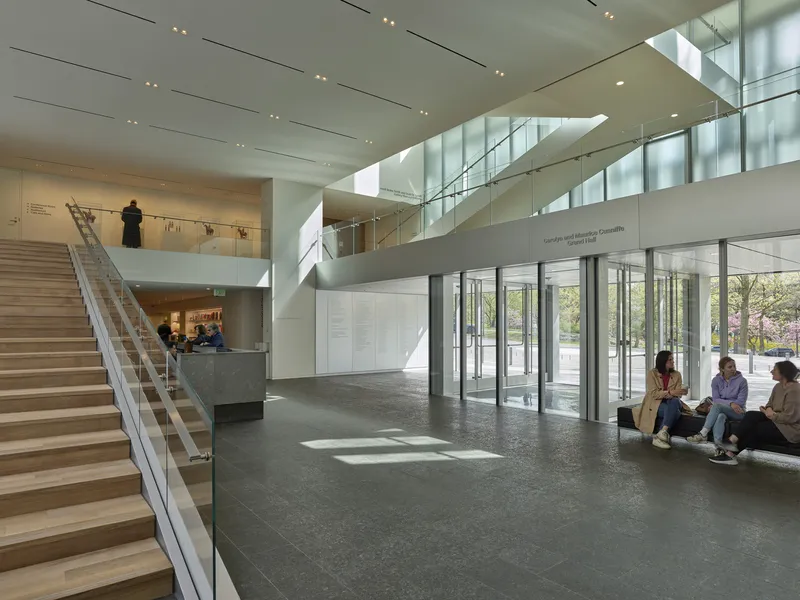
The expanded museum has quickly become a cultural hub, offering flexible spaces for diverse events and programs. The double-height lobby, café, and gift shop encourage interaction, while the new lecture hall has evolved into a focal point for community gatherings, educational programs, and public talks.
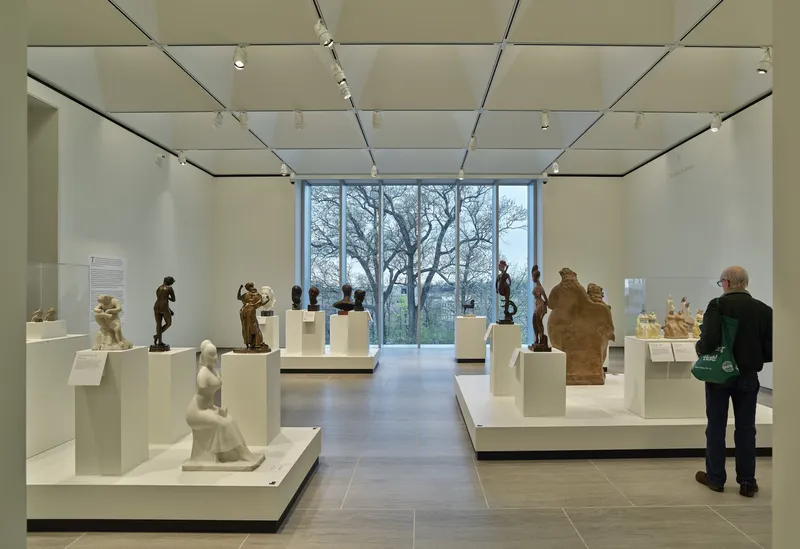
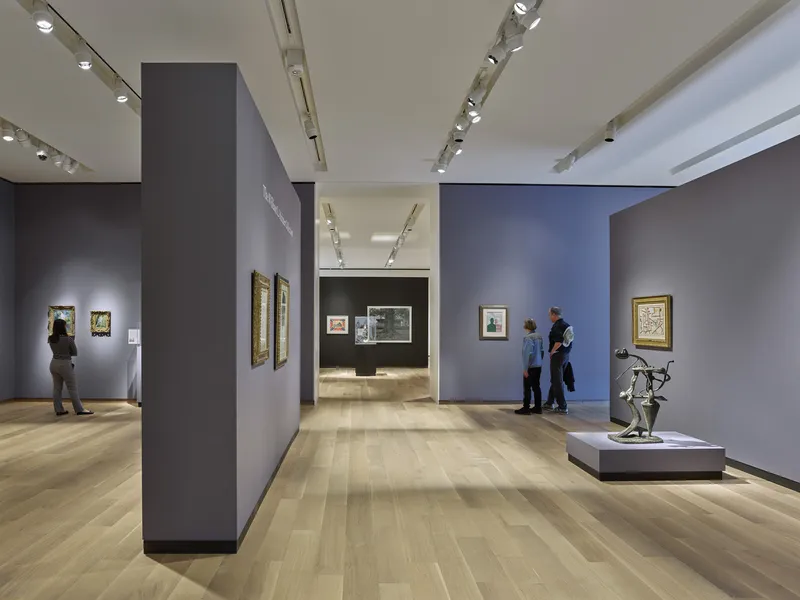
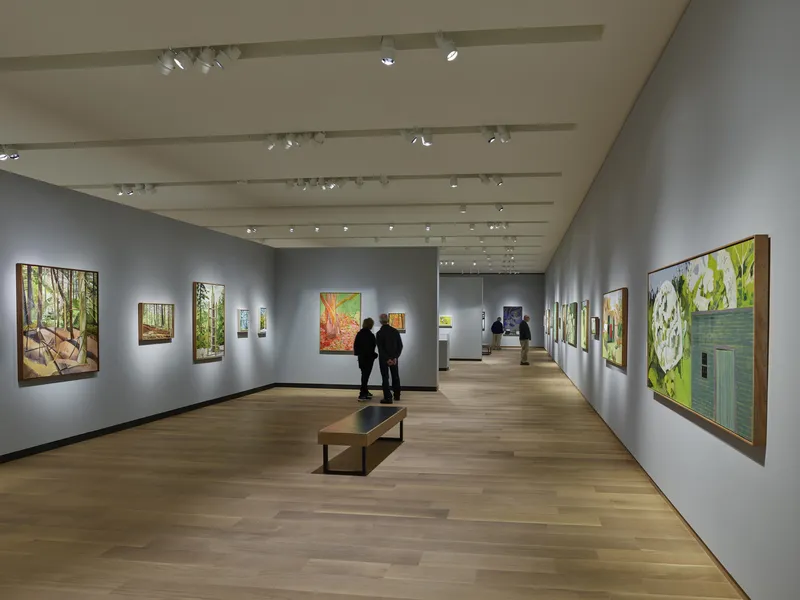
With the introduction of new permanent and rotating exhibition galleries, the Bruce Museum now has the capacity to showcase an expanded collection and attract major traveling exhibitions. Executive Director Robert Wolterstorff emphasized the significance of this transformation, noting that the museum can now display pieces from generous local collectors, fostering a new era of cultural patronage.
Natural Light & Sustainable Design Principles
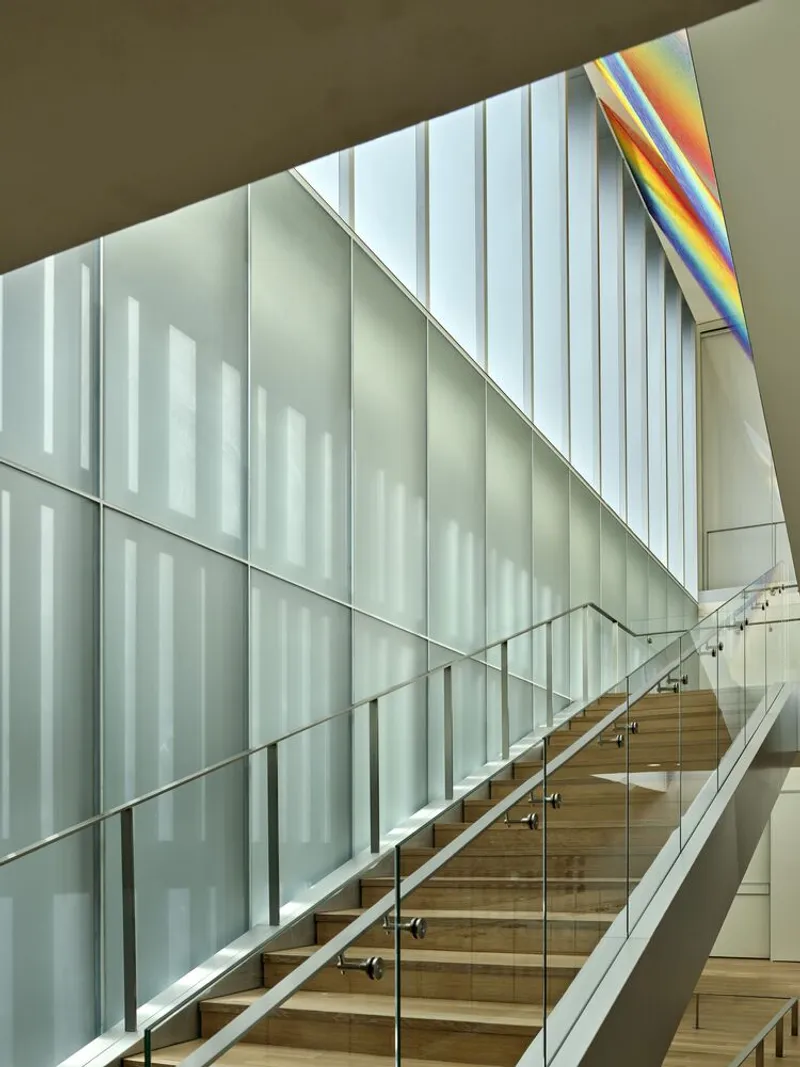
Daylighting strategies played a pivotal role in the museum’s renovation. Carefully designed façade openings diffuse natural light throughout the interior, with controlled variations in brightness guiding visitors through exhibition spaces. This balance between natural illumination and controlled gallery lighting creates an optimal environment for both artwork preservation and visitor experience.
A Cultural Beacon for the Future
The Bruce Museum’s transformation is a testament to innovative museum design, sustainability, and cultural enrichment. By seamlessly integrating modern architecture, natural landscapes, and functional exhibition spaces, the project ensures that the museum continues to be a vibrant, community-centered institution for generations to come.
All Photographs are works of Tim Hursley ; Michael Biondo



Popular Articles
Popular articles from the community


Conexión: Biophilic Design Reimagines High-Rise Living in Hong Kong
Conexión reimagines high-rise living in Hong Kong through biophilic design, green facades, shared spaces, daylight, water and nature within.

The Ocean Hive: Sustainable Architecture for a Self-Sufficient Civilization at Sea
The Ocean Hive imagines sustainable architecture at sea, where modular habitats, algae, wave power and ocean waste sustain a growing colony.

Riyadh For All: Intergenerational Urban Design for Active Aging in Rabat
Riyadh For All reimagines urban design in Rabat with intergenerational co-living, adaptive courtyards, and Moroccan cultural exchange today.

The Musturak Paradise: Senior Living Architecture for a Connected Future in Temara, Morocco
The Musturak Paradise reimagines senior living architecture in Temara via private homes, social spaces, culture, community, and shared care.

Similar Reads
You might also enjoy these articles


Hodi-Mandai Geram
Project Function: Preservation and revitalization of the Intangible heritage and socio-spatial identity of the Hodi by Housing, Cultural Memory Center, Sacred Grove, landscape, local tourism economy


Olio Towers: A Mid-Rise for Performers That Fuses Housing, Rehearsal, and Stage
Located blocks from Houston's Theater District, this modular tower stacks living units around a central performance atrium.

Oasis: Modular Green Housing Carved into Dhaka's Urban Fabric
A shortlisted Plugin Housing entry reclaims unauthorized settlements in Dhaka with stepped concrete volumes, green roofs, and ventilation-driven design.

Black Hole: A Floating Megastructure for the Post-Physical Era
Emiliano Mazzarotto envisions a spherical, self-scaling arena where e-sports, digital hotels, and holographic stadiums replace traditional public space.

Explore Cultural Architecture Competitions
Discover active competitions in this discipline



Challenge to reimagine the Iron Throne


Photograph architecture without architects


Illustrate the lost glory of Angkor Wat - Render Challenge

Bring back Drive In's
Comments (0)
Please login or sign up to add comments
No comments yet. Be the first to comment!