
Bumeran House by Lucas Maino Fernández: A Seamless Integration with Nature
Bumeran House by Lucas Maino Fernández blends modern design with nature, offering stunning views and a seamless connection to landscape.


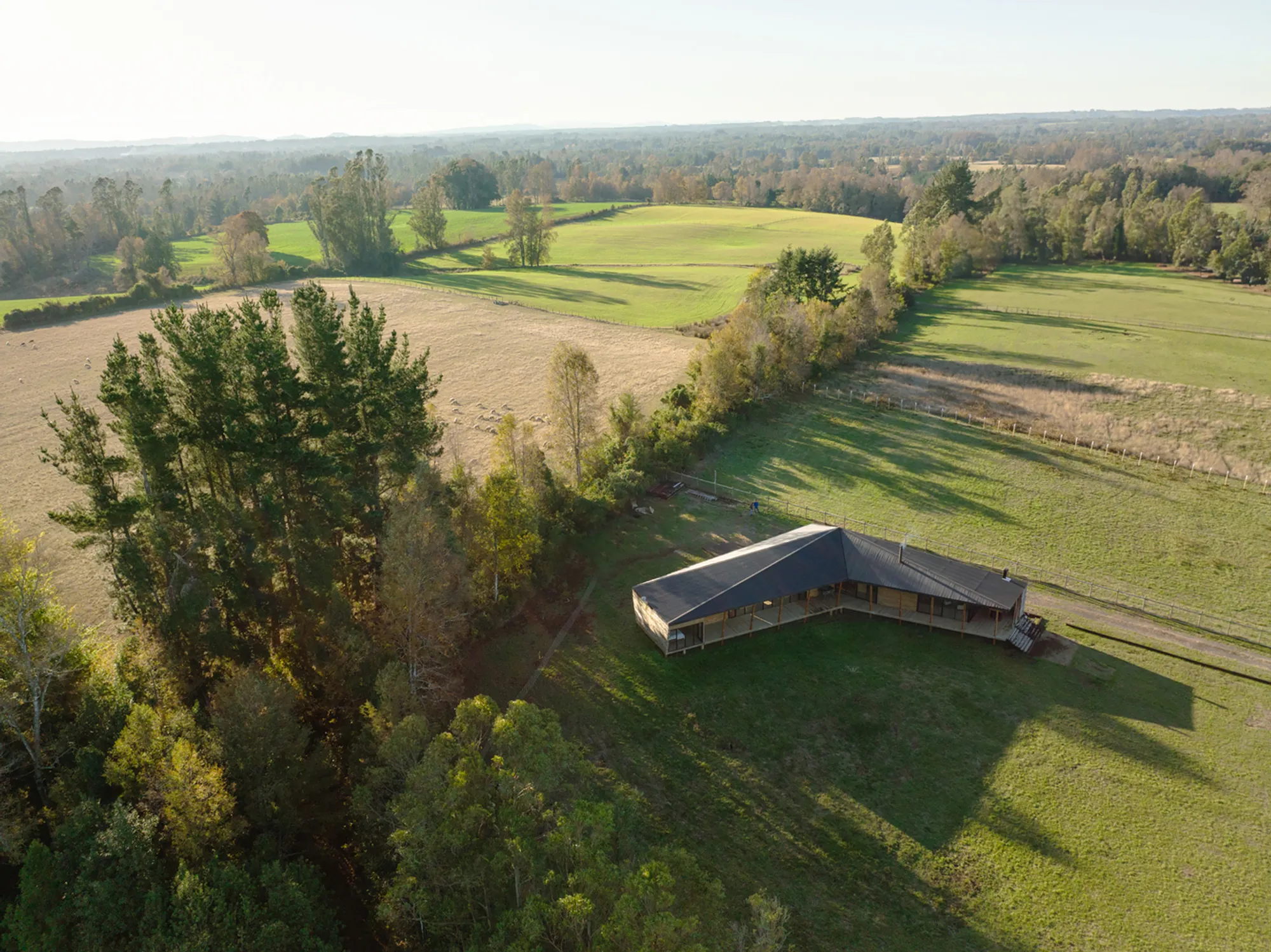
Nestled in the serene rural landscape near Villarrica, Araucanía, Chile, Bumeran House by renowned architect Lucas Maino Fernández is a striking example of architectural simplicity and harmonious integration with nature. Completed in 2020, this second home was designed with the specific aim of offering a peaceful retreat for family gatherings on weekends and holidays. The house’s unique form, environmental context, and thoughtful design details create a space that embraces its surroundings while maintaining privacy and functionality.
Architectural Concept and Design
The design of Bumeran House is guided by a profound connection to the landscape. Located on a 5,000 m² plot, the house sits amidst rolling hills, expansive grasslands, and pockets of trees. The view from the property stretches toward the Villarrica volcano to the east, with the other three directions offering endless vistas of the rural terrain. This vast, natural beauty deeply influenced the architecture, which prioritizes the landscape over the conventional idea of northern light.
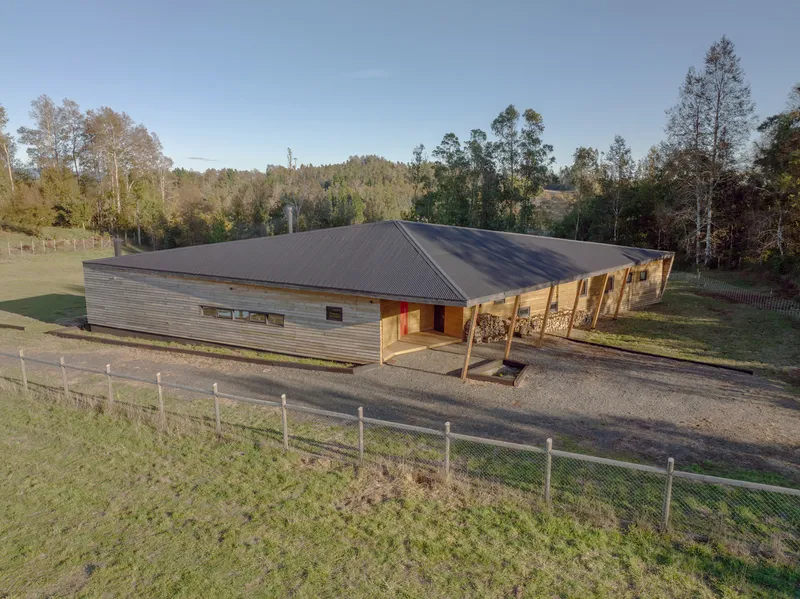
The primary design challenge of this rural retreat was the proximity to the northern boundary of the property, marked by a fence that creates a direct relationship with neighboring plots. To address this issue, the house's northern façade was intentionally kept modest, minimizing openings to maintain privacy and reduce any discomfort from future neighboring constructions. By shifting the focus toward the east and south, the architects ensured that the residents could enjoy uninterrupted views of the stunning Villarrica volcano and the vast fields.
Form and Layout
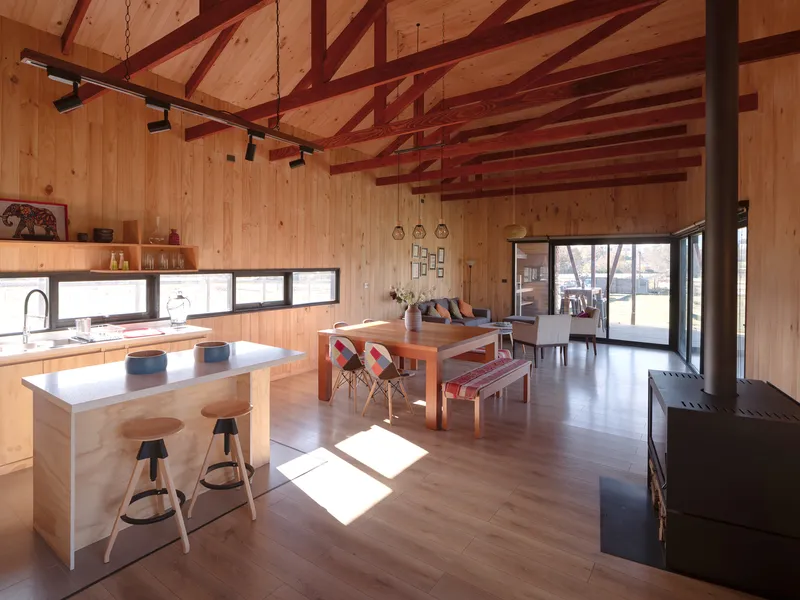
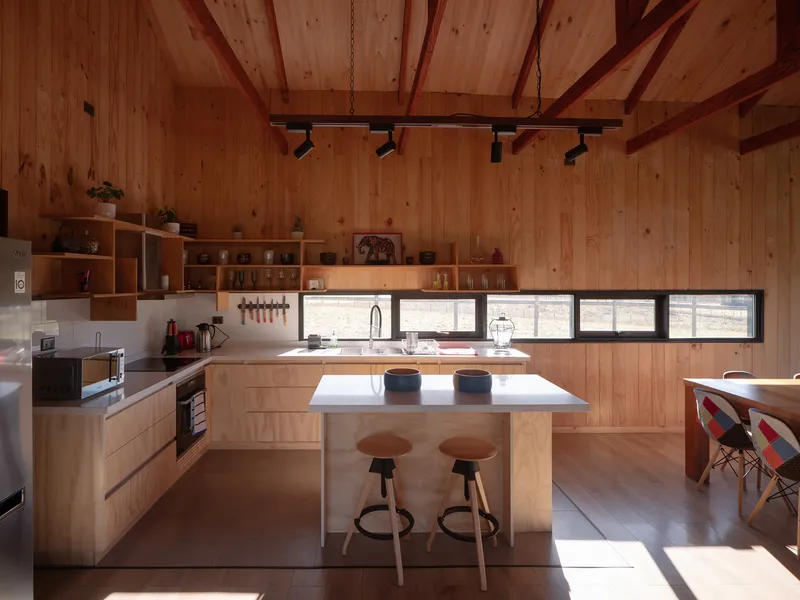
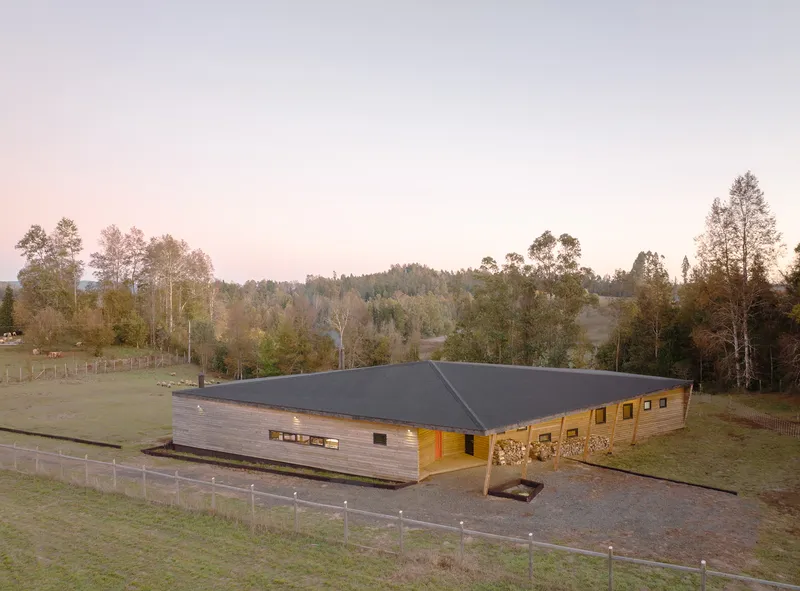
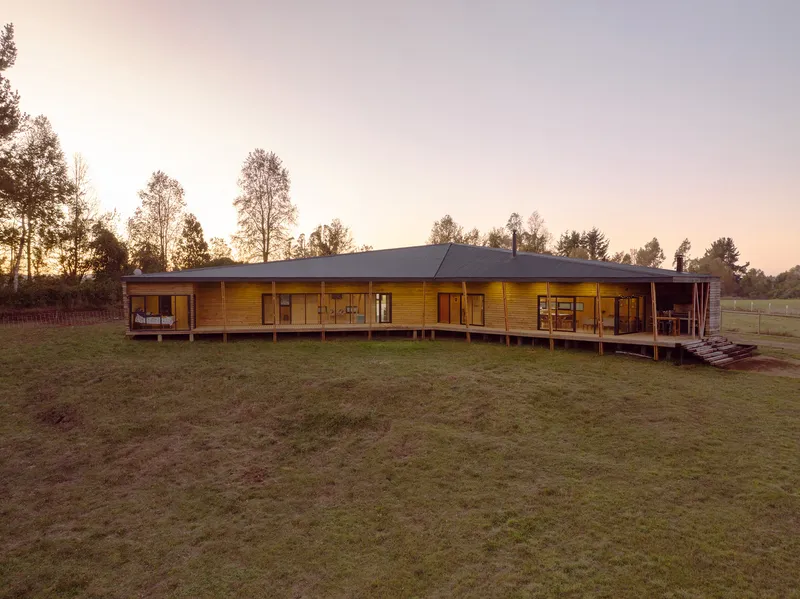
The layout of Bumeran House follows an innovative approach inspired by the shape of a boomerang, hence the project’s name. The house is organized in a V-shaped distribution with two wings connected at a central point, which serves as the entrance. From this access point, the house branches into two distinct areas: a private section housing the bedrooms and a communal space that combines the living, dining, and kitchen areas. This thoughtful separation allows for a balance between private and public spaces, enhancing the overall livability and comfort of the house.
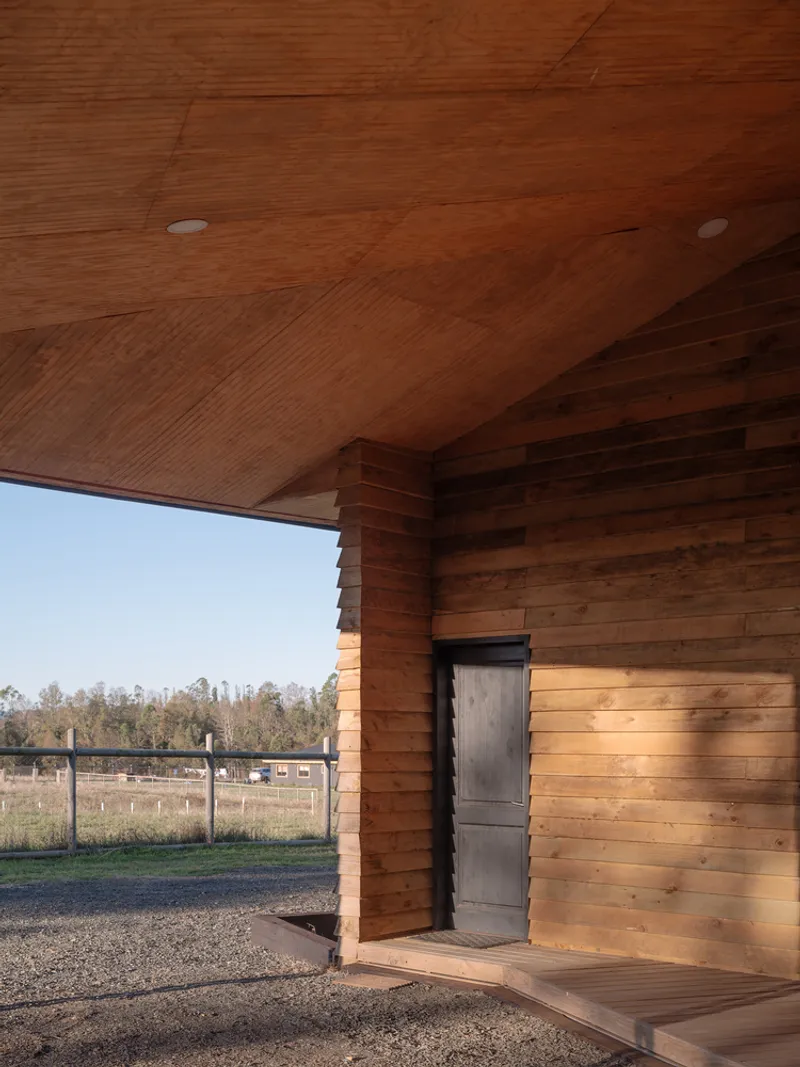
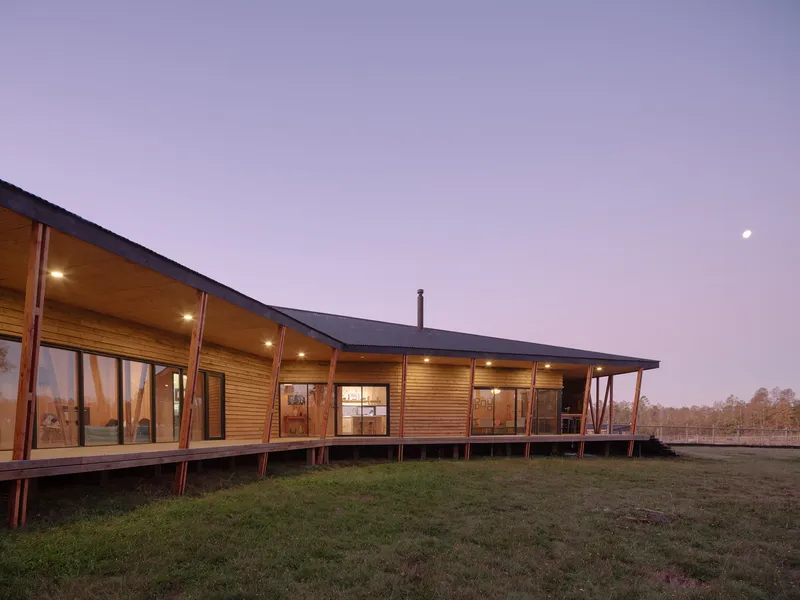
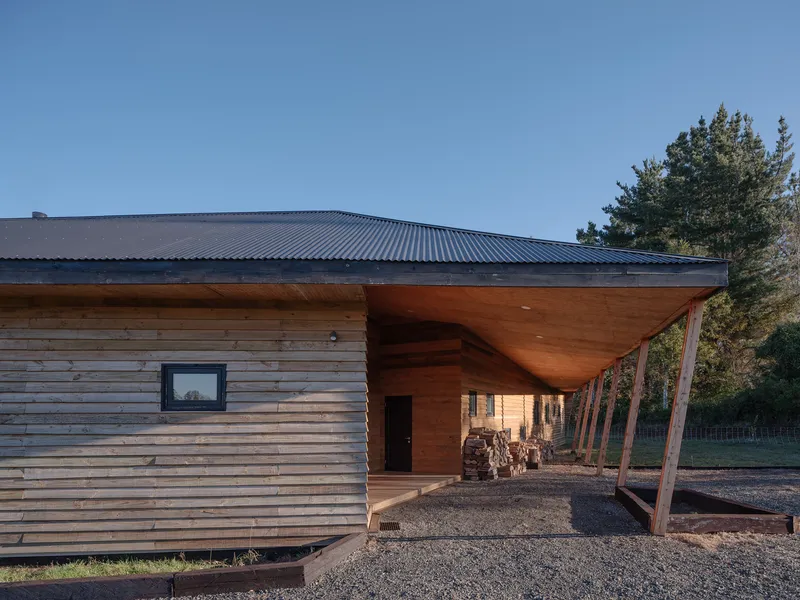
One of the most distinctive aspects of the design is the large, overarching roof that unites the entire house under its shelter. This roof is more expansive than the house itself, creating a sense of unity and protecting all the spaces within. The roof also allows for more intermediate spaces, such as terraces, parking, and a loggia, blending the indoors with the outdoors in a seamless manner.
Materiality and Aesthetics
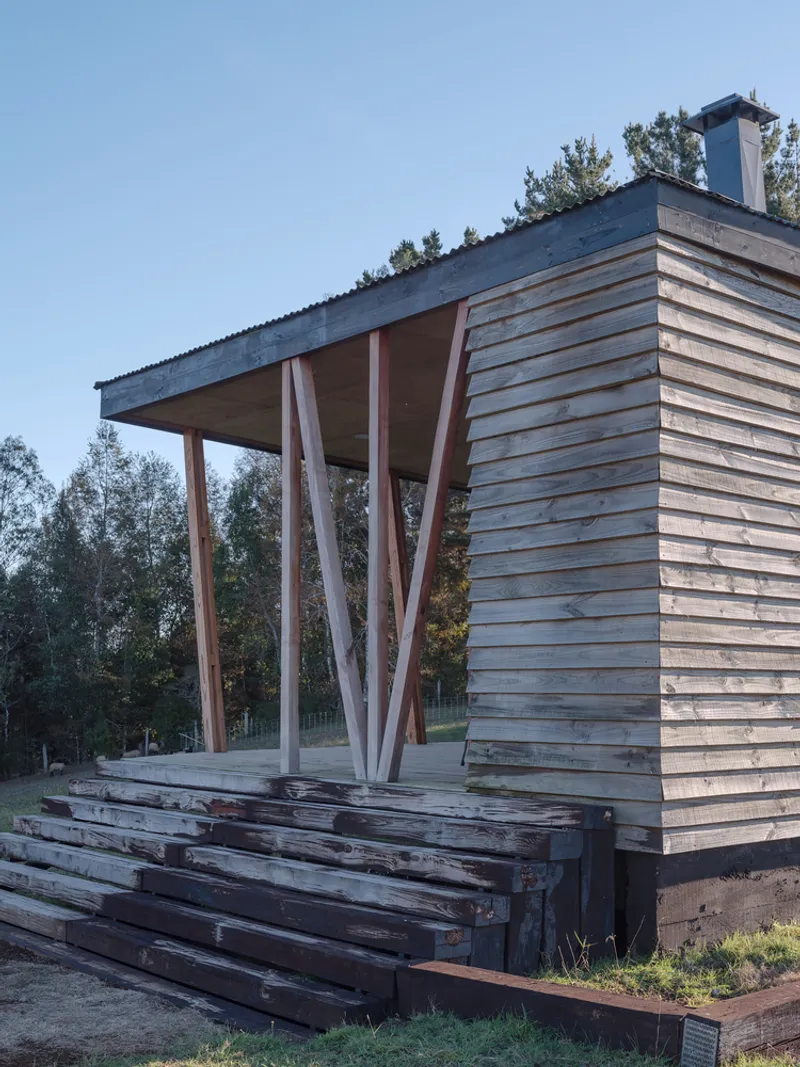
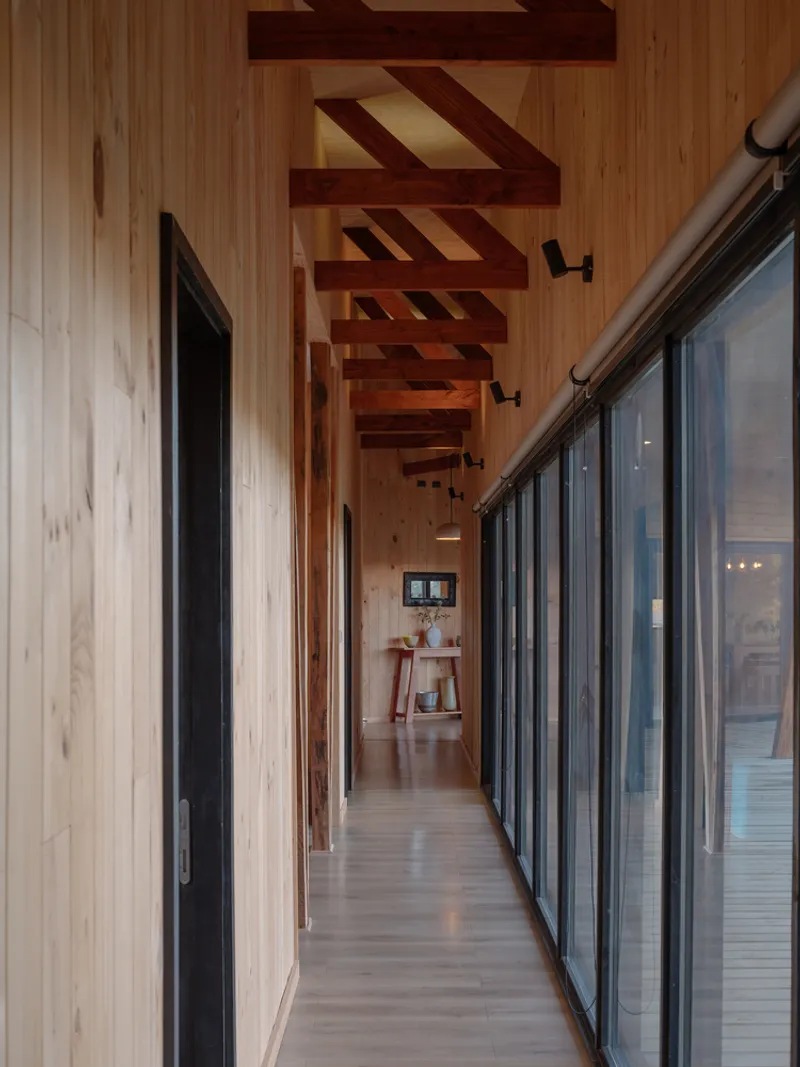
The exterior of Bumeran House features raw, impregnated pine wood boards, arranged horizontally to evoke a sense of connection with traditional wooden sheds found in the area. The choice of wood, untreated and exposed to the elements, is symbolic of the region’s vernacular architecture. Over time, the material will weather, giving the house a rustic, timeless feel that integrates naturally into the landscape. The use of natural materials not only adds to the aesthetic appeal of the home but also establishes a strong link with the local tradition.
Views and Connection to the Landscape
The most prominent feature of Bumeran House is its open southeast façade, designed to take full advantage of the spectacular views of the surrounding countryside. The large glazed openings create a continuous visual connection between the interior and the exterior, allowing natural light to flood the space and offering panoramic views of the garden and the landscape beyond. A substantial eave extends from the roof, providing shaded outdoor spaces that can be enjoyed even on rainy days, further enhancing the connection to nature.
This emphasis on views and the surrounding landscape underscores the essence of Bumeran House as a retreat. The building’s design is about more than just shelter; it is about fostering a connection to the environment, allowing its inhabitants to feel as if they are living within the landscape itself. The house doesn’t just overlook nature; it becomes an intrinsic part of it.
Sustainability and Practicality
In keeping with its rural setting, Bumeran House is designed to be a low-maintenance, sustainable home. The choice of materials and the orientation of the building ensure that the house will naturally age and blend with the environment, reducing the need for constant upkeep. The large roof also plays an essential role in regulating the internal climate, minimizing energy consumption by offering shelter from the sun and rain. The careful consideration of light and air flow ensures that the house remains comfortable year-round without excessive reliance on artificial heating or cooling.
Bumeran House by Lucas Maino Fernández is a masterful example of how architecture can integrate seamlessly with its natural surroundings. Through its innovative V-shaped layout, thoughtful use of local materials, and emphasis on panoramic views, this rural retreat offers a unique living experience where nature is never far away. The project exemplifies the power of simplicity in design, demonstrating that sometimes, less is more, and the beauty of a home lies in its connection to the land.
Whether you are drawn to the villarrica volcano views, the comfort of its open living spaces, or the understated elegance of its design, Bumeran House invites its residents to embrace a lifestyle that celebrates nature, privacy, and harmony.




Popular Articles
Popular articles from the community


The Ocean Hive: Sustainable Architecture for a Self-Sufficient Civilization at Sea
The Ocean Hive imagines sustainable architecture at sea, where modular habitats, algae, wave power and ocean waste sustain a growing colony.

Play: Fragments of Their World
Familiar architecture becomes modular playground design, creating safe spaces where displaced children can learn, connect, imagine and play.

The Musturak Paradise: Senior Living Architecture for a Connected Future in Temara, Morocco
The Musturak Paradise reimagines senior living architecture in Temara via private homes, social spaces, culture, community, and shared care.

Co-life: Sustainable Architecture for Age-Friendly Community Living
Co-life reimagines sustainable architecture for seniors through courtyards, rammed earth, shared gardens, and spaces designed for belonging.

Similar Reads
You might also enjoy these articles


Hodi-Mandai Geram
Project Function: Preservation and revitalization of the Intangible heritage and socio-spatial identity of the Hodi by Housing, Cultural Memory Center, Sacred Grove, landscape, local tourism economy


Olio Towers: A Mid-Rise for Performers That Fuses Housing, Rehearsal, and Stage
Located blocks from Houston's Theater District, this modular tower stacks living units around a central performance atrium.

Oasis: Modular Green Housing Carved into Dhaka's Urban Fabric
A shortlisted Plugin Housing entry reclaims unauthorized settlements in Dhaka with stepped concrete volumes, green roofs, and ventilation-driven design.

Black Hole: A Floating Megastructure for the Post-Physical Era
Emiliano Mazzarotto envisions a spherical, self-scaling arena where e-sports, digital hotels, and holographic stadiums replace traditional public space.

Explore Architecture Competitions
Discover active competitions in this discipline



Challenge to reimagine the Iron Throne


Photograph architecture without architects


Illustrate the lost glory of Angkor Wat - Render Challenge


Design challenge to reuse E-waste
Comments (0)
Please login or sign up to add comments
No comments yet. Be the first to comment!