
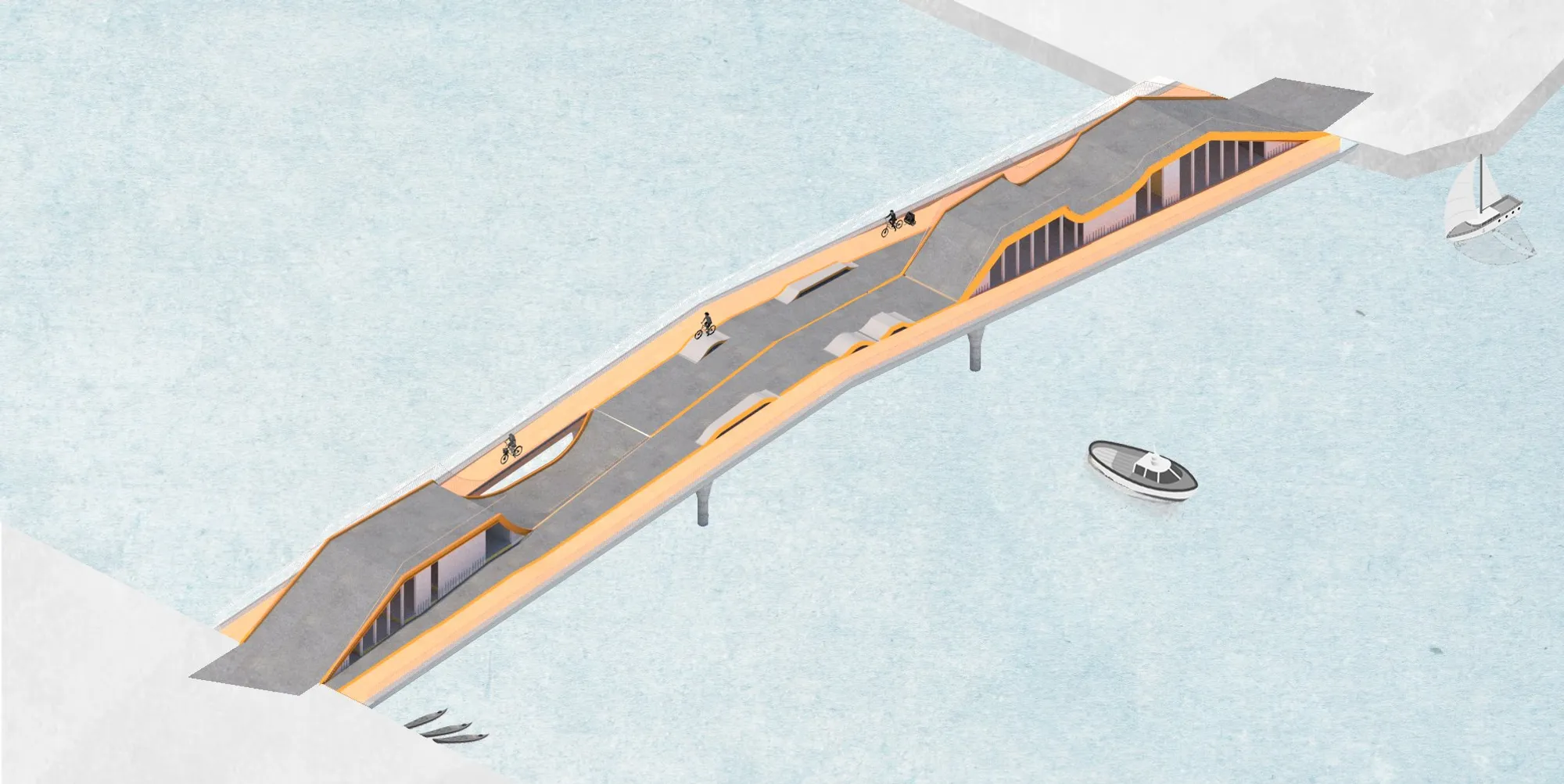
Bumpebroen: A Landmark of Sustainable Urban Design in Copenhagen
A playful cycling bridge in Copenhagen redefining sustainable urban design through movement, landscape, and vibrant public space


In a city globally recognized for its bicycle culture, Copenhagen continues to set new standards in sustainable urban design. Bumpebroen, designed by Hermine Bertrand and Elise Vandenbroucke, is more than a bridge, it is an experiential piece of cycling infrastructure architecture that transforms everyday commuting into an interactive urban landscape.
The name “Bumpebroen,” a Danish contraction of “bumps” and “bridge,” reflects its defining architectural gesture: a rhythmic, undulating surface that invites movement, play, and discovery. Connecting two sides of the harbor, the project operates simultaneously as transportation infrastructure, public space, and cultural landmark.
Cycling Infrastructure as Urban Catalyst
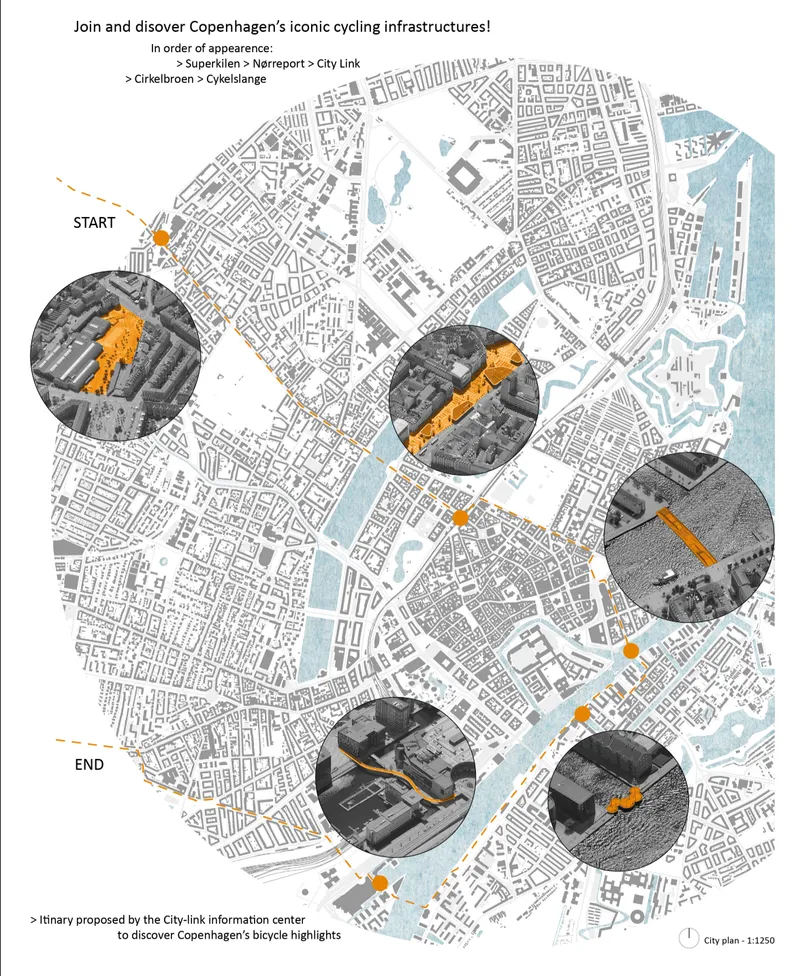
Copenhagen is living proof that bicycles remain central to modern urban life. The city’s cycling network: including Superkilen, Nørreport, City Link, Cirkelbroen, and Cykelslangen, demonstrates how infrastructure can shape identity. Bumpebroen builds upon this legacy by reinforcing sustainable mobility through thoughtful architectural intervention.
Rather than functioning solely as a transit route, the bridge becomes a destination. It supports cyclists, pedestrians, tourists, and urban explorers alike: encouraging a lifestyle rooted in accessibility, health, and environmental consciousness.
Bikes are convenient, flexible, affordable, and healthy. When urban design prioritizes these characteristics: security, comfort, and enjoyment, people adopt sustainable habits naturally. Bumpebroen embodies this principle by creating a secure and engaging spatial framework for sustainable transportation.
Concept: Three Ribbons of Movement
The architectural concept is organized around three distinct yet interconnected ribbons:
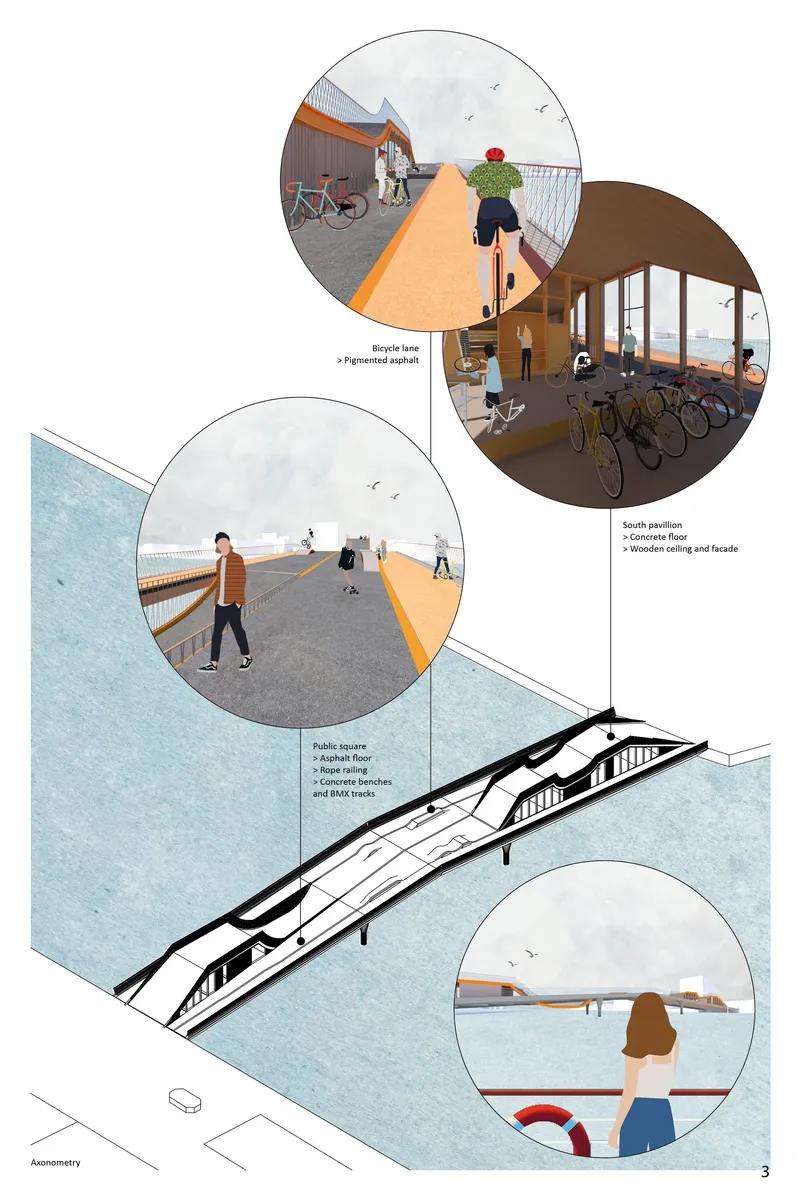
- Two external ribbons serve as the primary cycling paths, offering direct and efficient movement across the harbor.
- The central ribbon evolves into a playful, bumpy landscape that accommodates pedestrians, BMX riders, gathering spaces, and moments of pause.
This spatial hierarchy ensures fluid circulation while fostering interaction. Pedestrians remain at the center, surrounded by cycling flows, reinforcing coexistence rather than separation.
The deck’s topography introduces dynamic gradients, allowing the bridge to operate as both circulation and recreation. At certain points, the ribbon dips beneath the main structure, bringing users closer to the water and revealing the bridge’s construction, an architectural gesture that strengthens the sensory experience of the harbor.
A Vibrant Public Space Above Water
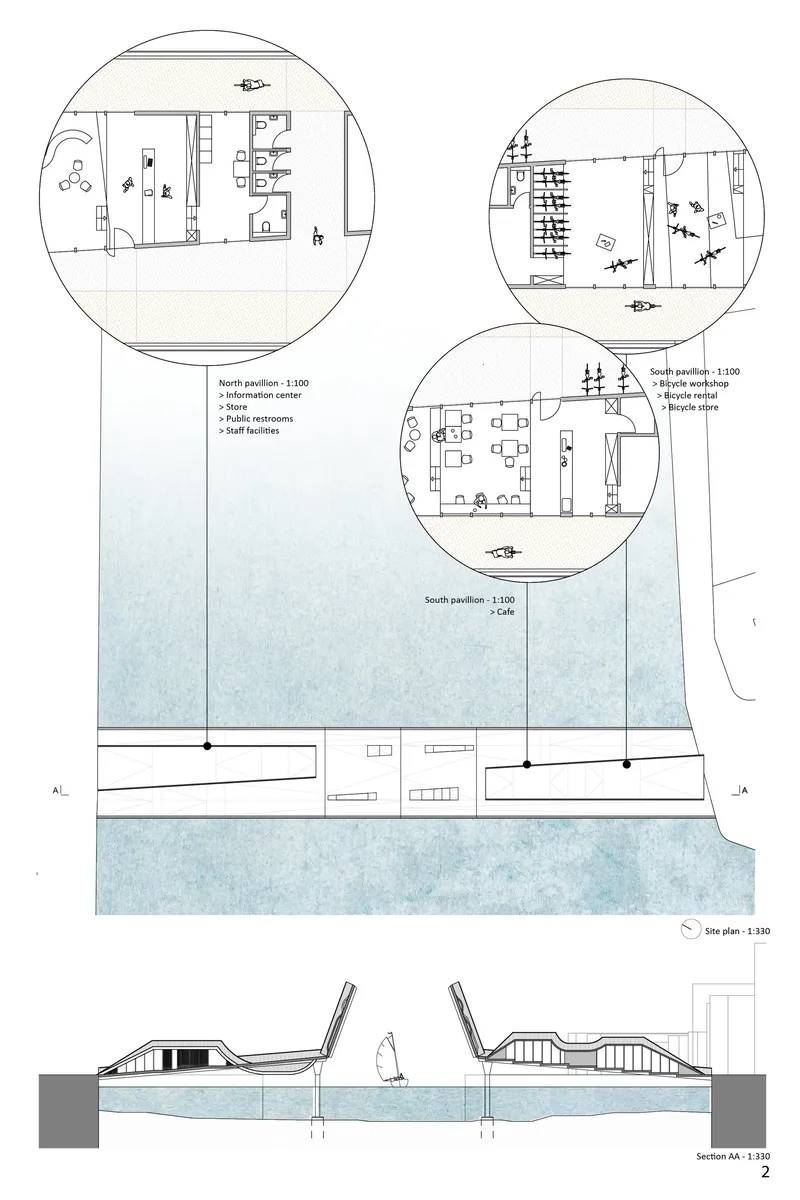
Unlike conventional bridges, Bumpebroen integrates architectural programs within its structure. The north pavilion houses an information center, public restrooms, retail space, and staff facilities. The south pavilion includes a bicycle workshop, rental area, café, and bicycle storage.
The roof surfaces double as gathering areas and BMX playgrounds. The openable segment of the bridge acts as a flexible event zone where cyclists can perform jumps, families can gather, and users can pause for coffee while waiting for repairs.
Concrete benches, rope railings, pigmented asphalt, and wooden interiors create a cohesive material palette that merges robustness with warmth. The design enables spontaneous uses, some anticipated, others emergent, reflecting the adaptable nature of public space within sustainable urban design strategies.
Functionality and Flow
Despite being openable to allow maritime traffic, Bumpebroen manages constant bicycle movement efficiently. The external ribbons maintain direct connectivity, while the central ribbon absorbs pauses and short stops, minimizing inconvenience during bridge openings.
Fixed sections provide generous seating and resting zones. The openable deck ensures that boats, kayaks, and canoes remain integrated into the harbor ecosystem. This coexistence of land and water mobility reinforces Copenhagen’s multimodal urban strategy.
By allowing cyclists to combine biking with public transportation, the project aligns with broader city-scale sustainability goals. It demonstrates that isolated bike lanes are insufficient; instead, integrated systems are essential to achieve truly sustainable cities.
A New Urban Landmark
Bumpebroen stands apart because it is more than a passage. It contains shops, gathering areas, cultural programming, and recreational infrastructure. Its sculptural form, subtle yet distinctive, creates a recognizable silhouette across the harbor.
The bridge’s playful landscape resonates with Danish culture, particularly its strong BMX community. Events such as Red Bull BMX competitions further activate the structure, reinforcing its identity as both infrastructure and spectacle.
While its form remains simple and clear, details such as color accents, ribbon geometry, and layered circulation transform it into a landmark of contemporary bridge architecture.
Sustainable Urban Design in Action
At its core, Bumpebroen exemplifies how sustainable urban design can reshape everyday infrastructure into vibrant civic architecture. It demonstrates that bridges can:
- Encourage low-carbon transportation
- Promote healthy lifestyles
- Foster social interaction
- Activate waterfronts
- Create economic opportunities
By merging movement, play, commerce, and culture, Hermine Bertrand and Elise Vandenbroucke present a forward-thinking model for sustainable bridge architecture.
Bumpebroen is not just a crossing, it is a living urban stage, celebrating Copenhagen’s bicycle way of life while redefining how infrastructure contributes to resilient, people-centered cities.




Popular Articles
Popular articles from the community


The Earth Pod: 3D Printed Homes for Resilient Refugee Communities
The Earth Pod reimagines refugee housing through 3D printed homes made from clay, combining resilience, self-sufficiency, and rapid shelter.

Play: Fragments of Their World
Familiar architecture becomes modular playground design, creating safe spaces where displaced children can learn, connect, imagine and play.

Lunar Spiral: Space Architecture Shaped by the Mathematics of the Universe
Lunar Spiral reimagines space architecture through Fibonacci geometry, lunar regolith, levitating habitats, and self-sustaining Moon living.

The Musturak Paradise: Senior Living Architecture for a Connected Future in Temara, Morocco
The Musturak Paradise reimagines senior living architecture in Temara via private homes, social spaces, culture, community, and shared care.

Similar Reads
You might also enjoy these articles

Eco Chapel: A Green Architecture Pavilion Designed in Symbiosis with the Forest
Eco Chapel uses green architecture to weave prayer, learning and reuse into a forest pavilion shaped by modular hexagonal canopies for life.
Kaffeebühnen: Coffee Shop Architecture Designed as a Civic Stage Between Vienna’s City and Park
Kaffeebühnen turns coffee shop architecture into a civic stage, linking Vienna’s park edge, urban life, warm timber yards, and coffee craft.
Healing Façade: Sustainable Architecture for Reforestation, Community, and Sacred Ecology in Ethiopia
Healing Façade reimagines sustainable architecture as a living wall that restores soil, catches water and renews Ethiopia's forest churches.


Urban Forest: A Vertical Ecosystem for 5,000 Workers in Singapore's Changi Business Park
Radially stacked pods and layered green decks turn a 7-acre plot into 47 acres of ecological workspace projected for 2040.





Comments (0)
Please login or sign up to add comments
No comments yet. Be the first to comment!