
Bunkeren House by James Stockwell Architect
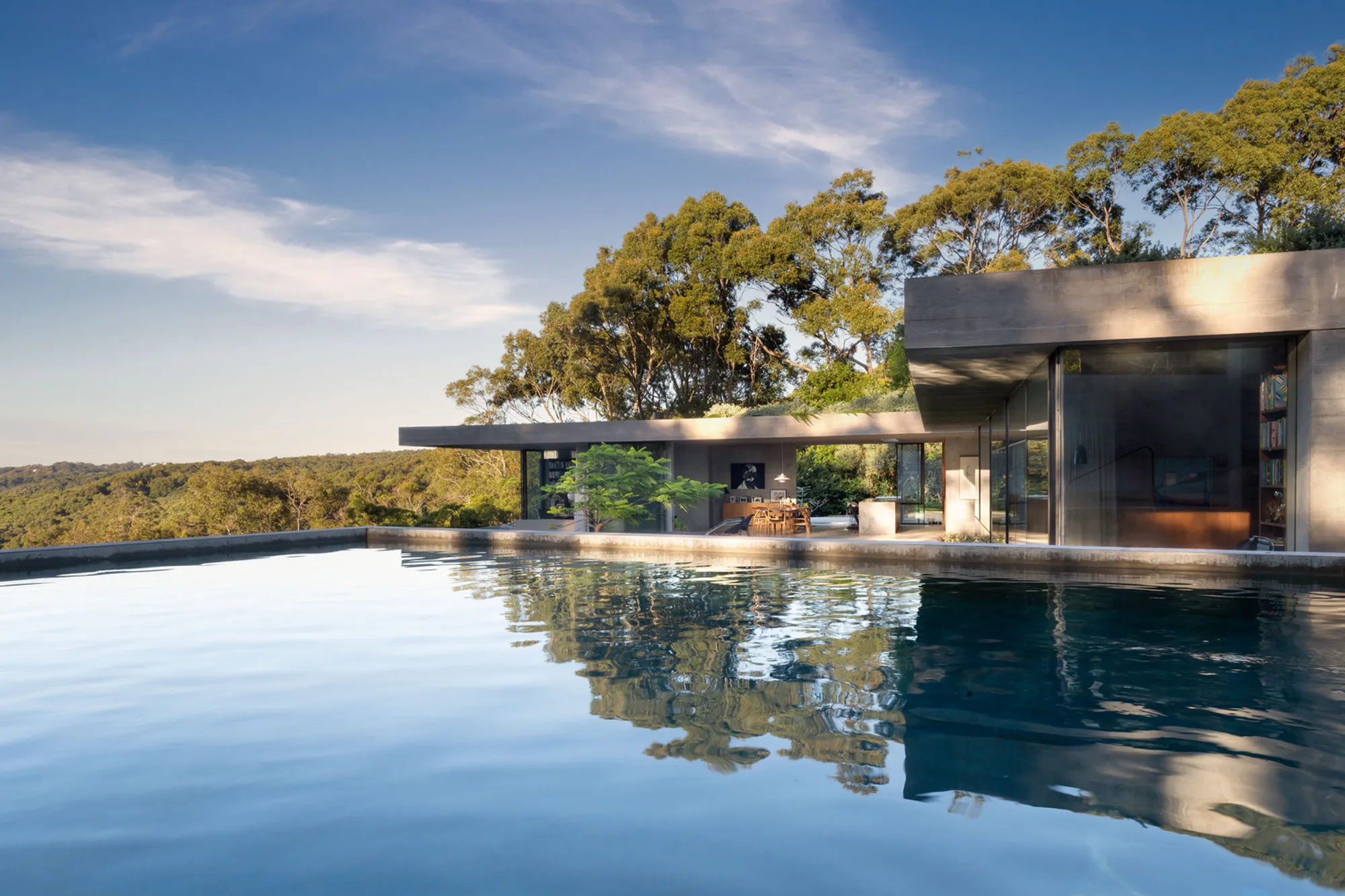
Bunkeren House by James Stockwell Architect seamlessly merges with the coastal landscape, a half-buried concrete home enhancing ecology and climatic stability.


A Seamless Dialogue Between Architecture and Landscape
Bunkeren House by James Stockwell Architect is a poetic exploration of how contemporary architecture can dissolve into its natural environment. Set within the rugged coastal terrain of Whitebridge, Australia, the house redefines the relationship between dwelling and landscape. Designed as a half-buried structure, it merges with the surrounding geology to create a home that is as much a part of the land as the headlands and embayments that shape the coastline.
The architect’s vision was simple yet profound: to make arrival at the house synonymous with arrival at the landscape. This deep integration allows the garden and the coastal ecosystem to take precedence, with architecture serving as a subtle mediator rather than a dominant presence.
A Design Rooted in Geological Inspiration
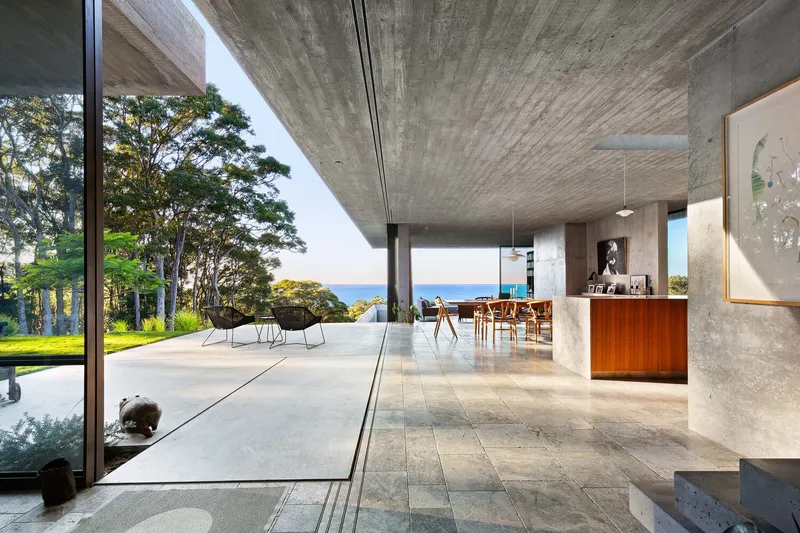
Carved into an amphitheatre of conglomerate rock, Bunkeren House takes inspiration from the natural topography and geological formations of the Australian headlands. The linear arc of the building mirrors the coastal buttresses and bays found nearby, creating a rhythm between built and natural elements.
The planning concept follows this curvature, positioning the home as a series of raised earthen platforms. Each platform is oriented to frame views of the garden and seascape while maximizing light, ventilation, and privacy. This architectural strategy reinforces the sense that the home is grown from the land itself, not imposed upon it.
Material Honesty and Climatic Intelligence
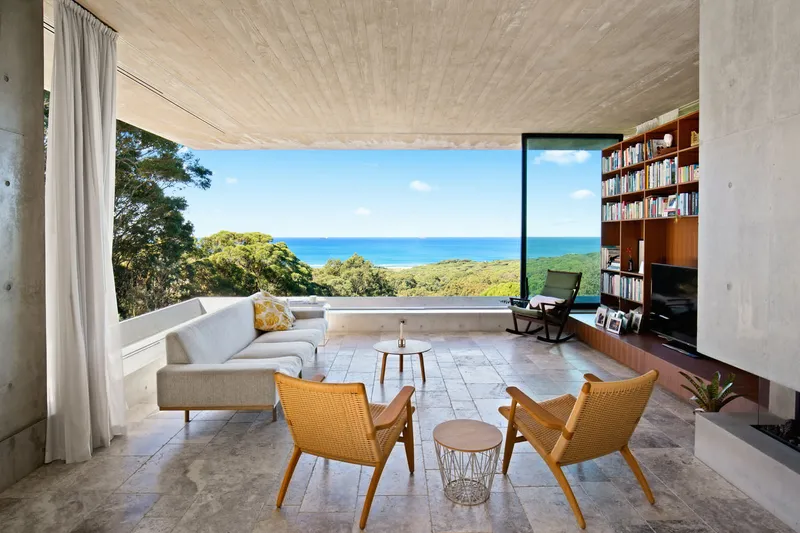
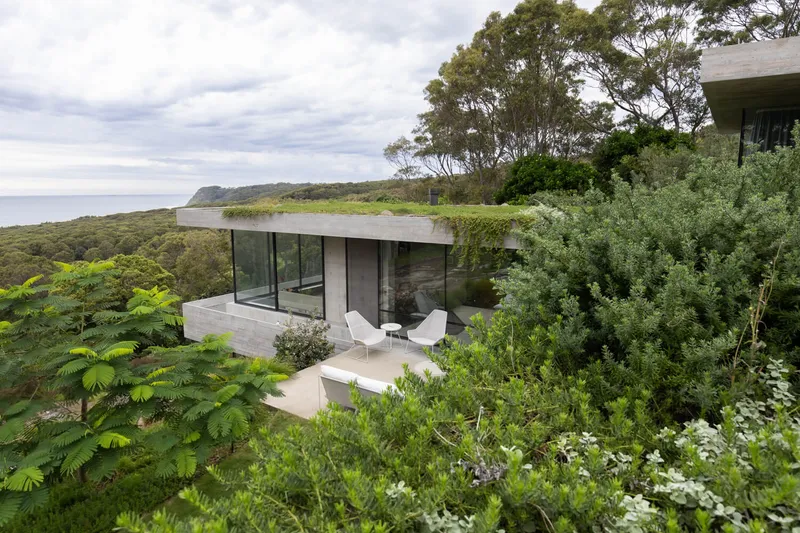
The decision to submerge the structure within the hillside is not purely aesthetic—it’s also a response to climate, ecology, and safety. By being partially buried, the house achieves thermal stability, maintaining a comfortable interior temperature year-round. The earthen insulation protects against bushfires, while the concrete shell provides long-term durability in the face of coastal weather conditions.
Concrete, chosen for its robustness and endurance, forms the primary structural and expressive material. Its tactile surfaces engage with the surrounding earth, vegetation, and light, gradually weathering into harmony with the site. The hovering concrete platforms, supported by post-tensioned cantilevers, create a play between solidity and suspension, grounding the home while allowing spaces of light and air to flow between structural layers.
Spatial Experience: A Living Amphitheatre
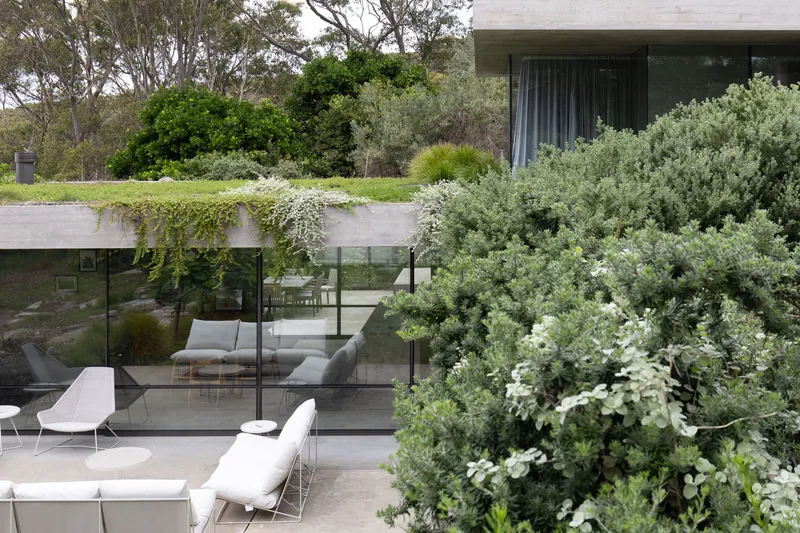
The interiors of Bunkeren House are minimalist yet deeply atmospheric. Natural light filters through narrow openings and courtyards, animating the concrete walls and revealing subtle shifts in texture throughout the day. Living spaces are oriented outward toward the garden, where native plants and shrubs form a soft boundary between the home and its environment.
Inside, the design maintains a sense of calm restraint. Furniture and finishes are understated, complementing the monolithic concrete and the surrounding greenery. The living room, with its simple wooden furnishings and neutral palette, evokes a sense of quiet retreat—a space to observe nature’s rhythm rather than dominate it.
Ecological Restoration and Biodiversity
A key aspect of the project is its commitment to biodiversity and habitat creation. The landscape surrounding the house has been carefully planted with 15 endemic species native to the region, encouraging the return of birdlife and local fauna. Over time, the vegetation is designed to grow over and around the architecture, blurring the boundary between structure and landscape even further.
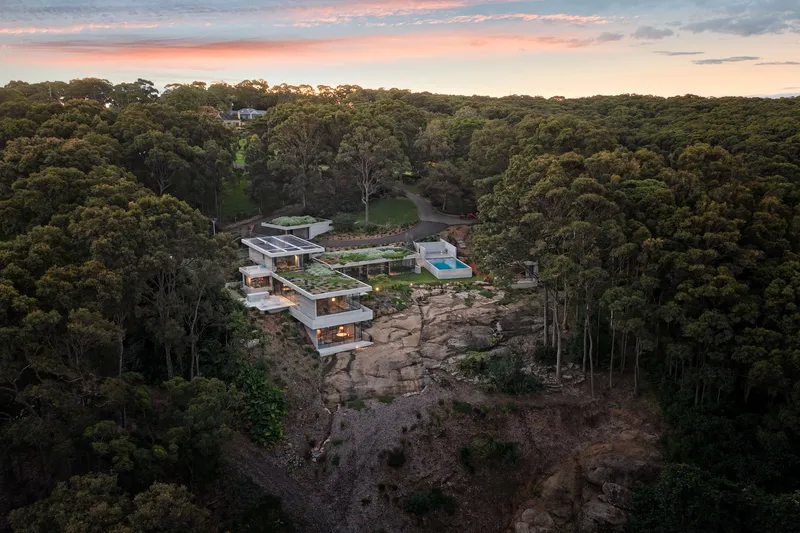
The result is a home that not only coexists with its ecosystem but actively enhances the local ecology, setting a precedent for sustainable, landscape-driven architecture in Australia.
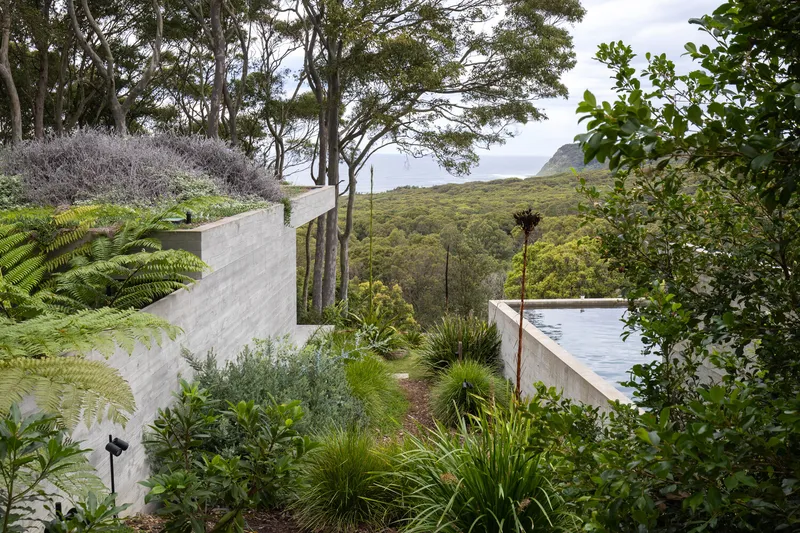
Arrival at a Living Landscape
James Stockwell Architect’s Bunkeren House transcends conventional definitions of residential architecture. It is not merely a structure within nature—it is an extension of the land itself, embodying resilience, humility, and environmental sensitivity. The house’s amphitheatrical form, half-buried geometry, and textured concrete skin all contribute to a sensory experience rooted in geological and climatic understanding.
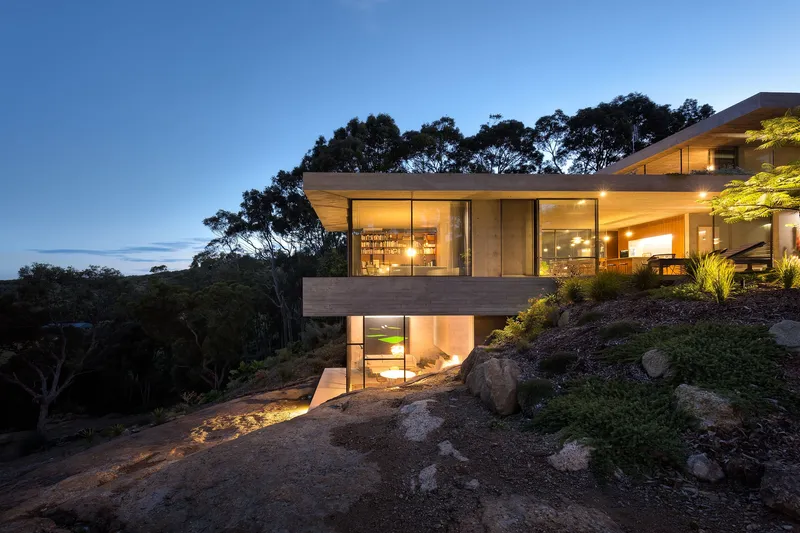
In an era where architecture often seeks to stand out, Bunkeren House stands apart by choosing to disappear—becoming one with the earth it inhabits. It is a contemporary bunker not of defense, but of coexistence—a serene shelter for both humans and nature.
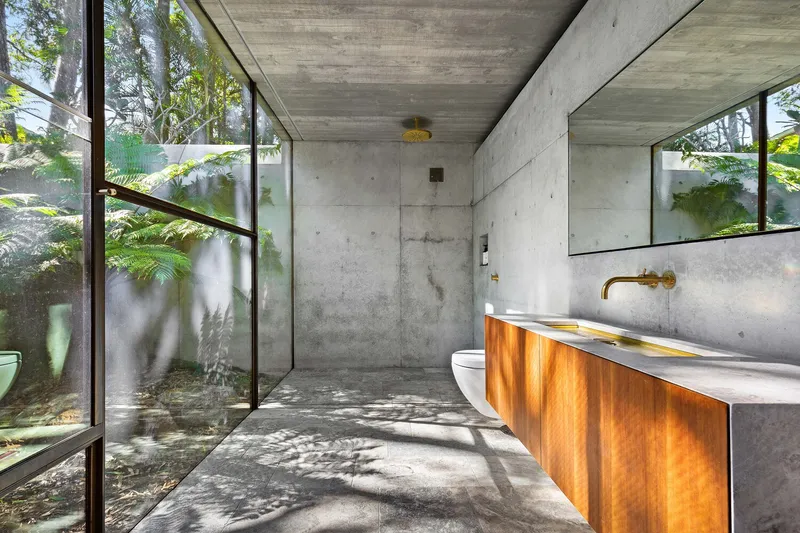
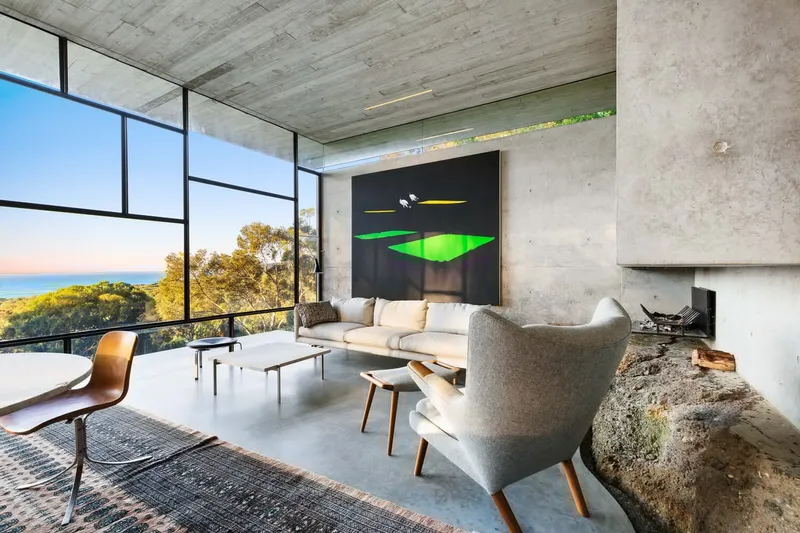
Discover Bunkeren House by James Stockwell Architect in Whitebridge, Australia — a half-buried concrete residence blending with the coastal landscape, offering climatic stability, ecological harmony, and timeless architectural beauty.
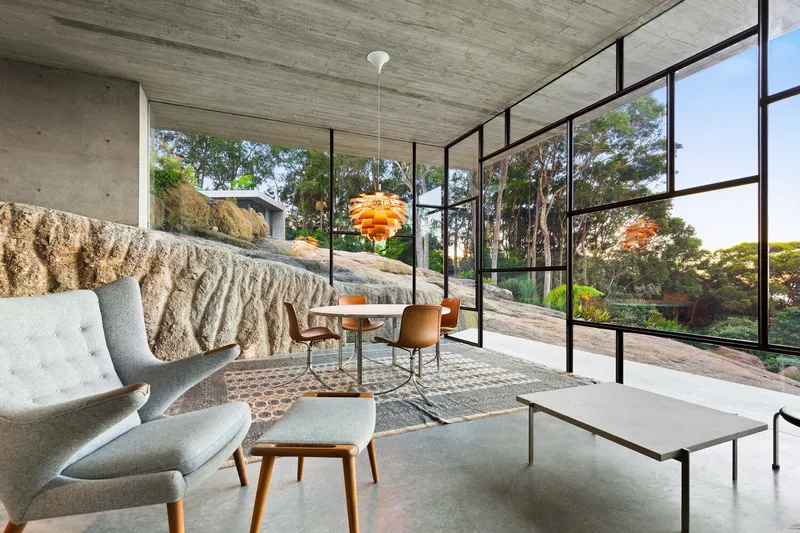
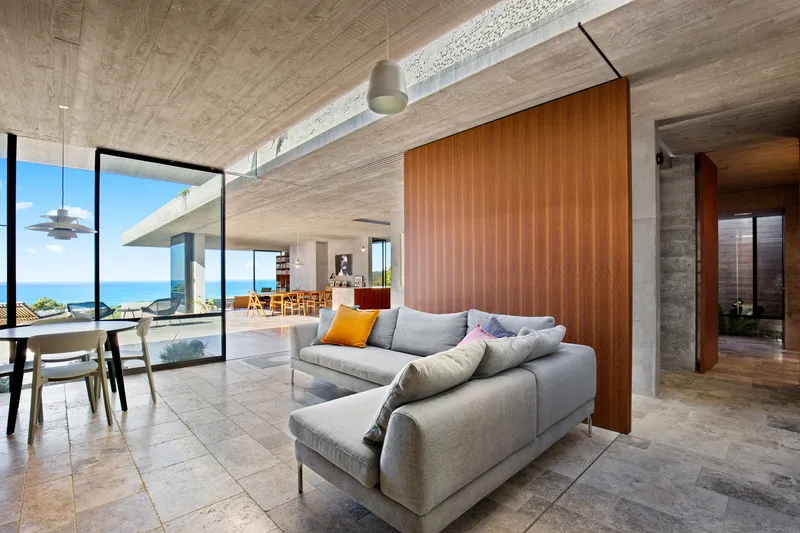
All photographs are works of Tony Marshall




Popular Articles
Popular articles from the community


Co-Life: Senior Housing Design That Reconnects Older Adults With the City
Co-Life reimagines senior housing design through healing gardens, shared streets, workshops, and a sustainable community across generations.

Conexión: Biophilic Design Reimagines High-Rise Living in Hong Kong
Conexión reimagines high-rise living in Hong Kong through biophilic design, green facades, shared spaces, daylight, water and nature within.

Riyadh For All: Intergenerational Urban Design for Active Aging in Rabat
Riyadh For All reimagines urban design in Rabat with intergenerational co-living, adaptive courtyards, and Moroccan cultural exchange today.

The Earth Pod: 3D Printed Homes for Resilient Refugee Communities
The Earth Pod reimagines refugee housing through 3D printed homes made from clay, combining resilience, self-sufficiency, and rapid shelter.


Similar Reads
You might also enjoy these articles


Hodi-Mandai Geram
Project Function: Preservation and revitalization of the Intangible heritage and socio-spatial identity of the Hodi by Housing, Cultural Memory Center, Sacred Grove, landscape, local tourism economy


Olio Towers: A Mid-Rise for Performers That Fuses Housing, Rehearsal, and Stage
Located blocks from Houston's Theater District, this modular tower stacks living units around a central performance atrium.

Oasis: Modular Green Housing Carved into Dhaka's Urban Fabric
A shortlisted Plugin Housing entry reclaims unauthorized settlements in Dhaka with stepped concrete volumes, green roofs, and ventilation-driven design.

Black Hole: A Floating Megastructure for the Post-Physical Era
Emiliano Mazzarotto envisions a spherical, self-scaling arena where e-sports, digital hotels, and holographic stadiums replace traditional public space.


Explore Sustainable Design Competitions
Discover active competitions in this discipline



Challenge to reimagine the Iron Throne


Photograph architecture without architects


Illustrate the lost glory of Angkor Wat - Render Challenge


Design challenge to reuse E-waste
Comments (0)
Please login or sign up to add comments
No comments yet. Be the first to comment!