

Cal Totxo Apartment by Cierto Estudio: A Warm, Circulatory Reimagination at the Edge of Nature
Cierto Estudio transforms a modernist Barcelona apartment into a warm, light-filled home with fluid circulation and custom-crafted details.


Set at the foothills of Collserola Natural Park in Barcelona, Cal Totxo is a thoughtful renovation by Cierto Estudio, transforming a compartmentalized modernist apartment into a fluid, light-filled home for a family of four. Completed in 2022, the 100 m² project redefines interior living through spatial reorganization, custom materiality, and sinuous design gestures that reflect both warmth and elegance.
From Constrained to Connected
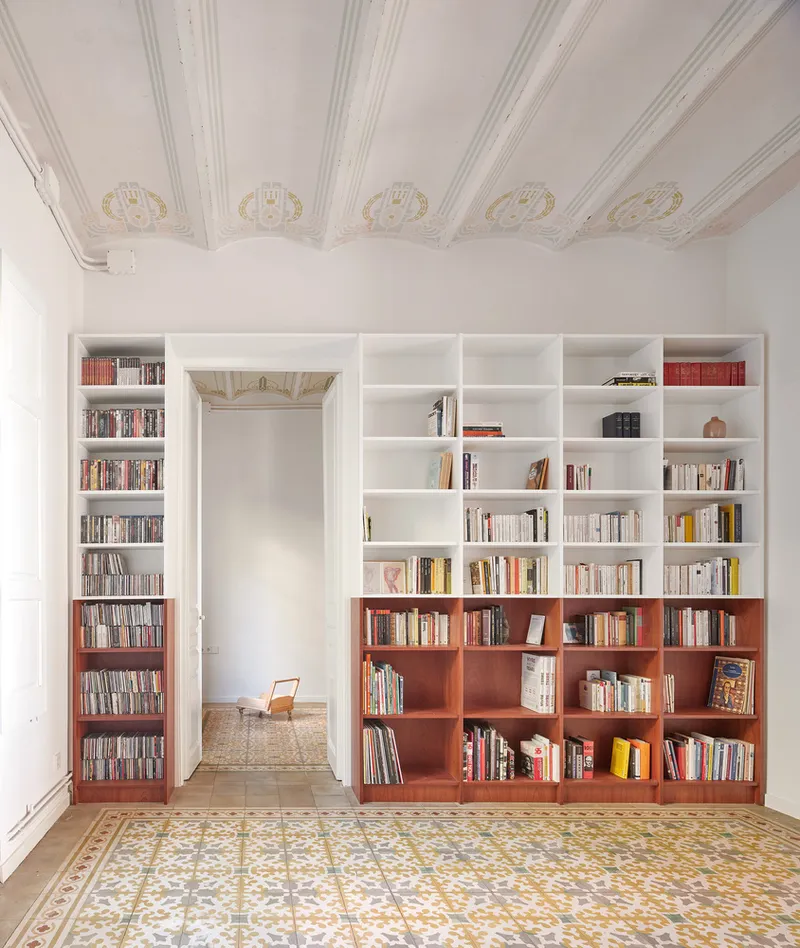
The original layout was marked by three small bedrooms, two dark bathrooms, and a series of narrow, underutilized corridors. Cierto Estudio’s intervention does away with rigid circulation in favor of an uneven interior grid that replaces hallways with interconnected, multifunctional rooms. Each space now has multiple access points, increasing flexibility and inviting daylight into previously isolated areas.
Key to this transformation was the decision to reduce the number of bedrooms from three to two, prioritizing generous shared living areas—a bold move tailored to the needs of the resident family.
Spatial Fluidity and Functional Zones
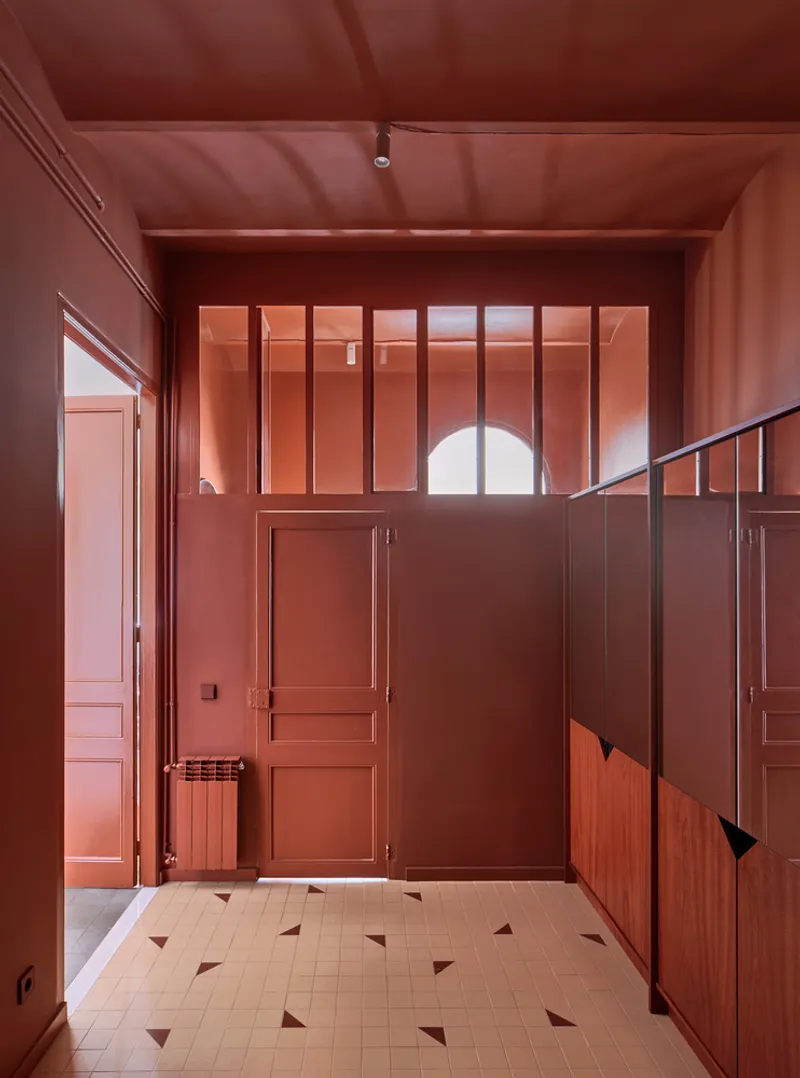
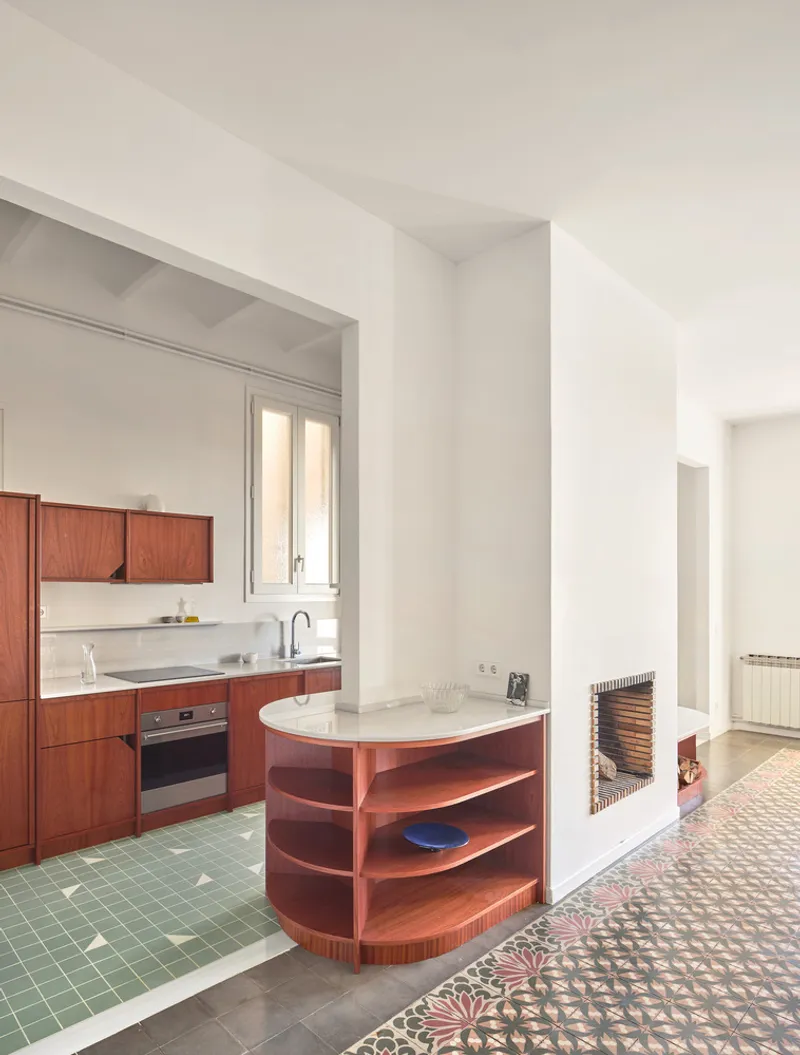
The apartment is now entered directly from outside through a welcoming entrance hall, which opens onto a communal dressing room and a library space. From there, occupants flow toward the living room, centered around an existing fireplace whose hearth now anchors a circular spatial route.
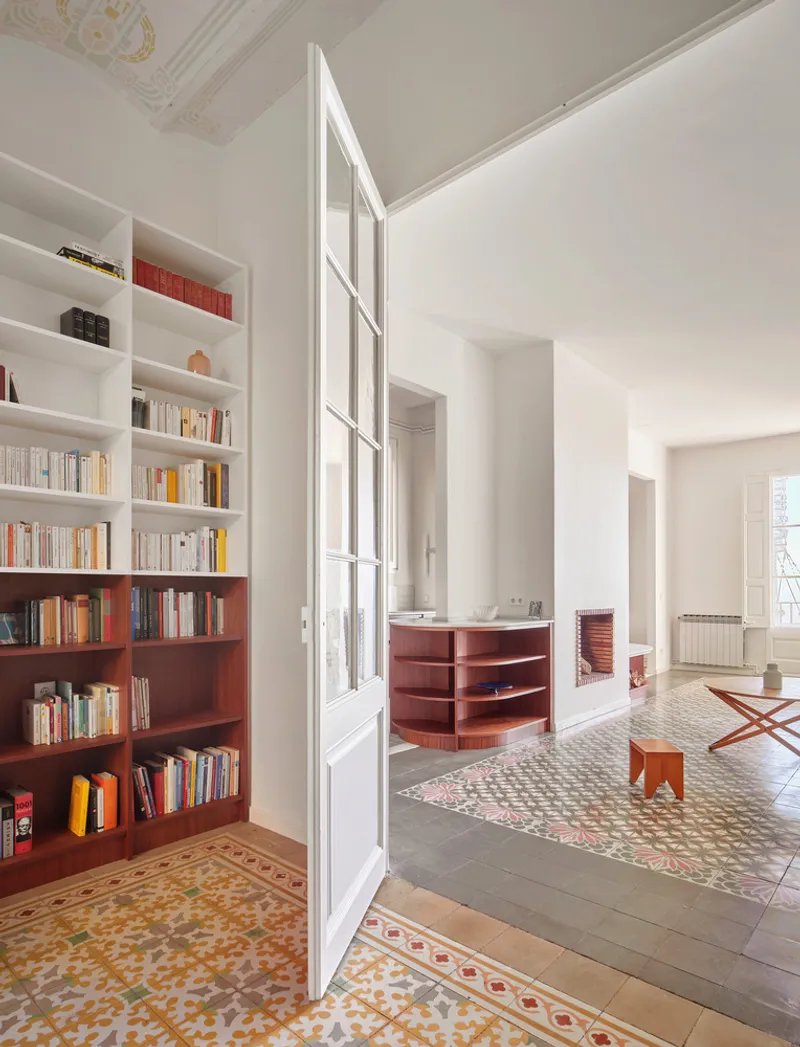
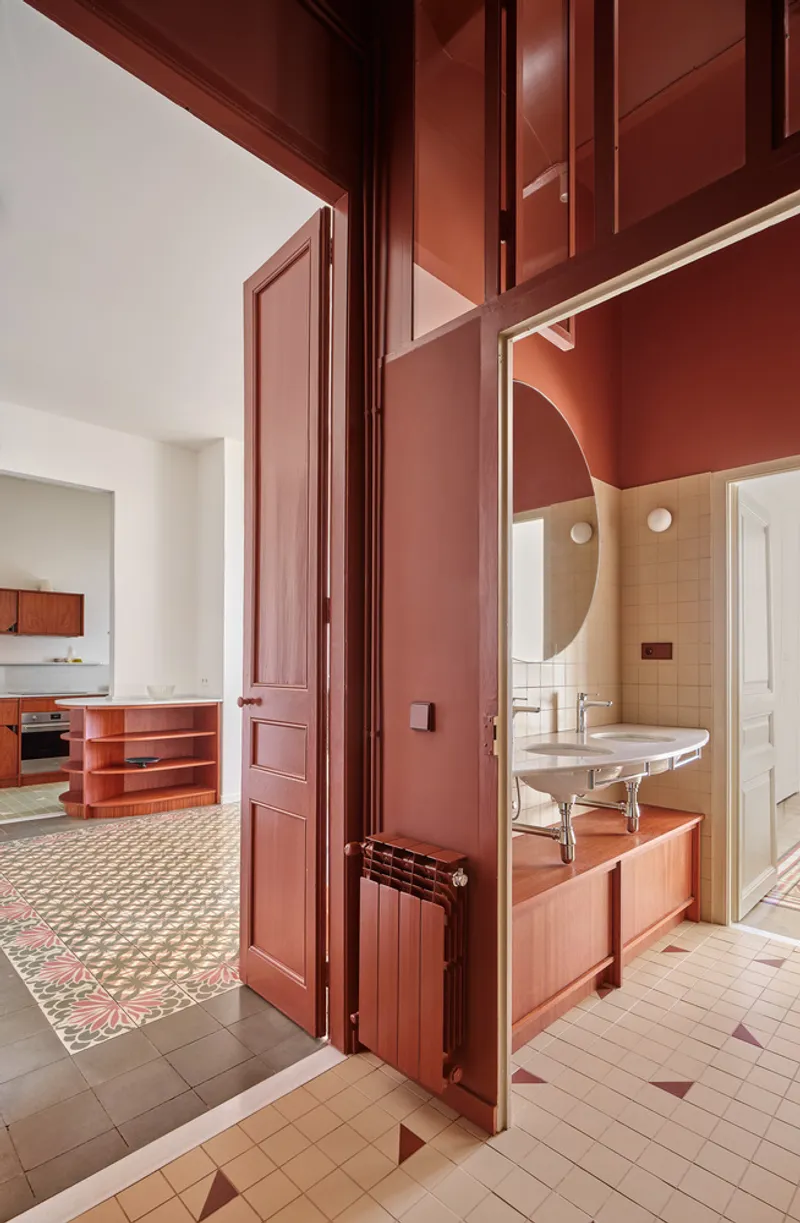
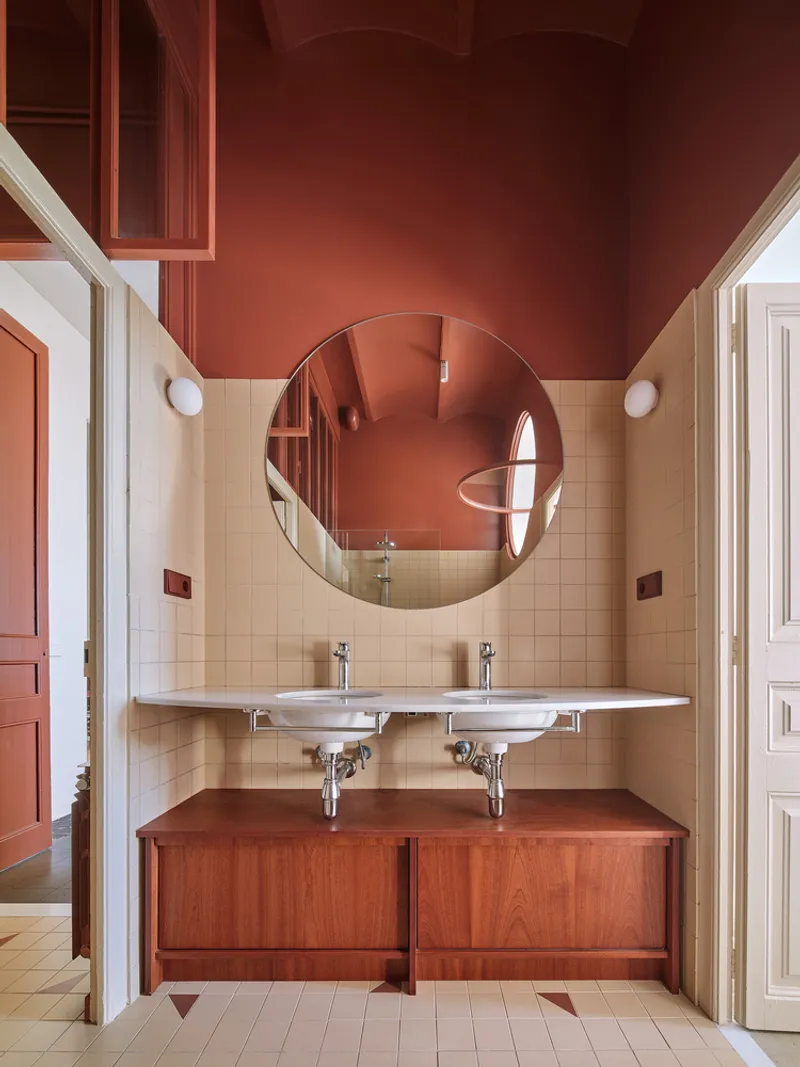
The kitchen was reconfigured and extended into a new dining area, visually separated but part of the larger interconnected layout. One of the original bathrooms was converted into a laundry room, allowing the remaining bathroom to be expanded and enhanced.
Crafted Geometry and Warm Materials
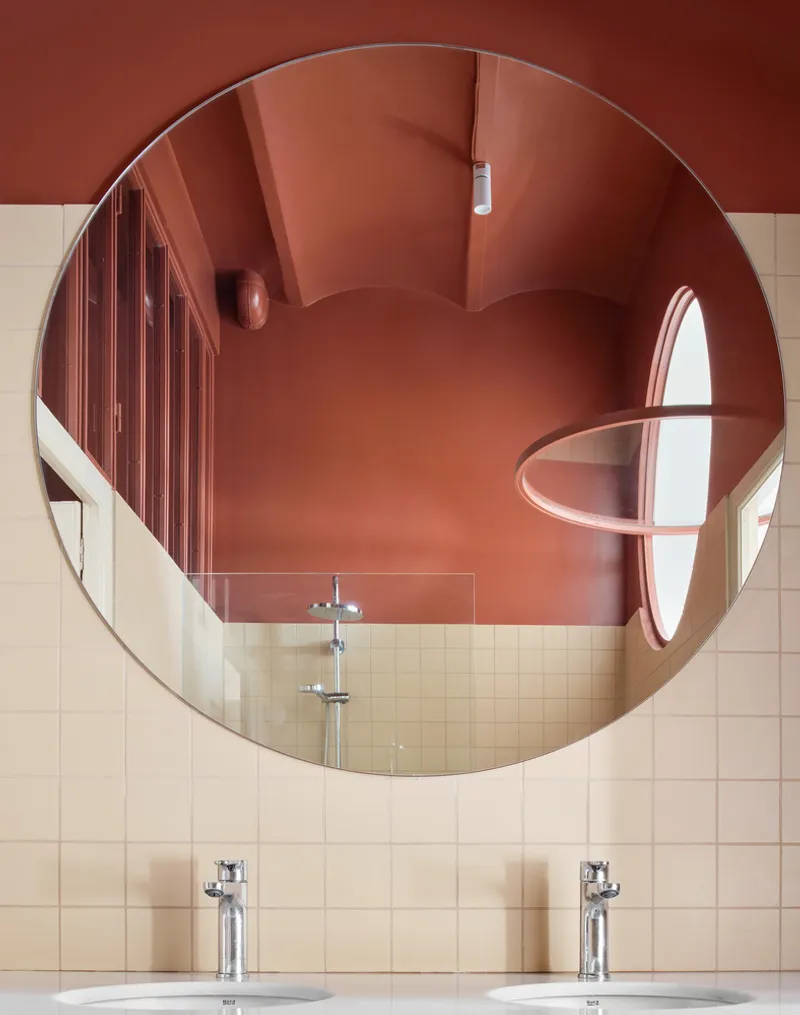
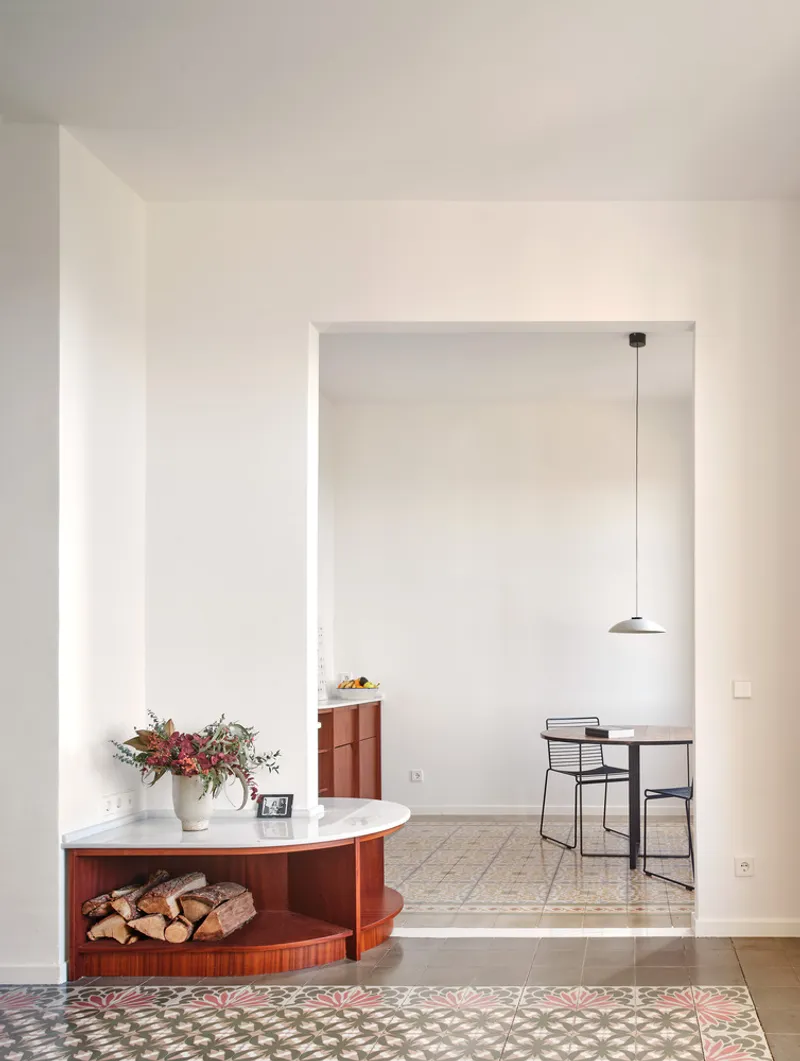
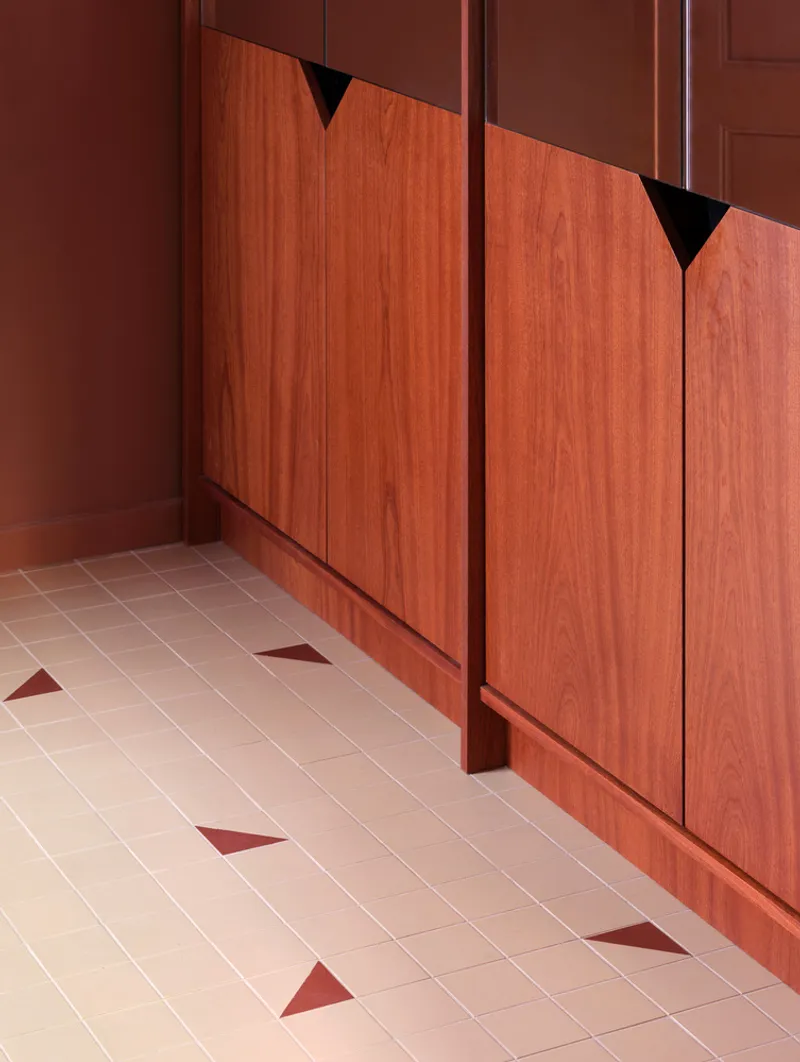
Cierto Estudio's custom furnishings bring cohesion and artistry to the renovation. Natural wood cabinetry, rounded corners, circular mirrors, and arched window frames introduce a tactile softness. The use of Sapelli wood, with its warm reddish hue, lends a subtle monochromatic palette that reinforces intimacy—especially within the darker dressing room, which gains natural light indirectly from the bathroom and entrance.
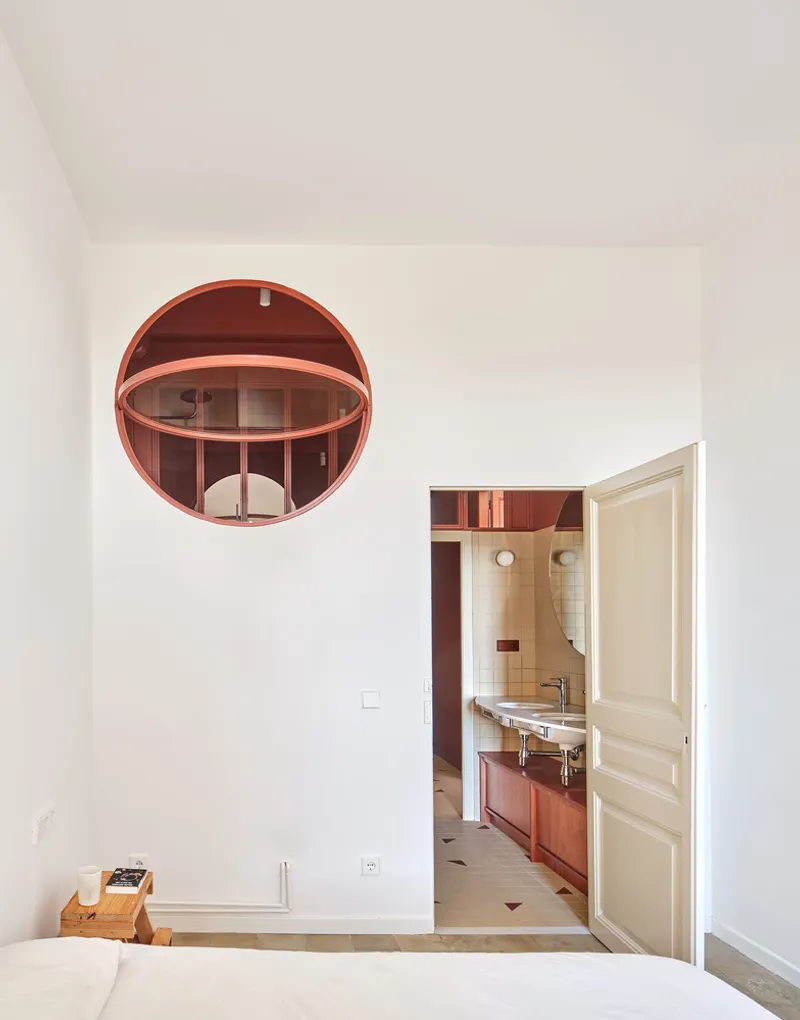
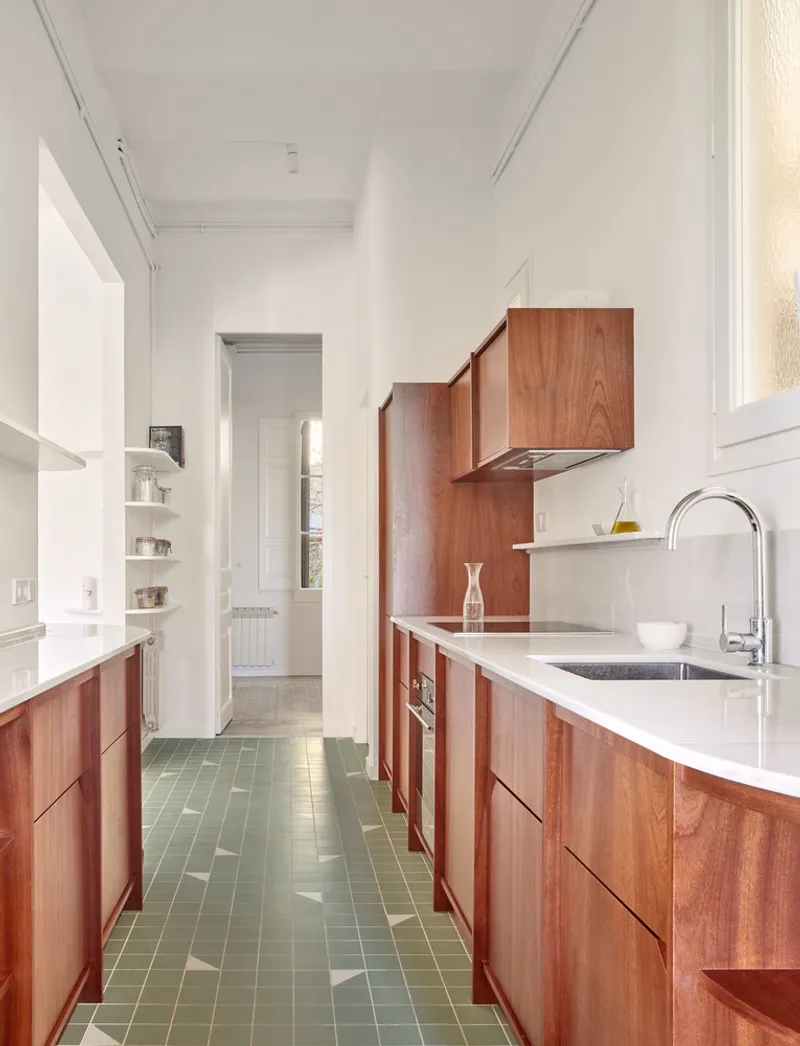
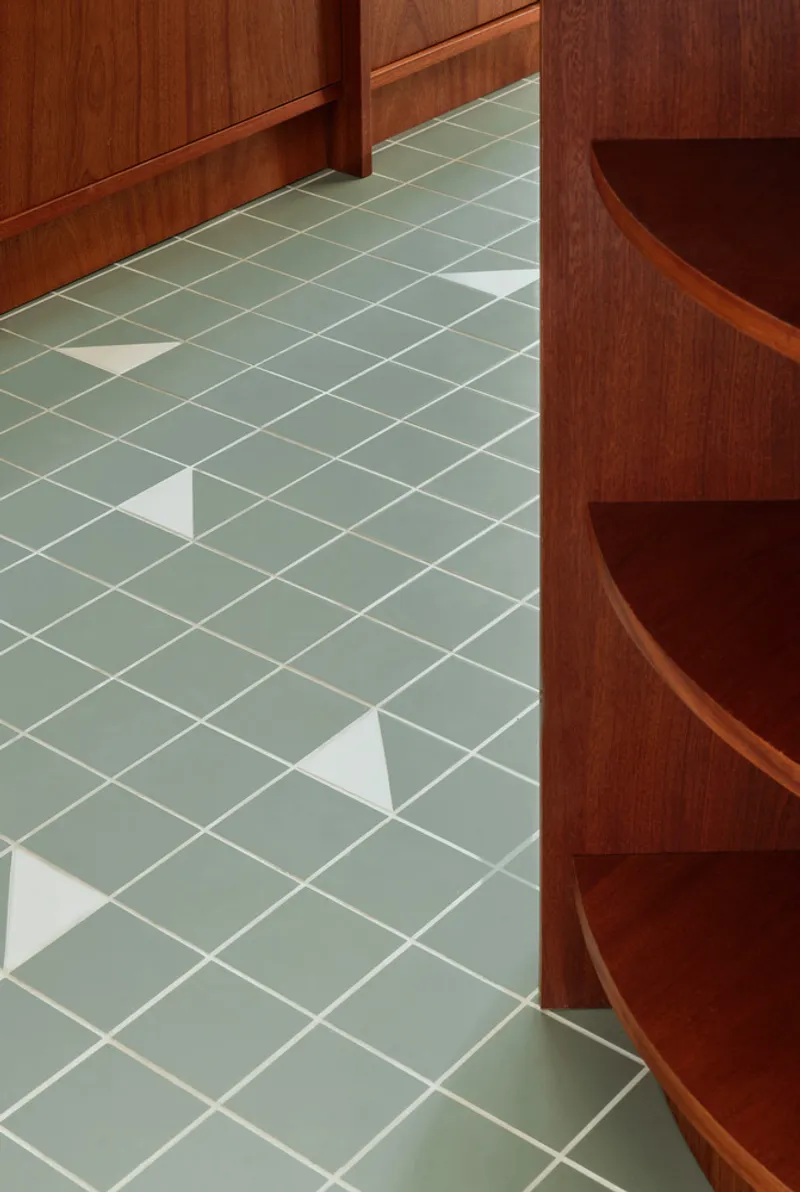
The team’s detail-oriented approach is evident in the use of hydraulic tiles, which are laid in a random two-tone pattern. The 10x10 cm format is cut diagonally to form triangular geometries, used not only for flooring but also as inspiration for door handles and surface transitions.
Material Contrast and Visual Continuity
Furniture throughout the home follows a two-tone strategy, pairing natural wood with Macael marble, white melamine, and painted surfaces. These material combinations change depending on the function of each space and subtly blend into the architectural shell, creating a seamless aesthetic between walls and furnishings.
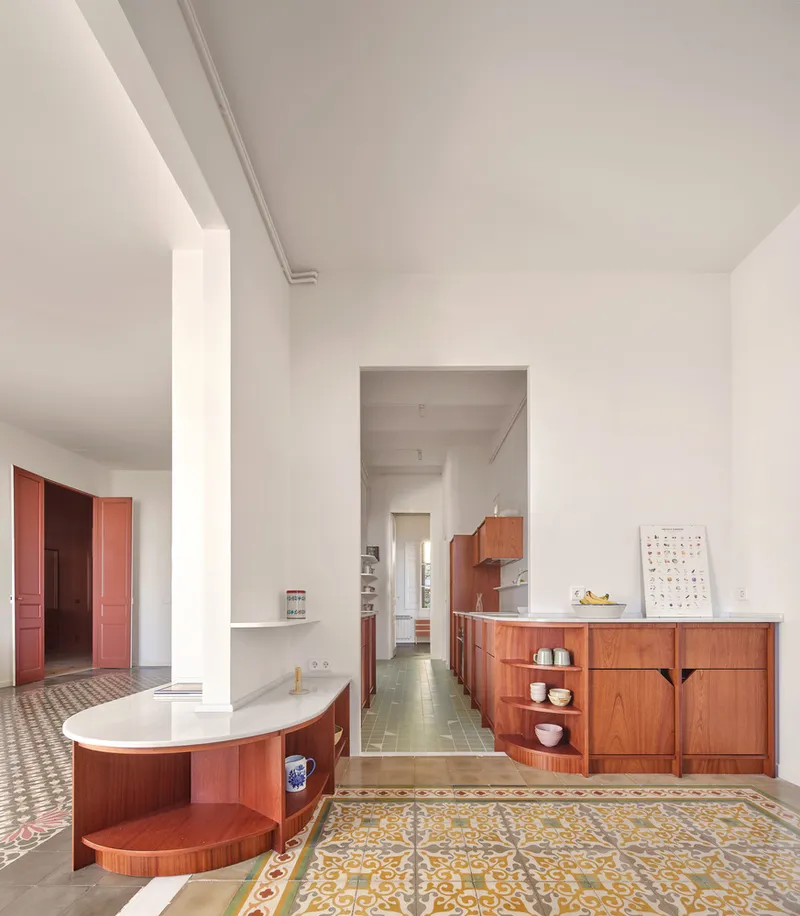
Rather than dominate the space, the renovation emphasizes visual rhythm, domestic comfort, and refined restraint, making Cal Totxo both highly livable and visually engaging.
All the photographs are works of José Hevia


Popular Articles
Popular articles from the community


Ayodele: Earth-Built Housing That Pushes Back Against Accra's Concrete and Asphalt
A modular earth-built housing block for central Accra stacks family units around shared courtyards, craft studios and planted roofs.

Becoming Aligned With All: A Rammed Earth Campus in Sri Lanka That Rises From the Ground and Falls Back
Two white concrete shells lift off a riverside site and land again, framing a pooled courtyard, rammed earth walls and rooms that can be reshuffled.


Fiechter Salzmann Extends Werner Künzi's Listed Mösli School in Ostermundigen with Concrete, Spruce and Red Steel
In Ostermundigen near Bern, a kindergarten and day school wing lengthens a heritage-listed complex using precast concrete, regional spruce and red steel.

3XN, B+H and ZHUBO Design Shape the Shenzhen Natural History Museum as a Walkable Geological Landscape
Beside Yanzi Lake in Shenzhen's Pingshan District, a 105,300 m² museum folds its galleries under a public roof that behaves like a river-carved hillside.

Similar Reads
You might also enjoy these articles

Hodi-Mandai Geram
Project Function: Preservation and revitalization of the Intangible heritage and socio-spatial identity of the Hodi by Housing, Cultural Memory Center, Sacred Grove, landscape, local tourism economy

Olio Towers: A Mid-Rise for Performers That Fuses Housing, Rehearsal, and Stage
Located blocks from Houston's Theater District, this modular tower stacks living units around a central performance atrium.
Oasis: Modular Green Housing Carved into Dhaka's Urban Fabric
A shortlisted Plugin Housing entry reclaims unauthorized settlements in Dhaka with stepped concrete volumes, green roofs, and ventilation-driven design.

Black Hole: A Floating Megastructure for the Post-Physical Era
Emiliano Mazzarotto envisions a spherical, self-scaling arena where e-sports, digital hotels, and holographic stadiums replace traditional public space.

Explore Architecture Competitions
Discover active competitions in this discipline

The International Standard for Design Portfolios

The Global Benchmark for Architecture Dissertation Awards

The Global Benchmark for Graduation Excellence

Challenge to reimagine the Iron Throne
Comments (0)
Please login or sign up to add comments
No comments yet. Be the first to comment!