

Calder Gardens Museum by Herzog & de Meuron: A Revolutionary Space for Art, Architecture, and Nature
Calder Gardens Museum in Philadelphia blends art, architecture, and nature, offering intimate, dynamic experiences of Alexander Calder’s sculptures and innovative garden spaces.


Calder Gardens Museum in Philadelphia, designed by the renowned Swiss architecture firm Herzog & de Meuron, is redefining the traditional museum experience. More than a conventional art space, Calder Gardens offers an intimate, dynamic encounter with the work of Alexander Calder, integrating art, architecture, nature, and the surrounding urban context.

Reimagining Museum Spaces
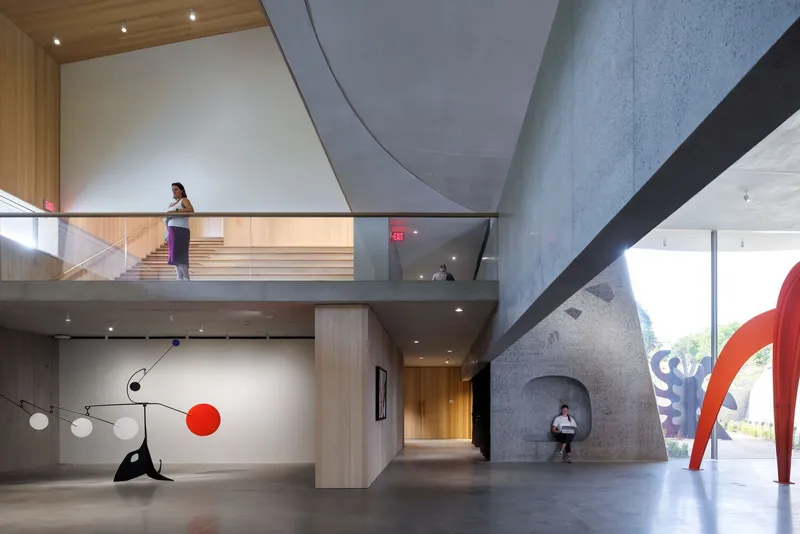
From the outset, the vision for Calder Gardens was clear: the museum should not feel like a building but a living, unfolding garden. While fulfilling the typical technical requirements of a museum, the project prioritizes a fluid interaction between Calder’s artworks and their environment. Visitors experience the space step by step, discovering a sequence of distinct and heterotopic spaces that allow for contemplation, interaction, and surprise.
A Site Rich in History
Philadelphia is not only Calder’s birthplace but also home to generations of Calders whose works adorn the Benjamin Franklin Parkway—an iconic boulevard shaped by the 19th-century City Beautiful movement. Anchored by major institutions like the Philadelphia Museum of Art and the Barnes Foundation, the Parkway intersects with the sunken Vine Street Expressway, a mid-20th-century urban intrusion. Calder Gardens occupies a flat, tapered site across from the Rodin Museum and Barnes Foundation. Previously an underutilized urban void, the site posed both a challenge and an opportunity for creating a destination that reconnects the city to art.
Architecture as a Garden
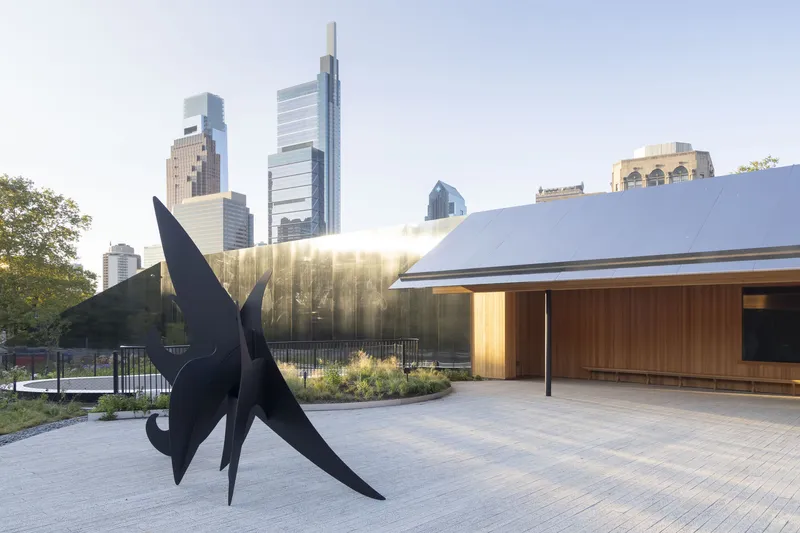
The museum’s architecture subtly emerges from the landscape. A tapered metal wall shields visitors from highway noise and frames a meadow-like public garden. Pathways guide visitors toward a central entry marked by a folded metal canopy and wood-lined foyer. Rather than grandiose entrances, the lobby feels domestic, engaging individuals personally as they begin their Calder Gardens journey.
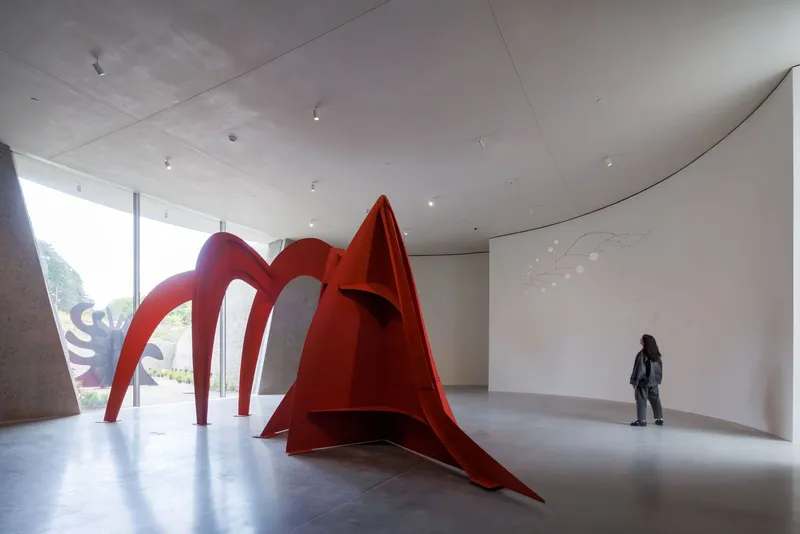
A circular central disc anchors the museum and forms a roof for the galleries below, while the Sunken Garden and Vestige Garden carve out protected outdoor spaces for Calder’s sculptures. The gardens bring natural light into the galleries and create fluid visual connections between the interior and exterior, emphasizing Calder’s signature interplay of form, color, and movement.
Step-by-Step Exploration
Visitors descend from the lobby to the Highway Gallery, where a mezzanine offers elevated views of Calder’s mobiles. A narrow passageway and rough concrete Cuboid stair connect the gallery to the outer garden spaces, forming additional opportunities to display Calder’s work.
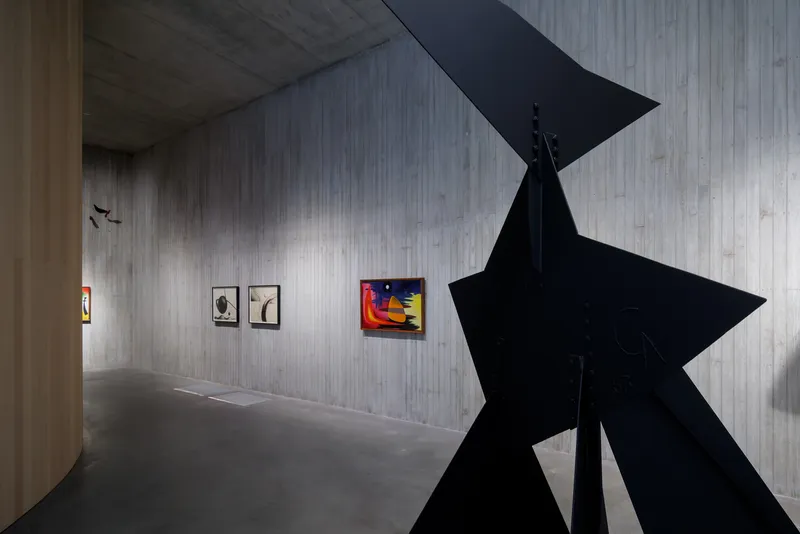
The Open Plan Gallery beneath the disc features orthogonal geometry to the east and west, curving towards the north to mirror the disc’s form above. Large windows open onto the Vestige Garden, flooding the space with natural light. A smaller, offset Apse Gallery allows for intimate encounters with Calder’s works. Meanwhile, the fully internalized Curved Gallery provides controlled lighting for sensitive pieces, such as Calder’s works on paper or paintings by his ancestors.
Vestiges and Historical Layers
The site’s historical layers shape both interior and exterior spatial arrangements. Traces of pre-Parkway city foundations inform the design of the Vestige Garden, while a Quasi Gallery offers a semi-covered outdoor space linking the controlled galleries with the natural environment. This spatial choreography creates a museum that unfolds gradually, offering a curated journey that balances art, architecture, and landscape.

Philosophy of “No-Design” Architecture
Jacques Herzog emphasizes that Calder Gardens embodies a philosophy of “no-design” architecture:
“It is a place where you can sit, wander, and observe, whether it’s nature or art, with the ease one has when sitting under a tree.”
This approach allows Calder’s art to express itself freely across varied spatial contexts, offering visitors a unique and ever-changing experience.

Collaboration and Legacy
Calder Gardens is the result of extensive collaboration between Herzog & de Meuron, the Calder Foundation, the Barnes Foundation, and numerous design and construction partners. The project not only respects Calder’s artistic legacy but also responds sensitively to the surrounding urban fabric, creating a public garden and museum that is accessible to all Philadelphians and visitors alike.

All photographs are works of Iwan Baan


Popular Articles
Popular articles from the community


U.GA Architects Wraps an Oval Rooftop Pool in Curved Board-Formed Concrete on Busan's Jeollidan-gil
In Busan's Jeonpo-dong, a 454 m² mixed-use block stacks a neighborhood facility, guest rooms and an oval rooftop pool inside spiraling concrete walls.

longwave studio Reorganizes a 112 m² Tainan Apartment Around the Daily Routines of a Family and Two Cats
In Tainan, Taiwan, birch plywood, rust-red furniture and a freestanding plaster wall link arrival, storage, work and family life in one apartment.

Jaramillo Van Sluys Arquitectura and Urbanismo Turn a Demolished Registry Lot in Quito into an Orchard Plaza
In Quito's Centro Histórico, a 2,800 m² plaza exposes the San Agustín convent wall and redraws its lost Augustinian orchard in volcanic stone.

GROUP A Strips a 1969 Rotterdam Harbor Headquarters to Its Frame and Wraps It in Timber Louvers
In Rotterdam's M4H harbor district, Ferro Offices reuses a 1969 frame, adds one timber storey and reaches BREEAM-NL Outstanding.

Similar Reads
You might also enjoy these articles


Hodi-Mandai Geram
Project Function: Preservation and revitalization of the Intangible heritage and socio-spatial identity of the Hodi by Housing, Cultural Memory Center, Sacred Grove, landscape, local tourism economy


Olio Towers: A Mid-Rise for Performers That Fuses Housing, Rehearsal, and Stage
Located blocks from Houston's Theater District, this modular tower stacks living units around a central performance atrium.

Oasis: Modular Green Housing Carved into Dhaka's Urban Fabric
A shortlisted Plugin Housing entry reclaims unauthorized settlements in Dhaka with stepped concrete volumes, green roofs, and ventilation-driven design.

Black Hole: A Floating Megastructure for the Post-Physical Era
Emiliano Mazzarotto envisions a spherical, self-scaling arena where e-sports, digital hotels, and holographic stadiums replace traditional public space.

Explore Architecture Competitions
Discover active competitions in this discipline

Challenge to reimagine the Iron Throne

Photograph architecture without architects

Illustrate the lost glory of Angkor Wat - Render Challenge

Design challenge to reuse E-waste
Comments (0)
Please login or sign up to add comments
No comments yet. Be the first to comment!