
Campana del Rey Rum Bar by Buero Wagner: A Contemporary Revival of a 16th-Century Vaulted Cellar
Campana del Rey Rum Bar transforms a 16th-century Munich cellar into an intimate, atmospheric space blending preserved brick vaults with contemporary concrete furnishings.


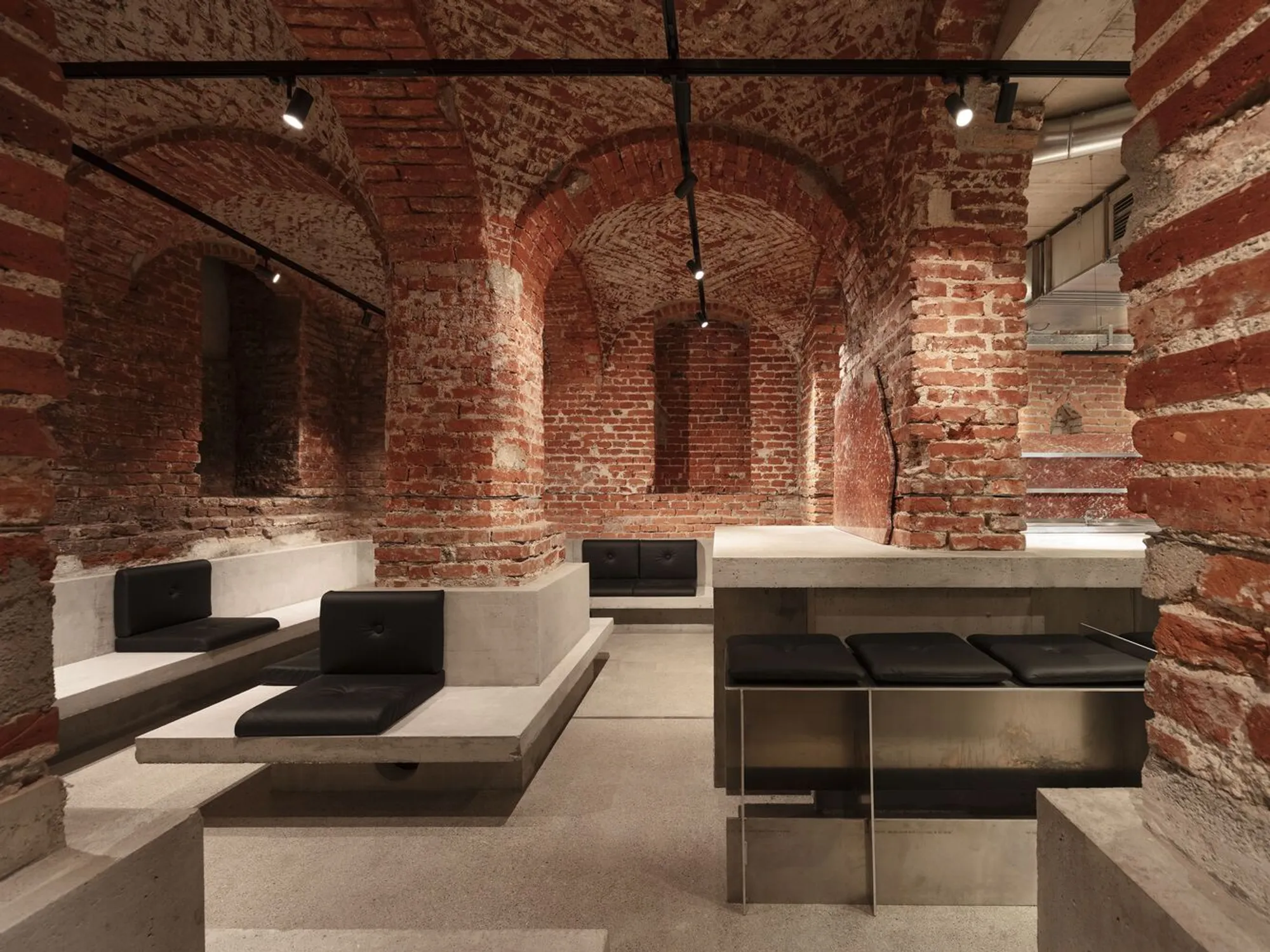
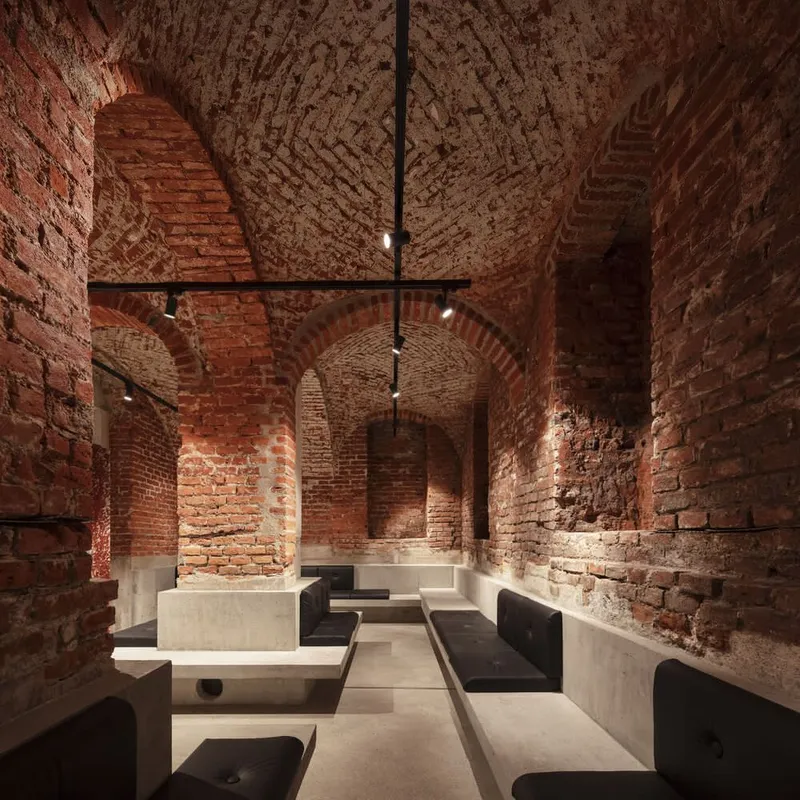
Campana del Rey Rum Bar, designed by Buero Wagner, is an intimate 75 m² hospitality project located deep within Munich’s old town. Positioned on the second basement level of a small residential building, the space occupies a vaulted cellar believed to date back to the 16th century, offering a rare architectural canvas shaped by centuries of urban evolution. In 2024, the design team undertook a meticulous restoration and transformation, balancing architectural heritage, craftsmanship, and modern bar culture.
Preserving the Past While Building the Future
Excavation and Structural Reinvention
As part of a larger building restructuring, the residential structure above was rebuilt from the second floor upward and extended down into a new third basement level. The existing cellar, originally only 1.70 meters high, was carefully excavated by hand. Buero Wagner then reinforced the historic vaulted brick supports and walls through gradual underpinning, ensuring the centuries-old architectural fabric remained intact.
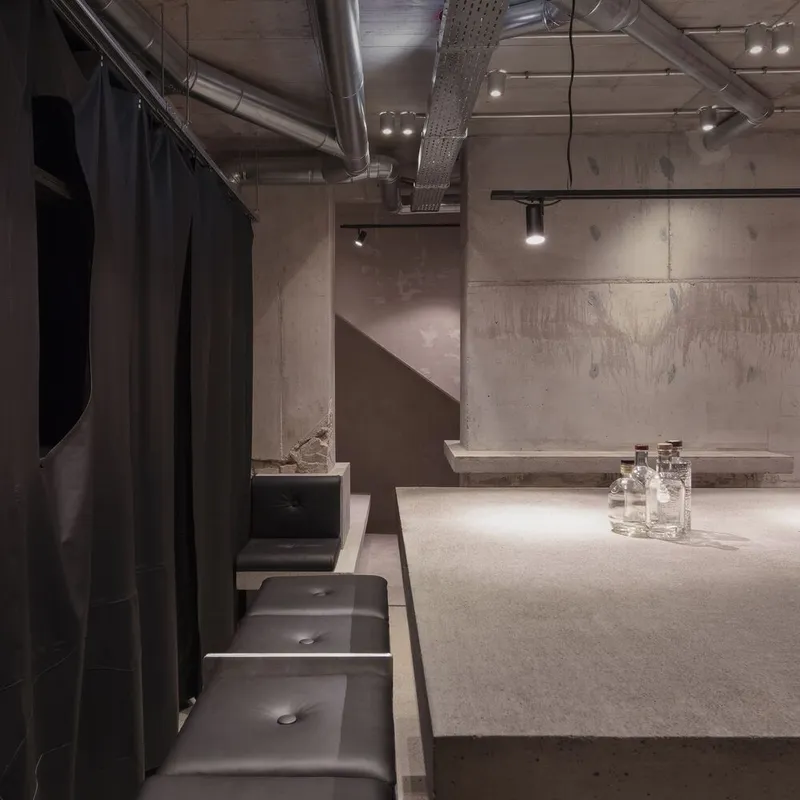
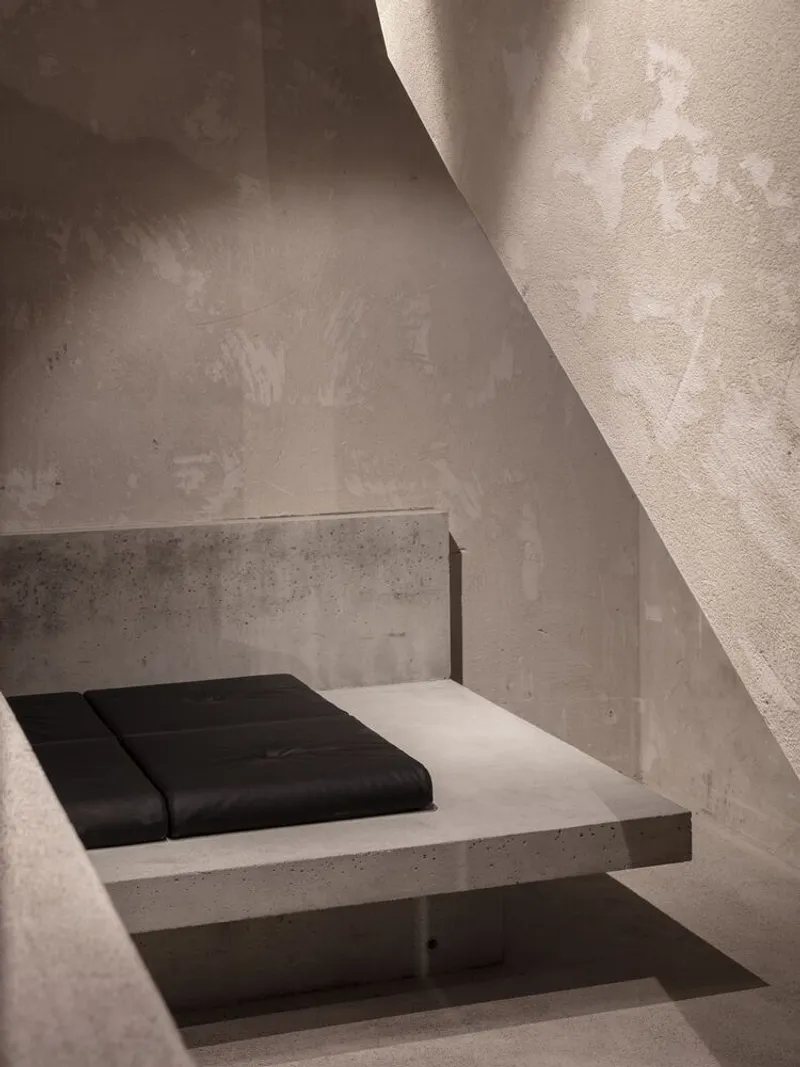
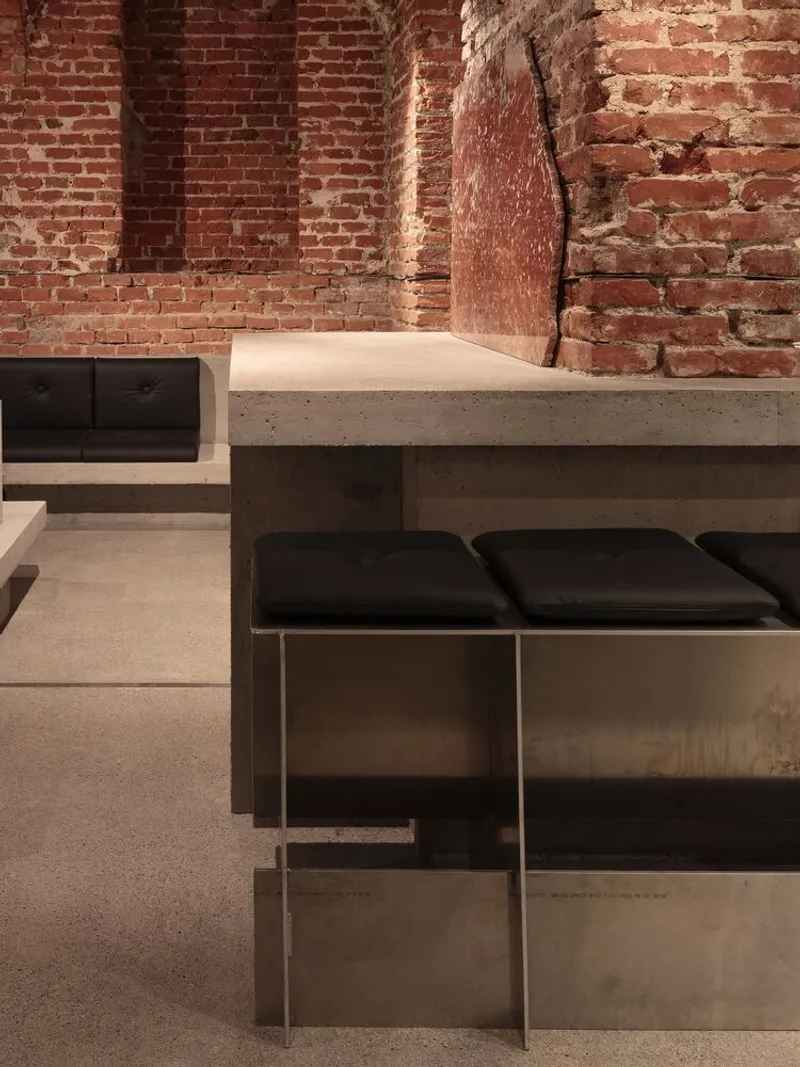
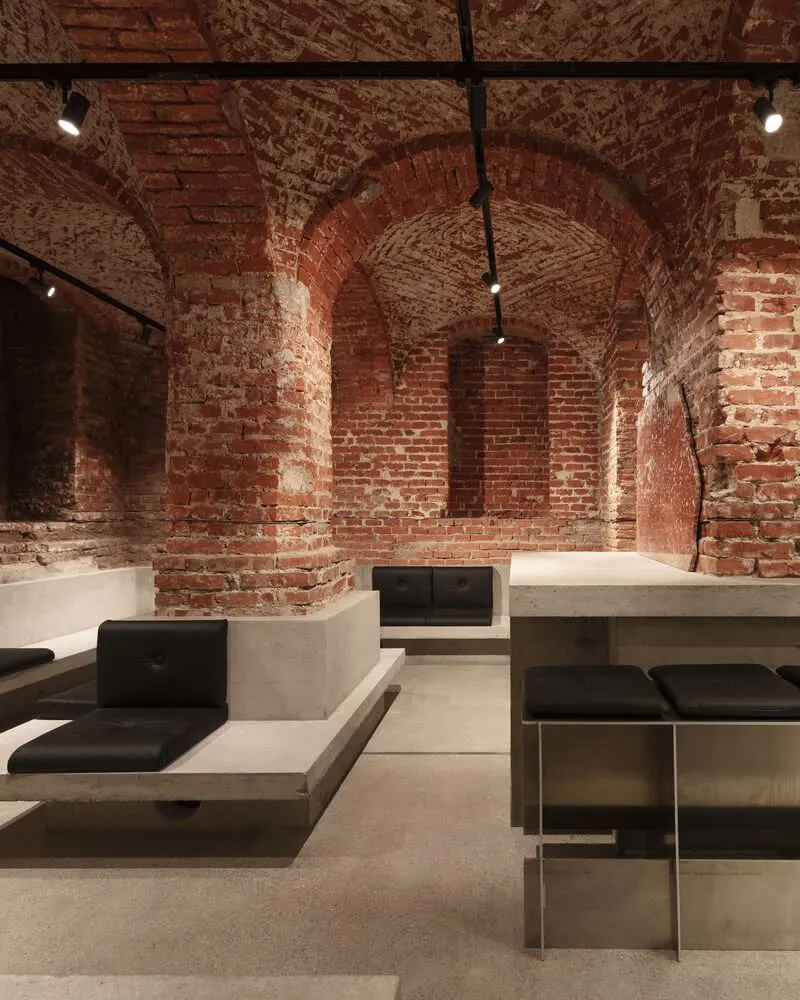
In a unique integration of structure and furniture, the benches, bar counters, and high tables were cast directly onto the new underpinnings. This design move allows the seating elements to act as both sculptural furnishings and structural foundations. In doing so, guests are literally seated on the same concrete elements that support the entire building: an architectural gesture that blurs the boundaries between function, history, and spatial narrative.
Material Strategy: Authentic, Textured, and Timeless
Revealing the Original Brick Vault
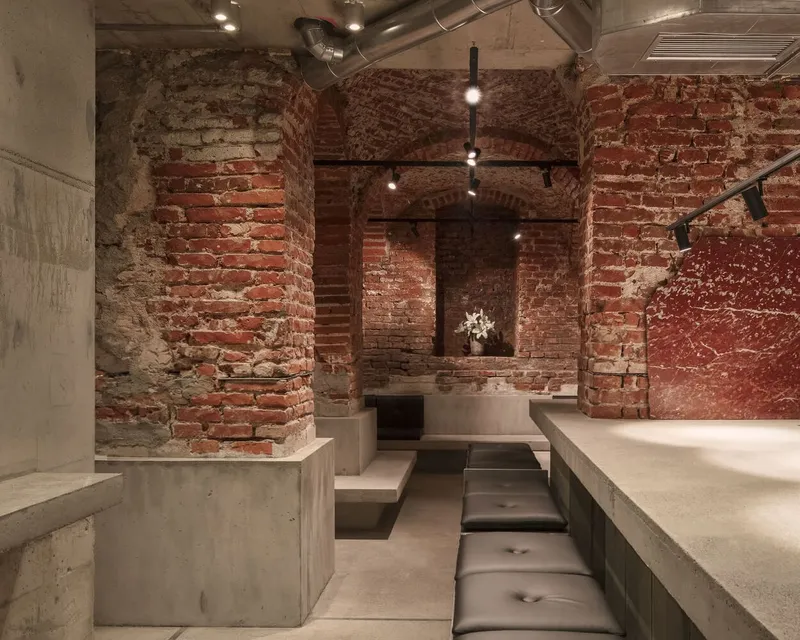
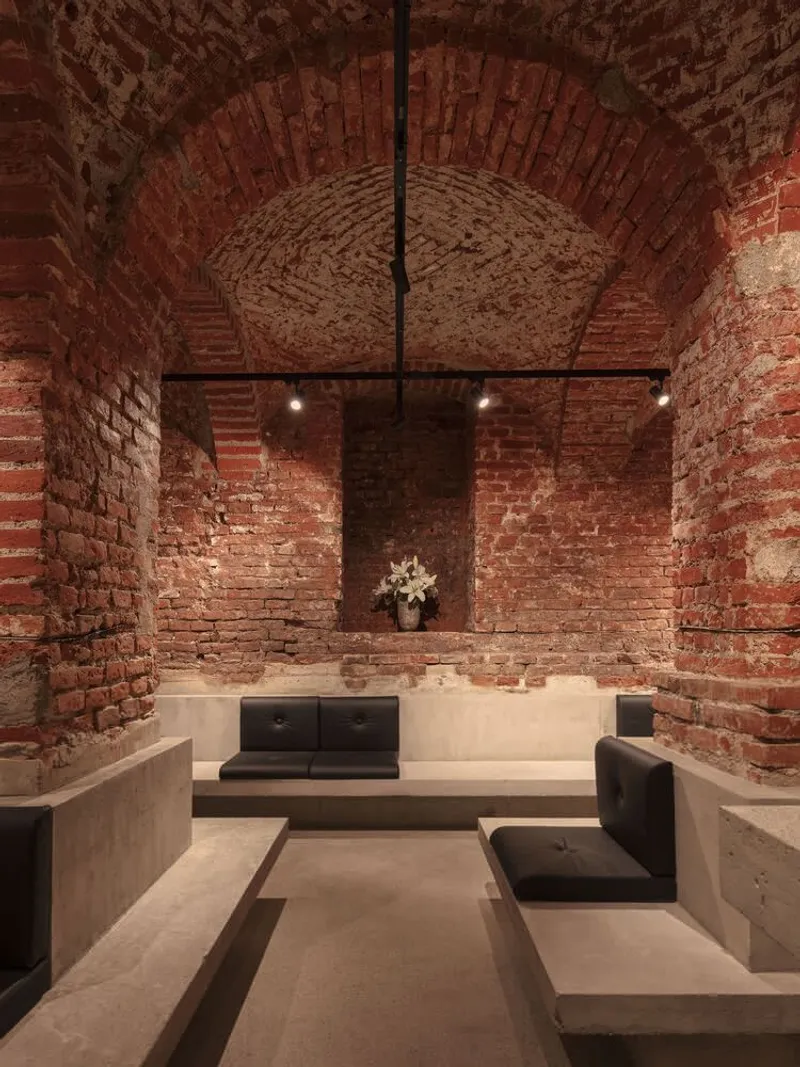
Buero Wagner prioritized respect for the original building fabric. Layers of accumulated plaster were stripped away to reveal the authentic texture of the centuries-old brick vaults. No alterations were made to these historic elements, highlighting the studio’s restrained and preservation-driven approach.
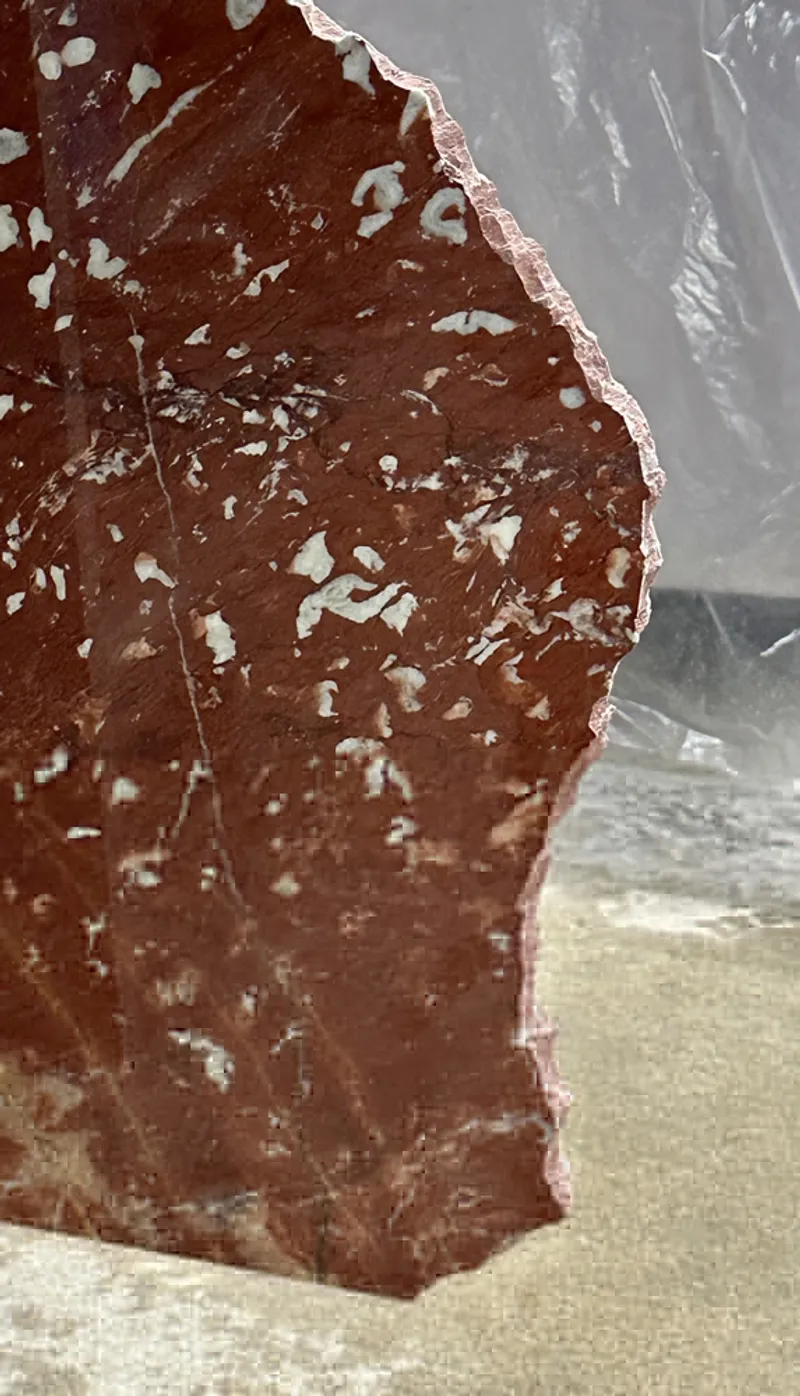
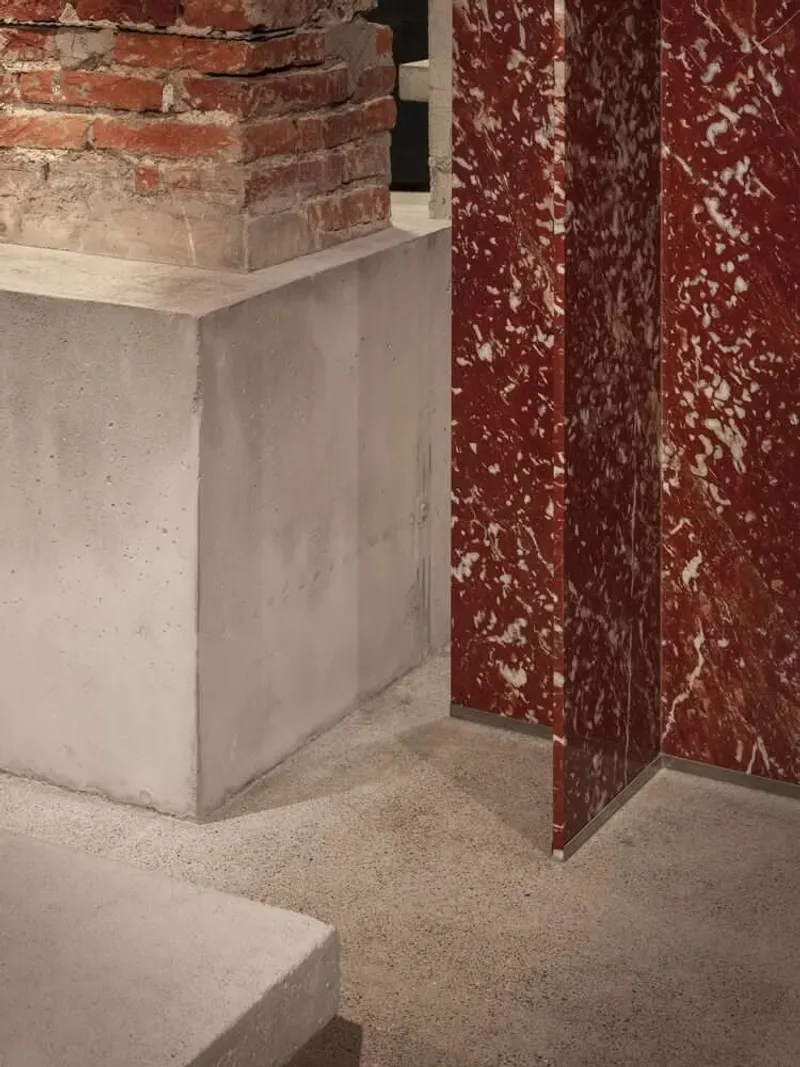
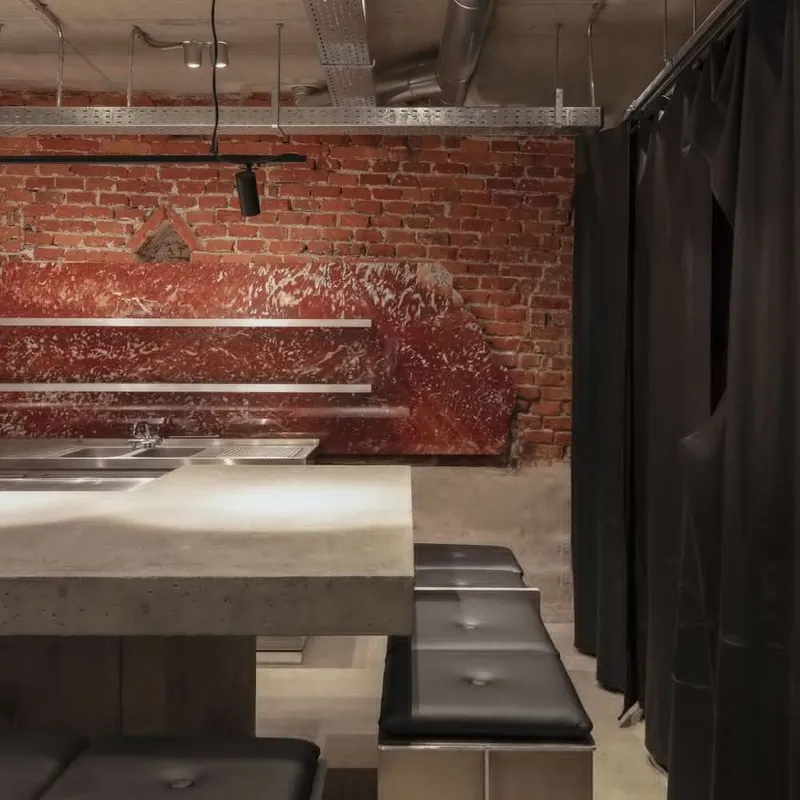
Areas vulnerable to splashing, such as near the bar and circulation paths, were clad in red natural stone. By using stone blocks with raw broken edges, the designers ensured zero material waste, every piece of the block was used, reinforcing a sustainable and resource-conscious design language.
Furniture, Lighting, and Craftsmanship
Industrial Precision Meets Tactile Warmth
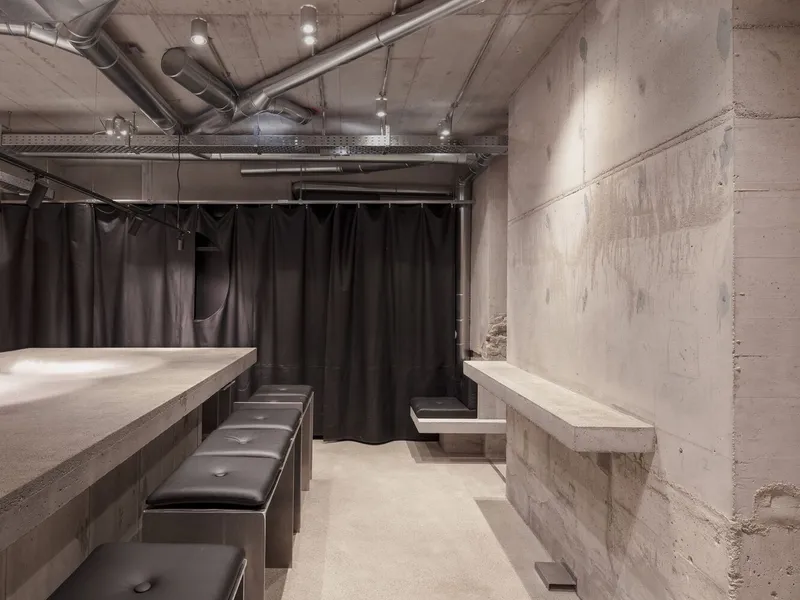
All essential building services: ventilation, heating, and utility systems, were tucked discreetly beneath the concrete ceiling or integrated into the flooring. The vaulted ceiling itself remains uninterrupted, featuring only subtle lighting and sound installations.
Custom-designed solid aluminum bar stools, available in two- and three-seater versions, provide a contemporary contrast to the historic surroundings. Upholstered in black leather, they echo both the metal piping systems and the concrete seating elements. A dramatic black leather curtain forms the flexible front end of the bar, cleverly concealing passageways and shelving. Half of this curtain was crafted from offcuts and leftover leather pieces, reinforcing the project’s sustainable ethos.
A Social Space Defined by Seating and Spatial Rhythm
Crafting Intimacy and Interaction
Rather than relying on conventional bar chairs, the designers opted for bench-like seating throughout to encourage communal energy. Each seating height and spatial configuration was carefully curated to create distinct micro-environments:
- Intimate seating zones for privacy and personal conversation
- Open, inviting areas designed to spark new interactions
- Transitional spaces in between that function as platforms for placing drinks and fostering relaxed social rhythms
The central bar table is deliberately large, flat, and unobstructed, promoting immediate interaction between guests and bartenders. This creates a warm, inclusive environment where communication and connection form the heart of the experience.
All photographs are works of
Kim Fohmann, Buero Wagner



Popular Articles
Popular articles from the community


The Musturak Paradise: Senior Living Architecture for a Connected Future in Temara, Morocco
The Musturak Paradise reimagines senior living architecture in Temara via private homes, social spaces, culture, community, and shared care.

Hill & Cross Opera: Sculptural Opera House Architecture Shaped by Tallinn’s Landscape and Identity
Hill & Cross Opera reimagines opera house architecture in Tallinn through its sculptural hill, civic plaza, glass wave and a luminous cross.

Lunar Spiral: Space Architecture Shaped by the Mathematics of the Universe
Lunar Spiral reimagines space architecture through Fibonacci geometry, lunar regolith, levitating habitats, and self-sustaining Moon living.

Conexión: Biophilic Design Reimagines High-Rise Living in Hong Kong
Conexión reimagines high-rise living in Hong Kong through biophilic design, green facades, shared spaces, daylight, water and nature within.

Similar Reads
You might also enjoy these articles


Hodi-Mandai Geram
Project Function: Preservation and revitalization of the Intangible heritage and socio-spatial identity of the Hodi by Housing, Cultural Memory Center, Sacred Grove, landscape, local tourism economy


Olio Towers: A Mid-Rise for Performers That Fuses Housing, Rehearsal, and Stage
Located blocks from Houston's Theater District, this modular tower stacks living units around a central performance atrium.

Oasis: Modular Green Housing Carved into Dhaka's Urban Fabric
A shortlisted Plugin Housing entry reclaims unauthorized settlements in Dhaka with stepped concrete volumes, green roofs, and ventilation-driven design.

Black Hole: A Floating Megastructure for the Post-Physical Era
Emiliano Mazzarotto envisions a spherical, self-scaling arena where e-sports, digital hotels, and holographic stadiums replace traditional public space.

Explore Architecture Competitions
Discover active competitions in this discipline



Challenge to reimagine the Iron Throne


Photograph architecture without architects


Illustrate the lost glory of Angkor Wat - Render Challenge


Design challenge to reuse E-waste
Comments (0)
Please login or sign up to add comments
No comments yet. Be the first to comment!