
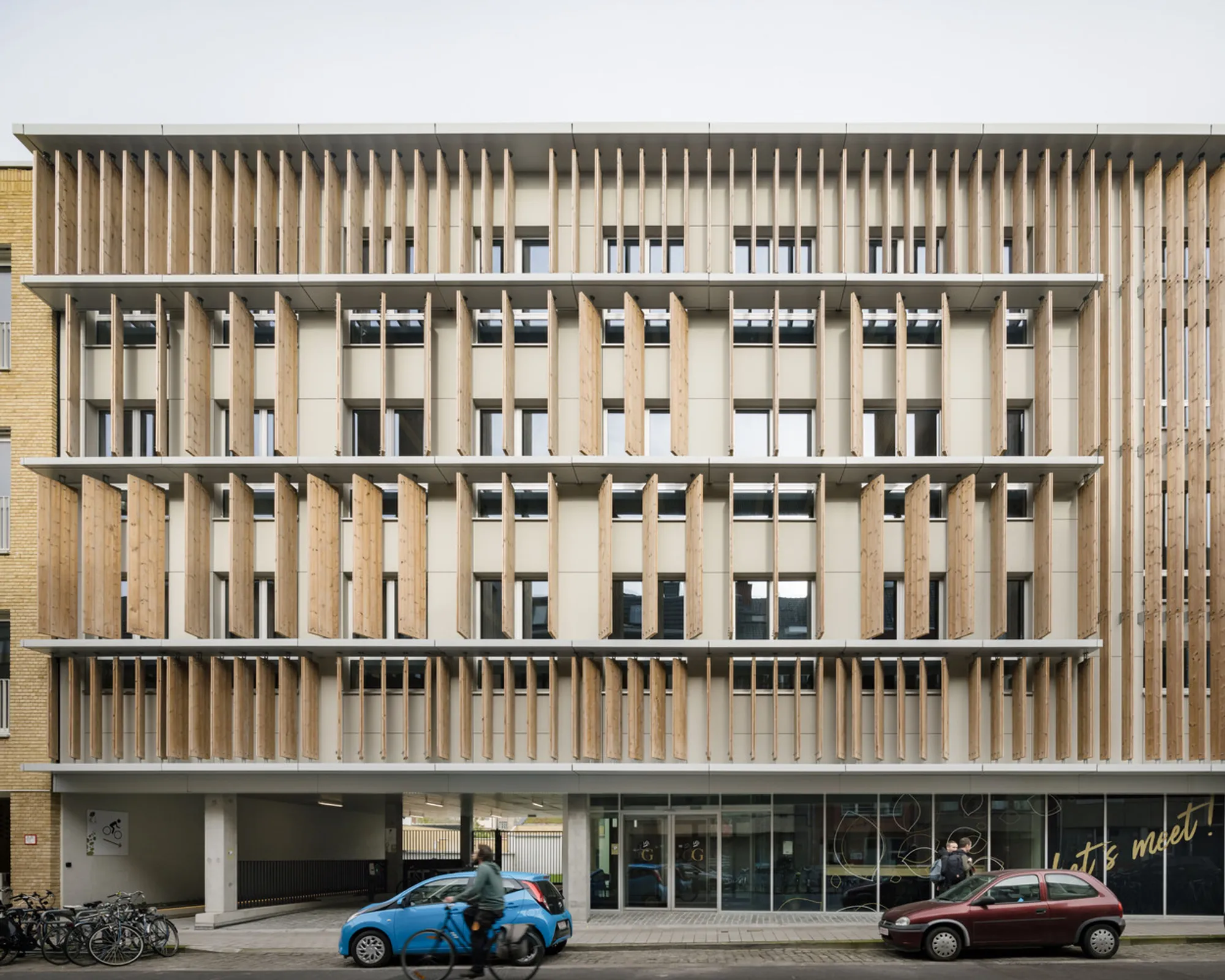
Campus ACV-CSC-Metea: Sustainable Renovation and Contemporary Educational Architecture in Ghent
A sustainable, wood-structured Ghent campus integrating renovated volumes, green courtyards, glass transparency, flexible offices, and energy-efficient design.


Located in Ghent, Belgium, the Campus ACV-CSC-Metea by evr-Architecten is a striking example of sustainable, adaptive reuse in modern educational architecture. Covering an area of 3,161 m², the project revitalizes an aging campus at Sint Pietersstation, blending historic structures with innovative wood construction to create a coherent, functional, and environmentally conscious educational environment.
Transforming an Unorganized Campus into a Cohesive Whole
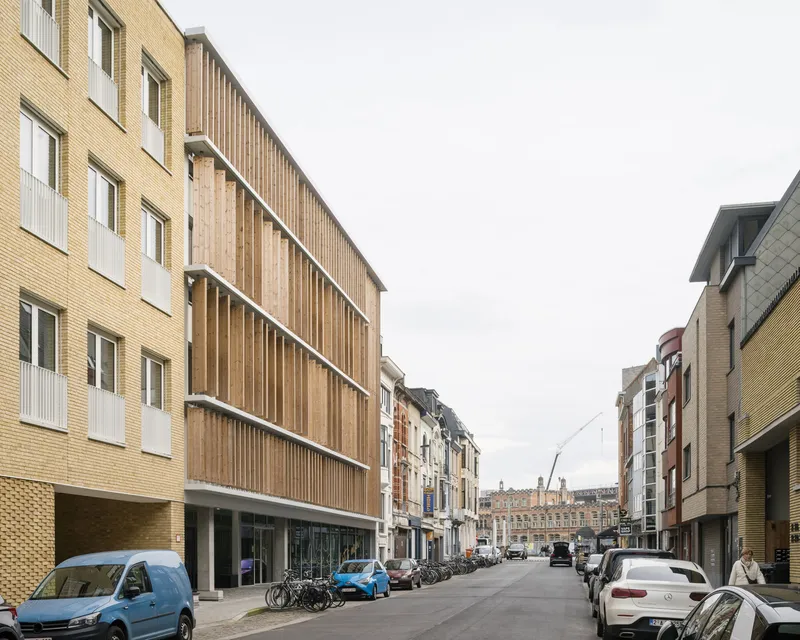
Previously, the campus extended between Koning Boudewijnstraat and Koning Albertlaan, consisting of multiple disconnected buildings with little public presence. Over time, numerous renovations and interventions had created a fragmented cluster, lacking functional clarity and architectural cohesion.
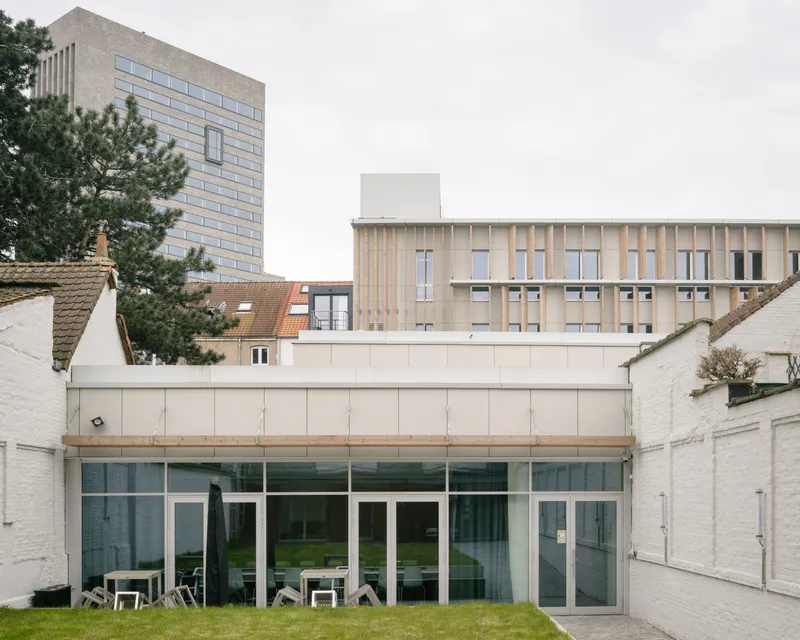
The design team prioritized the preservation of existing structures where feasible. The old archives cellar was converted into an accessible bicycle shed, while three rear volumes underwent a complete renovation following BEN (Nearly Zero Energy Building) principles. However, the main historic volumes, though structurally robust, could not meet contemporary comfort standards, leading to the construction of a new timber-based building, significantly reducing the carbon footprint.
Sustainable Design and Material Reuse
Sustainability was central to the project. During demolition, a thorough inventory of existing movable and fixed elements was conducted, enabling the reuse of insulation, joinery, and interior finishes. This circular approach extended the life cycle of materials and integrated them into the new structures.
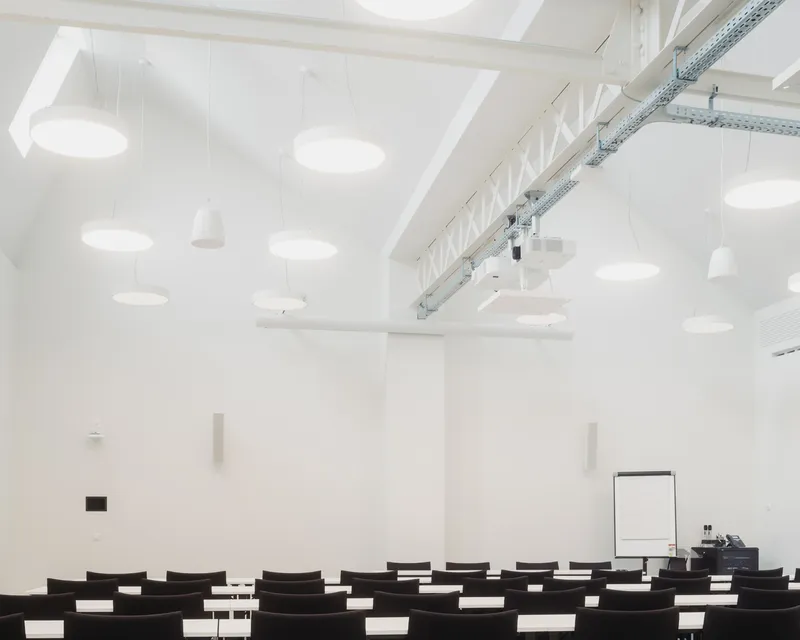
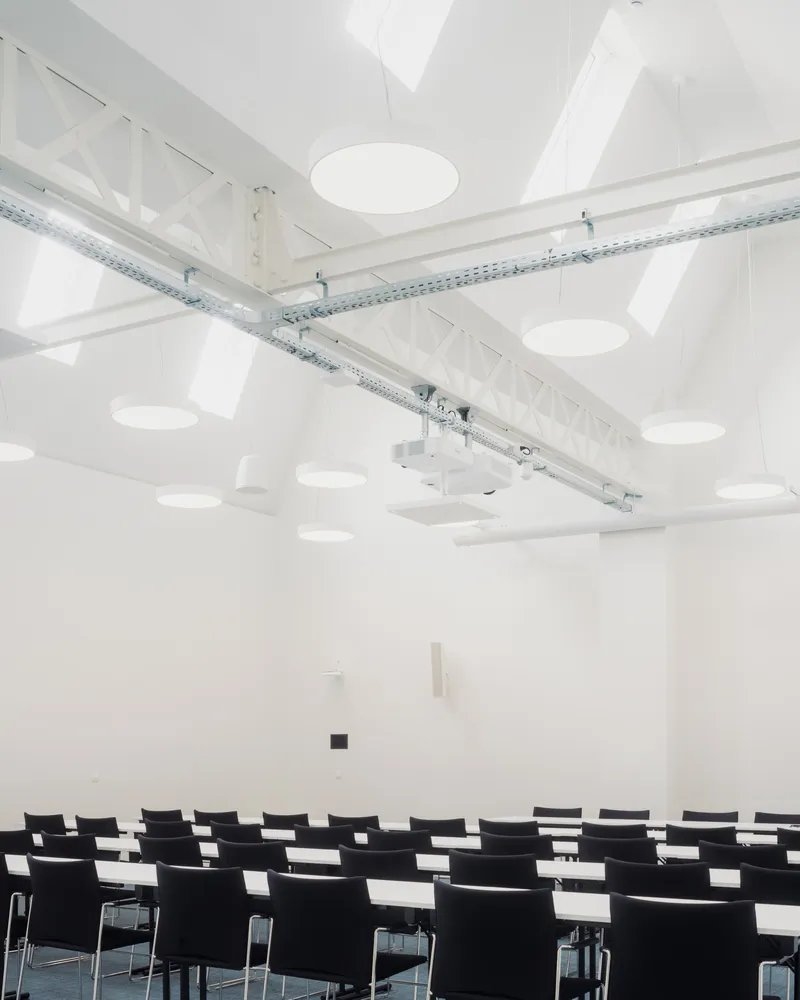
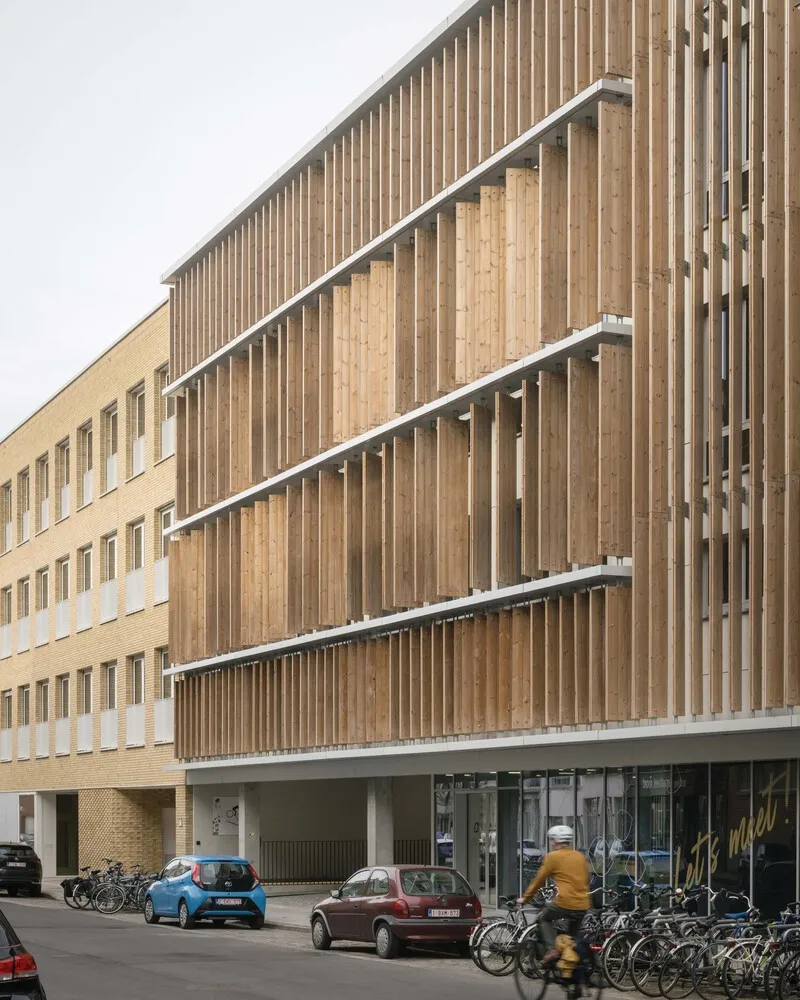
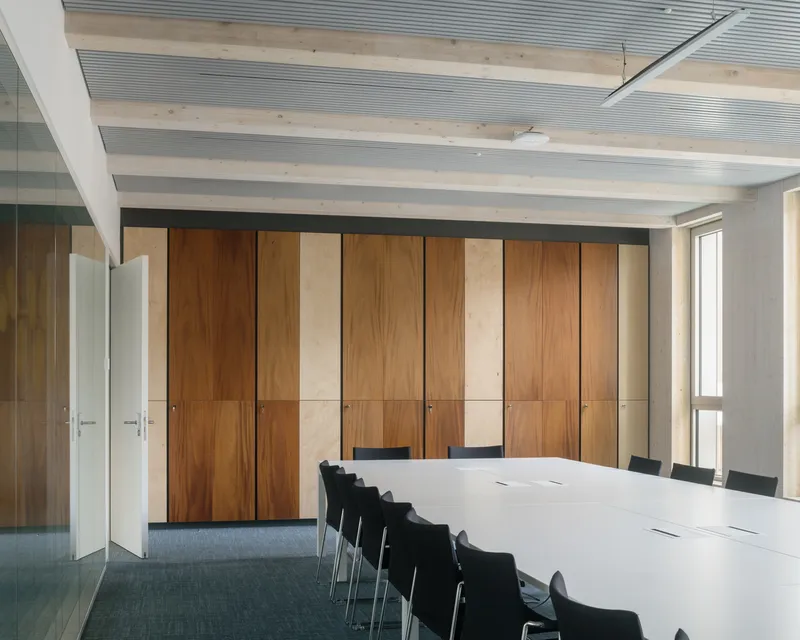
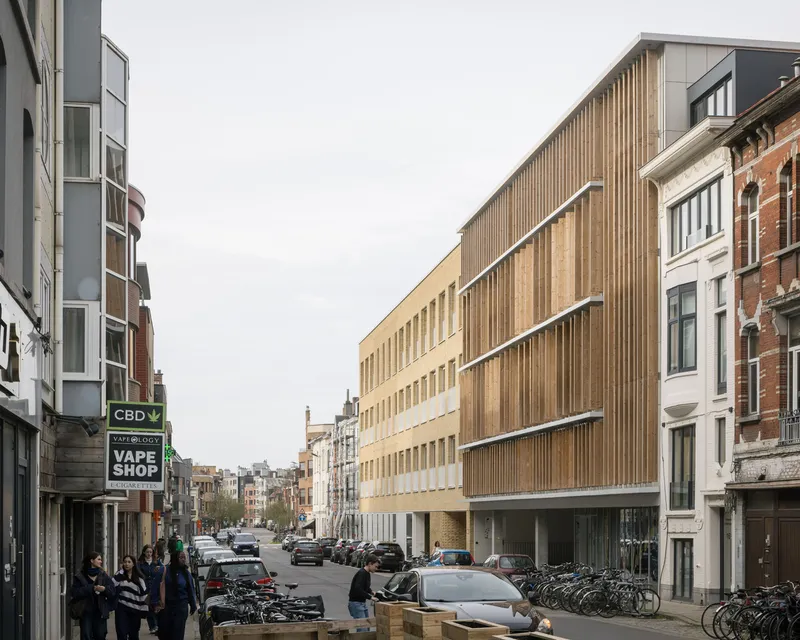
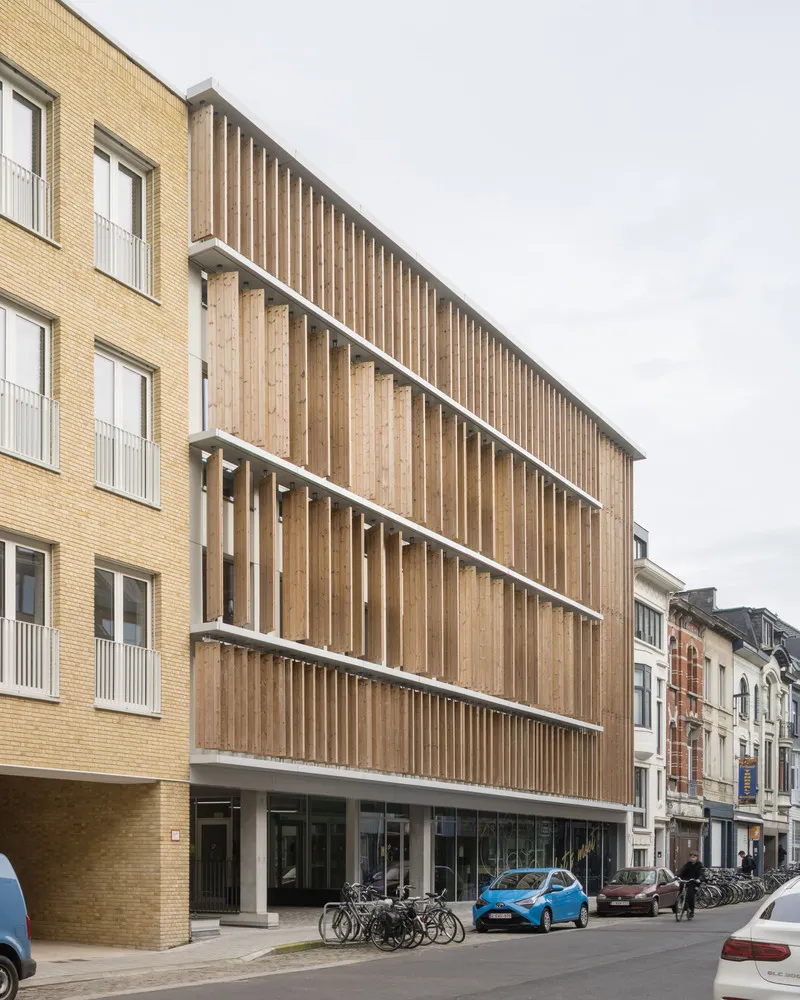
The new main volume features a glass, inward-sloping façade that connects seamlessly with the street and inner courtyard, creating transparency and openness. The ground floor houses a cafeteria, informal workspaces, and meeting rooms, while upper floors include lecture rooms, offices, and additional meeting spaces.
Flexible, Future-Proof Office Spaces
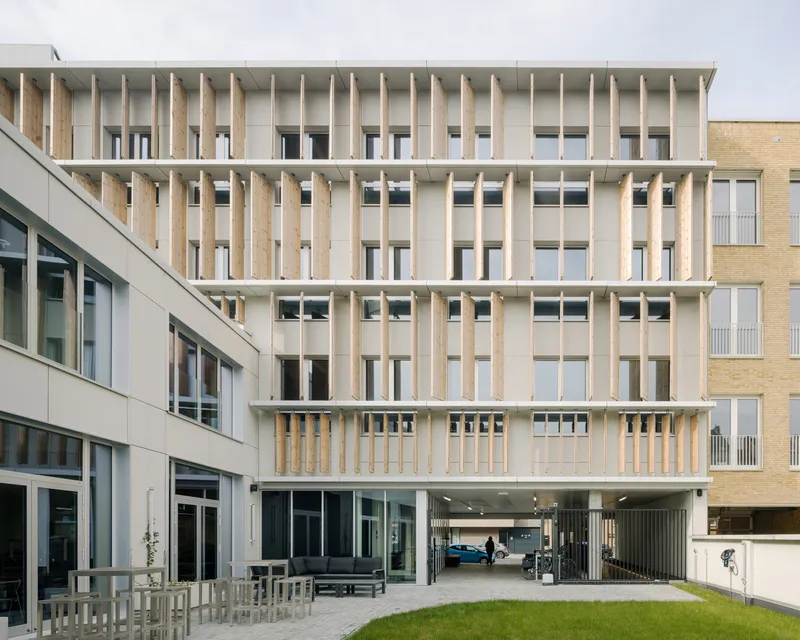
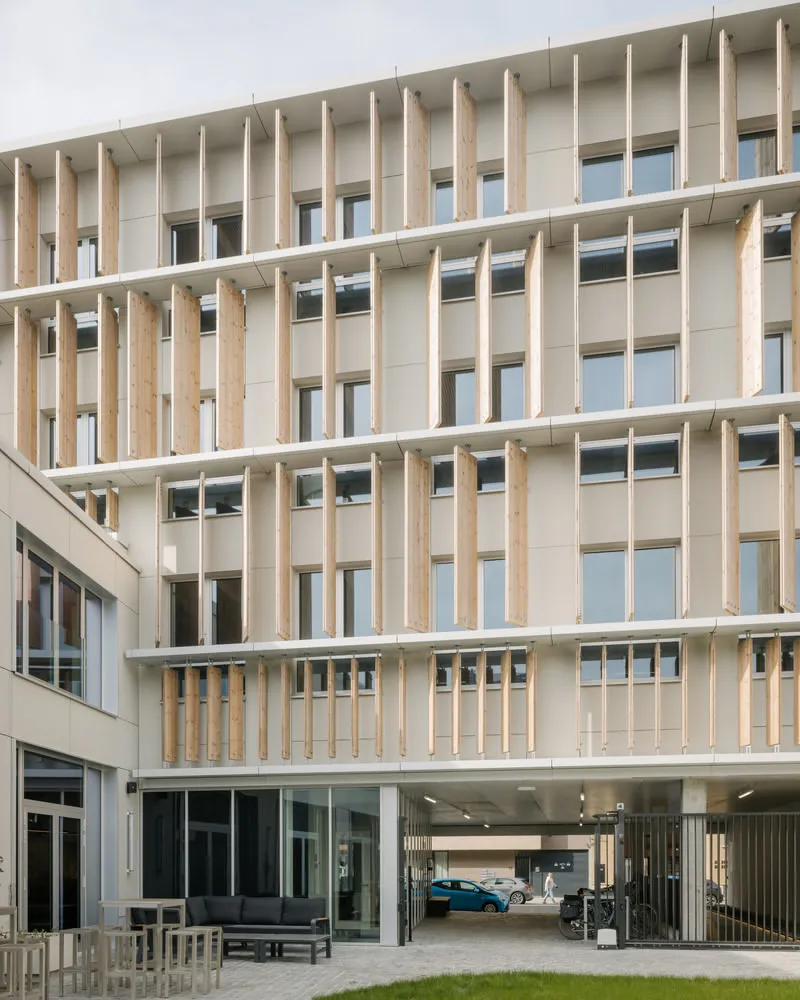
The upper three floors are constructed entirely from solid wood, offering a dismantlable, open structure that allows flexible office configurations. Vertical wooden slats, made from thermally treated FSC pine, provide passive solar shading, while horizontal lacquered fins diffuse daylight, balancing comfort and energy efficiency. Dynamic orientation of the slats ensures optimal daylight management throughout the day.
Collaboration with Bureau Bouwtechniek allowed for an advanced daylight and shading study, optimizing natural light access, glare reduction, and façade performance. The building’s design promotes interaction, accessibility, and sustainable operation while respecting the site’s historical context.
Green Courtyards and Community Integration
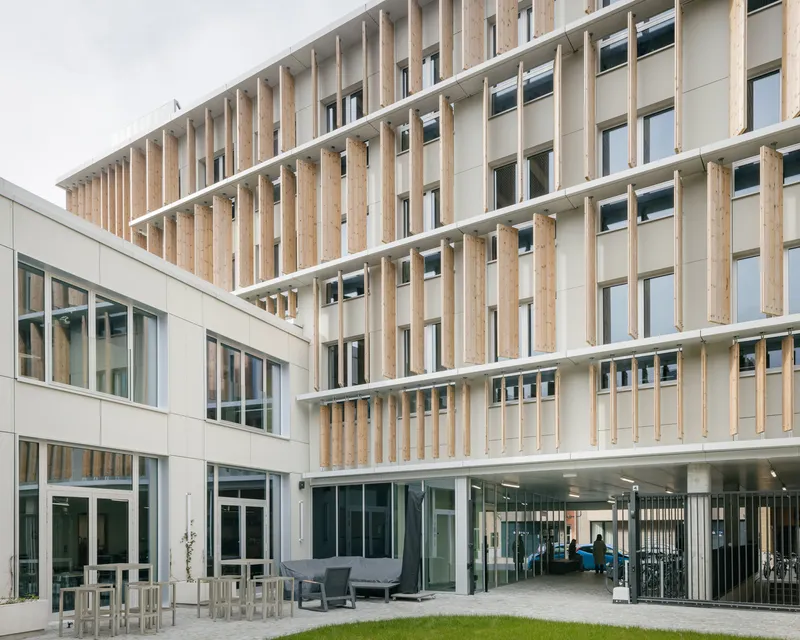
The renovation also redefined the campus landscape. By opening and connecting rear volumes to the new structure, two green courtyard gardens were created, enhancing accessibility and connecting to the cafeteria and meeting areas. The building now actively engages with the neighborhood, transforming the campus from a closed, fragmented environment into a vibrant, semi-public hub.
Campus ACV-CSC-Metea exemplifies how adaptive reuse, sustainable wood construction, and daylight-responsive design can transform aging educational facilities into functional, environmentally conscious, and aesthetically engaging spaces. The project sets a precedent for eco-friendly educational architecture, demonstrating a seamless balance between historic preservation, innovative design, and circular construction principles.
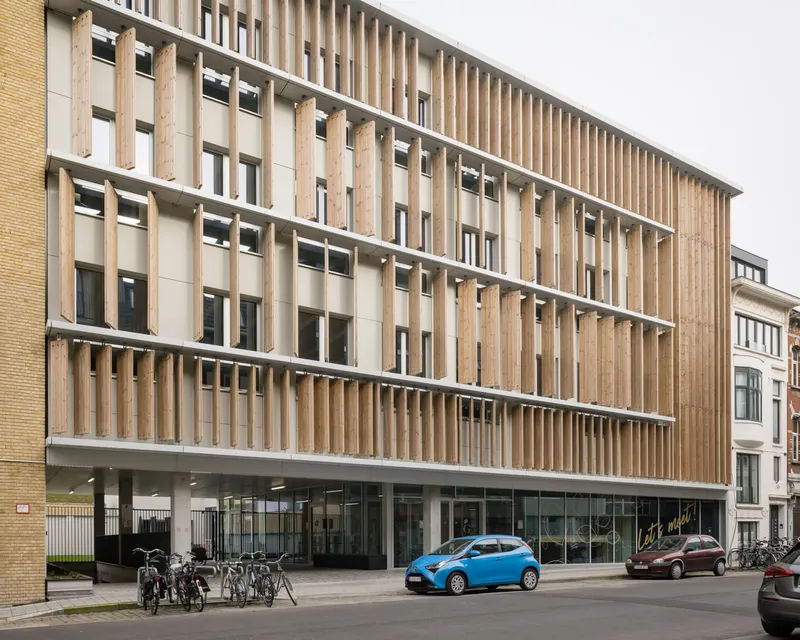
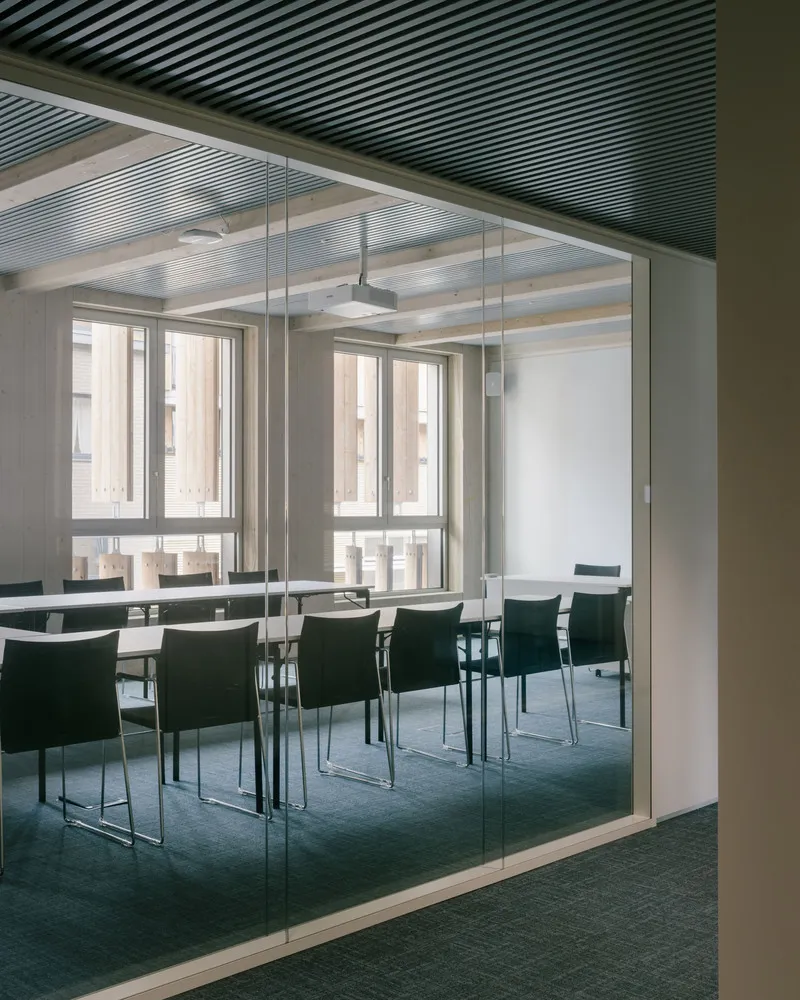
All photographs are works of
Stijn Bollaert




Popular Articles
Popular articles from the community


Lunar Spiral: Space Architecture Shaped by the Mathematics of the Universe
Lunar Spiral reimagines space architecture through Fibonacci geometry, lunar regolith, levitating habitats, and self-sustaining Moon living.

The Earth Pod: 3D Printed Homes for Resilient Refugee Communities
The Earth Pod reimagines refugee housing through 3D printed homes made from clay, combining resilience, self-sufficiency, and rapid shelter.

The Musturak Paradise: Senior Living Architecture for a Connected Future in Temara, Morocco
The Musturak Paradise reimagines senior living architecture in Temara via private homes, social spaces, culture, community, and shared care.

The Ocean Hive: Sustainable Architecture for a Self-Sufficient Civilization at Sea
The Ocean Hive imagines sustainable architecture at sea, where modular habitats, algae, wave power and ocean waste sustain a growing colony.


Similar Reads
You might also enjoy these articles

FAMM Arquitectura Organizes Ten Villas Around Courtyards and Jungle in Nosara, Costa Rica
El Molino pairs two elongated volumes with deep overhangs and timber louvers to build a compact coastal community five minutes from the beach.
Oscar Niemeyer's Ibirapuera Park Pavilions Define São Paulo's Cultural Identity in Concrete and Curve
A constellation of modernist volumes set within São Paulo's most important urban park, conceived for the city's 400th anniversary in 1954.
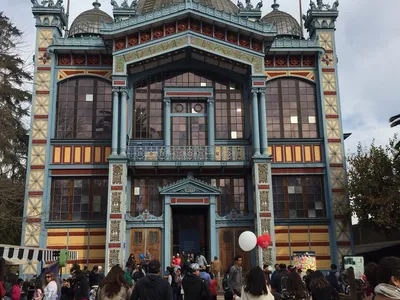
How Henri Picq's 1889 Paris Pavilion Traveled 11,000 Kilometers to Become Santiago's Artequín Museum
A prefabricated iron and glass pavilion built for the Paris Universal Exposition found a second life as a children's art museum in Chile.
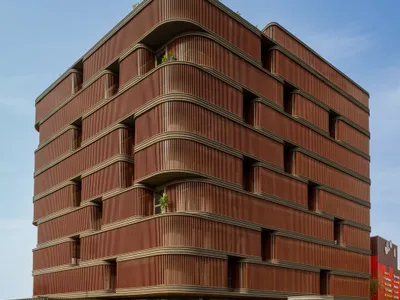
Sanjay Puri Architects Wraps a Jaipur Office Tower in Capsule-Shaped Green Buffers
A nine-level climate-responsive workplace near Jaipur Airport uses stacked planter terraces and aluminium screens to fight 40°C heat.


Explore Architecture Competitions
Discover active competitions in this discipline



Challenge to reimagine the Iron Throne


Photograph architecture without architects


Illustrate the lost glory of Angkor Wat - Render Challenge


Bring back Drive In's
Comments (0)
Please login or sign up to add comments
No comments yet. Be the first to comment!