
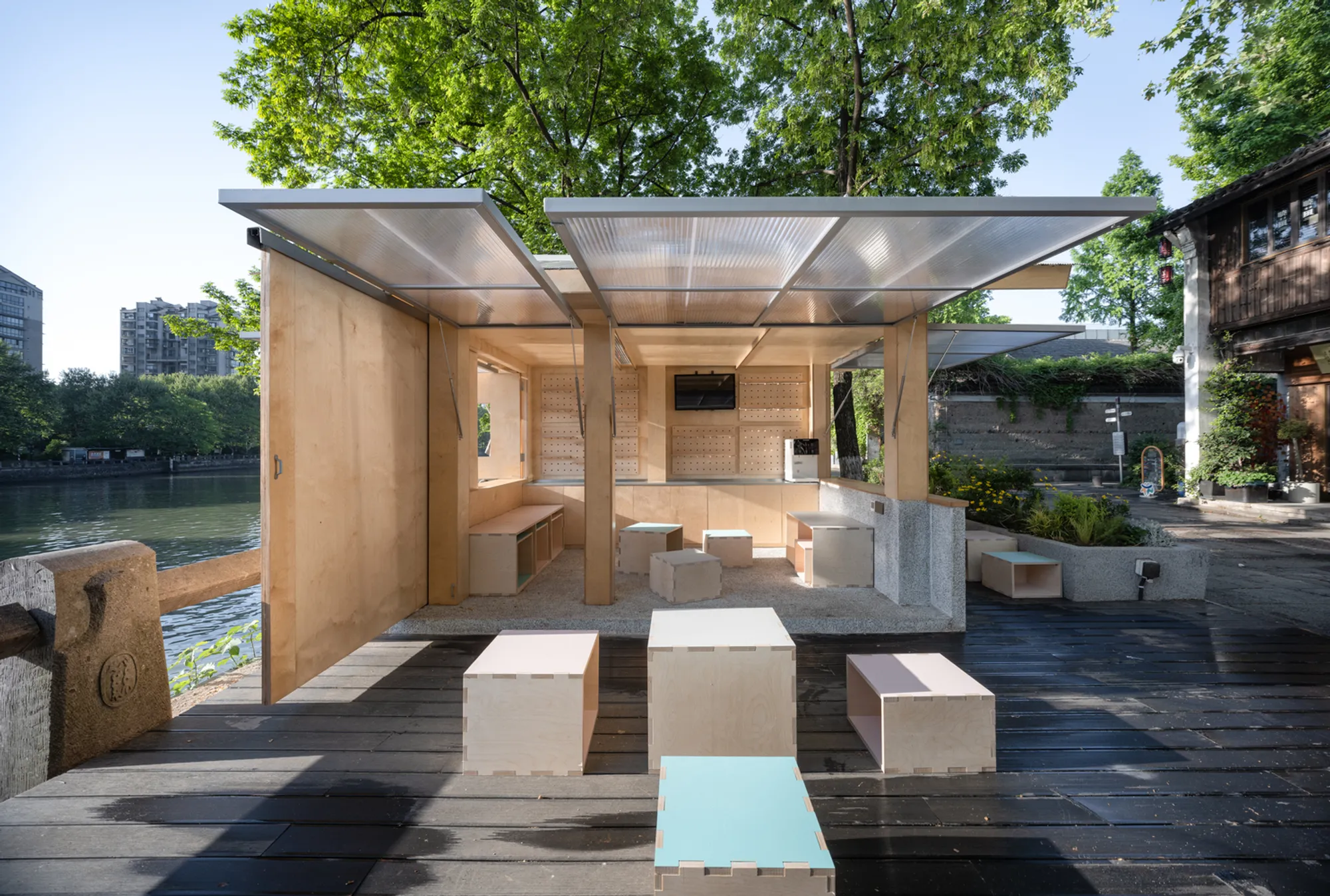
Canal Pavilion Post by ZAOZUO Architecture Studio: A Public Welfare Transformation on Hangzhou’s Grand Canal
Canal Pavilion Post by ZAOZUO Architecture Studio revitalizes a historic Hangzhou wooden house, offering open rest spaces, free water, and cultural engagement.


Reimagining a Historic Landmark
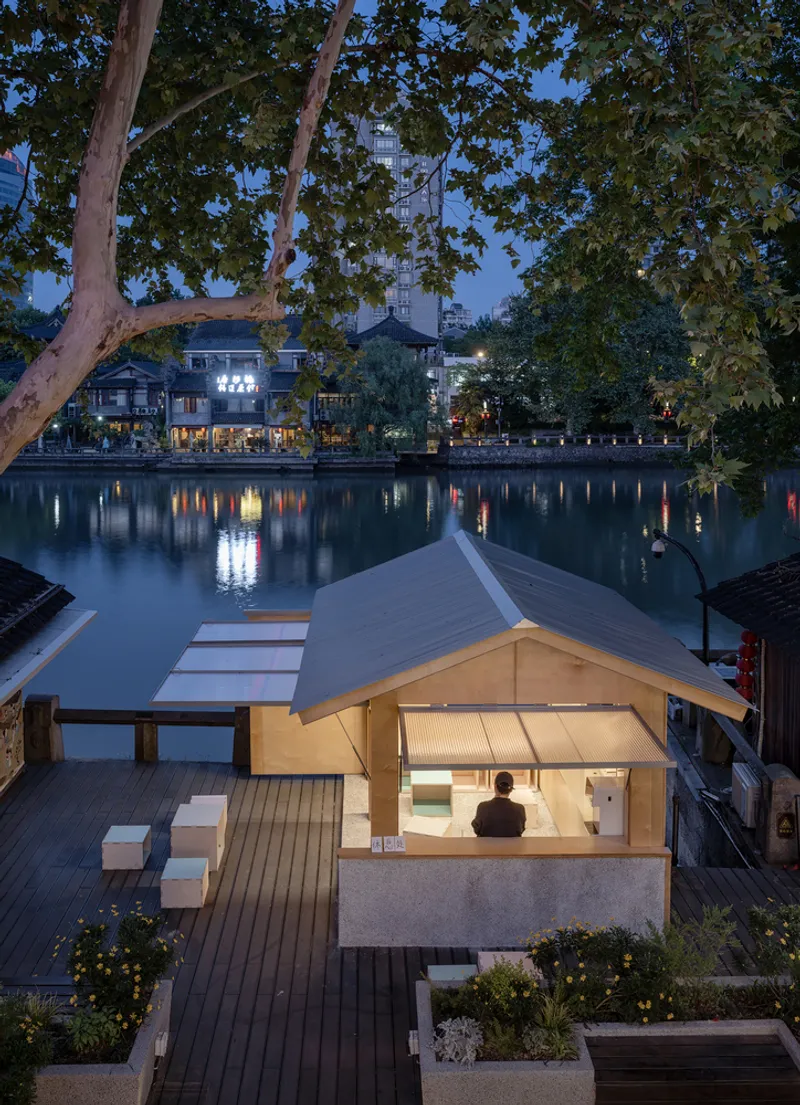
The Canal Pavilion Post is a thoughtful public welfare renovation project situated along the Hangzhou section of the Beijing-Hangzhou Grand Canal, adjacent to the historic Gongchen Bridge. Covering a modest 10 square meters and standing over 2 meters tall, the pavilion is affectionately called the "Little Box" due to its simple, square form. This small but impactful structure transforms a previously vacant wooden building into a multifunctional scenic post, providing free drinking water, rest spaces, and a point of engagement for tourists.
The project also acts as a cultural node, offering souvenirs, cultural products, and a promotional platform for the street and Gongchen Bridge, seamlessly blending heritage preservation with community service.
Design Concept: Pavilions, Corridors, and Openness
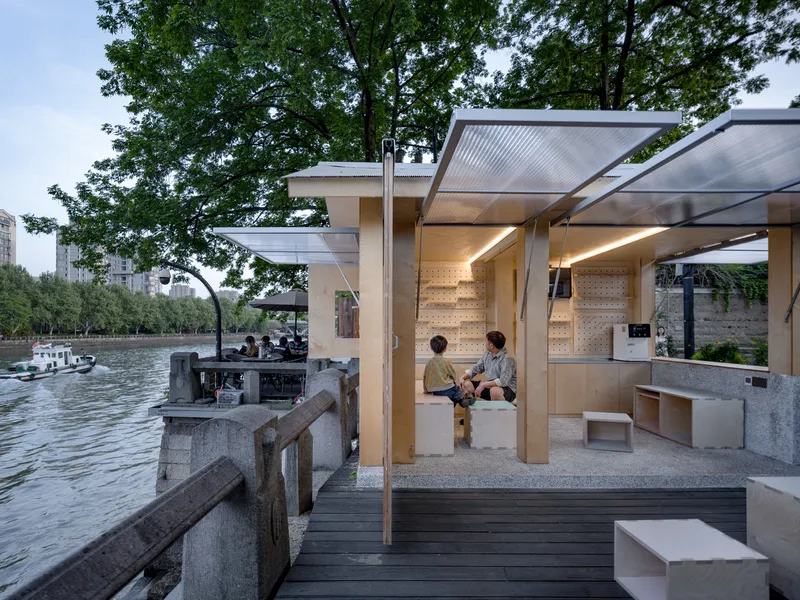
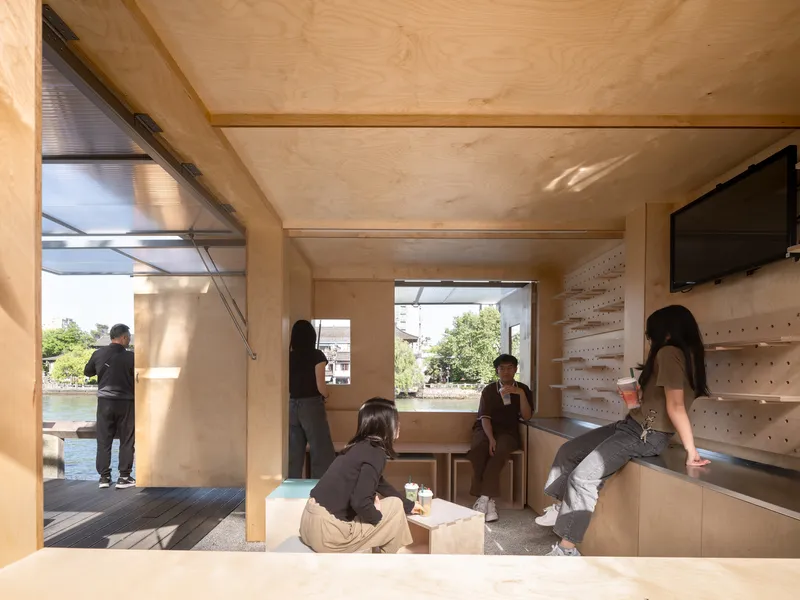
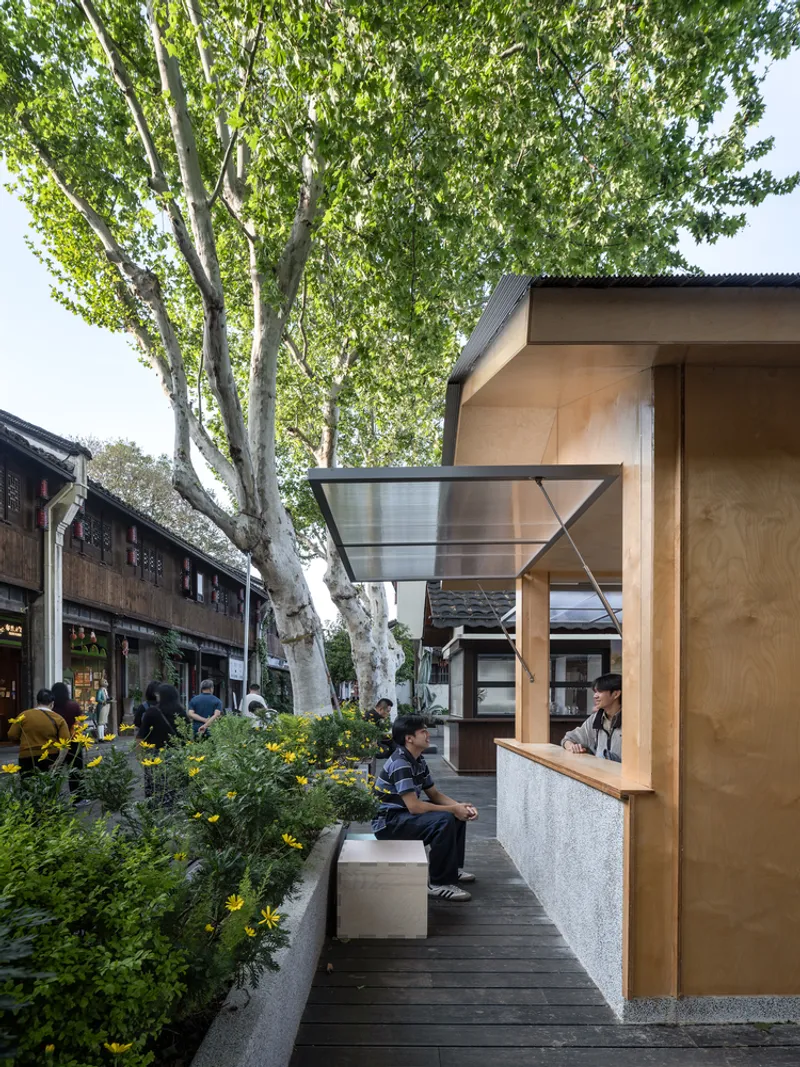
In the bustling area around Qiaoxi Straight Street, small wooden houses traditionally operate as private tea shops or retail outlets. To visitors, these structures often feel exclusive and inaccessible. In contrast, the Canal Pavilion Post embodies openness: visitors can freely enter, rest, and enjoy the canal view without physical or visual boundaries.
Key design strategies include:
- Sightlines: The pavilion maintains an uninterrupted view of the canal from the street.
- Circulation: Instead of a conventional door, the facade is fully open, creating a borderless experience.
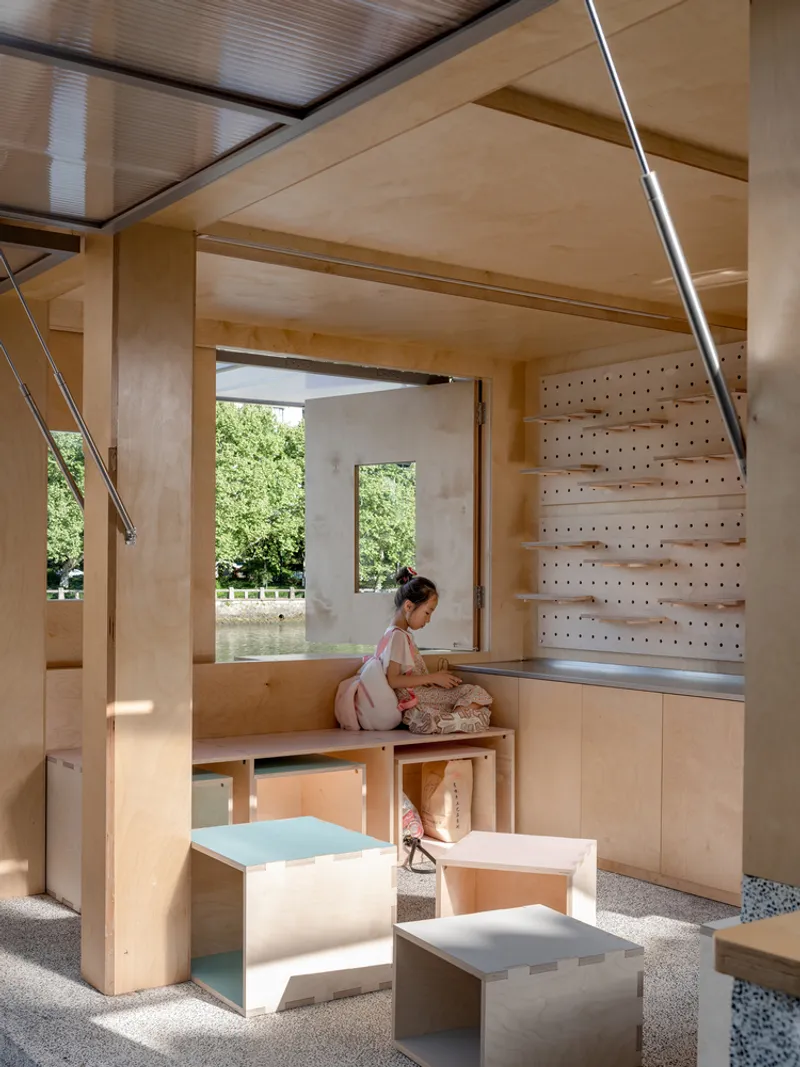
- Layout: Furniture such as counters and chairs is positioned along perimeter walls, blurring the line between indoor and outdoor spaces while promoting decentralized interaction.
This approach positions the pavilion as a scenic pavilion or wind-and-rain corridor, rather than a traditional enclosed structure.
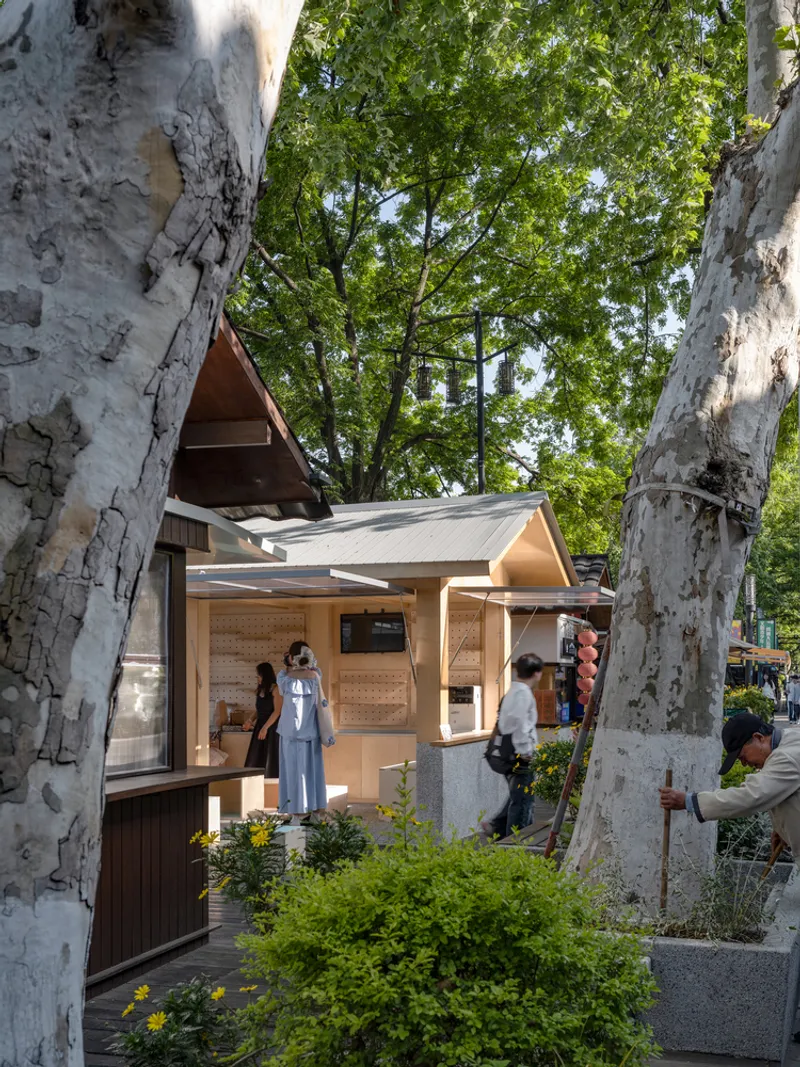
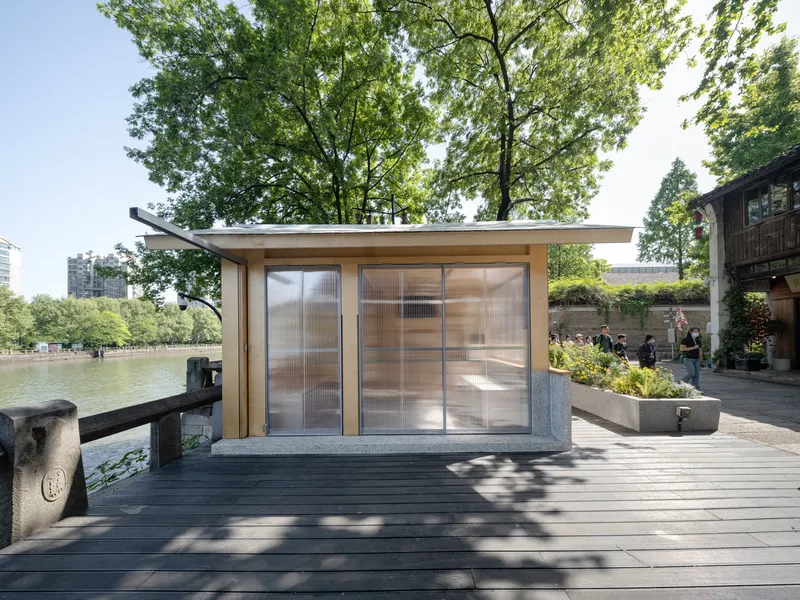
Transformable Design: A Multi-Functional Miniature
Despite its openness, the pavilion accommodates essential functions such as volunteer rest areas and storage facilities, making it a fully functional miniature building. Its transformable facade enables a versatile experience:
- The entrance on the long side includes a small platform.
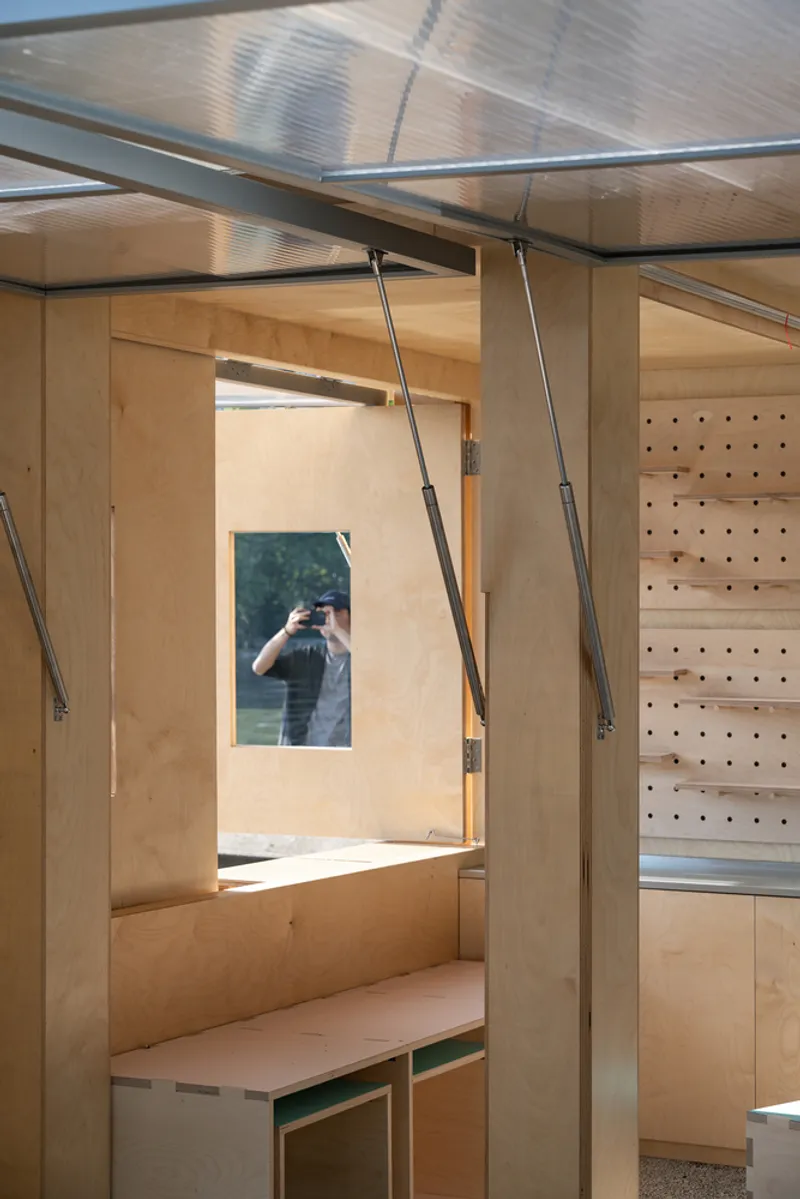
- Four sections of the canal-facing wall can open upwards to serve as canopies.
- The inner walls feature two doors: a small viewing door and a large sliding door for cultural promotion.
- Each movable element operates through bolts, latches, and handles, creating a sense of ritualized transformation between closed and open states.
This innovative design allows the pavilion to seamlessly transition from a private small house to a public rest and cultural space, enriching the visitor experience.
Materiality and Adaptive Solutions
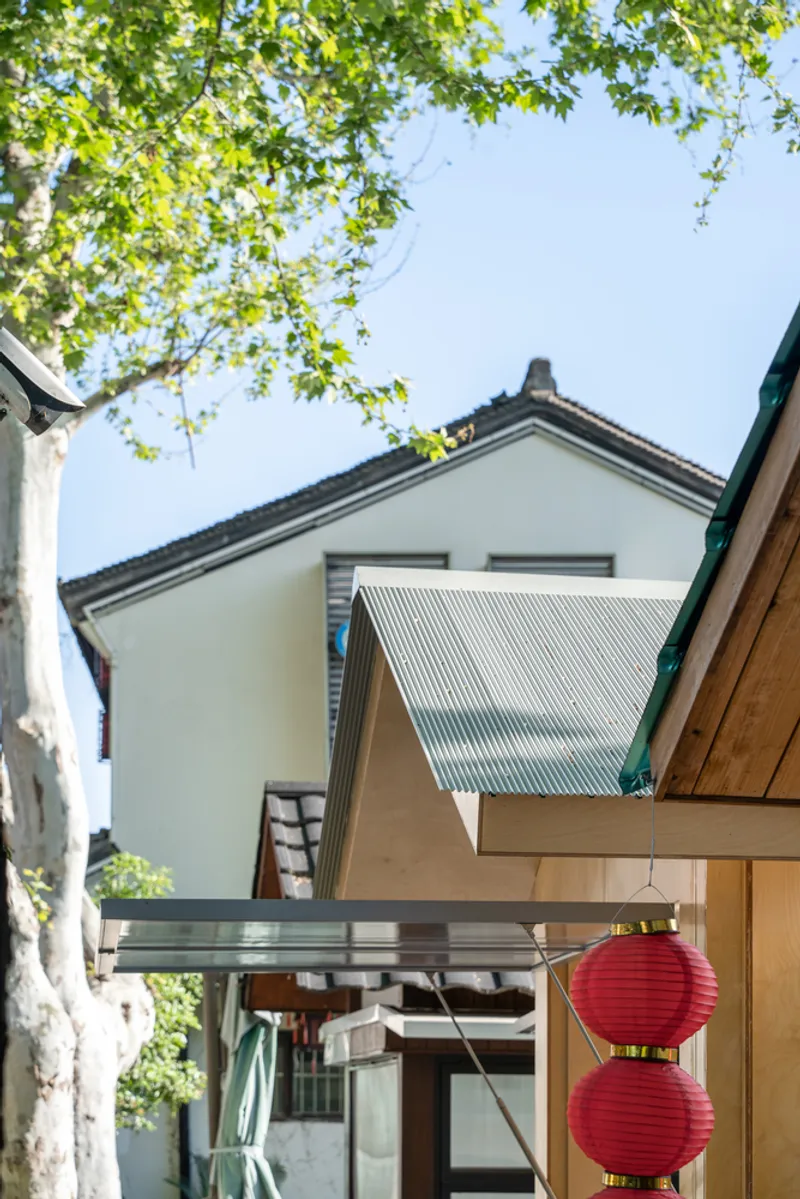
The pavilion’s design faced strict style constraints to match the surrounding gabled wooden houses. Initially, the roof and structure were not planned for modification due to tight construction budgets. During construction, it became evident that the original eaves and black aluminum tiles, while consistent with the neighborhood, appeared visually heavy for this site.
The solution involved:
- Adding facade panels without altering the structure
- Replacing roof metal sheets for a lighter visual impact
- Utilizing marine plywood as the main material, showcasing modularity and clean lines
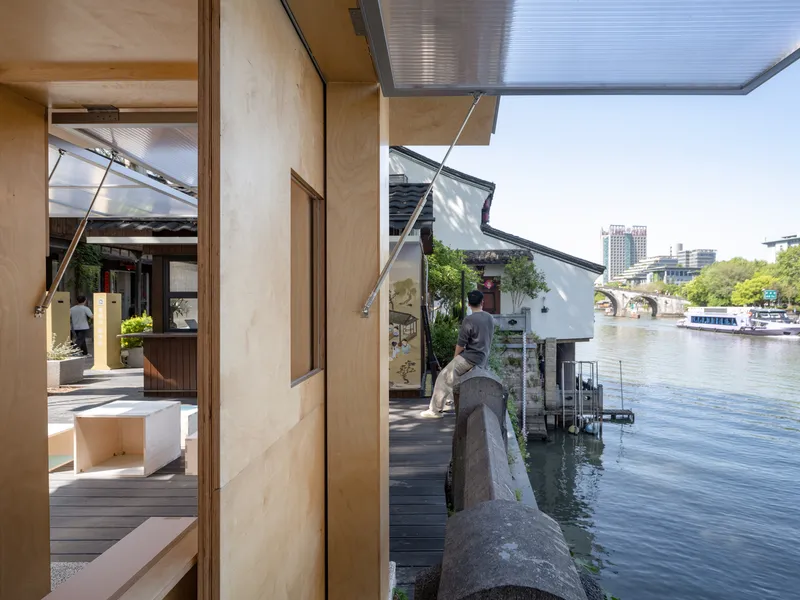
While some material textures were simplified, the folding and opening mechanisms were successfully implemented, marking a major experimental success in the project.
The Canal Pavilion Post exemplifies a sensitive, innovative approach to heritage renovation, public architecture, and community engagement. By balancing openness, functionality, and historical context, ZAOZUO Architecture Studio has created a small but meaningful cultural landmark along Hangzhou’s Grand Canal.
All Photographs are works of Qingshan Wu



Popular Articles
Popular articles from the community


Co-life: Sustainable Architecture for Age-Friendly Community Living
Co-life reimagines sustainable architecture for seniors through courtyards, rammed earth, shared gardens, and spaces designed for belonging.

Conexión: Biophilic Design Reimagines High-Rise Living in Hong Kong
Conexión reimagines high-rise living in Hong Kong through biophilic design, green facades, shared spaces, daylight, water and nature within.

Play: Fragments of Their World
Familiar architecture becomes modular playground design, creating safe spaces where displaced children can learn, connect, imagine and play.

The Ocean Hive: Sustainable Architecture for a Self-Sufficient Civilization at Sea
The Ocean Hive imagines sustainable architecture at sea, where modular habitats, algae, wave power and ocean waste sustain a growing colony.
Similar Reads
You might also enjoy these articles


Hodi-Mandai Geram
Project Function: Preservation and revitalization of the Intangible heritage and socio-spatial identity of the Hodi by Housing, Cultural Memory Center, Sacred Grove, landscape, local tourism economy


Olio Towers: A Mid-Rise for Performers That Fuses Housing, Rehearsal, and Stage
Located blocks from Houston's Theater District, this modular tower stacks living units around a central performance atrium.

Oasis: Modular Green Housing Carved into Dhaka's Urban Fabric
A shortlisted Plugin Housing entry reclaims unauthorized settlements in Dhaka with stepped concrete volumes, green roofs, and ventilation-driven design.

Black Hole: A Floating Megastructure for the Post-Physical Era
Emiliano Mazzarotto envisions a spherical, self-scaling arena where e-sports, digital hotels, and holographic stadiums replace traditional public space.
Explore Public Building Competitions
Discover active competitions in this discipline



Challenge to design locus for the upliftment of human rights


Challenge to reimagine the Iron Throne


Photograph architecture without architects


Illustrate the lost glory of Angkor Wat - Render Challenge
Comments (0)
Please login or sign up to add comments
No comments yet. Be the first to comment!