

Cap de Bos School: A Benchmark in Sustainable School Architecture by BPM Architectes
Cap de Bos School in Pessac exemplifies sustainable school architecture through thoughtful renovation, timber construction, and integrated natural design.


A Vision for Future-Focused Learning Environments in Pessac, France
The Cap de Bos School Group in Pessac, a suburb of Bordeaux, stands as a dynamic example of sustainable school architecture. Designed by BPM Architectes and completed in 2024, this comprehensive renovation and expansion project addresses growing student populations with a forward-thinking, eco-conscious design. The intervention not only increases capacity to 450 pupils but redefines what it means to create an inclusive, nature-integrated, and community-responsive learning space.

Reimagining Educational Infrastructure Through Architecture
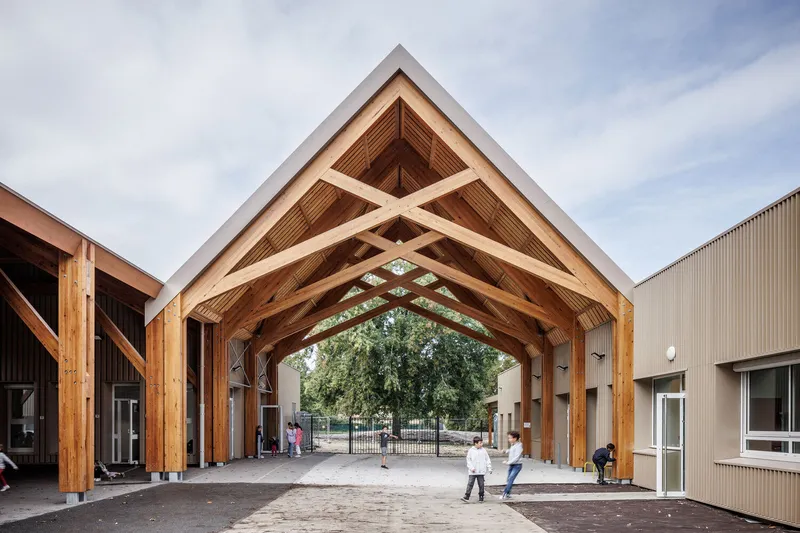
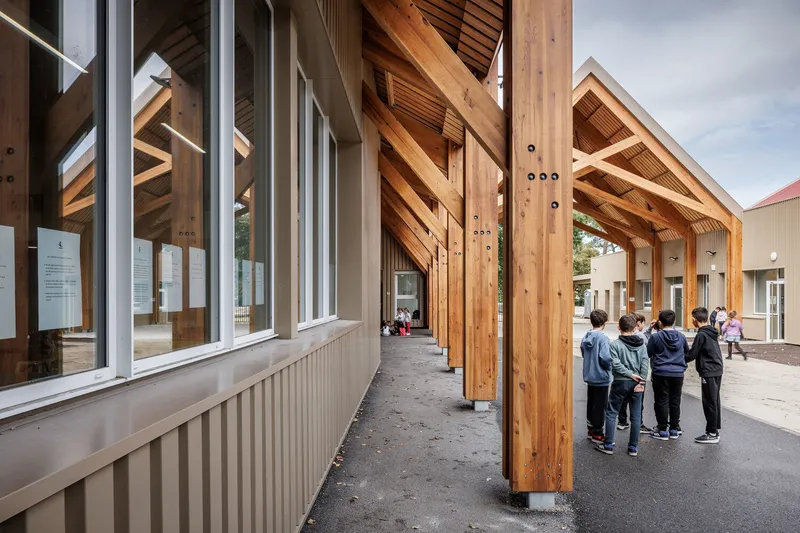
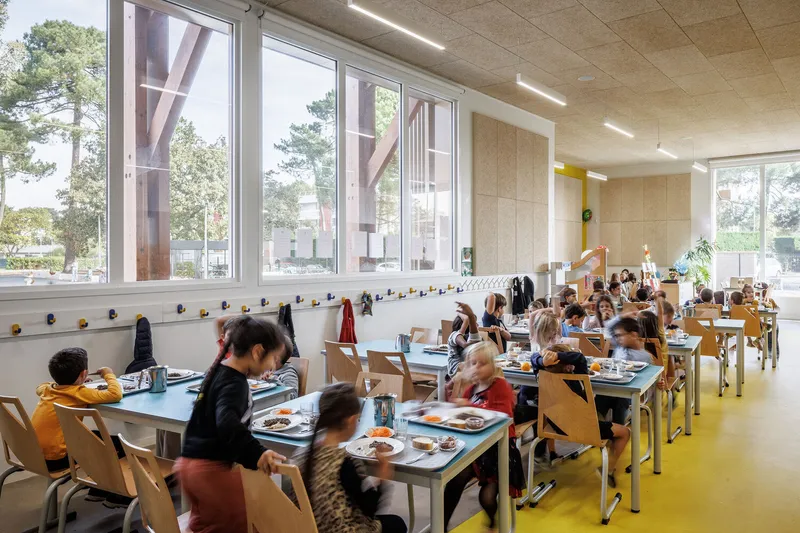
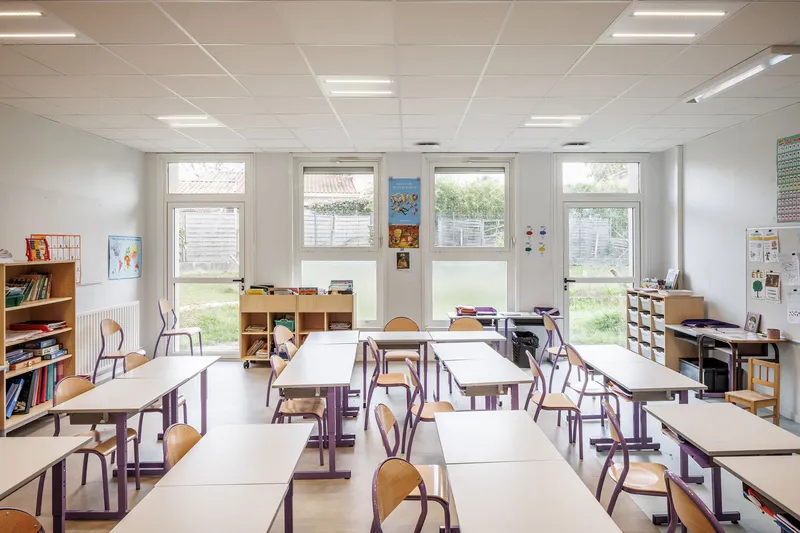
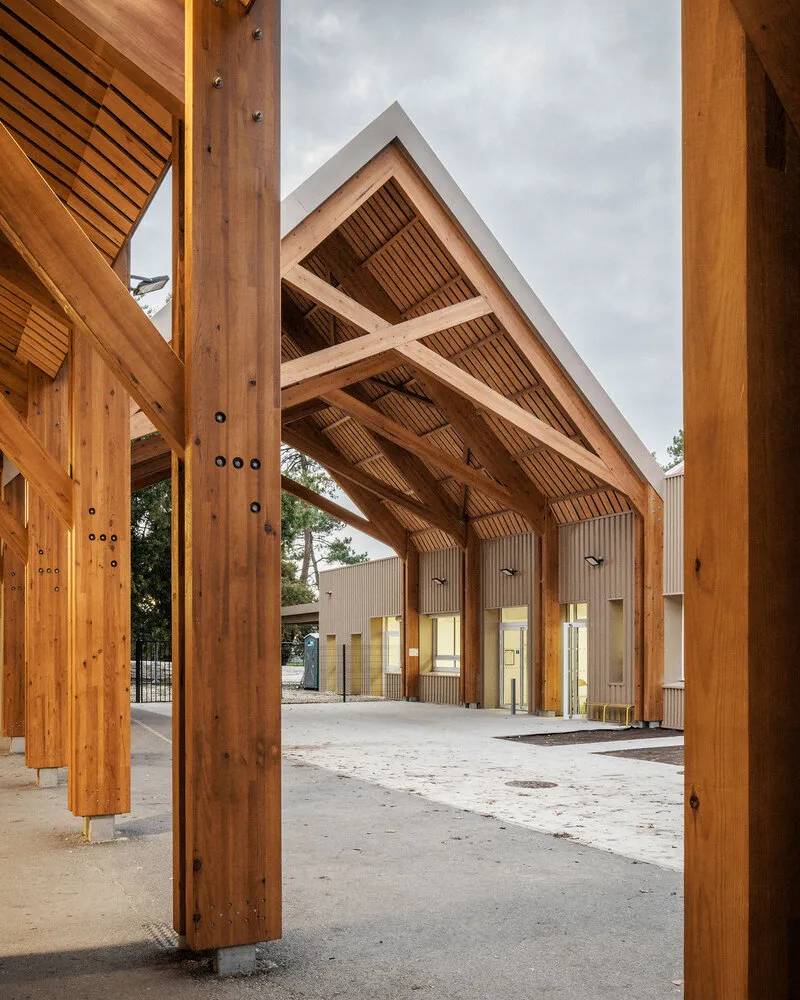
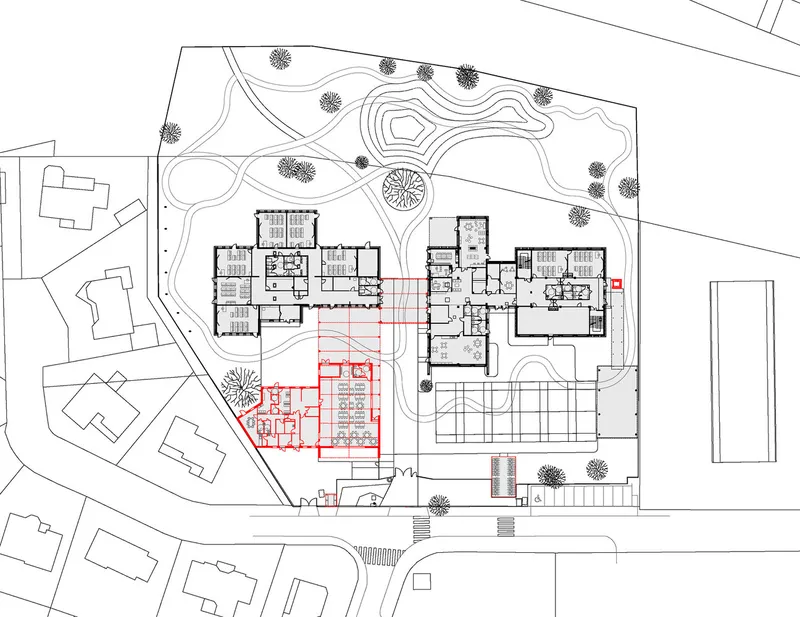
Situated on the wooded fringe of a residential neighborhood, the Cap de Bos campus has been restructured around three interconnected buildings: two refurbished blocks and one entirely new timber-framed cafeteria building. At the heart of the ensemble is a scissor-trussed central gallery, which serves as the connective and symbolic core of the school. This luminous corridor links essential functions, including reception, administration, a library, multipurpose spaces, after-school areas, and dining facilities, creating a seamless circulation path and a clear sense of community.


Harmonizing Built Form with the Natural Context
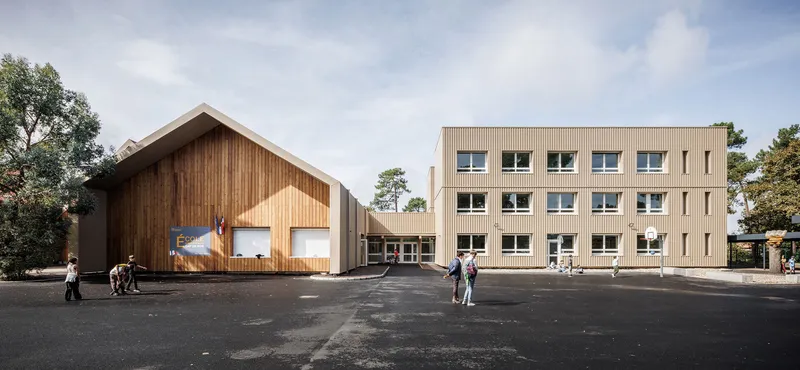
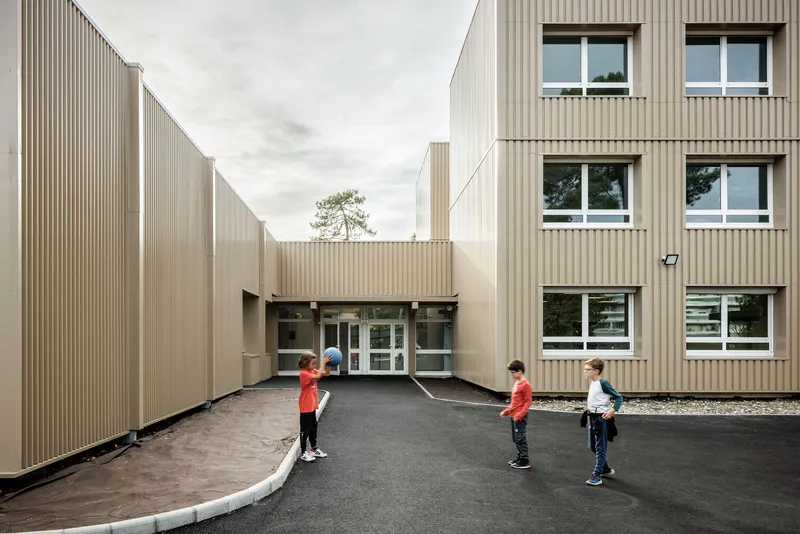
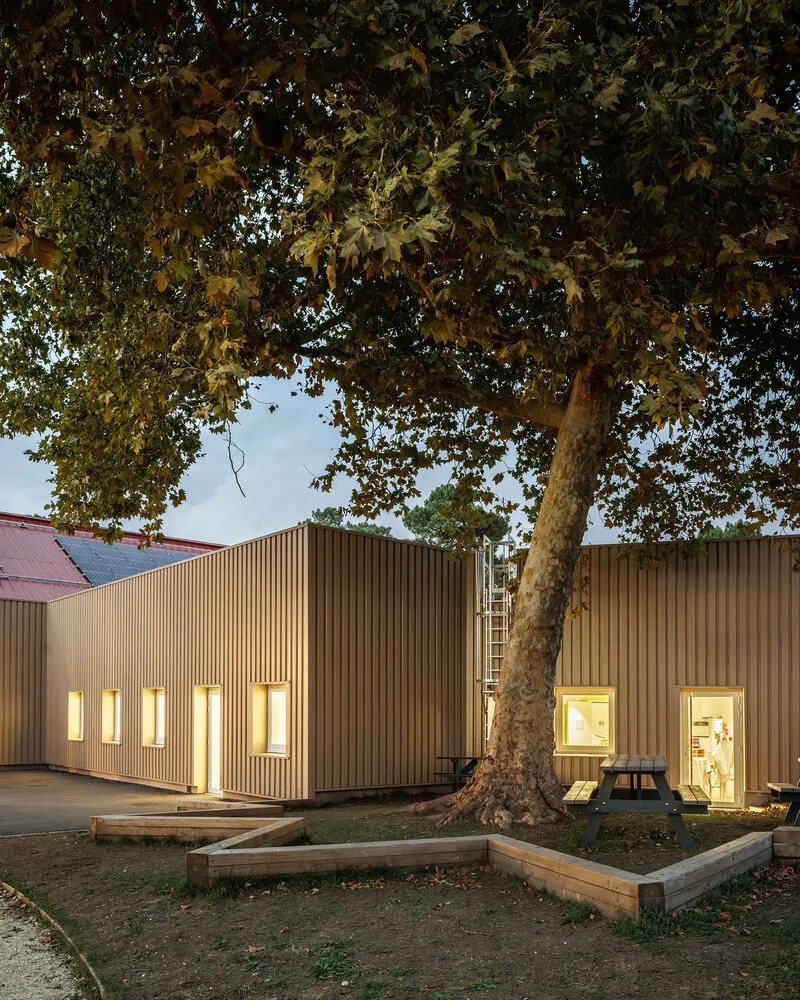
The architectural language of the project emphasizes a strong connection to the natural site while maintaining a sensitive dialogue with the surrounding residential context. Exterior finishes include ribbed metal cladding, lime-rendered insulation in earthy tones, and corrugated fiber cement roofing that echoes the pitched silhouettes of nearby houses. These gestures foster a sense of familiarity and comfort for children, aligning architectural form with emotional well-being.

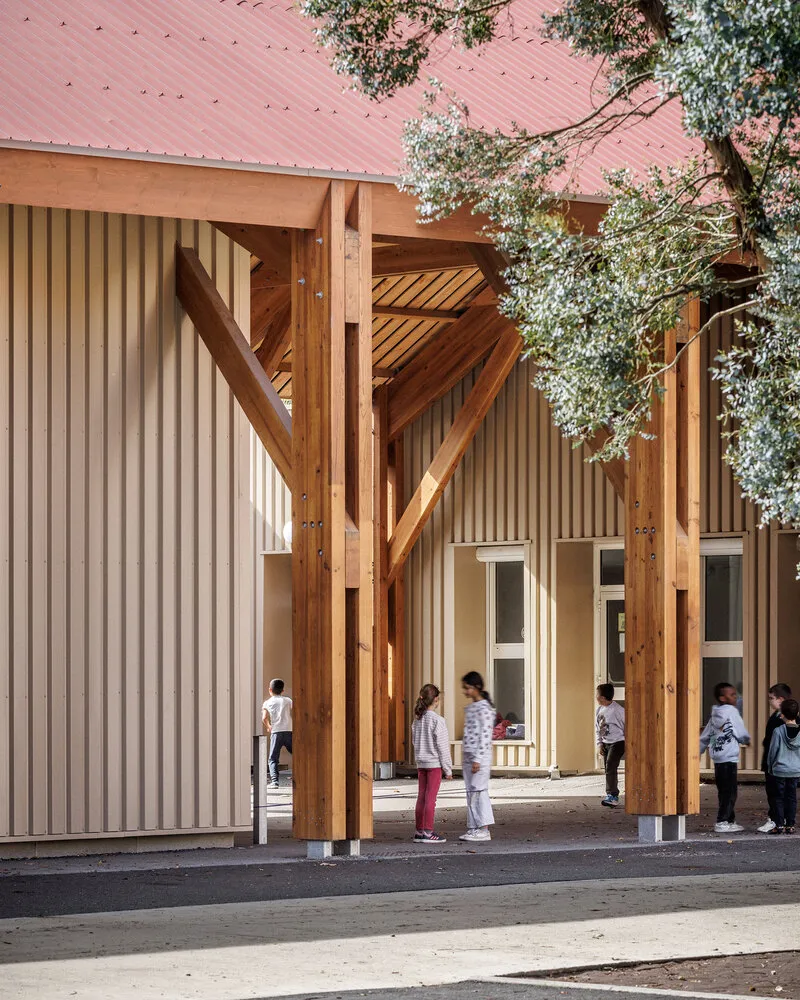
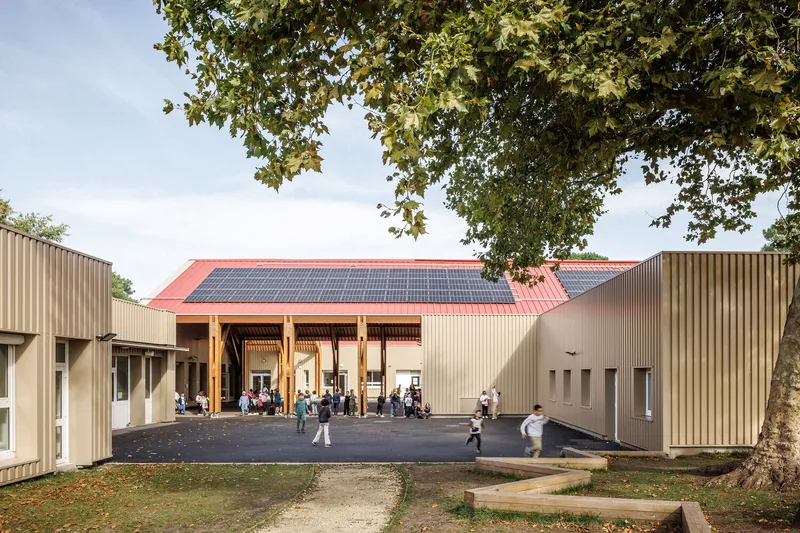
The design intentionally balances built space with carefully designed outdoor environments. To the southeast, an urban-inspired courtyard connects the school to the city grid, while to the west, a lush, biodiverse playground unfolds into the adjacent wooded corridor. These open spaces are more than recreational—they serve as active pedagogical landscapes where students can explore, play, and engage with nature.

A Model of Sustainable School Architecture
At every level, the Cap de Bos project demonstrates a commitment to sustainability. Energy performance is enhanced through the application of external insulation and cladding made from autoclaved wood siding on existing buildings. The newly constructed cafeteria employs a timber frame system and meets France’s E3C1 and Biosourced Level 1 environmental standards. This low-carbon approach supports the region's climate goals and reduces the building's overall environmental footprint.
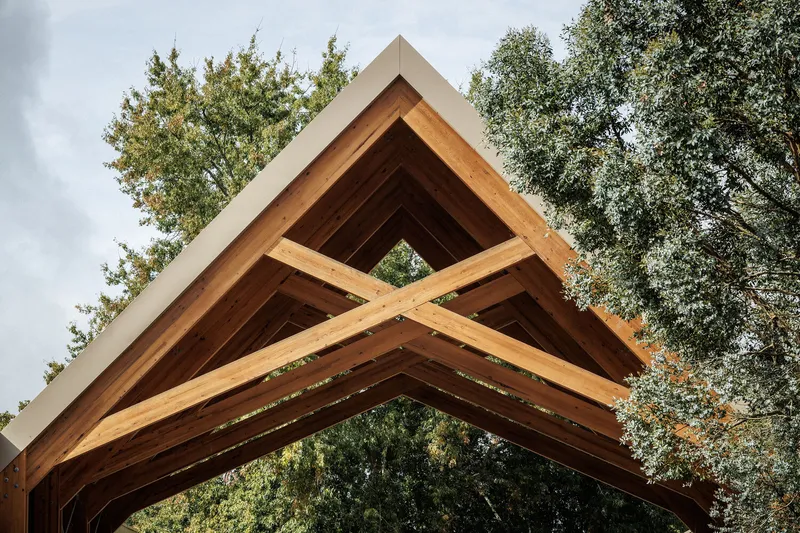
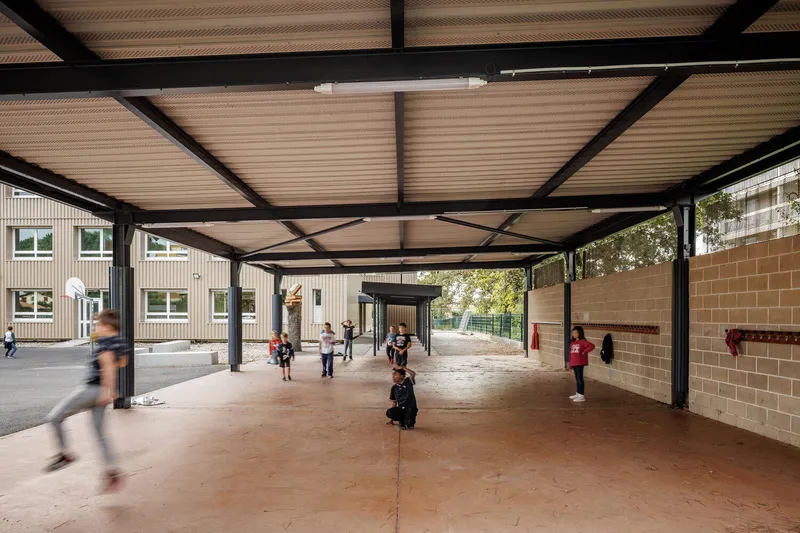
Sustainability here is not just a technical achievement but a guiding philosophy. The continuity in materials—particularly the use of wood across both old and new structures—creates a unified architectural identity rooted in warmth, resilience, and environmental stewardship. These materials and construction methods promote long-term durability while fostering a tactile, inviting environment for young learners.
Transforming Educational Architecture for the 21st Century
Cap de Bos School is more than a renovation—it is a transformation. The project blends architectural clarity with environmental intelligence, offering a space that is inclusive, adaptive, and attuned to the evolving needs of education. Its integration of sustainable design practices, thoughtful materiality, and biophilic outdoor environments make it a landmark example of how school architecture can positively shape the experience of learning and community engagement.

By elevating the spatial, environmental, and social dimensions of educational design, BPM Architectes has crafted a resilient model for sustainable school architecture that resonates well beyond the borders of Pessac.



Popular Articles
Popular articles from the community


Architekt Andreas Gruber Scatters 23 Dark Timber Chalets Across a South Tyrolean Forest Edge
In Molini di Tures, Amonti Chalets breaks a resort into a hamlet of gabled timber houses, with parking, storage and services pushed into the slope.

David Ortega Stacks a Two-Story Mexico City Penthouse Around a Steel Stair and a Pergola-Shaded Roof Terrace
In Colonia Roma, a 300 m² penthouse uses oak joinery, a planted steel stair and a slatted roof pergola to make a new-build apartment feel like a house.

Juan García Correa, John González and Claudia Rueda Sink a Circular Amphitheater into a Manizales Engineering Building
On the La Nubia campus in Manizales, Colombia, the S1 Building folds labs and offices into a hillside of ramped lawns that double as a campus route.

LT2A and OPEN Architectes Thread a Brick and Glass High School Through a Wooded Belgian Campus
In Braine-l'Alleud, a 3,000 m² wing for Collège Cardinal Mercier pairs pale brick with a glazed colonnade, deferring to a small chapel and a dense wood.

Similar Reads
You might also enjoy these articles

Gil Mello Arquitetura Tilts a Single Roof Toward the Waterfalls on a Plateau Above Aiuruoca, Brazil
In Aiuruoca, Minas Gerais, a 200 m² house of local labor and reclaimed poles pairs a low valley veranda with a tall mountain one.

U.GA Architects Wraps an Oval Rooftop Pool in Curved Board-Formed Concrete on Busan's Jeollidan-gil
In Busan's Jeonpo-dong, a 454 m² mixed-use block stacks a neighborhood facility, guest rooms and an oval rooftop pool inside spiraling concrete walls.

Felipe Hess Arquitetos Turns a Blind Stone Wall to the Street and Opens a Brazilian House onto a Courtyard and Canal
A canal-front house in Brazil hides behind painted stone and planting, then opens to an olive-tree courtyard, a reed-ceilinged porch and a curving pool.

David Macias Steps a Doorless Stone and Plaster House Down a Tropical Colombian Hillside
In the humid hills of Colombia, Threshold House replaces the front door with an open void and terraces its 850 m² down the slope instead of fighting it.

Explore Pont-Aven School Competitions
Discover active competitions in this discipline

Challenge to reimagine the Iron Throne

Photograph architecture without architects

Illustrate the lost glory of Angkor Wat - Render Challenge

Design challenge to reuse E-waste
Comments (0)
Please login or sign up to add comments
No comments yet. Be the first to comment!