

Carrying Pole House by Atelier KAI Architects: Innovative Renovation in Beijing
Carrying Pole House by Atelier KAI Architects transforms a narrow Beijing hutong into multidimensional, flexible spaces blending tradition, steel, and light.


The Carrying Pole House, designed by Atelier KAI Architects, is a remarkable example of blending modern architectural innovation with traditional Beijing hutong typology. Situated in Mao’er Hutong, this residential renovation reimagines a five-bay, bar-shaped house with narrow courtyards and sloping roofs. The design transforms a constrained, linear space into a dynamic, multidimensional home, offering both aesthetic appeal and functional versatility.
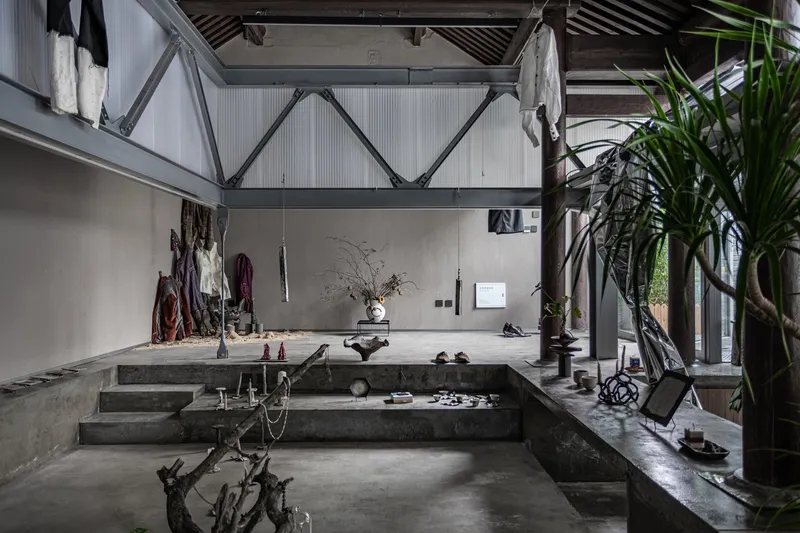
Expanding Functionality with Box Elements
The architects introduced box elements to create three distinct spatial zones: a sunken space, a large multipurpose area, and a roof space. This strategy not only enhances the house’s functionality but also enriches the user experience. The original room’s limitations are expanded, offering flexible usage for living, work, and exhibition purposes.
- Sunken Space: Engages with the original courtyard, creating intimate indoor-outdoor interactions.
- Large Space: Connects to the existing wooden frame, supporting versatile activities.
- Roof Space: Dialogues with the existing roof, maximizing light, air, and visual flow.
This spatial layering introduces three-dimensional living, giving the impression of larger areas while preserving the hutong’s historic charm.
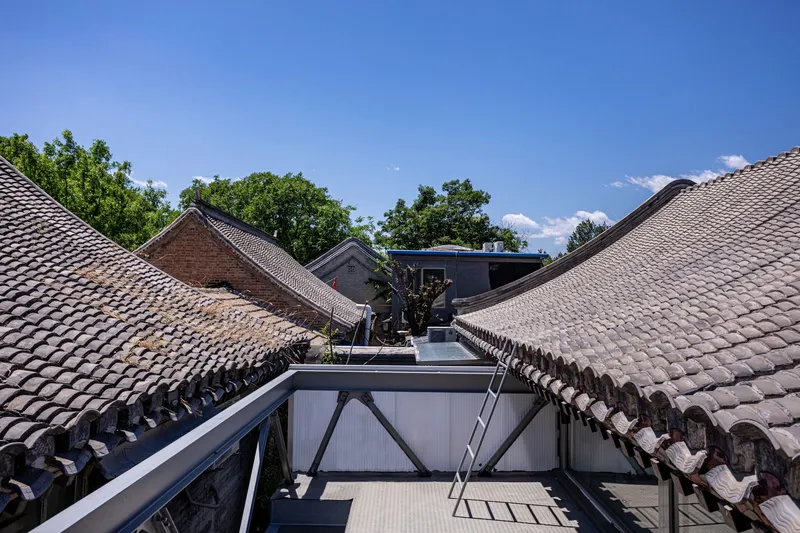
Innovative Spatial Perception
One of the most striking aspects of the renovation is its spatial transformation. The original single-dimensional layout evolves into three interconnected spatial experiences, each anchored to the existing structure.
The narrow strip of land is converted into a flexible, square-shaped space, enhancing usability and flow. The design emphasizes both visual and functional connections, creating an environment that feels expansive despite its modest 93 m² footprint.
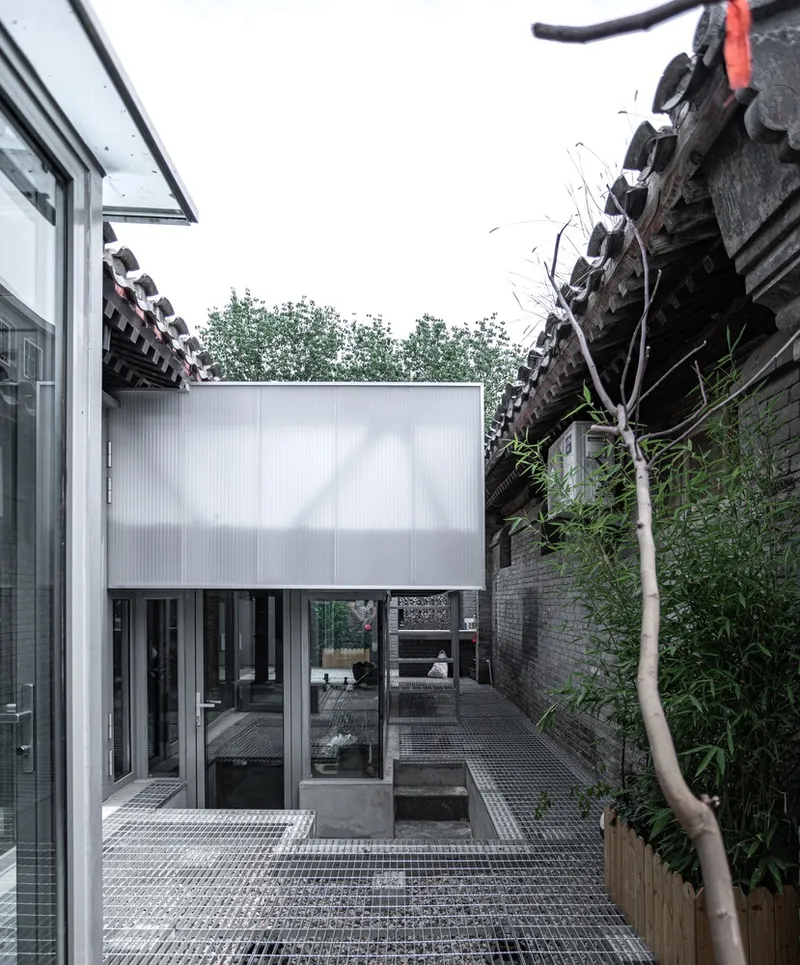
Three-Dimensional Courtyard and Light Strategies
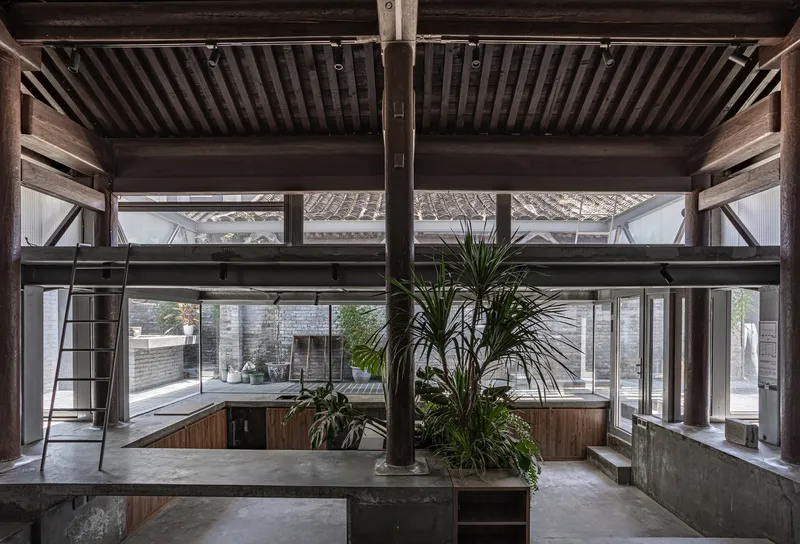
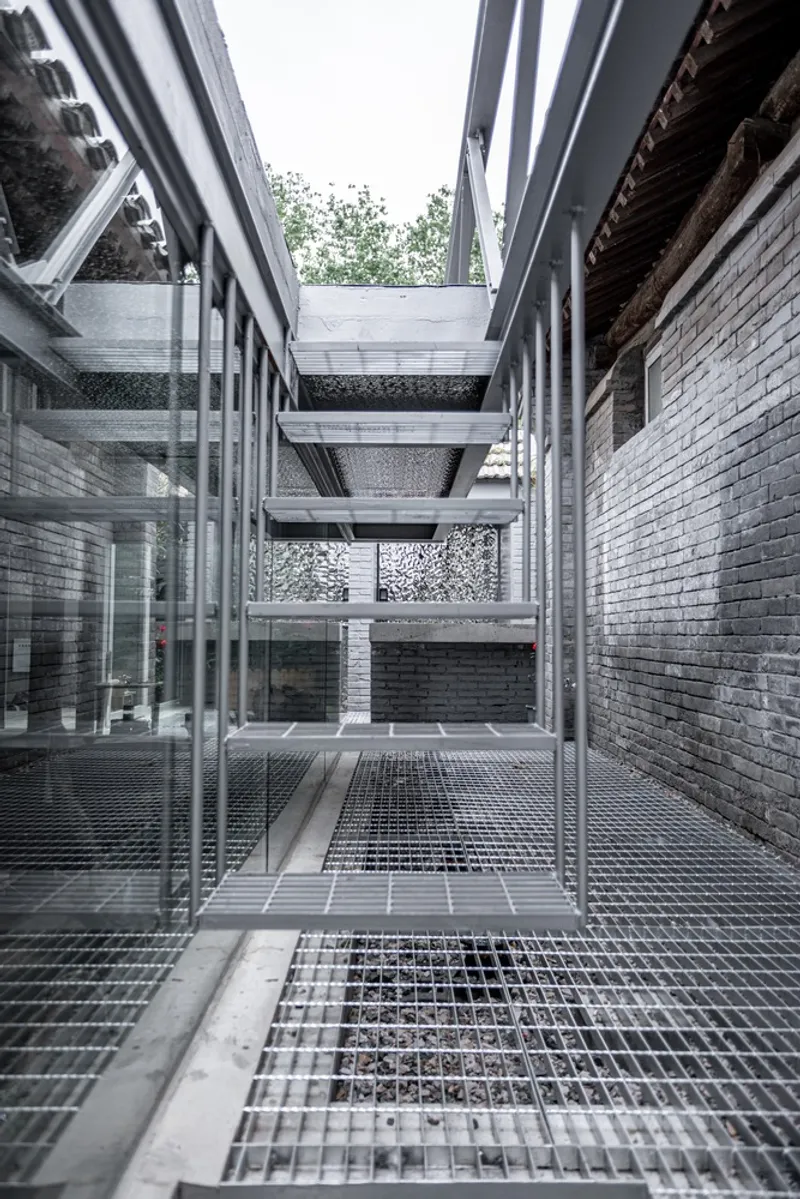
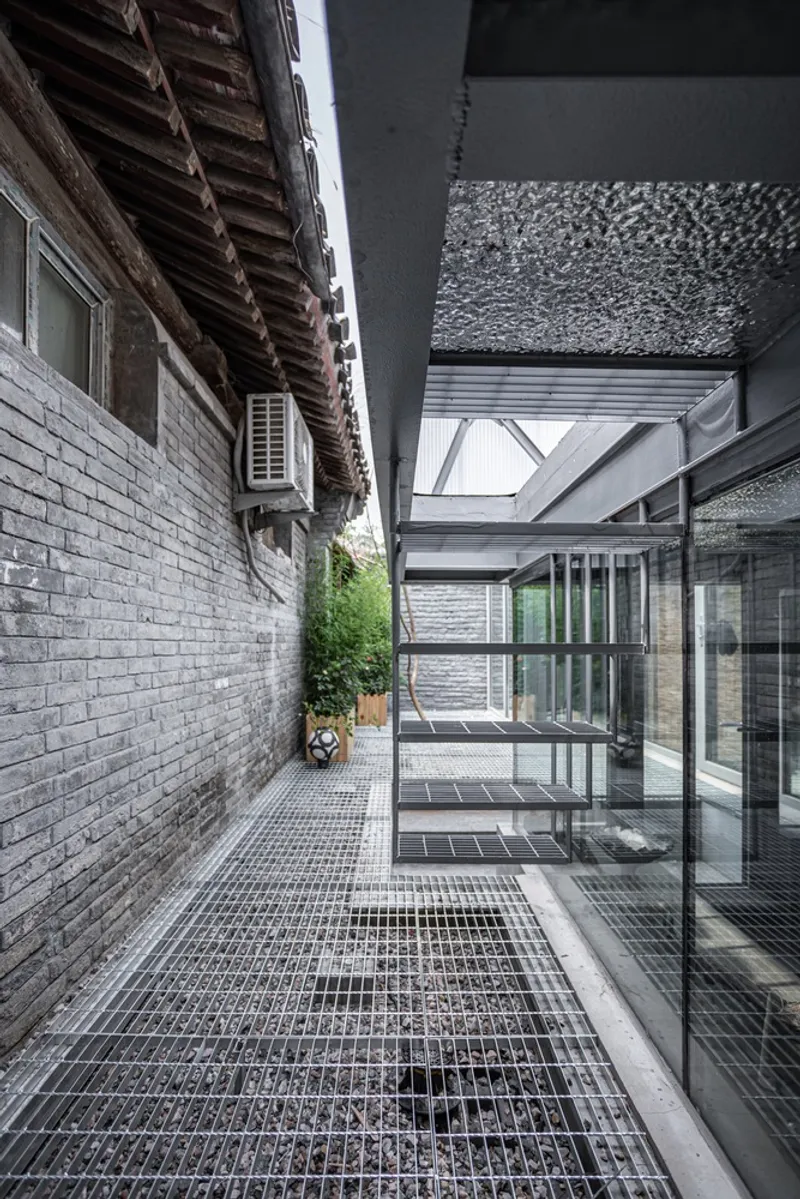
By leveraging the sloping roofs of neighboring buildings, Atelier KAI Architects created a three-dimensional courtyard. A semi-elevated platform allows the courtyard to stretch toward the sky, transforming light and landscape perception inside the house.
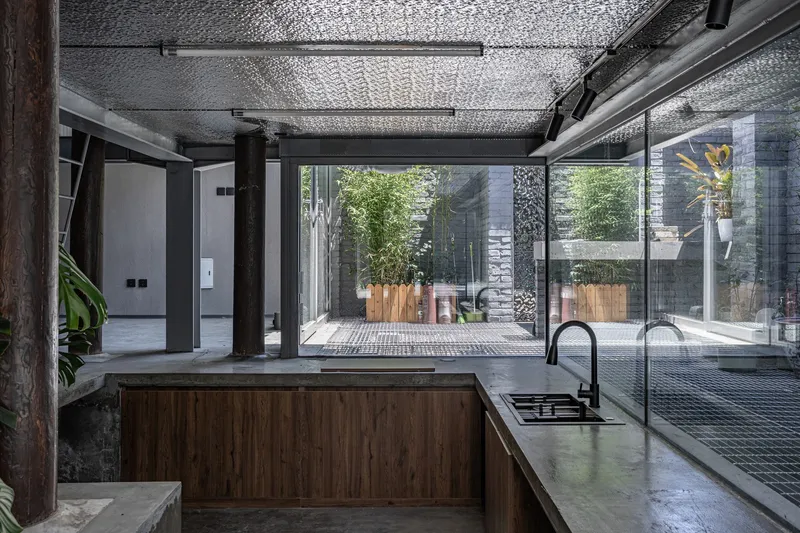
- Semi-Sunken Floor: Draws the eye inward, creating private scenic pockets.
- Layered Spaces: Staggered levels generate dynamic relationships between interior and exterior environments.
- Natural Light Optimization: Sloped roofs and elevated platforms guide light flow throughout the house.
This approach blends natural light, outdoor scenery, and interior spatial fluidity, turning the home into a multidimensional architectural experience.
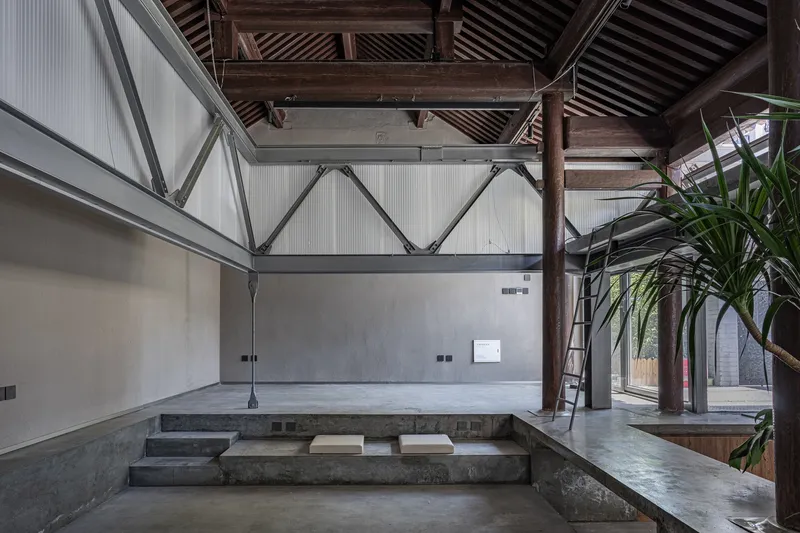
Structural Innovation: Pole Truss System
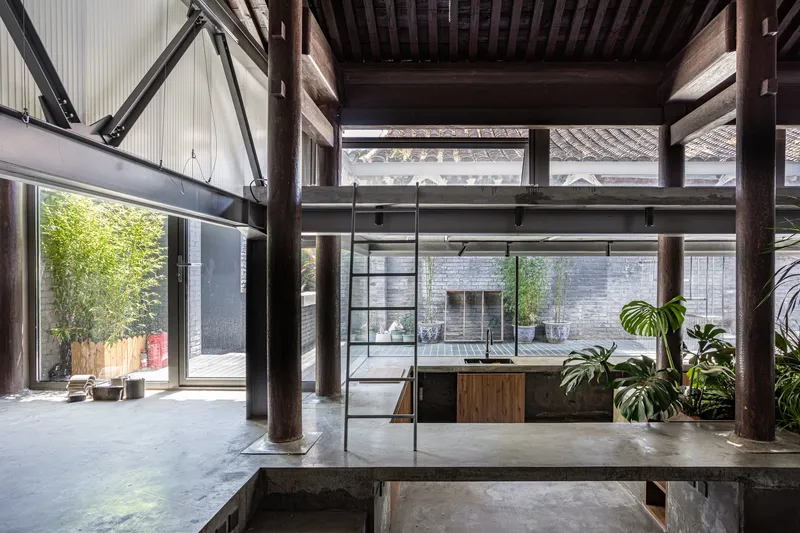
A key feature of the renovation is the lightweight steel truss system, weighing only 1.9 tons, which is structurally independent from the original wooden roof trusses. One end is anchored by a pull rod while the other is cantilevered, supporting a 6-ton floor slab. This innovative “pole truss” creates a floating yet enclosed volume, adding a sculptural element to the space.
The tension between old wooden structures and new steel frameworks transforms familiar hutong elements into something simultaneously recognizable and abstract, creating new spatial experiences and visual hierarchies.
Material Palette and Textural Harmony
The renovation introduces a carefully curated material palette, including:
- Natural metals
- Semi-transparent polycarbonate panels
- Plastering mortar
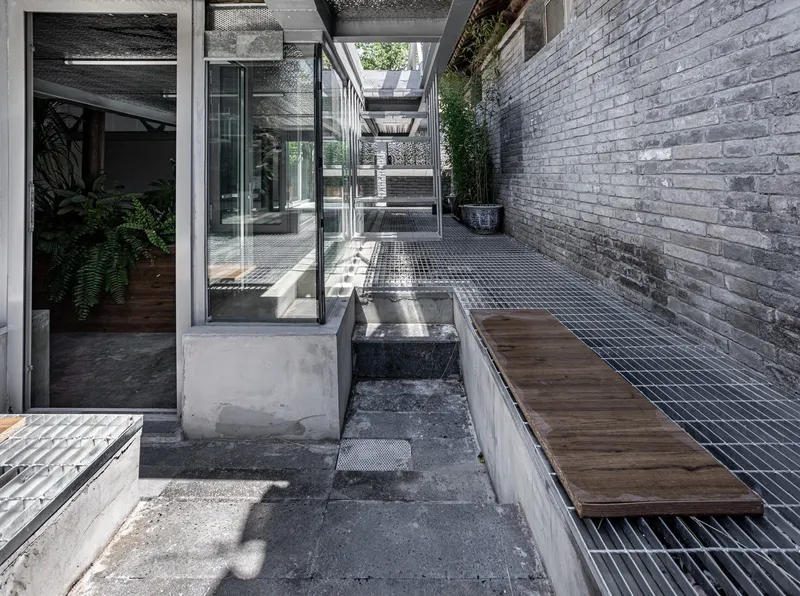
These materials interact with the original wooden framework, creating a temperature-sensitive, visually layered environment. The balance between old and new materials generates a home that is at once familiar and novel, respecting hutong heritage while embracing contemporary design.
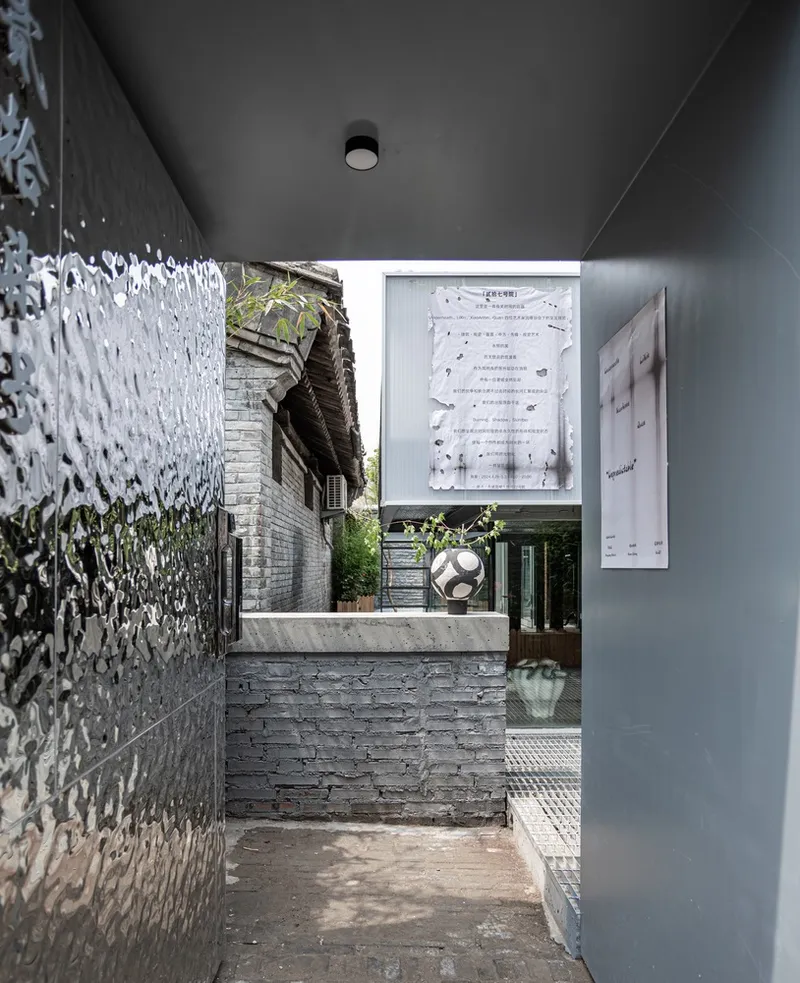
A Modern Hutong Experience
The Carrying Pole House exemplifies how thoughtful residential renovation can transform limited urban spaces into flexible, dynamic, and visually rich environments. By integrating steel structures, three-dimensional spatial design, and innovative light strategies, Atelier KAI Architects has redefined what it means to live within a historic hutong. This project highlights the potential of adaptive reuse in contemporary Chinese architecture, merging tradition and modernity seamlessly.
All photographs are works of XING RUI


Popular Articles
Popular articles from the community


David Ortega Stacks a Two-Story Mexico City Penthouse Around a Steel Stair and a Pergola-Shaded Roof Terrace
In Colonia Roma, a 300 m² penthouse uses oak joinery, a planted steel stair and a slatted roof pergola to make a new-build apartment feel like a house.

U.GA Architects Wraps an Oval Rooftop Pool in Curved Board-Formed Concrete on Busan's Jeollidan-gil
In Busan's Jeonpo-dong, a 454 m² mixed-use block stacks a neighborhood facility, guest rooms and an oval rooftop pool inside spiraling concrete walls.

longwave studio Reorganizes a 112 m² Tainan Apartment Around the Daily Routines of a Family and Two Cats
In Tainan, Taiwan, birch plywood, rust-red furniture and a freestanding plaster wall link arrival, storage, work and family life in one apartment.

Architekt Andreas Gruber Scatters 23 Dark Timber Chalets Across a South Tyrolean Forest Edge
In Molini di Tures, Amonti Chalets breaks a resort into a hamlet of gabled timber houses, with parking, storage and services pushed into the slope.

Similar Reads
You might also enjoy these articles


Hodi-Mandai Geram
Project Function: Preservation and revitalization of the Intangible heritage and socio-spatial identity of the Hodi by Housing, Cultural Memory Center, Sacred Grove, landscape, local tourism economy


Olio Towers: A Mid-Rise for Performers That Fuses Housing, Rehearsal, and Stage
Located blocks from Houston's Theater District, this modular tower stacks living units around a central performance atrium.

Oasis: Modular Green Housing Carved into Dhaka's Urban Fabric
A shortlisted Plugin Housing entry reclaims unauthorized settlements in Dhaka with stepped concrete volumes, green roofs, and ventilation-driven design.

Black Hole: A Floating Megastructure for the Post-Physical Era
Emiliano Mazzarotto envisions a spherical, self-scaling arena where e-sports, digital hotels, and holographic stadiums replace traditional public space.

Explore Housing Competitions
Discover active competitions in this discipline

Challenge to reimagine the Iron Throne

Photograph architecture without architects

Illustrate the lost glory of Angkor Wat - Render Challenge

Design challenge to reuse E-waste
Comments (0)
Please login or sign up to add comments
No comments yet. Be the first to comment!