

Cary Institute of Ecosystem Studies by Becker+Becker
Cary Institute’s renovated headquarters by Becker+Becker revives Malcolm Wells’ sustainable vision with solar systems, daylight design, and ecological integration.


The Cary Institute of Ecosystem Studies in Millbrook, New York, has long been a leading research hub dedicated to understanding ecosystems and advancing environmental stewardship. In 2020, the headquarters underwent a transformative renovation and expansion by Becker+Becker Architects, breathing new life into the visionary 1978 design by Malcolm Wells, one of the pioneers of the green building movement.

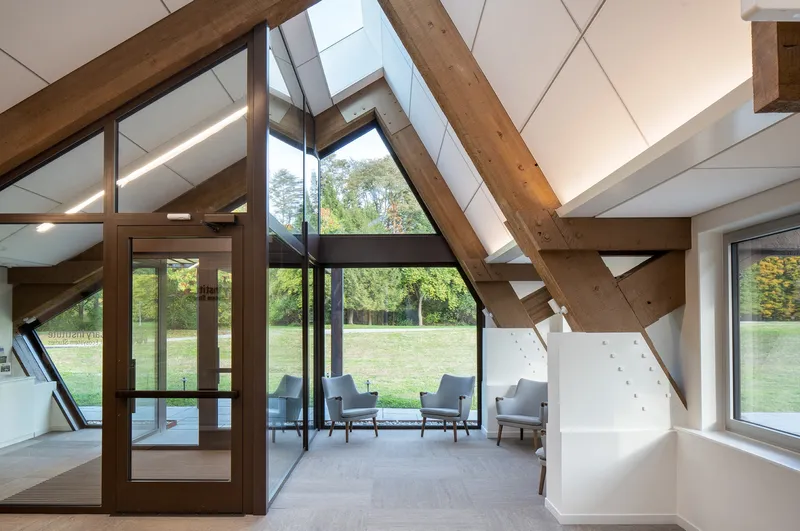
A Legacy of Sustainable Architecture
When it first opened, the building was celebrated as a groundbreaking example of sustainable architecture. Its solar thermal roof and geothermal systems represented forward-thinking strategies in environmental design. However, over the years, many of these innovative systems were lost due to renovations that diverted from the original ecological vision.
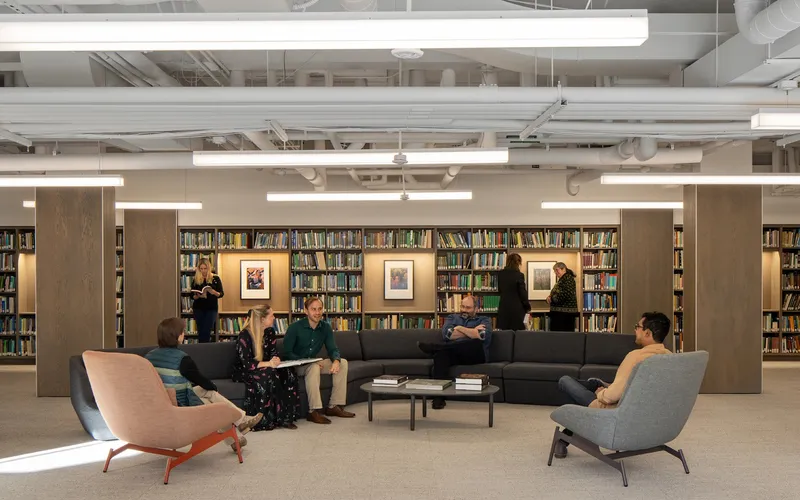

Re-Envisioning the 1978 Design
The recent renovation restores the building’s role as a living embodiment of the Institute’s ecological mission. Becker+Becker’s design enhances both the sustainability and the functionality of the structure while preserving its legacy.
- Saw-tooth roof monitors once again invite daylight deep into the interiors, reducing reliance on artificial lighting.
- Six feet of soil previously bermed against the building’s perimeter was carefully removed. This not only improves insulation performance but also reveals the building’s edges, opening up panoramic views.
- Large windows now establish a direct visual connection between interior research spaces and the surrounding forest ecosystems, reinforcing the bond between scientific inquiry and nature.
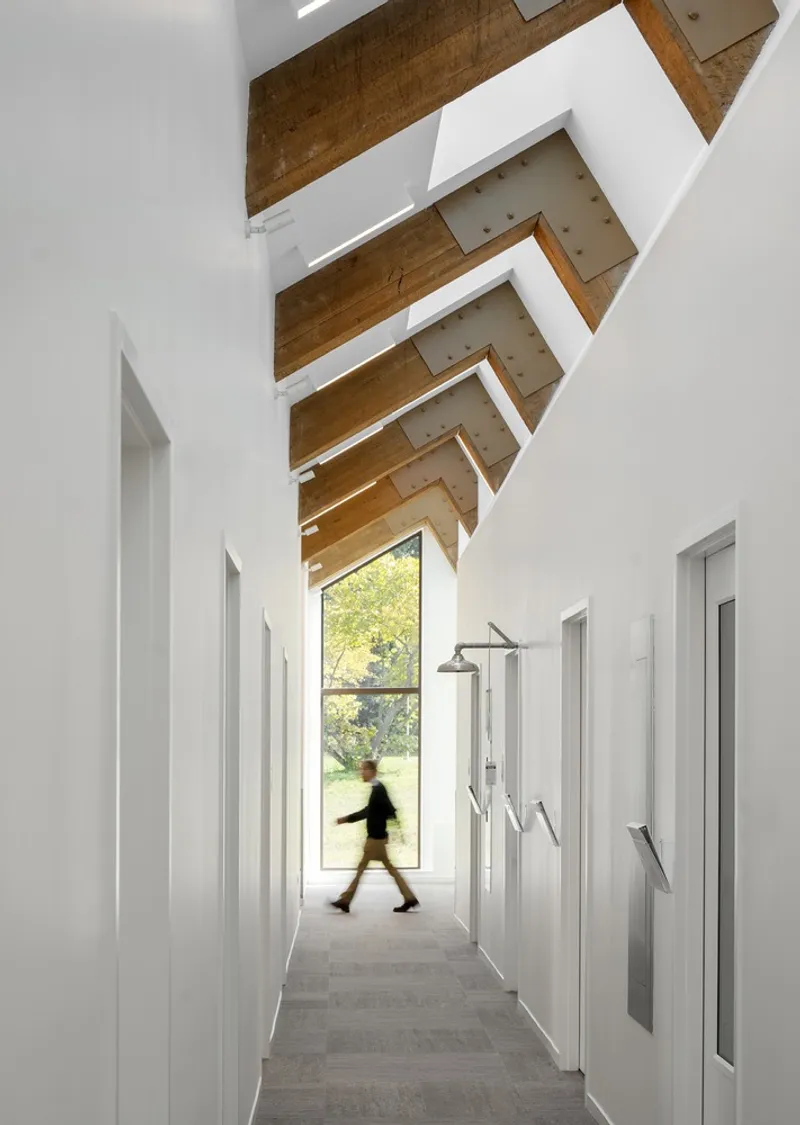

High-Performance Systems for a Sustainable Future
The renovation prioritizes renewable energy and resource efficiency.
- A solar-powered electrical system drives the building’s energy needs.
- Carefully selected mechanical services ensure flexible, comfortable interior conditions with minimal environmental impact.
- Insulation upgrades and passive strategies reduce energy demand while fostering a healthier work environment.
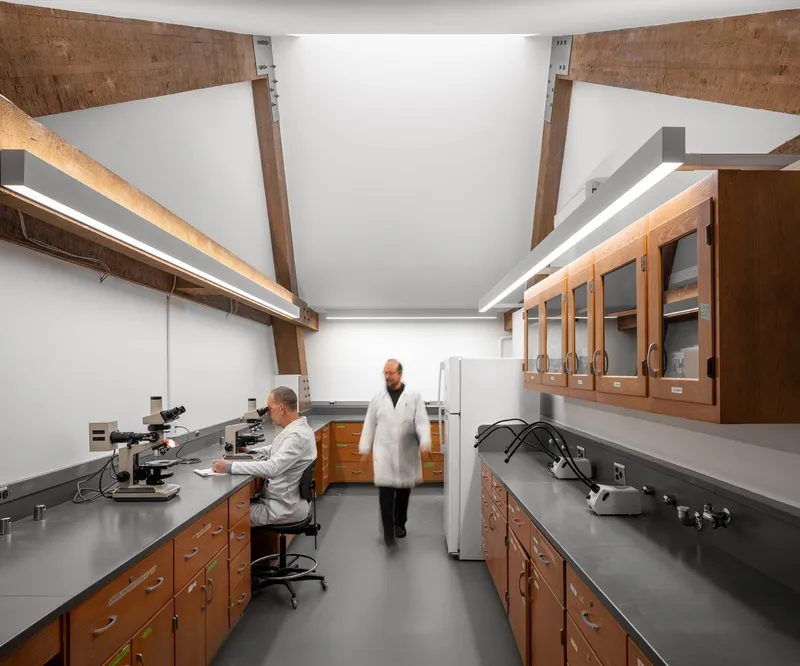
A Research Center in Dialogue with Nature
With its low-lying profile, sustainable material choices, and high-performance systems, the Cary Institute headquarters once again represents an inspiring model of ecological architecture. The design blurs the boundaries between indoor and outdoor environments, creating a setting where researchers can work in direct relationship with the ecosystems they study.

By reinstating Malcolm Wells’ vision through a 21st-century lens, Becker+Becker has redefined the building as not just a research facility, but as a living statement of environmental values—an architectural landmark that continues to inspire sustainable design innovation.
All Photographs are works of Seamus Payne


Popular Articles
Popular articles from the community


Opera on the Sea: Driftwood Logic Shapes a Timber Opera House on Estonia's Coast
Trevor Orgill's opera house translates the entangled drift of floating timber into a civic building where wood, water, and music converge.


ETEH Reworks the Shared Spaces of São Domingos School in Brazil Around Timber, Color and Hanging Plants
At São Domingos School in Brazil, 436 m² of hall, refectory and library are recast with timber joinery, a yellow and blue code and trailing greenery.

Aquadapt: An Underwater Habitat That Rewrites Its Rooms by the Hour
Curved modules ring the seabed while one shell shifts from breakfast room to cinema, farm and football pitch as residents' needs change.

David Ortega Stacks a Two-Story Mexico City Penthouse Around a Steel Stair and a Pergola-Shaded Roof Terrace
In Colonia Roma, a 300 m² penthouse uses oak joinery, a planted steel stair and a slatted roof pergola to make a new-build apartment feel like a house.

Similar Reads
You might also enjoy these articles


Hodi-Mandai Geram
Project Function: Preservation and revitalization of the Intangible heritage and socio-spatial identity of the Hodi by Housing, Cultural Memory Center, Sacred Grove, landscape, local tourism economy


Olio Towers: A Mid-Rise for Performers That Fuses Housing, Rehearsal, and Stage
Located blocks from Houston's Theater District, this modular tower stacks living units around a central performance atrium.

Oasis: Modular Green Housing Carved into Dhaka's Urban Fabric
A shortlisted Plugin Housing entry reclaims unauthorized settlements in Dhaka with stepped concrete volumes, green roofs, and ventilation-driven design.

Black Hole: A Floating Megastructure for the Post-Physical Era
Emiliano Mazzarotto envisions a spherical, self-scaling arena where e-sports, digital hotels, and holographic stadiums replace traditional public space.

Explore Environmental Psychology Competitions
Discover active competitions in this discipline

Challenge to reimagine the Iron Throne

Photograph architecture without architects

Illustrate the lost glory of Angkor Wat - Render Challenge

Design challenge to reuse E-waste
Comments (0)
Please login or sign up to add comments
No comments yet. Be the first to comment!