

Cas Sestadors: A Sensual Mallorcan Rural House Renovation Rooted in Agricultural Memory
A poetic Mallorcan rural house renovation transforming agricultural sheds into a soulful, site-sensitive home inspired by agrarian traditions.


A Contemporary Dwelling Reimagined from Agricultural Sheds in Algaida, Mallorca
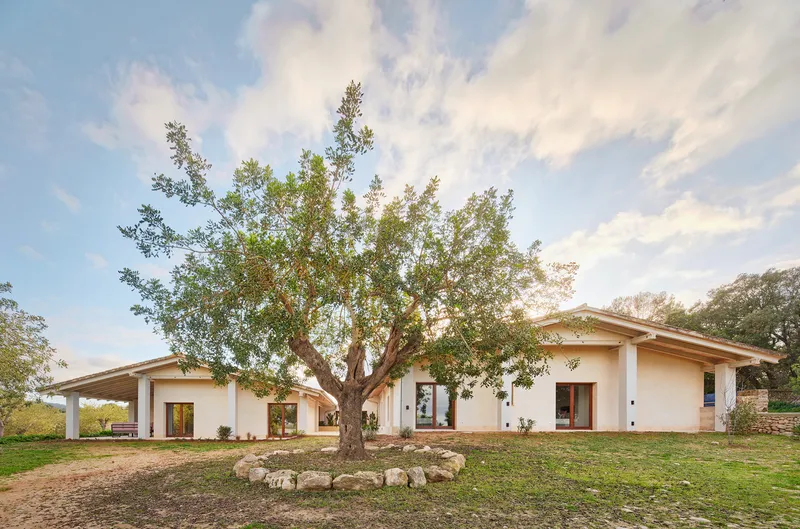
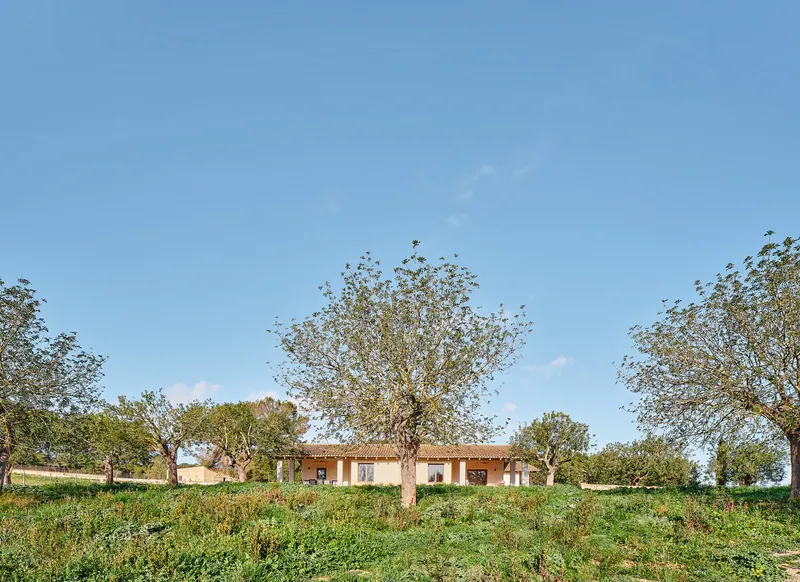
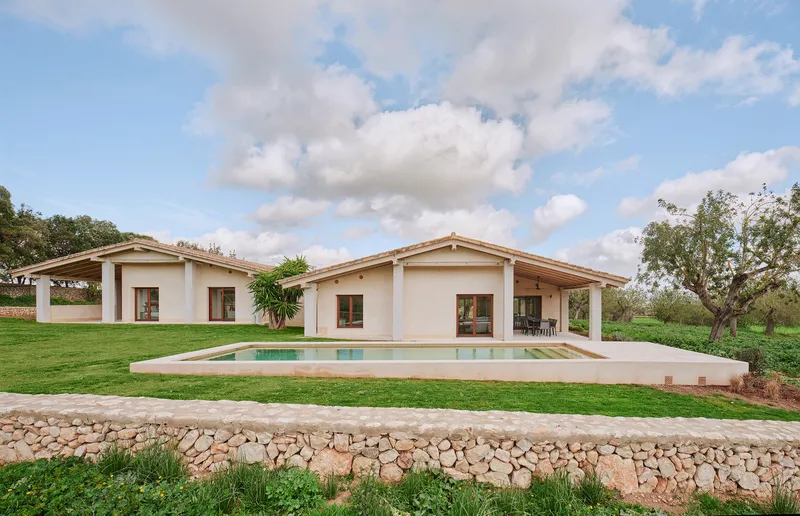
In the heart of Mallorca’s rural landscape, halfway between Puig de Randa and Montuïri, Cas Sestadors by MIEL Arquitectos stands as a sublime example of Mallorcan rural house renovation. Designed by Elodie Grammont and Miguel Ángel Borrás, this 450 m² project transforms two agricultural sheds—used for over three decades—into a refined, site-sensitive home. The architecture bridges Mallorca’s vernacular heritage with a sensual, contemporary way of living deeply informed by local materials, traditions, and climate.

Reclaiming the Spirit of Place through Existing Structures
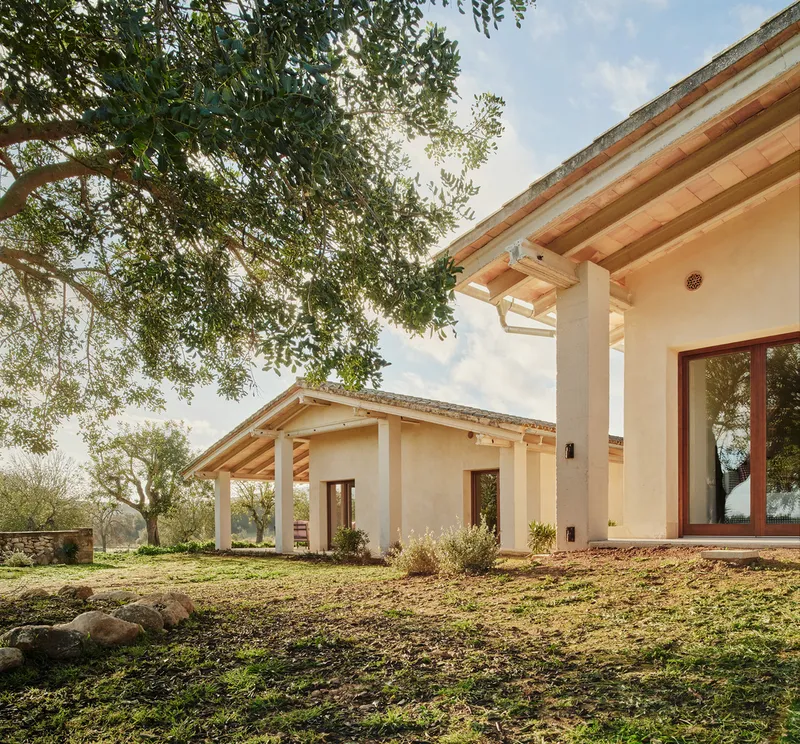
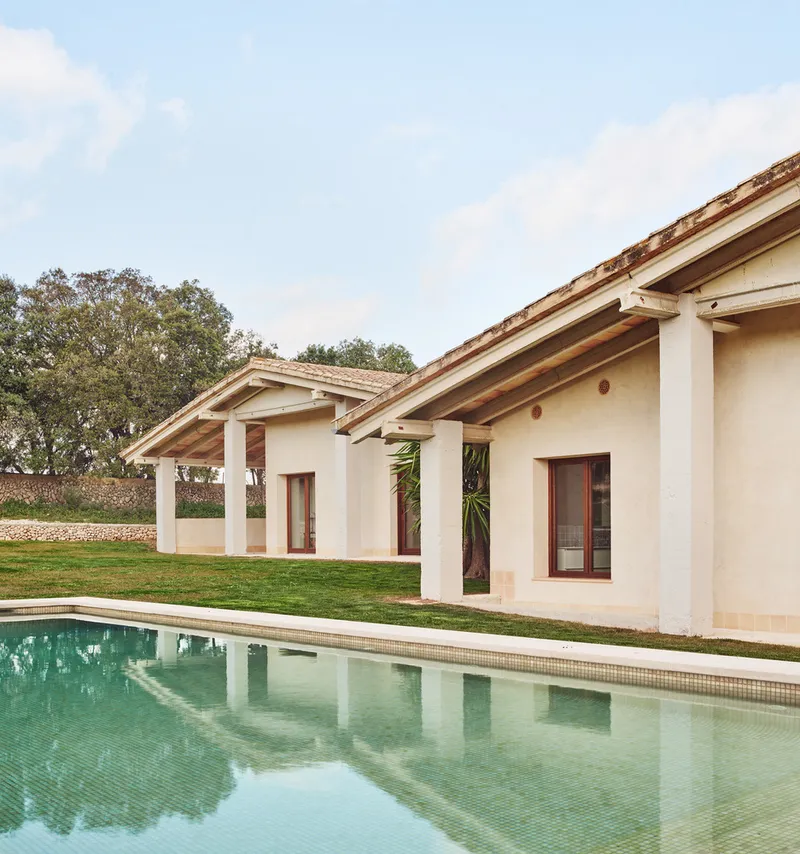
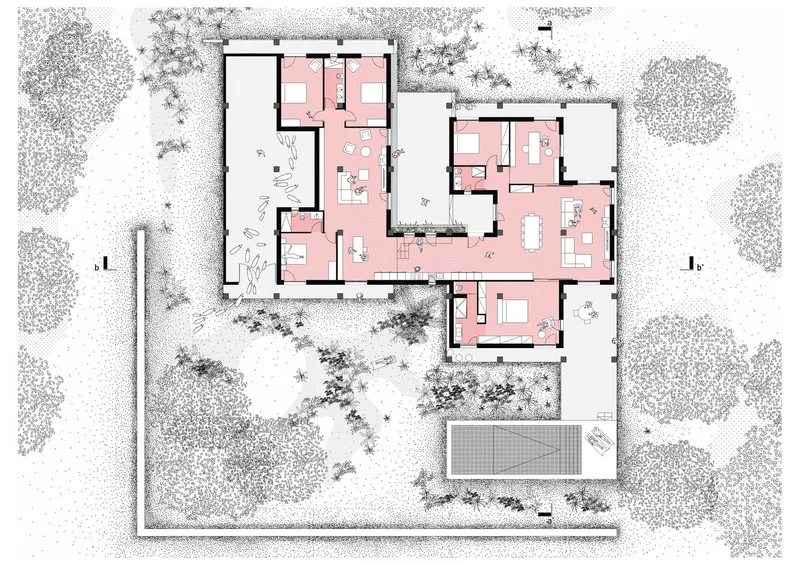
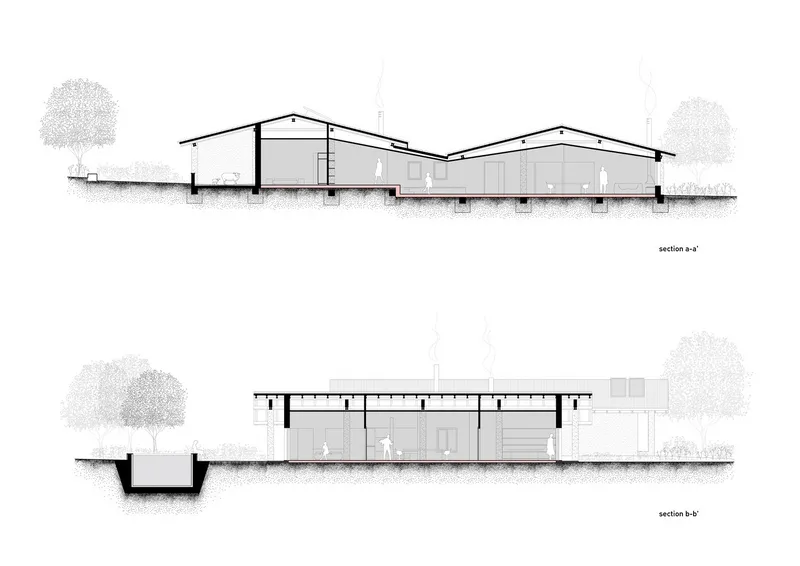
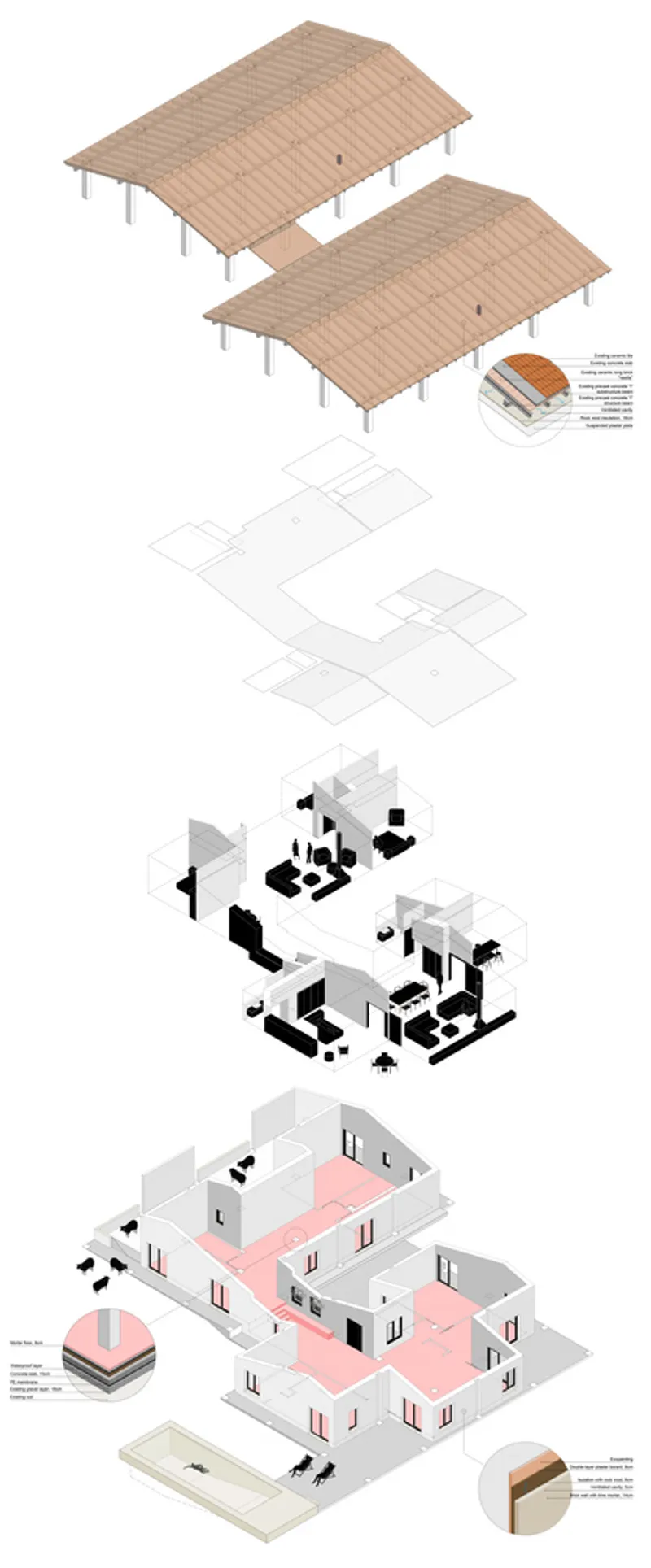
Rather than erasing the past, Cas Sestadors celebrates it. The house is conceived as a fluid, responsive body that flows through and around the grid of robust concrete columns inherited from the original farm buildings. These elements are absorbed into the design—centralized in some spaces, pushed to the periphery in others—revealing the inherent poetry of the site’s structural logic.
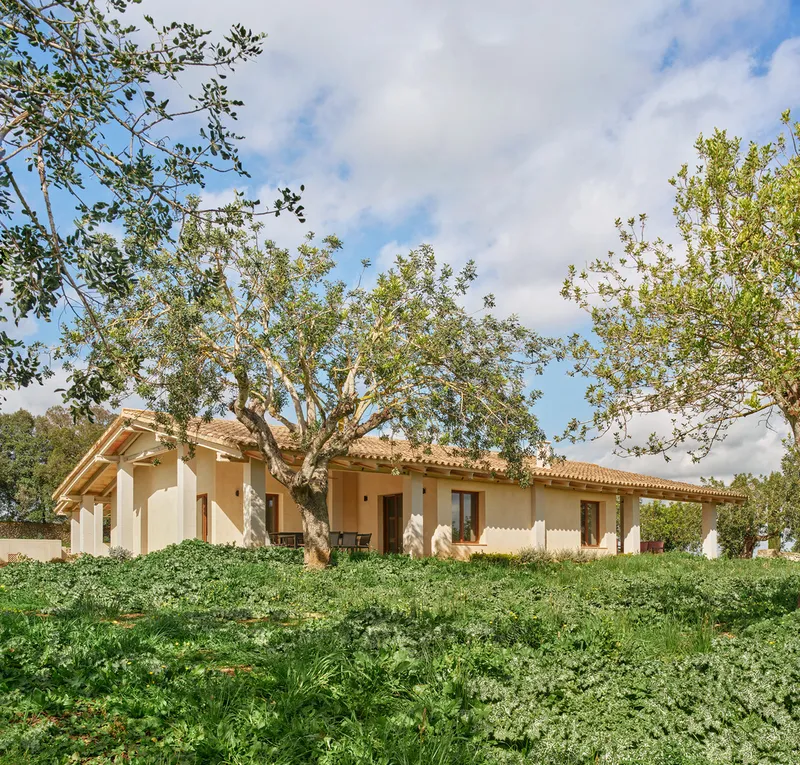
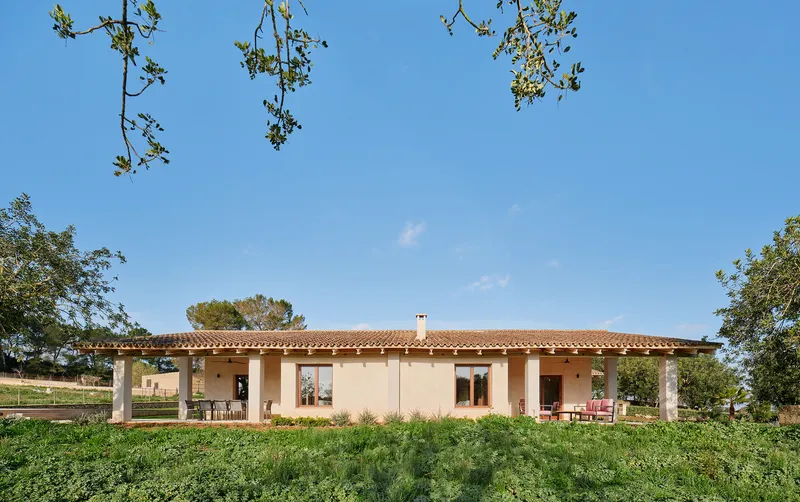
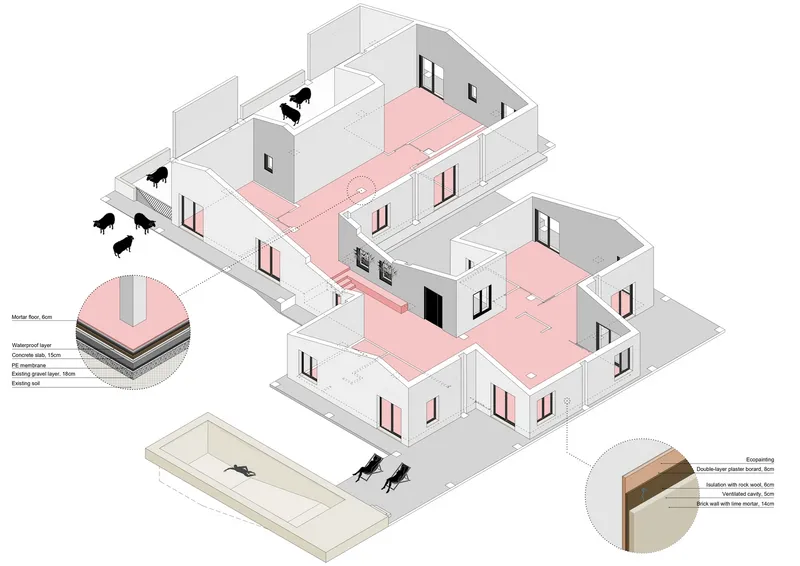
The intervention enhances this legacy through a new ventilated sandstone skin that preserves thermal continuity while visually grounding the architecture in the Mallorcan landscape. This porous boundary between inside and outside enables the architecture to breathe and adjust, elevating what was once utilitarian into a warm, living environment.
A Domestic Cloister Anchored in Ritual
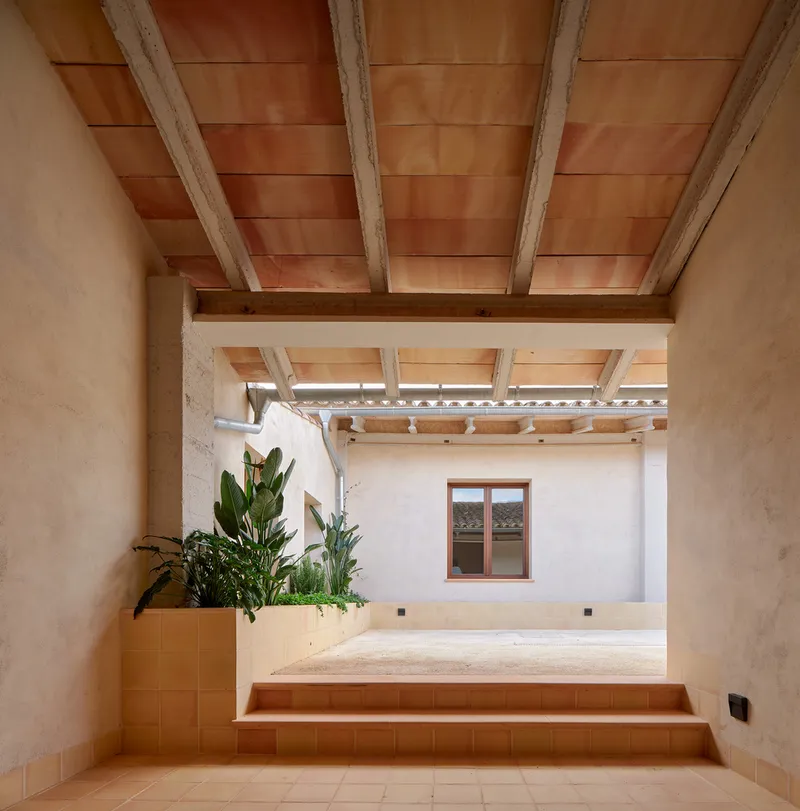
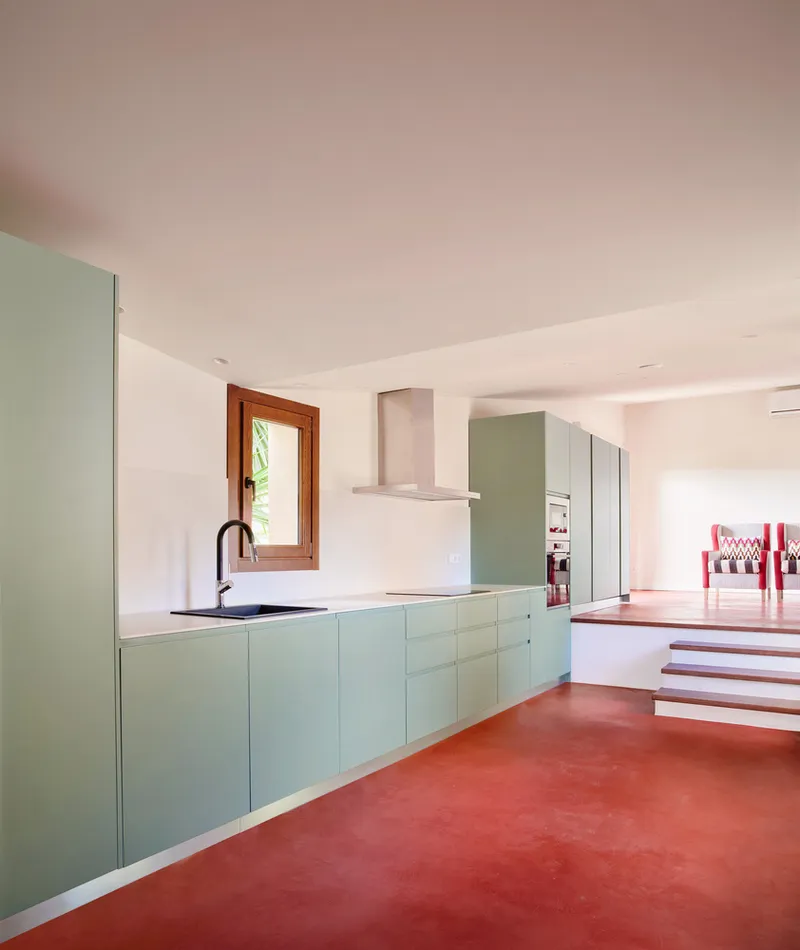
At the threshold of the house, a cloister emerges—a subtle architectural gesture formed by a bridge between the two former sheds. This space serves as both an entry courtyard and an informal kitchen, embodying Mediterranean living through its role as a daily ritual hub. It’s a space of gathering, of nourishment, and of rhythm—“three times a day,” as the architects describe it—a vital core where the domestic and communal intersect.
This layering of functions transforms the kitchen into the spiritual and social center of the home. More than a transitional zone, it becomes the axis around which life rotates, anchoring movement and activity with architectural clarity.
Southward Expansion: Terraces, Porches, and a Garden Pond
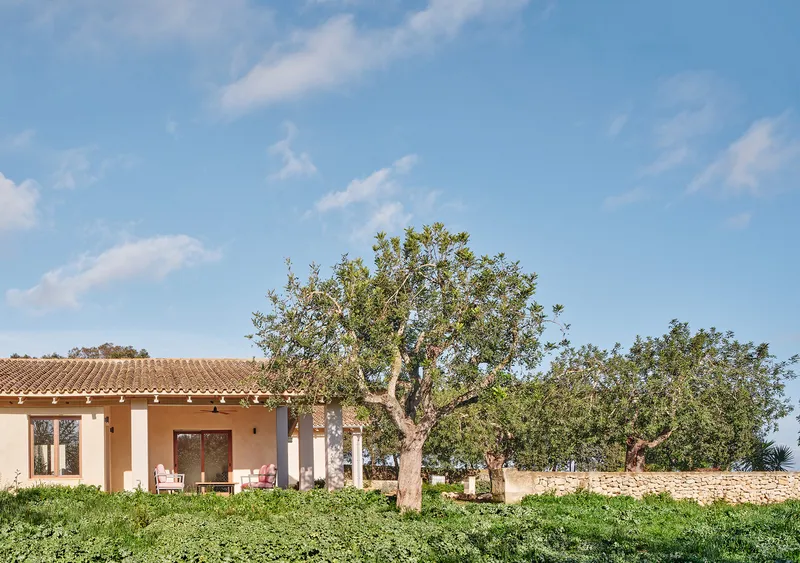
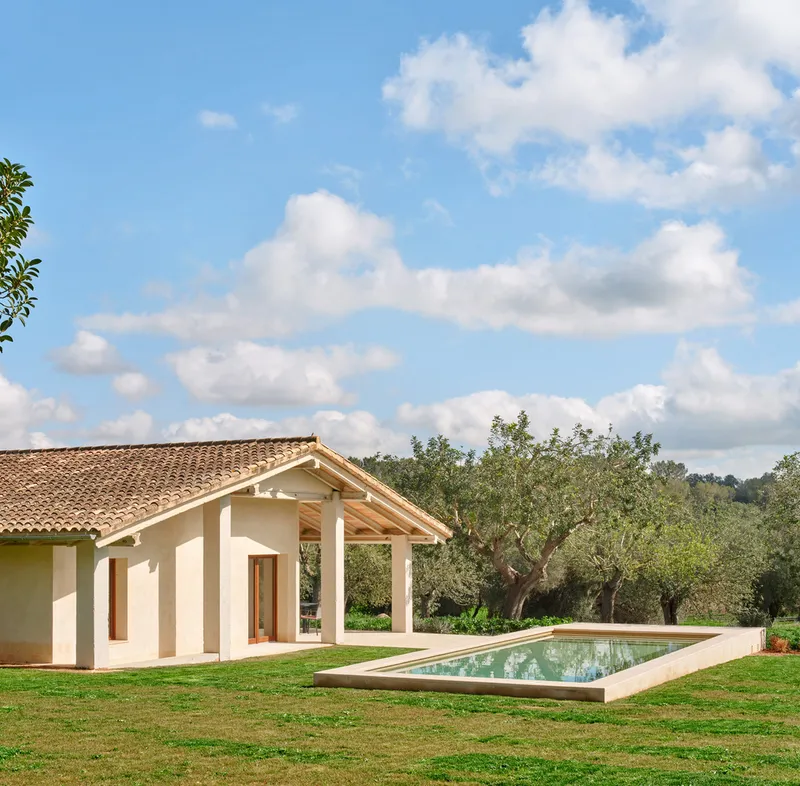
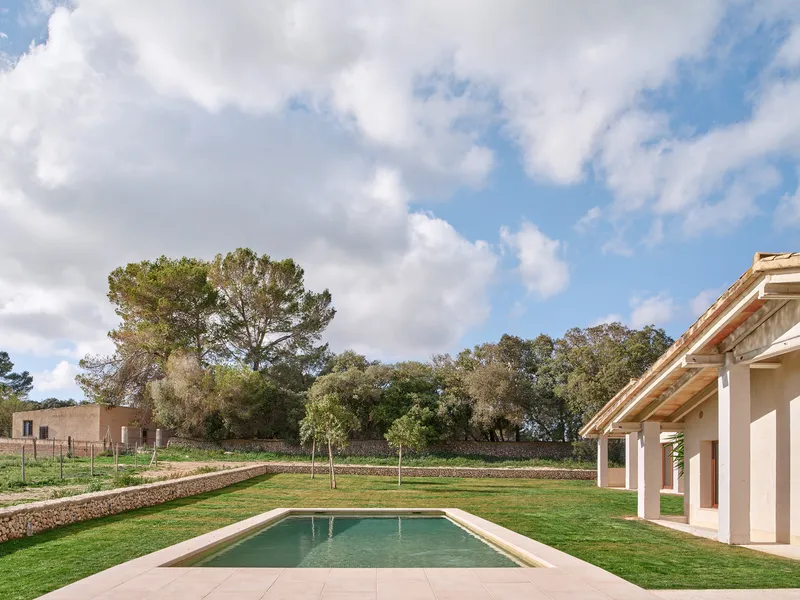
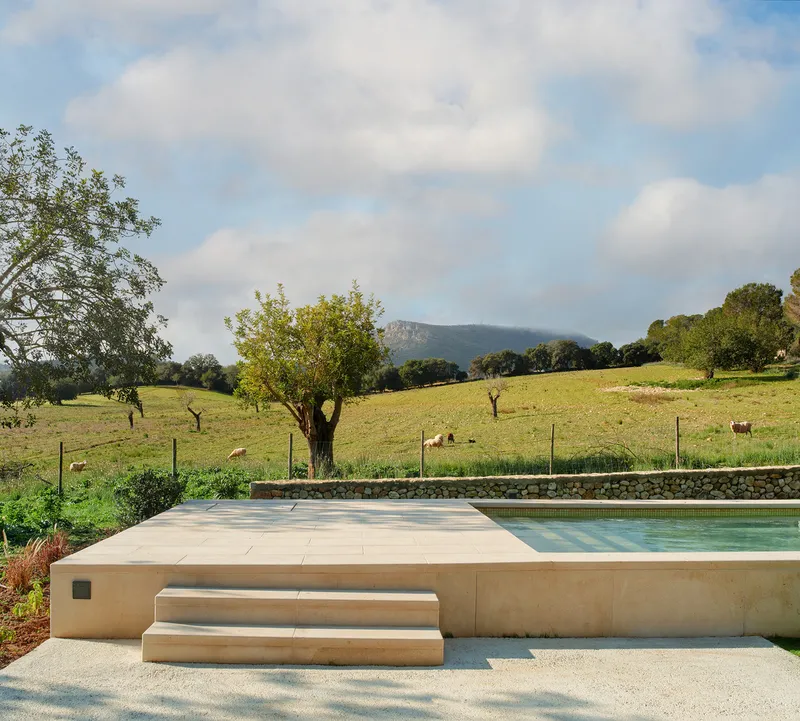
To the south, the house unfurls with generosity. Terraces and porches flow seamlessly toward a pool disguised as a traditional garden pond, inspired by the qanawat irrigation systems of nearby Son Trobat. These water networks, dating back to the Middle Ages, speak of endurance, sustainability, and Mallorcan agrarian history.
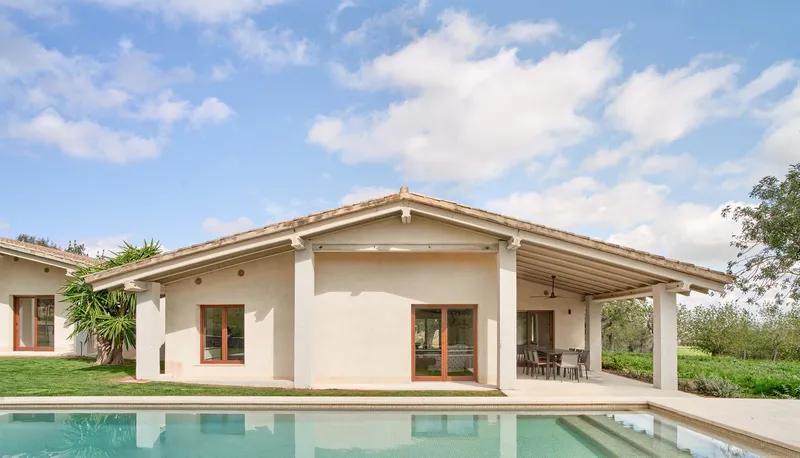
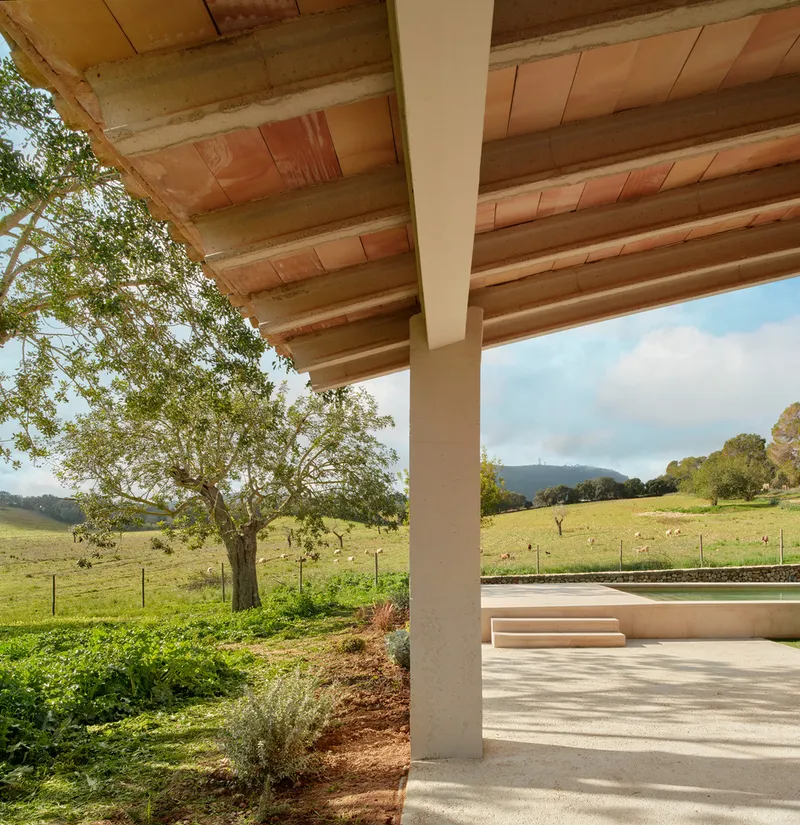
This subtle integration of water into the landscape further roots the architecture in its surroundings. The pool, framed by rustic stone and shaded pergolas, becomes both a place of leisure and a cultural gesture—blurring the line between architecture and landscape, utility and poetry.
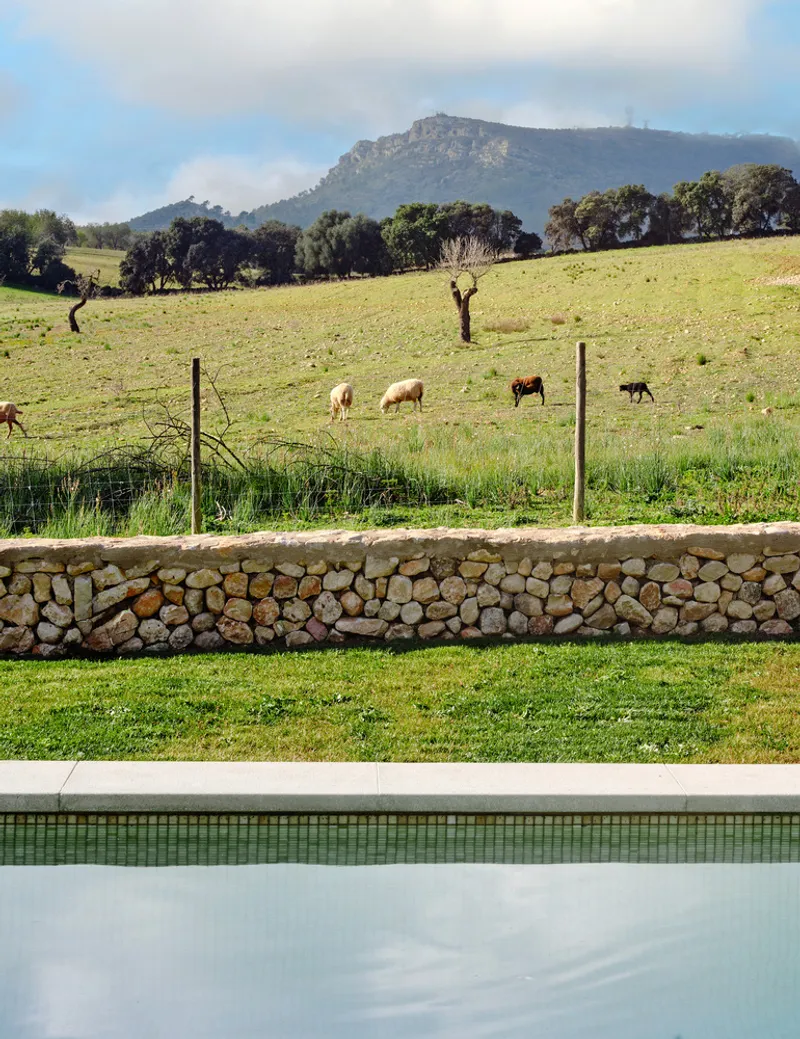
Twin Living Rooms and Polarized Intimacy
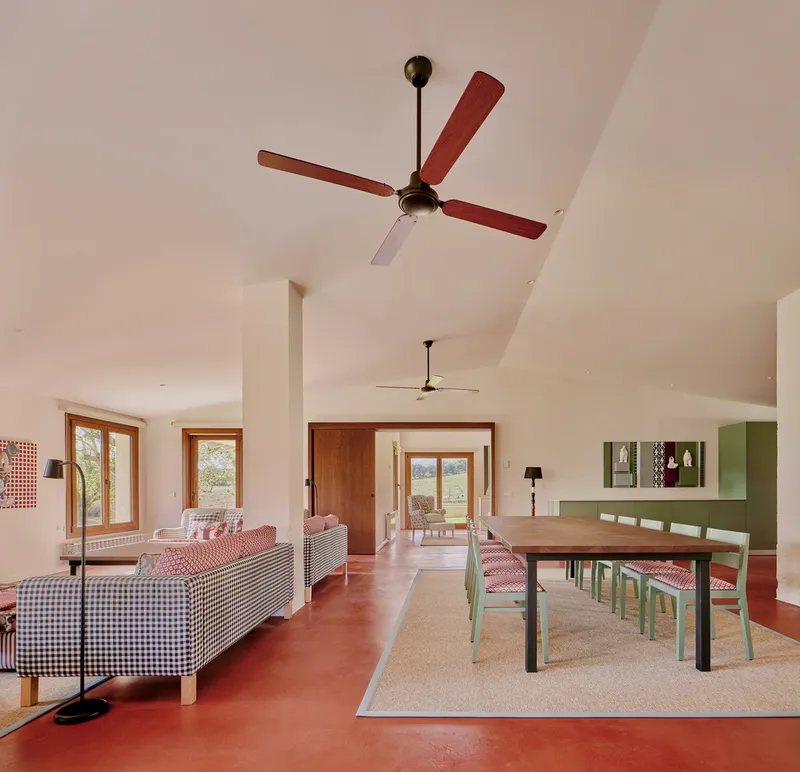
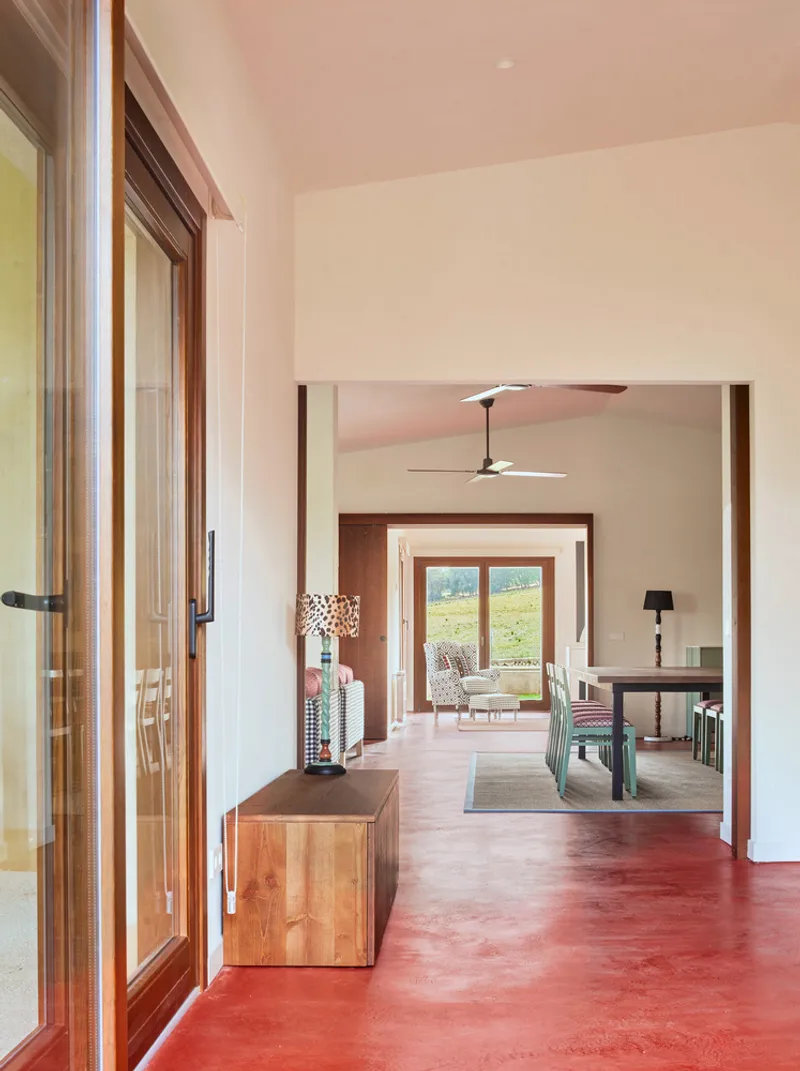
Cas Sestadors unfolds along two distinct axes. Each of the former sheds now contains its own living room, with personalities shaped by orientation. The northern room is introspective, intimate, and contemplative, featuring a small stove and spaces for reading. In contrast, the southern living room opens outward, lively and bright—designed for conversation, communal meals, and social interaction.
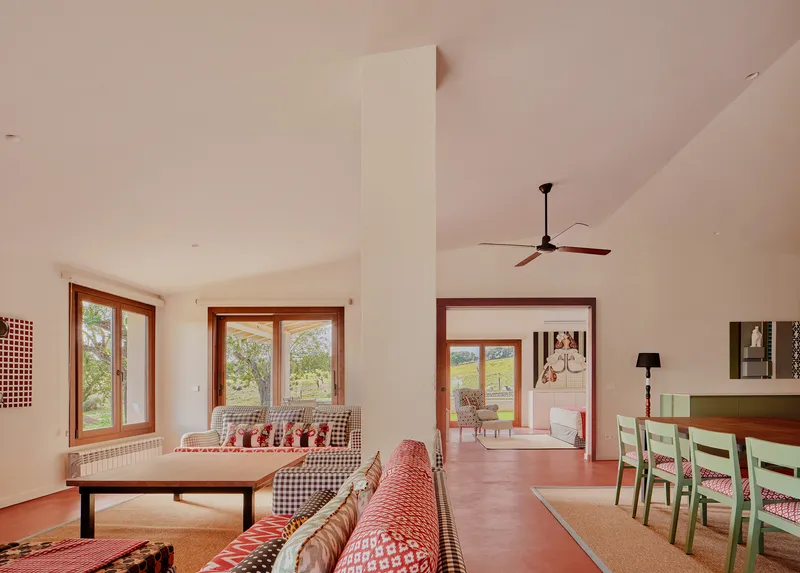
This spatial polarity reflects a thoughtful domestic choreography, offering quiet retreat and vibrant exchange in equal measure. The layout ensures that each zone of the house responds not only to cardinal orientation and views but also to daily rhythms and human needs.
Bedrooms Framed by Carob Trees
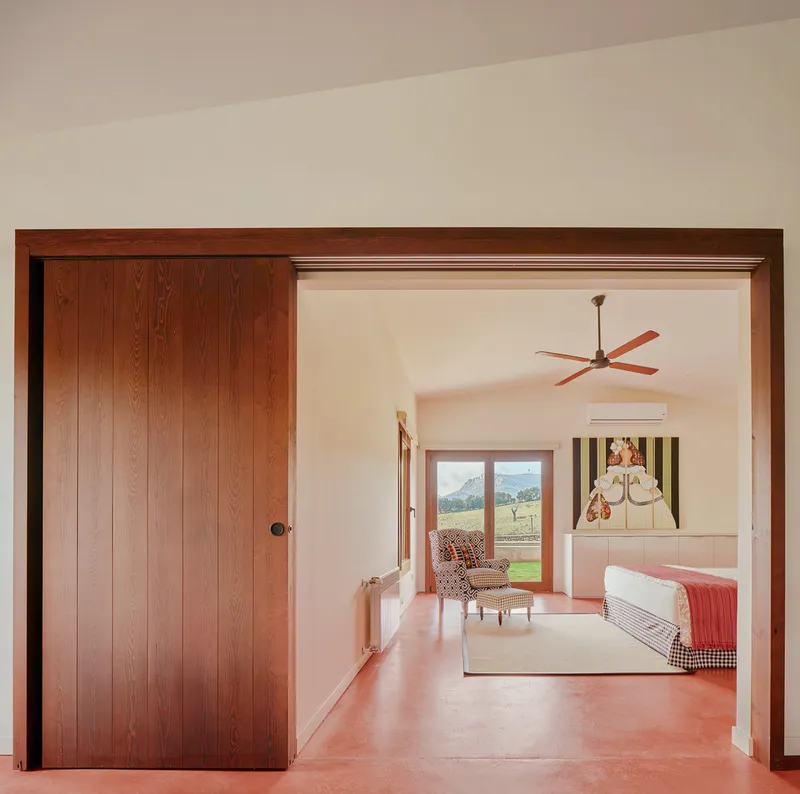
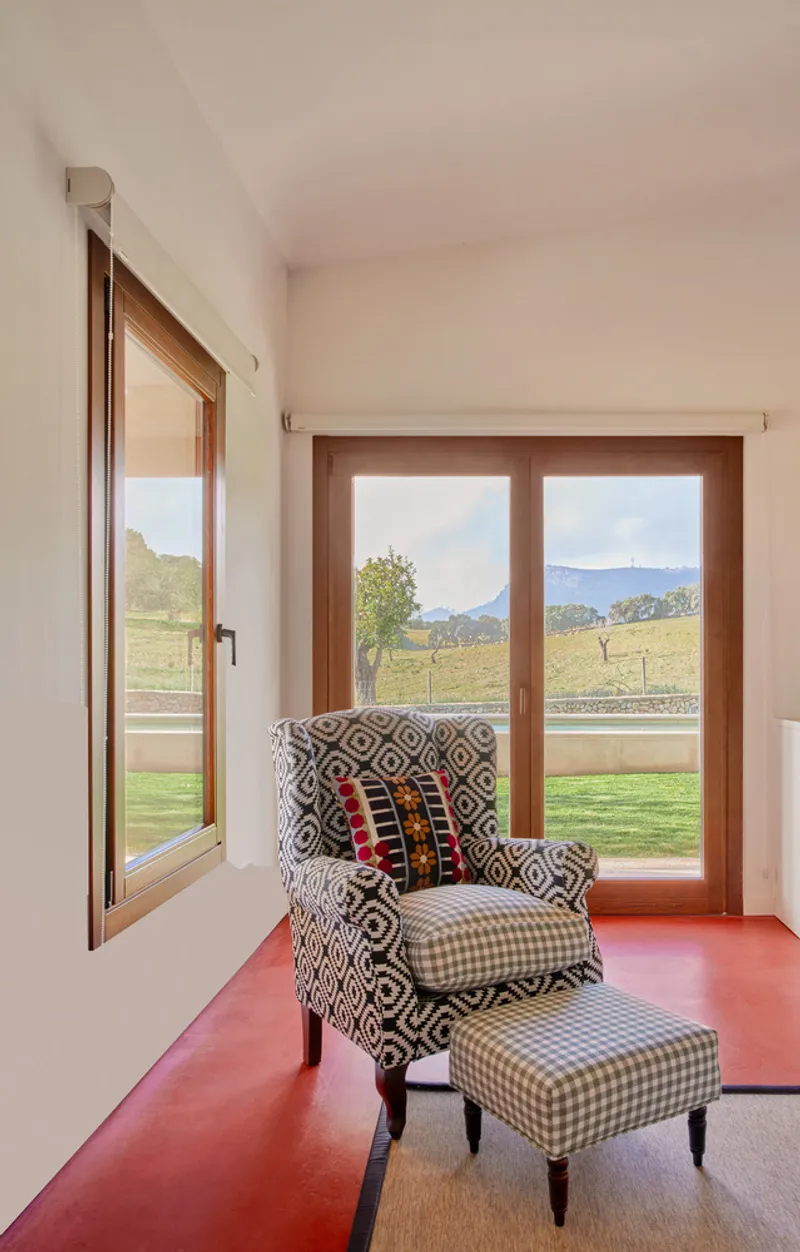
At the outermost edges of the plan—quietly distanced from the active core—are the bedrooms: one for friends, one for children, and a master suite. Each is positioned to soak in the expansive views of the surrounding carob tree forest. These sleeping areas feel as though they’ve been gently absorbed by the landscape itself, offering immersive privacy without disconnecting from the architectural narrative.
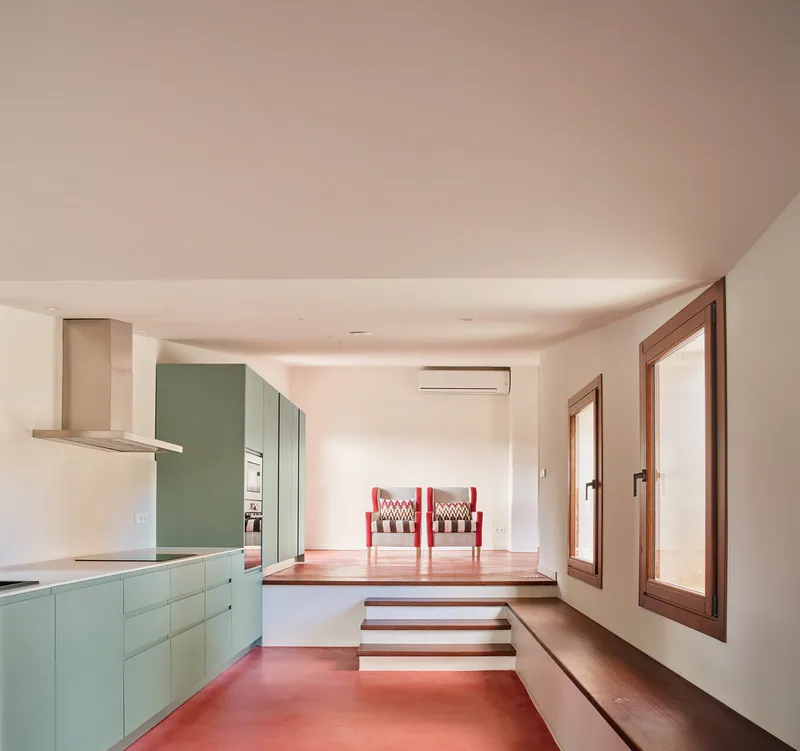
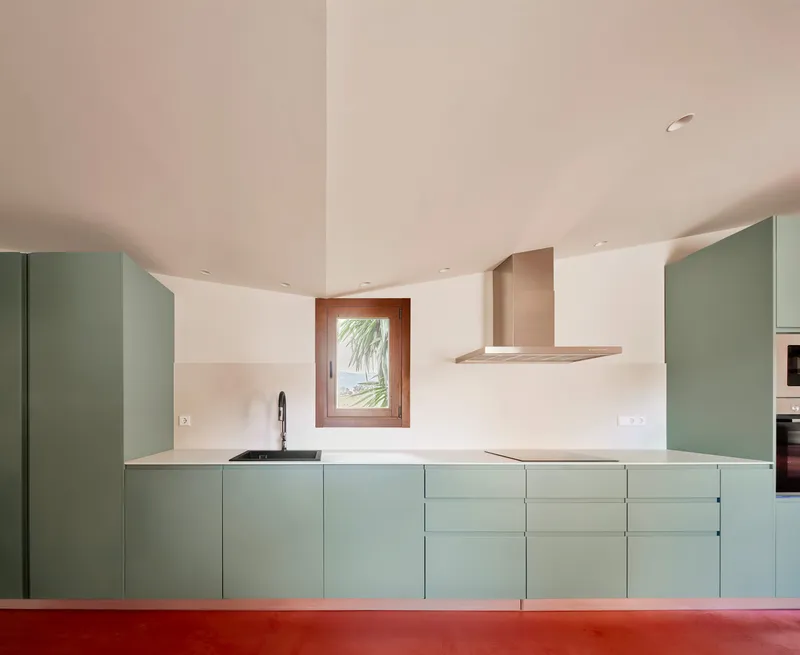
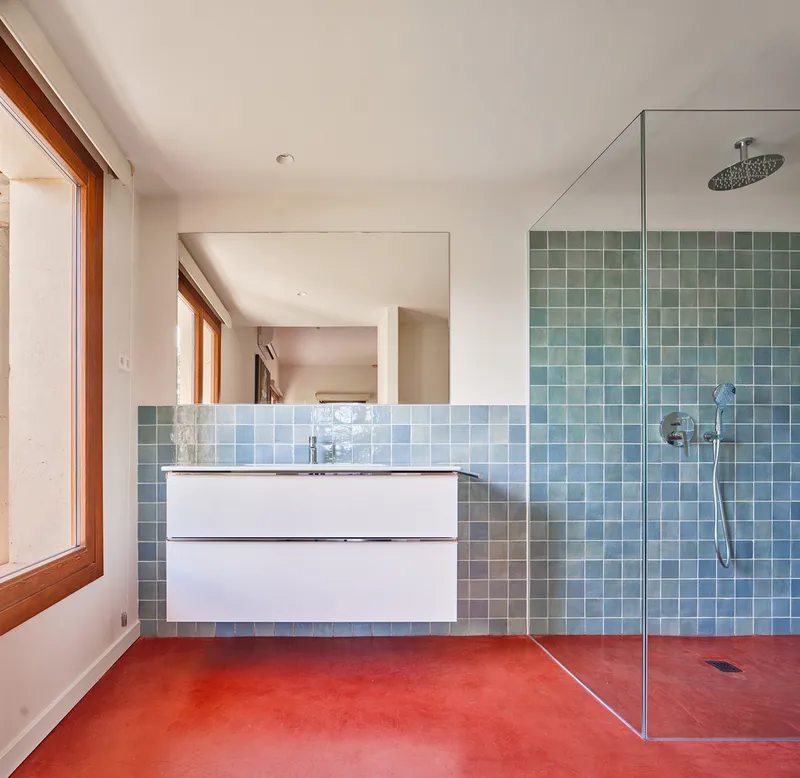
Large windows frame rural scenes as living paintings. The architecture amplifies, rather than competes with, the natural context, turning views into a design element that shapes mood, light, and the rhythm of each room.
A Deeply Rooted Contemporary Rural Home
Cas Sestadors is not a nostalgic reproduction of Mallorcan heritage, but a contemporary rural house renovation that translates agrarian memory into modern spatial language. Its restrained material palette, precise tectonics, and attentiveness to place create a quiet yet powerful architectural statement—one that blends the past and the present with poetic clarity.
This project by MIEL Arquitectos exemplifies how sensitive renovation can extend the life and meaning of rural architecture. It embodies an ethos where design arises not from imposition but from listening—to place, to history, and to the enduring rhythms of rural life.




Popular Articles
Popular articles from the community


The Musturak Paradise: Senior Living Architecture for a Connected Future in Temara, Morocco
The Musturak Paradise reimagines senior living architecture in Temara via private homes, social spaces, culture, community, and shared care.

The Earth Pod: 3D Printed Homes for Resilient Refugee Communities
The Earth Pod reimagines refugee housing through 3D printed homes made from clay, combining resilience, self-sufficiency, and rapid shelter.

Hill & Cross Opera: Sculptural Opera House Architecture Shaped by Tallinn’s Landscape and Identity
Hill & Cross Opera reimagines opera house architecture in Tallinn through its sculptural hill, civic plaza, glass wave and a luminous cross.

Co-life: Sustainable Architecture for Age-Friendly Community Living
Co-life reimagines sustainable architecture for seniors through courtyards, rammed earth, shared gardens, and spaces designed for belonging.

Similar Reads
You might also enjoy these articles

FAMM Arquitectura Organizes Ten Villas Around Courtyards and Jungle in Nosara, Costa Rica
El Molino pairs two elongated volumes with deep overhangs and timber louvers to build a compact coastal community five minutes from the beach.
Oscar Niemeyer's Ibirapuera Park Pavilions Define São Paulo's Cultural Identity in Concrete and Curve
A constellation of modernist volumes set within São Paulo's most important urban park, conceived for the city's 400th anniversary in 1954.
How Henri Picq's 1889 Paris Pavilion Traveled 11,000 Kilometers to Become Santiago's Artequín Museum
A prefabricated iron and glass pavilion built for the Paris Universal Exposition found a second life as a children's art museum in Chile.
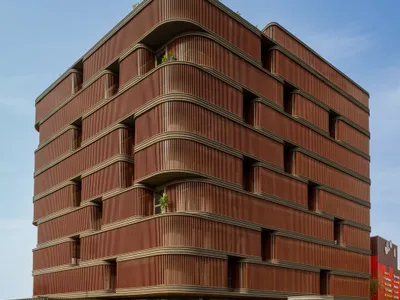
Sanjay Puri Architects Wraps a Jaipur Office Tower in Capsule-Shaped Green Buffers
A nine-level climate-responsive workplace near Jaipur Airport uses stacked planter terraces and aluminium screens to fight 40°C heat.

Explore Architecture Competitions
Discover active competitions in this discipline



Challenge to reimagine the Iron Throne


Photograph architecture without architects


Illustrate the lost glory of Angkor Wat - Render Challenge


Design challenge to reuse E-waste
Comments (0)
Please login or sign up to add comments
No comments yet. Be the first to comment!