

Casa de Albergue: Redefining Sustainable Architecture in Mexico City
An exploration of Casa de Albergue's sustainable design and cultural integration in Mexico City.


The primary intent behind Casa de Albergue is to create a boutique hostel that prioritizes living space over working areas, making it ideal for extended stays. The design ensures adaptability, offering comfort and convenience at a fair price. Tailored for a new generation of tourists, the hostel emphasizes privacy, engagement, and the harmonious integration of open and closed spaces.
The design concept is inspired by Mexico City's diverse cultural legacy, created by Srishti Khatwani, Madhavi Kadam, Samruddhi Shinde, Swarangi Dharmadhikari, Winner entry of Uncommon competition combining indigenous, European, and architectural influences. The triangular form, a significant element in ancient Mexican civilizations, symbolizes the three powers of nature and is central to the design's concept.
Form Development
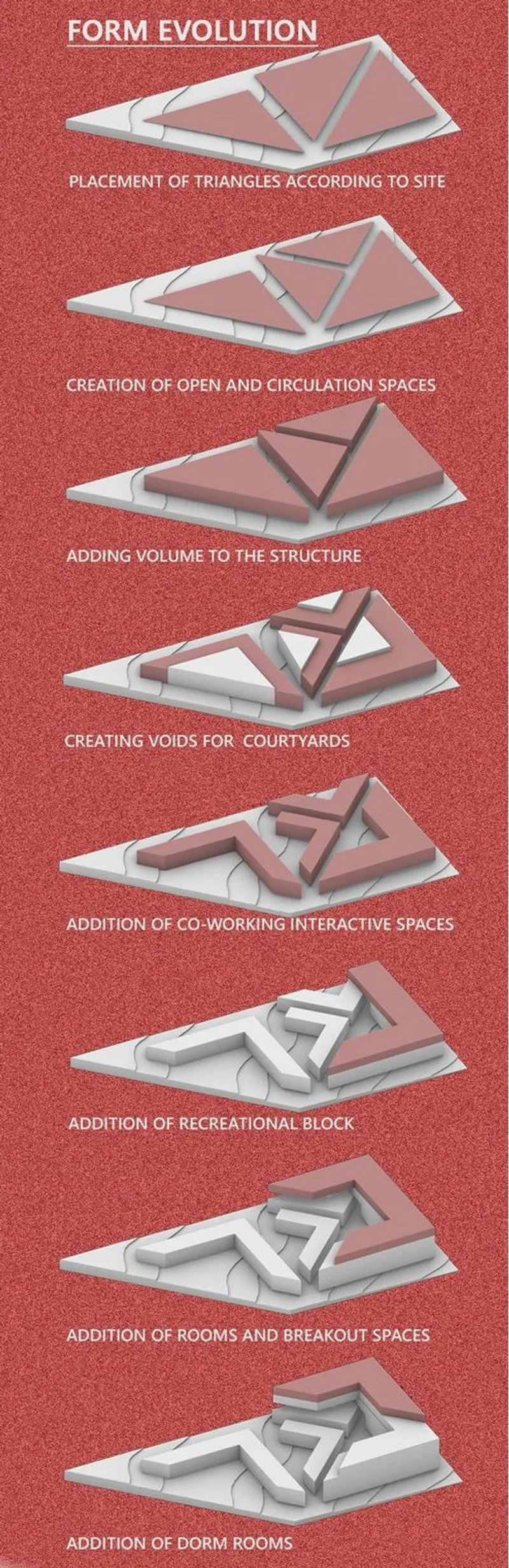
The development of Casa de Albergue's form revolves around the strategic use of triangles. This geometric shape, rich in cultural and historical significance, was the starting point for the project's development. The architects employed a compact arrangement of triangles to achieve a balanced design. By eliminating non-functional parts, they created open and circulation spaces, each serving a specific purpose. This thoughtful planning resulted in a dynamic structure where different functions are seamlessly integrated into the most suitable parts of the overall form.
Spatial Characteristics
The spatial characteristics of Casa de Albergue are deeply rooted in Mexican culture and architecture. The design heavily incorporates courtyards, arches, and materials that resonate with the local environment.
Courtyards
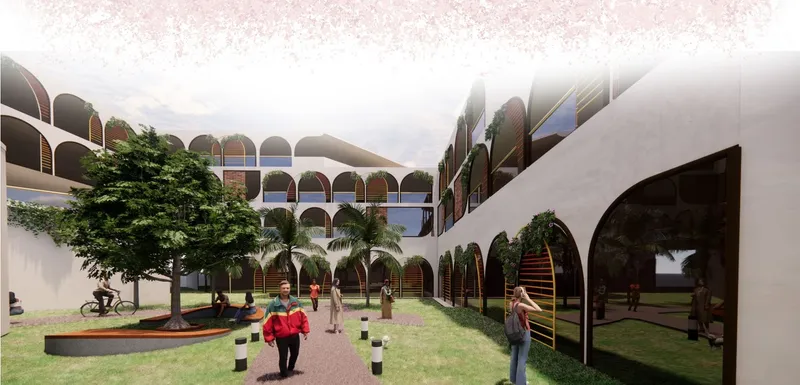
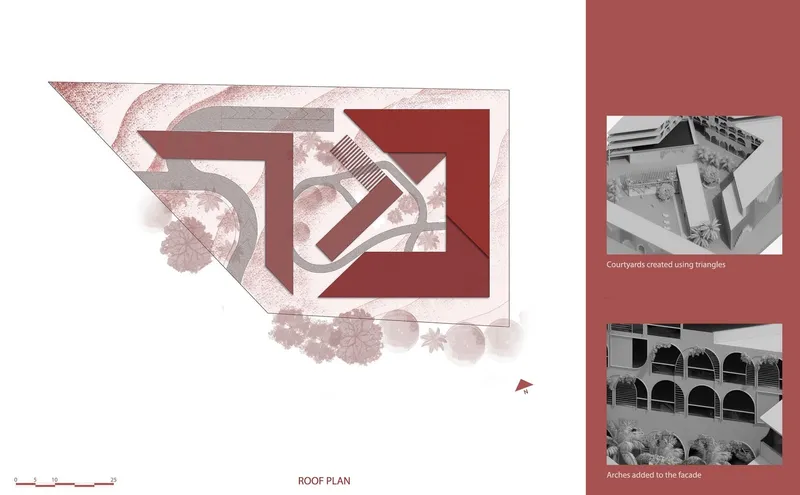
Central to Mexican architecture, courtyards facilitate a seamless transition between indoor and outdoor spaces, fostering a sense of community and providing relief from the hot weather. They honor the natural beauty and customs of Mexico while enhancing the overall living experience.
Arches
The use of arches in the design pays homage to Mexico's architectural tradition, symbolizing national identity and cultural pride. These elements add aesthetic value and functional benefits, contributing to the building's ventilation and light management.
Sustainability
Sustainability is a core principle of Casa de Albergue's design, addressing the environmental challenges faced by Mexico City. The architects implemented several strategies to enhance the building's sustainability:
Ventilation
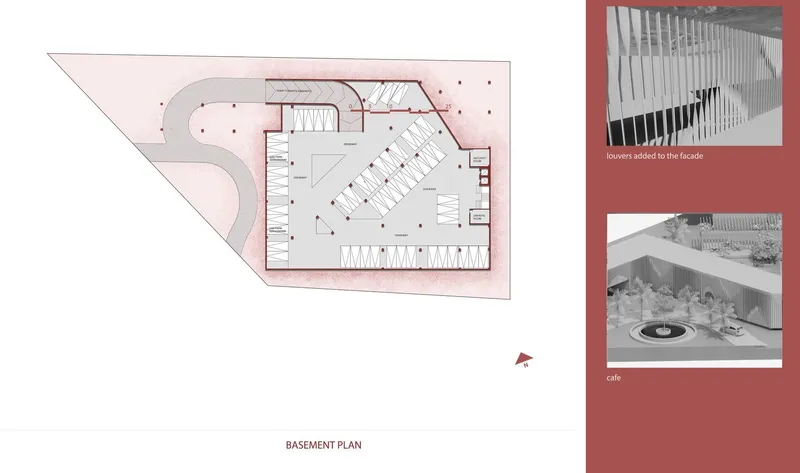
The twisted louvers create triangular patterns that represent Mexican culture and provide a unique visual experience. These climate-responsive elements offer natural light and ventilation, adapting to different climates to maximize occupant comfort.
Materials
The incorporation of terracotta bricks into the facade system is a significant sustainable design choice. These bricks reduce environmental impact, improve energy efficiency, and promote long-term durability. Their natural composition, recyclability, and aesthetic appeal make them an environmentally friendly choice, keeping the corridors cool throughout the day.
Functional Spaces
Casa de Albergue is designed to cater to various functional needs, ensuring a balanced and engaging environment for its inhabitants.
Single/Double Occupancy Rooms
These rooms provide privacy and comfort, accommodating individuals, couples, or families. Each room includes a bed, a working desk, a pantry space, and ample storage.
Dorms
The dormitory areas offer a comfortable and engaging living environment for long-term stays, fostering social interactions while providing the comforts of home.
Breakout Spaces
Strategically placed between rooms, these dynamic spaces encourage collaboration, creativity, and relaxation. They are designed to enhance productivity and foster social connections among guests.
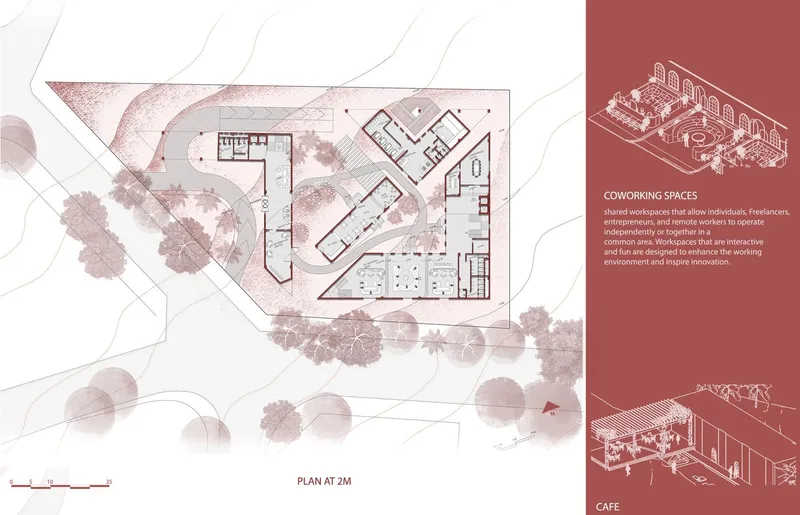
Coworking Spaces
The hostel features shared workspaces that allow freelancers, entrepreneurs, and remote workers to operate independently or collaboratively. These interactive spaces inspire innovation and enhance the working environment.
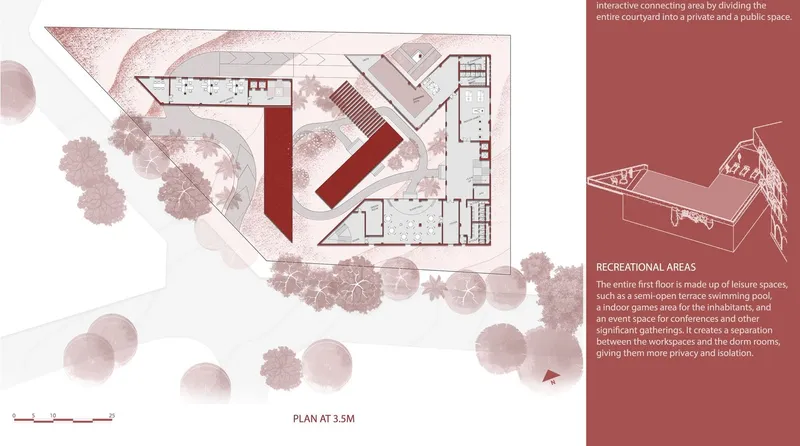
Recreational Areas
The first floor comprises leisure spaces, including a semi-open terrace swimming pool, an indoor games area, and an event space for conferences and gatherings. These areas create a separation between workspaces and dorm rooms, offering privacy and isolation.
Site Analysis and Zoning
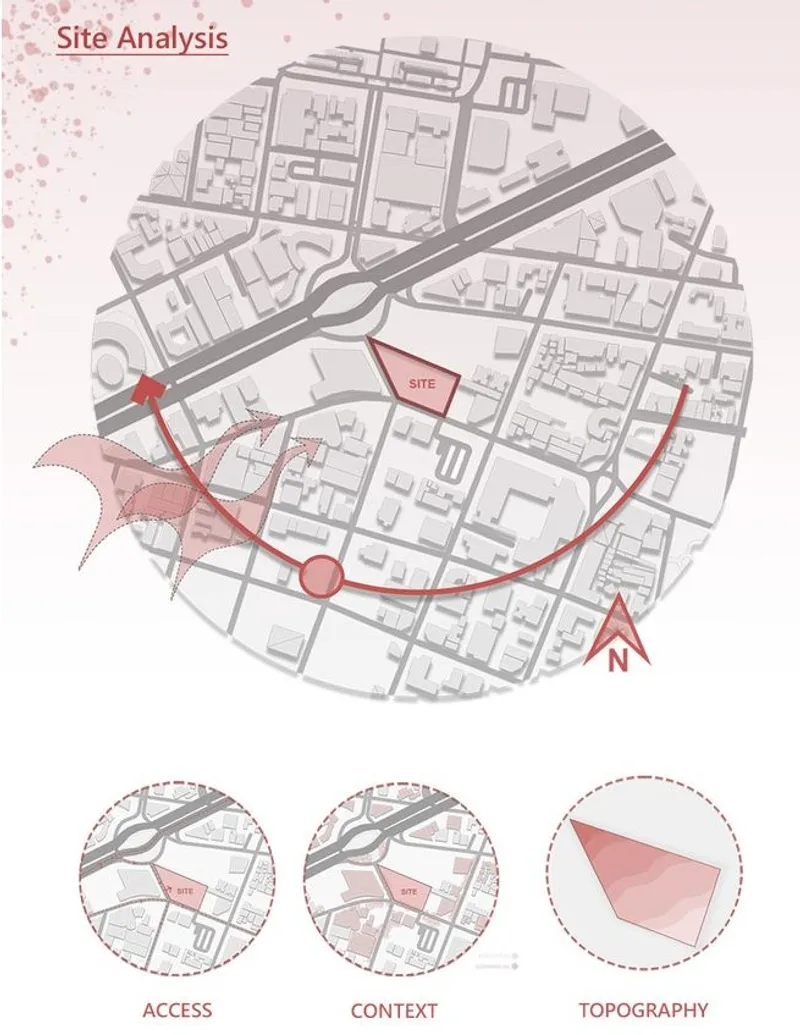
The strategic placement of functional spaces within Casa de Albergue is informed by a comprehensive site analysis. The hostel's location near a junction offers easy access and convenience for travelers. The design takes into account the topography, with the high elevation contributing to cooler temperatures and better air quality.
Dorm Rooms
Positioned on the top floor for enhanced privacy and better experience.
Recreational Activities
Located on the ground floor to serve as a barrier between open spaces and private areas.
Reception and Cafe
Strategically placed near the entrance, forming two courtyards that connect the reception and hotel blocks.
Form Evolution
The form evolution of Casa de Albergue highlights the innovative use of triangles in the design process. The architects meticulously planned each space according to its intended function, resulting in a cohesive and functional structure. The form evolution process included:
- Placement of triangles according to the site.
- Creation of open and circulation spaces.
- Addition of coworking and recreational spaces.
- Integration of dorm rooms and breakout spaces.
Interior and Exterior Design
The interior and exterior design of Casa de Albergue reflect a vibrant and culturally rich aesthetic. The use of colors, patterns, and materials celebrates Mexican heritage and enhances the overall ambiance of the hostel.
Interior Views
The interiors feature interactive and vibrant corridor spaces, a cafeteria, a spa and sauna area, and coworking spaces.
Exterior Views
The facade showcases twisted louvers and arches, creating a visually appealing and functionally effective design.


Popular Articles
Popular articles from the community


David Macias Steps a Doorless Stone and Plaster House Down a Tropical Colombian Hillside
In the humid hills of Colombia, Threshold House replaces the front door with an open void and terraces its 850 m² down the slope instead of fighting it.

Architekt Andreas Gruber Scatters 23 Dark Timber Chalets Across a South Tyrolean Forest Edge
In Molini di Tures, Amonti Chalets breaks a resort into a hamlet of gabled timber houses, with parking, storage and services pushed into the slope.

LT2A and OPEN Architectes Thread a Brick and Glass High School Through a Wooded Belgian Campus
In Braine-l'Alleud, a 3,000 m² wing for Collège Cardinal Mercier pairs pale brick with a glazed colonnade, deferring to a small chapel and a dense wood.

longwave studio Reorganizes a 112 m² Tainan Apartment Around the Daily Routines of a Family and Two Cats
In Tainan, Taiwan, birch plywood, rust-red furniture and a freestanding plaster wall link arrival, storage, work and family life in one apartment.

Similar Reads
You might also enjoy these articles


Vereda Arquitetos Renovates a 40-Square-Meter Apartment Inside Niemeyer's Copan Building
A compact unit in São Paulo's most iconic residential tower gets a material overhaul that pairs exposed concrete with bold blue Formica.

Shakur's House: Exposed Brick as an Interior Organiser in a 168 m² Mashhad Residence
Brick moves indoors in this Mashhad residence, where masonry walls, glass partitions and teal planes sequence a compact home without closing it off.

Day and Night Park: A Time-Based Urban Newsstand in Beijing
A temporary urban newsstand in Beijing blending travel, light, and reading through poetic colors, compact form, and community-focused design.

Modernist Patio Renovation in El Masnou, Barcelona by Oliver Segura Arquitectura + Cebrià Arquitectura
Modernist patio renovation blending tradition and innovation with a movable pool, leveled floors, and Catalan materials in El Masnou.

Explore Mexican Design Competitions
Discover active competitions in this discipline


Comments (0)
Please login or sign up to add comments
No comments yet. Be the first to comment!