
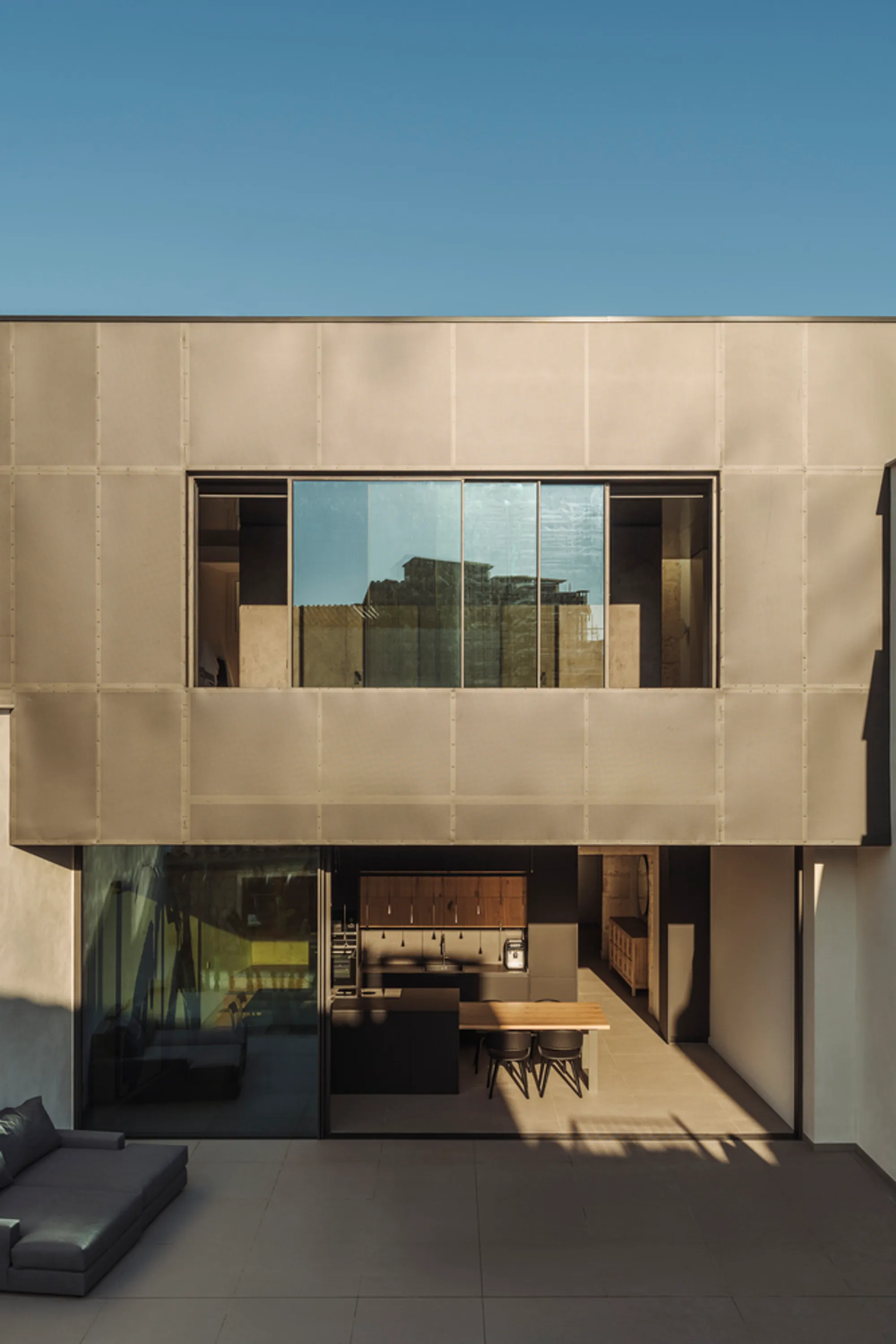
Casa Interstici by NØRA Studio: A Contemporary Renovation Rooted in Tradition
Casa Interstici by NØRA Studio transforms a historic Mallorca home using natural materials, interstitial spaces, and light-filled volumes.


Location: Muro, Mallorca, Spain Architects: NØRA Studio Lead Architects: Marina Munar Bonnin, Rafel Capó Quetglas, Pau del Campo Montoliu, Luca Lliteras Roldán Area: 202 m² Completion Year: 2023 Photography: Ricard Lopez Manufacturers: Germans Santandreu, Tonia Fuster
A Thoughtful Renovation in the Heart of Mallorca
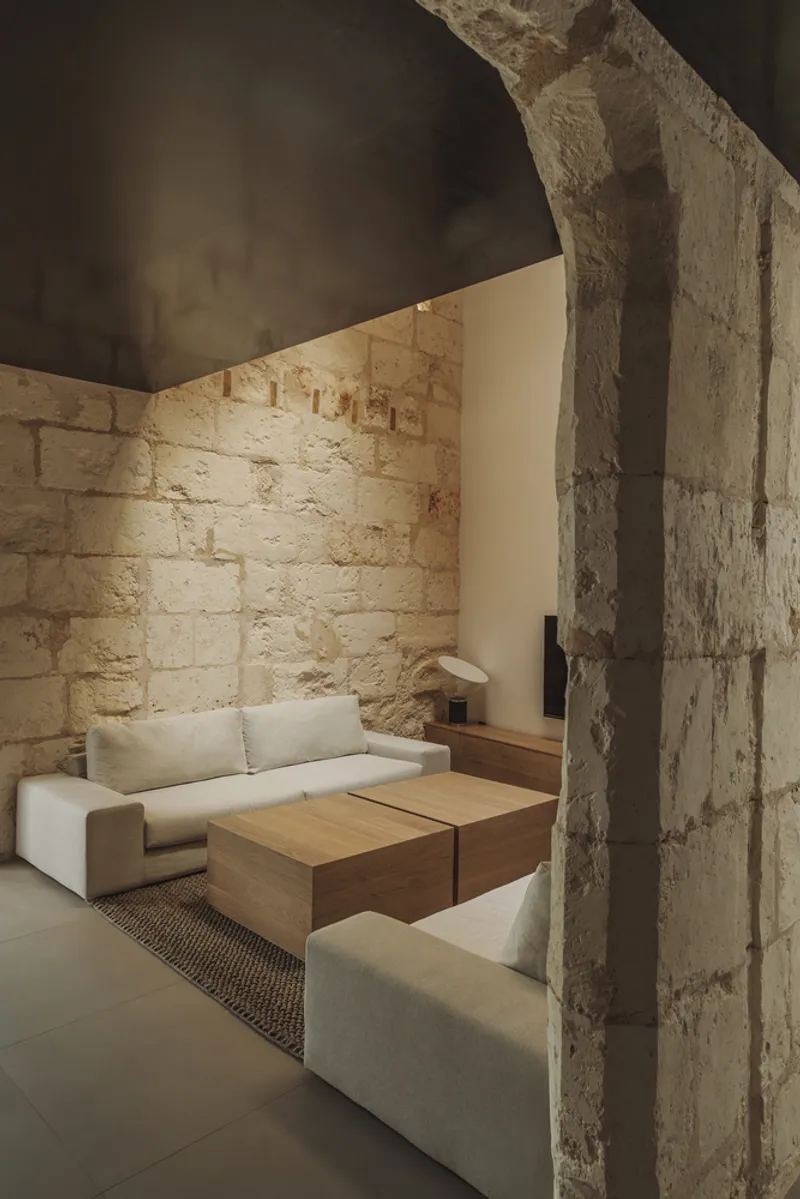
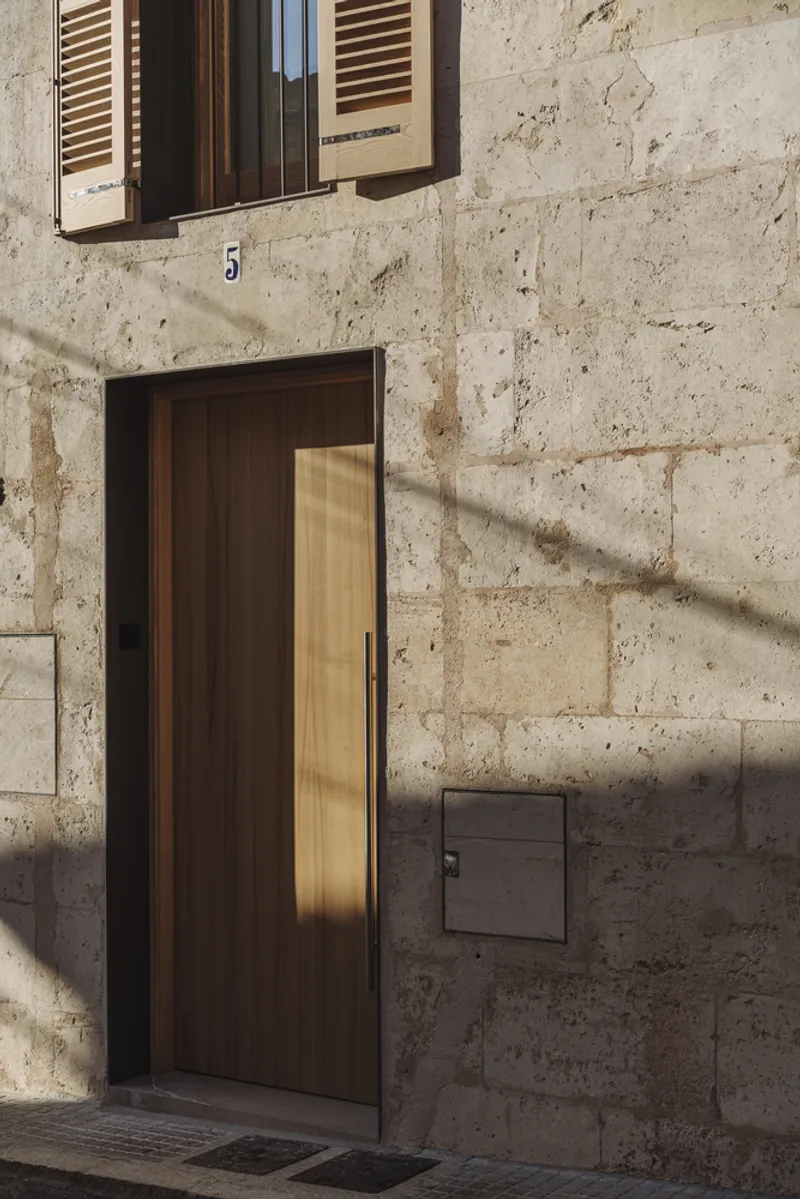
Located on the same historic street as the Church of Muro in Mallorca, Casa Interstici by NØRA Studio is a masterfully renovated three-story house that redefines how contemporary architecture can engage with traditional materials and urban heritage. Framed by a timeless marès sandstone façade, this 202-square-meter residence balances material honesty, spatial clarity, and subtle architectural interventions to create a dialogue between the old and the new.
Interior Palette: Natural Materials and Mediterranean Light
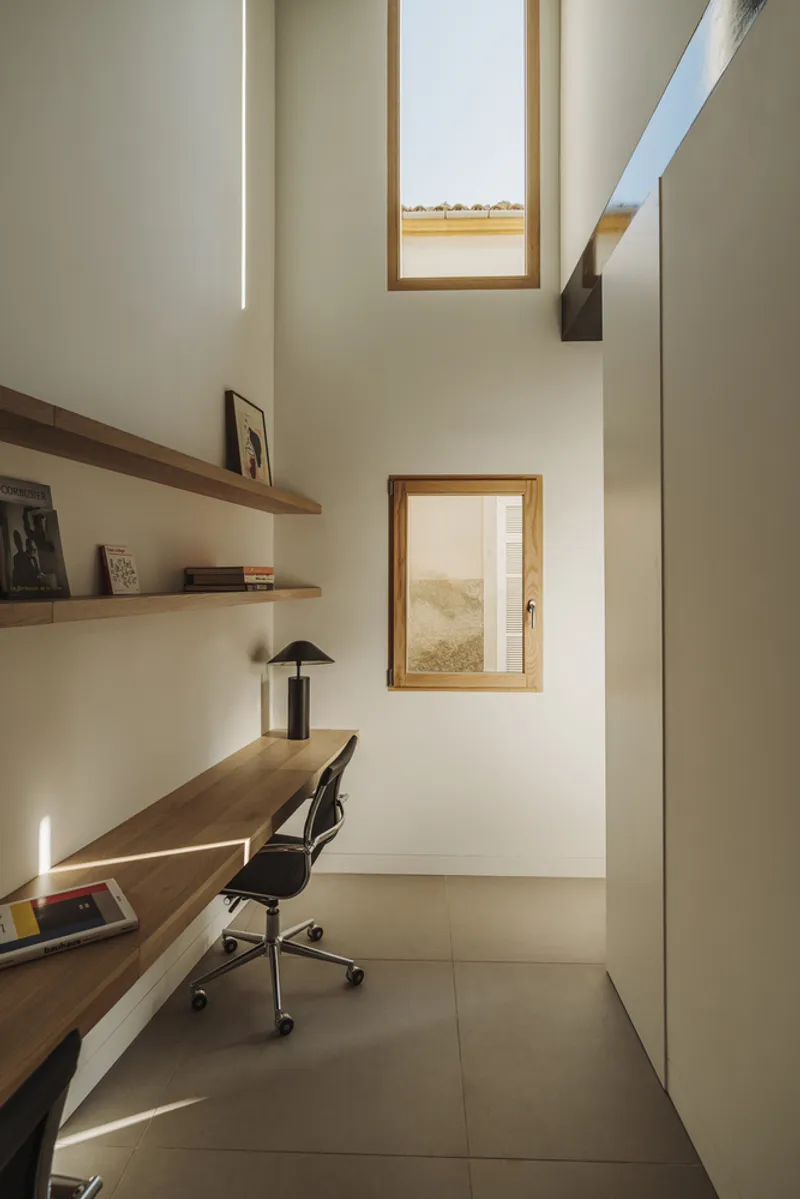
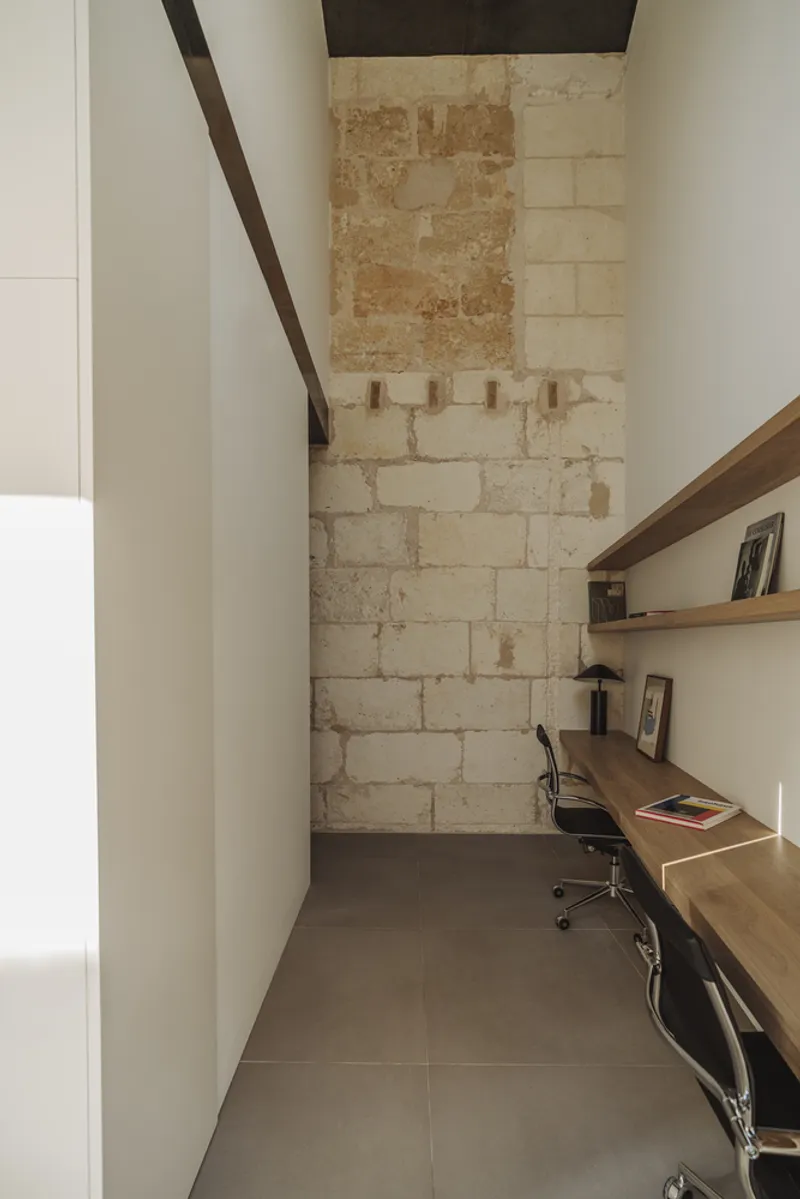
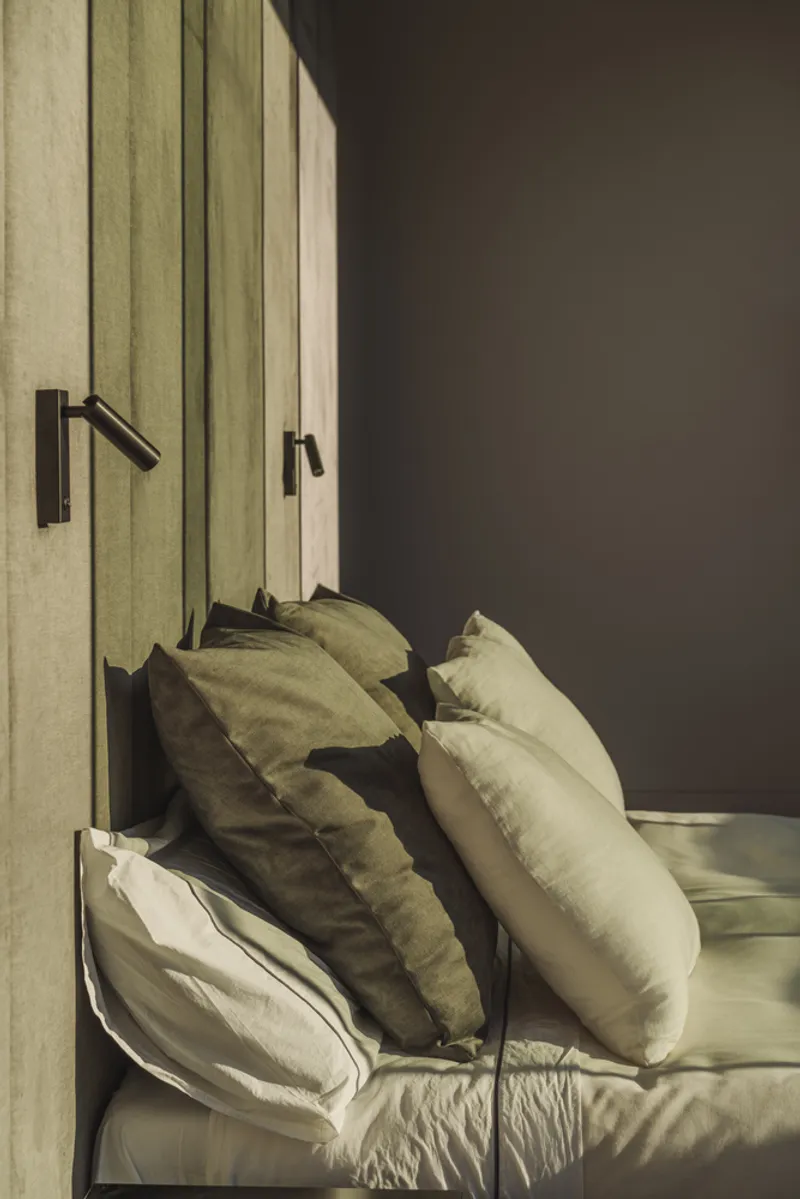
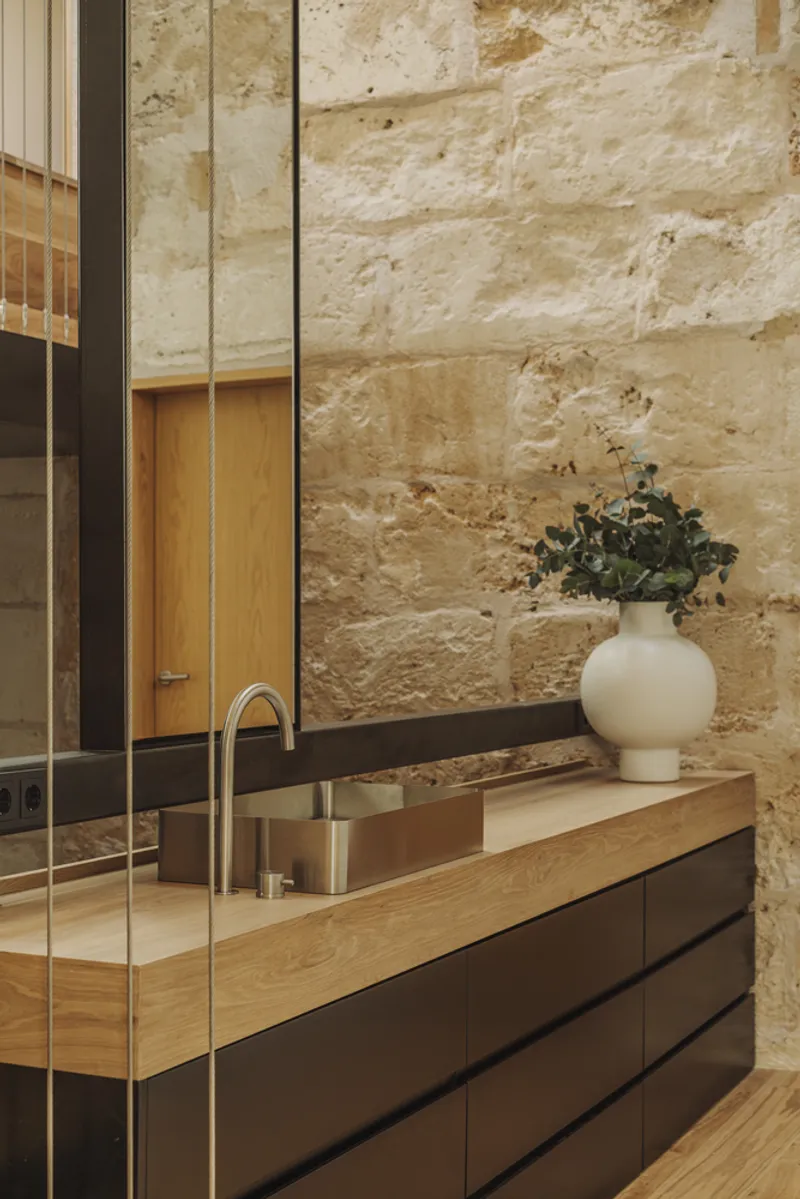
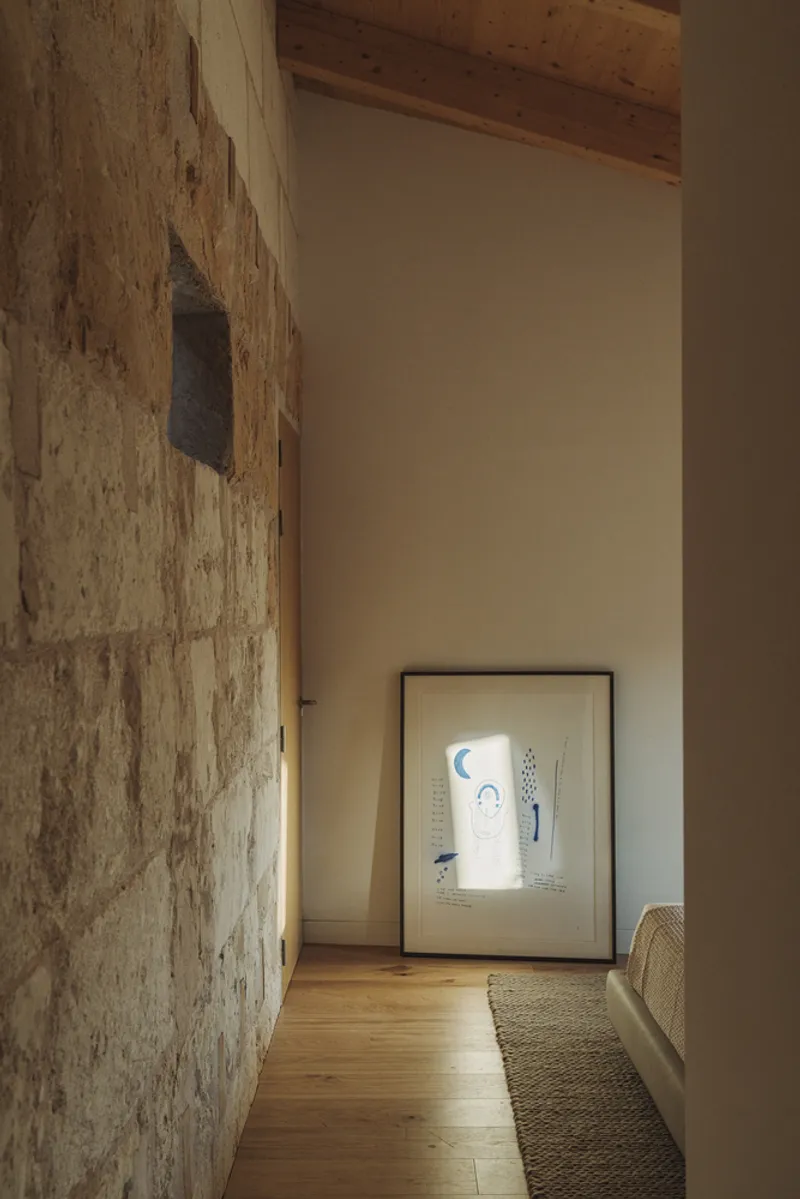
The interior spaces are marked by a neutral color palette, featuring soft beiges, warm browns, and muted oranges. These tones come alive when the Mediterranean sunlight filters through the openings, casting warm highlights on the textured stone walls and wooden floors. The interior design strategy emphasizes harmony with the natural environment and celebrates material authenticity.
Design Strategy: Emptying, Filling, Completing
At the heart of this renovation lies a triadic design approach: emptying, filling, and completing. These architectural actions guide the transformation of the house into a sequence of interstitial spaces that prioritize movement, light, and vertical connection. The main volume serves as the centerpiece, creating a layered experience as occupants move from room to room.
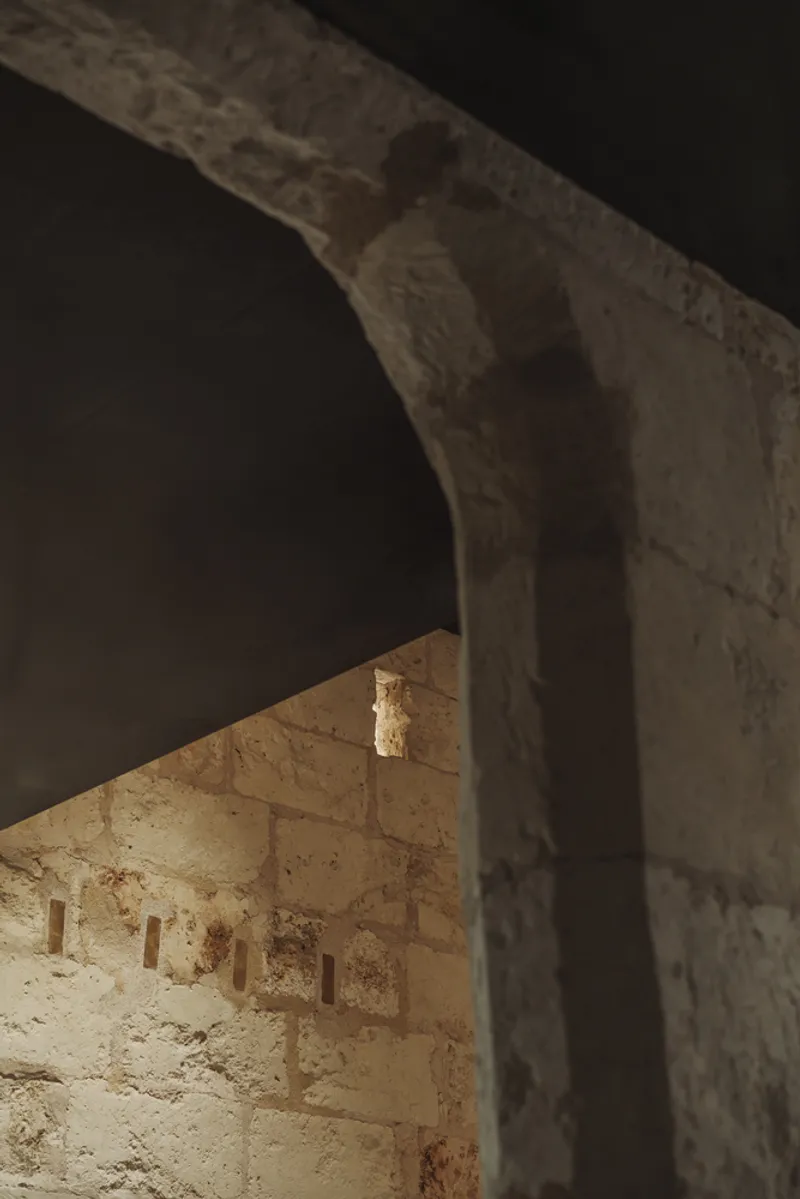
Local sandstone and steel are the two primary materials orchestrating this transformation. Their juxtaposition creates a powerful material dialogue—the rough, earthy quality of the stone contrasting with the sleek, cool finish of the steel—embodying both the historical character of the building and the personal life of its owners.
Spatial Continuity and Light
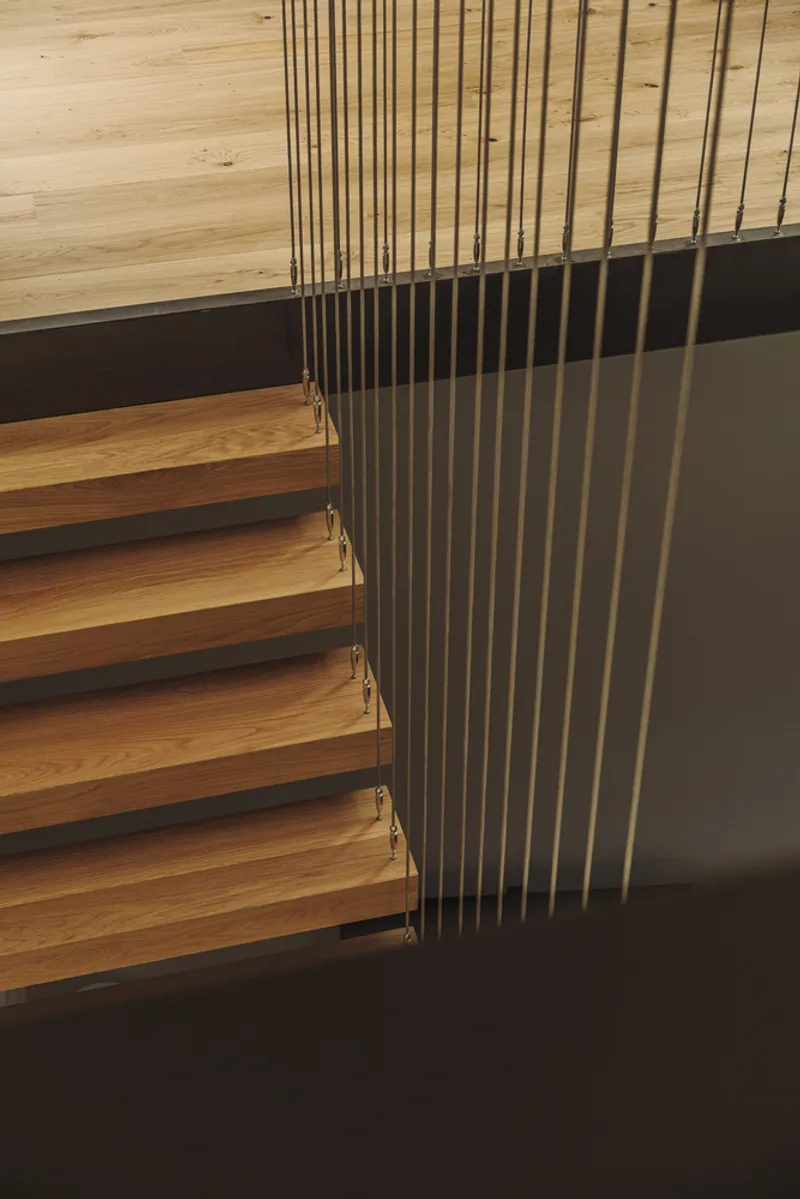
One of the most captivating features of Casa Interstici is its ability to frame light through double-height volumes and strategically placed windows. Upon entry, a service module functions as a central artery, connecting the main studio and the living area, both of which expand upward to welcome light from above. The verticality of these spaces is amplified by intermediate floors that serve as both transitional platforms and visual connectors across the house.
These intermediate levels offer observation points that reveal the interwoven spatial layers—views toward the roof, glimpses of the skylight, and the various textures of the renovated structure. In doing so, the house unfolds gradually, creating a rich spatial narrative full of surprises and moments of stillness.
Rear Façade: A Contemporary Volume in Dialogue with the Past
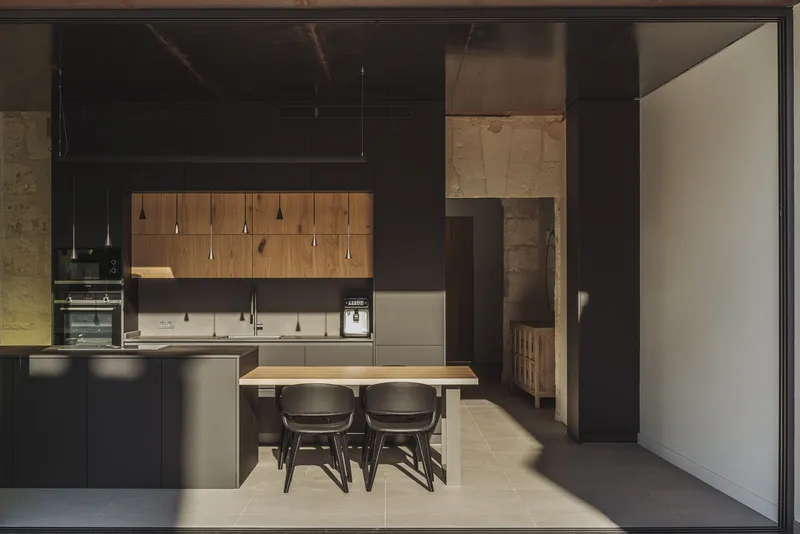
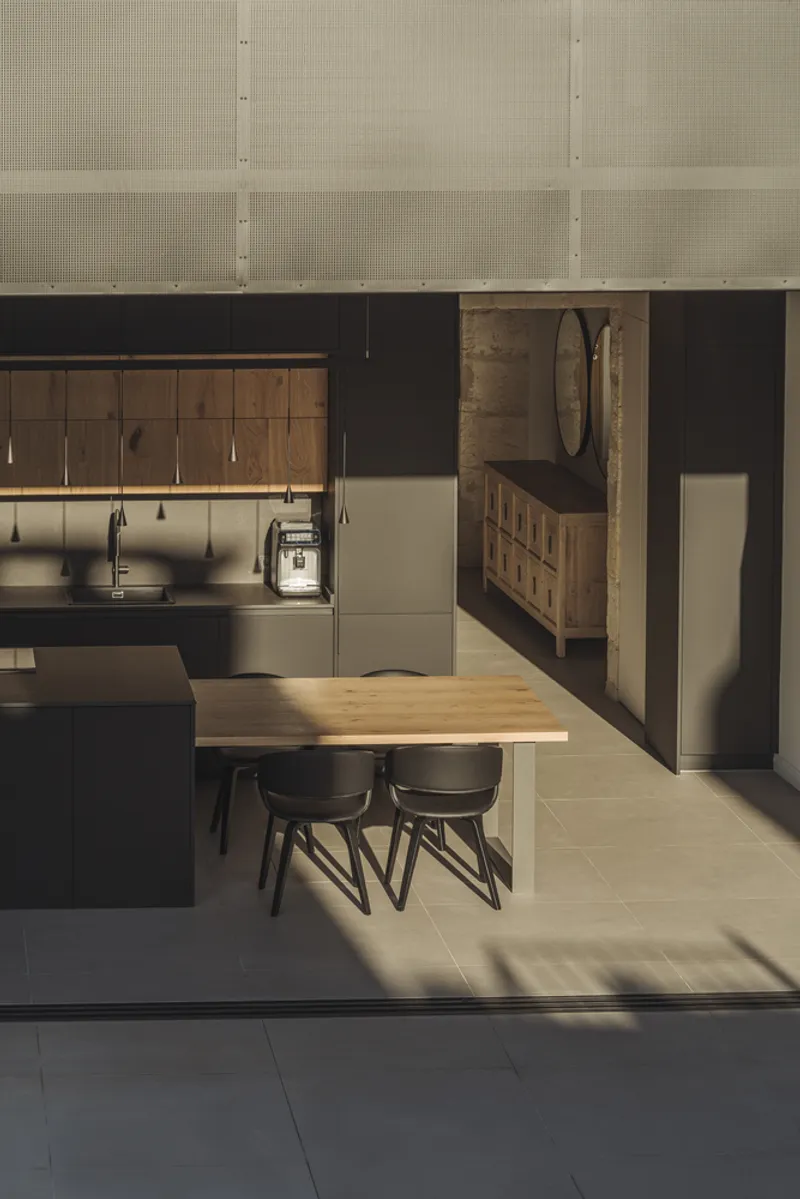
At the rear of the house, a once-insignificant structure has been replaced by a new architectural volume housing the main suite, kitchen, and dining area. This addition is visually distinct from the original structure, deliberately separated by a staircase that acts as a physical and conceptual threshold. The continuity of the flooring between interior and exterior spaces further blurs the boundary between old and new, grounding the modern intervention in the site's original character.



Popular Articles
Popular articles from the community


The Ocean Hive: Sustainable Architecture for a Self-Sufficient Civilization at Sea
The Ocean Hive imagines sustainable architecture at sea, where modular habitats, algae, wave power and ocean waste sustain a growing colony.

Riyadh For All: Intergenerational Urban Design for Active Aging in Rabat
Riyadh For All reimagines urban design in Rabat with intergenerational co-living, adaptive courtyards, and Moroccan cultural exchange today.

The Earth Pod: 3D Printed Homes for Resilient Refugee Communities
The Earth Pod reimagines refugee housing through 3D printed homes made from clay, combining resilience, self-sufficiency, and rapid shelter.

Conexión: Biophilic Design Reimagines High-Rise Living in Hong Kong
Conexión reimagines high-rise living in Hong Kong through biophilic design, green facades, shared spaces, daylight, water and nature within.


Similar Reads
You might also enjoy these articles


Hodi-Mandai Geram
Project Function: Preservation and revitalization of the Intangible heritage and socio-spatial identity of the Hodi by Housing, Cultural Memory Center, Sacred Grove, landscape, local tourism economy


Olio Towers: A Mid-Rise for Performers That Fuses Housing, Rehearsal, and Stage
Located blocks from Houston's Theater District, this modular tower stacks living units around a central performance atrium.

Oasis: Modular Green Housing Carved into Dhaka's Urban Fabric
A shortlisted Plugin Housing entry reclaims unauthorized settlements in Dhaka with stepped concrete volumes, green roofs, and ventilation-driven design.

Black Hole: A Floating Megastructure for the Post-Physical Era
Emiliano Mazzarotto envisions a spherical, self-scaling arena where e-sports, digital hotels, and holographic stadiums replace traditional public space.


Explore Nio Architects Competitions
Discover active competitions in this discipline



Challenge to reimagine the Iron Throne


Photograph architecture without architects


Illustrate the lost glory of Angkor Wat - Render Challenge


Design challenge to reuse E-waste
Comments (0)
Please login or sign up to add comments
No comments yet. Be the first to comment!