
Casa Leria by TAC Taller Alberto Calleja: A Low-Impact Coastal Sanctuary in Puerto Escondido
Casa Leria by TAC Taller Alberto Calleja is a sustainable, modular coastal home in Puerto Escondido, blending nature with innovative palapa design.


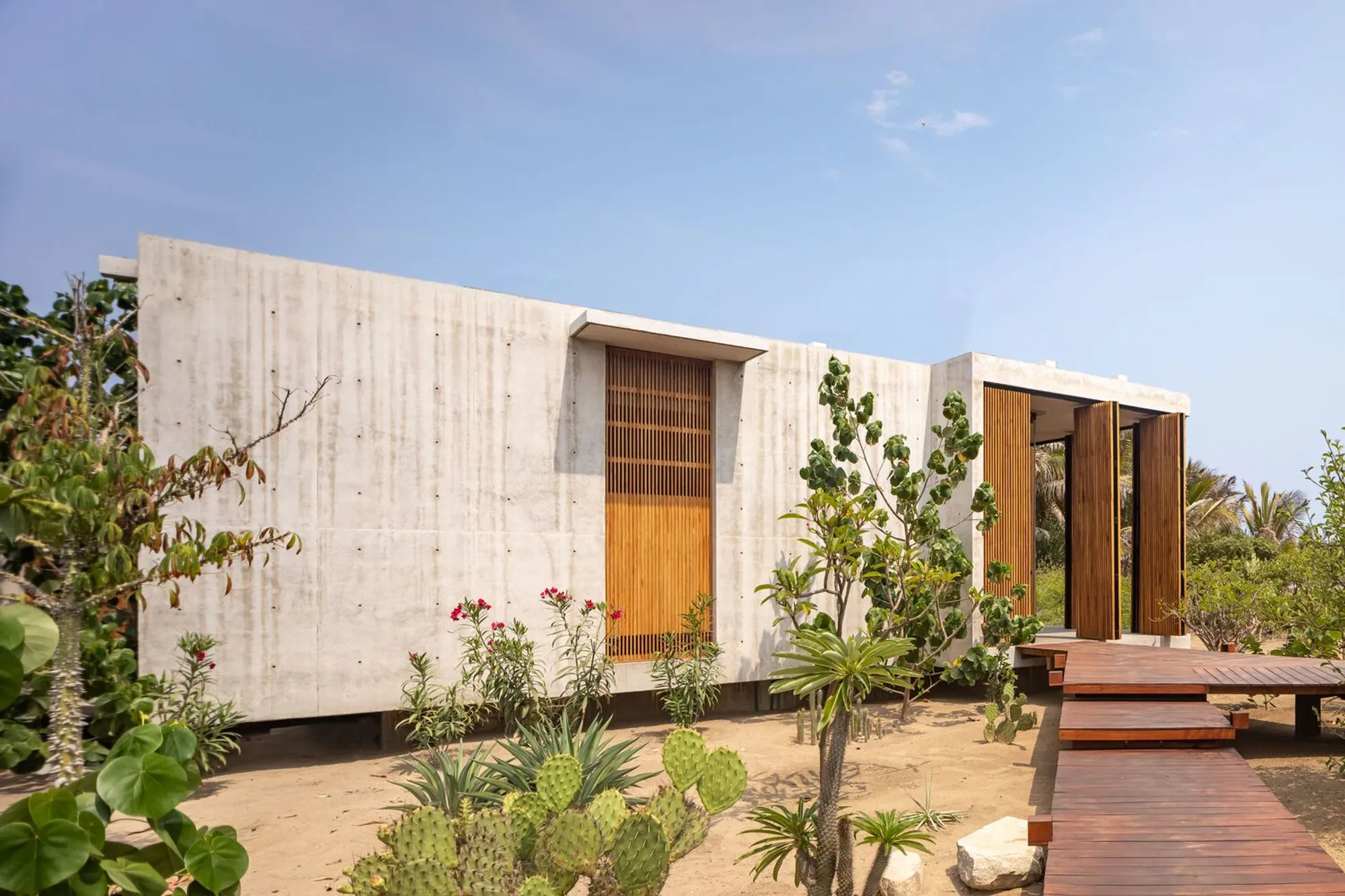
Casa Leria, designed by TAC Taller Alberto Calleja, is a residential sanctuary nestled within the lush coastal vegetation of Puerto Escondido, Oaxaca. Set on a generous 3,500-square-meter site in the seaside community of El Tomatal, this 1,100-square-meter home redefines tropical modernism through ecological sensitivity, modular architecture, and bioclimatic design strategies.
A Discreet Architectural Footprint
The central challenge of the project was to respond to the natural context with minimal impact while still accommodating the full programmatic needs of a family home. Rather than creating a monolithic structure, the architects deconstructed the program into eight discrete modules, each addressing a specific function:
- A social core housing a palapa, kitchen, and pool
- A sculptural social tower
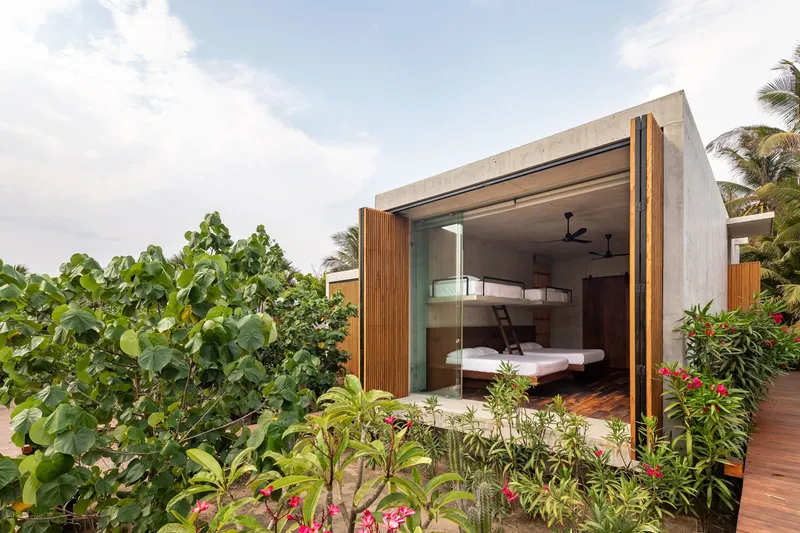
- Independent bedroom units
- A service wing and parking area
These elements are dispersed across the site and connected by lightweight circulation bridges, allowing the architecture to integrate gently into the existing vegetation without major disruption to the land.


A Reimagined Palapa: Innovation in Traditional Forms
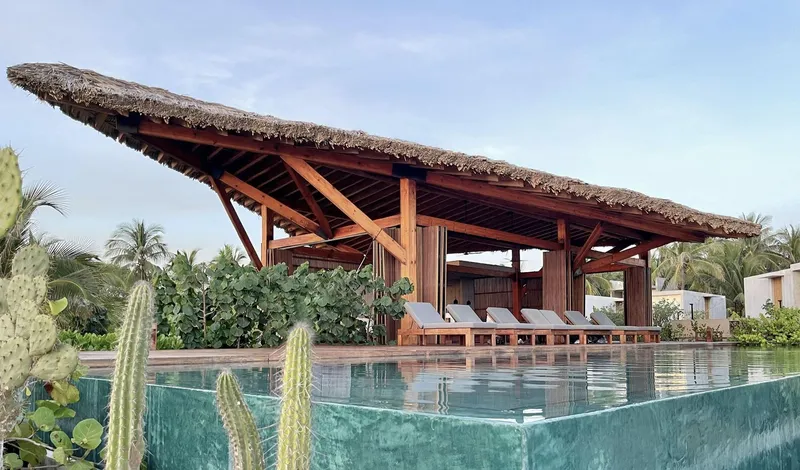
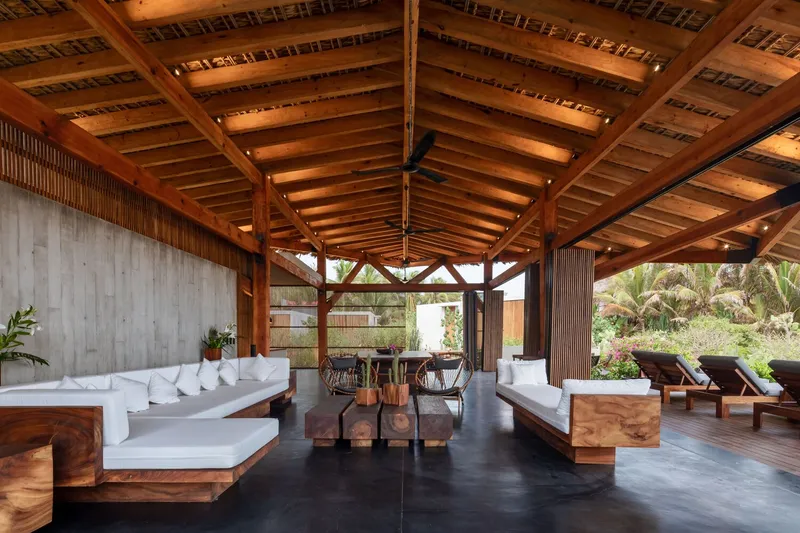
The heart of Casa Leria is the social space, enclosed beneath a dramatic reinterpretation of the traditional Mexican palapa. By stretching and rotating its typical geometry—playing with slope, span, and scale—TAC Taller Alberto Calleja created a distinctive architectural gesture that sets the tone for the entire residence.
Rotated 45 degrees eastward, the main palapa opens diagonal views toward the ocean while creating a ventilated courtyard at the center of the home. This subtle shift in orientation enhances natural ventilation, light flow, and thermal comfort, while simultaneously freeing the rear of the site for lush reforestation.


Regenerative Design: Architecture that Heals the Land
A defining aspect of Casa Leria’s sustainability strategy is the transference of ecological responsibility to the rooftops. The footprint disturbed by construction is conceptually “returned” through the integration of green roofs atop each module. These planted surfaces not only restore the site’s vegetative layer but also contribute to passive cooling, thermal insulation, and the house’s overall bioclimatic performance.
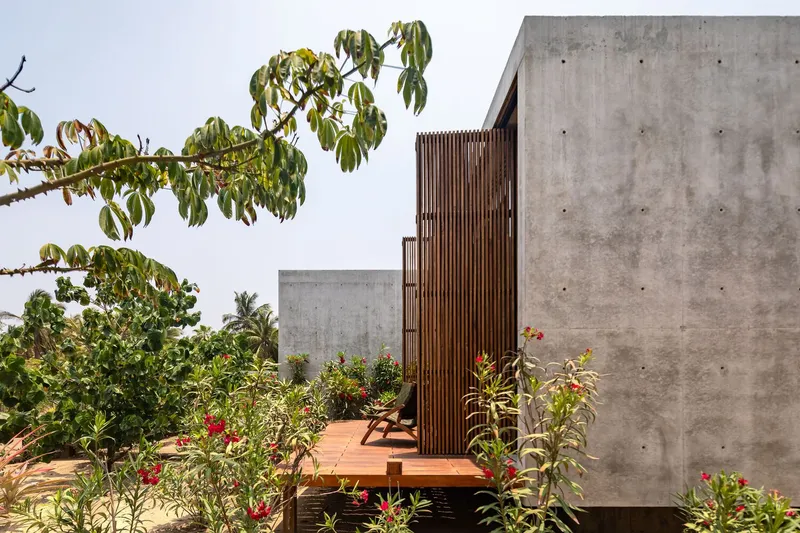
An Architecture of Sensory Journeys
Casa Leria invites its occupants to experience space through a sequence of intimate pathways and framed views, blurring the boundaries between interior and exterior. From shaded terraces and open-air lounges to secluded bedrooms embedded in the greenery, each moment of the home is designed as a sensorial encounter with the coastal landscape.
Through this fragmentation, the architects have made a large home feel unobtrusive and human-scaled, allowing it to disappear into the site’s natural rhythms. The result is not just a residence, but a landscape-embedded living experience—a model for contextual and low-impact architecture in tropical environments.
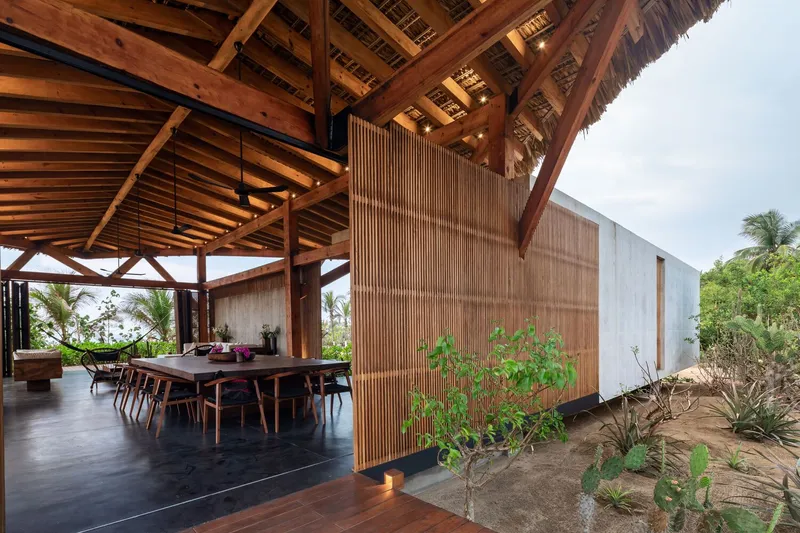
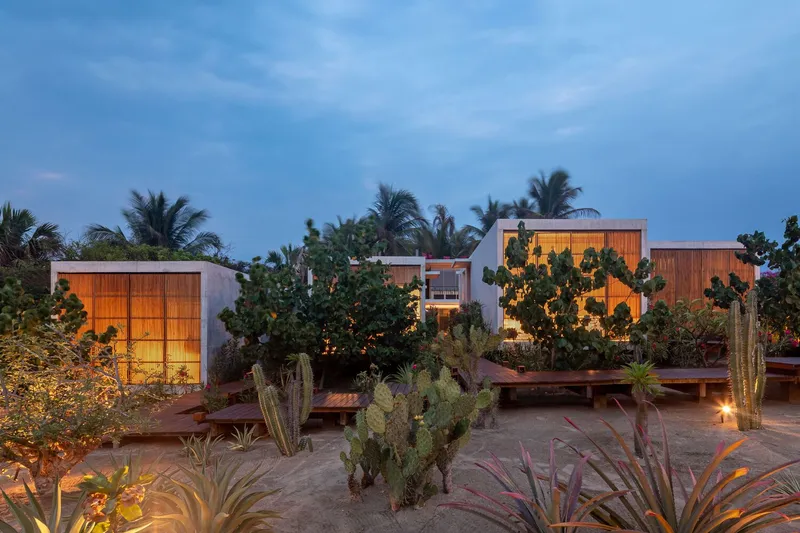
All Photographs are works of Onnis Luque




Popular Articles
Popular articles from the community

AL-JANNAH: Sustainable Architecture and Permaculture for Afghan Widows
AL-JANNAH uses sustainable architecture and permaculture to create resilient oasis of housing, learning, work and renewal for Afghan widows.

Co-life: Sustainable Architecture for Age-Friendly Community Living
Co-life reimagines sustainable architecture for seniors through courtyards, rammed earth, shared gardens, and spaces designed for belonging.

Riyadh For All: Intergenerational Urban Design for Active Aging in Rabat
Riyadh For All reimagines urban design in Rabat with intergenerational co-living, adaptive courtyards, and Moroccan cultural exchange today.

Co-Life: Senior Housing Design That Reconnects Older Adults With the City
Co-Life reimagines senior housing design through healing gardens, shared streets, workshops, and a sustainable community across generations.


Similar Reads
You might also enjoy these articles


Hodi-Mandai Geram
Project Function: Preservation and revitalization of the Intangible heritage and socio-spatial identity of the Hodi by Housing, Cultural Memory Center, Sacred Grove, landscape, local tourism economy


Olio Towers: A Mid-Rise for Performers That Fuses Housing, Rehearsal, and Stage
Located blocks from Houston's Theater District, this modular tower stacks living units around a central performance atrium.

Oasis: Modular Green Housing Carved into Dhaka's Urban Fabric
A shortlisted Plugin Housing entry reclaims unauthorized settlements in Dhaka with stepped concrete volumes, green roofs, and ventilation-driven design.

Black Hole: A Floating Megastructure for the Post-Physical Era
Emiliano Mazzarotto envisions a spherical, self-scaling arena where e-sports, digital hotels, and holographic stadiums replace traditional public space.

Explore Housing Competitions
Discover active competitions in this discipline



Challenge to reimagine the Iron Throne


Photograph architecture without architects


Illustrate the lost glory of Angkor Wat - Render Challenge


Design challenge to reuse E-waste
Comments (0)
Please login or sign up to add comments
No comments yet. Be the first to comment!