
Casa no Meco by Fábio Ferreira Neves: A Contemporary Tribute to Mediterranean Tradition
A secluded Mediterranean-inspired home blending traditional forms, natural light, and contemporary spatial strategies to ensure privacy, warmth, and harmony with its transformed surroundings.

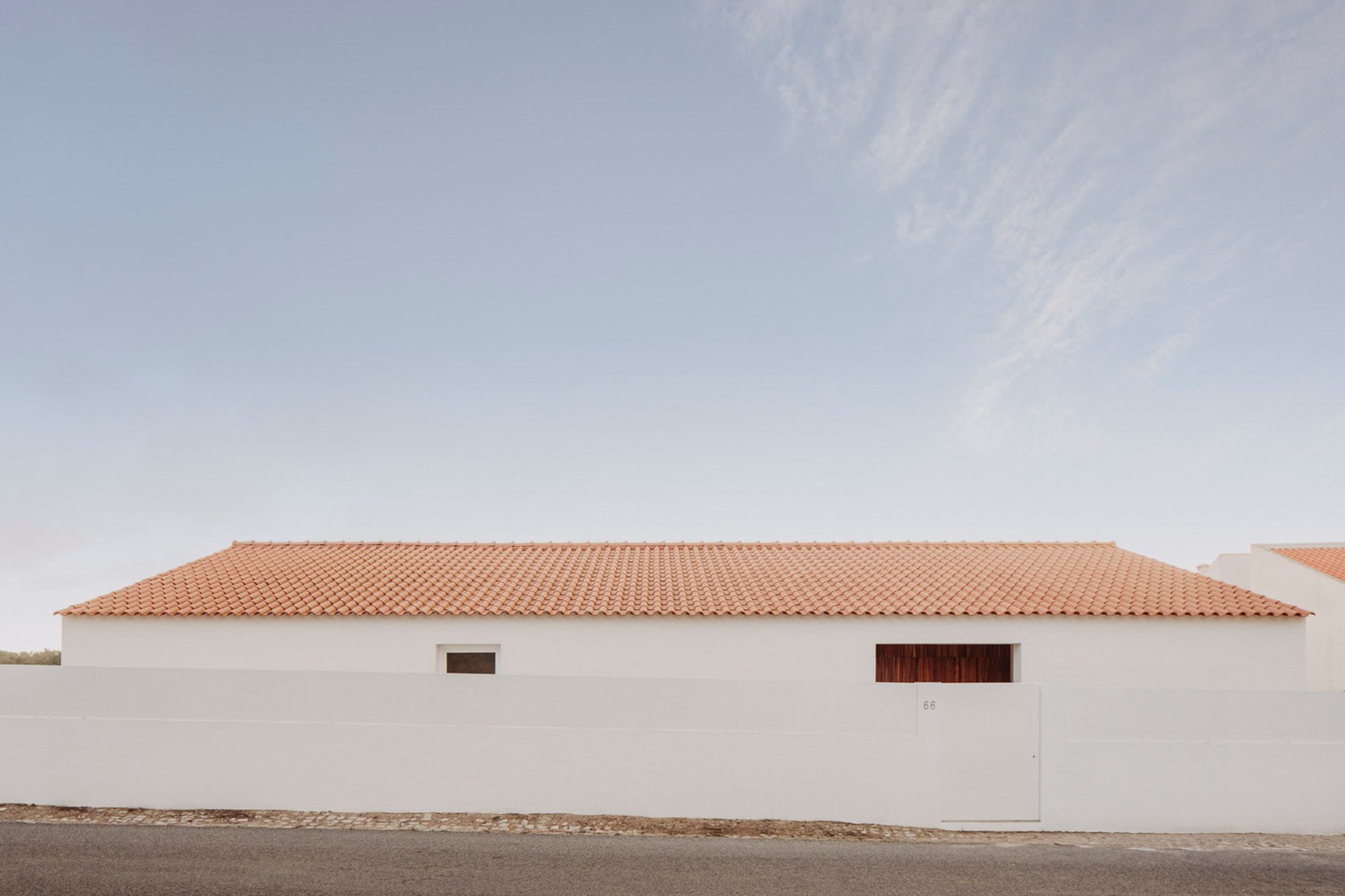
Casa no Meco, designed by architect Fábio Ferreira Neves, sits on the edge of Aldeia do Meco, a small village in the southern Lisbon Metropolitan Area. Once defined by rural life and modest traditional homes, the village underwent a dramatic transformation as seaside tourism expanded over the last four decades. Larger, out-of-scale constructions appeared in the early 1980s, reshaping the built landscape and altering the village’s identity. Positioned beside these massive structures, Casa no Meco emerges as a carefully calibrated architectural response—one that reinstates scale, privacy, and authenticity through thoughtful design.
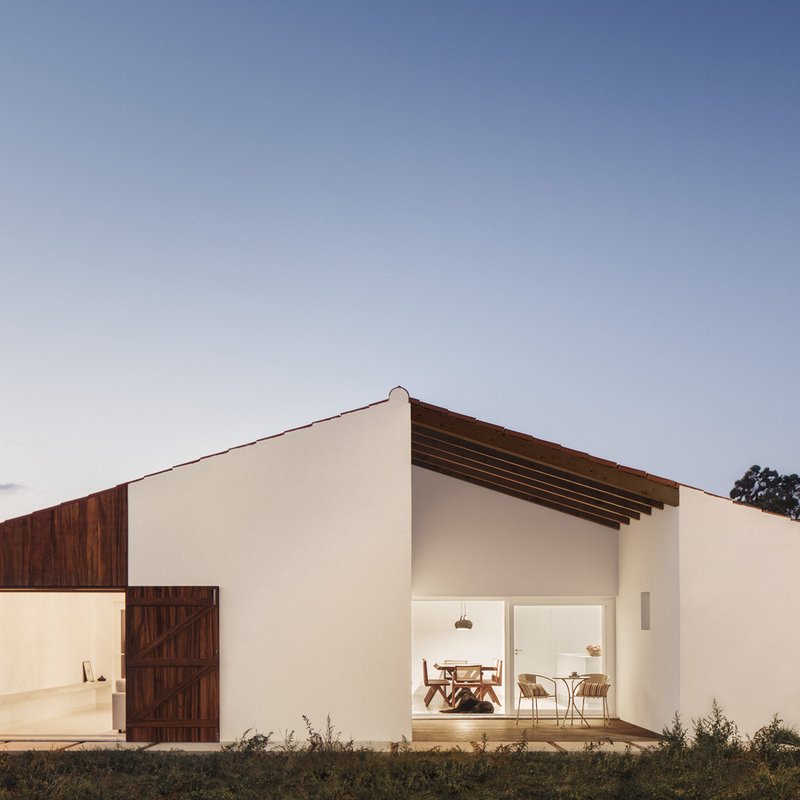
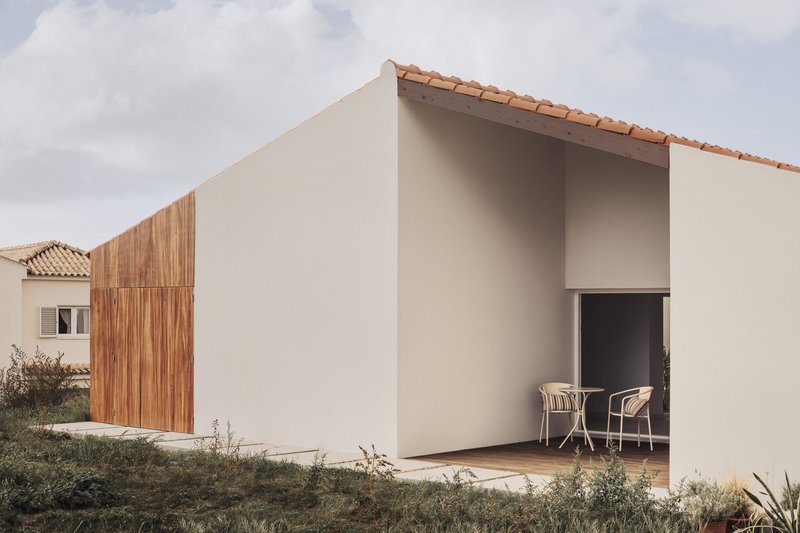
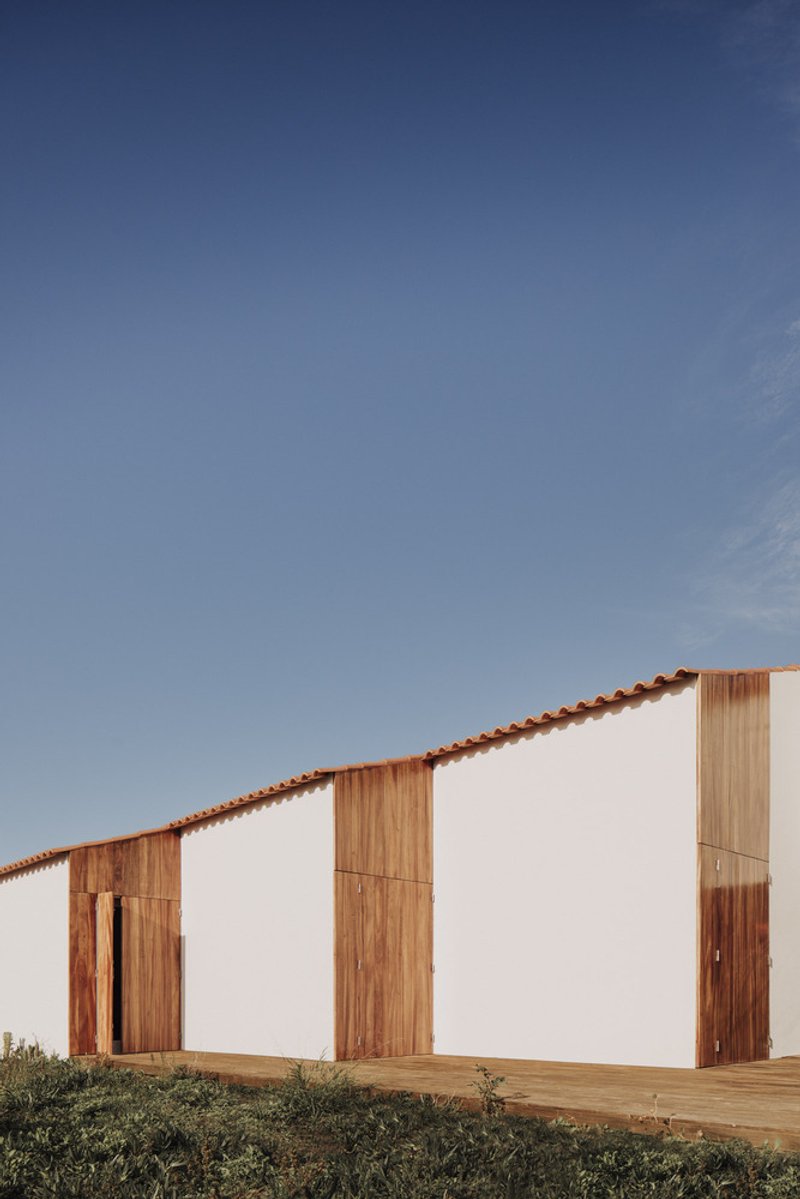
Set on a longitudinal lot, the project replaces the owner’s childhood home with a new dwelling that preserves the simplicity and emotional memory of the original. The client’s request was straightforward: recreate a house with similar proportions and character while avoiding direct exposure to the oversized neighboring buildings. This guidance shaped a new architectural volume defined by a pitched roof and whitewashed façades that echo the essence of traditional Mediterranean domesticity.
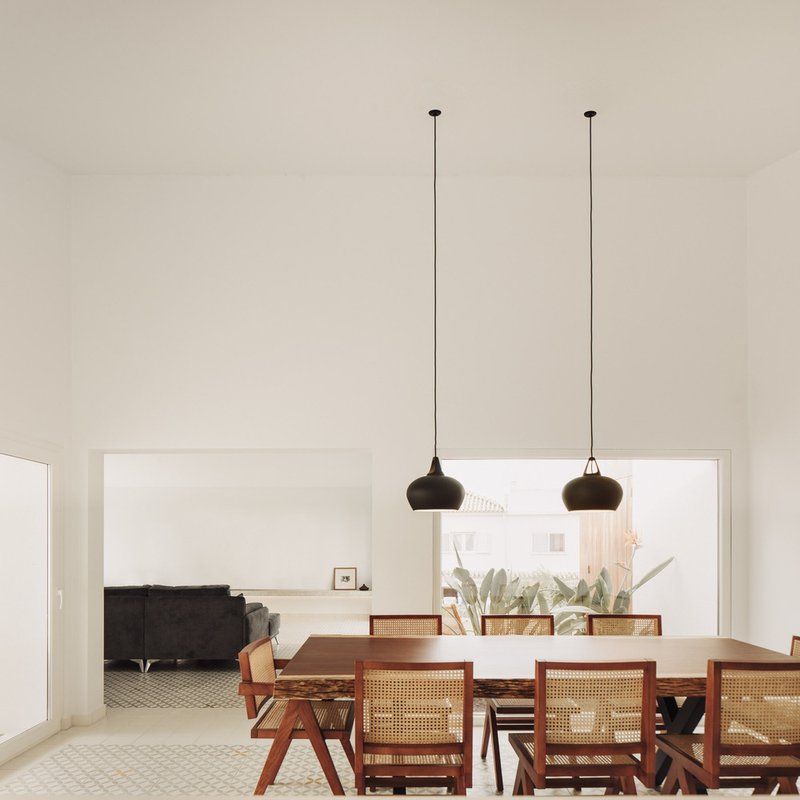
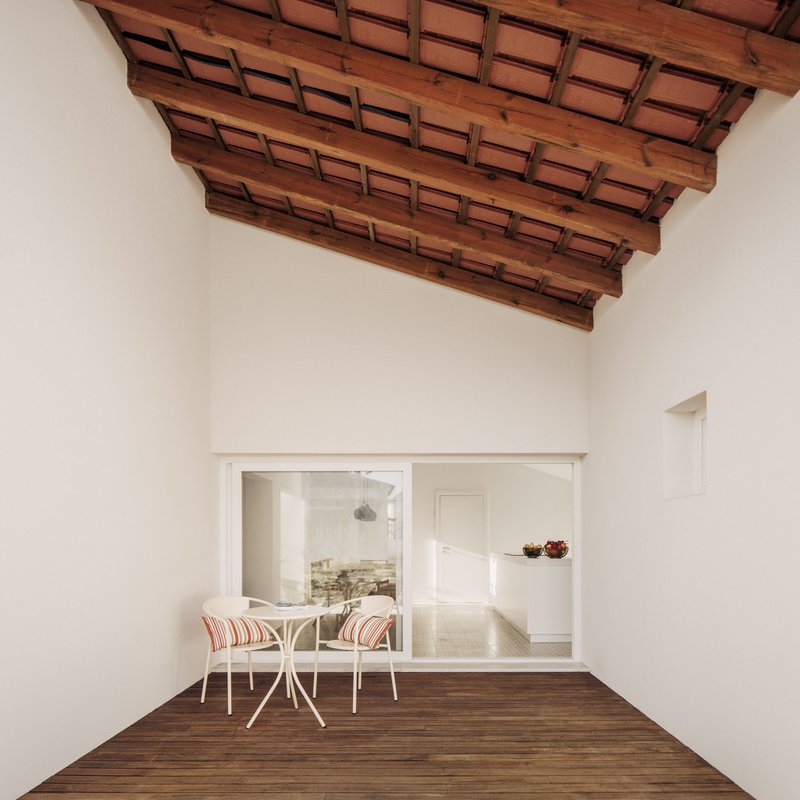
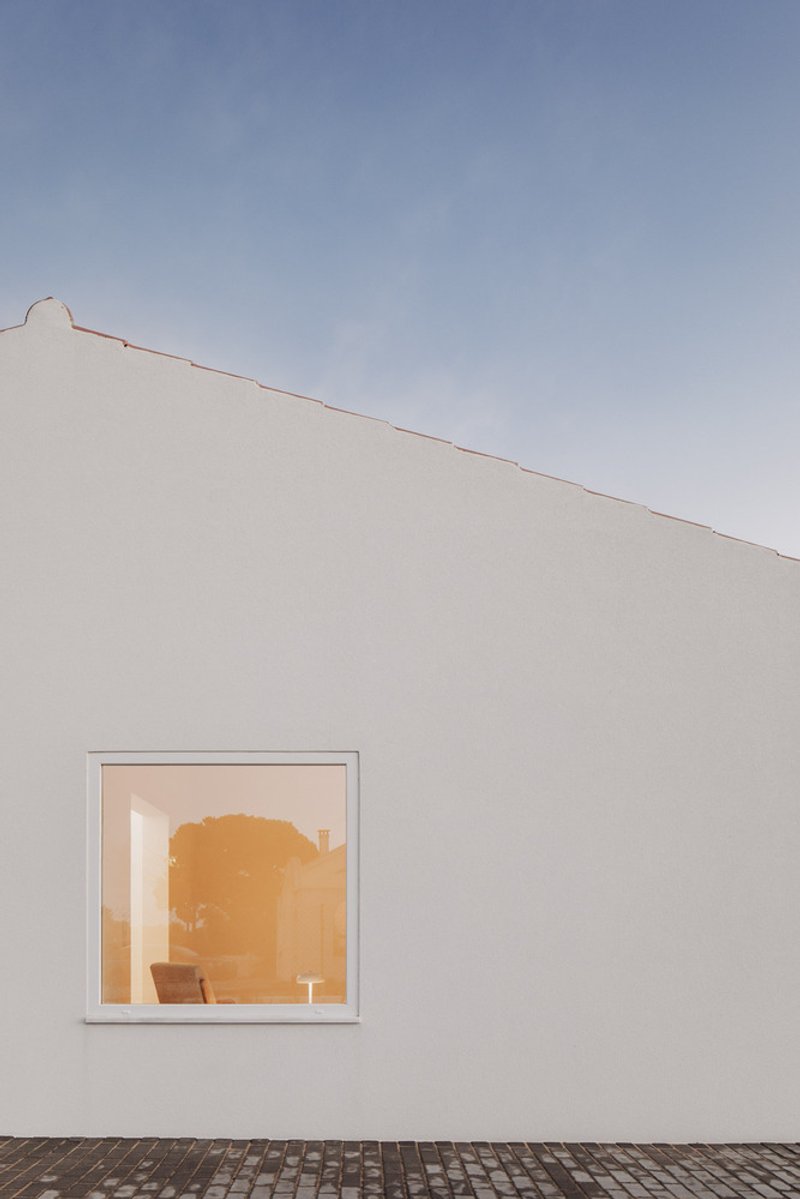
The spatial organization follows a clear linear strategy. On the eastern side, the supporting program—bathrooms, kitchen, closets, and circulation—forms a protected band facing the village road. Here, small window openings maintain acoustic comfort, control privacy, and reinforce the house’s quiet presence. The western side opens generously to the garden, allowing the main living spaces to enjoy abundant natural light and uninterrupted views. Large, strategically placed windows extend the visual depth of the living room, office, and bedrooms, while exterior wooden shutters provide climatic control and contextual warmth.
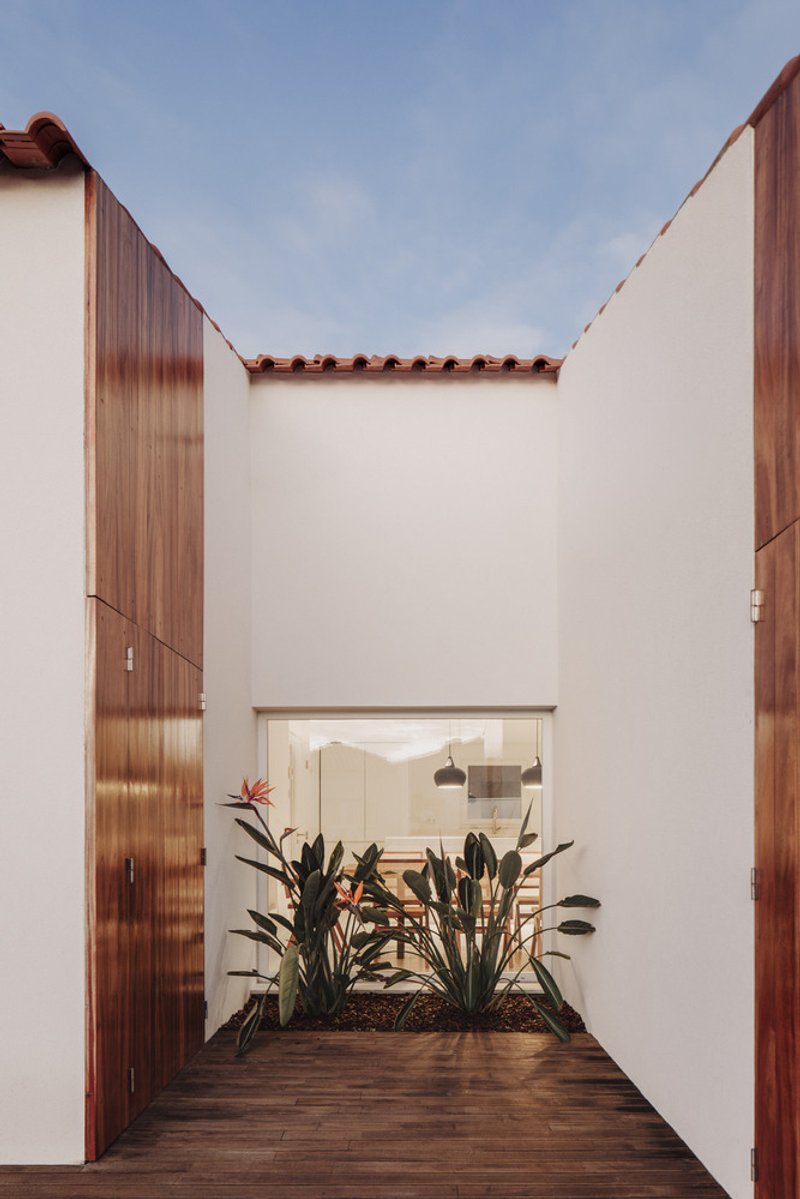
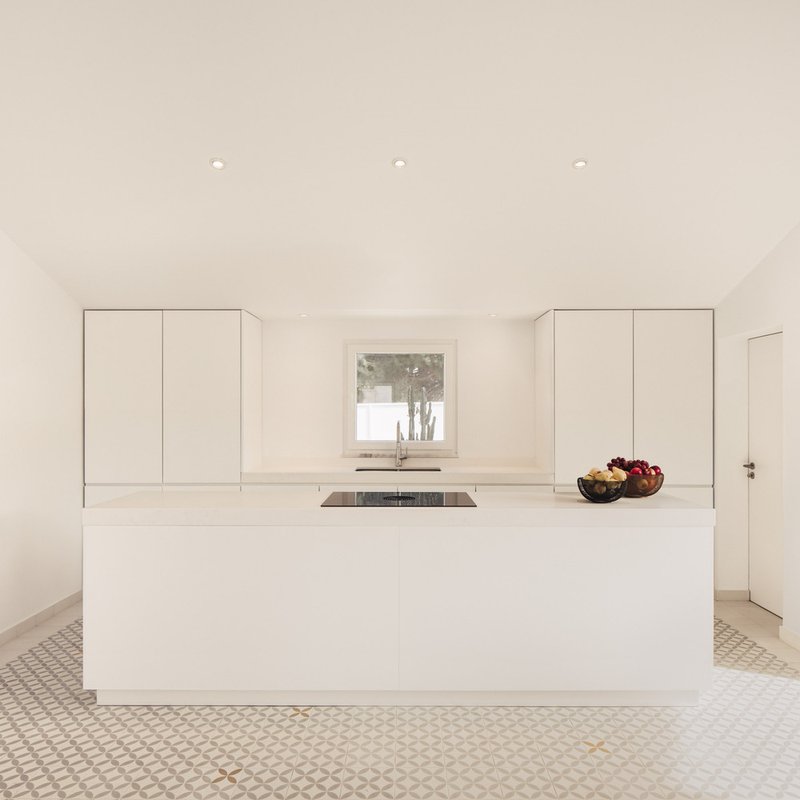
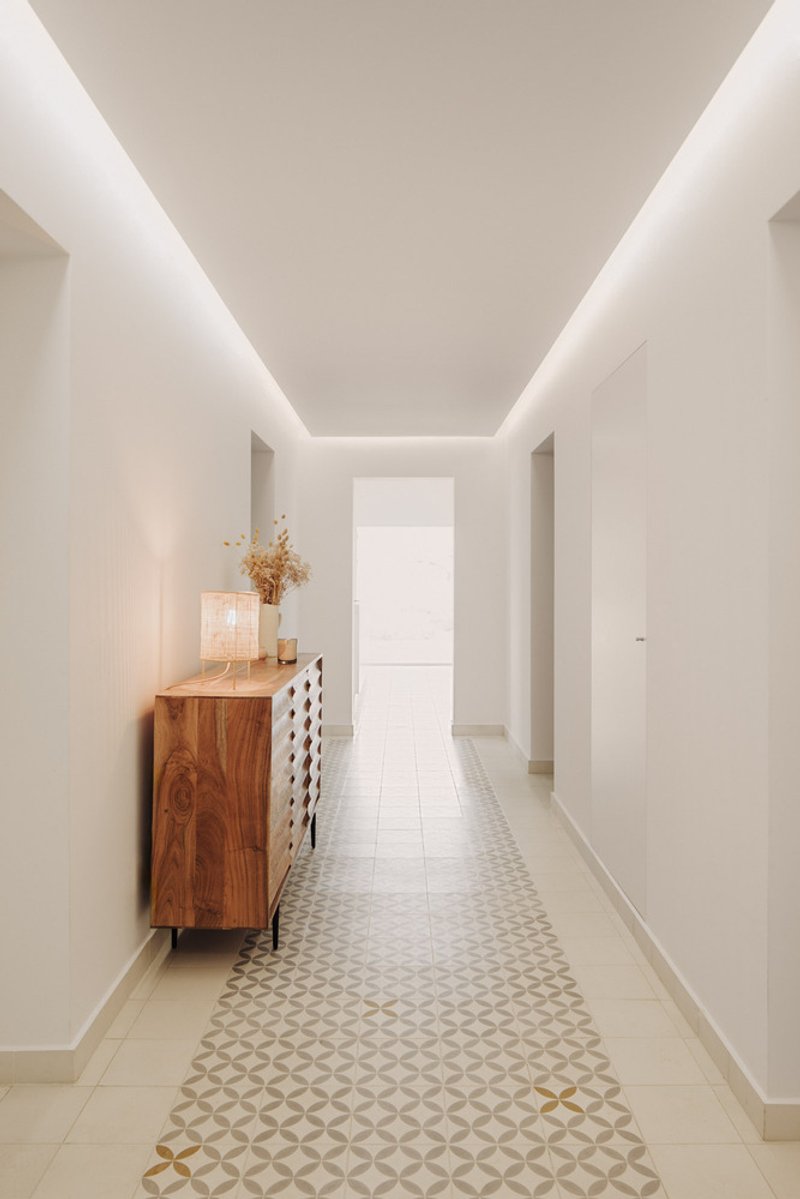
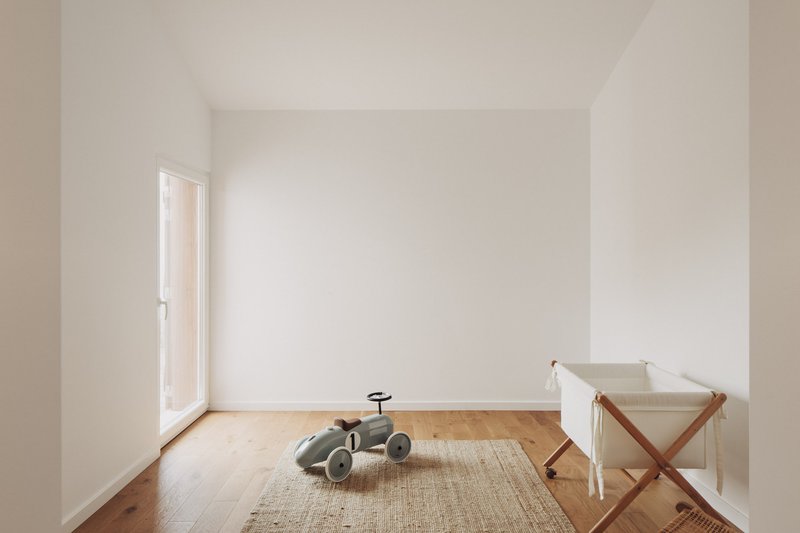
Material choices reinforce the connection to local tradition. The whitewashed exterior walls, combined with the pitched tiled roof, evoke the familiar silhouettes of Mediterranean settlements. Inside, handmade cement tiles enhance the rustic character of the communal spaces, while wooden flooring in the bedrooms adds softness and warmth. The careful contrast between these materials subtly distinguishes public and private areas, echoing the rhythms of everyday life.
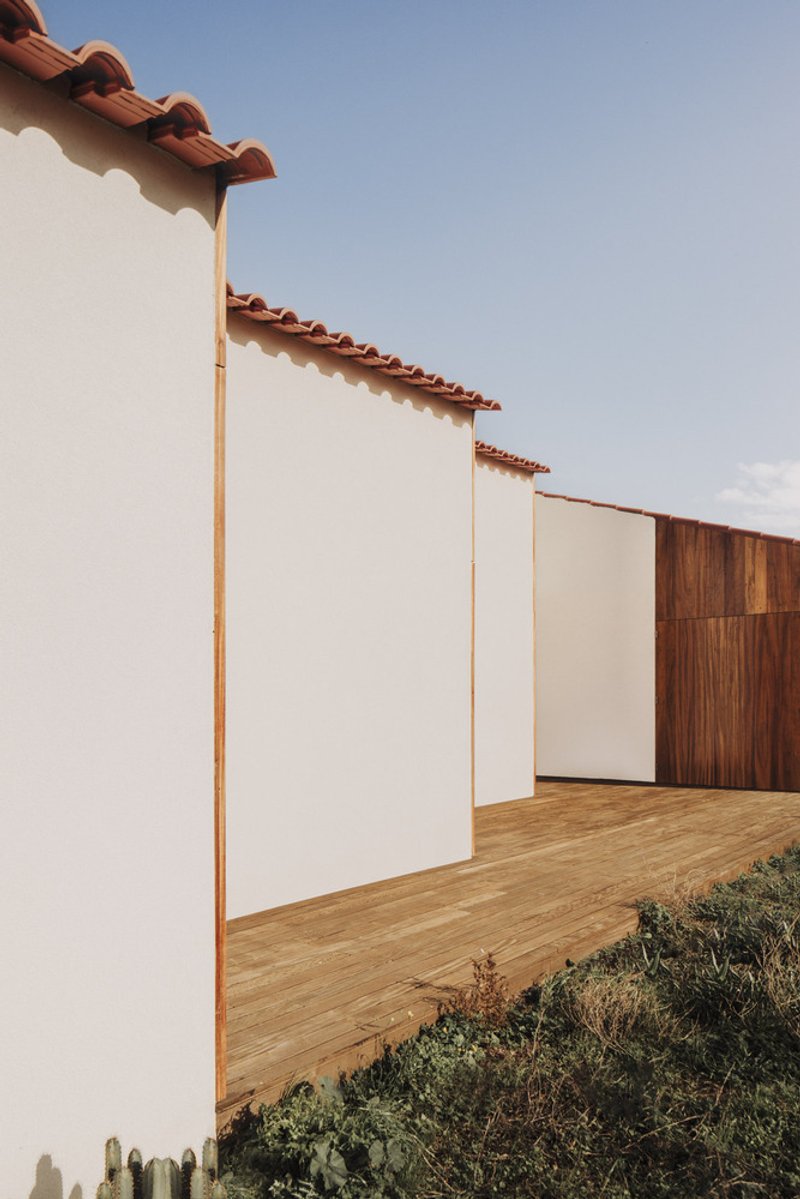
A defining feature of the project is the “stone line,” an architectural gesture that runs between the street and the house, unifying the exterior spaces. This linear element links the parking zone to a compact vertical volume containing the outdoor kitchen, barbecue, technical systems, and garden storage. The form reinterprets the village’s traditional oven houses, blending memory and function while strengthening the overall composition.
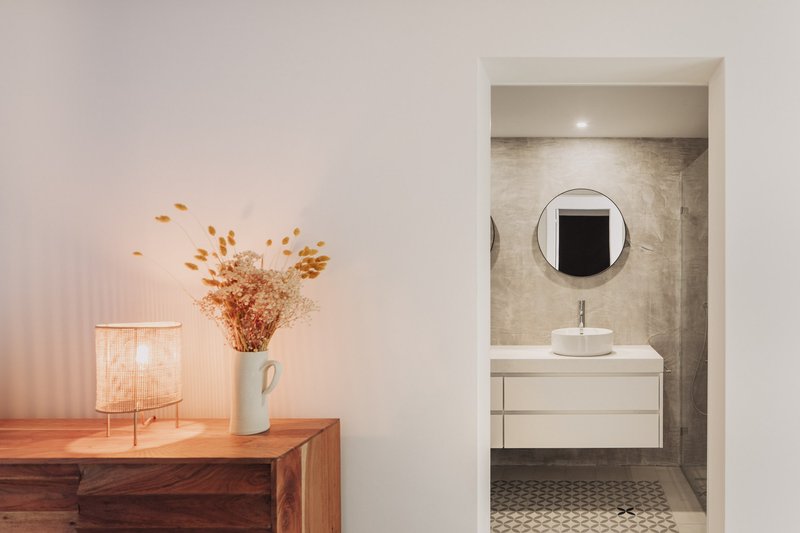
The design employs a contemporary approach of subtraction, carving space and form to shield the home from undesirable surroundings while maximizing sunlight and garden connections. Interior ceiling heights shift gently throughout the house, creating a dynamic sense of movement that reflects the hierarchy and purpose of each room. These subtle variations reinforce the architect’s intent to evoke comfort, intimacy, and spatial clarity.
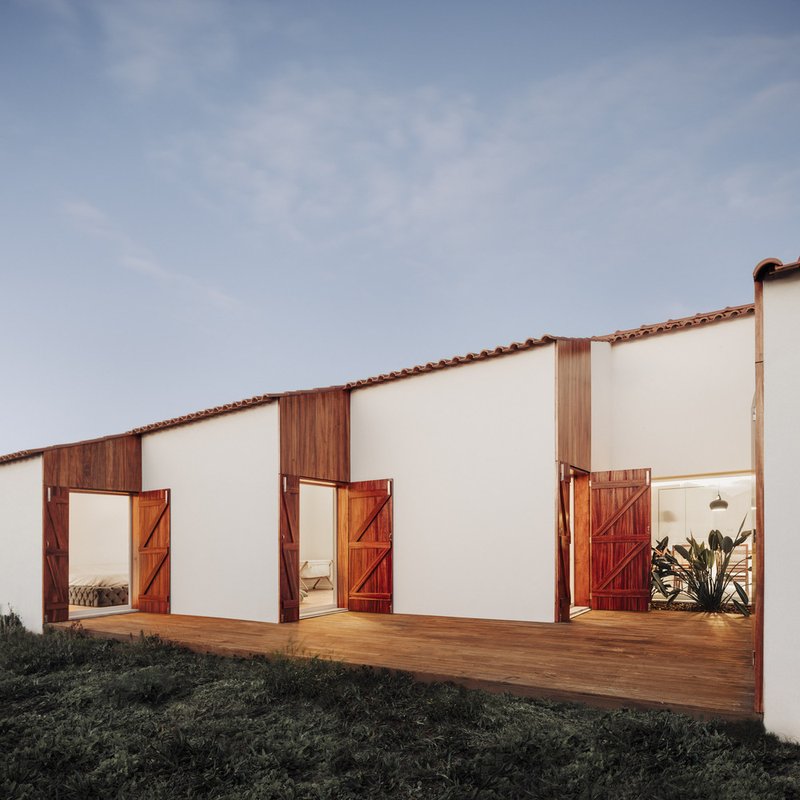
All photographs are works of David Pereira




Popular Articles
Popular articles from the community

20 Most Popular Office Building Projects of 2025
From biophilic workspaces in India to net-positive energy offices in New Delhi, 20 office building projects that defined architecture in 2025.

YOAP Architects Round a Corner in Yeongcheon with a Cylindrical Community Hub
A 197-square-meter brick and ribbed-clad tower turns a forgotten alley corner in South Korea into a public garden with a low threshold.
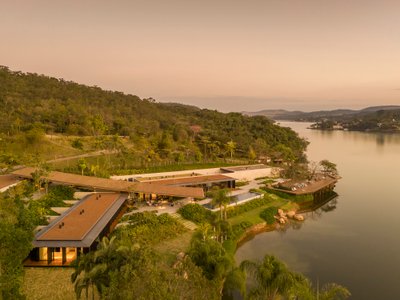
Bernardes Arquitetura Stretches a Timber Roof Along a Reservoir's Edge in Minas Gerais
Dam House in Itaúna lets a sweeping wooden canopy dissolve the boundary between hillside terrain and open water.
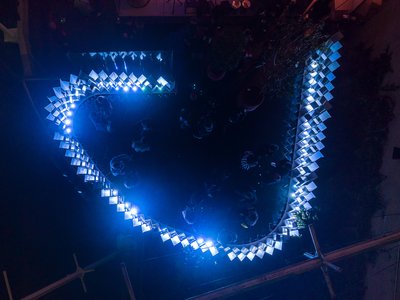
Rojkind Arquitectos and Think Parametric Build a Glueless Pavilion from 67 Interlocking Panels
A serpentine fiber-cement installation in Chapultepec Park celebrates a decade of architectural media in Mexico City.


Similar Reads
You might also enjoy these articles
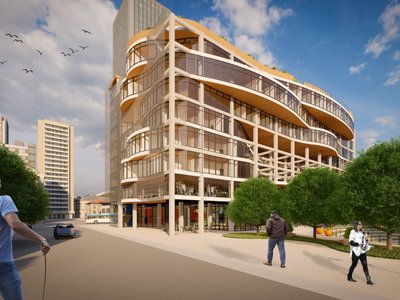
Olio Towers: A Mid-Rise for Performers That Fuses Housing, Rehearsal, and Stage
Located blocks from Houston's Theater District, this modular tower stacks living units around a central performance atrium.

Oasis: Modular Green Housing Carved into Dhaka's Urban Fabric
A shortlisted Plugin Housing entry reclaims unauthorized settlements in Dhaka with stepped concrete volumes, green roofs, and ventilation-driven design.

Black Hole: A Floating Megastructure for the Post-Physical Era
Emiliano Mazzarotto envisions a spherical, self-scaling arena where e-sports, digital hotels, and holographic stadiums replace traditional public space.
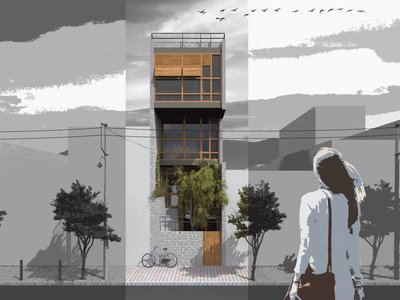
Compact & Sustainable Living in Piraeus: A Four-Level Family Home Built Around Light and Air
A narrow townhouse in one of Greece's densest port cities uses a central atrium and passive strategies to house three generations under one roof.


Explore Architecture Competitions
Discover active competitions in this discipline




The International Standard for Design Portfolios


The Global Benchmark for Architecture Dissertation Awards


The Global Benchmark for Graduation Excellence


Challenge to reimagine the Iron Throne
Comments (0)
Please login or sign up to add comments
No comments yet. Be the first to comment!