

Casa RIMA Chile Architecture by Cristián Romero Valente
Casa RIMA in Los Vilos, Chile, by Cristián Romero Valente, creates a coastal refuge blending concrete, wood, glass, and horizon.


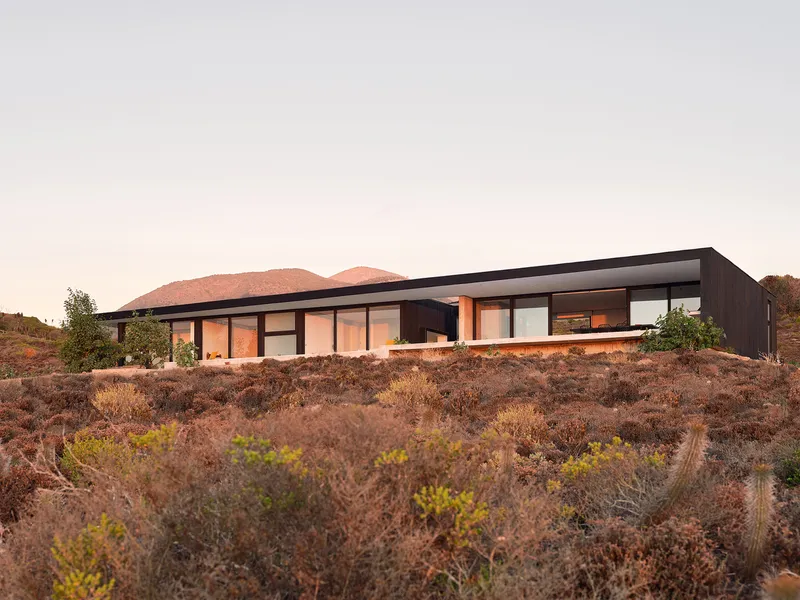
The Casa RIMA Chile architecture project, designed by Cristián Romero Valente, is a 192 m² coastal residence located in Los Vilos, northern Chile. Completed in 2024, the house is conceived as a serene refuge where the ocean, horizon, and sound of the sea become integral elements of daily life. By combining exposed concrete, wood, and steel, the architecture creates both a durable and poetic retreat deeply connected to its landscape.

Site and Concept
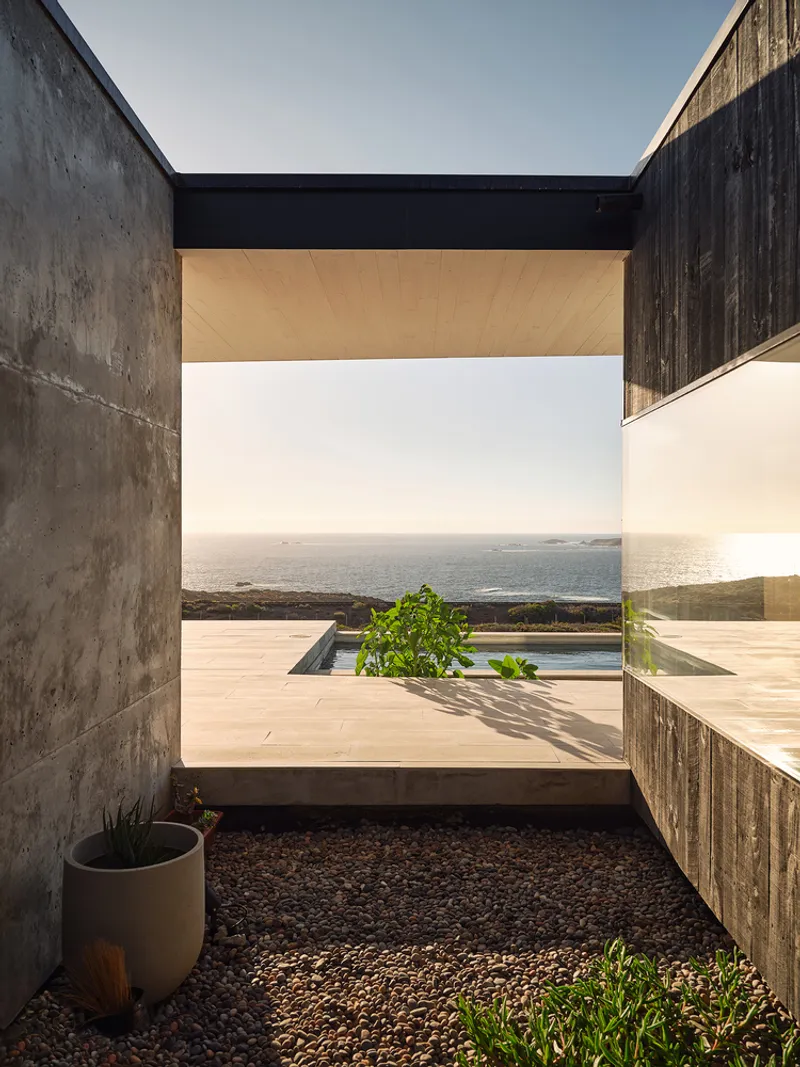
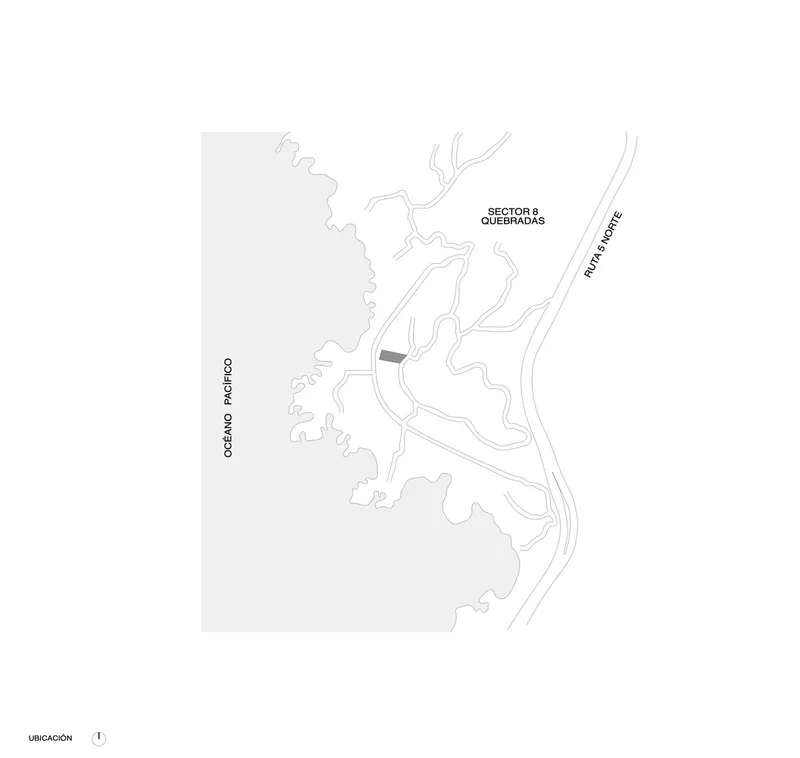
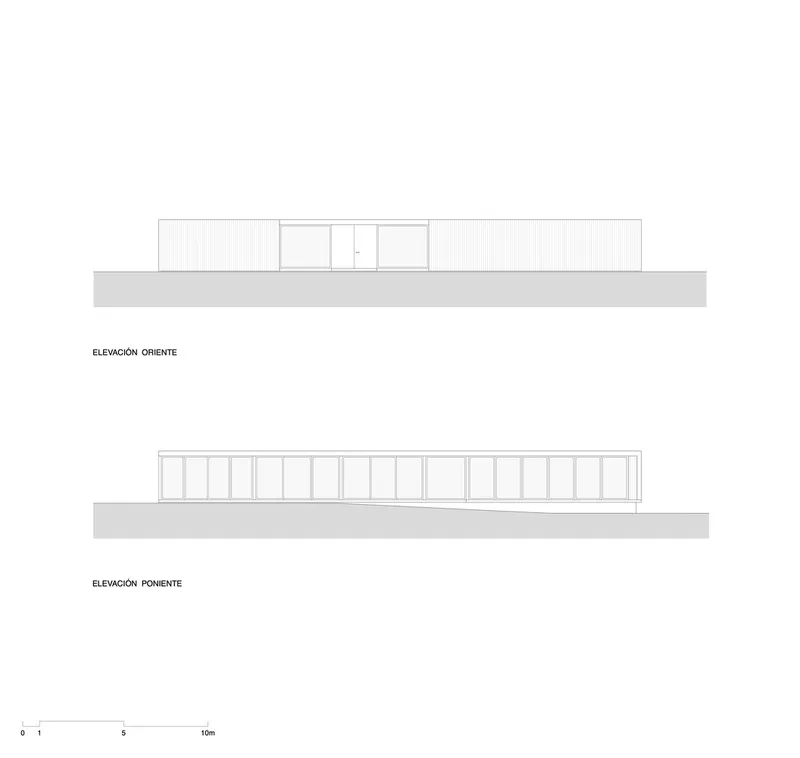
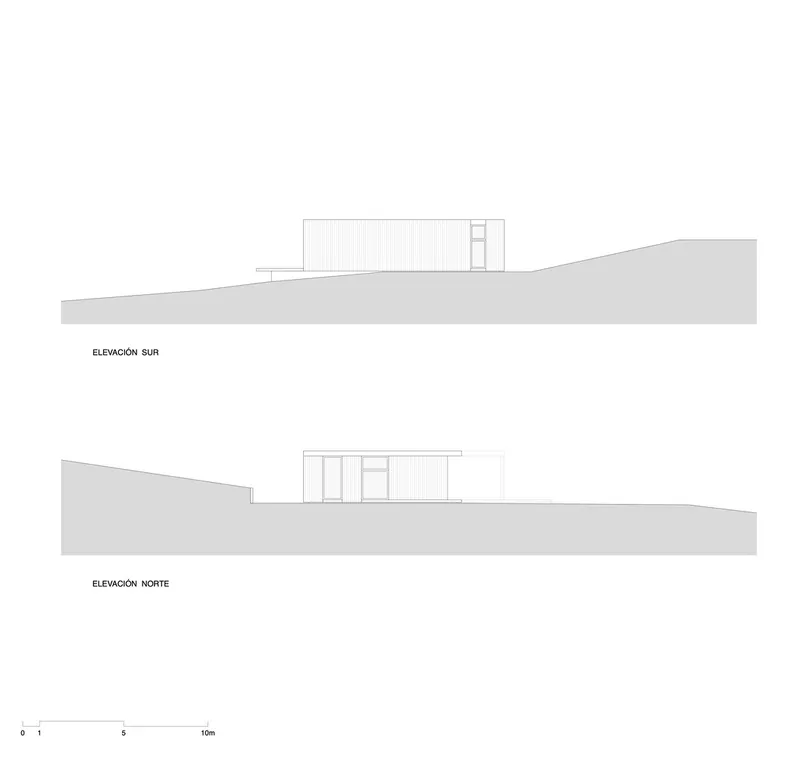
Casa RIMA is situated along the Chilean coastline, where strong southern winds and expansive sea views define the environment. The design responds with a continuous wall that shields the interiors from wind while allowing uninterrupted openness toward the ocean. This dual gesture provides both protection and connection, balancing shelter with contemplation.


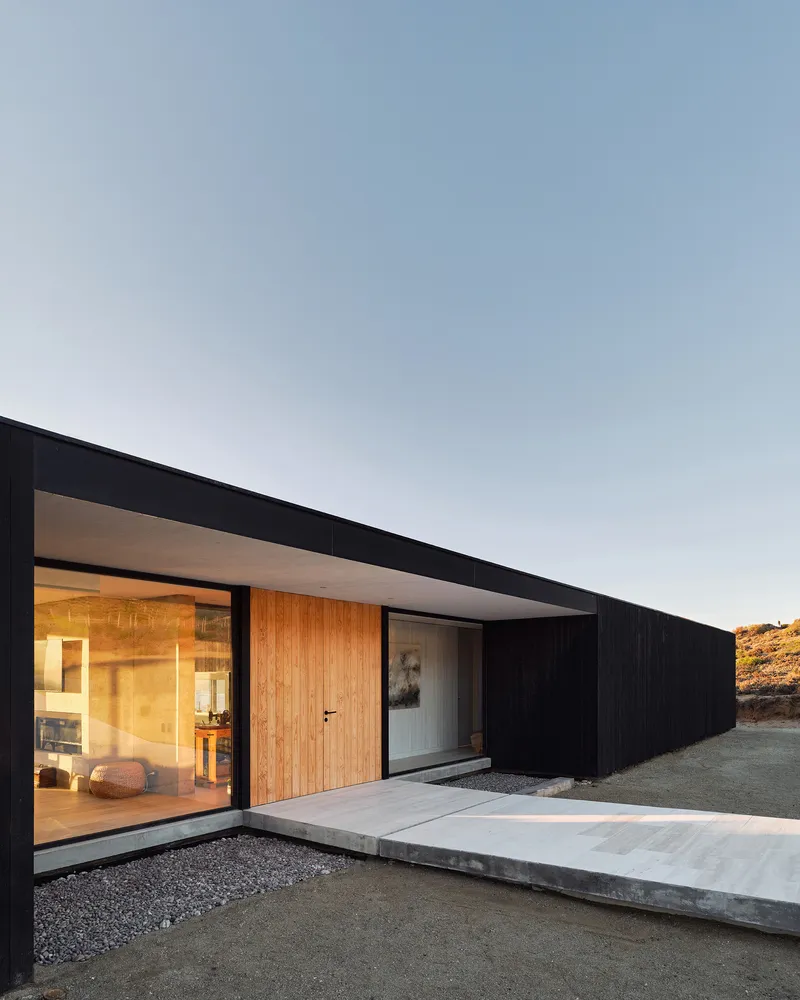
The arrival sequence begins with a ramp-like floor that connects parking to the entrance hall, framing the sea as a dramatic reveal. This architectural promenade prepares the visitor for immersion into the coastal setting, gradually unfolding views and sensory experiences.
Spatial Organization
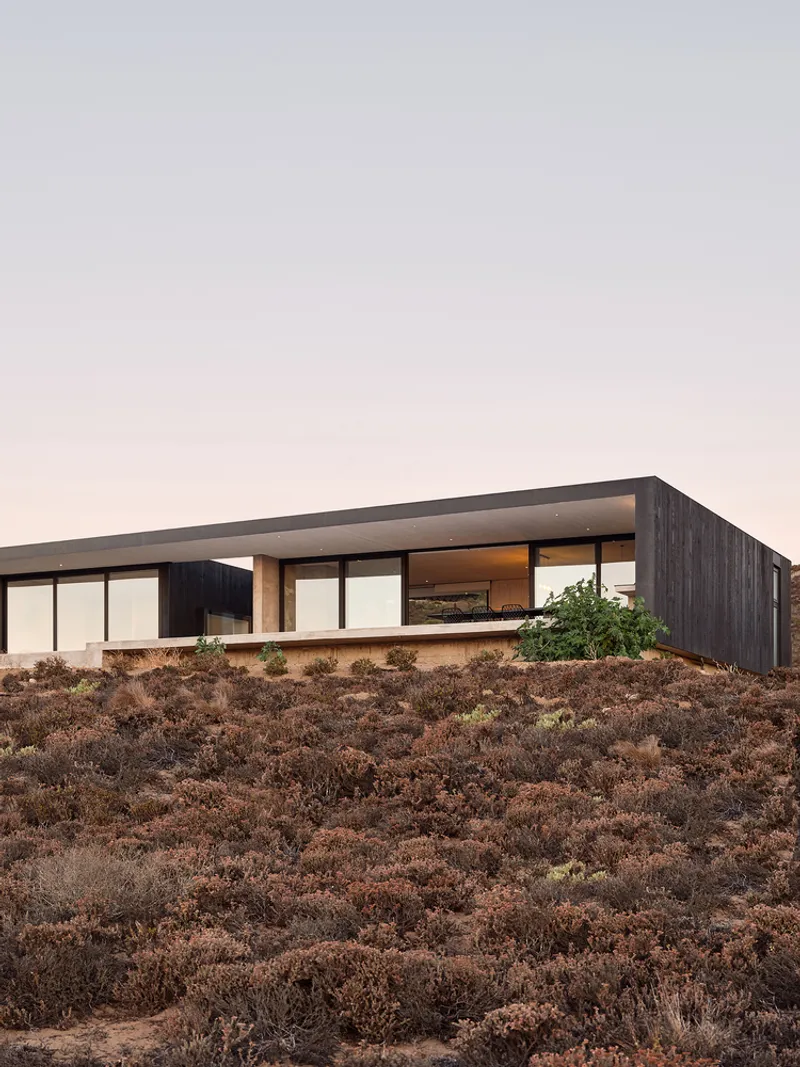
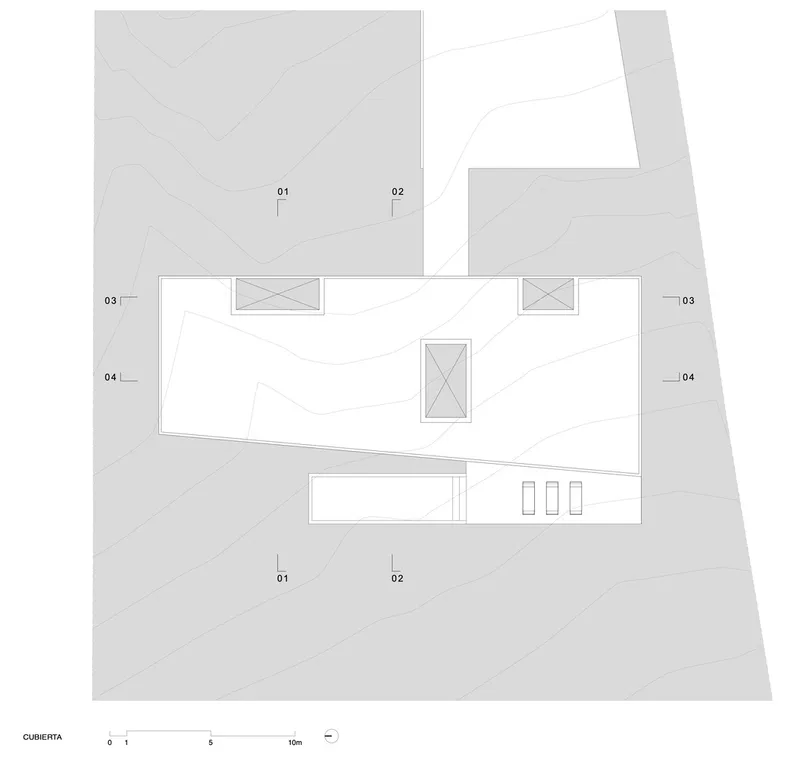
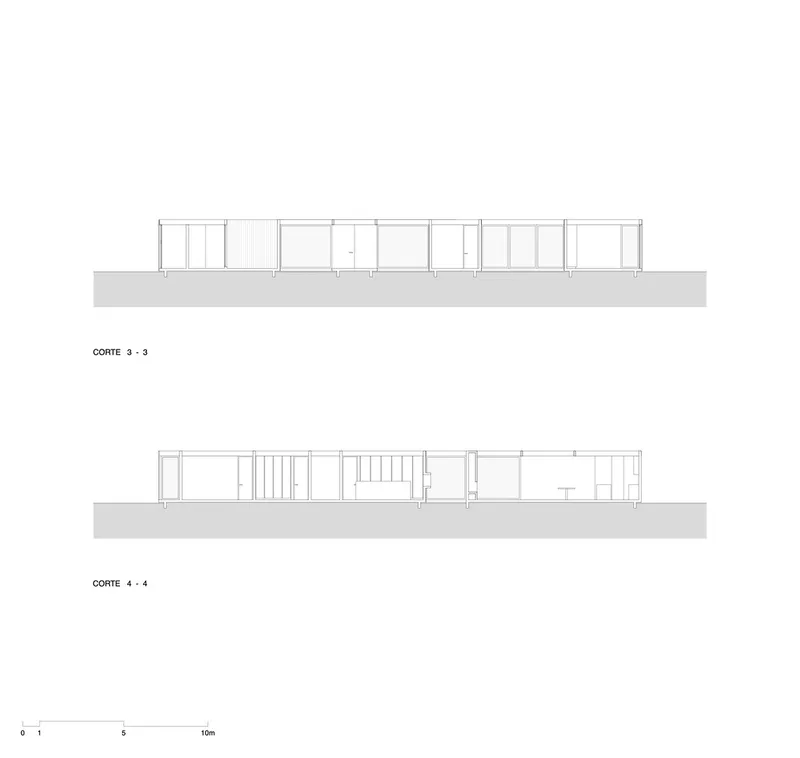
The house is designed as a single-level residence with a linear plan. Interior courtyards punctuate the scheme, introducing natural light and cross-ventilation while organizing circulation.
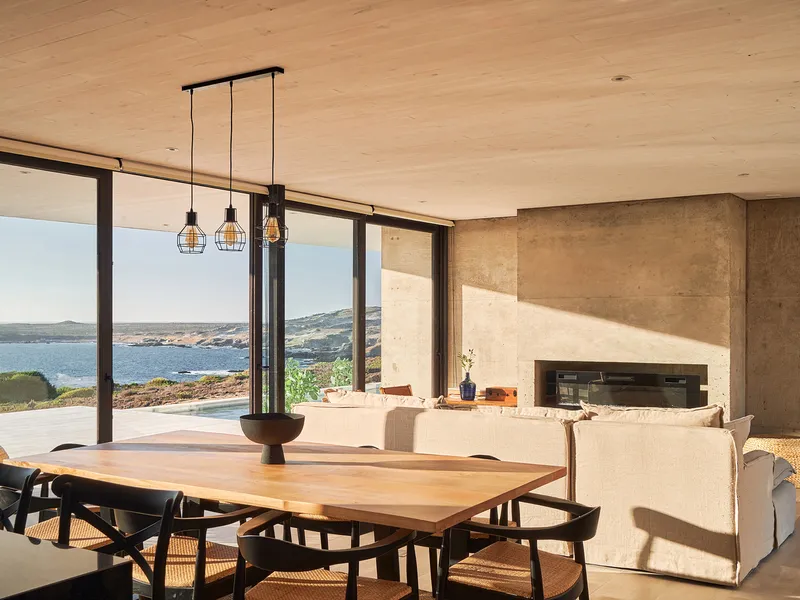
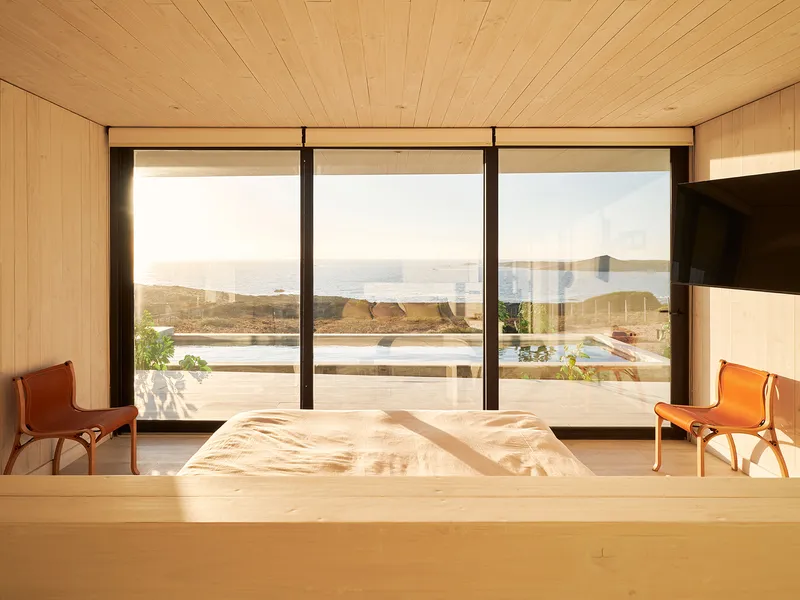

The central common spaces—living room, dining room, and kitchen—fully open toward the terrace and pool, dissolving the line between inside and outside. Bedrooms are placed at either end of the house, ensuring privacy while maintaining visual and spatial continuity with the landscape. These transitions ensure that every space engages with the horizon, wind, and filtered light.


Climate and Eaves Design
A defining architectural feature of Casa RIMA is its steel-beam eaves, engineered to resist marine corrosion. More than functional, these horizontal extensions create shaded outdoor zones, reduce solar heat, and blur boundaries between built form and natural surroundings. They establish a microclimate that allows the family to enjoy outdoor living even under the strong coastal sun.


Material Expression
The material palette of Casa RIMA reflects honesty and restraint. Exposed concrete forms the structural backbone, offering solidity and permanence. Warm timber surfaces soften the interiors, adding intimacy to living spaces. Large glass panels act as transparent membranes, framing the ocean and reflecting the ever-changing light of the coast. Together, these materials ground the house in durability while maintaining an atmosphere of calm simplicity.

A Sensory Refuge
Casa RIMA is more than a residence; it is a coastal retreat designed for sensory living. The sound of waves, filtered sea breezes, and expansive views of the horizon define the experience of the home. By harmonizing protection and openness, durability and elegance, the architecture creates a sanctuary where the family can inhabit the Chilean coast in stillness and connection.

All Photographs are works of Juan Pablo Calderón


Popular Articles
Popular articles from the community


LT2A and OPEN Architectes Thread a Brick and Glass High School Through a Wooded Belgian Campus
In Braine-l'Alleud, a 3,000 m² wing for Collège Cardinal Mercier pairs pale brick with a glazed colonnade, deferring to a small chapel and a dense wood.

Architekt Andreas Gruber Scatters 23 Dark Timber Chalets Across a South Tyrolean Forest Edge
In Molini di Tures, Amonti Chalets breaks a resort into a hamlet of gabled timber houses, with parking, storage and services pushed into the slope.

Juan García Correa, John González and Claudia Rueda Sink a Circular Amphitheater into a Manizales Engineering Building
On the La Nubia campus in Manizales, Colombia, the S1 Building folds labs and offices into a hillside of ramped lawns that double as a campus route.

GROUP A Strips a 1969 Rotterdam Harbor Headquarters to Its Frame and Wraps It in Timber Louvers
In Rotterdam's M4H harbor district, Ferro Offices reuses a 1969 frame, adds one timber storey and reaches BREEAM-NL Outstanding.

Similar Reads
You might also enjoy these articles

Gil Mello Arquitetura Tilts a Single Roof Toward the Waterfalls on a Plateau Above Aiuruoca, Brazil
In Aiuruoca, Minas Gerais, a 200 m² house of local labor and reclaimed poles pairs a low valley veranda with a tall mountain one.

U.GA Architects Wraps an Oval Rooftop Pool in Curved Board-Formed Concrete on Busan's Jeollidan-gil
In Busan's Jeonpo-dong, a 454 m² mixed-use block stacks a neighborhood facility, guest rooms and an oval rooftop pool inside spiraling concrete walls.

Felipe Hess Arquitetos Turns a Blind Stone Wall to the Street and Opens a Brazilian House onto a Courtyard and Canal
A canal-front house in Brazil hides behind painted stone and planting, then opens to an olive-tree courtyard, a reed-ceilinged porch and a curving pool.

David Macias Steps a Doorless Stone and Plaster House Down a Tropical Colombian Hillside
In the humid hills of Colombia, Threshold House replaces the front door with an open void and terraces its 850 m² down the slope instead of fighting it.

Explore Architecture Competitions
Discover active competitions in this discipline

Challenge to reimagine the Iron Throne

Photograph architecture without architects

Illustrate the lost glory of Angkor Wat - Render Challenge

Design challenge to reuse E-waste
Comments (0)
Please login or sign up to add comments
No comments yet. Be the first to comment!