

Casa VO / Casa WO by Ludwig Godefroy Architecture: A Tropical Ode to Simplicity and Timeless Design
Casa VO / WO by Ludwig Godefroy Architecture blends tropical minimalism, open-air living, and raw materials on Mexico’s Pacific coast.


On the sun-drenched Mexican Pacific coast, nestled in the surf paradise of Punta Zicatela, Puerto Escondido, stands Casa VO / Casa WO, a visionary series of four twin houses designed by Ludwig Godefroy Architecture. Completed in 2020, these homes are an architectural response to the region’s year-round tropical climate — a place where winter never arrives, and the natural environment demands a design that embraces openness, fluidity, and elemental materials.
Puerto Escondido, a small tropical city renowned for its warm weather and laid-back surf culture, shaped the guiding principles behind Casa VO / WO. Here, houses do not need insulation from cold or heavy enclosure; they simply need to offer shelter from the sun and occasional rain. Godefroy approached this condition not as a limitation but as the starting point for an entirely new residential typology.
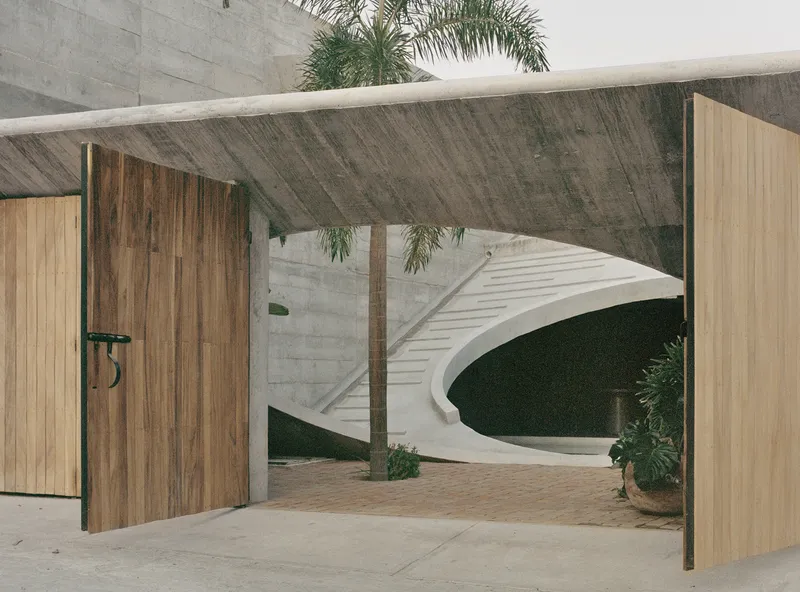
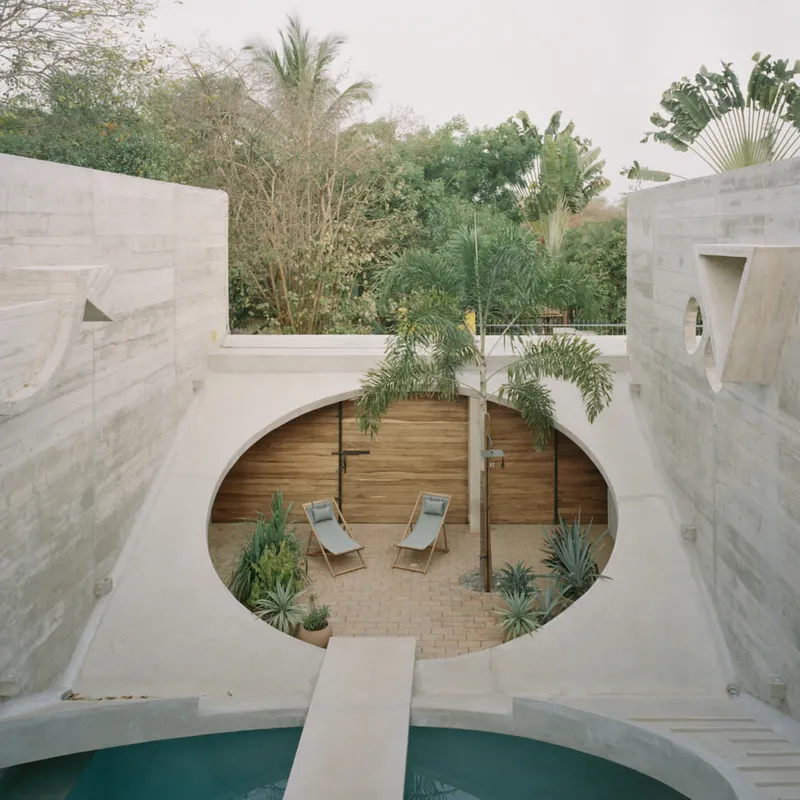
Reversing the Classic House-Garden Scheme
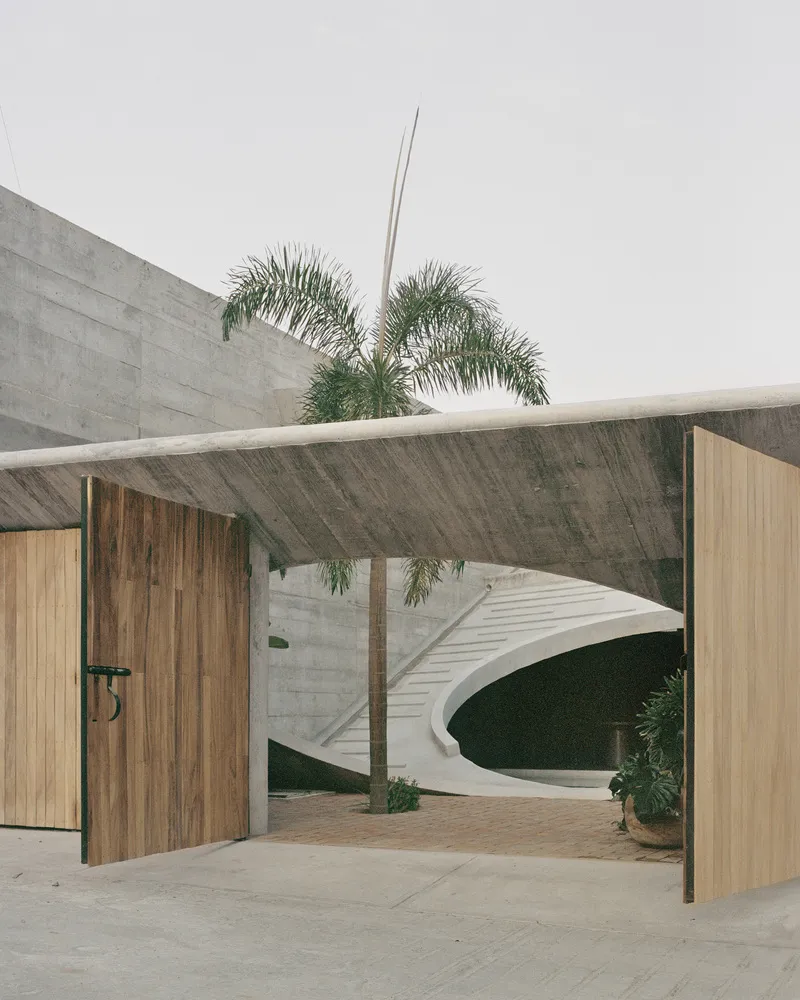
The heart of the project lies in reversing the conventional idea of a house surrounded by a garden. Instead, Casa VO / WO creates a garden with a house at its core, allowing residents to live outdoors as much as possible. This architectural inversion blurs the line between interior and exterior, erasing the rigid boundaries we typically associate with urban homes.
The garden is no longer just a decorative space — it becomes the primary living area, extending into and merging with the home itself. By eliminating typical urban features like windows, glass, and enclosed facades, the design establishes a seamless, continuous connection between nature and dwelling. The houses remain open all day and all night, transforming into habitable gardens where tropical life unfolds effortlessly.
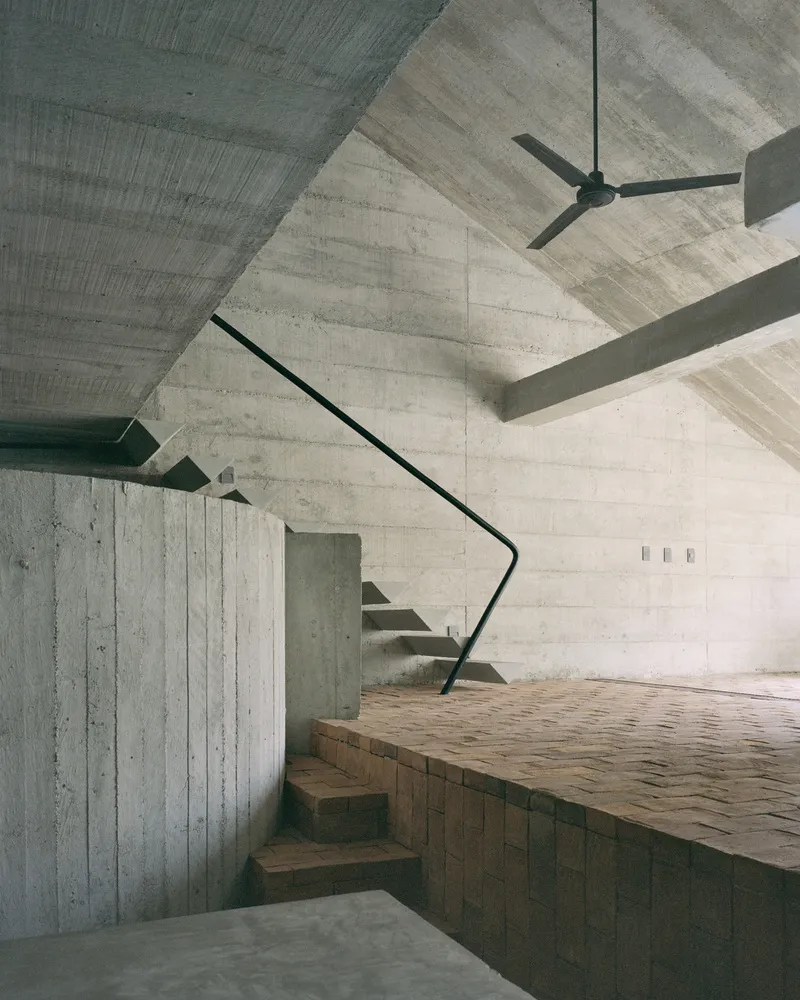
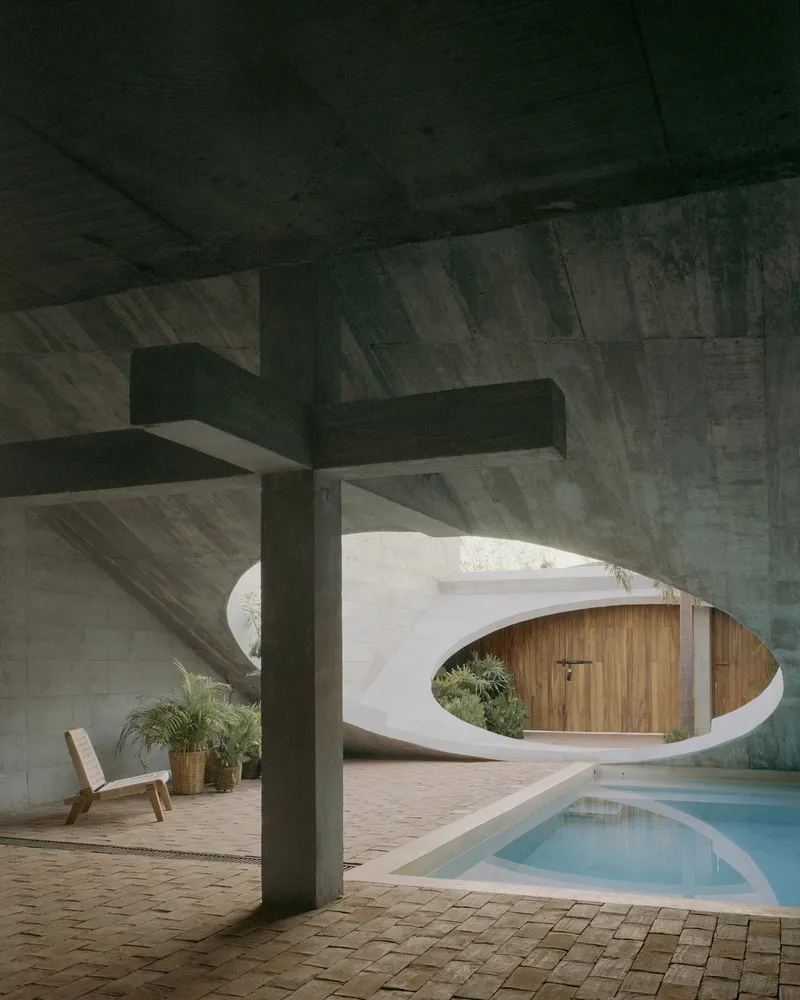
Embracing Wind, Light, and Material Authenticity
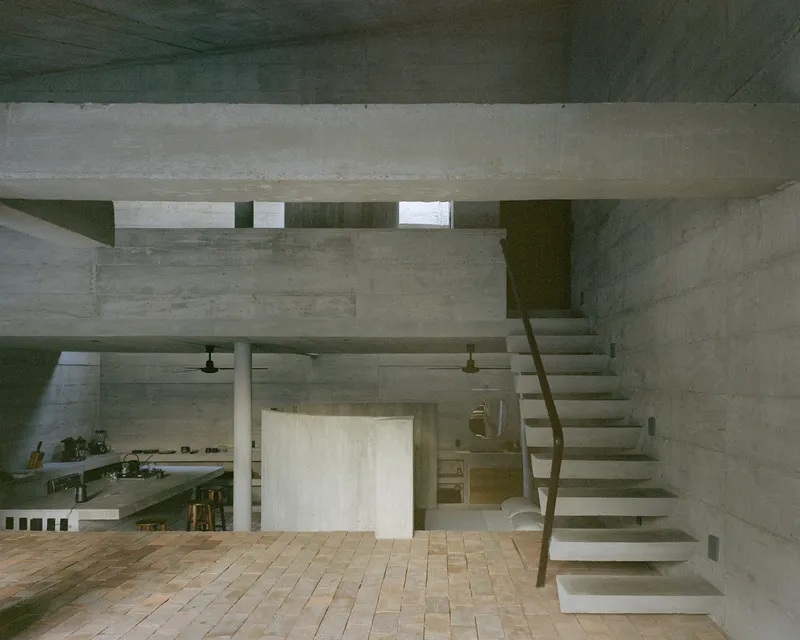
Casa VO / WO embodies the concept of a house as a cave-like refuge — not in the sense of darkness or enclosure, but as a structure that invites wind to pass freely through its spaces. Rather than overcomplicating the architecture with unnecessary elements, Godefroy focuses on the essence of simplicity.
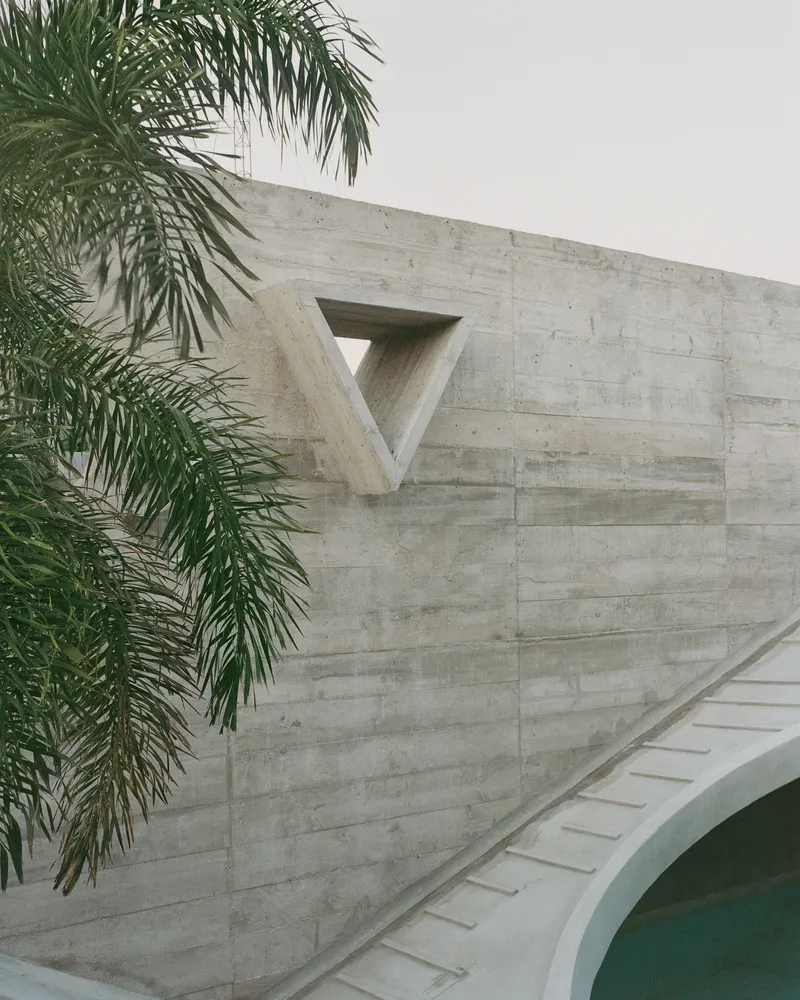
The material palette is deliberately elemental: exposed concrete, wood, and brick dominate the design, chosen not just for their durability but for their capacity to age gracefully. Here, materials are celebrated for their evolving textures and imperfections, embracing the “patina of time” as an active participant in the life of the architecture. As years pass, these materials deepen in character, their surfaces weathered by sun, salt, and wind — reflecting the passage of time in a way that enhances, rather than diminishes, the building’s beauty.

A Timeless Dialogue Between Architecture and Environment
Time is treated as a material in its own right at Casa VO / WO. The architecture deliberately takes a step back, allowing natural processes to leave their imprint and shape the atmosphere of the homes. This philosophy aligns with Godefroy’s broader design ethos: crafting spaces that are not over-controlled or sterile, but alive — spaces that welcome change, movement, and imperfection.
With its abstract forms, minimalist geometry, and earthy textures, Casa VO / WO offers an elegant reinterpretation of tropical living. It demonstrates how architecture can become a direct extension of its climate, culture, and landscape, rejecting superfluous ornament in favor of raw, essential design.


All Photographs are works of Rory Gardiner



Popular Articles
Popular articles from the community


Conexión: Biophilic Design Reimagines High-Rise Living in Hong Kong
Conexión reimagines high-rise living in Hong Kong through biophilic design, green facades, shared spaces, daylight, water and nature within.

Riyadh For All: Intergenerational Urban Design for Active Aging in Rabat
Riyadh For All reimagines urban design in Rabat with intergenerational co-living, adaptive courtyards, and Moroccan cultural exchange today.

Hill & Cross Opera: Sculptural Opera House Architecture Shaped by Tallinn’s Landscape and Identity
Hill & Cross Opera reimagines opera house architecture in Tallinn through its sculptural hill, civic plaza, glass wave and a luminous cross.

Lunar Spiral: Space Architecture Shaped by the Mathematics of the Universe
Lunar Spiral reimagines space architecture through Fibonacci geometry, lunar regolith, levitating habitats, and self-sustaining Moon living.

Similar Reads
You might also enjoy these articles


Hodi-Mandai Geram
Project Function: Preservation and revitalization of the Intangible heritage and socio-spatial identity of the Hodi by Housing, Cultural Memory Center, Sacred Grove, landscape, local tourism economy


Olio Towers: A Mid-Rise for Performers That Fuses Housing, Rehearsal, and Stage
Located blocks from Houston's Theater District, this modular tower stacks living units around a central performance atrium.

Oasis: Modular Green Housing Carved into Dhaka's Urban Fabric
A shortlisted Plugin Housing entry reclaims unauthorized settlements in Dhaka with stepped concrete volumes, green roofs, and ventilation-driven design.

Black Hole: A Floating Megastructure for the Post-Physical Era
Emiliano Mazzarotto envisions a spherical, self-scaling arena where e-sports, digital hotels, and holographic stadiums replace traditional public space.

Explore Architecture Competitions
Discover active competitions in this discipline



Challenge to reimagine the Iron Throne


Photograph architecture without architects


Illustrate the lost glory of Angkor Wat - Render Challenge


Design challenge to reuse E-waste
Comments (0)
Please login or sign up to add comments
No comments yet. Be the first to comment!