
Cast House: A Contemporary Reinterpretation of Edwardian Architecture in Clapham
Cast House blends 1930s suburban motifs with modern design, using brick and concrete to create a sustainable, layered family home.


Introduction
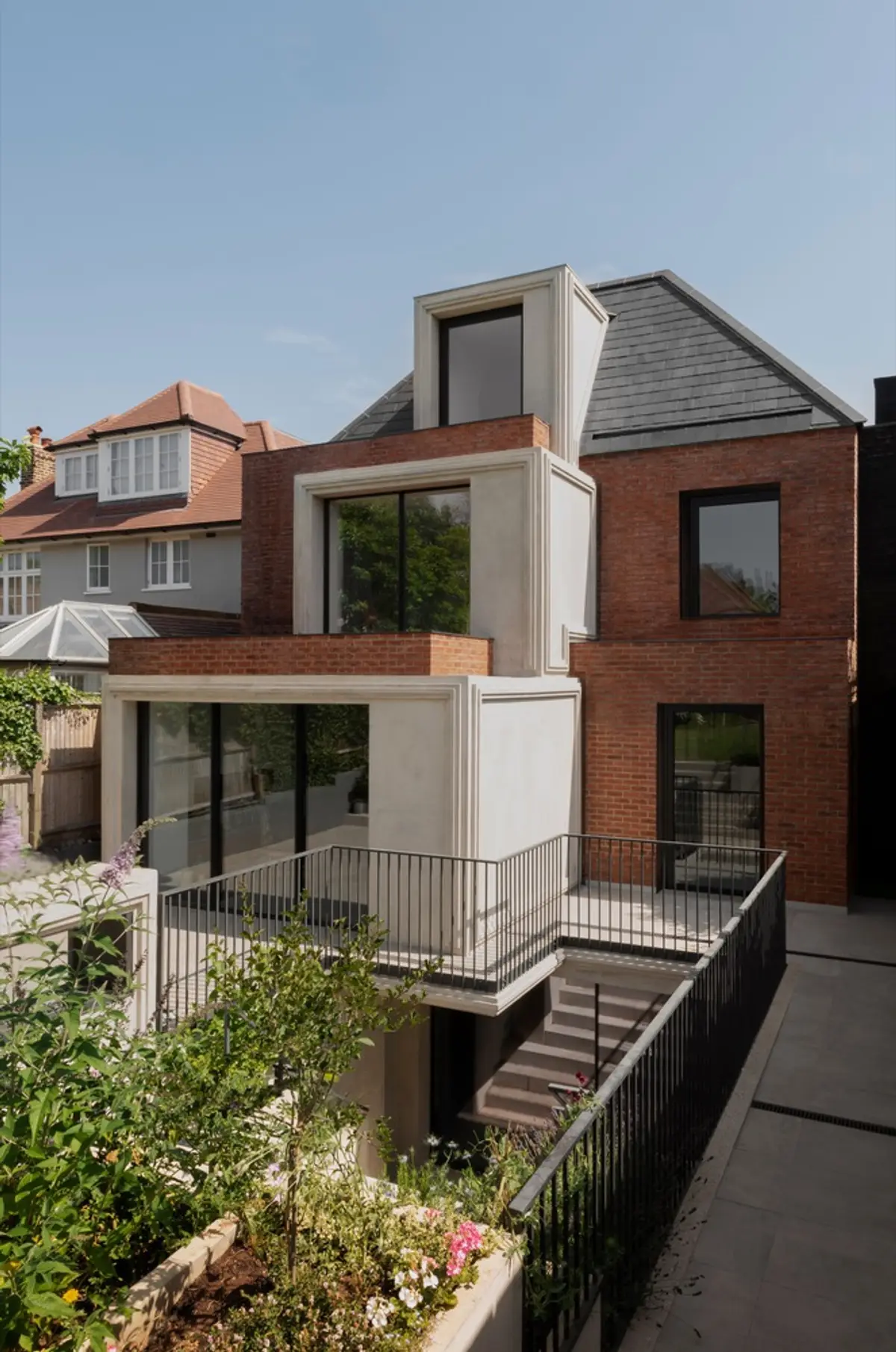
Located in the tranquil suburbs of Clapham, South London, Cast House is a newly constructed detached residence that masterfully blends traditional Edwardian architectural elements with modern design sensibilities. Designed by Bureau de Change Architects, this 420 m², four-story home reimagines the classic London suburban house, offering a fresh perspective while respecting the neighborhood's historical context.
Design Concept and Architectural Language
Cast House draws inspiration from the surrounding Edwardian architecture, characterized by gable roofs, bay windows, tiered materiality, and open porch entrances. Bureau de Change Architects has skillfully integrated these motifs into a contemporary idiom, creating a composition of London stock brick and precast concrete. The result is a harmonious fusion that pays homage to the past while embracing modernity.
The entrance elevation is thoughtfully designed to blend seamlessly with its heritage neighbors, responding to the established rhythm of the street. In contrast, the rear façade presents a bold statement with a cascading sequence of tiered cubic volumes that project into a re-landscaped garden and a sunken patio. This juxtaposition of traditional and contemporary elements creates a dynamic and engaging architectural narrative.
Materiality and Craftsmanship
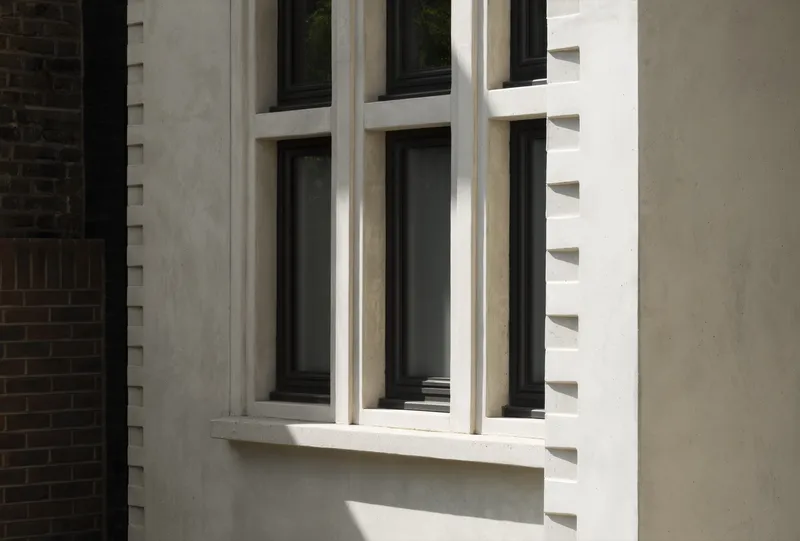
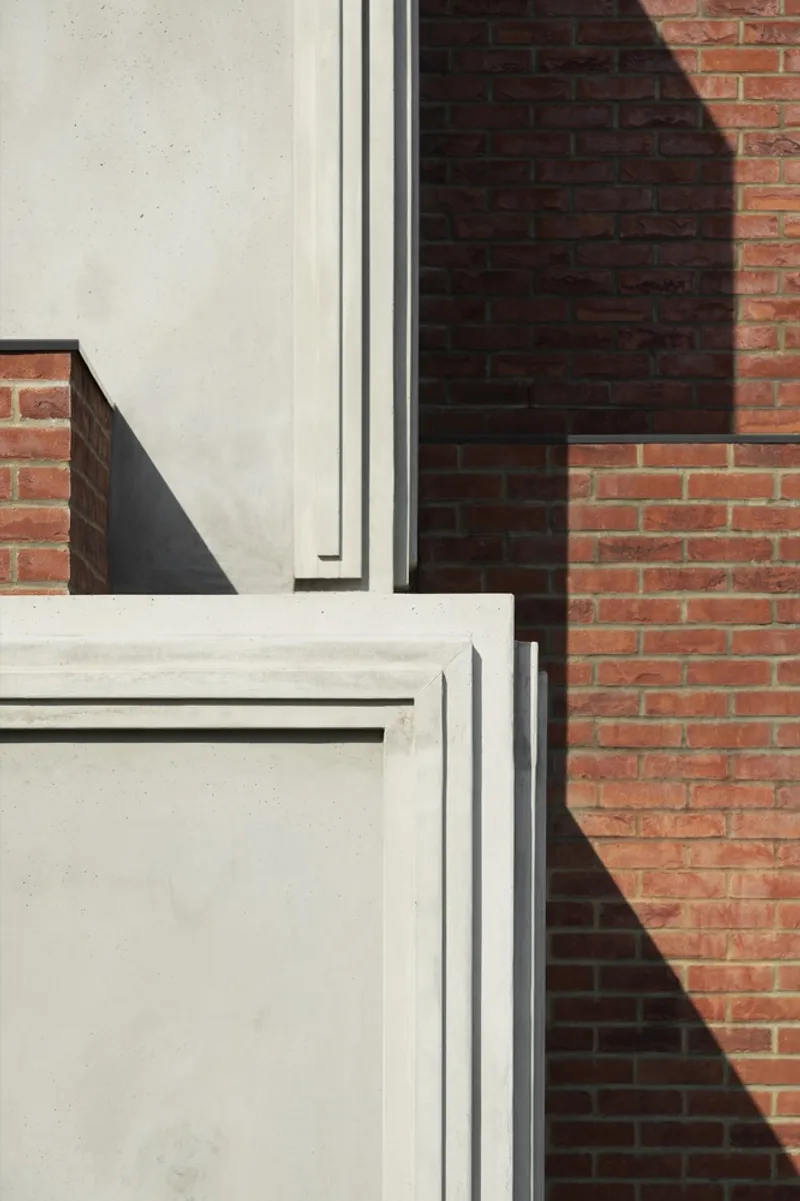
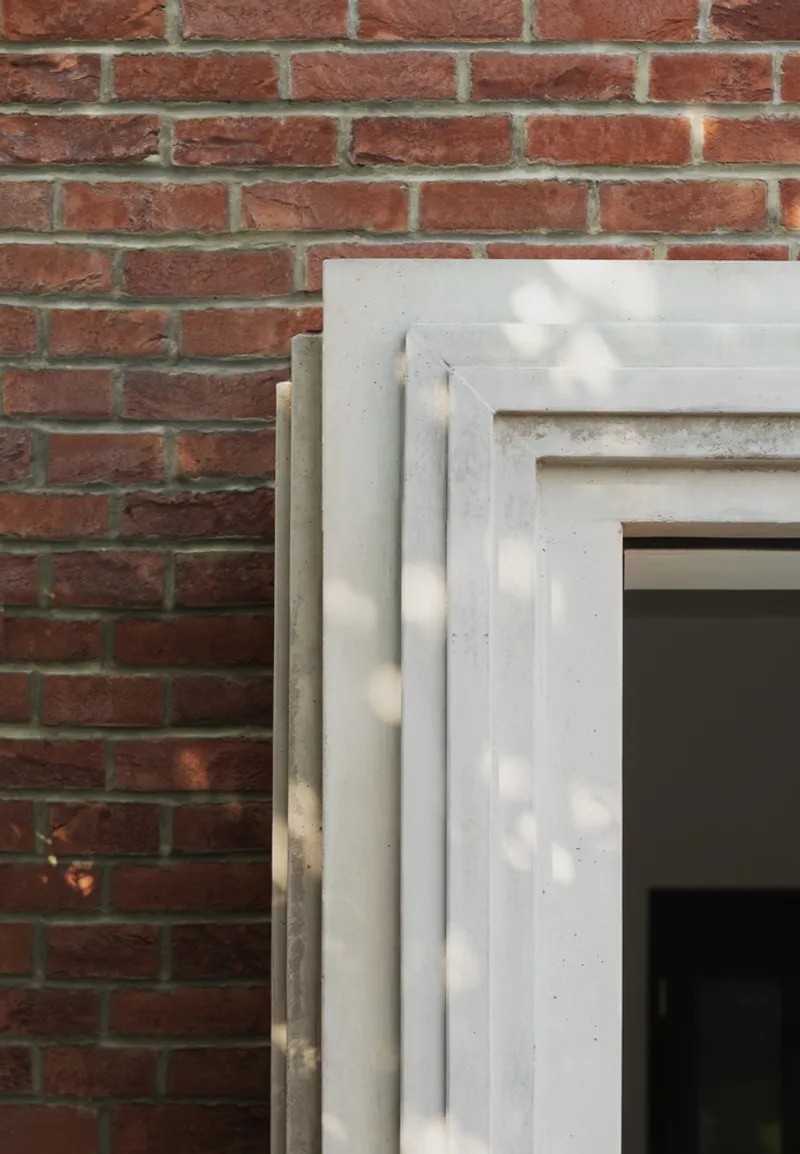
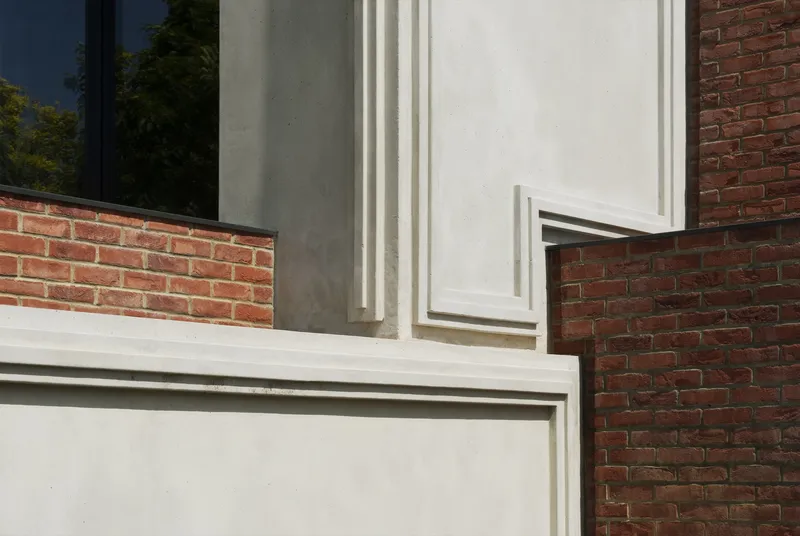
The choice of materials plays a pivotal role in the home's design. Precast concrete details echo the local 1930s architectural language, while also reducing the embodied carbon footprint. The concrete panels incorporate a high content of ground granulated blast-furnace slag (GGBS), a cement substitute that yields a whitewash effect and softer texture. Additional molds at the rear capture the imprints of bricks, and the aggregate is revealed on window sills and planters through timber grinding, enhancing the tactile quality of the surfaces.
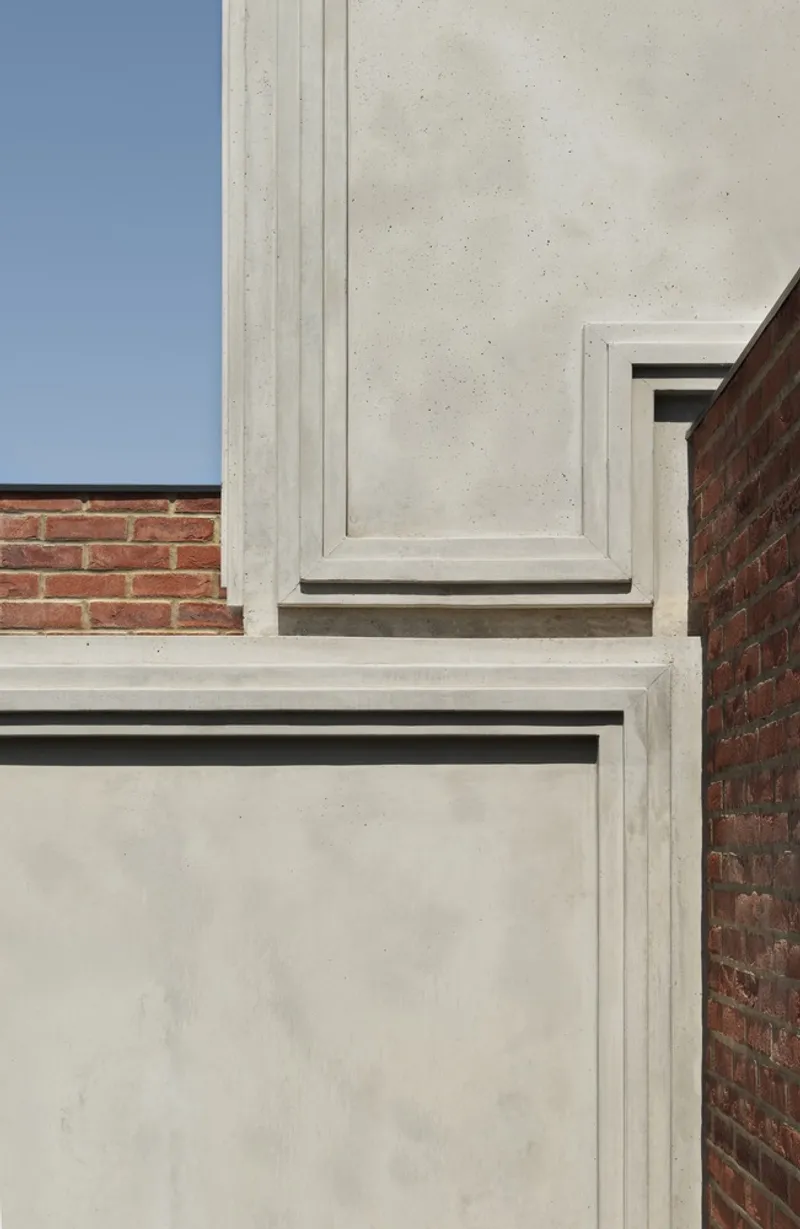
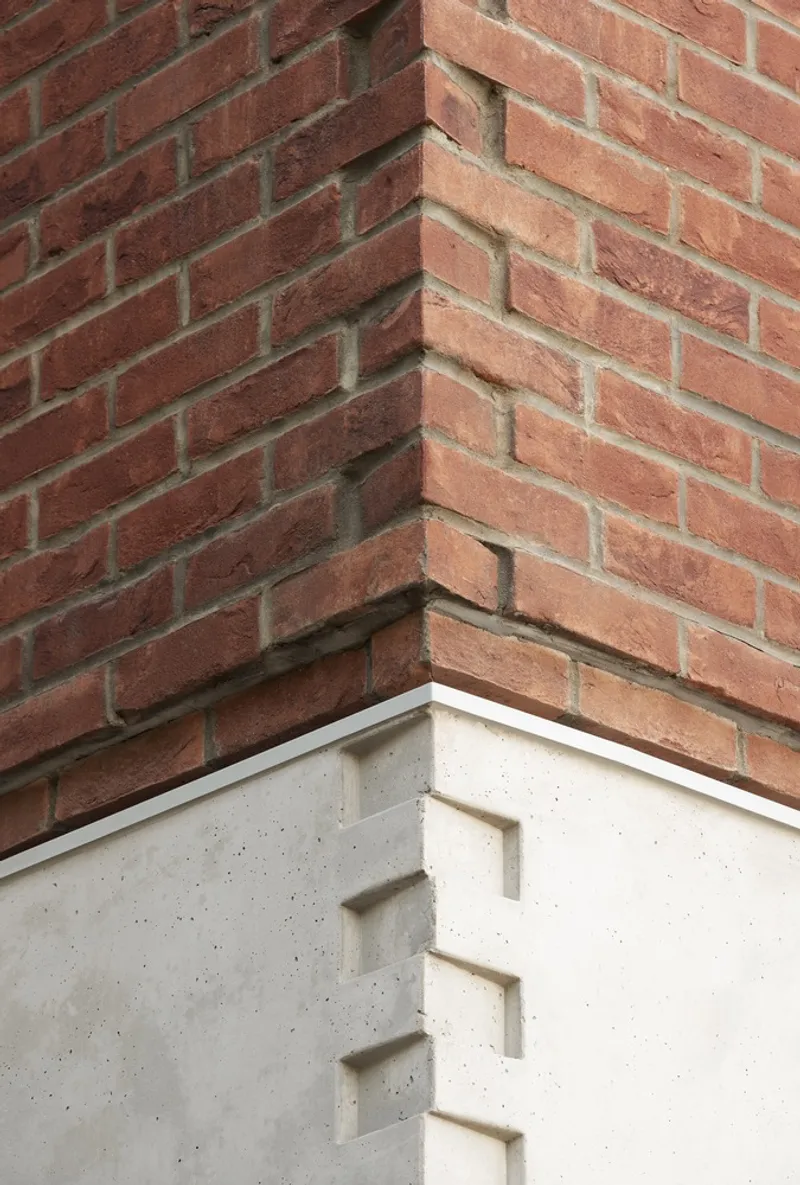
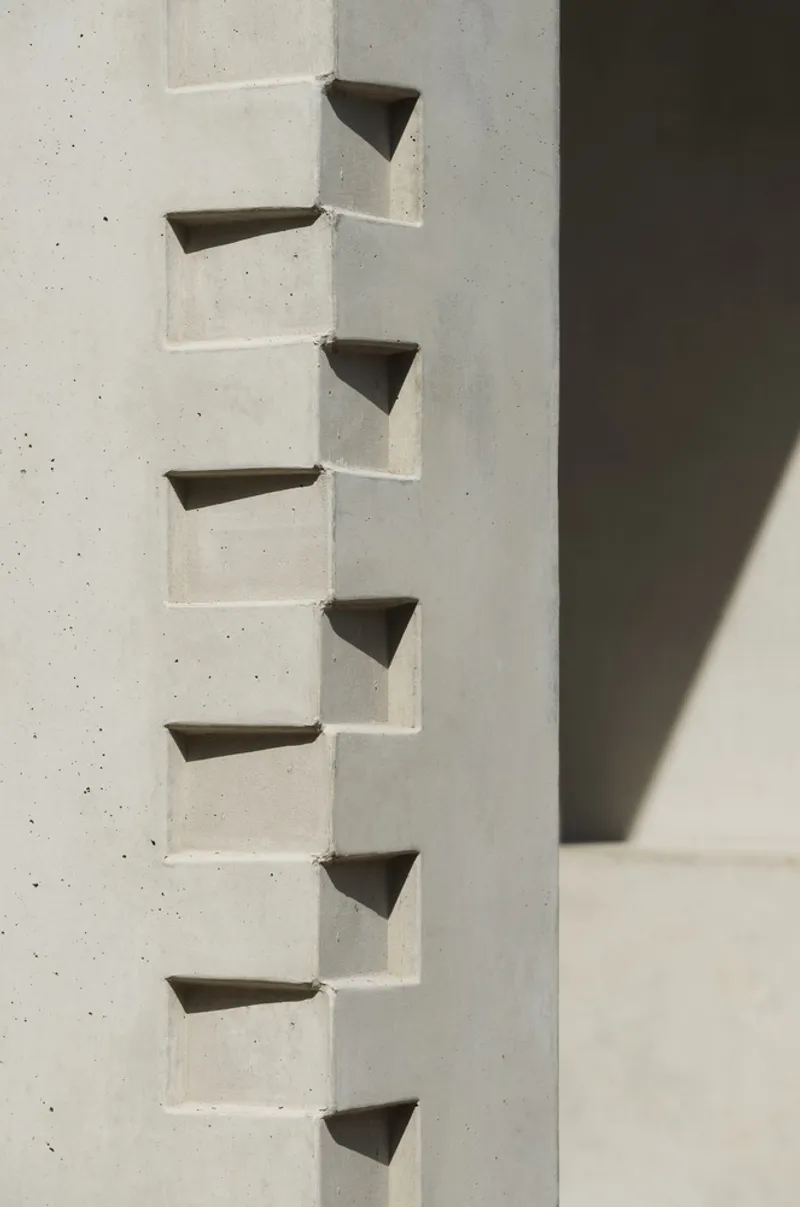
The craftsmanship is evident in the interlocking brick corners, cut at an angle to create a rhythmic pattern along the vertical edges. This pattern is inverted in the concrete plinth below, emphasizing the interplay between brick and cast concrete. The inset brick detail gives the impression that the concrete volumes have been pushed into an existing façade, highlighting the distinction between active and passive volumes.
Spatial Organization and Interior Experience
Designed within the footprint and height parameters of the original 1930s house, Cast House maximizes its spatial potential through thoughtful planning. Bureau de Change Architects excavated one level below ground and added a fifth bedroom as an attic room with a dormer window, resulting in a generous four-story layout.
The interior spaces are connected by an azure blue suspended staircase with vertical railings, leading to a stepped garden terrace that unifies the house and garden. The terrace, flanked by cubic volumes housing planters and an open hearth for outdoor cooking, serves as a bridge between the interior and the re-landscaped garden.
Sustainability and Energy Efficiency
Cast House adheres to passive house principles, incorporating sustainable technologies to enhance energy efficiency. The design includes two air source heat pumps (ASHP) and a mechanical ventilation heat recovery system (MVHR), ensuring optimal indoor air quality and reduced energy consumption. These systems contribute to the home's sustainability goals while providing a comfortable living environment.
All the photographs are works of Gilbert McCarragher


Popular Articles
Popular articles from the community


Conexión: Biophilic Design Reimagines High-Rise Living in Hong Kong
Conexión reimagines high-rise living in Hong Kong through biophilic design, green facades, shared spaces, daylight, water and nature within.

ALGAL REALM: A Bio-Integrated Lunar Habitat Design for Life Beyond Earth
ALGAL REALM reimagines lunar habitat design with algae-powered life support, 3D-printed regolith, and vertical living for a lunar future.

Lunar Spiral: Space Architecture Shaped by the Mathematics of the Universe
Lunar Spiral reimagines space architecture through Fibonacci geometry, lunar regolith, levitating habitats, and self-sustaining Moon living.

Little Red Riding Hood: Architectural Design as a Journey Through Fear, Light, and Storytelling
Little Red Riding Hood reimagines the fairy tale through architectural design shaped by fear, light, scale, memory, uncertainty, and choice.

Similar Reads
You might also enjoy these articles


Hodi-Mandai Geram
Project Function: Preservation and revitalization of the Intangible heritage and socio-spatial identity of the Hodi by Housing, Cultural Memory Center, Sacred Grove, landscape, local tourism economy


Olio Towers: A Mid-Rise for Performers That Fuses Housing, Rehearsal, and Stage
Located blocks from Houston's Theater District, this modular tower stacks living units around a central performance atrium.

Oasis: Modular Green Housing Carved into Dhaka's Urban Fabric
A shortlisted Plugin Housing entry reclaims unauthorized settlements in Dhaka with stepped concrete volumes, green roofs, and ventilation-driven design.

Black Hole: A Floating Megastructure for the Post-Physical Era
Emiliano Mazzarotto envisions a spherical, self-scaling arena where e-sports, digital hotels, and holographic stadiums replace traditional public space.

Explore Housing Competitions
Discover active competitions in this discipline

Challenge to reimagine the Iron Throne

Photograph architecture without architects

Illustrate the lost glory of Angkor Wat - Render Challenge

Design challenge to reuse E-waste
Comments (0)
Please login or sign up to add comments
No comments yet. Be the first to comment!