
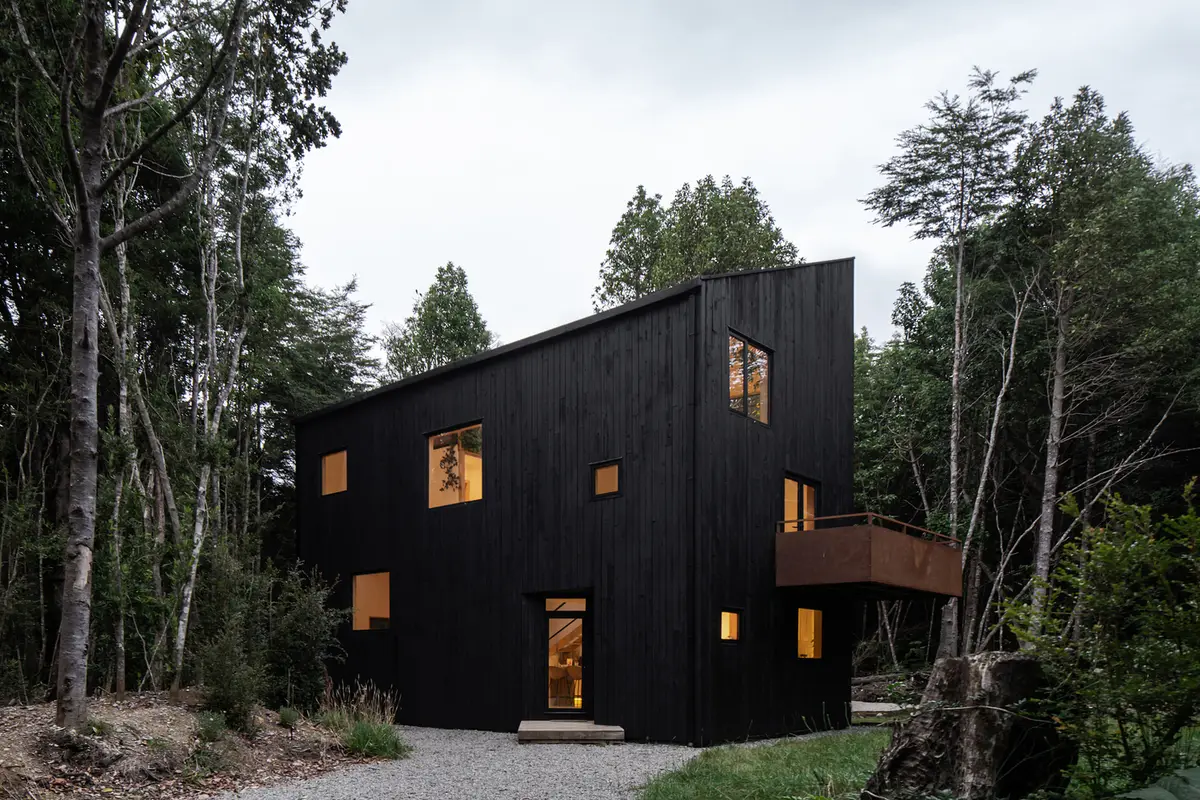
Cero House by Estudio Sur Arquitectos
A slender vertical wooden house rising through forest canopy, minimizing footprint while layering light-filled living spaces immersed in nature context.


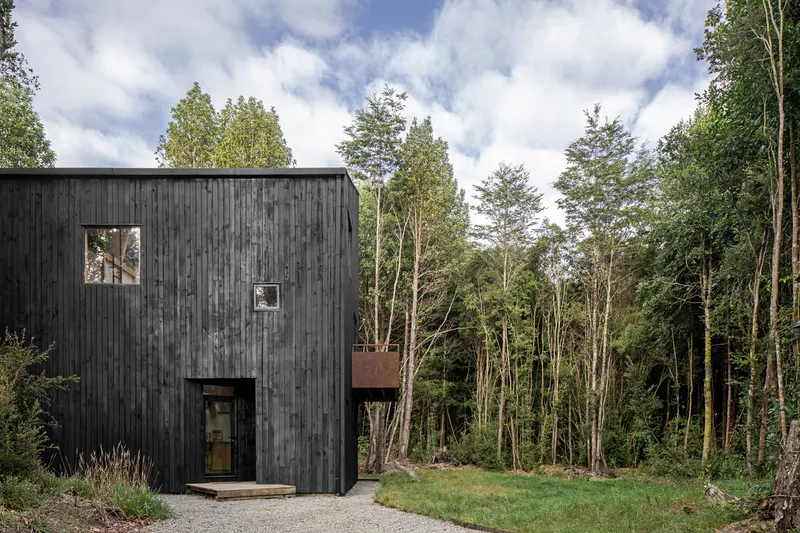
Cero House is a compact yet spatially ambitious residential project designed by Estudio Sur Arquitectos in Puerto Varas, southern Chile. Set within a dense native forest, the house responds to a clear architectural mandate: to create an economical, low-impact dwelling that preserves the integrity of its natural surroundings while offering a rich spatial experience within a limited footprint.
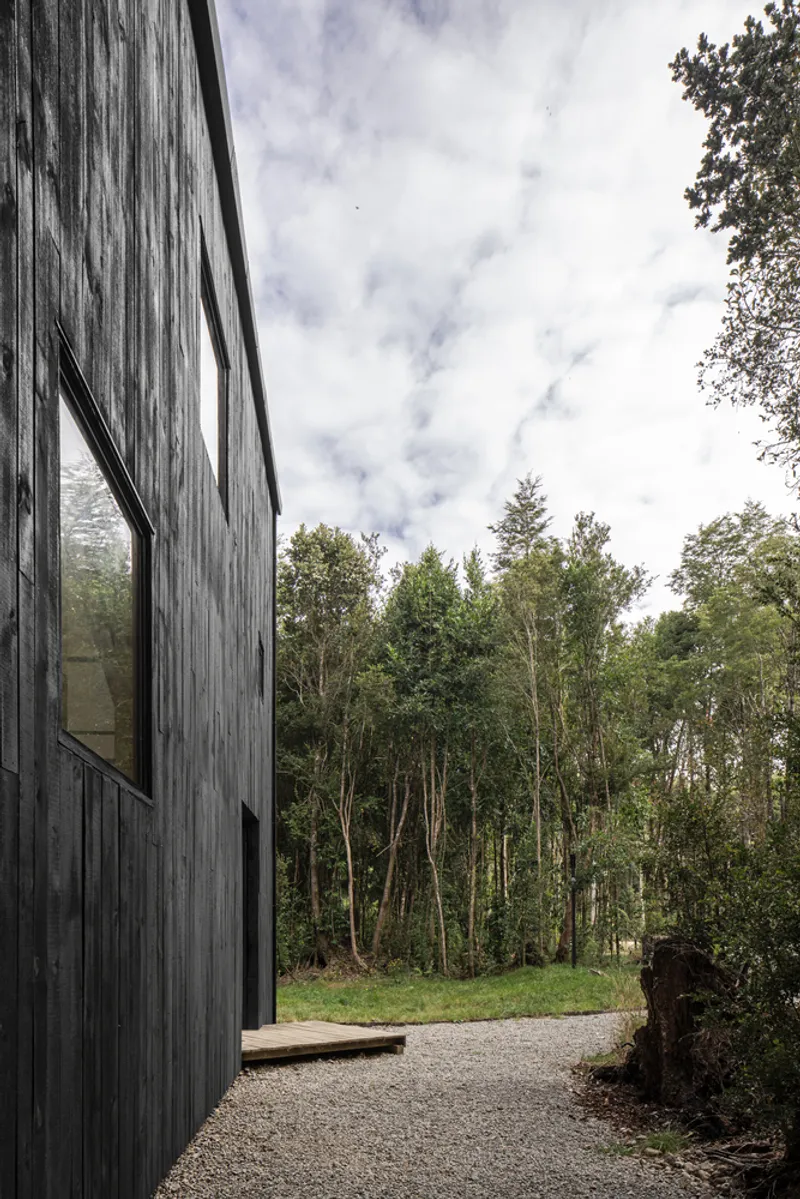
The project occupies a small clearing in the landscape, carefully positioned to minimize intervention in the existing vegetation. With a total built area of approximately 120 m² (1292 ft²), Cero House demonstrates how vertical residential architecture can become an effective strategy for building in environmentally sensitive contexts.
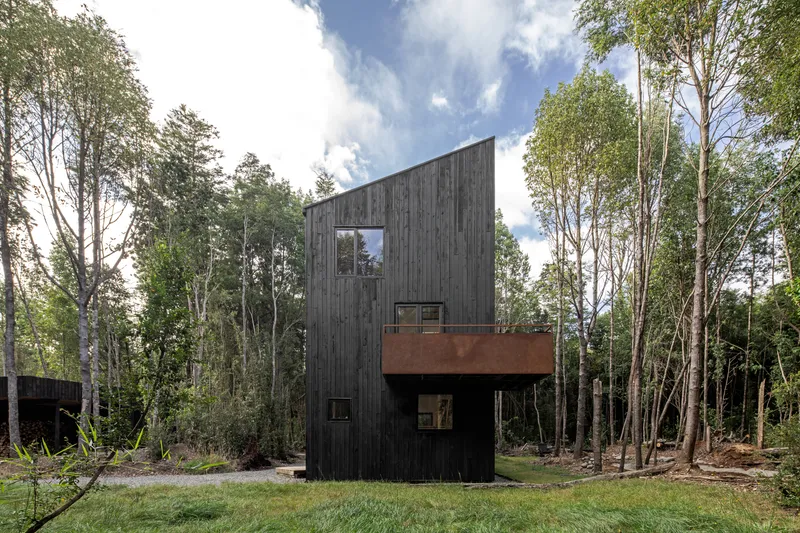
Vertical Living in a Forest Context
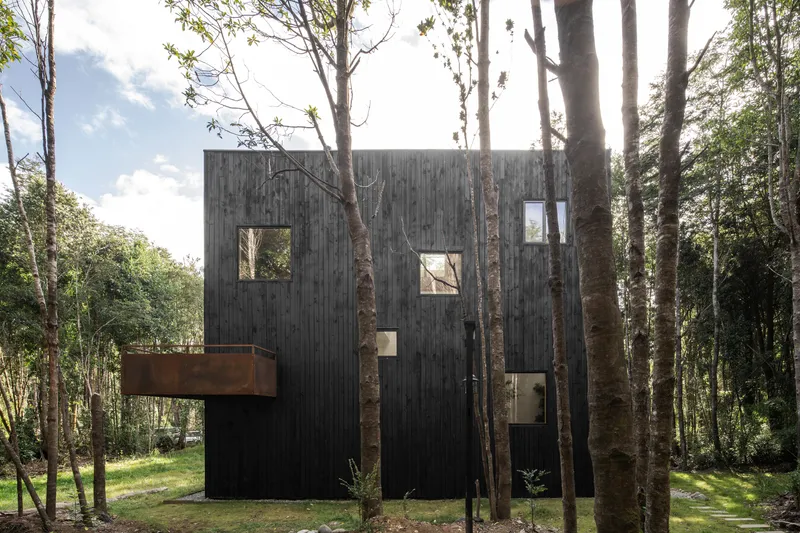
Rather than expanding horizontally and disrupting the terrain, the architects proposed a slender, elongated volume clad entirely in wood. This compact form rises vertically and is organized into six interconnected levels, allowing the house to occupy minimal ground area while maximizing spatial diversity and views.
The vertical organization enables each level to engage differently with the surrounding forest, offering changing perspectives of the tree canopy, filtered daylight, and seasonal shifts. This approach not only optimizes land use but also reinforces a continuous visual relationship between interior spaces and nature.
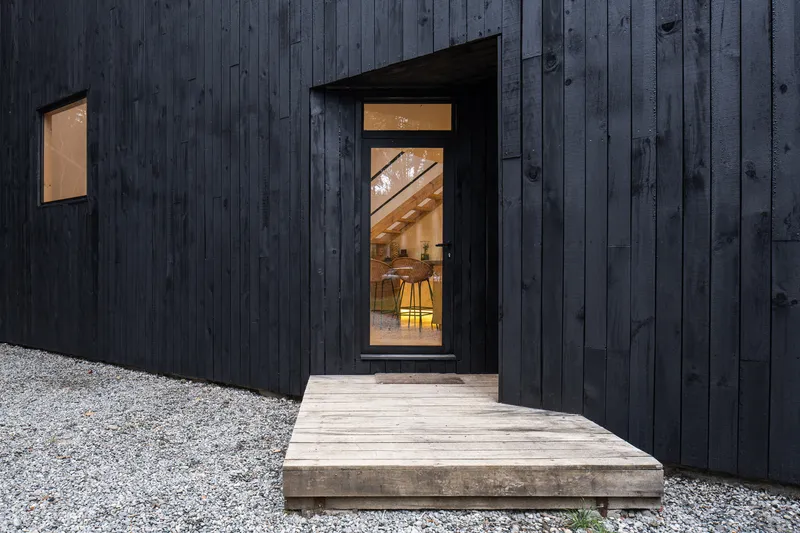
Central Staircase as Spatial Core
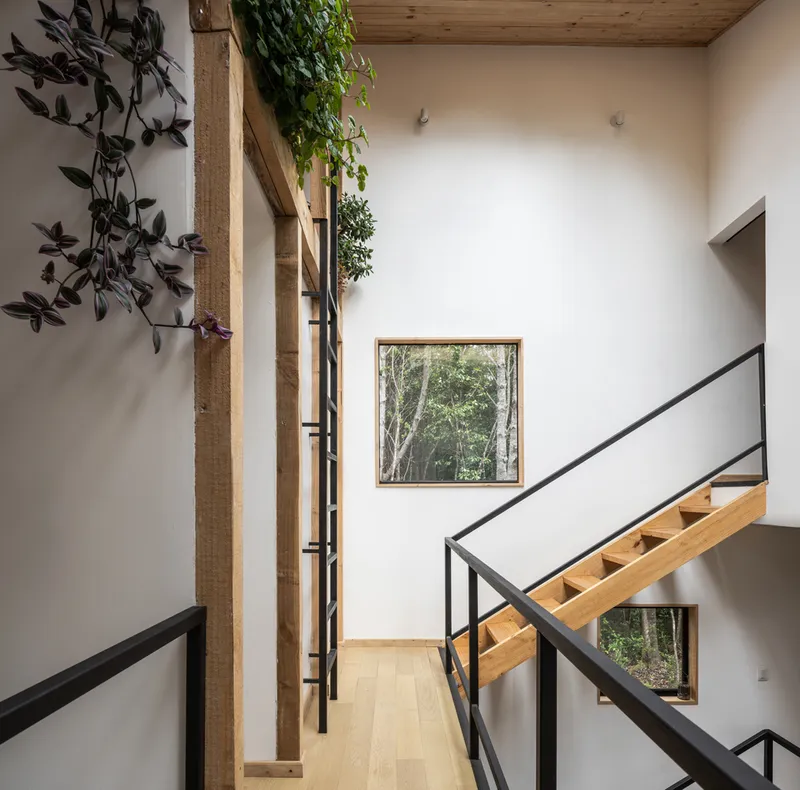
At the heart of Cero House is a central staircase, conceived as the main organizing element of the residence. More than a circulation device, the staircase acts as a spatial spine, connecting all levels while facilitating the flow of natural light and ventilation throughout the house.
Open connections between floors create a sense of openness despite the compact dimensions, enhancing visual continuity and reinforcing the vertical character of the design. This strategy contributes to an atmosphere that feels generous, fluid, and closely tied to the surrounding environment.
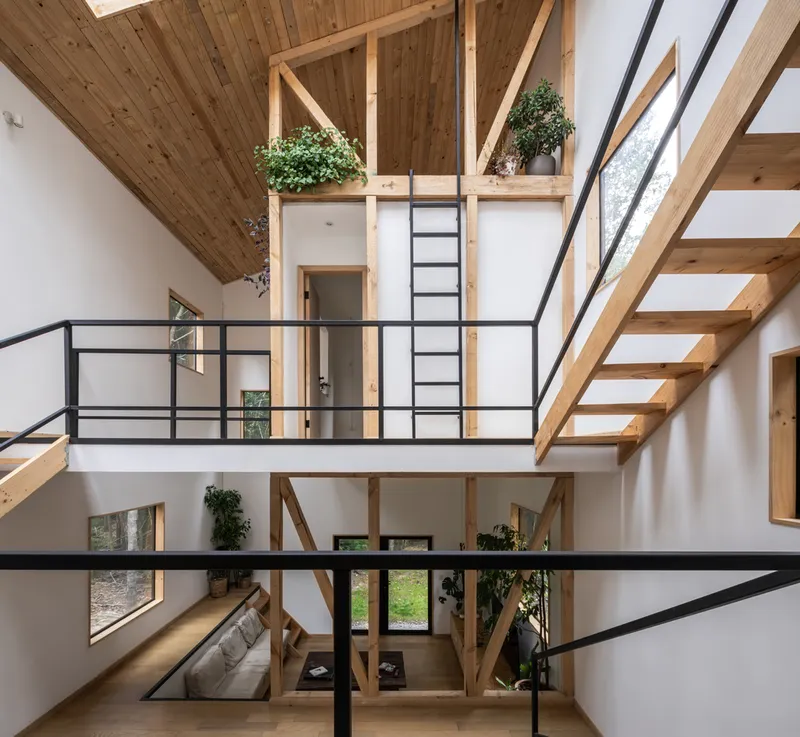
Social Spaces Rooted in Light and Openness
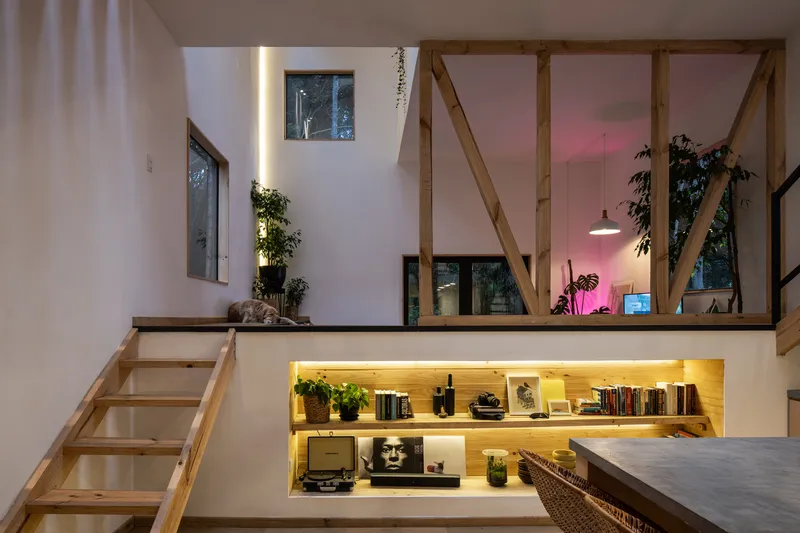
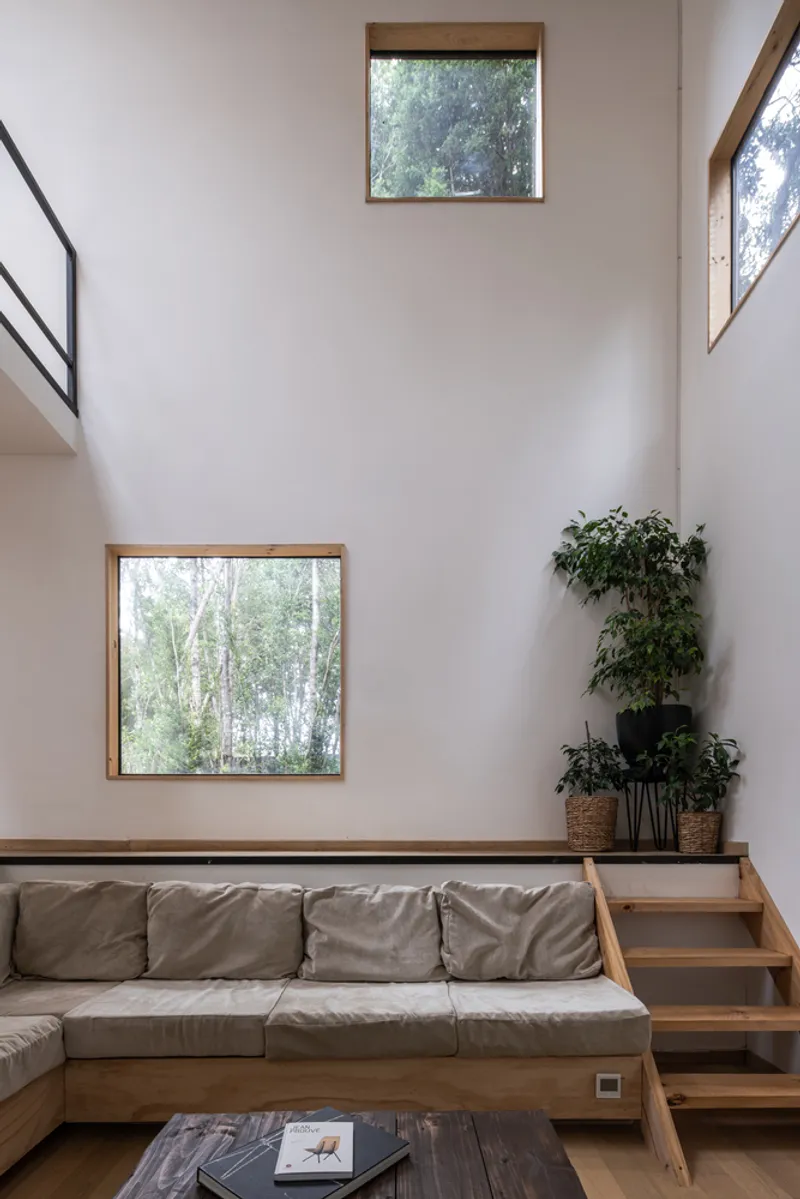
The lower levels accommodate the home’s primary social areas, including the kitchen and living space. These areas are conceived as open, bright environments that encourage gathering and daily interaction. Large-format windows frame views of the forest, allowing daylight to penetrate deep into the interior and creating a strong visual dialogue between inside and outside.
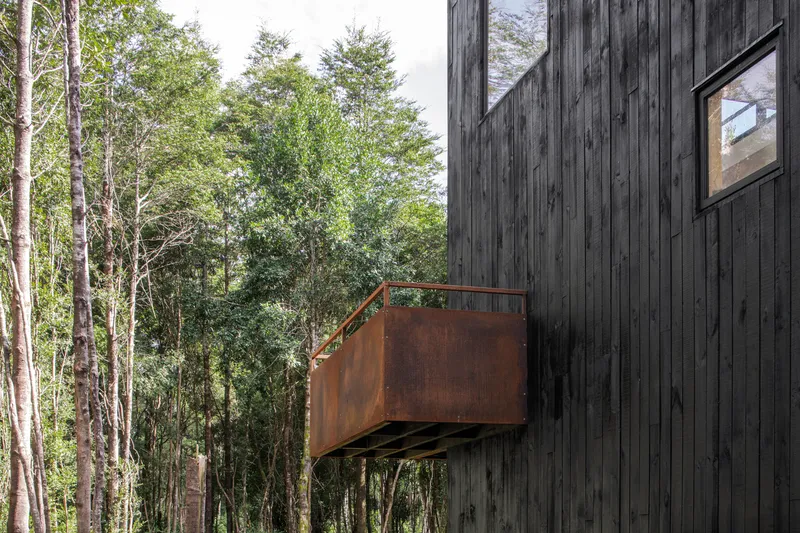
The material palette: dominated by wood: reinforces warmth and continuity, while the restrained architectural language ensures that the focus remains on light, space, and landscape.
Private Areas Immersed in Nature
The upper levels house the more private functions of the home, including bedrooms and workspaces. Each level is carefully oriented to capture panoramic forest views and optimal sunlight conditions, contributing to a calm and restorative atmosphere.
The spatial arrangement balances privacy and openness, allowing residents to retreat while remaining visually connected to the surrounding vegetation. This layered vertical sequence creates a gradual transition from communal to intimate spaces.
Flexible Upper Level and Adaptability
At the top of the house, a multifunctional space offers flexibility for changing needs, such as a studio, workspace, or recreational area. Elevated above the forest floor, this level benefits from abundant natural light and expansive views of the native tree canopy, reinforcing the project’s immersive relationship with its context.
A Model for Sustainable, Low-Impact Housing
Cero House exemplifies a thoughtful approach to sustainable residential architecture, where compact design, vertical organization, and material simplicity come together to reduce environmental impact. By working within a small footprint and embracing the existing landscape, Estudio Sur Arquitectos deliver a house that is both economical and environmentally responsive, proving that modest scale can still offer architectural richness.
Project Details
Architects: Estudio Sur Arquitectos Location: Puerto Varas, Chile Year: 2023 Area: 1292 ft² Photographs: Nico Saieh Manufacturers: Arauco, Kitchen Center, MK, Micropiso Curated by: Paula Pintos
All photographs are works of Nico Saieh


Popular Articles
Popular articles from the community


The Ocean Hive: Sustainable Architecture for a Self-Sufficient Civilization at Sea
The Ocean Hive imagines sustainable architecture at sea, where modular habitats, algae, wave power and ocean waste sustain a growing colony.

The Musturak Paradise: Senior Living Architecture for a Connected Future in Temara, Morocco
The Musturak Paradise reimagines senior living architecture in Temara via private homes, social spaces, culture, community, and shared care.

Hill & Cross Opera: Sculptural Opera House Architecture Shaped by Tallinn’s Landscape and Identity
Hill & Cross Opera reimagines opera house architecture in Tallinn through its sculptural hill, civic plaza, glass wave and a luminous cross.

Co-Life: Senior Housing Design That Reconnects Older Adults With the City
Co-Life reimagines senior housing design through healing gardens, shared streets, workshops, and a sustainable community across generations.

Similar Reads
You might also enjoy these articles


Hodi-Mandai Geram
Project Function: Preservation and revitalization of the Intangible heritage and socio-spatial identity of the Hodi by Housing, Cultural Memory Center, Sacred Grove, landscape, local tourism economy


Olio Towers: A Mid-Rise for Performers That Fuses Housing, Rehearsal, and Stage
Located blocks from Houston's Theater District, this modular tower stacks living units around a central performance atrium.

Oasis: Modular Green Housing Carved into Dhaka's Urban Fabric
A shortlisted Plugin Housing entry reclaims unauthorized settlements in Dhaka with stepped concrete volumes, green roofs, and ventilation-driven design.

Black Hole: A Floating Megastructure for the Post-Physical Era
Emiliano Mazzarotto envisions a spherical, self-scaling arena where e-sports, digital hotels, and holographic stadiums replace traditional public space.

Explore Housing Competitions
Discover active competitions in this discipline

Challenge to reimagine the Iron Throne

Photograph architecture without architects

Illustrate the lost glory of Angkor Wat - Render Challenge

Design challenge to reuse E-waste
Comments (0)
Please login or sign up to add comments
No comments yet. Be the first to comment!