

Chazal School Renovation and Playground Transformation by MULTIPLE Architecture & Urbanism: A Model for Energy and Ecological Education in Brussels
Chazal School by MULTIPLE Architecture renews a 1970s building with sustainable design, energy efficiency, and a green educational playground.


In Schaerbeek, Belgium, the Chazal School Renovation and Playground Transformation by MULTIPLE Architecture & Urbanism reinvents a 1970s school complex into a progressive example of sustainable, educational, and ecological design. This project seamlessly fuses energy efficiency, circular construction, and landscape learning, producing a school environment where architecture, sustainability, and pedagogy coexist.
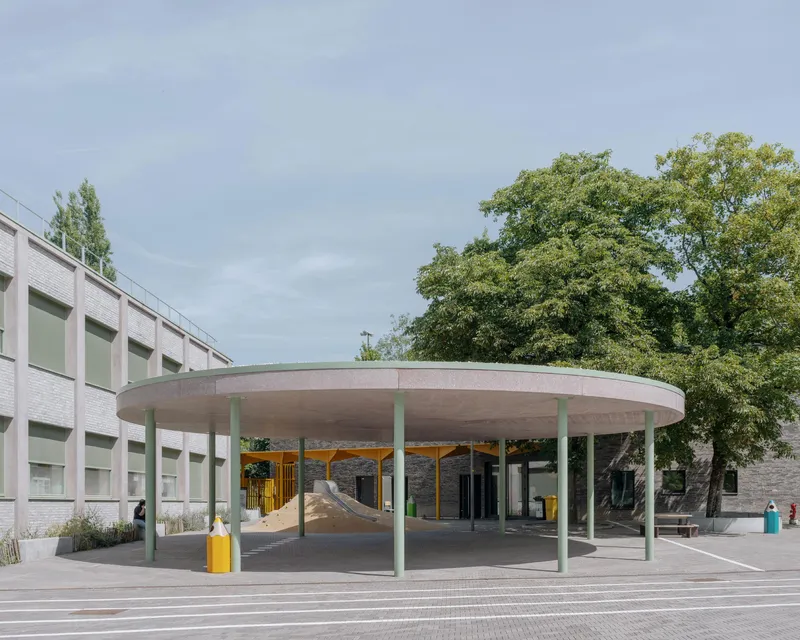
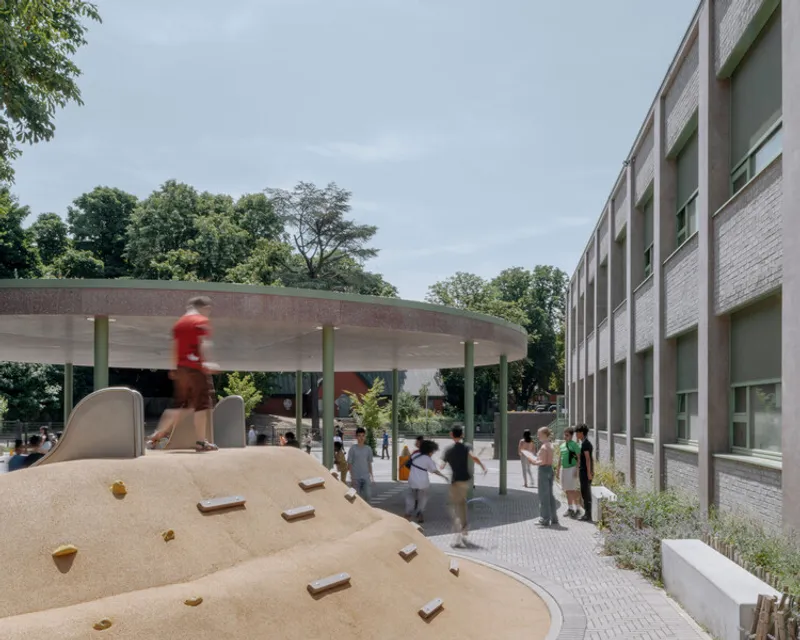
The initiative reflects a broader European commitment toward carbon-neutral public infrastructure and healthier urban spaces. Yet it is also deeply local — reimagining a beloved neighborhood school as both an energy-positive building and a living classroom for environmental awareness.
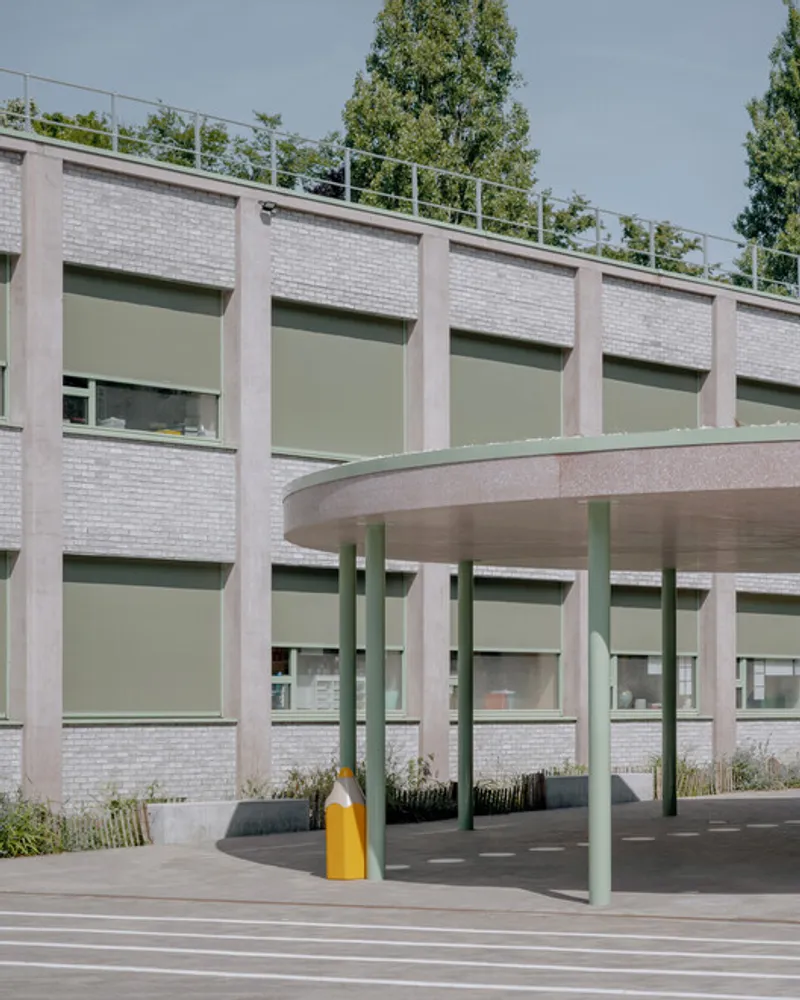
A School Reborn Through Energy Transformation
The Chazal School, built in the 1970s, typified many post-war educational buildings: compact, functional, but poorly insulated and dependent on fossil fuel-based heating and outdated ventilation systems. Over time, the building’s concrete frame had aged without ever undergoing renovation, resulting in thermal inefficiency and low interior comfort.
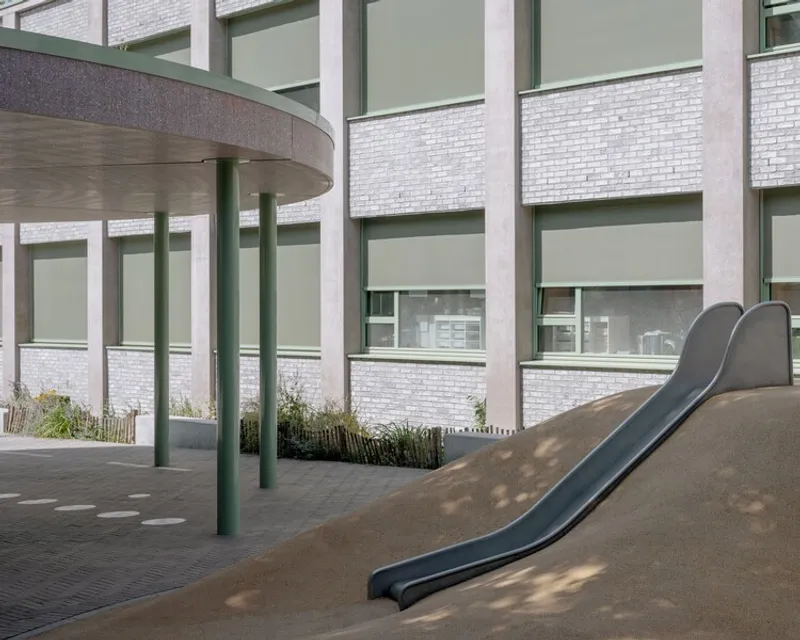
MULTIPLE approached the challenge not through demolition but surgical transformation. Rather than replacing, they wrapped, reinforced, and reenergized the existing structure — preserving its embedded carbon and saving significant construction waste.
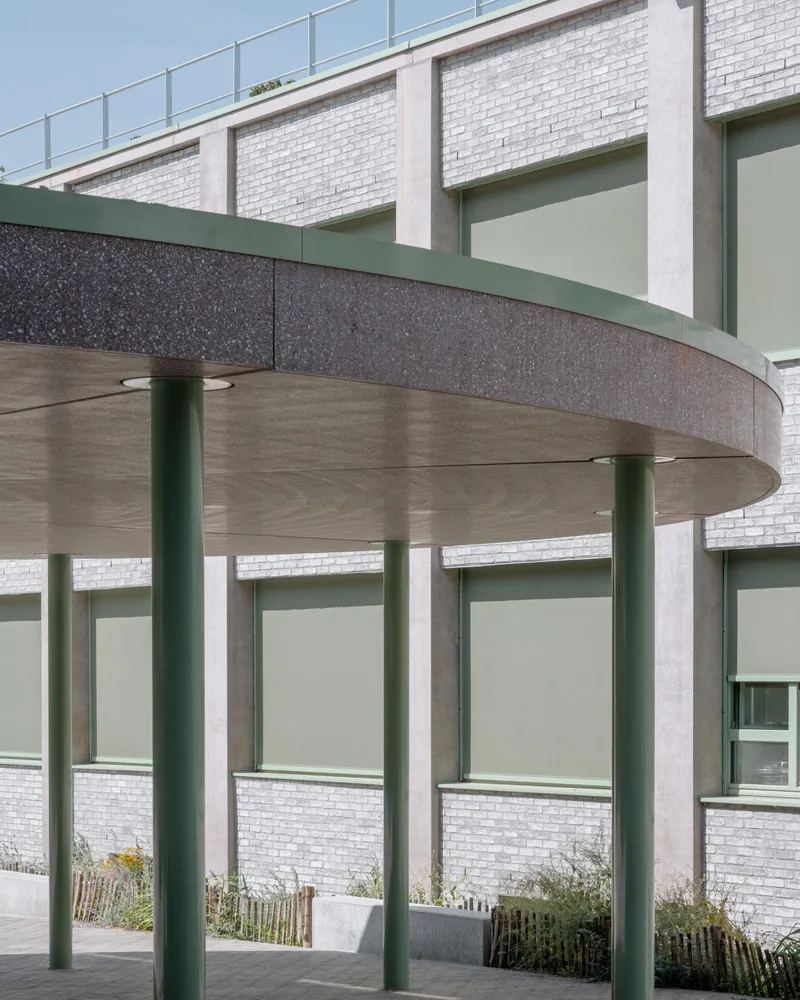
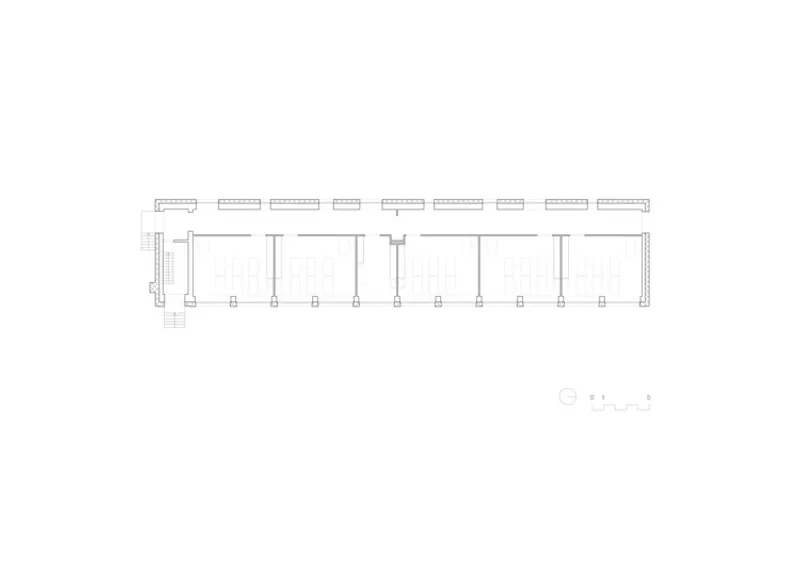
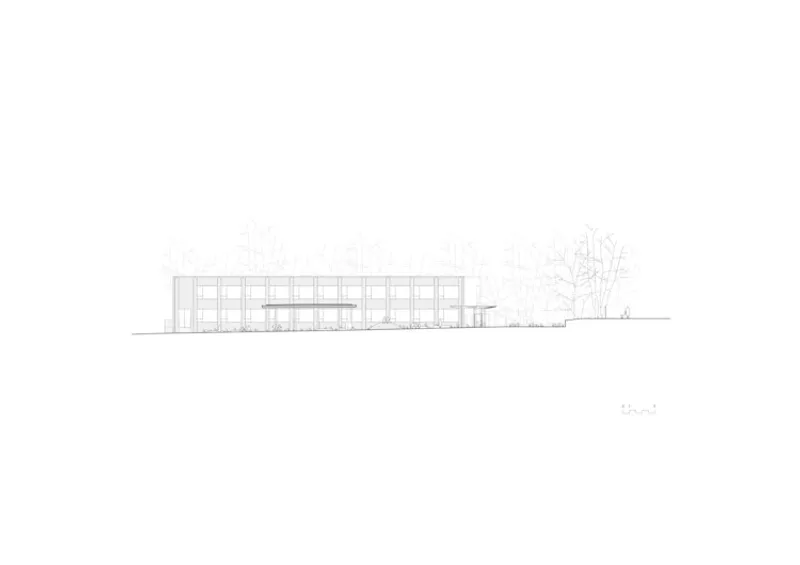
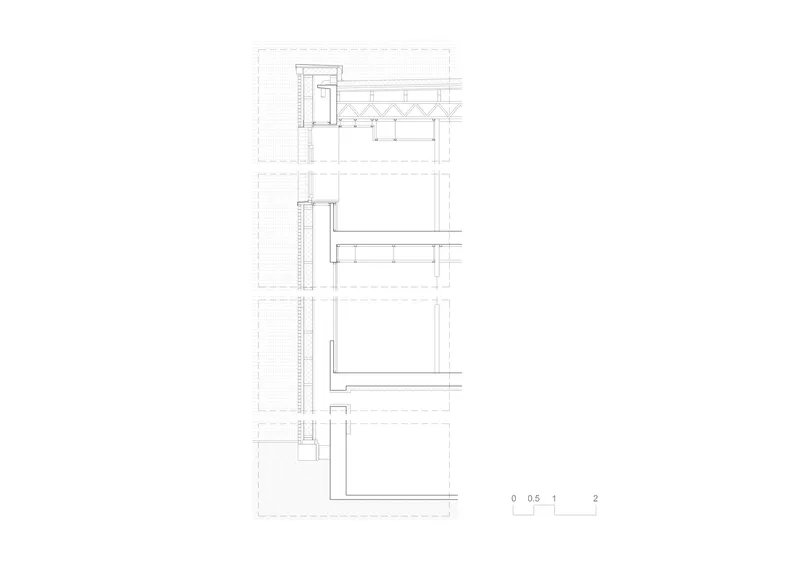
The architects enveloped the entire building in a new high-performance energy shell, made of prefabricated insulated panels. This lightweight and rapid solution served multiple purposes: improving insulation, modernizing the aesthetics, and drastically reducing heating loss.
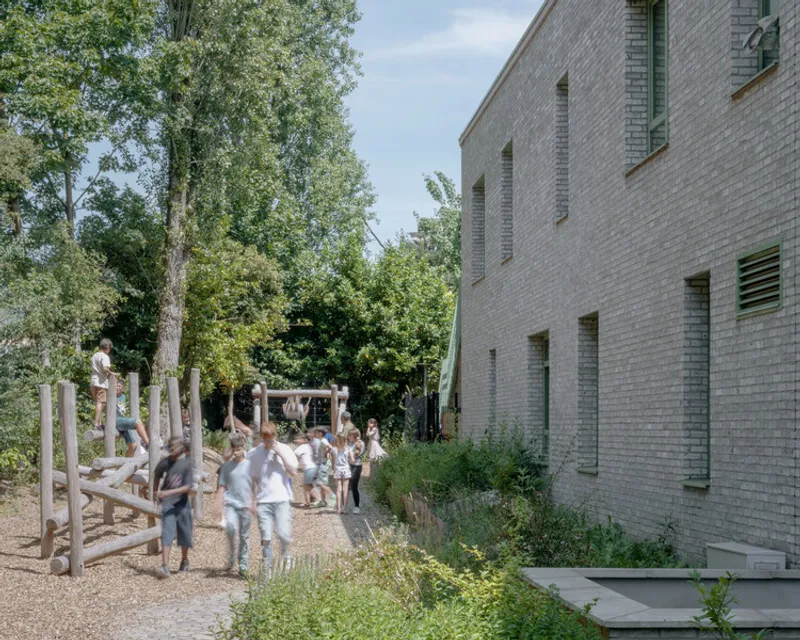
The strategy was dual-sided:
- On the street façade, the insulation panels are semi-opaque, maximizing thermal efficiency while filtering daylight through controlled openings.
- On the courtyard side, generous windows and bright finishes invite natural light into classrooms and administrative spaces, creating environments that inspire learning while cutting electricity consumption.
Inside, mechanical systems were completely replaced. These include double-flow ventilation, LED lighting, low-carbon heating systems, and acoustic upgrades — transforming the old concrete box into a model of comfort, health, and sustainability for future educational facilities.
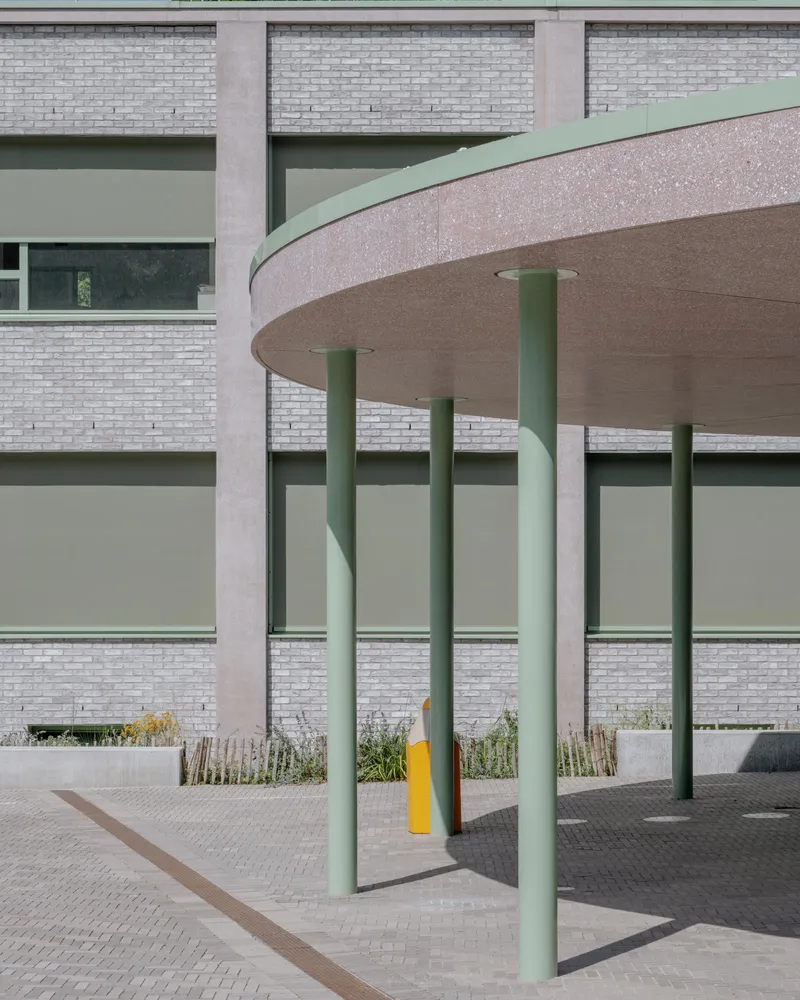
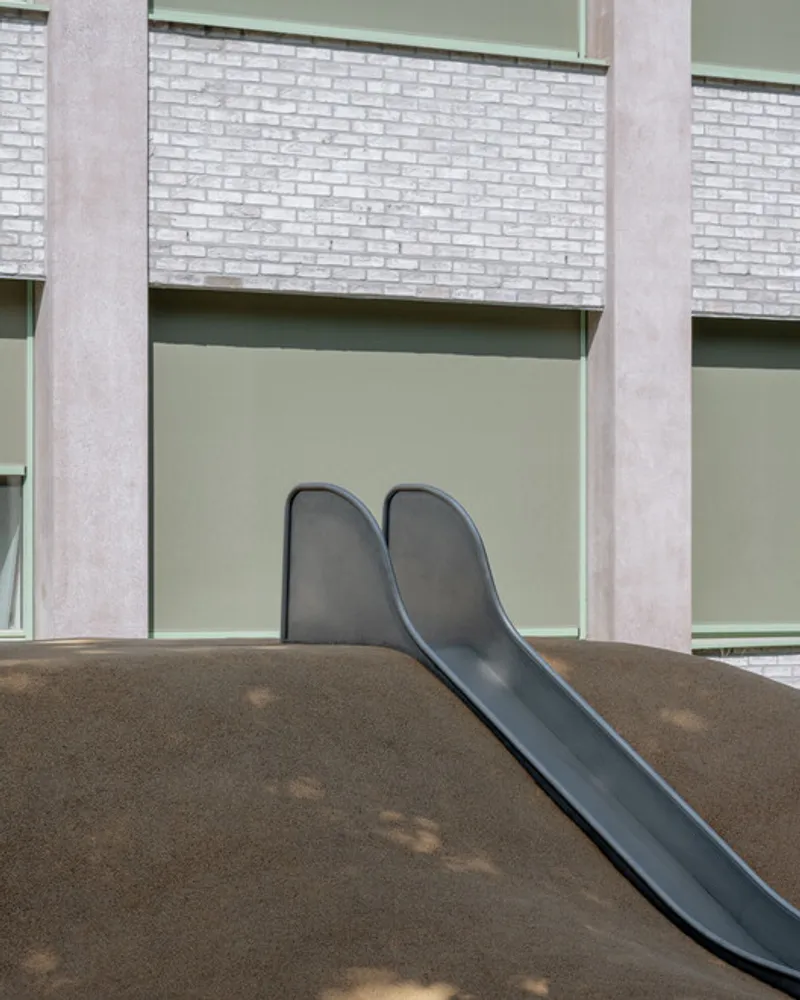
From Concrete Yard to Living Landscape
Parallel to the energy retrofit, the architects completely reimagined the school’s playground — once a monotonous asphalt surface — into a vibrant, green, and permeable learning landscape. This transformation positions outdoor space not as an afterthought but as a central educational environment.
The new yard is permeable, biodiverse, and multi-functional. Its design embodies the principles of climate adaptation and slow water management. Rainwater is no longer hidden underground; instead, it flows through open channels and rain gardens, teaching children about natural cycles and local ecosystems in real time. The landscape absorbs and filters water on-site, mitigating urban runoff — an increasingly vital function for cities coping with heavier rainfall due to climate change.
The new design introduces zones of varied character:
- Active play areas with sports courts and play mounds for movement and collaboration.
- Natural zones with native plantings, boulders, and tree trunks that promote informal exploration and imaginative play.
- Quiet gardens and shaded corners where children can rest, observe insects and leaves, or learn through direct contact with nature.
Every element in the redesigned yard supports pedagogical potential — from environmental science to creativity and well-being. Children can now learn outdoors through participation and discovery, engaging the senses as well as the intellect.
Circular and Sustainable Architecture
From the outset, the project followed a circular design logic — reusing every feasible component of the original structure, minimizing demolition, and relying on prefabrication to reduce construction waste. This approach offered environmental and social benefits by shortening the construction timeline, lowering emissions, and keeping the school functional for much of the process.
By wrapping instead of replacing, MULTIPLE preserved the memory and structure of the school while upgrading it for a future defined by energy consciousness and environmental responsibility. This process demonstrates how existing buildings can be reimagined as resources, not burdens — a critical concept in cities confronting the carbon cost of new construction.
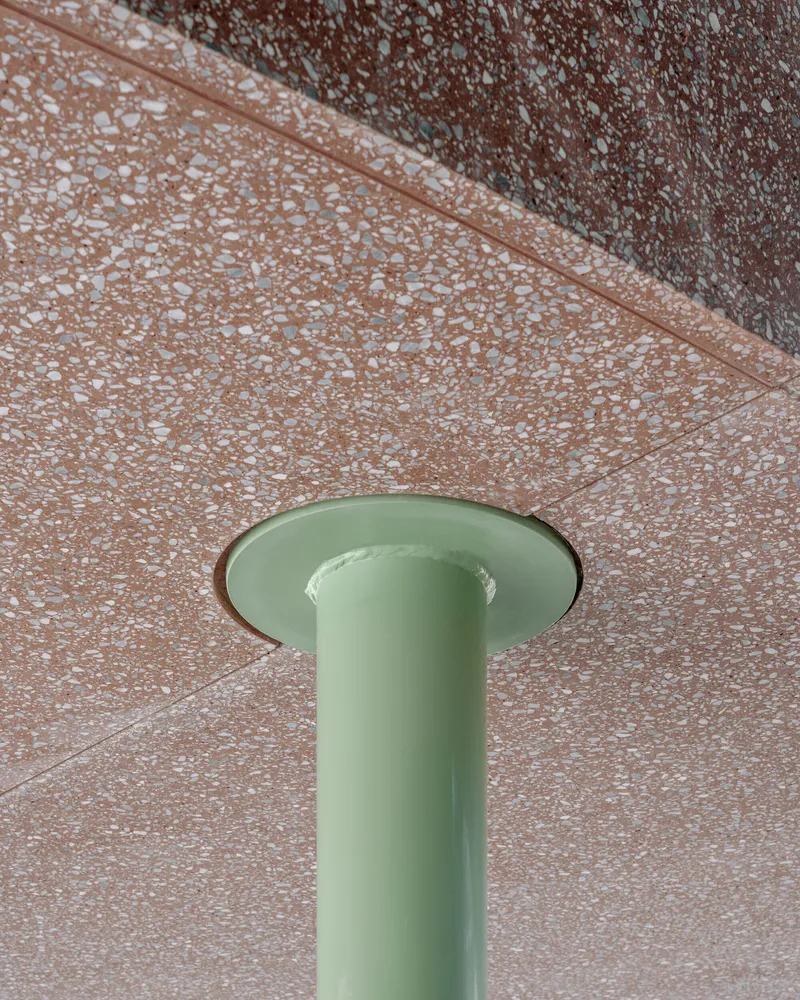
The renovation also enhances resilience and longevity. Maintenance systems are simplified, technical installations are visible and accessible for educational demonstration, and materials such as local timber and low-VOC finishes ensure durability and indoor air quality.
Architecture for a New Model of Learning
The project embodies an evolving philosophy of educational design — where architecture itself becomes a teaching tool. Chazal School’s transformation integrates environmental performance with ecological pedagogy, proving that energy-efficient schools can also be empathetic, inspiring, and attuned to their surroundings.
Students are not just passive occupants but active observers of energy and nature in motion. Transparent systems, visible air ducts, and rainwater pathways make sustainability legible and engaging. For teachers, the outdoor spaces double as flexible, interdisciplinary classrooms.
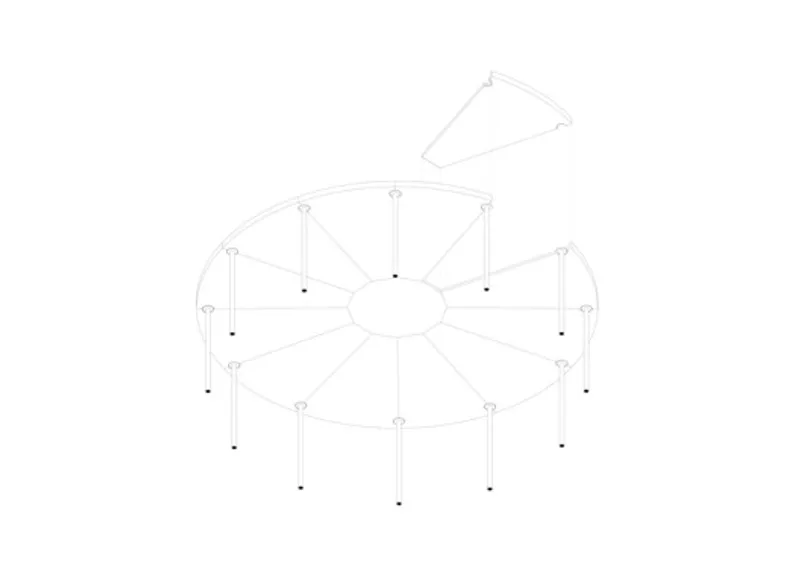
The result is an environment that links learning, comfort, and climate awareness — a balance often missing in older educational infrastructure.
Integration of Nature and Urban Life
Located within the urban fabric of Schaerbeek, the project enhances both its neighborhood presence and its ecological identity. The courtyard façade now opens generously toward the city, forming a visual and symbolic bridge between the classroom and the community.
Vegetation planted along façades and within courtyards acts as a natural buffer, reducing heat island effects and improving biodiversity. These layers of greenery reclaim what was once a hard-edged urban site, making the school a shared garden of learning.
A Prototype for Future Schools
The Chazal School Renovation and Playground Transformation is more than an isolated project; it presents a prototype for public school renovation across Europe. It shows that energy efficiency, environmental education, and design quality can coexist within a modest municipal budget.
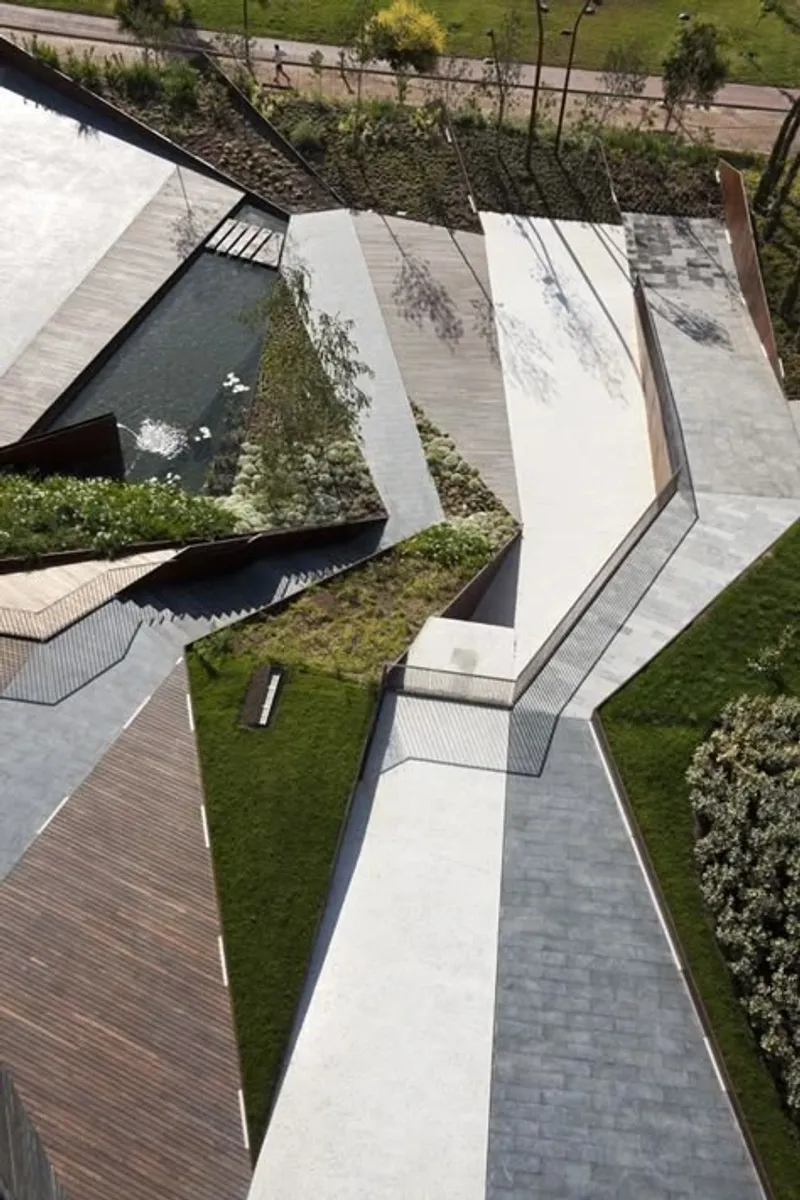
The project redefines the school as a living system — one that breathes, learns, and adapts. Here, children’s daily environments become catalysts for curiosity, empathy, and sustainable behavior.
Through the synthesis of architecture, ecology, and pedagogy, MULTIPLE demonstrates that schools can indeed model the future of cities: resilient, green, and profoundly human.
All the photographs are works of Bruno Dias Ventura


Popular Articles
Popular articles from the community


Juan García Correa, John González and Claudia Rueda Sink a Circular Amphitheater into a Manizales Engineering Building
On the La Nubia campus in Manizales, Colombia, the S1 Building folds labs and offices into a hillside of ramped lawns that double as a campus route.

David Ortega Stacks a Two-Story Mexico City Penthouse Around a Steel Stair and a Pergola-Shaded Roof Terrace
In Colonia Roma, a 300 m² penthouse uses oak joinery, a planted steel stair and a slatted roof pergola to make a new-build apartment feel like a house.

LT2A and OPEN Architectes Thread a Brick and Glass High School Through a Wooded Belgian Campus
In Braine-l'Alleud, a 3,000 m² wing for Collège Cardinal Mercier pairs pale brick with a glazed colonnade, deferring to a small chapel and a dense wood.

longwave studio Reorganizes a 112 m² Tainan Apartment Around the Daily Routines of a Family and Two Cats
In Tainan, Taiwan, birch plywood, rust-red furniture and a freestanding plaster wall link arrival, storage, work and family life in one apartment.

Similar Reads
You might also enjoy these articles


Hodi-Mandai Geram
Project Function: Preservation and revitalization of the Intangible heritage and socio-spatial identity of the Hodi by Housing, Cultural Memory Center, Sacred Grove, landscape, local tourism economy


Olio Towers: A Mid-Rise for Performers That Fuses Housing, Rehearsal, and Stage
Located blocks from Houston's Theater District, this modular tower stacks living units around a central performance atrium.

Oasis: Modular Green Housing Carved into Dhaka's Urban Fabric
A shortlisted Plugin Housing entry reclaims unauthorized settlements in Dhaka with stepped concrete volumes, green roofs, and ventilation-driven design.

Black Hole: A Floating Megastructure for the Post-Physical Era
Emiliano Mazzarotto envisions a spherical, self-scaling arena where e-sports, digital hotels, and holographic stadiums replace traditional public space.

Explore Educational Building Competitions
Discover active competitions in this discipline

Challenge to design public laboratory

Challenge to reimagine the Iron Throne

Photograph architecture without architects

Illustrate the lost glory of Angkor Wat - Render Challenge
Comments (0)
Please login or sign up to add comments
No comments yet. Be the first to comment!