
Chicago Park District Headquarters and Fieldhouse: Civic Architecture Rooted in Landscape and Community
A circular civic landmark in Chicago combining park headquarters and fieldhouse, integrating landscape, public pathways, and sustainable design for community life.


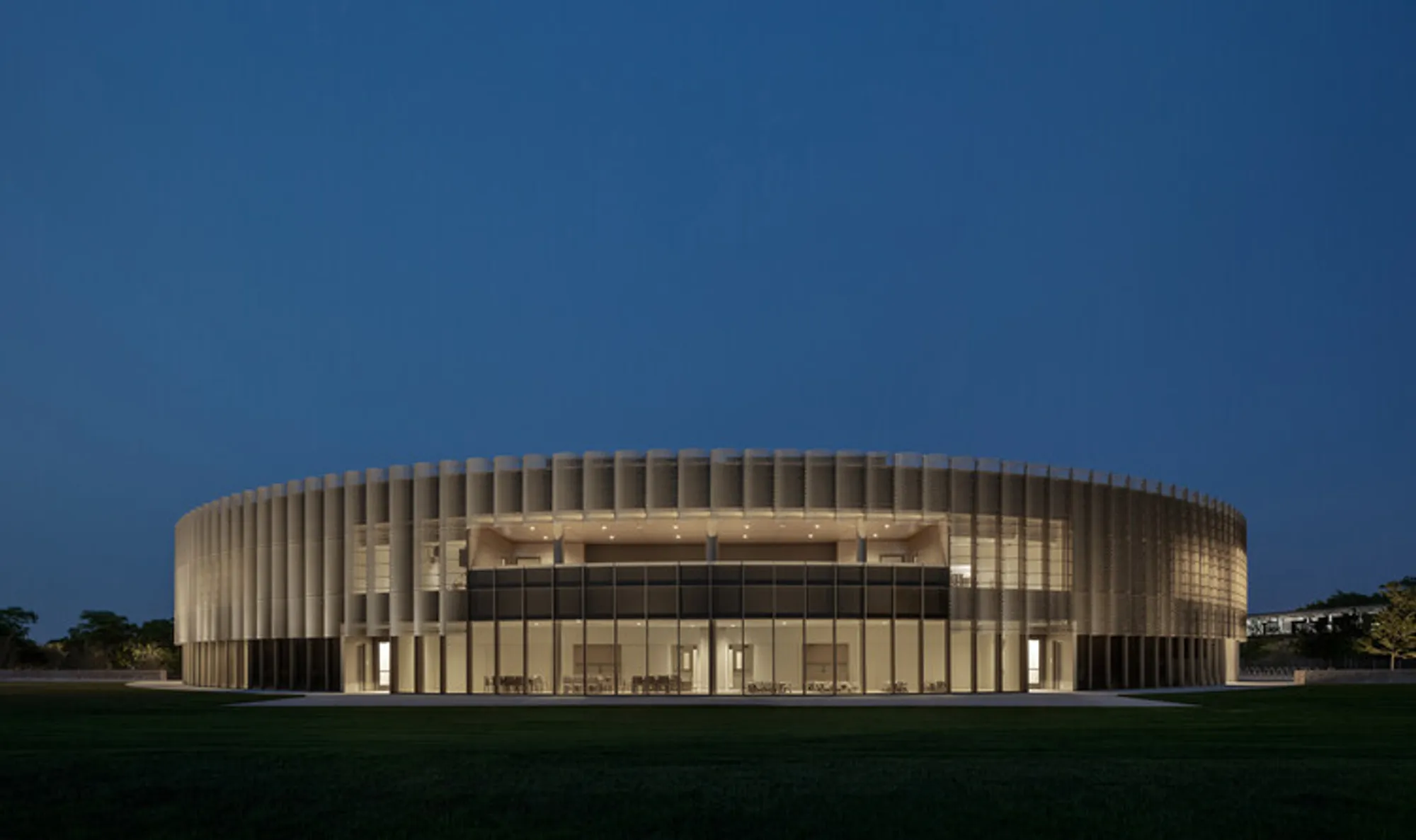
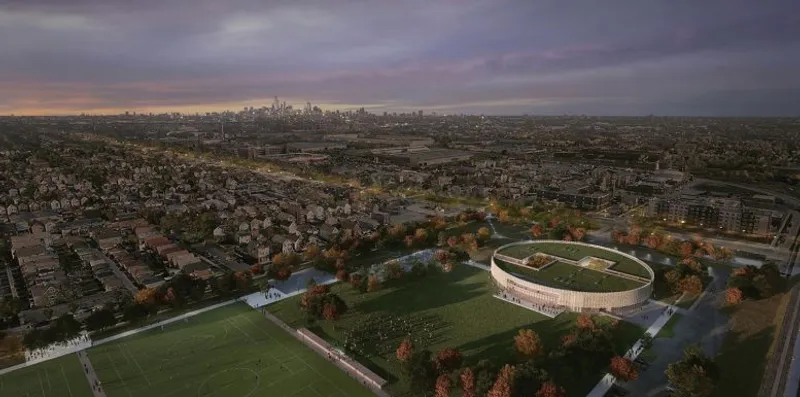
The Chicago Park District Headquarters and Fieldhouse, designed by John Ronan Architects and completed in 2023, is a powerful example of how contemporary civic architecture can operate simultaneously as workplace, community center, and landscape infrastructure. Located in the Brighton Park neighborhood on Chicago’s southwest side, the 7,430-square-meter (80,000-square-foot) building anchors a new 17-acre public park reclaimed from a former brownfield site—transforming previously contaminated land into a vital civic and recreational asset.
Combining headquarters offices for the Chicago Park District (CPD) with an 18,000-square-foot public fieldhouse, the project reinterprets the historic Chicago fieldhouse typology for the twenty-first century. Through its circular form, integrated park pathways, and material strategies rooted in reuse, the building embodies the Park District’s mission: to serve both staff and the public while reinforcing the idea that civic work is inseparable from civic space.
Reclaiming Land, Reclaiming Purpose
The site of the new headquarters was once an industrial brownfield—an overlooked and environmentally compromised parcel within a dense residential neighborhood. Its transformation into a park and civic complex represents not just a physical reclamation, but a social and symbolic one.
John Ronan Architects were commissioned not only to design the building, but also to master-plan the entire 17-acre park, ensuring that architecture and landscape would function as a unified system. This holistic approach allowed the building to be conceived as an integral component of the park rather than an isolated object placed within it.
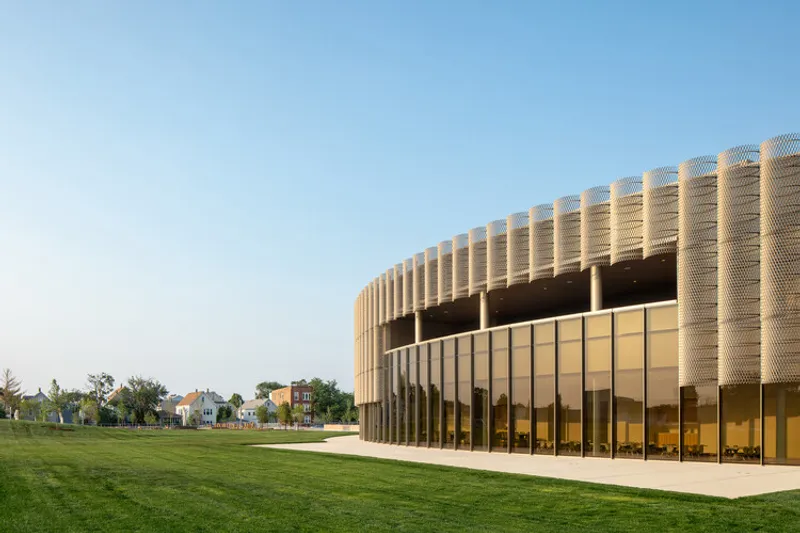
Like Chicago’s historic park fieldhouses, the headquarters and fieldhouse are set into the landscape, giving the building a dignified civic presence while organizing the surrounding open space. The architecture reinforces the idea that public institutions should be accessible, visible, and deeply embedded in everyday life.
A Circular Civic Landmark
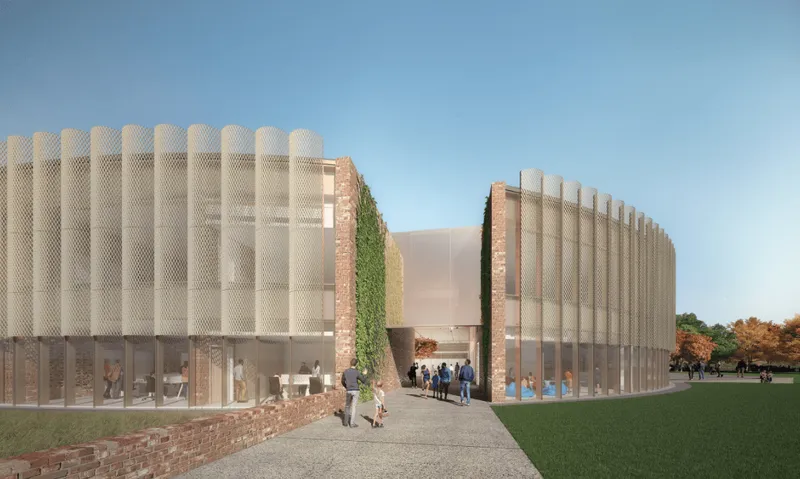
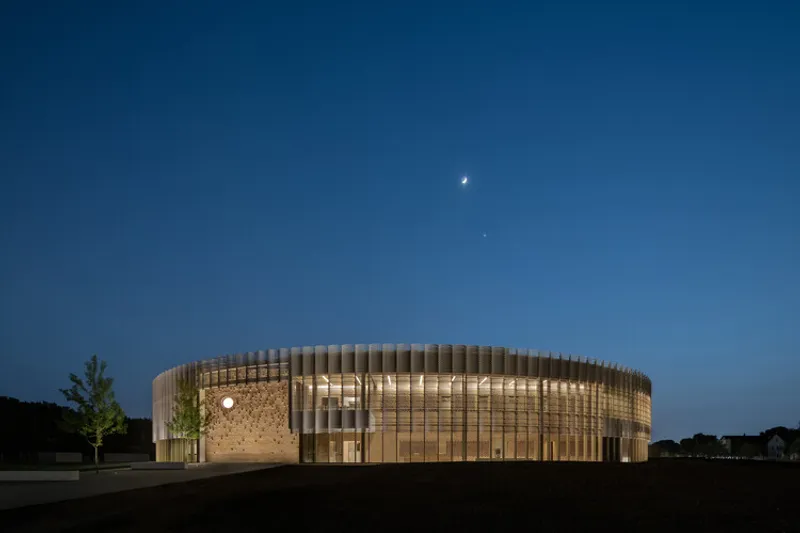
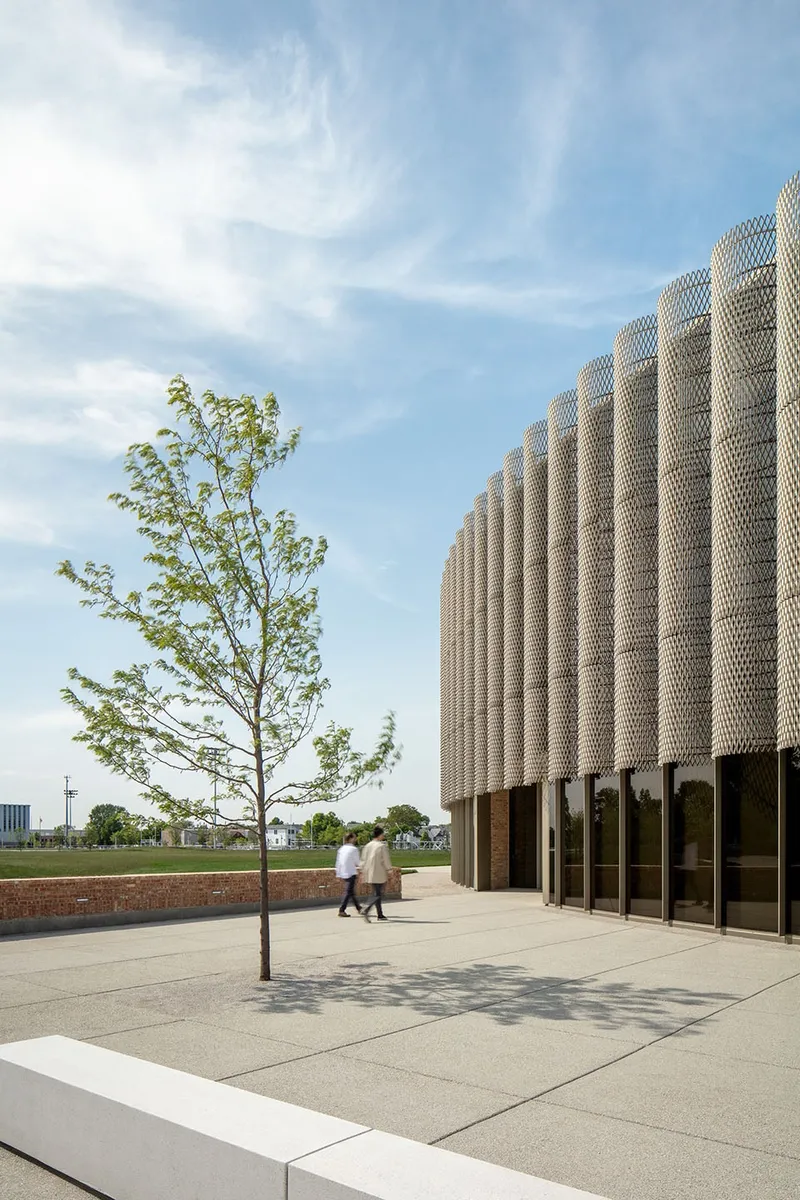
At the heart of the project is a bold and legible architectural move: a two-story, circular building. The circular plan gives the headquarters a strong civic identity—iconic without being monumental—and allows the building to engage the park equally from all sides.
This geometry is both symbolic and practical. As a civic institution serving the entire city, the Park District headquarters presents itself as open, inclusive, and centrally organized. Internally, the circular form enables efficient circulation, abundant daylight, and visual connections across departments and functions.
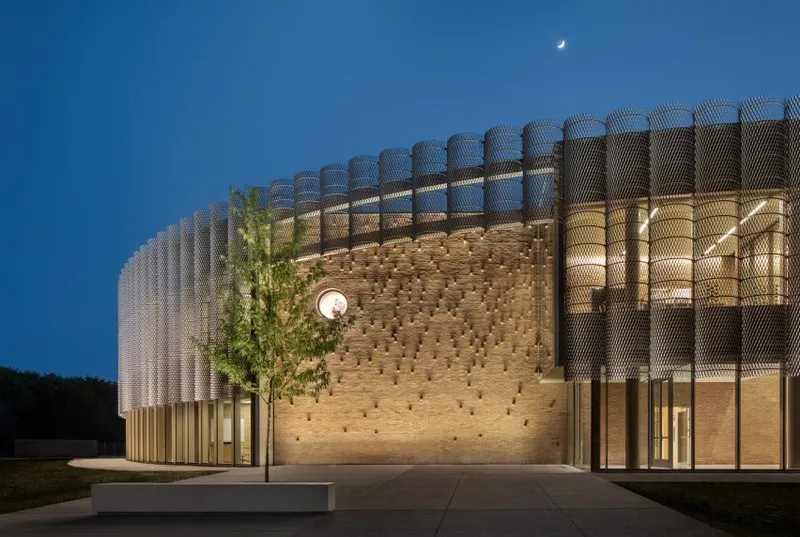
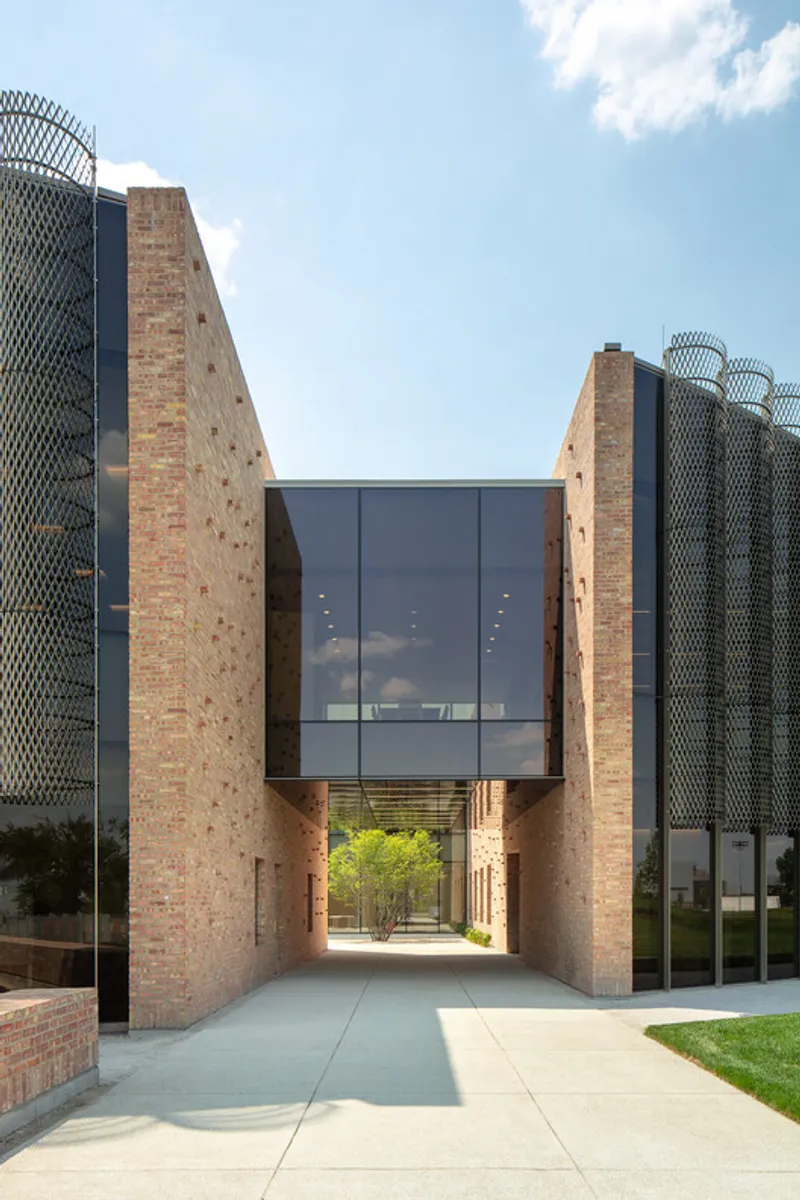
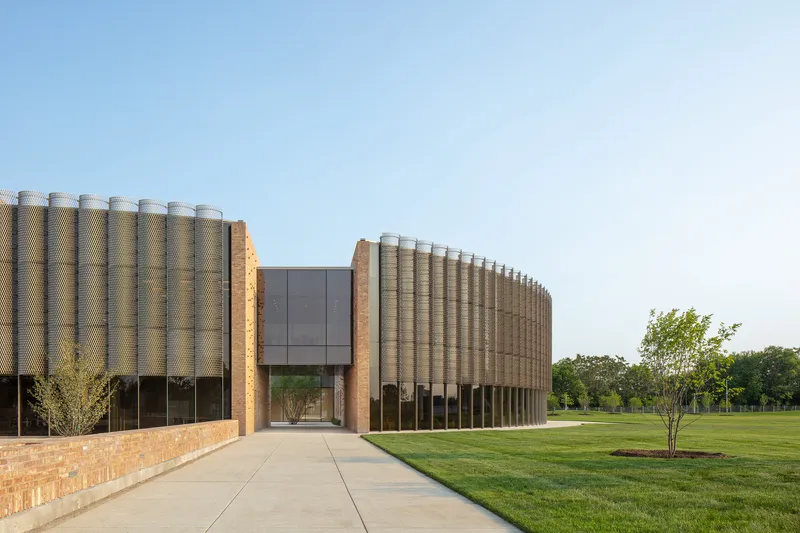
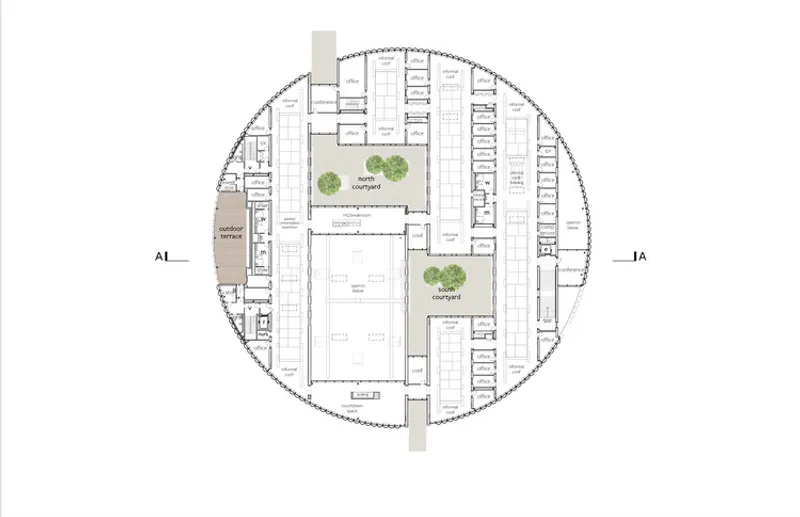
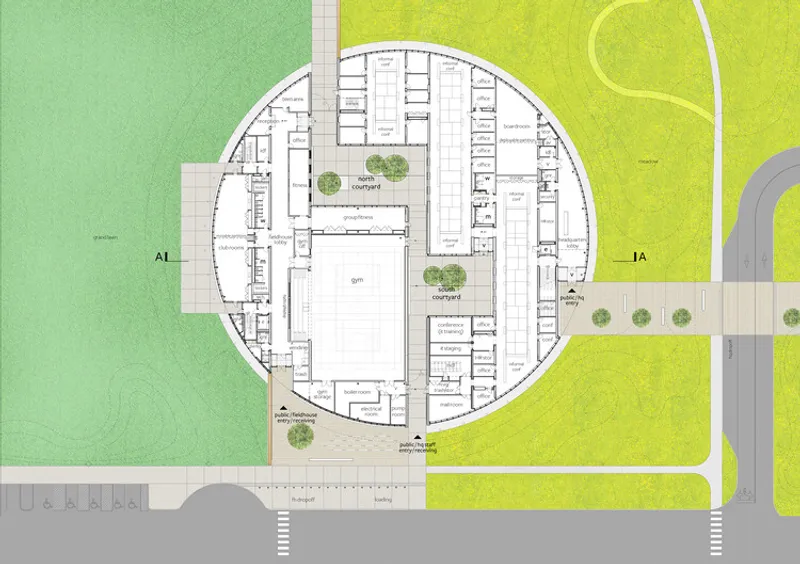
A park pathway passes directly through the building, physically and conceptually dividing the public fieldhouse from the administrative headquarters while maintaining continuity between them. This gesture reinforces the idea that the building belongs to the park and the community, not just to the institution.
Olmsted’s Legacy Reimagined
The park pathway that intersects the building is inspired by Frederick Law Olmsted’s historic park and boulevard system for Chicago, which envisioned a connected network of green spaces linked by landscaped corridors. In this project, the pathway acts as a contemporary interpretation of that legacy.
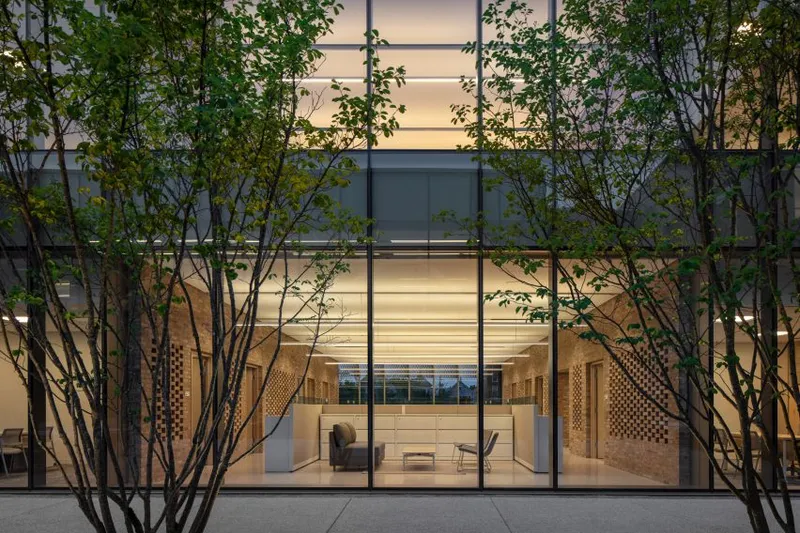
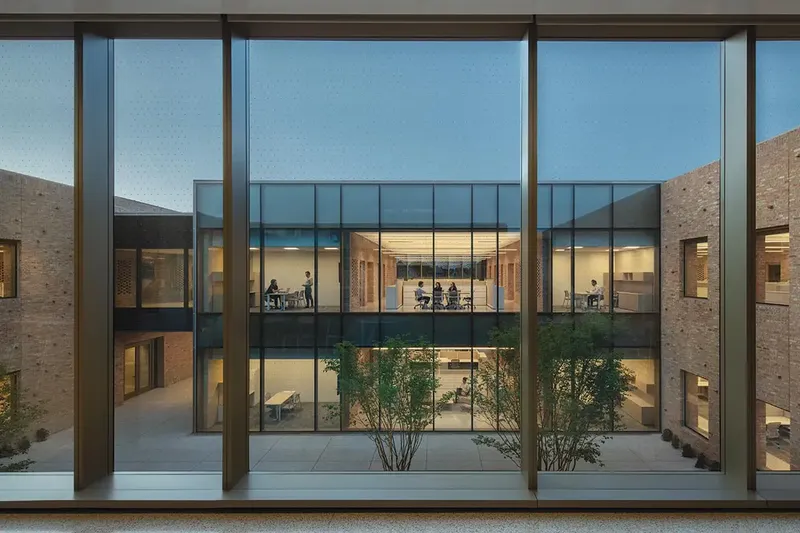
As the path moves through the circular building, it widens into two open-air courtyards, bringing daylight, fresh air, and greenery into the center of the structure. These courtyards serve multiple roles: they are places of pause along the path, outdoor rooms for staff and visitors, and sources of light and ventilation for the interior spaces.
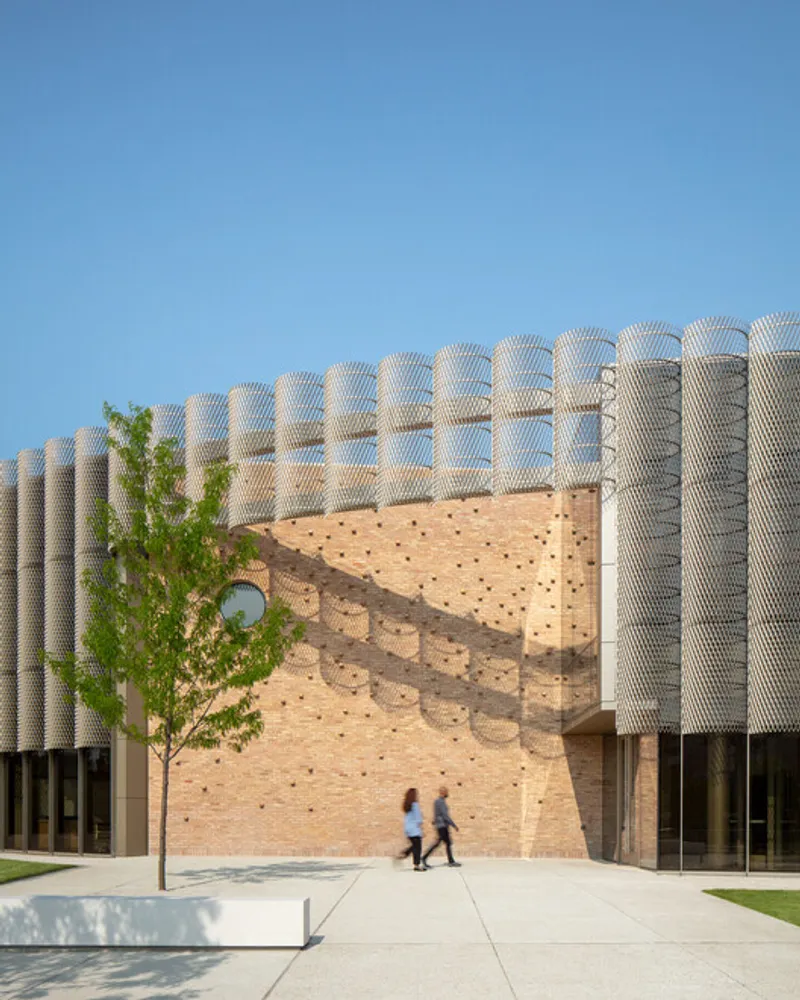
By allowing a public route to pass through the building, the architecture dissolves the boundary between inside and outside, reinforcing the idea of the headquarters as part of the park’s public life.
Offices Designed to Feel Like a Park
One of the primary goals of the project was to ensure that CPD staff feel like they are working in a park. This ambition is evident throughout the office design, which prioritizes daylight, views, and proximity to outdoor spaces.
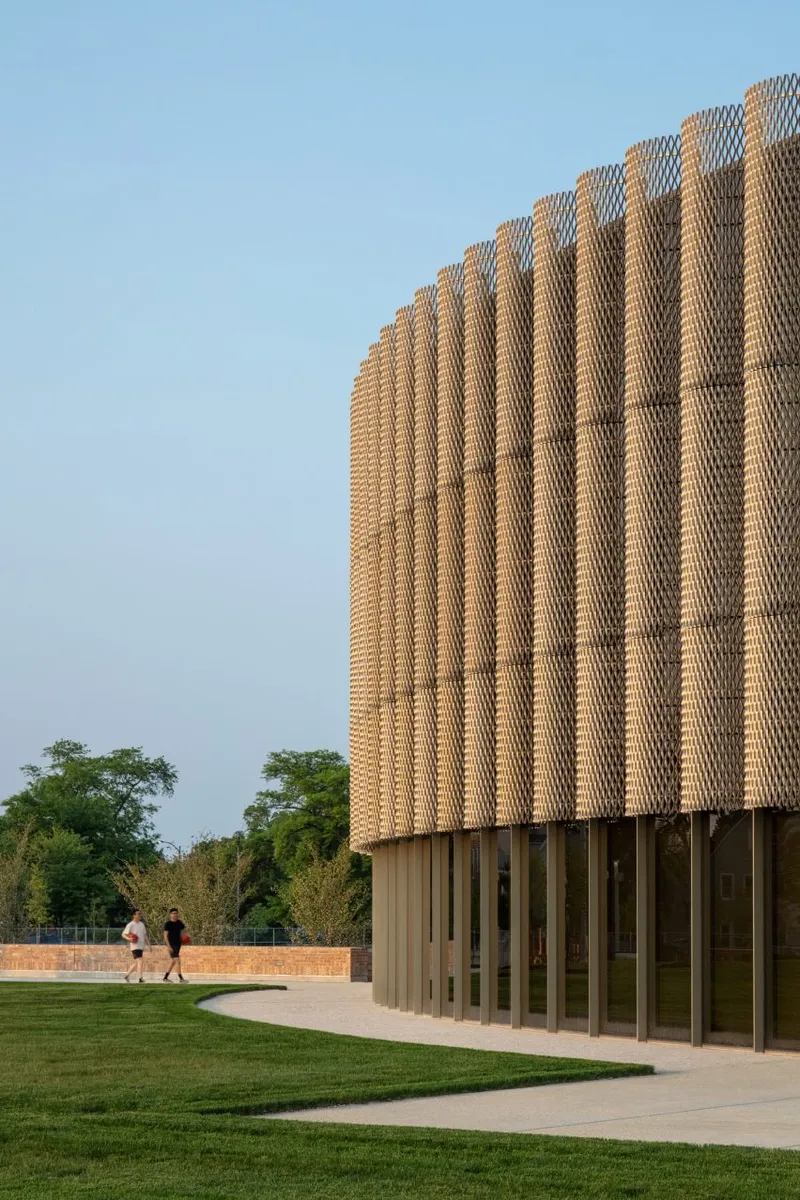
The headquarters accommodates 205 staff members, with office space organized in alternating bands of enclosed rooms and open office areas. This arrangement supports collaboration while allowing privacy and flexibility as organizational needs evolve.
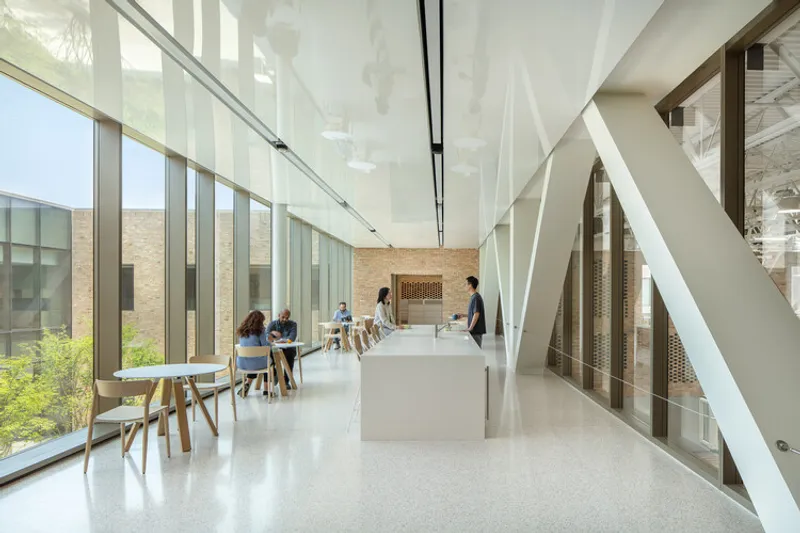
Large windows provide expansive views of the surrounding park and playing fields, constantly reinforcing the connection between administrative work and the landscapes the Park District manages. The result is a workplace environment that feels open, humane, and connected to the city it serves.
A Fieldhouse Integrated with Civic Life
The public fieldhouse—a gymnasium with fitness and club rooms—is fully integrated into the building rather than treated as a separate structure. This integration reflects the Park District’s dual role as both administrator and provider of public recreation.
On the second floor, office space extends over the gymnasium, allowing visual connections between staff and public activity below. The staff break room, located at the heart of the upper level, borders a courtyard on one side and the gym on the other. From here, staff can look out to greenery or watch a basketball game during lunch, reinforcing a sense of shared civic purpose.
Direct internal connections—stairs and elevators—allow staff to access the fieldhouse without going outside, further blurring the boundary between workspaces and public amenities.
Terraces, Courtyards, and Shared Spaces
Outdoor space is treated as an extension of the building’s program. A covered outdoor terrace on the second level overlooks the park and playing fields, providing a flexible venue for events, meetings, or informal relaxation.
This terrace has direct access from the fieldhouse below, making it easy to use for community gatherings, celebrations, or recreational activities. At the same time, it serves as an everyday amenity for staff, reinforcing the idea that outdoor space is a fundamental part of civic architecture, not an afterthought.
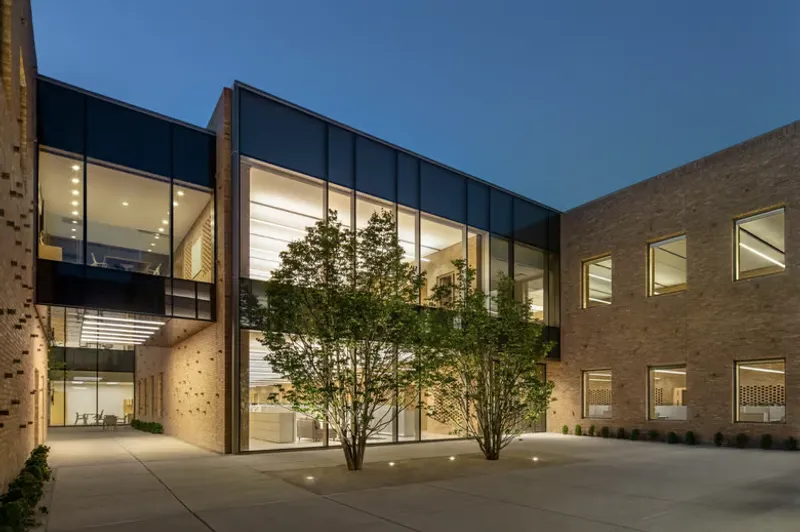
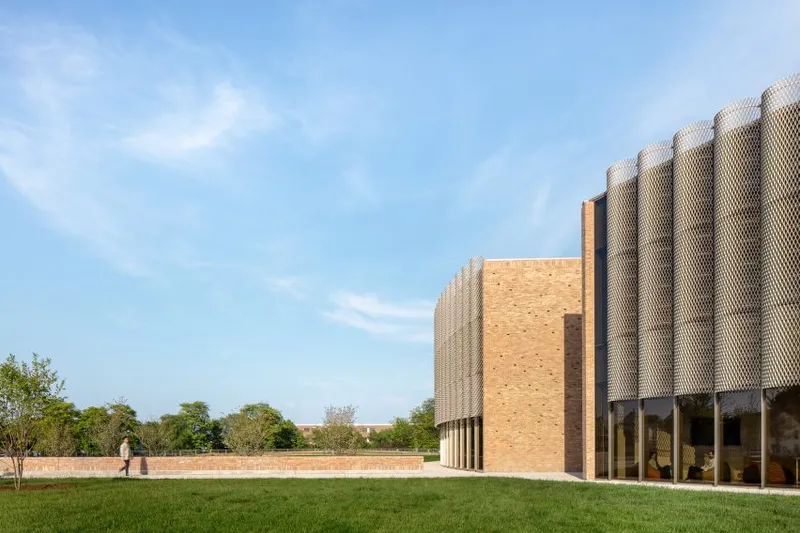
The courtyards created by the park pathway further enrich this network of shared spaces, offering places for meeting, recreation, and rest that are equally accessible to staff and neighborhood residents.
Material Reuse and Local Identity
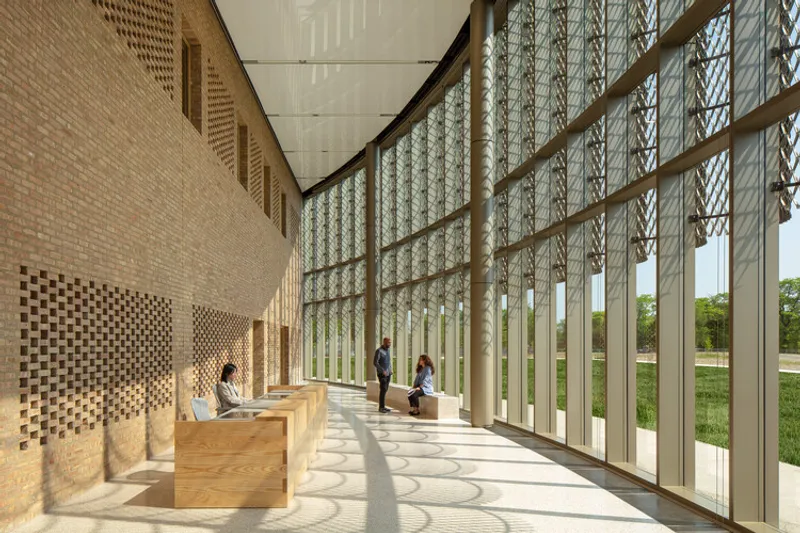
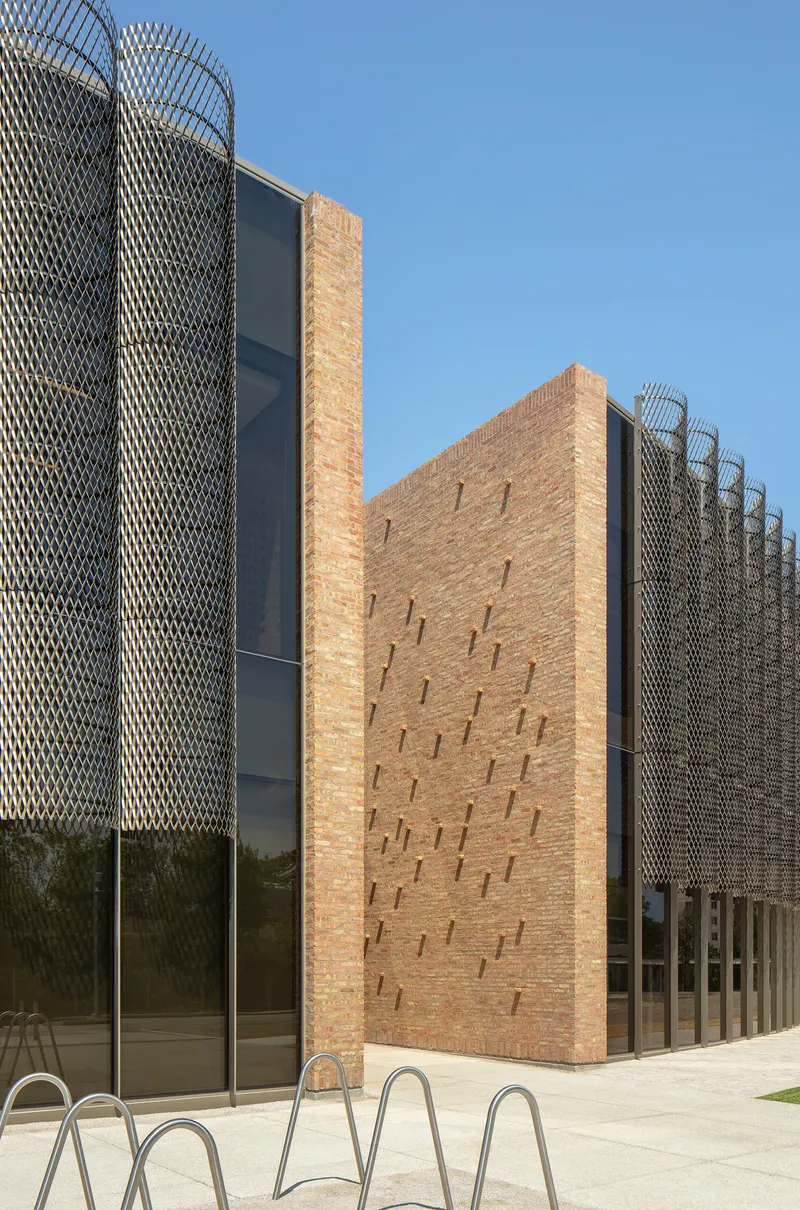
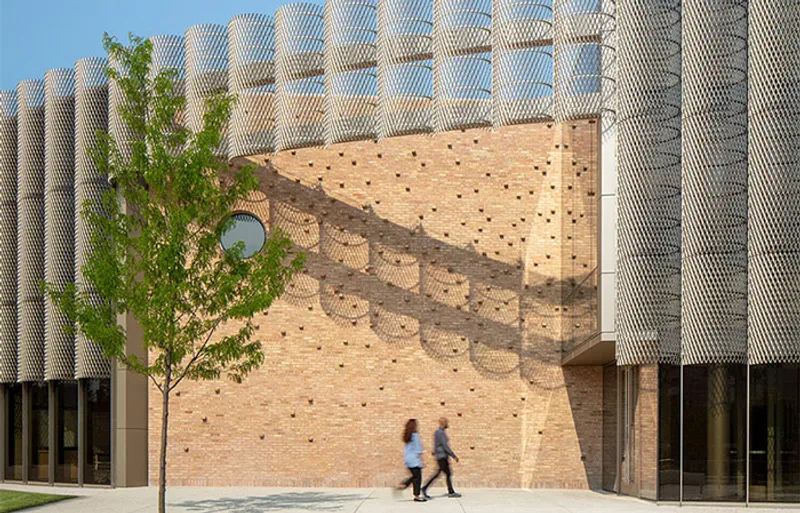
Materiality plays a central role in grounding the building in its context and history. The exterior is clad in reclaimed Chicago common brick, salvaged from two demolished buildings in the area. This choice foregrounds the theme of reclaiming—of land, materials, and civic purpose—while rooting the architecture in Chicago’s vernacular.
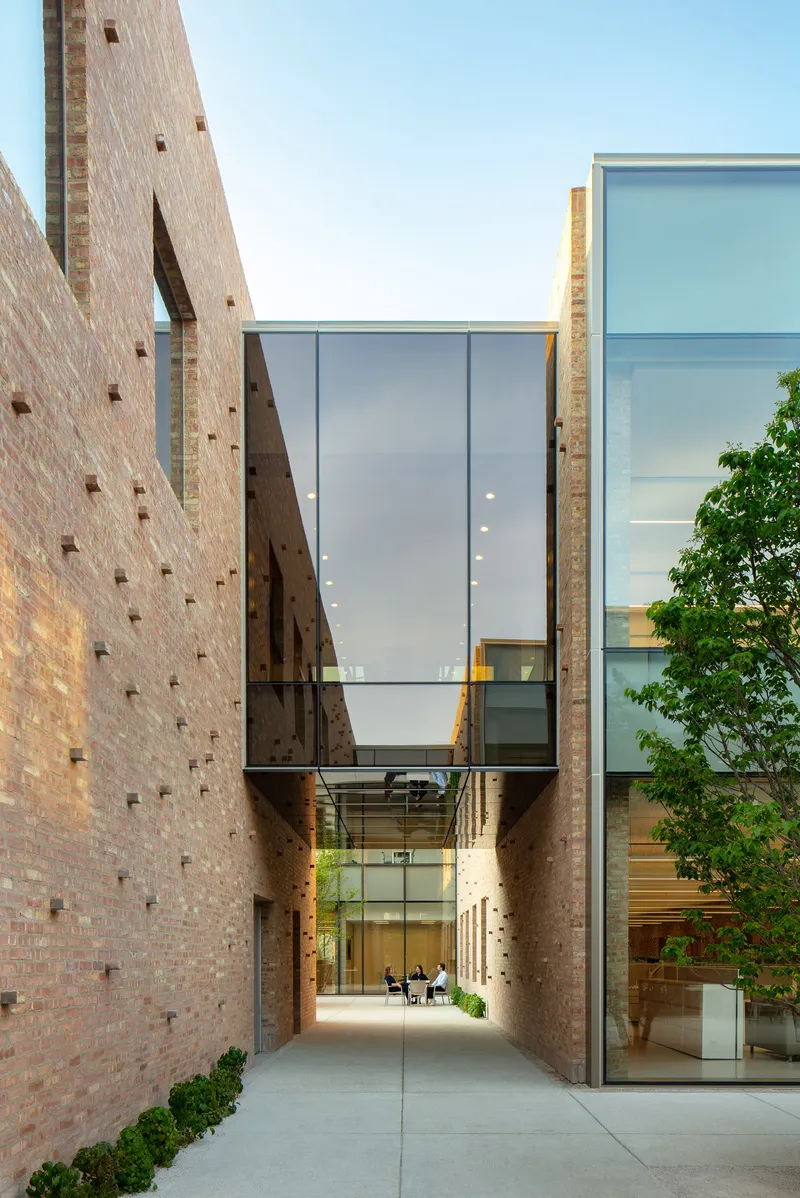
The brick masonry walls are paired with bronze-tinted glazing in a unitized system that wraps the building’s perimeter. This glazing allows generous daylight while maintaining a sense of warmth and solidity appropriate for a civic institution.
Curved expanded metal screens in champagne-anodized aluminum provide sun shading, improving energy performance while giving the building a distinctive, contemporary character that complements its circular form.
Sustainable Strategies and Structural Efficiency
The building’s sustainability is addressed through both design strategies and material choices. A cost-effective structural system—metal bar joists spanning between parallel masonry bearing walls—provides efficiency and durability while allowing flexibility in interior layouts.
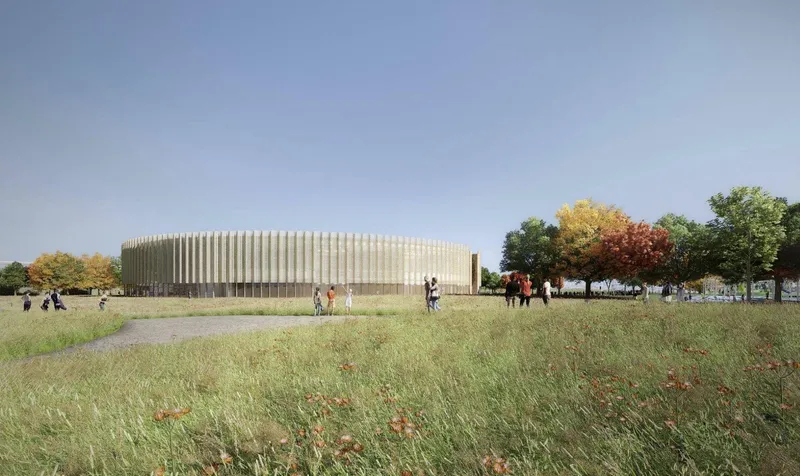
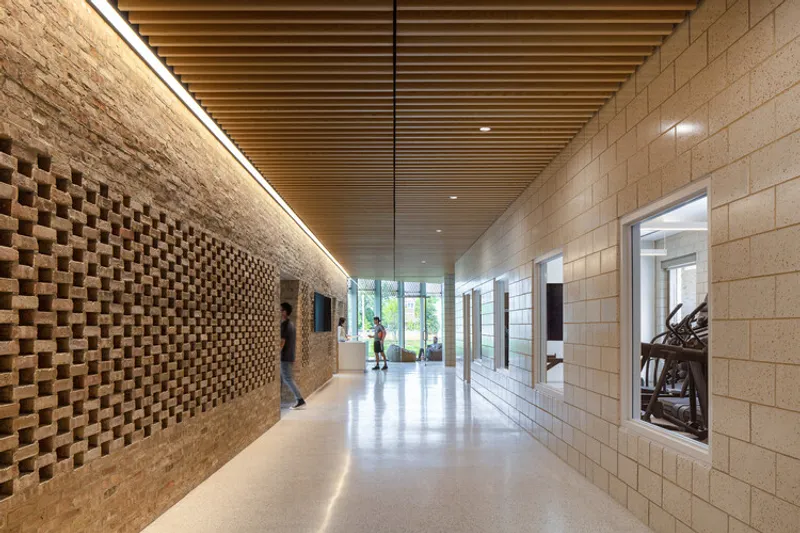
A green roof system mitigates the urban heat island effect, improves stormwater management, and enhances insulation. Inside the building, ash wood reclaimed from local trees affected by the emerald ash borer is used for furniture, wall cladding, and gym flooring—turning ecological loss into material continuity.
Together, these strategies reflect a commitment to environmental responsibility that aligns with the Park District’s stewardship role.
Architecture as Civic Connector
What distinguishes the Chicago Park District Headquarters and Fieldhouse is not only its formal clarity or technical performance, but its ability to act as a connector—between park and neighborhood, staff and public, administration and recreation.
The circular form, public pathway, and shared spaces all contribute to a building that is both symbolic and practical. It represents the Park District as an inclusive civic institution while functioning as an everyday place of work, play, and gathering.
Rather than separating administrative functions from public life, the architecture intentionally intertwines them, reinforcing trust, transparency, and accessibility.
A Contemporary Fieldhouse for Chicago
Historically, Chicago’s fieldhouses have served as anchors of neighborhood life—places where recreation, education, and civic identity converge. John Ronan Architects’ design reimagines this typology for contemporary needs, integrating offices, sports facilities, and landscape into a single, coherent whole.
The project demonstrates how mixed-use civic architecture can address social, environmental, and urban challenges simultaneously. By reclaiming land, reusing materials, and prioritizing public connection, the Chicago Park District Headquarters and Fieldhouse sets a new standard for public buildings in the city.
Civic Architecture as Landscape Infrastructure
Ultimately, the project positions architecture not as an isolated object, but as landscape infrastructure—a framework that supports community life, public service, and environmental repair.
By embedding the building within the park, allowing public pathways to pass through it, and designing spaces that encourage interaction, John Ronan Architects have created a civic landmark that is both grounded and generous.
The Chicago Park District Headquarters and Fieldhouse stands as a reminder that public architecture, at its best, is not just about housing functions, but about shaping relationships—between people, place, and the shared spaces of the city.
All the Photographs are works of James Florio




Popular Articles
Popular articles from the community


Co-life: Sustainable Architecture for Age-Friendly Community Living
Co-life reimagines sustainable architecture for seniors through courtyards, rammed earth, shared gardens, and spaces designed for belonging.

Co-Life: Senior Housing Design That Reconnects Older Adults With the City
Co-Life reimagines senior housing design through healing gardens, shared streets, workshops, and a sustainable community across generations.

The Earth Pod: 3D Printed Homes for Resilient Refugee Communities
The Earth Pod reimagines refugee housing through 3D printed homes made from clay, combining resilience, self-sufficiency, and rapid shelter.

Hill & Cross Opera: Sculptural Opera House Architecture Shaped by Tallinn’s Landscape and Identity
Hill & Cross Opera reimagines opera house architecture in Tallinn through its sculptural hill, civic plaza, glass wave and a luminous cross.


Similar Reads
You might also enjoy these articles


Hodi-Mandai Geram
Project Function: Preservation and revitalization of the Intangible heritage and socio-spatial identity of the Hodi by Housing, Cultural Memory Center, Sacred Grove, landscape, local tourism economy


Olio Towers: A Mid-Rise for Performers That Fuses Housing, Rehearsal, and Stage
Located blocks from Houston's Theater District, this modular tower stacks living units around a central performance atrium.

Oasis: Modular Green Housing Carved into Dhaka's Urban Fabric
A shortlisted Plugin Housing entry reclaims unauthorized settlements in Dhaka with stepped concrete volumes, green roofs, and ventilation-driven design.

Black Hole: A Floating Megastructure for the Post-Physical Era
Emiliano Mazzarotto envisions a spherical, self-scaling arena where e-sports, digital hotels, and holographic stadiums replace traditional public space.


Explore City Park Competitions
Discover active competitions in this discipline


Challenge to design a barrier free sports center


Challenge to design an outdoor ice-rink and park


Challenge to reimagine the Iron Throne


Photograph architecture without architects
Comments (0)
Please login or sign up to add comments
No comments yet. Be the first to comment!