

Chieng Ban Kindergarten by 1+1>2 Architects: A Sustainable Haven for Early Learning in Sơn La, Vietnam
Colorful, sustainable kindergarten in Sơn La, Vietnam by 1+1>2 Architects, blending natural light, ventilation, and playful design for children’s learning.


A Bright Beginning for Chieng Ban’s Young Learners
Nestled in the serene landscape of Sơn La Province, Vietnam, Chieng Ban Kindergarten stands as a vibrant symbol of community, creativity, and sustainability. Designed by the acclaimed architectural studio 1+1>2 Architects, this 105-square-meter educational space redefines rural school design through its thoughtful integration of natural light, ventilation, and color.
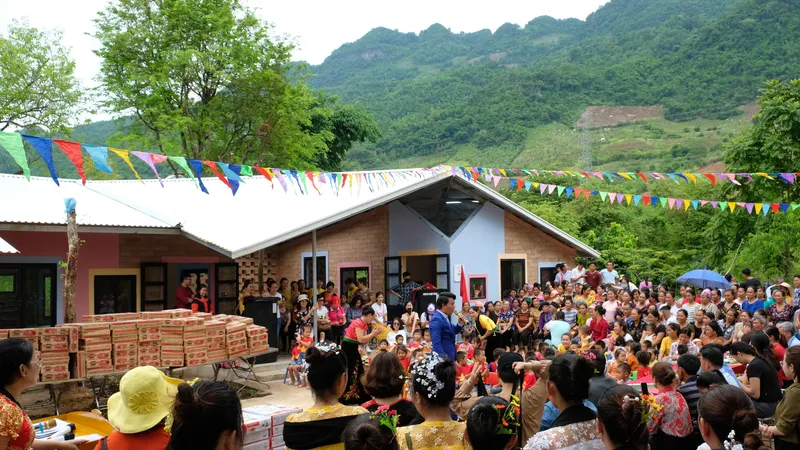
Completed in 2020, the project transforms the learning environment for 64 children in Chieng Ban village, replacing an old, deteriorated storage shed with a safe, inspiring, and inclusive kindergarten that encourages both learning and play.
Architectural Vision and Concept
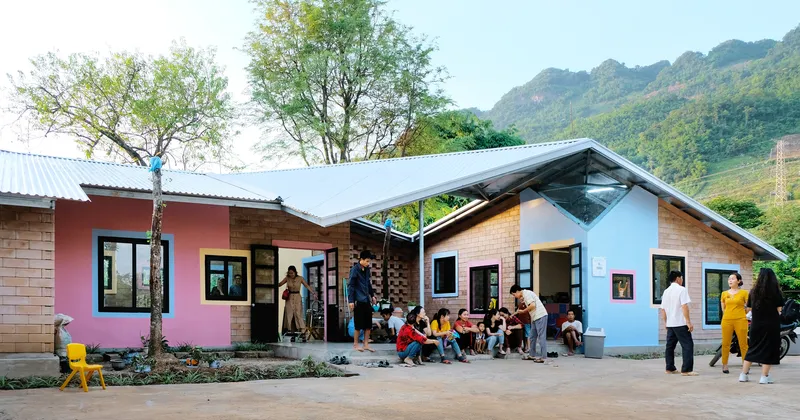
The architectural team—Hoang Thuc Hao, Vu Xuan Son, and Nguyen Hanh Le—envisioned a school that goes beyond function, serving as a bridge between architecture, nature, and community. The building’s compact footprint accommodates two classrooms, two restrooms, a staff room, and a multifunctional corridor that doubles as a sheltered play area.
At first glance, the playful facade of colorful brickwork and painted surfaces captures the joyful spirit of childhood. However, behind its cheerful aesthetic lies a deeply functional design language. The architects arranged square windows of varying sizes and heights across the walls to create a rhythmic, engaging pattern while ensuring maximum natural light and cross-ventilation throughout the day.
Design Features That Inspire Learning
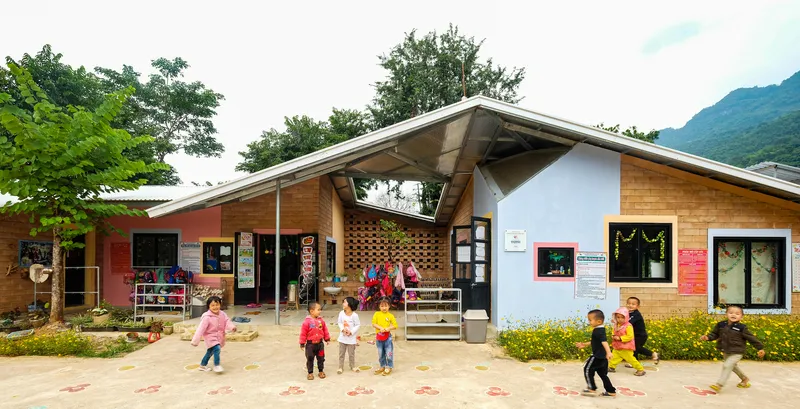
One of the most distinctive elements of Chieng Ban Kindergarten is the open corners at the top of the walls. These architectural voids dissolve the boundary between inside and outside, allowing the classrooms to connect with the sky, trees, and surrounding landscape. This subtle yet powerful gesture fosters a sense of openness and encourages children’s curiosity about the natural world.
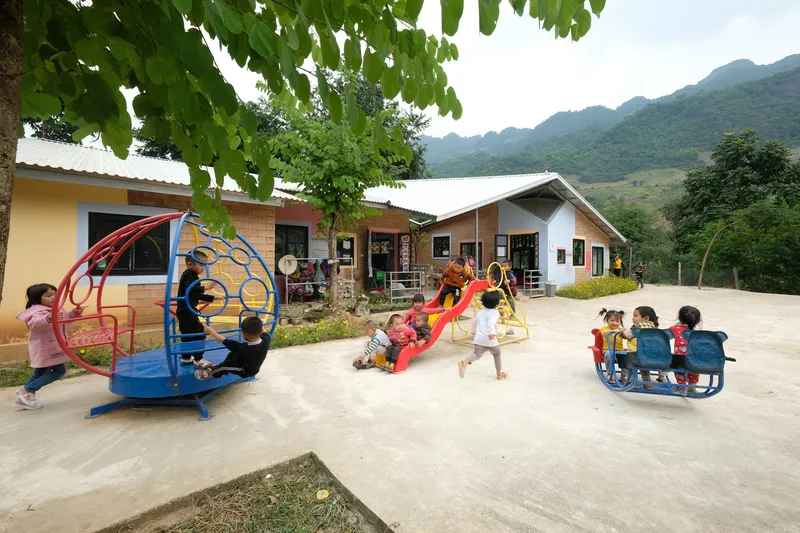
Above, a large unifying roof shelters both classrooms and a central courtyard, providing protection from harsh sunlight and heavy rains typical of the region. This covered communal area acts as an interactive social hub, where teachers and students can gather, learn, and play together—strengthening relationships and promoting collective engagement.
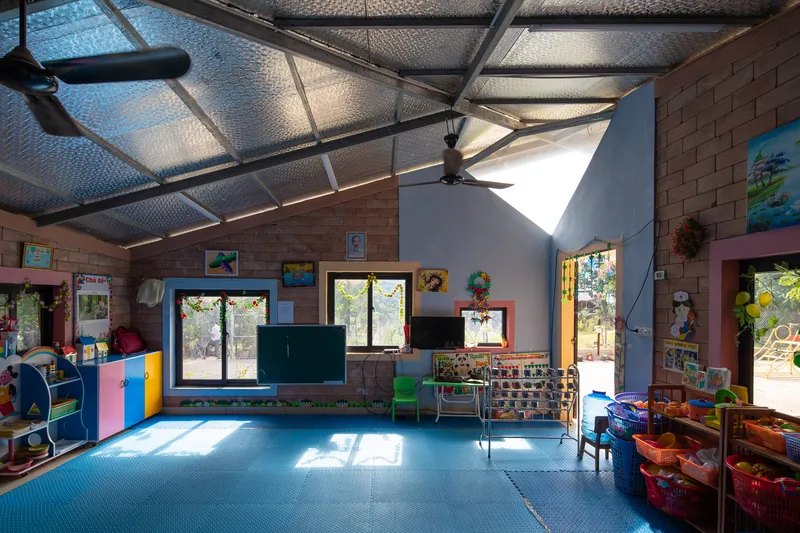
Sustainability and Comfort in Design
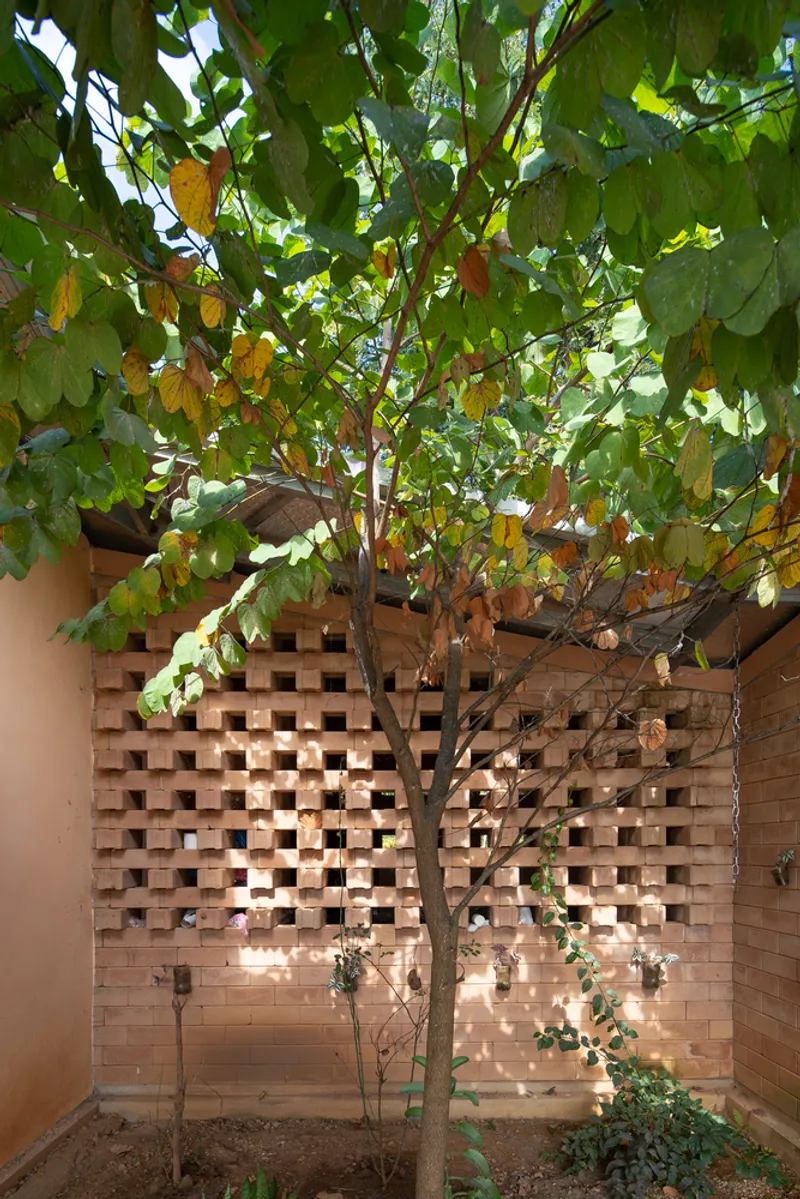
Sustainability lies at the heart of the project. The architects employed local materials and passive cooling strategies, minimizing energy use while enhancing comfort. The restroom blocks, for instance, are designed with perforated brick walls on both sides, ensuring continuous airflow and maintaining a cool, hygienic environment even in warm weather.
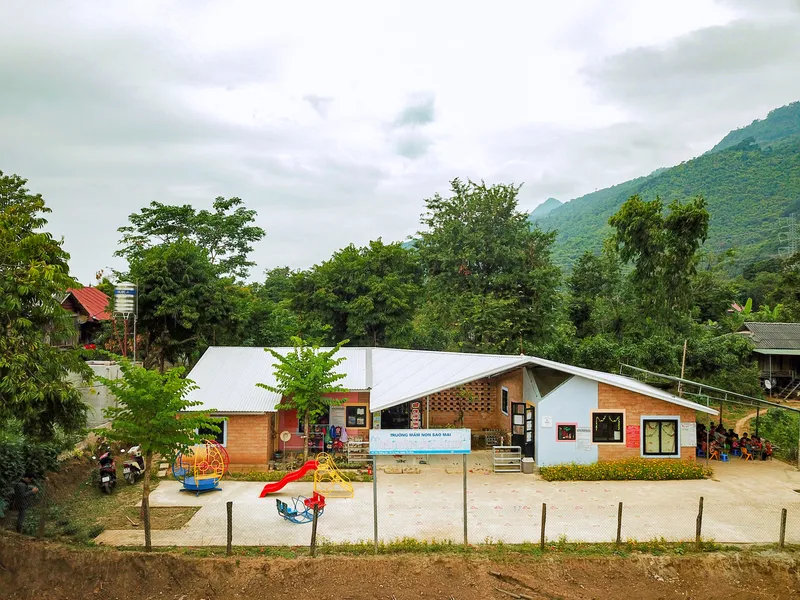
By harnessing natural light, ventilation, and shading, the building maintains a comfortable indoor climate without relying heavily on mechanical systems. This approach not only reduces operational costs but also teaches children the importance of environmental harmony from an early age.
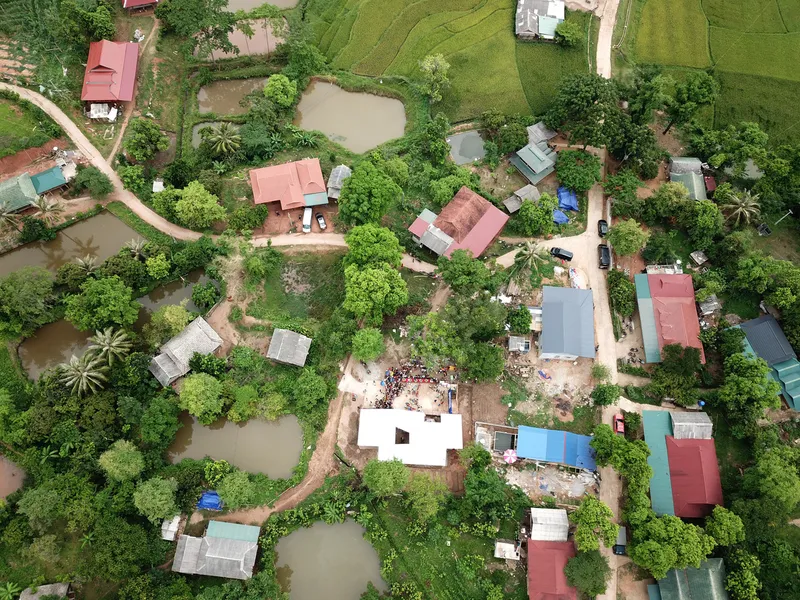
Community Collaboration and Impact
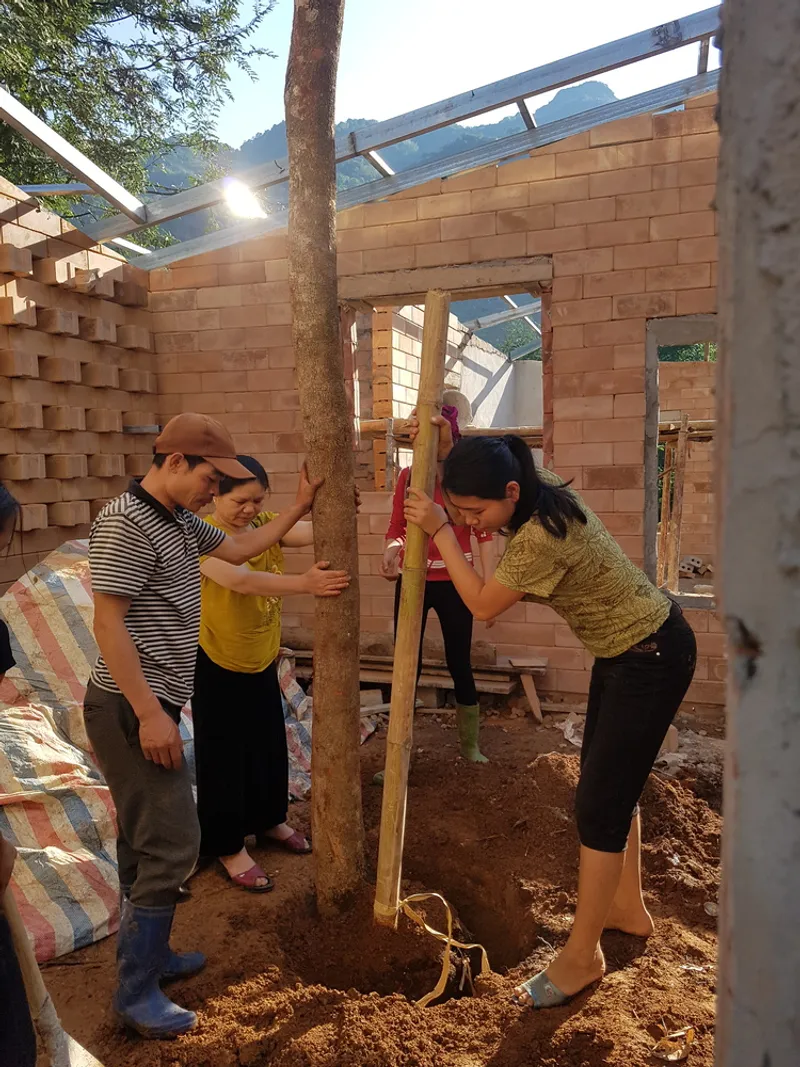
The realization of Chieng Ban Kindergarten was made possible through the generous support of TOTO Vietnam and the Gieo Tin Yeu Group. Their collaboration with 1+1>2 Architects and local builders underscores the power of community-driven architecture in transforming lives.
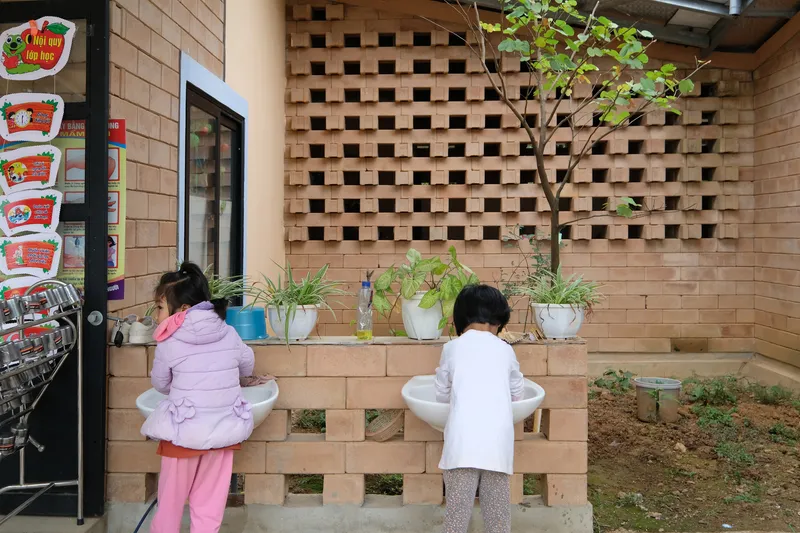
Today, Chieng Ban Kindergarten is more than just a school—it is a beacon of hope and progress. The children of Chieng Ban now enjoy a warm, secure environment where they can learn, play, and grow freely. The playground and shared spaces foster creativity, collaboration, and joy—elements vital for early childhood development.
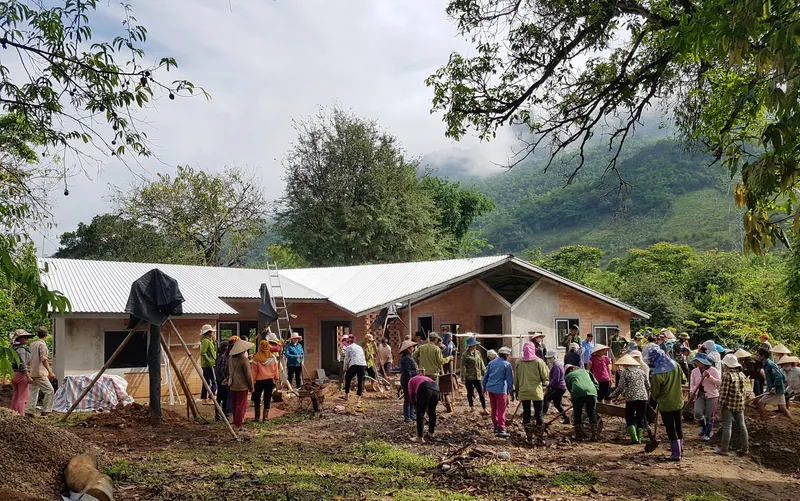
Through its innovative yet humble design, Chieng Ban Kindergarten embodies the philosophy that architecture can nurture both space and spirit. By combining local materials, human-centered design, and sustainable practices, 1+1>2 Architects have created not only a building but also a community landmark—one that reminds us of architecture’s profound role in shaping better futures.
Project Details:
- Architects: 1+1>2 Architects
- Location: Chieng Ban Commune, Sơn La, Vietnam
- Lead Architects: Hoang Thuc Hao, Vu Xuan Son, Nguyen Hanh Le
- Area: 105 m²
- Year Completed: 2020
- Photography: Son Vu, Trieu Chien
- Sponsors: TOTO Vietnam, Gieo Tin Yeu Group


Popular Articles
Popular articles from the community


Wave 'Coral': Four Perforated Canopies Bring Human Scale to a Monumental Plaza
A wavy lattice shell repeated four times around an obelisk, turning a vast paved square into pockets of shade, planting and places to sit.


Minqa Atelier Steps a 53 m² Teak Refuge Down a Forested Slope in Ecuador's Chocó
In Pedro Vicente Maldonado, Ecuador, stepped teak platforms on river-stone gabions let a small forest house follow the hillside instead of flattening it.

Charlene Koetz Arquitetura Lifts a Glass House on Piers Above a Mossy Forest Slope in Gramado
In Vila Prinstrop, Brazil, a 455 m² house pairs black-framed glazing with board-formed concrete, rough stone and a forest it barely disturbs.

Vietnam S: Rhymes of the River Built From Upturned Boat Hulls and a Shared Rooftop
Timber-ribbed, hull-shaped pavilions gather around a water courtyard, turning a street market into an authentic, dynamic place to chill out.

Similar Reads
You might also enjoy these articles

Hodi-Mandai Geram
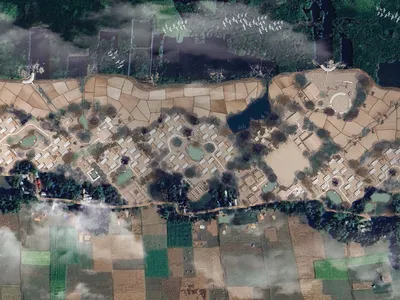
Project Function: Preservation and revitalization of the Intangible heritage and socio-spatial identity of the Hodi by Housing, Cultural Memory Center, Sacred Grove, landscape, local tourism economy

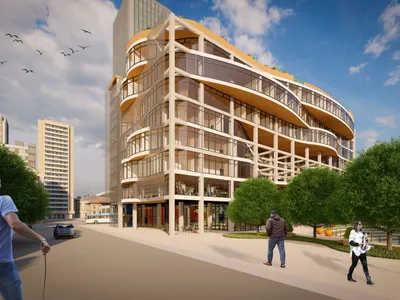
Olio Towers: A Mid-Rise for Performers That Fuses Housing, Rehearsal, and Stage
Located blocks from Houston's Theater District, this modular tower stacks living units around a central performance atrium.
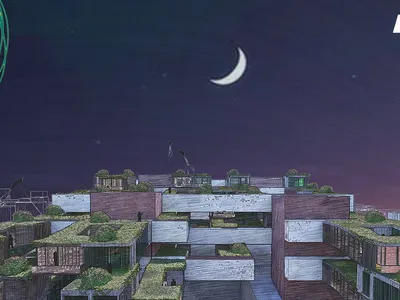
Oasis: Modular Green Housing Carved into Dhaka's Urban Fabric
A shortlisted Plugin Housing entry reclaims unauthorized settlements in Dhaka with stepped concrete volumes, green roofs, and ventilation-driven design.

Black Hole: A Floating Megastructure for the Post-Physical Era
Emiliano Mazzarotto envisions a spherical, self-scaling arena where e-sports, digital hotels, and holographic stadiums replace traditional public space.

Explore Educational Building Competitions
Discover active competitions in this discipline

Submit a world, not a render

Studio work deserves a jury

The International Standard for Design Portfolios

The Global Benchmark for Architecture Dissertation Awards
Comments (0)
Please login or sign up to add comments
No comments yet. Be the first to comment!