
Children's Campus Theodoor: A Showcase of Sustainable Educational Architecture
The article explores Children's Campus Theodoor, a pioneering example of sustainable educational architecture blending nature, energy efficiency, and community.


Redefining Educational Spaces
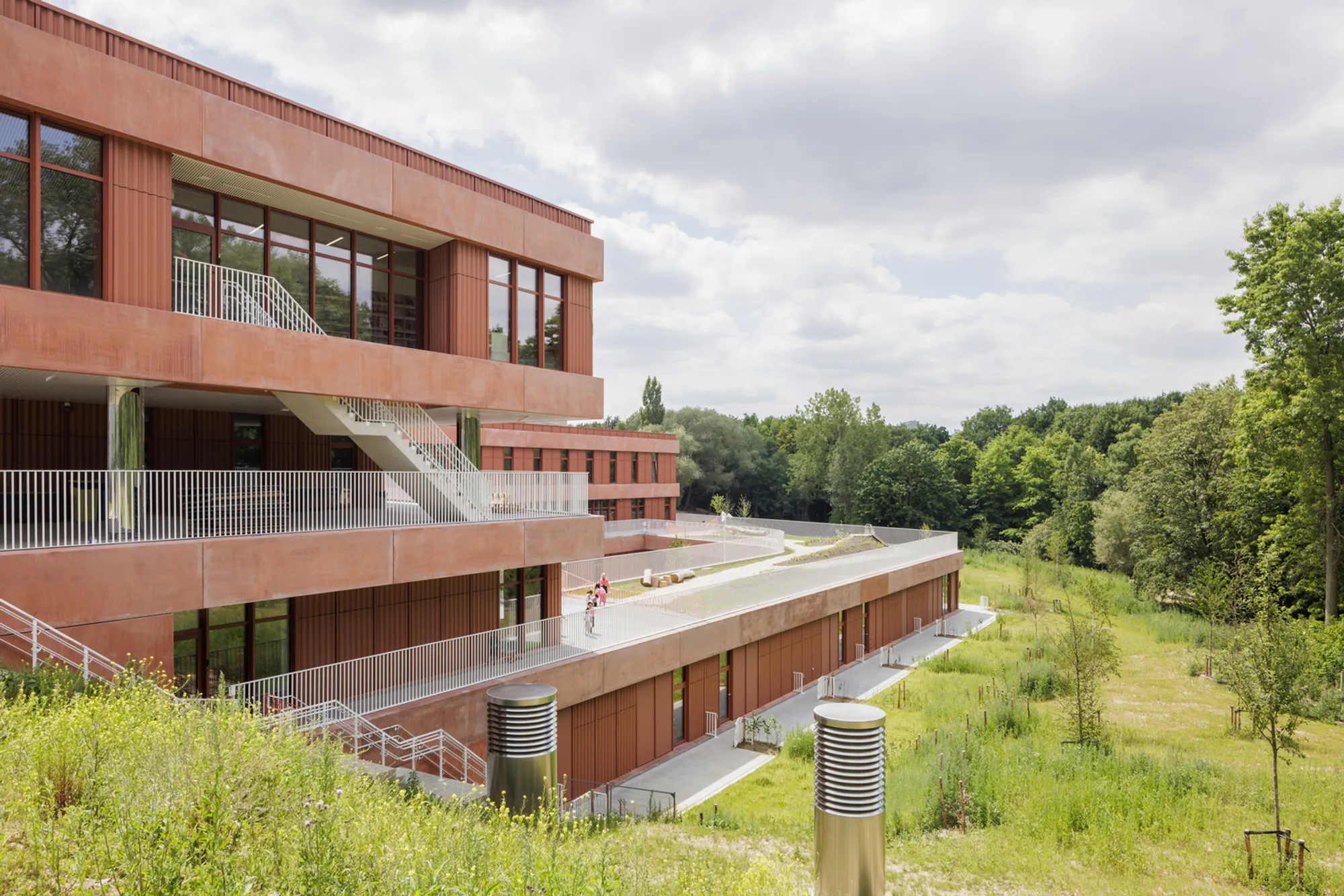
In Brussels, Belgium, Children's Campus Theodoor stands as a beacon of innovation in sustainable educational architecture. Designed by cuypers & Q architecten, this 2022 project masterfully blends environmental sustainability, functional design, and community integration. Located on the Brussels Health Campus of the Vrije Universiteit Brussel (VUB), the campus serves as a dynamic hub for children, offering a unique mix of daycare, education, and recreational facilities.
This article explores how the campus exemplifies sustainability, inclusivity, and cutting-edge design in educational architecture.
A Sustainable Approach to Educational Architecture
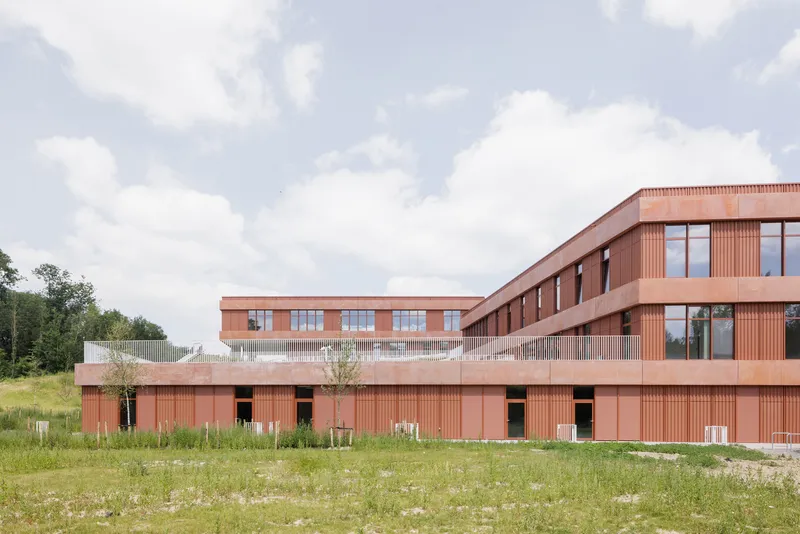
Children's Campus Theodoor demonstrates how sustainable educational architecture can address modern challenges. Sustainability is woven into the project's core, from its site integration to its innovative energy systems.

1. Integrating Architecture with Nature
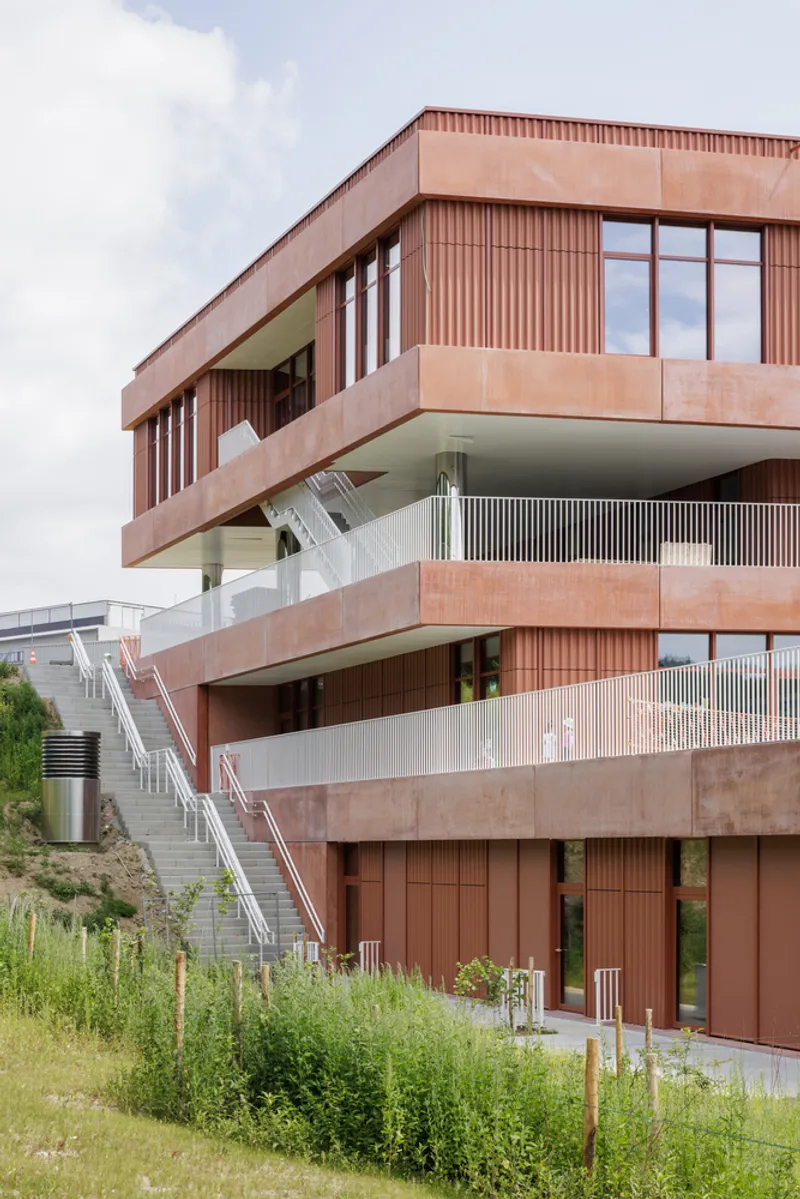
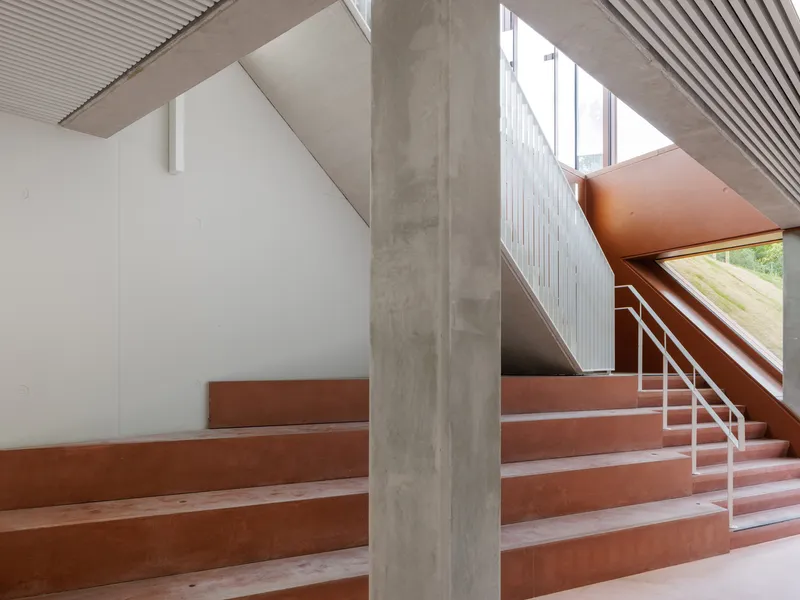
The campus is thoughtfully embedded into a natural slope adjacent to the Natura 2000 nature reserve. This approach minimizes environmental disruption while maximizing the connection between the built environment and the natural world. Green roofs, outdoor learning areas, and car-free zones provide a harmonious balance between architecture and nature.
Key features include:
- Green spaces designed for biodiversity and environmental education.
- Car-free areas prioritizing pedestrians and cyclists, encouraging sustainable mobility.
- Outdoor play zones that serve as interactive learning environments, promoting water and energy awareness.
2. Energy-Neutral Design
The building is a shining example of energy efficiency, incorporating advanced technologies to achieve energy neutrality.
- Geothermal energy: A BEO field with concrete core activation regulates heating and cooling.
- Photovoltaic panels: 284 solar panels on green roofs generate clean energy.
- Water reuse systems: Rainwater and gray water are harvested and repurposed for toilet flushing and other uses.
- Passive insulation: Triple glazing and rigorous insulation maintain indoor temperatures without excessive energy use.

Designing for Community and Flexibility
At its heart, Children's Campus Theodoor is a community-focused project. It fosters collaboration and interaction while maintaining functionality and safety.
1. Multi-Functionality
The campus accommodates a wide range of users, including:
- A daycare for 120–150 children.
- A primary school for 240 students.
- Spaces for scout groups and community organizations.
- Offices for child welfare services like Huis van het Kind and Kind & Gezin.
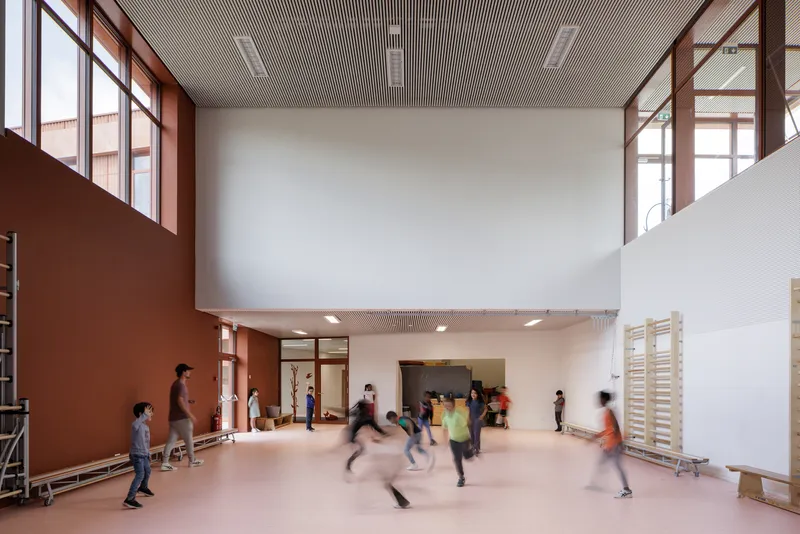
Each function is housed in its own section of the building, with separate entrances and outdoor areas. However, shared spaces like the sports hall and cafeteria encourage interaction and foster a sense of community.
2. Flexible Design for Future Needs
The architects prioritized flexibility in the design, ensuring the campus can adapt to changing needs. Open-plan layouts, durable materials, and modular fixtures allow for easy reconfiguration, making the building future-proof.


Educational Benefits of Sustainable Architecture
Children's Campus Theodoor doesn’t just prioritize sustainability—it integrates it into the educational experience. The design serves as a living classroom, teaching children about environmental responsibility through direct interaction with their surroundings.
1. Learning Through Interaction
Outdoor spaces incorporate elements like:
- Biodiversity-focused play zones.
- Natural water purification systems.
- Educational signage about fauna, flora, and energy conservation.
These features instill an early appreciation for sustainability among children, empowering them to become environmental stewards.

2. A Healthier Environment
The campus’s design promotes well-being through:
- Ample natural light via large windows and open spaces.
- Ventilation systems that improve indoor air quality.
- Noise-reducing materials for optimal acoustic comfort.


Sustainability Beyond Energy
Sustainability at Children's Campus Theodoor extends to construction practices and material selection.
1. Eco-Friendly Materials
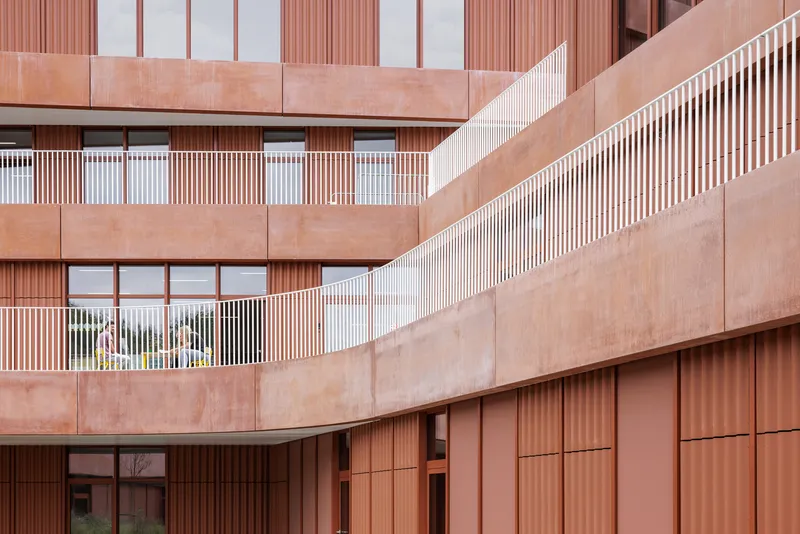
The building uses local, recyclable, and eco-certified materials. Claddings are detachable for future reuse, and waste was minimized during construction. Warm, low-maintenance materials in a natural color palette ensure both functionality and aesthetic appeal.
2. Art and Aesthetics
Artists Luca Beel and Adriaan Tas collaborated on the project, creating Echoes, an installation that enhances the campus’s visual and experiential qualities. Art integration elevates the project, connecting form, function, and beauty.

A Model for Sustainable Educational Architecture
Children's Campus Theodoor is more than just a building—it’s a blueprint for future educational spaces. By blending sustainability, flexibility, and inclusivity, it addresses the needs of today while safeguarding resources for tomorrow.
This project proves that sustainable educational architecture is not just achievable—it’s essential. It redefines how educational spaces can serve children, communities, and the planet.

Building for the Future
Children's Campus Theodoor exemplifies the transformative power of architecture. By prioritizing sustainability and integrating nature, it offers a space where children can learn, grow, and connect with the environment. It is an inspiring example of how thoughtful design can shape a brighter, more sustainable future for generations to come.


Popular Articles
Popular articles from the community


The Earth Pod: 3D Printed Homes for Resilient Refugee Communities
The Earth Pod reimagines refugee housing through 3D printed homes made from clay, combining resilience, self-sufficiency, and rapid shelter.

Riyadh For All: Intergenerational Urban Design for Active Aging in Rabat
Riyadh For All reimagines urban design in Rabat with intergenerational co-living, adaptive courtyards, and Moroccan cultural exchange today.

The Musturak Paradise: Senior Living Architecture for a Connected Future in Temara, Morocco
The Musturak Paradise reimagines senior living architecture in Temara via private homes, social spaces, culture, community, and shared care.

The Ocean Hive: Sustainable Architecture for a Self-Sufficient Civilization at Sea
The Ocean Hive imagines sustainable architecture at sea, where modular habitats, algae, wave power and ocean waste sustain a growing colony.
Similar Reads
You might also enjoy these articles


Hodi-Mandai Geram
Project Function: Preservation and revitalization of the Intangible heritage and socio-spatial identity of the Hodi by Housing, Cultural Memory Center, Sacred Grove, landscape, local tourism economy


Olio Towers: A Mid-Rise for Performers That Fuses Housing, Rehearsal, and Stage
Located blocks from Houston's Theater District, this modular tower stacks living units around a central performance atrium.

Oasis: Modular Green Housing Carved into Dhaka's Urban Fabric
A shortlisted Plugin Housing entry reclaims unauthorized settlements in Dhaka with stepped concrete volumes, green roofs, and ventilation-driven design.

Black Hole: A Floating Megastructure for the Post-Physical Era
Emiliano Mazzarotto envisions a spherical, self-scaling arena where e-sports, digital hotels, and holographic stadiums replace traditional public space.

Explore Educational Building Competitions
Discover active competitions in this discipline


Challenge to design public laboratory


Challenge to reimagine the Iron Throne


Photograph architecture without architects


Illustrate the lost glory of Angkor Wat - Render Challenge
Comments (0)
Please login or sign up to add comments
No comments yet. Be the first to comment!