
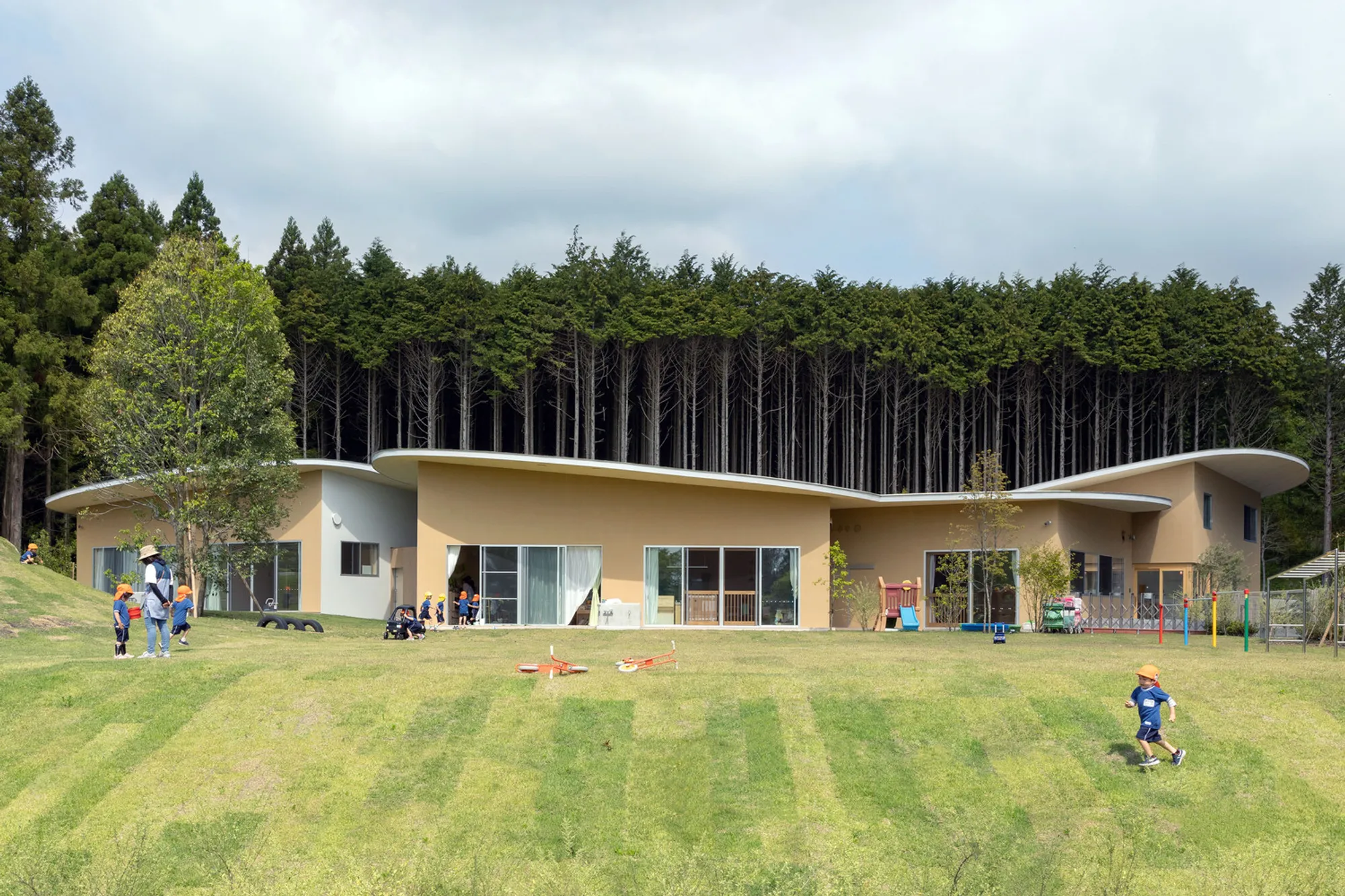
Children’s Forest Nursery School by Takashige Yamashita Office: A Nature-Immersed Learning Haven in Gotemba, Japan
A forest-integrated nursery in Gotemba fostering early childhood learning through modular design, natural light, and immersive landscape experiences.


Nestled in the serene foothills of Mount Fuji, the Children’s Forest Nursery School in Gotemba, Shizuoka Prefecture, is a thoughtfully crafted architectural response to the natural beauty of its forested surroundings. Designed by Takashige Yamashita Office, this 1,008-square-meter early education center embraces the ethos of nature-based learning, encouraging young children—from infancy to age five—to grow, explore, and thrive within a rich environmental context.
Context-Responsive Architecture
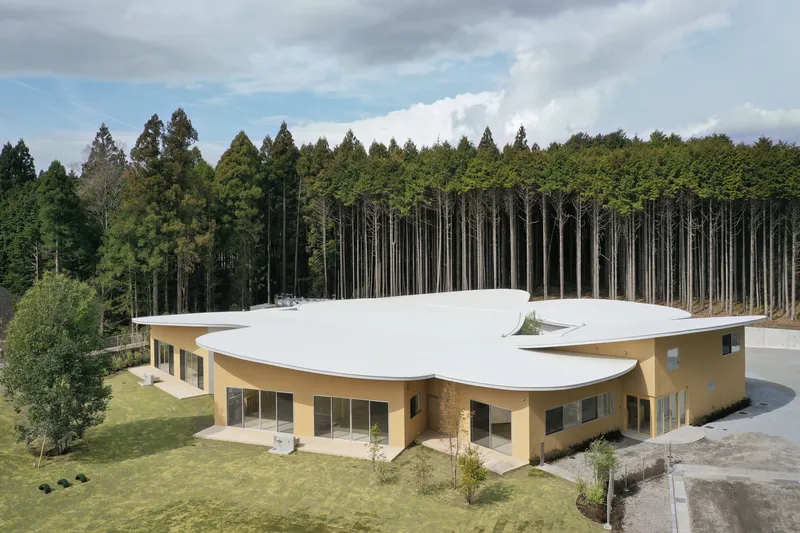
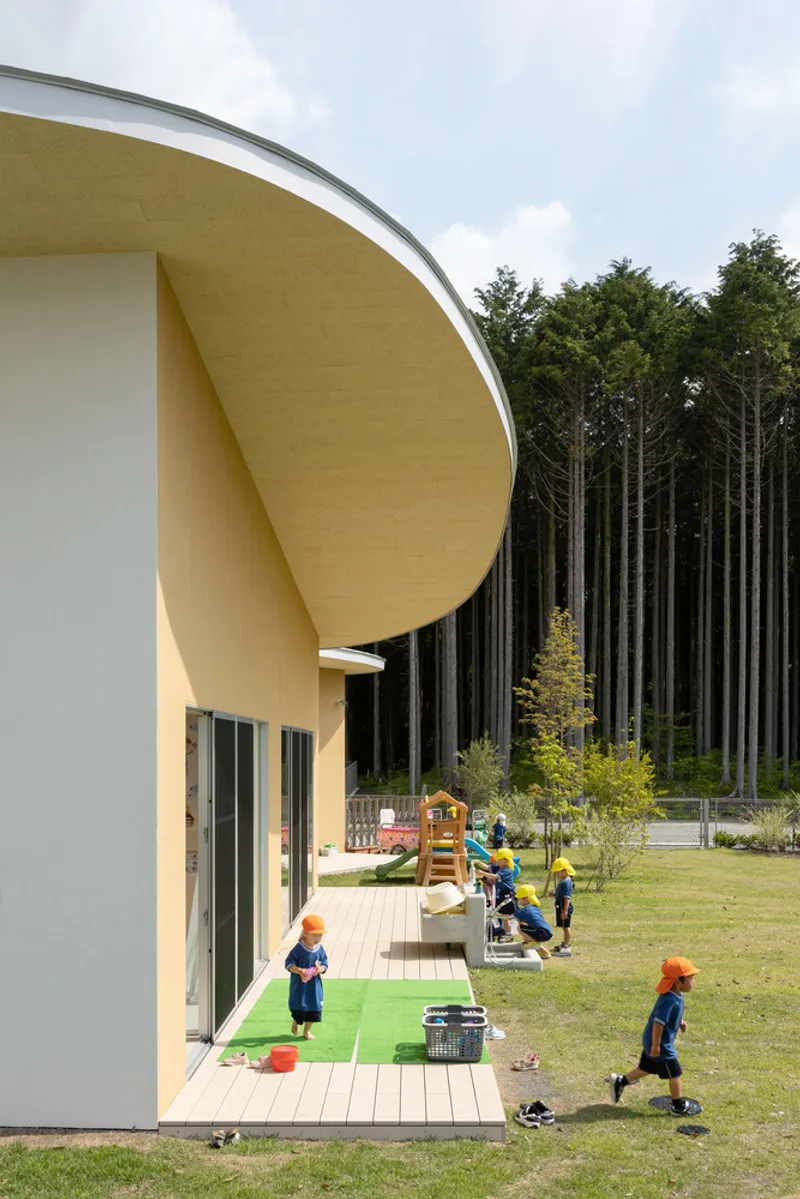
The site was originally blanketed by tall Hinoki cypress trees, filtering sunlight in dappled patterns that inspired the design team to recreate the forest’s ephemeral quality within the built environment. Rather than leveling the undulating terrain, the architects celebrated it—preserving the slope and an existing hill rising 3–4 meters at the western edge to integrate natural topography into the daily experience of the children.
Cubical Learning Volumes with Individual Views
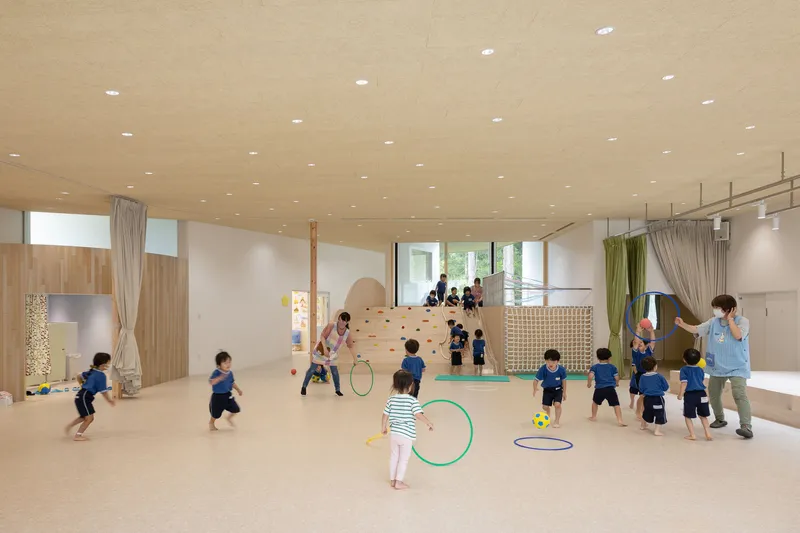
The nursery is composed of a series of modular volumes, each dedicated to a specific age group or function, and positioned at different angles and elevations. These volumes are carefully oriented to frame unique views of the landscape—whether it be the sprawling grass fields, the symbolic 8-meter-tall tree, dense forest edges, or the open sky. The spatial arrangement ensures that every classroom feels connected to its own natural microcosm, nurturing a strong sense of place-based education.
Indoor-Outdoor Connectivity Through Landscape and Courtyards
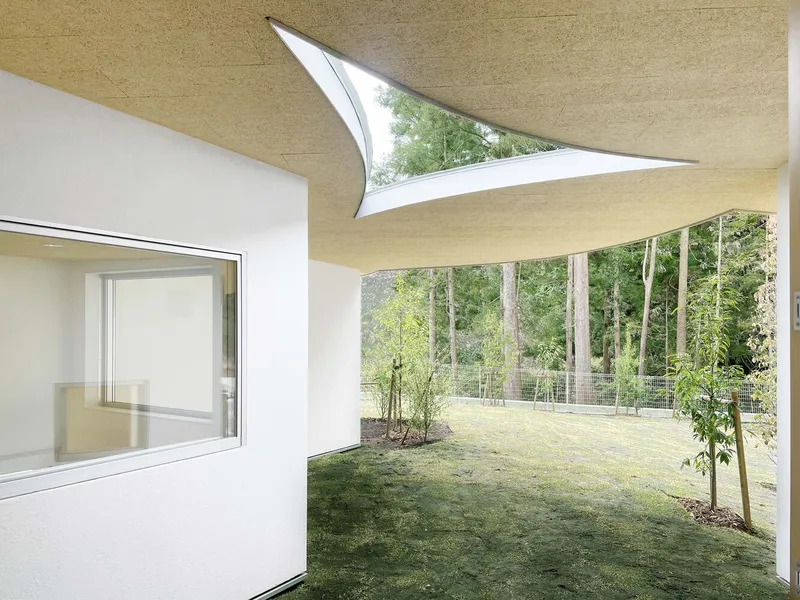
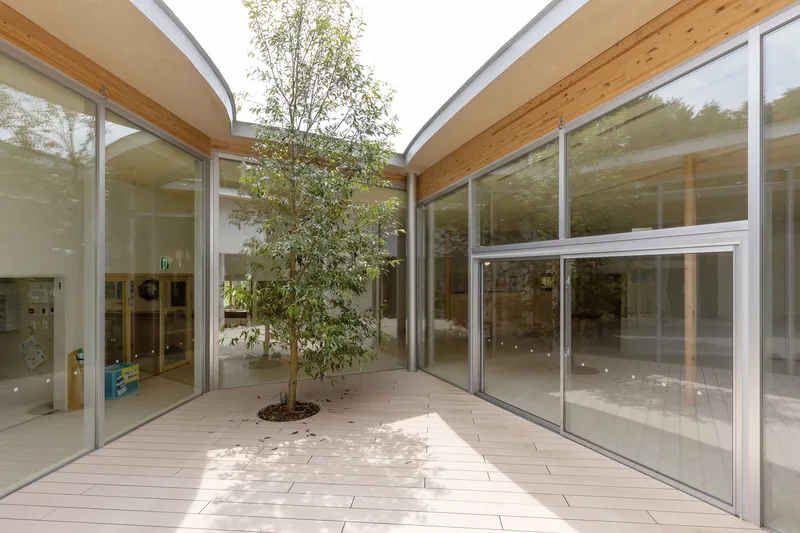
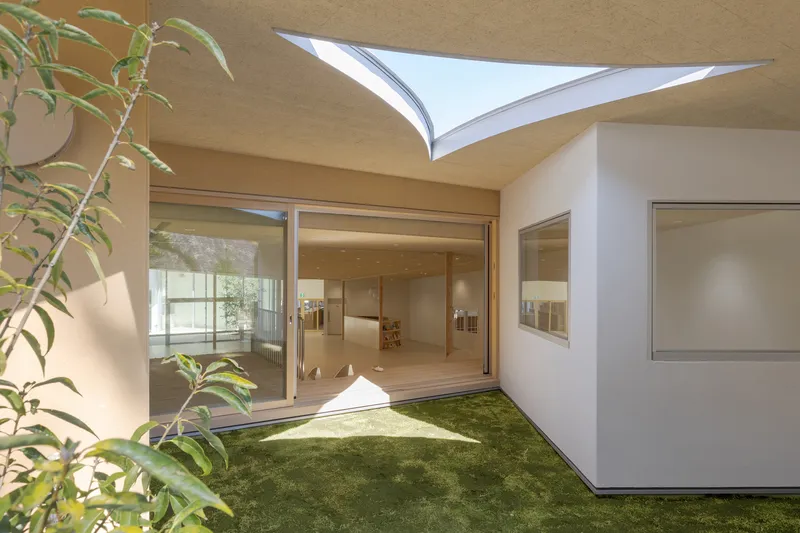
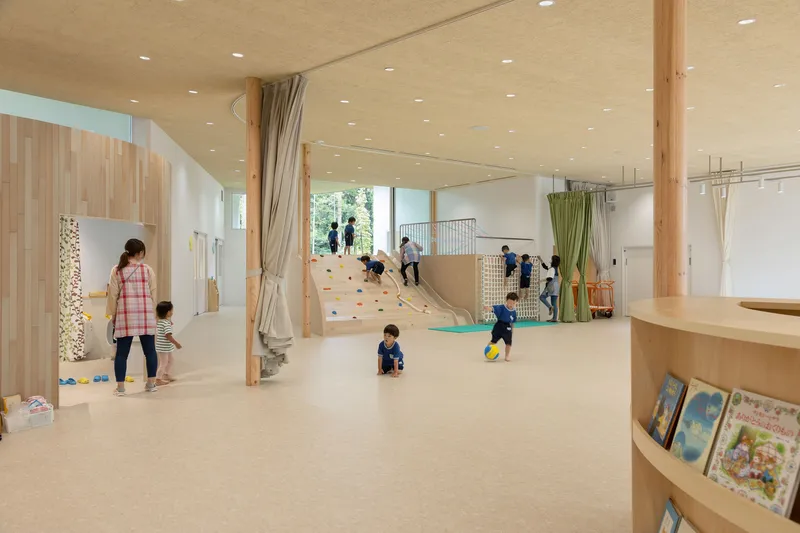
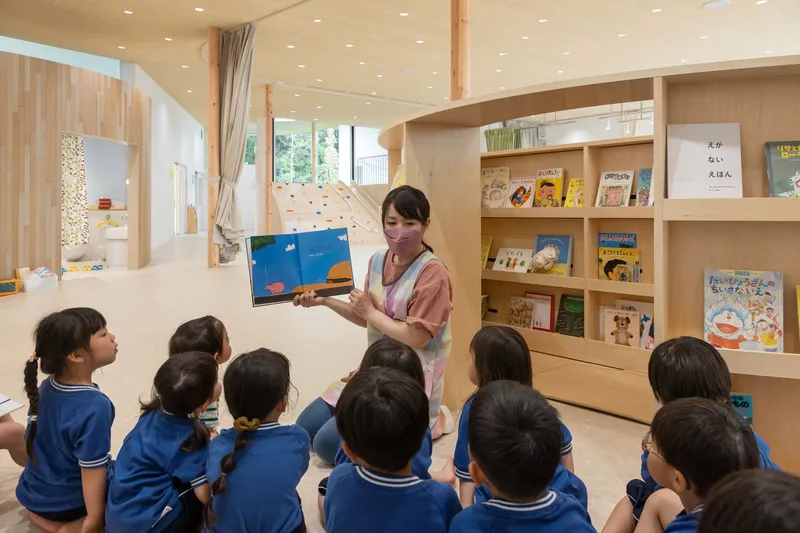
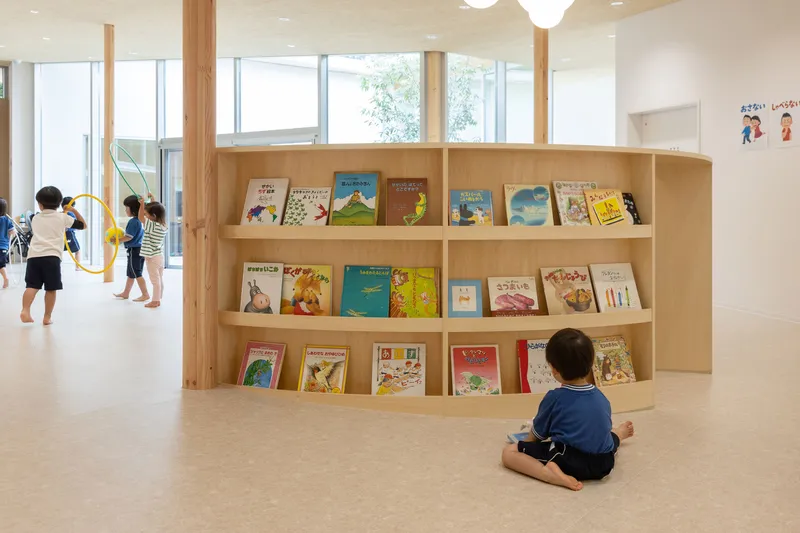
Internally, the learning spaces are linked by gentle ramps, covered walkways, and courtyards, creating an interior play landscape. This allows children to move freely and safely between rooms, even during inclement weather. A central multipurpose hall, accommodating up to 150 people, functions as a shared space for communal play, performances, and seasonal events. Above it, cleverly designed roof gaps and eave openings invite sunlight and views of treetops into the space, maintaining visual and physical contact with the outdoors.
Play Zones Blended with Terrain
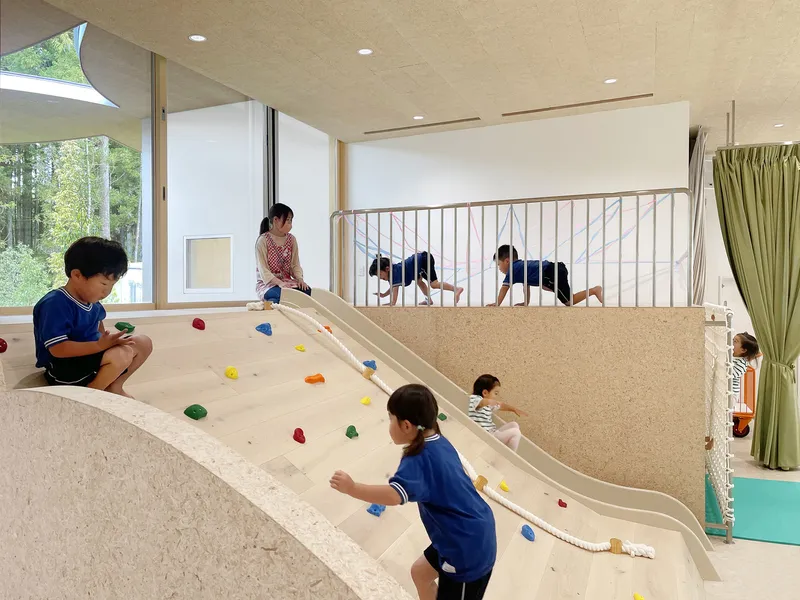
Children are offered varied play opportunities—from bouldering walls leading up to a forested backyard to a wooden-deck courtyard for toddlers still mastering their footing. The design blurs the line between built and natural environments, fostering confidence, curiosity, and independence in its young users. This seamless integration of nature also supports biophilic design principles, shown to improve wellbeing and cognitive development in early childhood.
A Forest Garden for Growing Minds
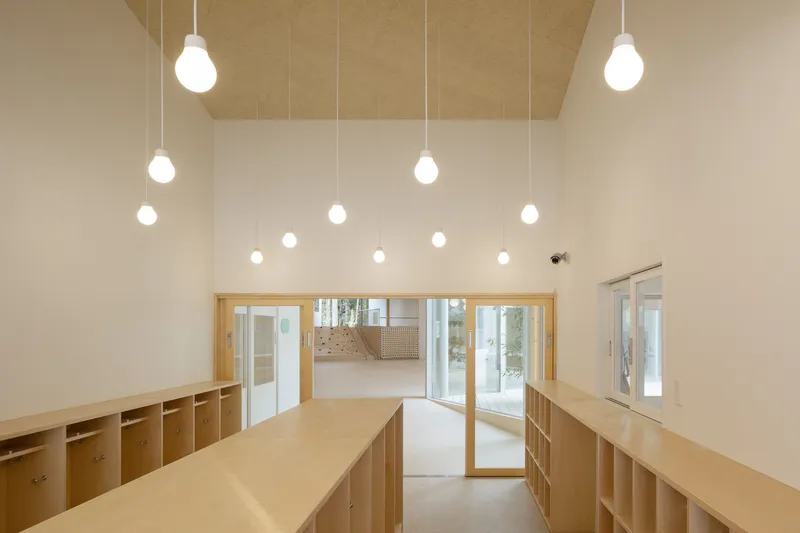
Ultimately, the Children’s Forest Nursery School is more than a day care—it is a forest garden for growing minds. The architects describe their vision as a desire to offer “a warm and healthy environment for the little ones to grow up with some good memories from the forest.” The result is an uplifting, sustainable, and responsive educational space where architecture and nature work hand in hand to nurture the next generation.
All the photographs are works of Kai Nakamura




Popular Articles
Popular articles from the community


The Earth Pod: 3D Printed Homes for Resilient Refugee Communities
The Earth Pod reimagines refugee housing through 3D printed homes made from clay, combining resilience, self-sufficiency, and rapid shelter.

Co-life: Sustainable Architecture for Age-Friendly Community Living
Co-life reimagines sustainable architecture for seniors through courtyards, rammed earth, shared gardens, and spaces designed for belonging.

Riyadh For All: Intergenerational Urban Design for Active Aging in Rabat
Riyadh For All reimagines urban design in Rabat with intergenerational co-living, adaptive courtyards, and Moroccan cultural exchange today.

Play: Fragments of Their World
Familiar architecture becomes modular playground design, creating safe spaces where displaced children can learn, connect, imagine and play.


Similar Reads
You might also enjoy these articles


Hodi-Mandai Geram
Project Function: Preservation and revitalization of the Intangible heritage and socio-spatial identity of the Hodi by Housing, Cultural Memory Center, Sacred Grove, landscape, local tourism economy


Olio Towers: A Mid-Rise for Performers That Fuses Housing, Rehearsal, and Stage
Located blocks from Houston's Theater District, this modular tower stacks living units around a central performance atrium.

Oasis: Modular Green Housing Carved into Dhaka's Urban Fabric
A shortlisted Plugin Housing entry reclaims unauthorized settlements in Dhaka with stepped concrete volumes, green roofs, and ventilation-driven design.

Black Hole: A Floating Megastructure for the Post-Physical Era
Emiliano Mazzarotto envisions a spherical, self-scaling arena where e-sports, digital hotels, and holographic stadiums replace traditional public space.

Explore Educational Building Competitions
Discover active competitions in this discipline



Challenge to design public laboratory


Challenge to reimagine the Iron Throne


Photograph architecture without architects


Illustrate the lost glory of Angkor Wat - Render Challenge
Comments (0)
Please login or sign up to add comments
No comments yet. Be the first to comment!