

Children’s Hospice House for Julia by CTYRSTEN: A Sanctuary of Compassion and Design
Children’s Hospice House for Julia by CTYRSTEN blends nature, comfort, and accessibility, offering therapeutic, family-centered spaces in a sustainable, serene environment.


Designing with Empathy: Architecture for Healing
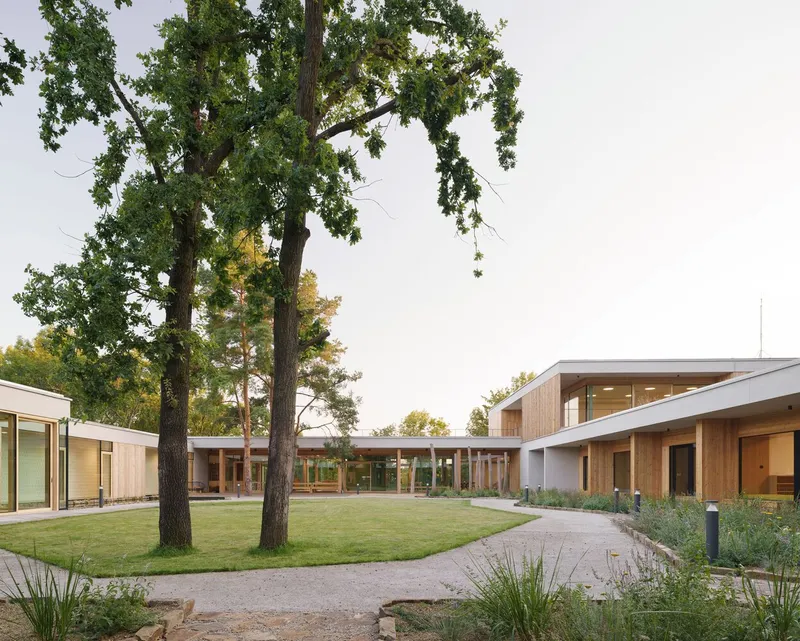
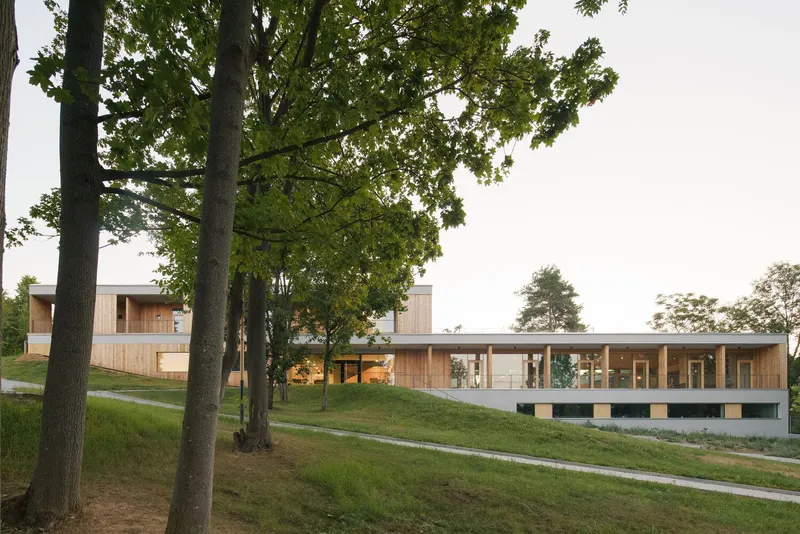
The Children’s Hospice House for Julia is more than just a building—it is a sanctuary carefully designed to nurture inner peace, acceptance, and harmony. Created by CTYRSTEN, the hospice is discreetly integrated into the natural amphitheatre of an existing park, surrounded by mature trees and greenery. Every architectural decision prioritizes emotional comfort, accessibility, and connection with nature, creating a serene environment for children, families, and staff alike.
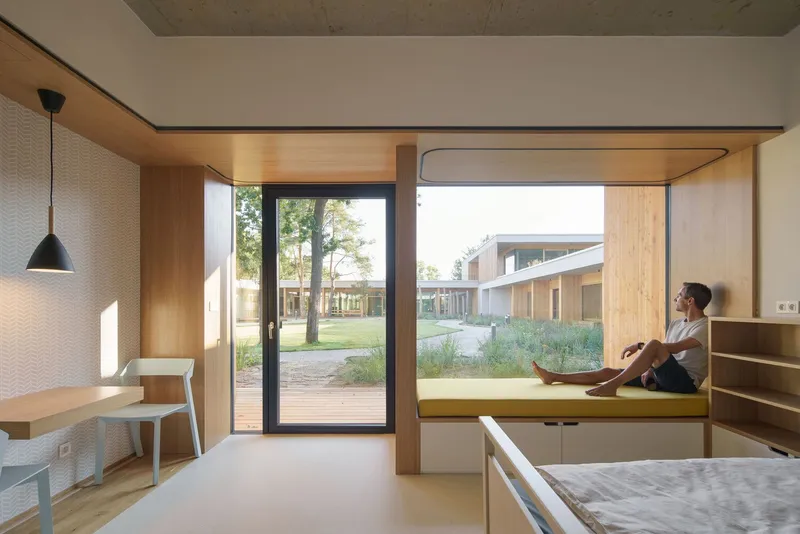
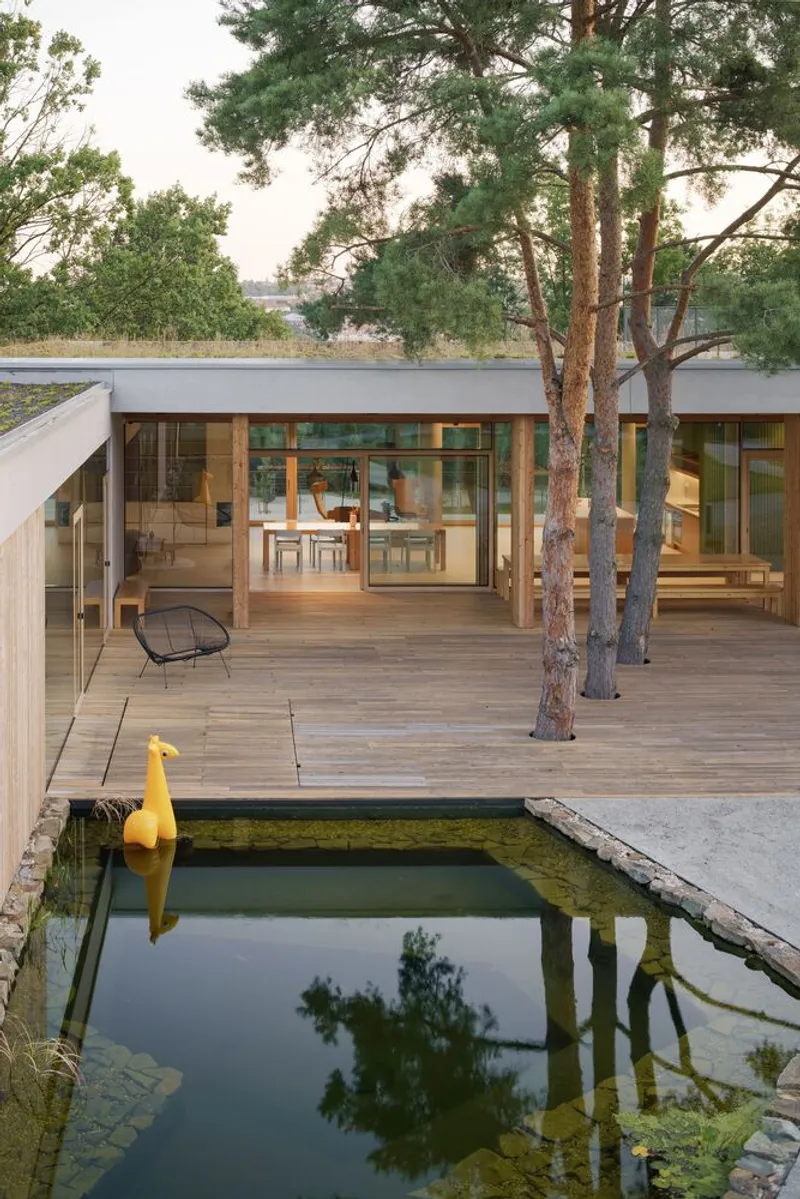
The hospice is oriented around a protected inner courtyard featuring lush landscaping and a reflective pond. All children’s rooms and communal spaces are designed to maximize natural light and outdoor views, reinforcing a sense of calm. A rooftop viewing walkway and meditation spot provide parents with a private retreat to reflect and relax, accessible at any time of day.
Thoughtful Spatial Planning
The hospice is carefully divided into four main sections, each serving distinct functions while maintaining fluid connectivity:
1. Communal and Dining Spaces
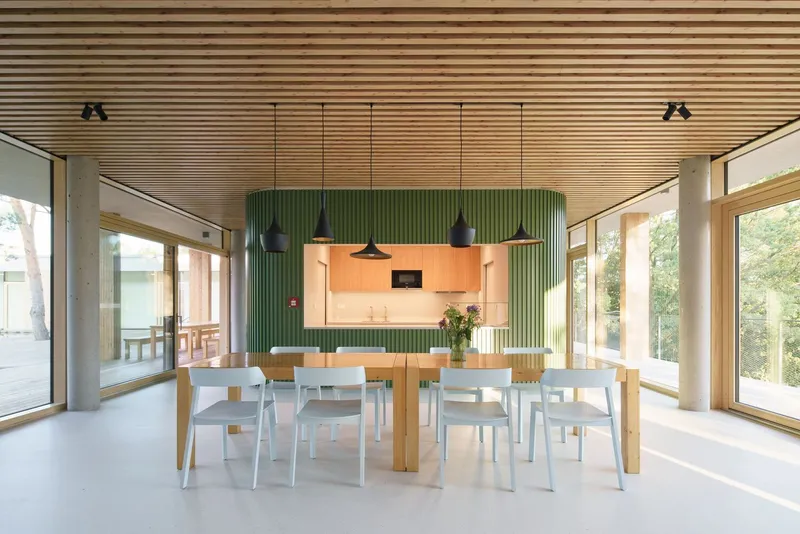
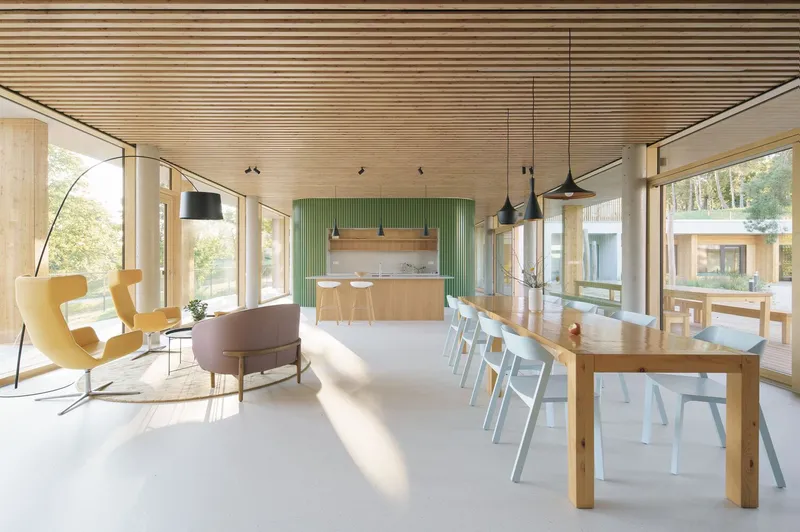
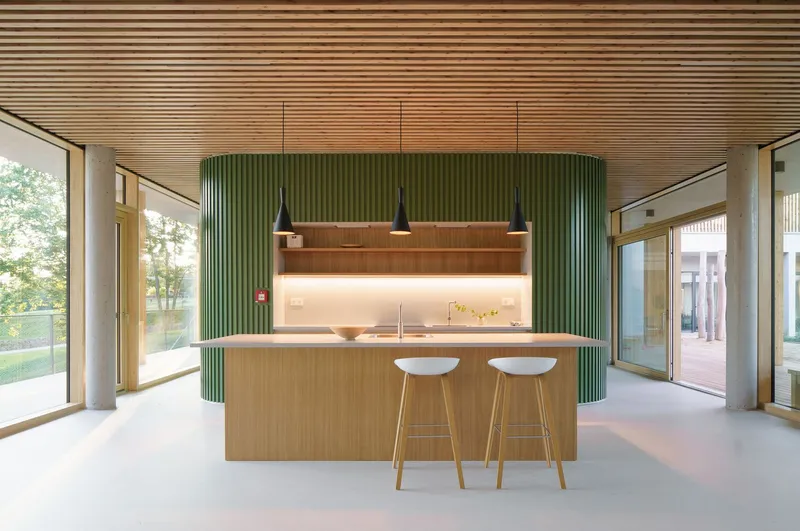
Located to the right of the main entrance, the spacious communal area accommodates social gatherings, family meals, and relaxation. Large terraces extend on both sides, offering seamless indoor-outdoor interaction. Behind the central kitchen, private lounge spaces with a cozy fireplace allow families intimate moments together.
2. Therapy and Activity Zones
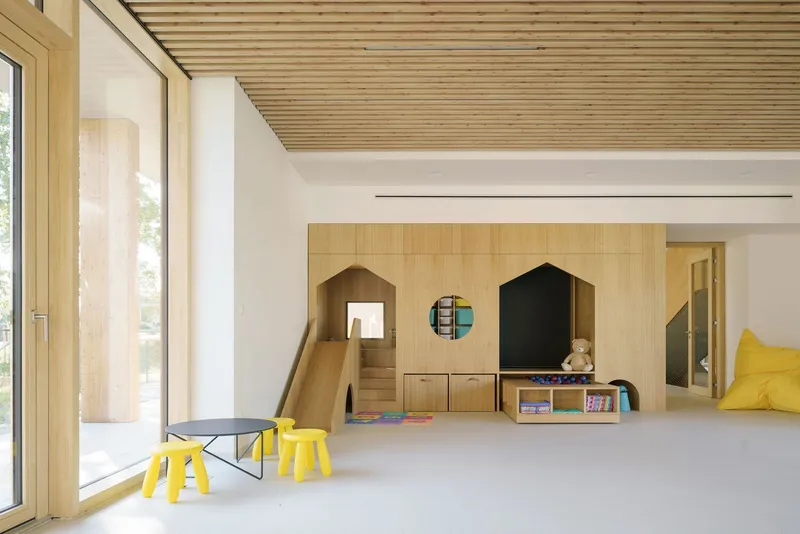
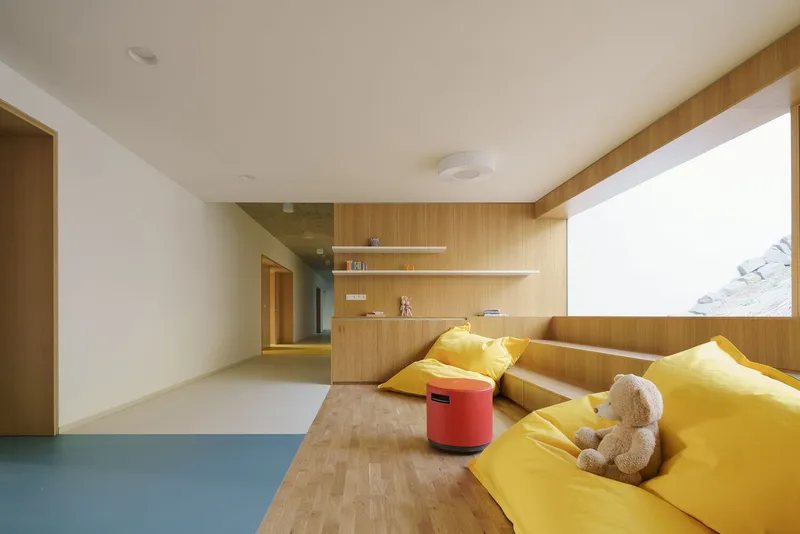
To the left of the entrance, around a smaller courtyard, are rooms dedicated to daily activities and therapies: physiotherapy, art therapy, music therapy, a pool for watsu therapy, snoezelen rooms, and even a small cinema. This thoughtful arrangement encourages engagement and emotional well-being in a supportive environment.
3. Children’s Accommodation
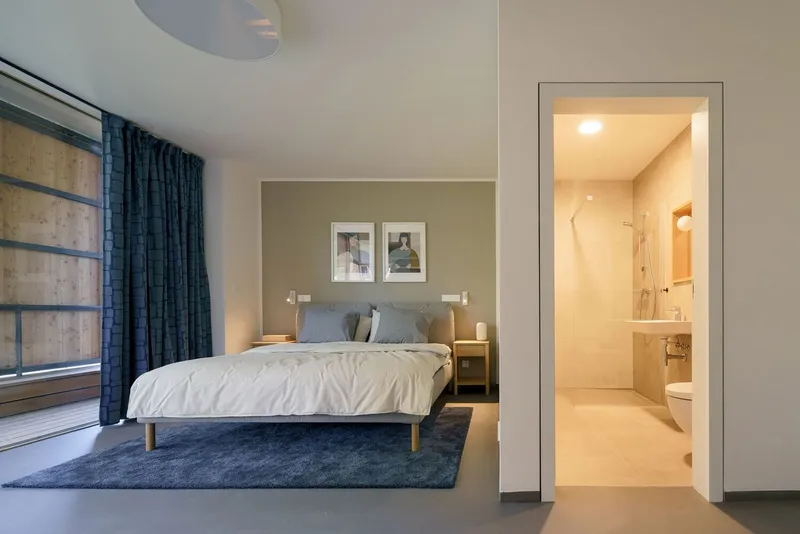
The main accommodation area includes 10 children’s rooms, each with a private terrace opening to the central courtyard. A nurses’ station ensures continuous care, while a separate apartment for final farewells features its own memorial atrium and chilled room, allowing parents to say goodbye privately and respectfully.
4. Administrative and Support Areas
Embedded discreetly into the terrain, the administrative section houses offices, meeting rooms, technical facilities, and storage. It includes separate access to the memorial atrium, ensuring privacy and dignity in sensitive moments.
Design Features that Prioritize Comfort and Accessibility
A key element of the hospice is its circular corridor system around the central courtyard. Generously glazed, it offers continuous views of trees, the sky, and reflections from the pond, creating a sense of openness and tranquility. The layout supports mobility for walking, strollers, or wheelchairs, allowing residents to alternate between private and social environments while staying connected to nature.
The parents’ floor is entirely separated from the main operations, providing privacy, relaxation, and reassurance that children are well cared for. Family rooms with private terraces, a common lounge, and direct access to the rooftop walkway and terrace offer panoramic views of Brno and spaces for social events, relaxation, or stargazing.

Sustainable and Thoughtful Construction
The building is primarily constructed with monolithic reinforced concrete, harmonized with larch wood panelling and large-format wooden-frame glazing. Overhangs provide passive shading, protect terraces, and contribute to the building’s sleek, modern aesthetic.
Heating and cooling are managed through a conduit system embedded in concrete and fibre-cement ceilings, powered by three air-to-water heat pumps discreetly located in underground niches. Green roofs help prevent overheating, retain rainwater, and blend the building into its natural surroundings. Collected rainwater supplies the courtyard pond and irrigates surrounding vegetation, reinforcing the hospice’s commitment to sustainable design.
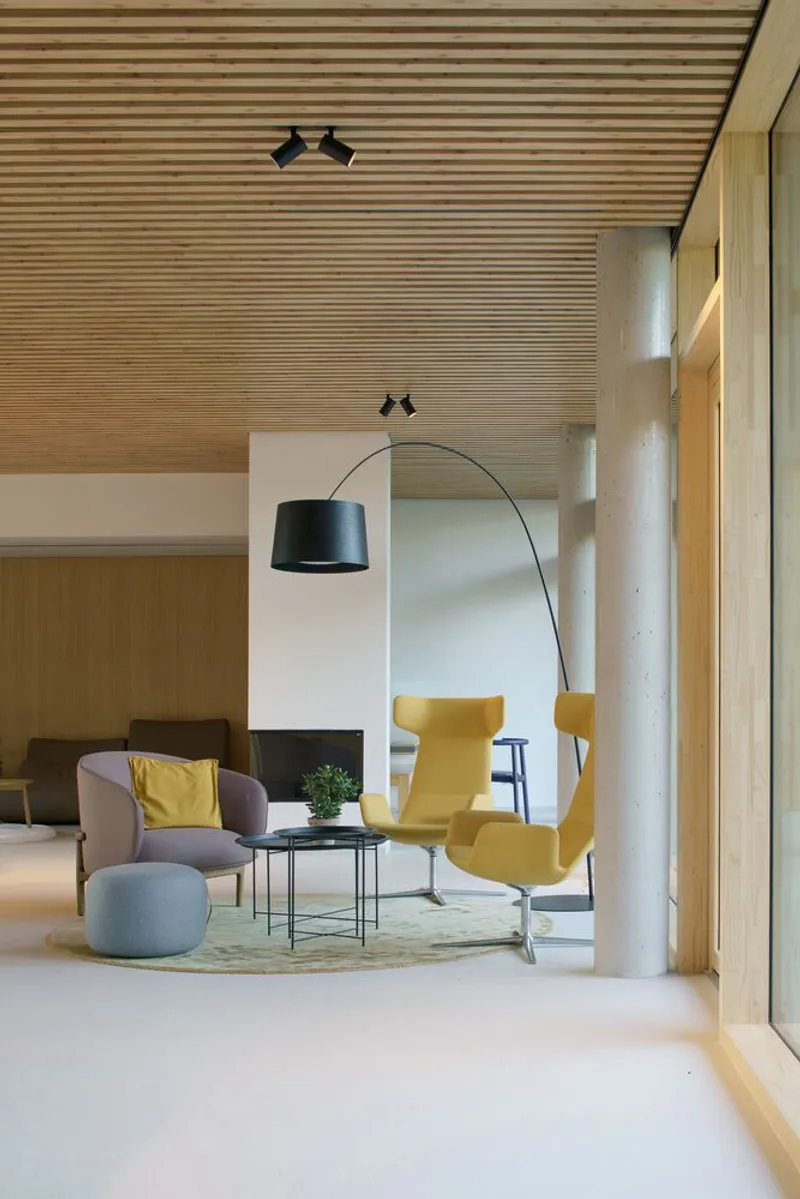
A Modern Sanctuary for Families
The Children’s Hospice House for Julia embodies CTYRSTEN’s philosophy of combining architecture, nature, and care. It balances emotional needs with practical functionality, offering a safe, comforting, and accessible environment for children facing critical illnesses and their families. Every design element—from the central courtyard to the rooftop meditation spaces—emphasizes connection, peace, and dignity, making this hospice a benchmark for compassionate healthcare architecture.
All photographs are works of Alex Shoots Buildings


Popular Articles
Popular articles from the community


Jaramillo Van Sluys Arquitectura and Urbanismo Turn a Demolished Registry Lot in Quito into an Orchard Plaza
In Quito's Centro Histórico, a 2,800 m² plaza exposes the San Agustín convent wall and redraws its lost Augustinian orchard in volcanic stone.

Cube Design Draws an Ecological Corridor Between Two Shenzhen Hills with the Nankai Building
Beside Shenzhen's container docks, the Nankai Building pairs stacked balconies with a climbing green screen to connect two hillsides across its height.

David Ortega Stacks a Two-Story Mexico City Penthouse Around a Steel Stair and a Pergola-Shaded Roof Terrace
In Colonia Roma, a 300 m² penthouse uses oak joinery, a planted steel stair and a slatted roof pergola to make a new-build apartment feel like a house.

longwave studio Reorganizes a 112 m² Tainan Apartment Around the Daily Routines of a Family and Two Cats
In Tainan, Taiwan, birch plywood, rust-red furniture and a freestanding plaster wall link arrival, storage, work and family life in one apartment.

Similar Reads
You might also enjoy these articles


Hodi-Mandai Geram
Project Function: Preservation and revitalization of the Intangible heritage and socio-spatial identity of the Hodi by Housing, Cultural Memory Center, Sacred Grove, landscape, local tourism economy


Olio Towers: A Mid-Rise for Performers That Fuses Housing, Rehearsal, and Stage
Located blocks from Houston's Theater District, this modular tower stacks living units around a central performance atrium.

Oasis: Modular Green Housing Carved into Dhaka's Urban Fabric
A shortlisted Plugin Housing entry reclaims unauthorized settlements in Dhaka with stepped concrete volumes, green roofs, and ventilation-driven design.

Black Hole: A Floating Megastructure for the Post-Physical Era
Emiliano Mazzarotto envisions a spherical, self-scaling arena where e-sports, digital hotels, and holographic stadiums replace traditional public space.

Explore Sustainable Design Competitions
Discover active competitions in this discipline

Challenge to reimagine the Iron Throne

Photograph architecture without architects

Illustrate the lost glory of Angkor Wat - Render Challenge

Design challenge to reuse E-waste
Comments (0)
Please login or sign up to add comments
No comments yet. Be the first to comment!