
Church of Beatified Restituta by Atelier Štěpán: A Modern Sacred Landmark in Brno
The Church of Beatified Restituta by Atelier Štěpán blends circular geometry, concrete minimalism, and spiritual symbolism into a contemporary sacred landmark.


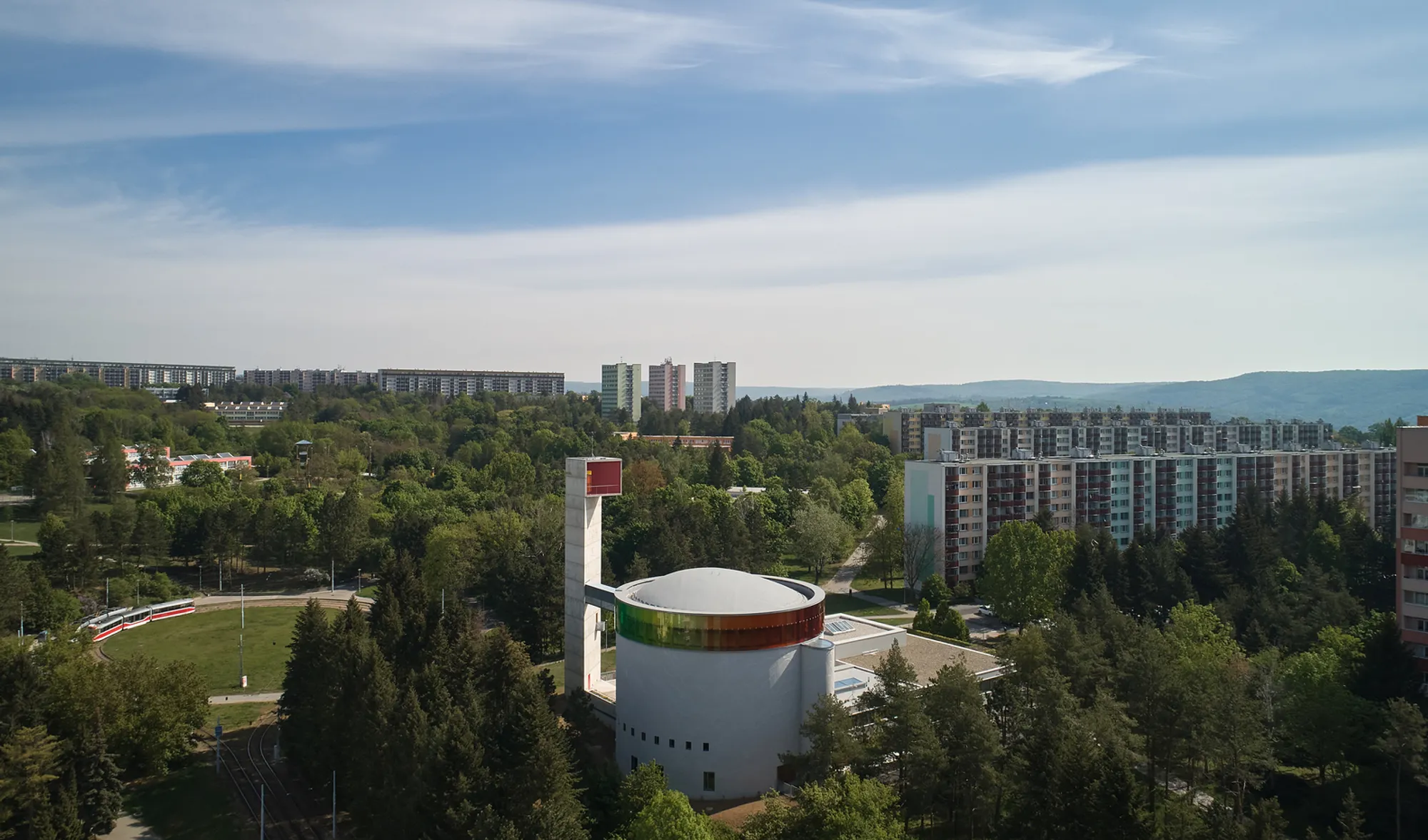
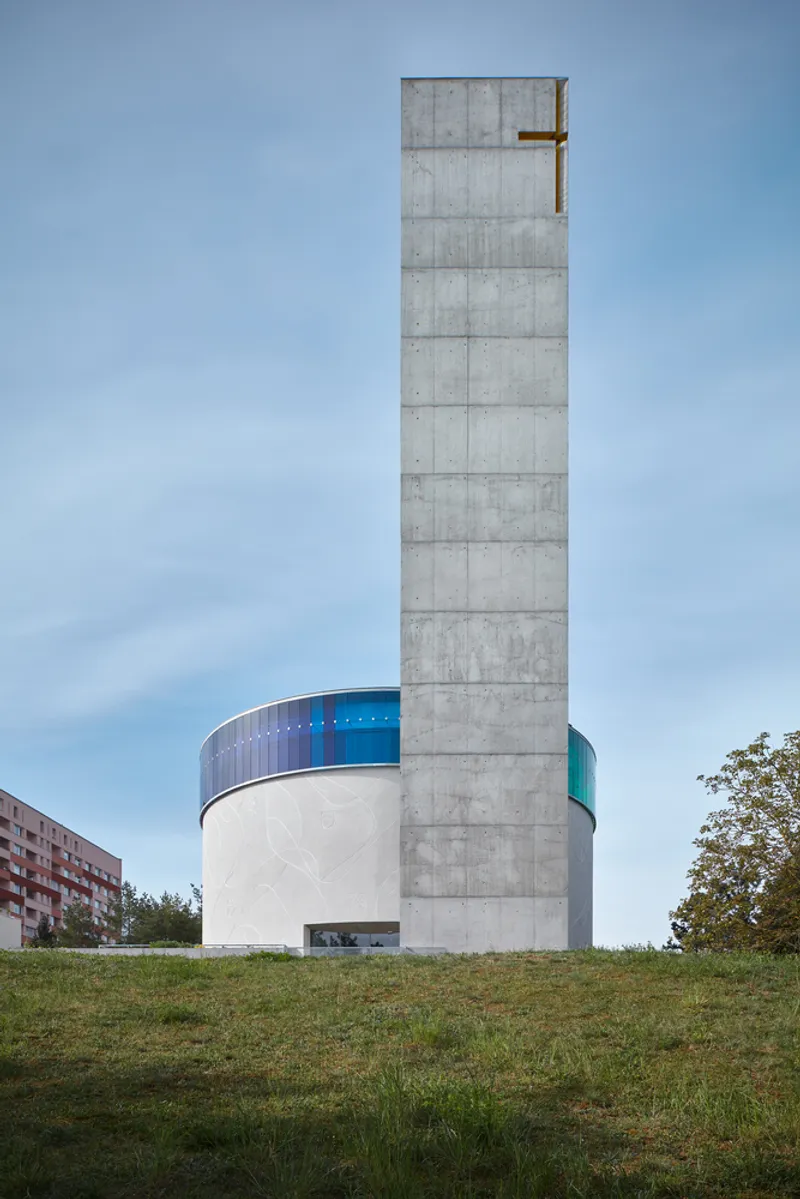
The Church of Beatified Restituta, designed byAtelier Štěpán, is one of the most remarkable contemporary churches in the Czech Republic. Completed in 2020, the 2,350 m² project stands in Brno-sever, within the Lesná housing estate, and represents a unique fusion of sacred symbolism, minimalist geometry, and material honesty.
This church, dedicated to Blessed Marie Restituta, is not only a spiritual center but also an architectural landmark that reflects a fifty-year journey from idea to realization. Architect Marek Jan Štěpán first envisioned this project over three decades ago, and its realization fulfills a community dream originally conceived in the relaxed cultural atmosphere of 1968.
Urban Context and Sacred Geometry
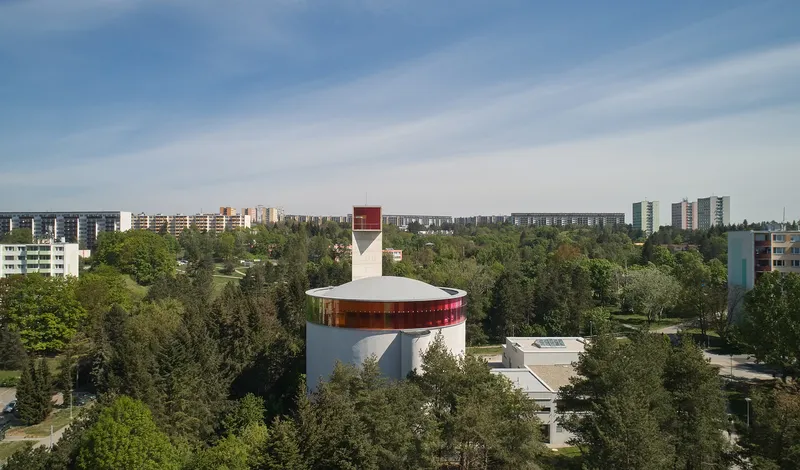
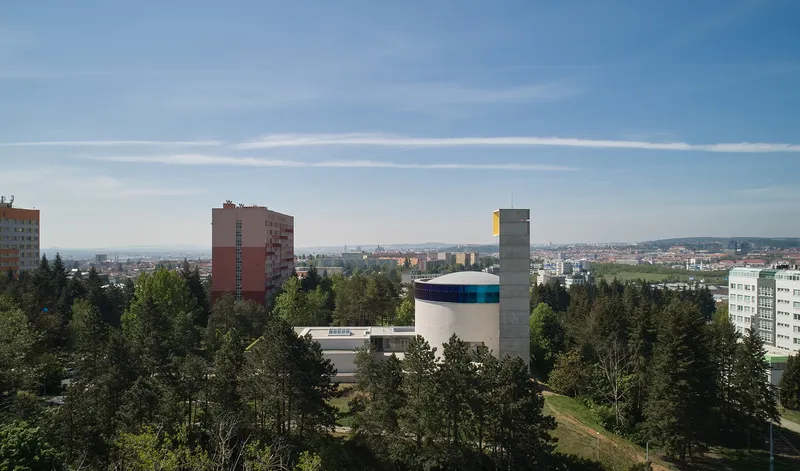
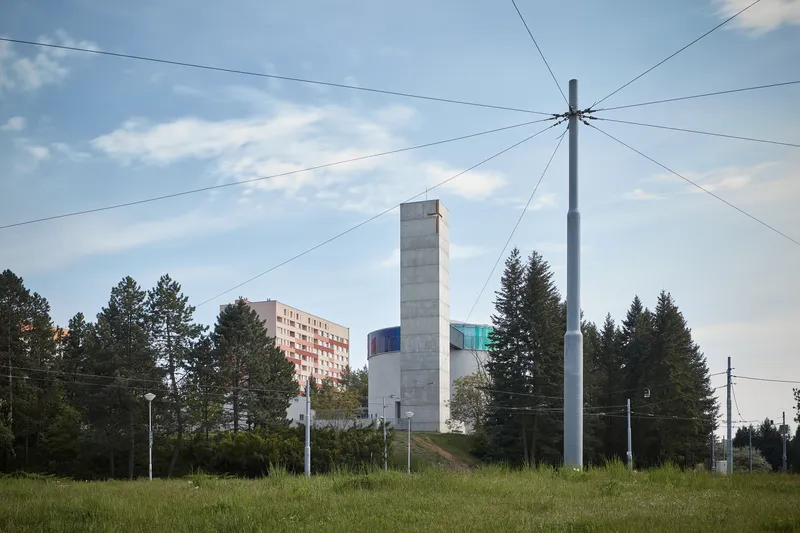
Set against the backdrop of Lesná’s tall concrete apartment blocks, the church was designed with simplicity and clarity. Instead of competing with the surrounding mass, the architecture asserts itself through elementary geometric forms.
The complex is arranged on a rectangular plateau, creating a distinct sacred district. Three primary forms define the space:
- The circular church – representing heaven and eternity.
- The triangular tower – anchoring the ensemble with verticality and symbolism.
- The rectangular spiritual center – a counterbalance that grounds the composition.
These forms differentiate the district from the surrounding urban fabric, creating a new spiritual landmark.
The Circle: Symbol of Eternity
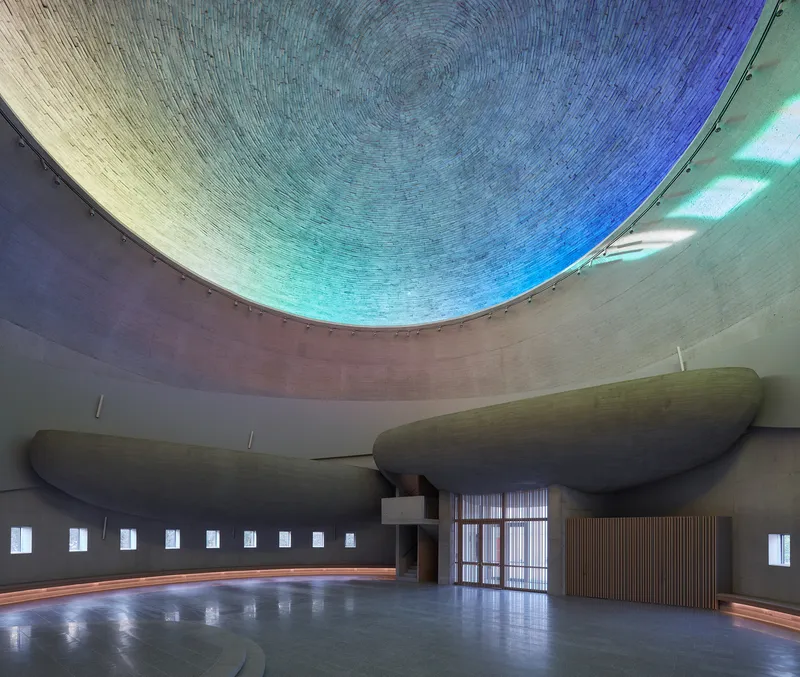
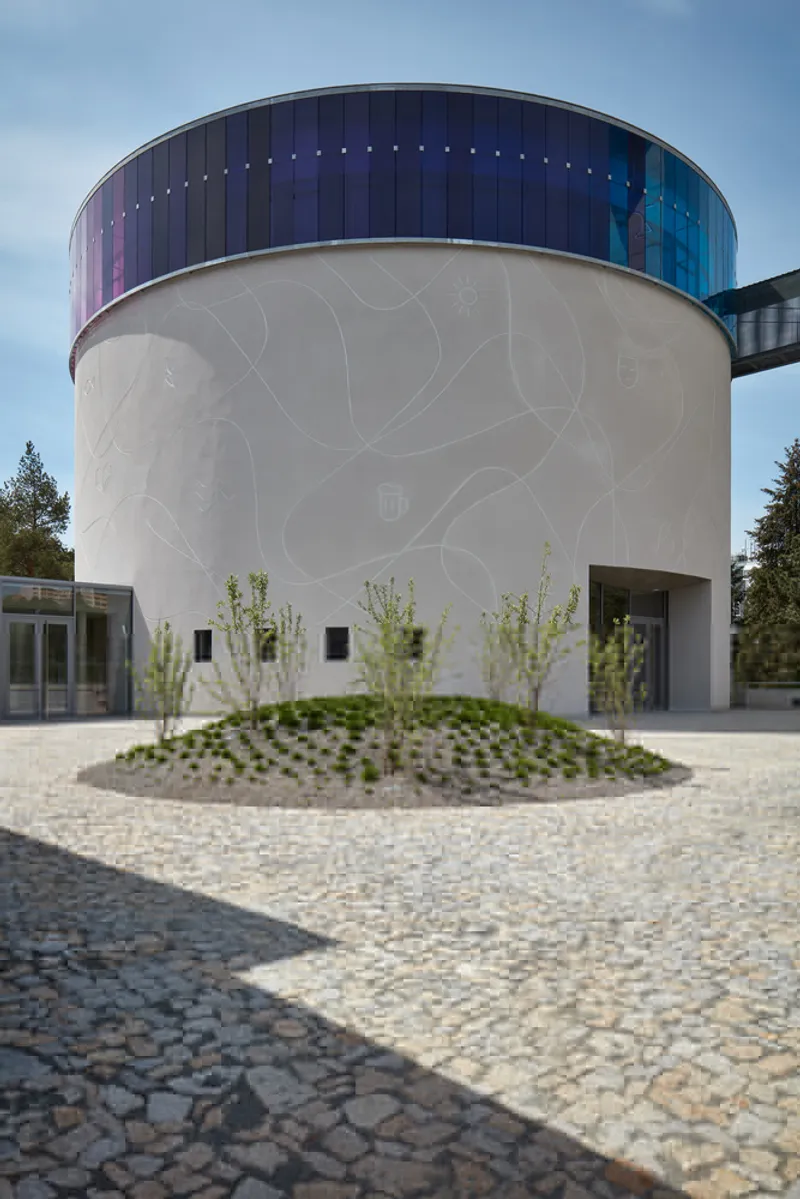
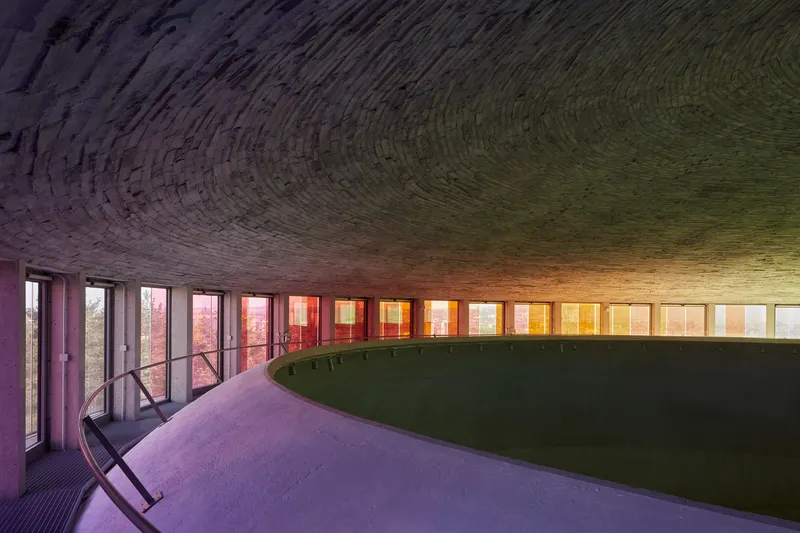
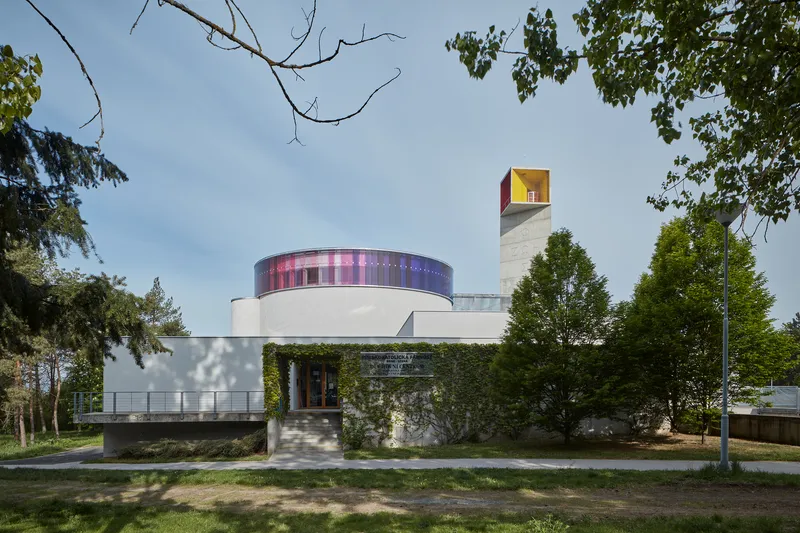
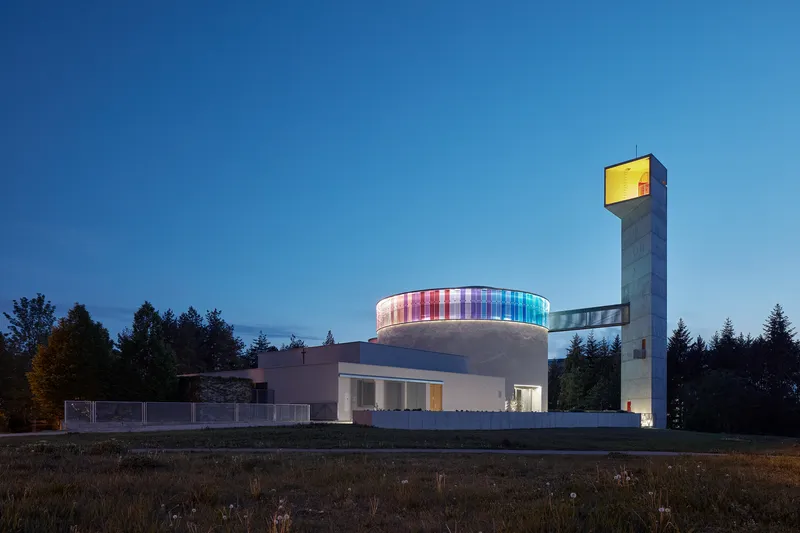
The circular floor plan of the church is a timeless symbol of wholeness, unity, and eternity. It reflects heaven itself, visually emphasized by the annular stained-glass window that crowns the building below the roofline, creating an aura of floating light above Lesná.
The circle also responds to modern liturgical concepts, evoking the community of the Apostles gathered around Christ at the Last Supper. Inside, a tall apse illuminated from above houses the tabernacle. A striking triangular tear in the wall recalls the symbolic rupture of the curtain in the Temple of Jerusalem, reinforcing the spiritual narrative of sacrifice and transcendence.
The Tower: Verticality and Meaning
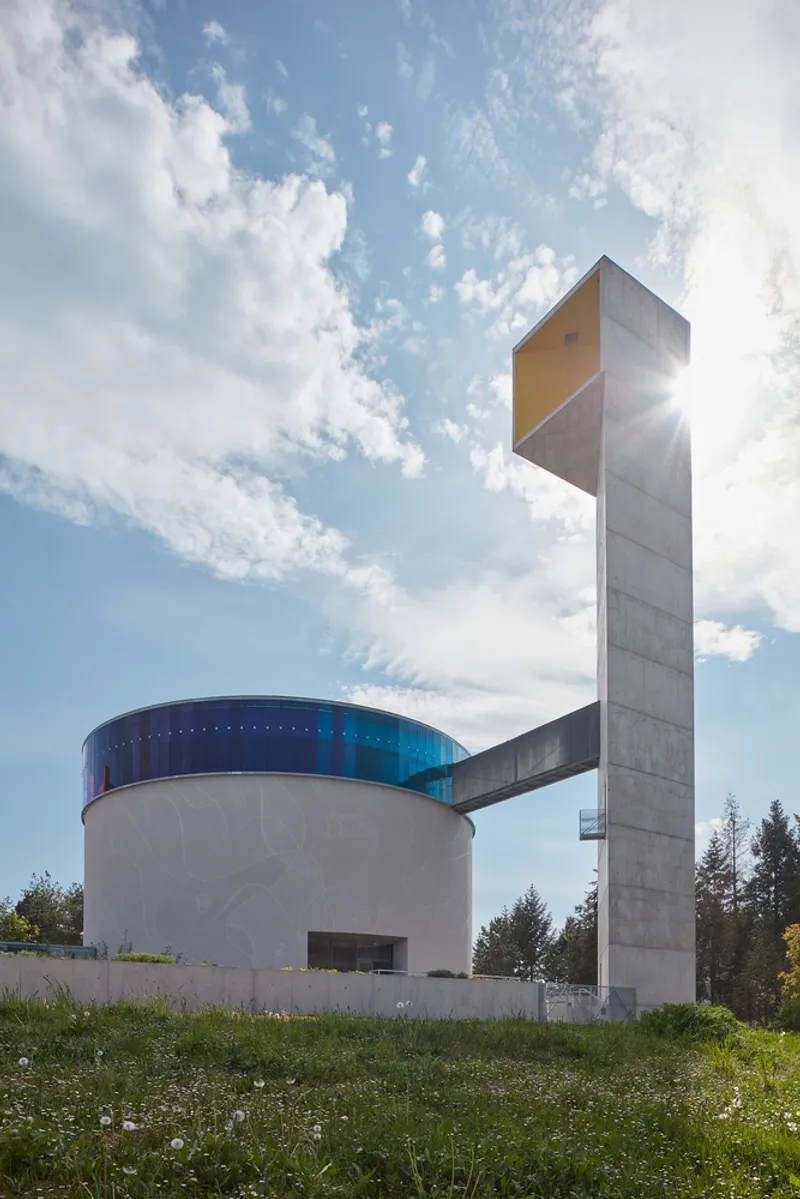
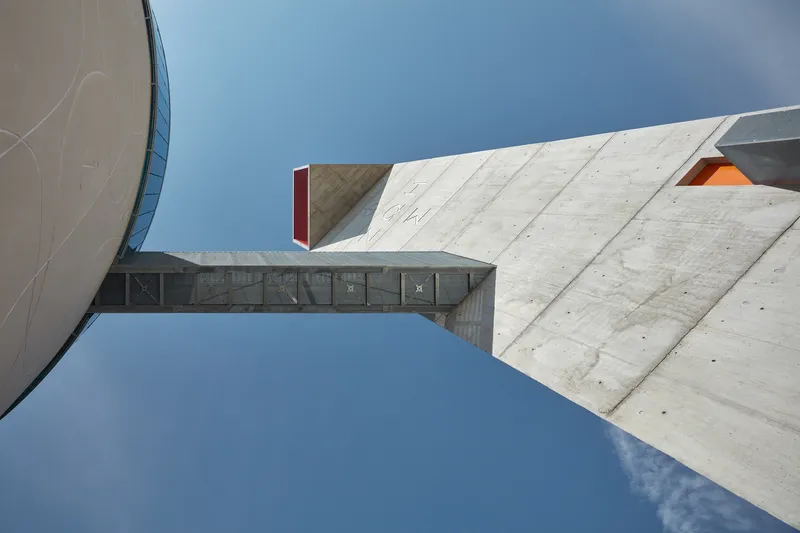
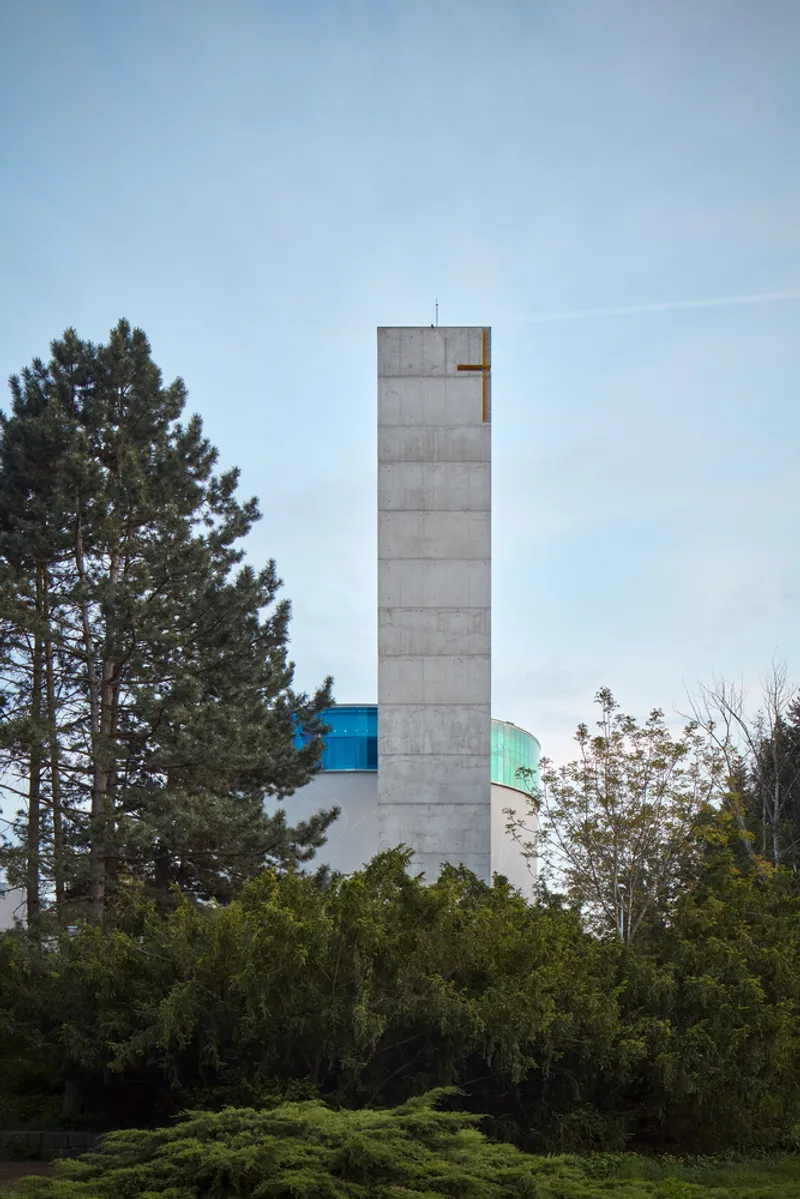
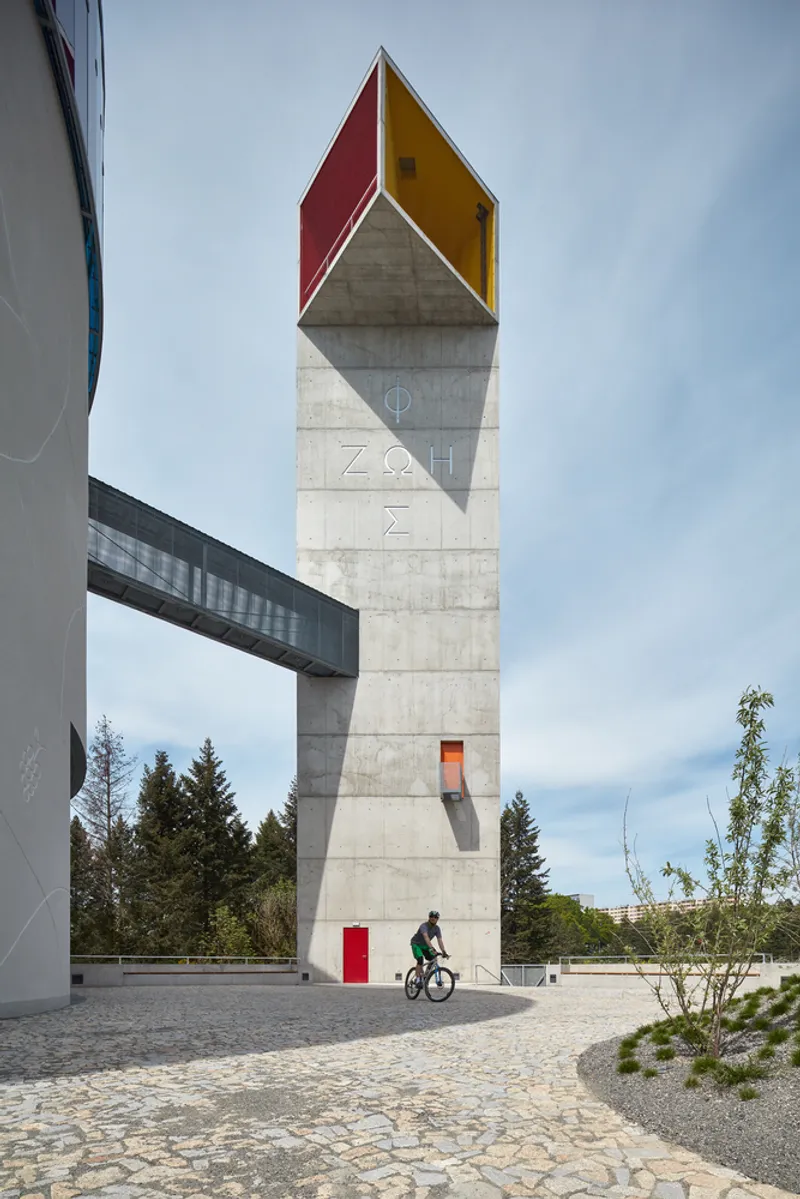
Standing slightly apart from the church, the 31-meter tower has a triangular floor plan. From the outside, it appears as a solid, static volume recalling historic church towers, but its open interior creates a dialogue with the main building.
The tower incorporates symbolic elements:
- A yellow glockenspiel evoking fire and earthly life.
- A red lookout platform offering views toward Brno’s city center.
- The inscription FOS ZOE (“light and life”), a reference to symbols found in early Christian archaeology at Mikulčice.
Unlike traditional towers pointing exclusively heavenward, this tower redirects its axis toward the church itself, emphasizing the relationship between God and His people.
Materiality and Expression of Concrete
Concrete defines the building both structurally and aesthetically, connecting it with the material palette of the surrounding housing estate. Prestressed reinforced concrete was used in key structural elements, while textured shuttering and different pours reveal the raw honesty of the material.
This approach highlights concrete as a “truthful” medium, where every imprint, joint, and variation becomes part of the architectural expression — much like historic stone masonry. The result is a sacral minimalism, free from visual overload, allowing spiritual focus.
Sustainability was also integral to the design. The church uses ground source heat pumps for efficient heating, aligning with the community’s ecological values.
Light, Color, and Symbolism
While the exterior embraces austerity, color plays a symbolic role. The stained-glass annulus creates a luminous spectrum, linking heaven and earth. On the tower, the red and yellow accents symbolize fire, suffering, and life, creating dramatic effects, especially under sunlight.
In fact, this strong chromatic presence once caused a misunderstanding. On Christmas Day 2019, firefighters were called when locals believed the tower was on fire — a testament to the evocative power of architectural color and light.
A Landmark for the Future
The Church of Beatified Restituta stands as a bold rethinking of contemporary sacred architecture. By merging timeless geometry with raw materiality and subtle symbolism, Atelier Štěpán created a place for reflection, prayer, and community gathering that resonates far beyond Brno.
All photographs are works of BoysPlayNice



Popular Articles
Popular articles from the community


Riyadh For All: Intergenerational Urban Design for Active Aging in Rabat
Riyadh For All reimagines urban design in Rabat with intergenerational co-living, adaptive courtyards, and Moroccan cultural exchange today.

The Musturak Paradise: Senior Living Architecture for a Connected Future in Temara, Morocco
The Musturak Paradise reimagines senior living architecture in Temara via private homes, social spaces, culture, community, and shared care.

Hill & Cross Opera: Sculptural Opera House Architecture Shaped by Tallinn’s Landscape and Identity
Hill & Cross Opera reimagines opera house architecture in Tallinn through its sculptural hill, civic plaza, glass wave and a luminous cross.

Lunar Spiral: Space Architecture Shaped by the Mathematics of the Universe
Lunar Spiral reimagines space architecture through Fibonacci geometry, lunar regolith, levitating habitats, and self-sustaining Moon living.

Similar Reads
You might also enjoy these articles


Hodi-Mandai Geram
Project Function: Preservation and revitalization of the Intangible heritage and socio-spatial identity of the Hodi by Housing, Cultural Memory Center, Sacred Grove, landscape, local tourism economy


Olio Towers: A Mid-Rise for Performers That Fuses Housing, Rehearsal, and Stage
Located blocks from Houston's Theater District, this modular tower stacks living units around a central performance atrium.

Oasis: Modular Green Housing Carved into Dhaka's Urban Fabric
A shortlisted Plugin Housing entry reclaims unauthorized settlements in Dhaka with stepped concrete volumes, green roofs, and ventilation-driven design.

Black Hole: A Floating Megastructure for the Post-Physical Era
Emiliano Mazzarotto envisions a spherical, self-scaling arena where e-sports, digital hotels, and holographic stadiums replace traditional public space.


Explore Archip Prague Competitions
Discover active competitions in this discipline



Challenge to reimagine the Iron Throne


Photograph architecture without architects


Illustrate the lost glory of Angkor Wat - Render Challenge


Design challenge to reuse E-waste
Comments (0)
Please login or sign up to add comments
No comments yet. Be the first to comment!