

Chusajae House by Soltozibin Architects: A Harmonious Blend of Nature, Books, and Architecture in Gwangju
Chusajae House by Soltozibin Architects blends timber, concrete, and nature, featuring layered floors, a vast library, and forest-integrated sustainable design.


Chusajae House, designed by Soltozibin Architects, is a remarkable residential project situated at the base of Mudeungsan Mountain in Gwangju, South Korea. Commissioned by a former forensic dentist from a nearby university, the house was envisioned as a personal retreat after retirement. Unlike conventional choices, the client opted to live away from Seoul, embracing the serenity of Gwangju's natural surroundings.
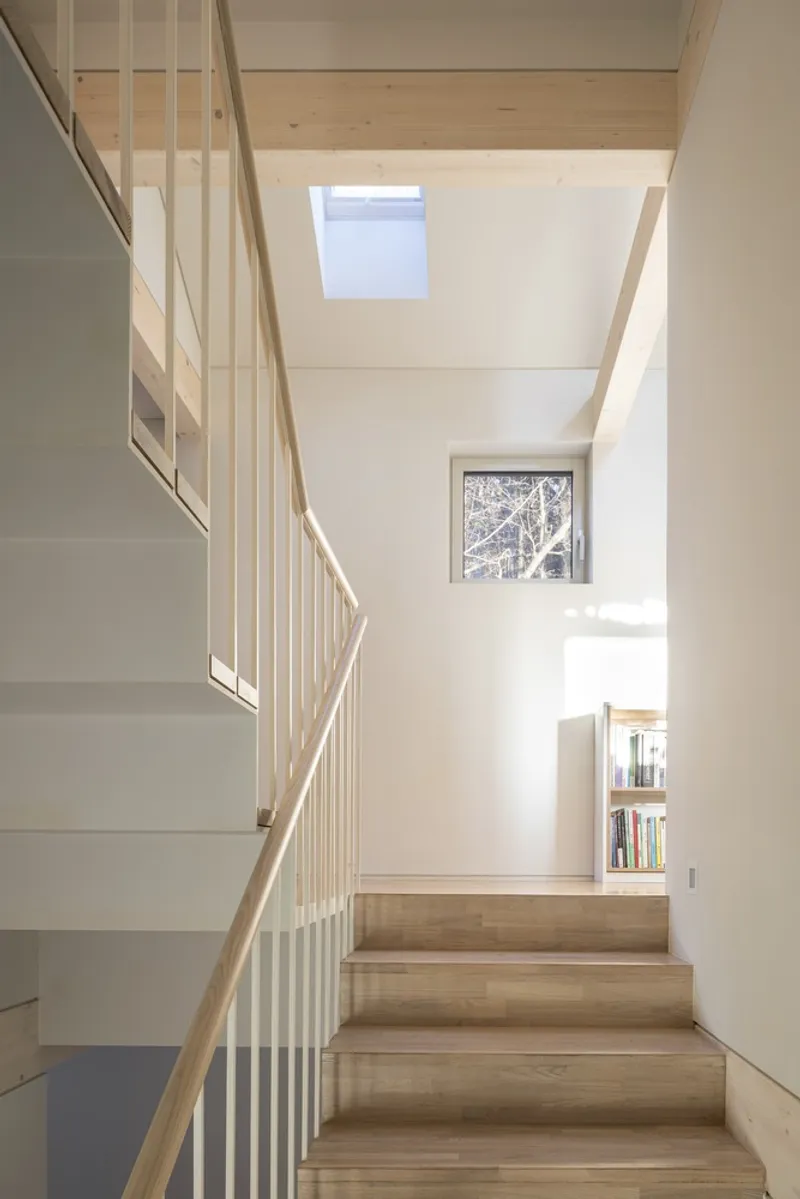

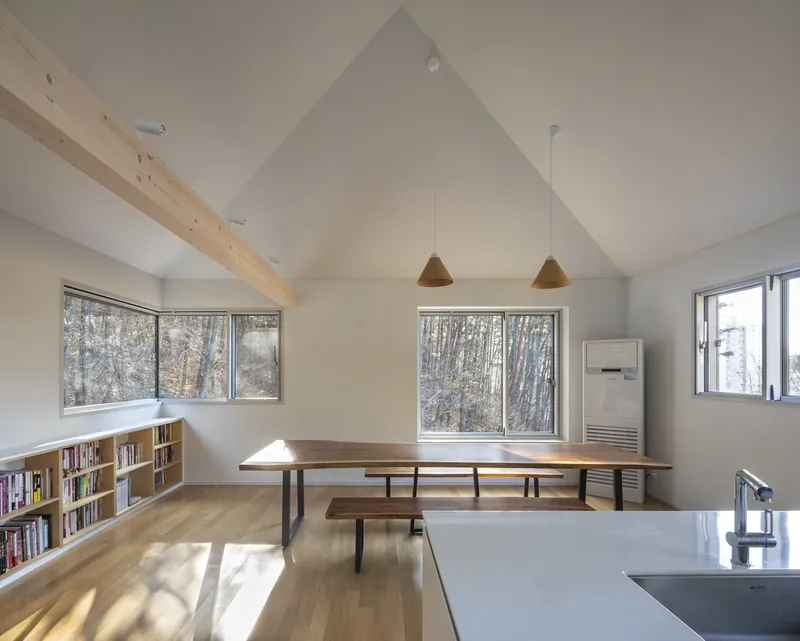
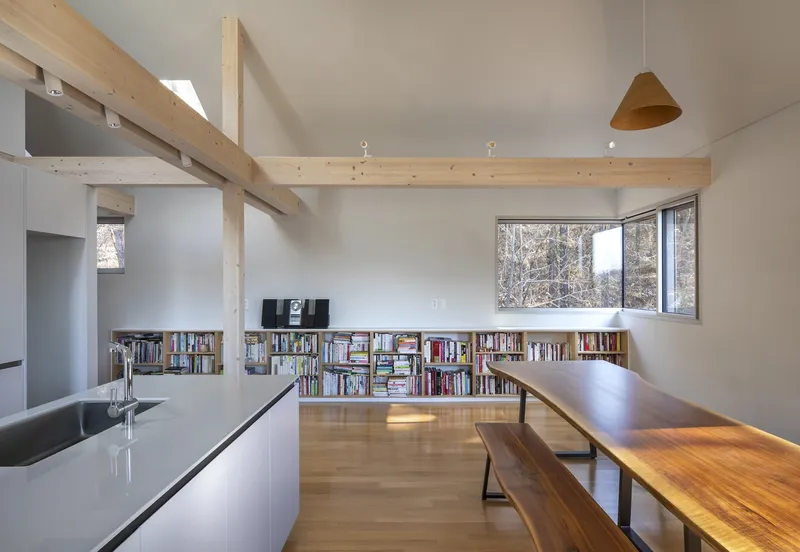
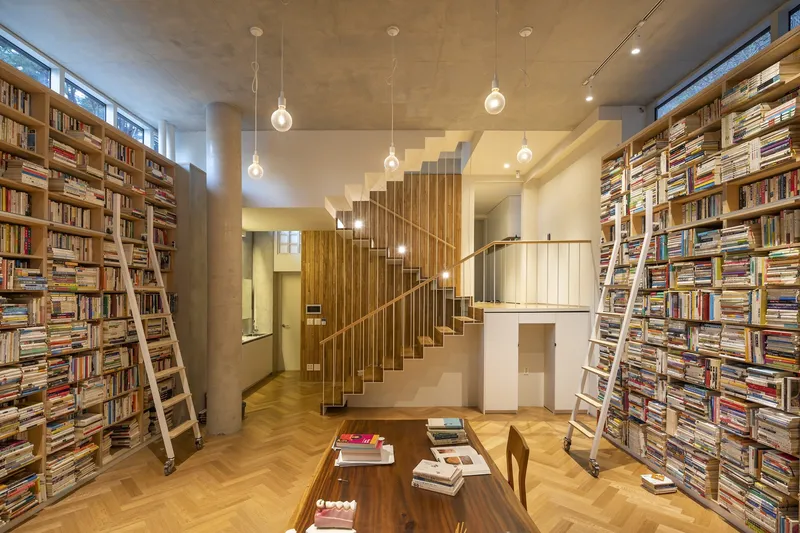
The primary design agenda for Chusajae House is “Nature and Book,” reflecting the client’s love for the outdoors and a personal library of over 23,000 books. The site, surrounded by lush forest and sloping terrain, presented both challenges and inspiration for the architectural design.

Site and Context
Located directly in front of dense woods, the plot has a flat base but is framed by tall trees and natural slopes. These conditions create a sense of intimacy and seclusion while imposing strict limitations, such as a building coverage ratio of less than 20%.
The limited footprint encouraged a vertical architectural solution, resulting in a three-story residence that maximizes spatial quality while respecting the natural environment. The house sits subtly within the landscape, blending into its surroundings rather than dominating them.
Spatial Organization
Chusajae House embraces a split-level concept to respond to the unique site conditions:
- Entrance: The main entry sits half a floor below ground level, forming a gentle connection with the earth.
- Guest Room & Attic: Positioned on the right side of the entrance, offering privacy and versatility.
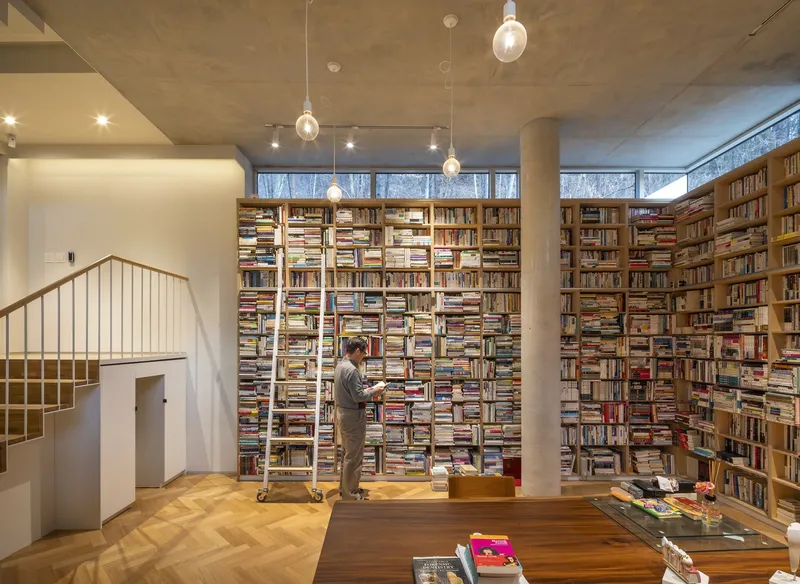
- Library: Located 1.5 floors below the main entrance, featuring high-sided windows that allow abundant daylight to illuminate the space.
- Bedrooms: Placed on the middle floor for optimal views and natural ventilation.
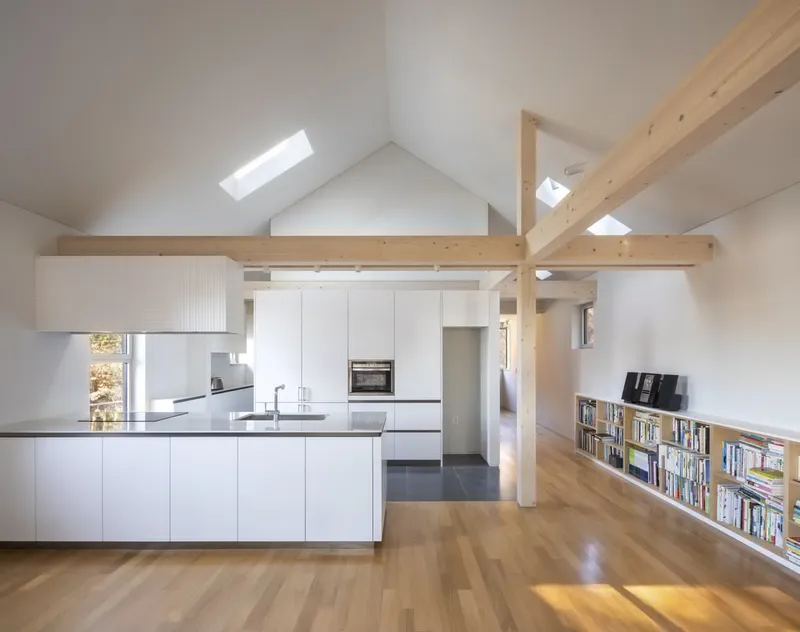
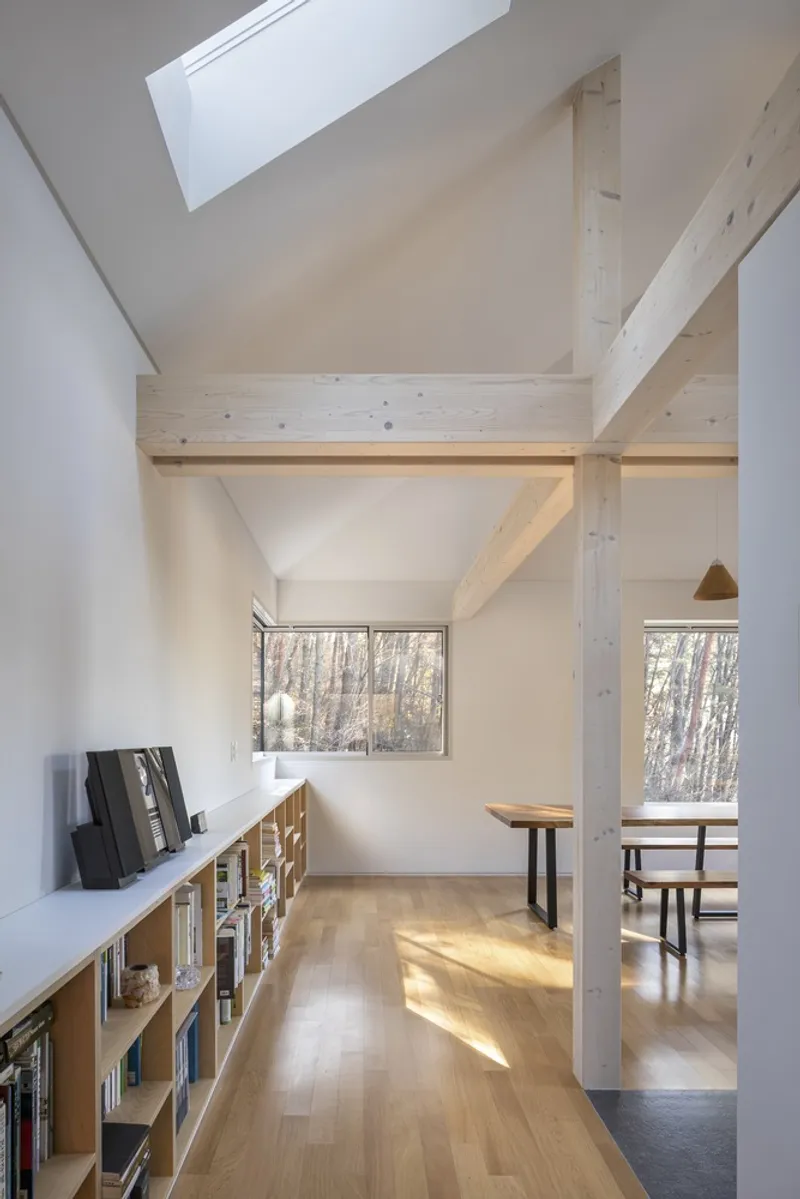
- Dining & Living Area: Situated on the top floor, where high ceilings create a sense of openness and connection to the forest canopy.
This careful layering of spaces ensures a seamless flow between private, communal, and contemplative areas, all while maximizing natural light and forest views.

Terra Tectonics: Architecture in Dialogue with the Land
Chusajae House demonstrates the concept of terra tectonics, a design philosophy where architecture responds to and engages with the land. The project interprets this through two complementary strategies:
- Reinforced Concrete Base: The lower structure actively interacts with the ground, transforming the terrain and forming a structural foundation that integrates architecture and landscape.
- Timber Superstructure: A lightweight wooden frame rises above the concrete base, minimally touching the ground while absorbing energy from the earth. The exterior combines timber and copper cladding, allowing the house to harmonize with the surrounding forest over time.
The lifted timber structure and ribbon windows not only create a visual connection with the treetops but also respect the natural contours and character of the site.

Materials and Sustainability
- Wood: Both heavy timber and lightweight frame structures were used to balance durability with sensitivity to the environment.
- Copper Cladding: Applied in varying widths, it will naturally age and blend with the forest.
- Daylighting: Strategically placed high-sided windows and open plans reduce reliance on artificial lighting.
By combining natural materials with innovative construction techniques, Chusajae House emphasizes sustainability, biophilic design, and environmental integration.
Chusajae House stands as a serene, thoughtfully designed retreat where architecture, nature, and personal passion converge. By responding to the site’s natural constraints and celebrating the client’s love of books, Soltozibin Architects created a home that is as contemplative as it is visually striking.

All photographs are works of
Yoon Junhwan


Popular Articles
Popular articles from the community


Cube Design Draws an Ecological Corridor Between Two Shenzhen Hills with the Nankai Building
Beside Shenzhen's container docks, the Nankai Building pairs stacked balconies with a climbing green screen to connect two hillsides across its height.

LT2A and OPEN Architectes Thread a Brick and Glass High School Through a Wooded Belgian Campus
In Braine-l'Alleud, a 3,000 m² wing for Collège Cardinal Mercier pairs pale brick with a glazed colonnade, deferring to a small chapel and a dense wood.

U.GA Architects Wraps an Oval Rooftop Pool in Curved Board-Formed Concrete on Busan's Jeollidan-gil
In Busan's Jeonpo-dong, a 454 m² mixed-use block stacks a neighborhood facility, guest rooms and an oval rooftop pool inside spiraling concrete walls.

longwave studio Reorganizes a 112 m² Tainan Apartment Around the Daily Routines of a Family and Two Cats
In Tainan, Taiwan, birch plywood, rust-red furniture and a freestanding plaster wall link arrival, storage, work and family life in one apartment.

Similar Reads
You might also enjoy these articles


Hodi-Mandai Geram
Project Function: Preservation and revitalization of the Intangible heritage and socio-spatial identity of the Hodi by Housing, Cultural Memory Center, Sacred Grove, landscape, local tourism economy


Olio Towers: A Mid-Rise for Performers That Fuses Housing, Rehearsal, and Stage
Located blocks from Houston's Theater District, this modular tower stacks living units around a central performance atrium.

Oasis: Modular Green Housing Carved into Dhaka's Urban Fabric
A shortlisted Plugin Housing entry reclaims unauthorized settlements in Dhaka with stepped concrete volumes, green roofs, and ventilation-driven design.

Black Hole: A Floating Megastructure for the Post-Physical Era
Emiliano Mazzarotto envisions a spherical, self-scaling arena where e-sports, digital hotels, and holographic stadiums replace traditional public space.

Explore Architecture Competitions
Discover active competitions in this discipline

Challenge to reimagine the Iron Throne

Photograph architecture without architects

Illustrate the lost glory of Angkor Wat - Render Challenge

Design challenge to reuse E-waste
Comments (0)
Please login or sign up to add comments
No comments yet. Be the first to comment!