

CIMA Elementary School by Punto Arquitectos: A Contemporary Educational Landmark in Aguascalientes, Mexico
Contemporary elementary school in Mexico by Punto Arquitectos, featuring modular classrooms, exposed concrete, and student-centered sustainable design principles.


A Visionary Approach to Elementary Education Architecture
Completed in 2023 and designed by Punto Arquitectos, CIMA Elementary School is a forward-thinking educational facility located in Aguascalientes, Mexico. This private elementary school is part of a comprehensive educational master plan on a 15,000 m² site, with a built area of 1,800 m². The project sets a new benchmark for modern school design in Mexico, blending functionality, spatial clarity, and honest material expression.
A Modular and Thoughtful Architectural Layout
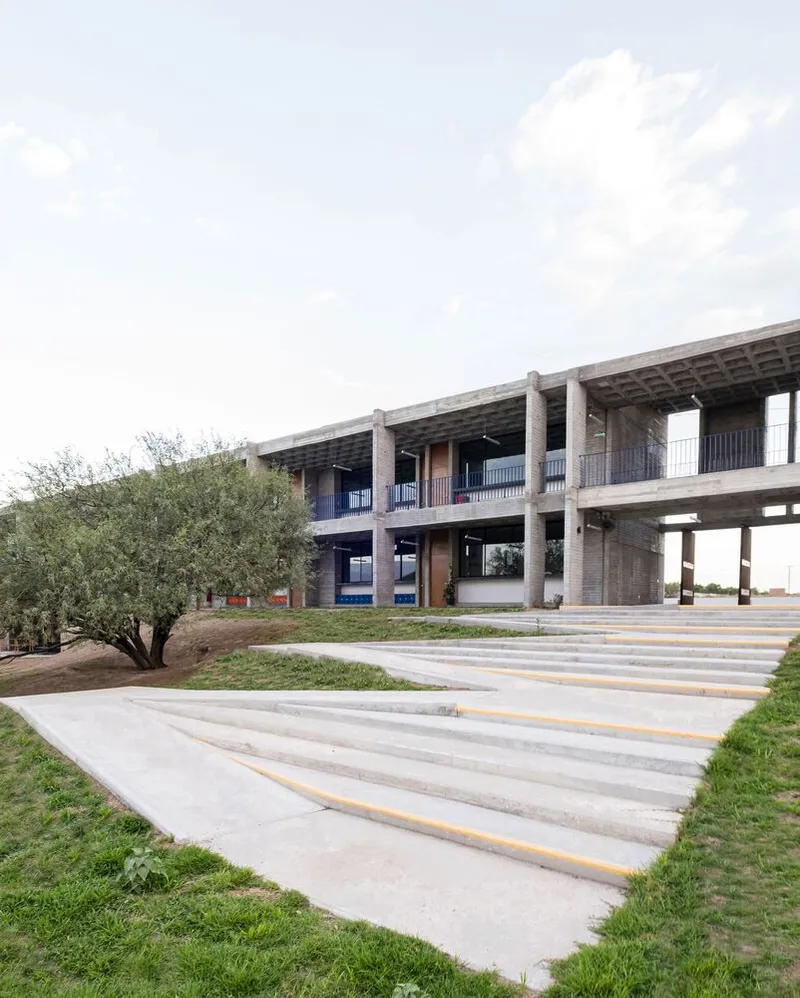
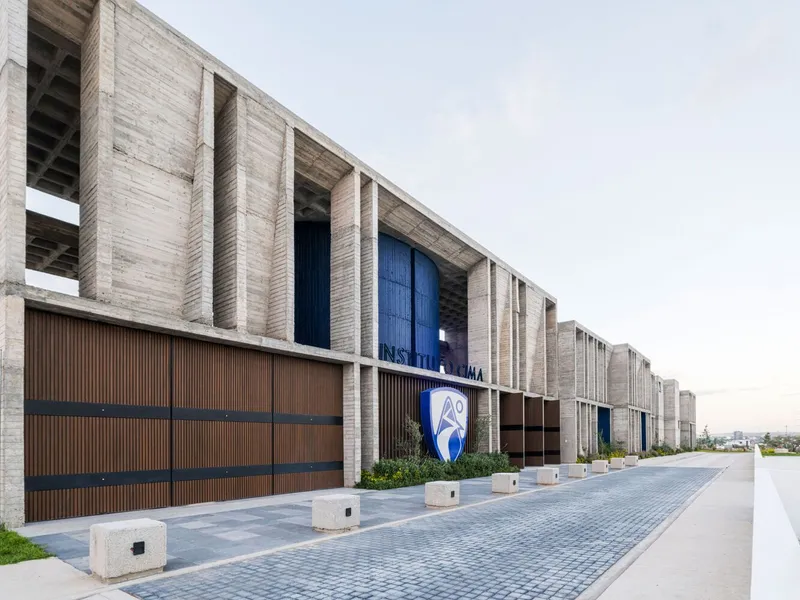
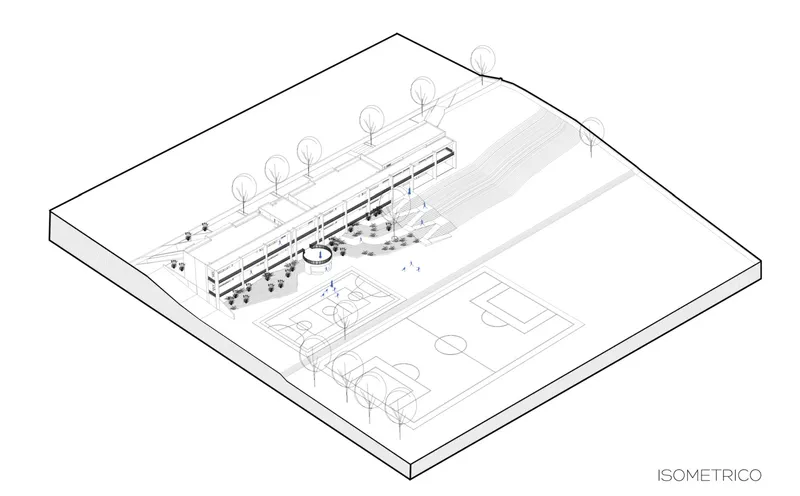
The architectural concept is based on the creation of twelve modular classroom blocks spread over two levels. These blocks are interconnected by a linear axis that introduces rhythm and spatial pauses between volumes, enhancing circulation and spatial hierarchy. This clear and structured layout ensures a student-centered environment, where movement and transition between learning spaces are intuitive and engaging.
Emphasis on Material Honesty and Structural Clarity
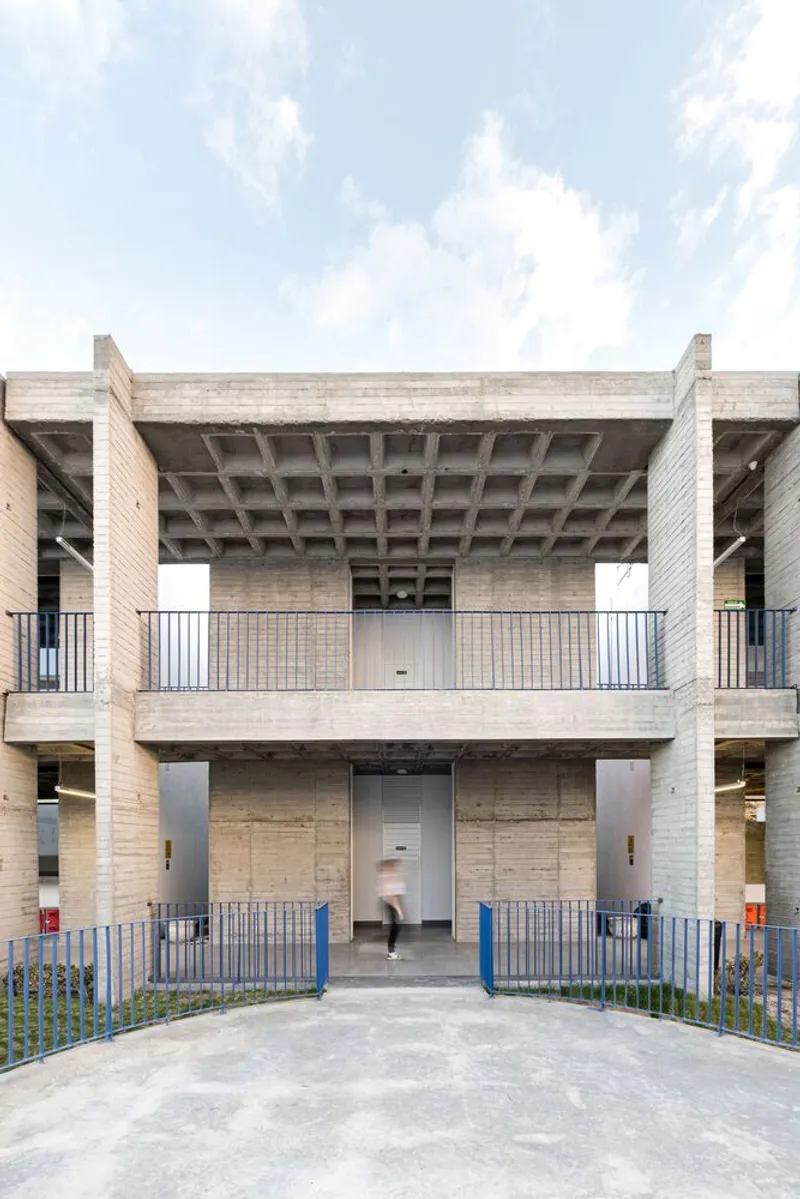
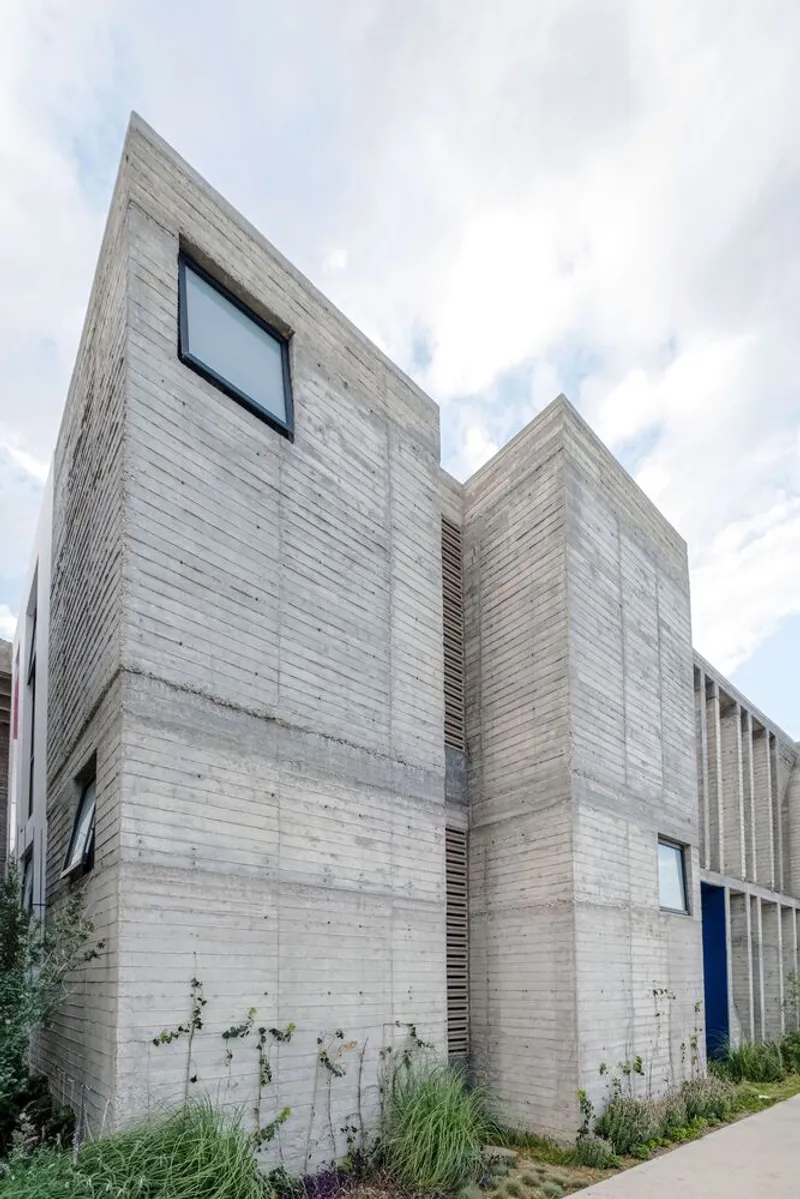
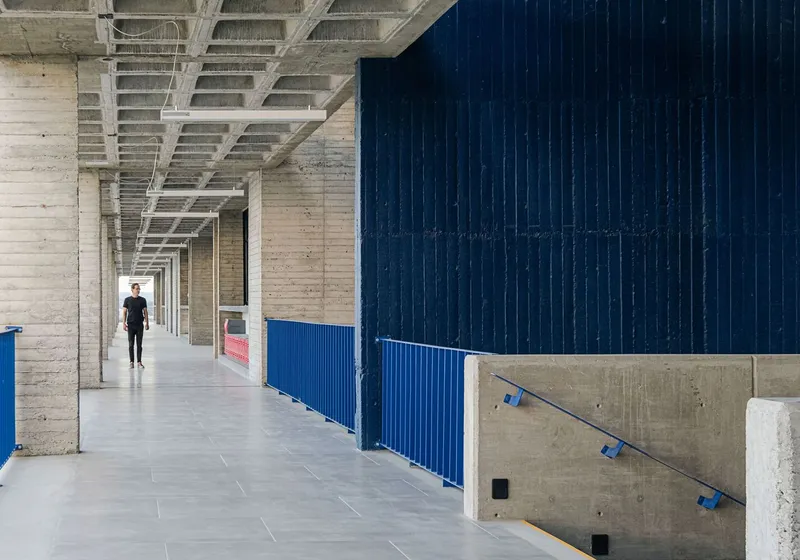
At the core of the design is the use of exposed concrete, which conveys both durability and transparency—qualities that reflect the institution’s educational values. The access block is defined by a bold rectilinear volume that incorporates vertical circulation within a curved element, providing a monumental yet approachable entry. The use of color adds visual interest without compromising the raw texture and rhythm of the concrete formwork.
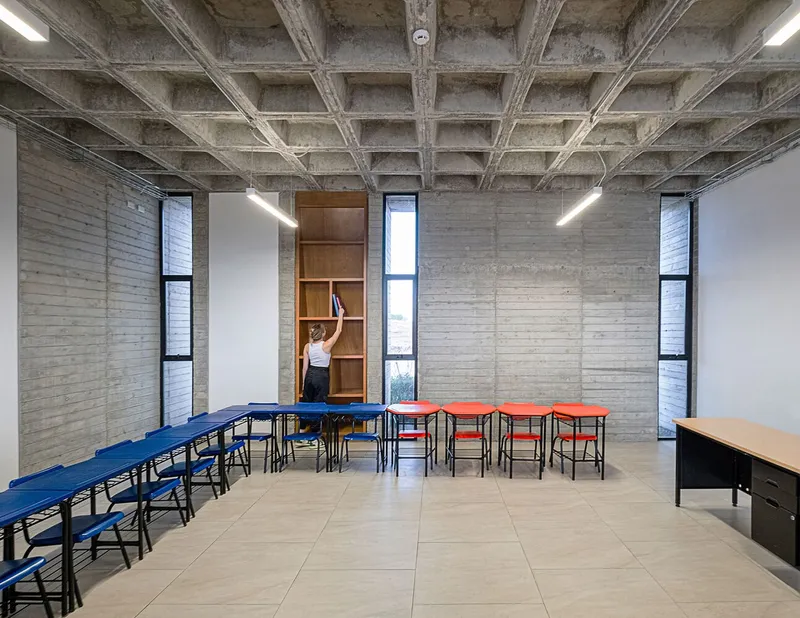
The design also integrates sustainable architectural principles, with concrete providing thermal benefits well-suited to the local climate. The classrooms feature a softer interior palette with wood accents and neutral tones, offering a balance between warmth and structural expression.
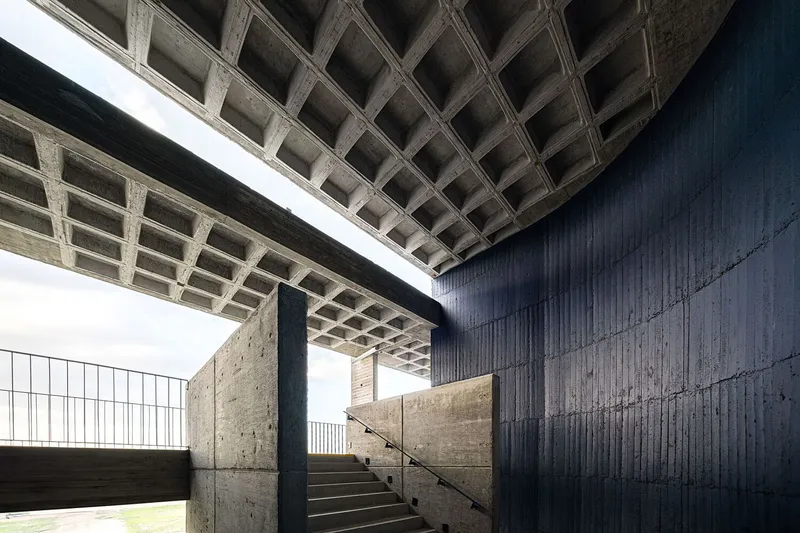
Spatial Transparency and Learning Visibility
The exposed systems within the classrooms are a deliberate design move, symbolizing the openness and transparency of the learning process. Vertical concrete fins on the north and south facades frame views and bring in controlled daylight, enhancing comfort and reducing glare. The interplay of open and solid elements throughout the school contributes to a dynamic architectural language that remains functional and educationally focused.
Adapting to Topography and Promoting Social Interaction
The site’s irregular topography posed both a challenge and an opportunity. Punto Arquitectos responded by situating the building at the highest point of the site, creating green vegetated slopes that function as outdoor gathering areas. These landscaped areas promote social interaction and outdoor learning, while also guiding users to the sports and recreational zones.
Accessibility across the campus is achieved via a central ramp system that links various platforms and learning environments. This ramp not only enhances universal accessibility but also serves as a visual and spatial connector that enriches the school’s circulation network.
Reflecting Institutional Values Through Design
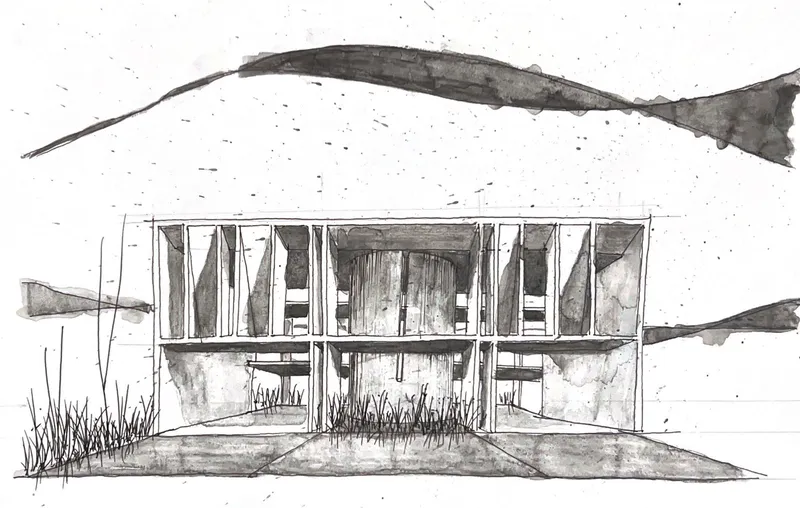
CIMA Elementary School exemplifies an architectural philosophy grounded in simplicity, clarity, and purpose. While the overall composition remains straightforward, the richness lies in the architectural detailing, which adds layers of depth and sophistication. The built environment reflects the institution’s commitment to quality education, encouraging exploration, interaction, and a sense of belonging among its young users.
All Photographs are works of Aaron Ortiz


Popular Articles
Popular articles from the community


Temporary Home for Dogs: A Reversed Zoo Rethinks Animal Shelter Architecture
In Bucharest, a sinuous corridor and freed landscape flip the logic of containment, designing a shelter that works to make itself unnecessary.

Extended Shell: Retrofitting Kolkata's Balconies as Living Urban Thresholds
A modular retrofit system recovers the social and environmental intelligence of Kolkata's historic verandas for contemporary Park Street residents.

Manzana Morphosis: Stretching Barcelona's Grid into a Living Landscape for 2050
A radical reworking of the Eixample manzana turns density into a tool for generous public space, vertical ecology, and environmental performance.

Tsunami Convergenics: Turning Catastrophic Ocean Forces into Underwater Housing Infrastructure
A speculative underwater settlement off the coast of Onagawa, Japan, treats tsunamis and typhoons as energy sources rather than threats.

Similar Reads
You might also enjoy these articles


Hodi-Mandai Geram
Project Function: Preservation and revitalization of the Intangible heritage and socio-spatial identity of the Hodi by Housing, Cultural Memory Center, Sacred Grove, landscape, local tourism economy


Olio Towers: A Mid-Rise for Performers That Fuses Housing, Rehearsal, and Stage
Located blocks from Houston's Theater District, this modular tower stacks living units around a central performance atrium.

Oasis: Modular Green Housing Carved into Dhaka's Urban Fabric
A shortlisted Plugin Housing entry reclaims unauthorized settlements in Dhaka with stepped concrete volumes, green roofs, and ventilation-driven design.

Black Hole: A Floating Megastructure for the Post-Physical Era
Emiliano Mazzarotto envisions a spherical, self-scaling arena where e-sports, digital hotels, and holographic stadiums replace traditional public space.

Explore Educational Building Competitions
Discover active competitions in this discipline

Challenge to design public laboratory

Challenge to reimagine the Iron Throne

Photograph architecture without architects

Illustrate the lost glory of Angkor Wat - Render Challenge
Comments (0)
Please login or sign up to add comments
No comments yet. Be the first to comment!