
City Clusters by Butler Wiltshire: A Modular Urban Seating and Greenery Solution in London
City Clusters by Butler Wiltshire integrates modular seating and planters, using sustainable terracotta and reclaimed timber to enhance London’s urban spaces.


Revitalizing Public Spaces with Sustainable and Sculptural Designs
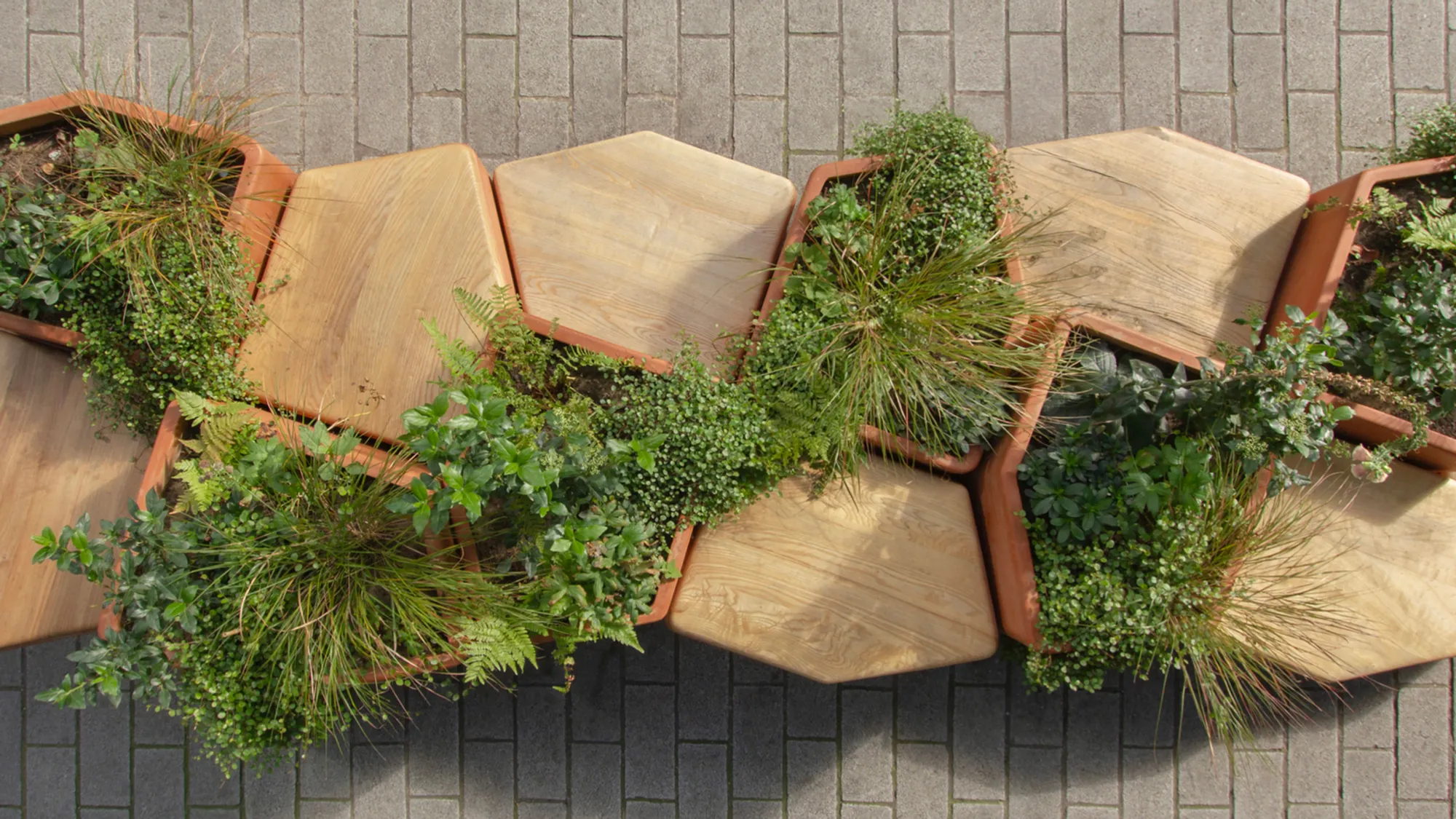
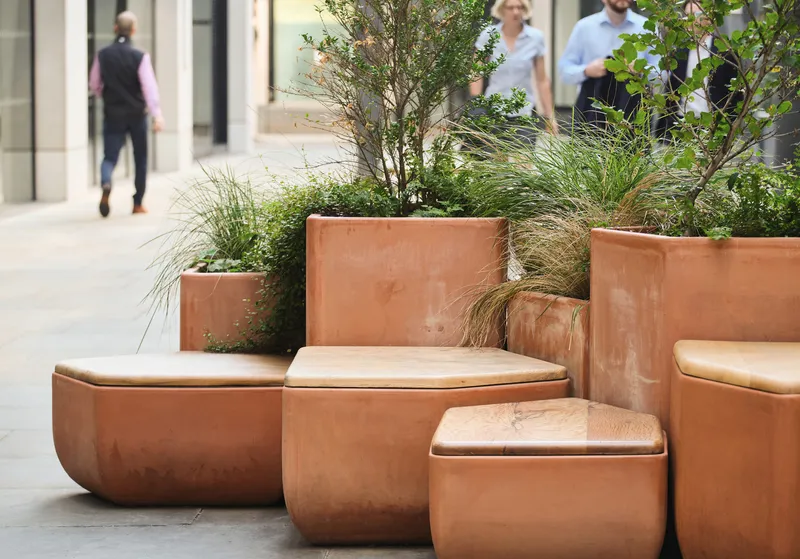
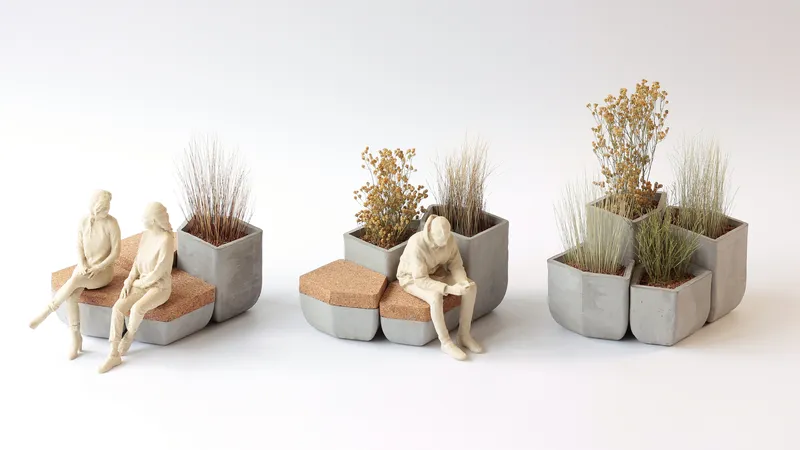
Butler Wiltshire has recently completed City Clusters, an innovative installation of modular seating and planter units for the City of London. Designed to enhance urban well-being, these sculptural clusters incorporate sustainable materials, blending seamlessly with the city's unique architectural heritage. Crafted from terracotta and repurposed timber, the design introduces much-needed seating and greenery to the high-rise Eastern City district.
A Design Inspired by London’s Historic Identity
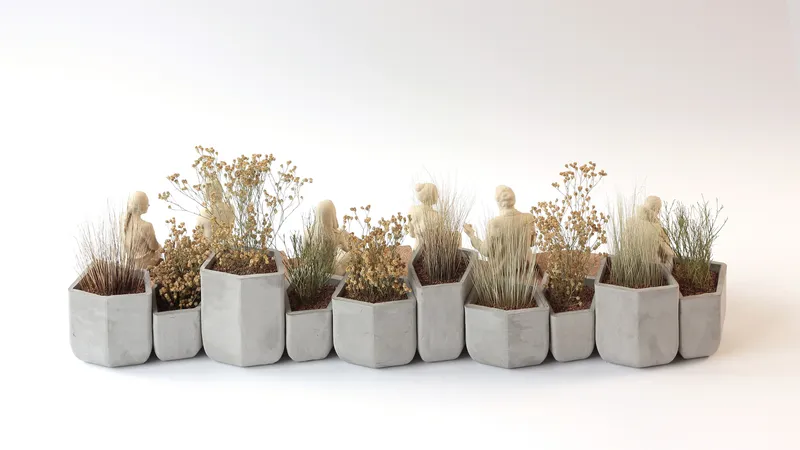
The geometry of these modular installations is derived from the Coats of Arms of the historic City Livery Companies—a design rooted in London’s past. These five-sided crests, commonly found on buildings, gateways, and street furniture, provided inspiration for a unique tessellating tile geometry. This pattern was then extruded to create modular vessels in six different heights, serving both as urban seating and planters.
Blending Natural Materials with an Urban Landscape
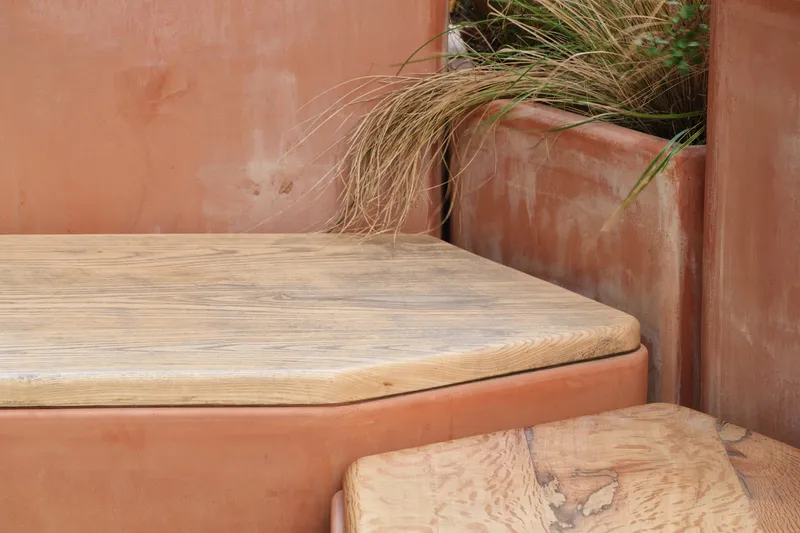
In contrast to the glass and steel skyscrapers dominating the City of London, the City Clusters installation embraces natural, handcrafted materials. The bases are made from ceramic terracotta, a material that reflects the historic clay foundations of London. The distinctive warm hue echoes Roman bricks and pottery unearthed by archaeologists in key areas like Bishopsgate, Fenchurch Street, and Lime Street. These ceramic elements were meticulously hand-produced by Darwen Terracotta, a leading specialist in architectural ceramics based in Blackburn.

Sustainable Timber from Fallen Urban Trees
The seating elements of City Clusters are topped with timber crafted by Fallen & Felled, a company dedicated to repurposing fallen urban trees from Greater London. The wood—sourced from oak, elm, yew, hornbeam, and sycamore—adds a distinct variety of grains, colors, and textures to each installation. By utilizing reclaimed timber, the project embodies the principles of sustainable design and circular construction, reducing waste while preserving the natural beauty of urban forestry.
A Flexible and Adaptive Urban Solution
The asymmetric pattern and varying module heights create a dynamic and organic visual language, steering away from uniform repetition. The design can be adapted to different site sizes and conditions, allowing for endless reconfigurations. Depending on placement, the clusters can form structured, orthogonal patterns or more fluid, undulating edges. While the lower modules provide comfortable seating for public use, the taller modules serve as planters filled with sculptural, seasonal greenery, reinforcing a connection to nature within the cityscape.
Transforming Public Spaces in the City of London
By merging historical influences, sustainable materials, and modular design, City Clusters offers a new vision for urban public spaces. The project not only enhances the aesthetic and environmental quality of the city but also encourages interaction, relaxation, and appreciation of London’s architectural and cultural heritage.
All Photographs are works of Butler Wiltshire - Ed Butler, Simon Kennedy




Popular Articles
Popular articles from the community


Co-Life: Senior Housing Design That Reconnects Older Adults With the City
Co-Life reimagines senior housing design through healing gardens, shared streets, workshops, and a sustainable community across generations.

The Ocean Hive: Sustainable Architecture for a Self-Sufficient Civilization at Sea
The Ocean Hive imagines sustainable architecture at sea, where modular habitats, algae, wave power and ocean waste sustain a growing colony.

AL-JANNAH: Sustainable Architecture and Permaculture for Afghan Widows
AL-JANNAH uses sustainable architecture and permaculture to create resilient oasis of housing, learning, work and renewal for Afghan widows.

Co-life: Sustainable Architecture for Age-Friendly Community Living
Co-life reimagines sustainable architecture for seniors through courtyards, rammed earth, shared gardens, and spaces designed for belonging.

Similar Reads
You might also enjoy these articles


Hodi-Mandai Geram
Project Function: Preservation and revitalization of the Intangible heritage and socio-spatial identity of the Hodi by Housing, Cultural Memory Center, Sacred Grove, landscape, local tourism economy


Olio Towers: A Mid-Rise for Performers That Fuses Housing, Rehearsal, and Stage
Located blocks from Houston's Theater District, this modular tower stacks living units around a central performance atrium.

Oasis: Modular Green Housing Carved into Dhaka's Urban Fabric
A shortlisted Plugin Housing entry reclaims unauthorized settlements in Dhaka with stepped concrete volumes, green roofs, and ventilation-driven design.

Black Hole: A Floating Megastructure for the Post-Physical Era
Emiliano Mazzarotto envisions a spherical, self-scaling arena where e-sports, digital hotels, and holographic stadiums replace traditional public space.


Explore Urban Furniture Competitions
Discover active competitions in this discipline



Challenge to design a portable theatre


Challenge to design a portable music platform


Challenge to design an open learning module for the elderly


Challenge to reimagine the Iron Throne
Comments (0)
Please login or sign up to add comments
No comments yet. Be the first to comment!