

City Link Sustainable Urban Bridge Architecture
A sustainable urban bridge architecture redefining mobility, public space, and waterfront identity through innovation and civic design.


In contemporary cities, infrastructure is no longer just about movement: it is about experience, identity, and sustainability. The City Link by Alexander Malyshev reimagines what a bridge can be, transforming a functional crossing into a vibrant civic destination. Rooted in the principles of sustainable urban bridge architecture, the project merges engineering innovation with public life, creating a hybrid structure that operates both as a transportation corridor and an active public realm.
Positioned across a historically significant waterfront, the proposal responds to urban mobility demands while respecting navigation, environmental sensitivity, and pedestrian experience.

A Single-Span Engineering Vision
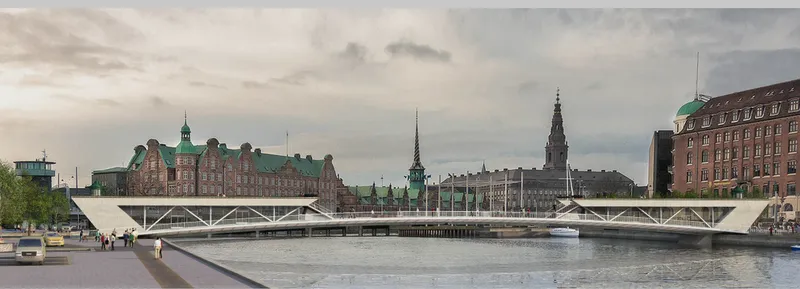
At the heart of the project lies a bold structural concept: a single-span bridge without intermediate piers in the water. By eliminating piers, the design preserves unobstructed water flow, reduces ecological impact, and enhances navigational safety.
The central span operates as a 25-meter bascule system, allowing vessels to pass efficiently. The rest of the deck extends from robust concrete abutments, completed as solid cantilever trusses approximately three meters in height. This structural clarity reinforces the bridge’s lightweight visual expression while maintaining strength and durability.
This approach exemplifies sustainable urban bridge architecture, minimizing environmental disruption while maximizing spatial performance.
Designing for Sustainable Mobility
More than a crossing, The City Link prioritizes cycling and pedestrian infrastructure. In an era where cities are shifting toward low-carbon transport systems, the bridge becomes an active promoter of healthy, inclusive mobility.
Dedicated cycling lanes operate in opposite directions on both sides of the structure, separated from pedestrian movement to ensure safety and fluid circulation. The integration of bicycle parking, repair workshops, and rental facilities within the structural trusses reinforces the bridge’s identity as a mobility hub.
Urban design here is not incidental, it is intentional. The bridge becomes a catalyst for sustainable transportation, embedding environmental responsibility into everyday urban life.

Bridge as Public Building
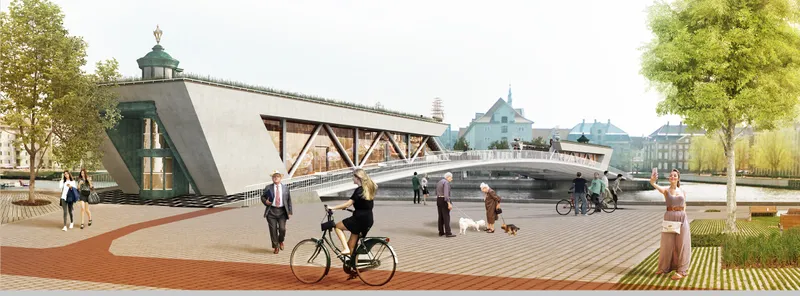
A defining characteristic of The City Link is its transformation from pure infrastructure into a hybrid public building. The cantilevered structural volumes are activated with programmatic spaces including:
- Cafeterias and eateries
- Observation terraces overlooking the waterfront
- Public restrooms and administration offices
- Retail and information centers
These functions are carefully integrated inside the truss systems, turning structural necessity into spatial opportunity. During summer months, upper terraces can host cultural events, musical performances, and public gatherings, further strengthening the bridge’s civic role.
Elevators and barrier-free access ensure inclusivity, making the structure accessible to all age groups and physical abilities.
A Landmark for the City
Urban landmarks are not defined solely by height or monumentality, but by public meaning. The City Link achieves landmark status by merging visual identity with experiential richness.
When closed, the bridge presents a refined horizontal silhouette that complements historic embankments. When open, the raised bascule elements create a dramatic sculptural moment on the skyline, reinforcing the bridge as a dynamic symbol of movement and transformation.
Cafeterias and viewing platforms positioned above the water offer panoramic perspectives of the cityscape, strengthening the emotional connection between inhabitants and their waterfront.
Through this integration of architecture, engineering, and public programming, the project embodies the future of sustainable urban bridge architecture.
Flexible Functionality
Despite its openness and civic activation, the bridge maintains operational efficiency. When navigation requires the bascule span to lift, pedestrian and cycling circulation temporarily pauses. However, upper terraces remain adaptable spaces capable of hosting cultural events, ensuring the structure continues to serve the city even during mechanical operation.
This layered functionality reflects a forward-thinking urban strategy: infrastructure that adapts, performs, and enriches simultaneously.
The City Link by Alexander Malyshev demonstrates how sustainable urban bridge architecture can redefine the role of infrastructure in contemporary cities. By combining structural innovation, environmental sensitivity, and vibrant public programming, the project transcends traditional bridge typologies.
It is not merely a crossing: it is a destination, a mobility hub, and a civic landmark that reconnects people, water, and city life.




Popular Articles
Popular articles from the community


AL-JANNAH: Sustainable Architecture and Permaculture for Afghan Widows
AL-JANNAH uses sustainable architecture and permaculture to create resilient oasis of housing, learning, work and renewal for Afghan widows.

Conexión: Biophilic Design Reimagines High-Rise Living in Hong Kong
Conexión reimagines high-rise living in Hong Kong through biophilic design, green facades, shared spaces, daylight, water and nature within.
EW PARK: Sustainable Architecture Reimagines the Future of Urban Parking
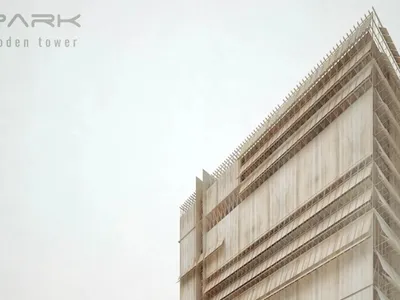
EW PARK reimagines city parking as a modular wooden tower combining automation, solar energy, electric mobility, and adaptable urban design.

The Earth Pod: 3D Printed Homes for Resilient Refugee Communities
The Earth Pod reimagines refugee housing through 3D printed homes made from clay, combining resilience, self-sufficiency, and rapid shelter.


Similar Reads
You might also enjoy these articles

Eco Chapel: A Green Architecture Pavilion Designed in Symbiosis with the Forest
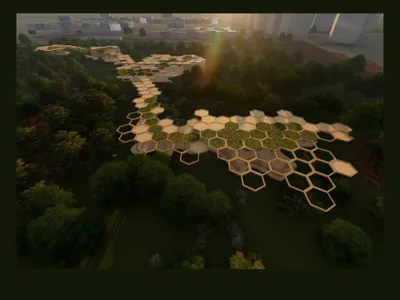
Eco Chapel uses green architecture to weave prayer, learning and reuse into a forest pavilion shaped by modular hexagonal canopies for life.
Kaffeebühnen: Coffee Shop Architecture Designed as a Civic Stage Between Vienna’s City and Park
Kaffeebühnen turns coffee shop architecture into a civic stage, linking Vienna’s park edge, urban life, warm timber yards, and coffee craft.
Healing Façade: Sustainable Architecture for Reforestation, Community, and Sacred Ecology in Ethiopia
Healing Façade reimagines sustainable architecture as a living wall that restores soil, catches water and renews Ethiopia's forest churches.


Urban Forest: A Vertical Ecosystem for 5,000 Workers in Singapore's Changi Business Park
Radially stacked pods and layered green decks turn a 7-acre plot into 47 acres of ecological workspace projected for 2040.

Comments (0)
Please login or sign up to add comments
No comments yet. Be the first to comment!