
City Theater of Qazvin by GRI Co. – A Cultural Landmark in Iran
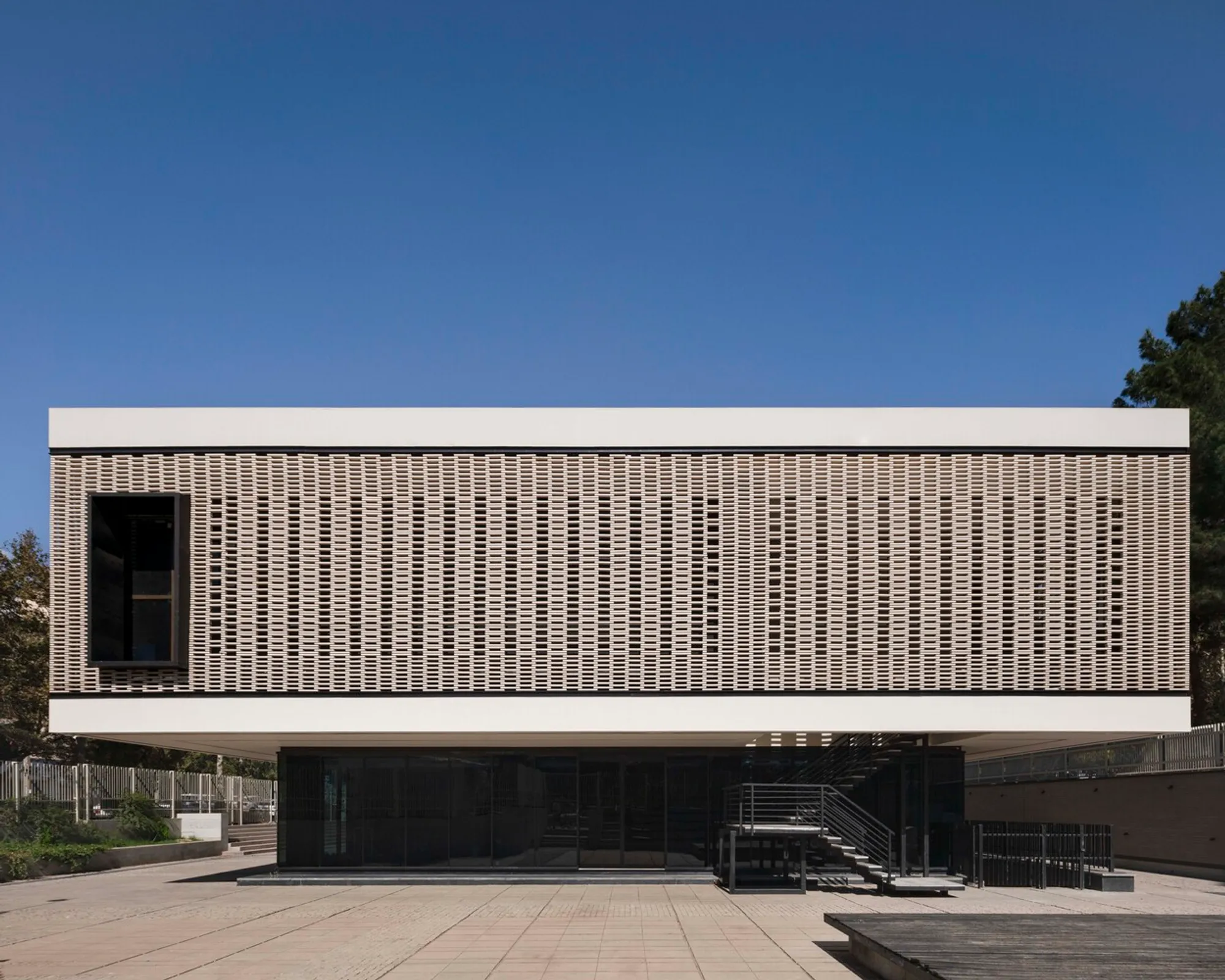
City Theater of Qazvin blends a suspended white brick Black Box theater above glass public spaces, revitalizing urban park surroundings.


The City Theater of Qazvin, designed by GRI Co. (Golden Rectangle Idea Consulting Engineers) and led by architect Mahdi Karimi, is a modern cultural centerpiece located in the heart of Qazvin, Iran. Completed in 2023, this 1970 m² facility redefines the urban landscape by providing professional theater spaces and revitalizing an inefficient urban plot. Photographed by Deed Studio and Erfan Dadkhah, the project stands as a striking example of contemporary cultural architecture blending functionality, aesthetics, and urban integration.
Transforming Urban Spaces
Built on a 2,200-square-meter plot, the City Theater replaced a series of dilapidated market stalls that posed social and functional challenges. By acquiring and demolishing most of these outdated structures, the project transformed a neglected area into a vibrant, safe, and active cultural hub. Three stalls remained due to acquisition limits, but the design was adjusted to accommodate them, ensuring seamless integration with the surrounding urban fabric.
Located adjacent to Mellat Park, one of Qazvin’s largest historic parks, the theater connects urban life with green spaces. The project was carefully planned to respect the park’s natural beauty, preserving mature trees and maintaining visual permeability between the building and the park. This integration creates a porous, welcoming environment for citizens, performers, and theater enthusiasts alike.
Innovative Architectural Design
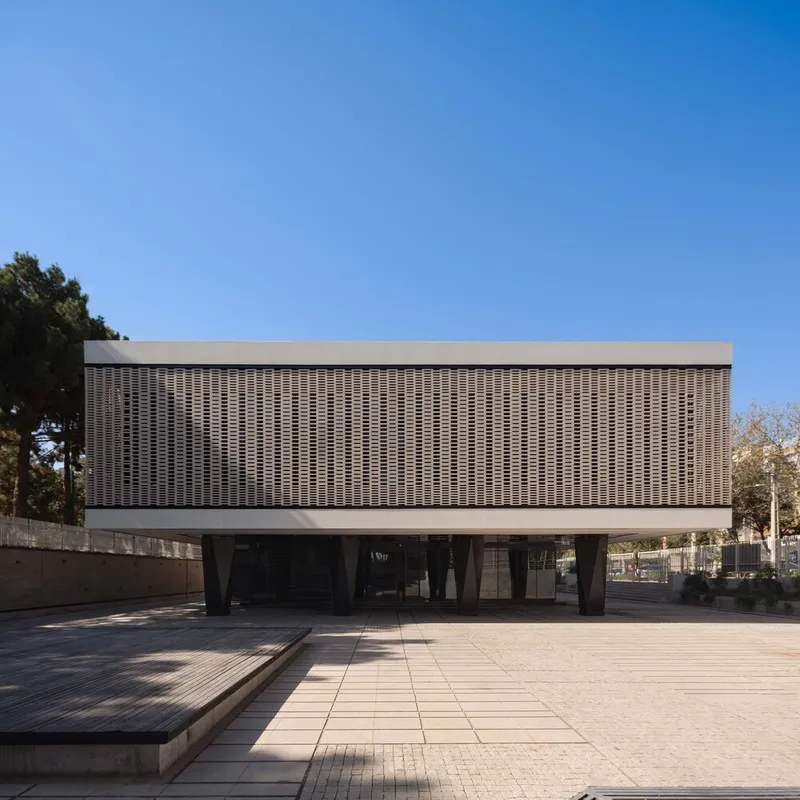
The theater is a two-story structure with a basement, designed to meet strict height restrictions imposed near the historic park. By excavating the site by 2 meters and positioning the ground floor below street level, the design accommodates the height requirements while creating dynamic public terraces.
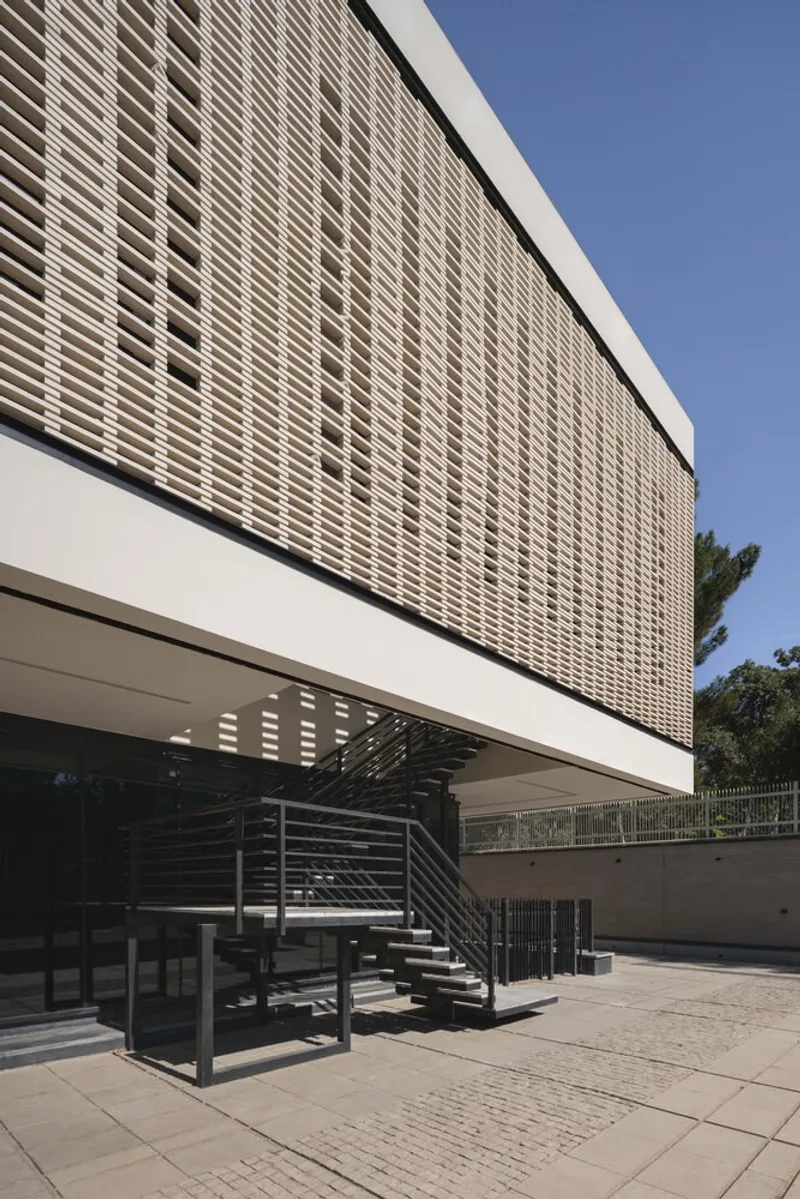
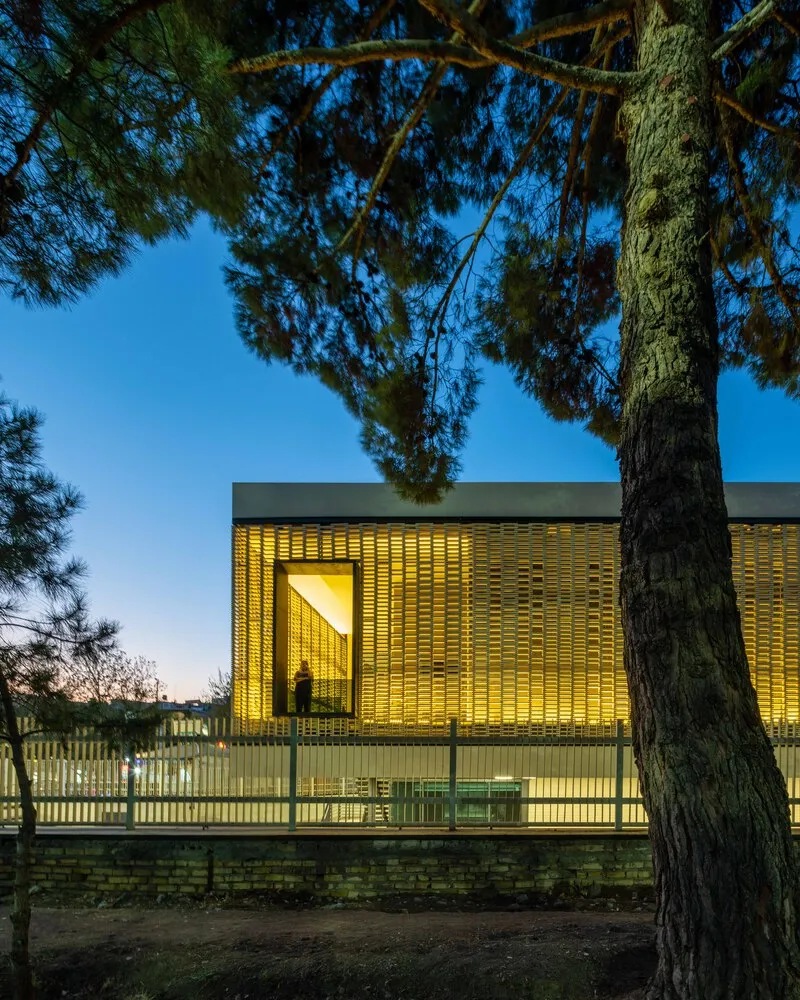
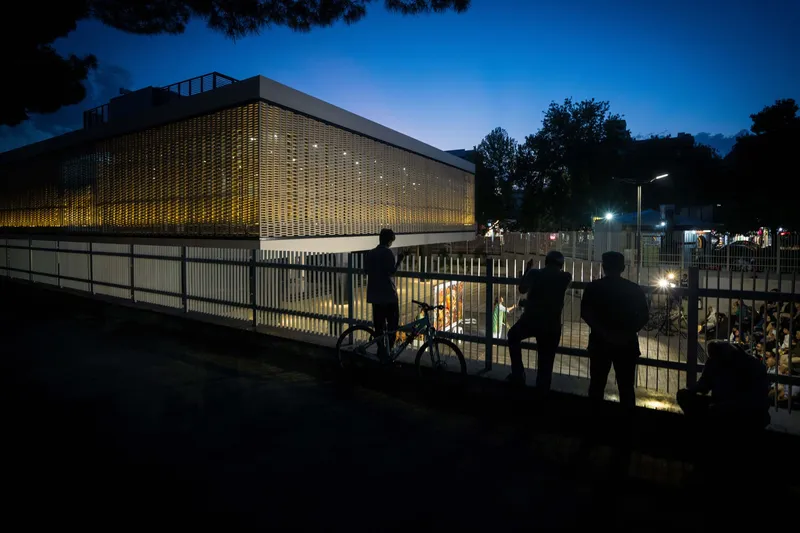
The building features a glass base, housing rehearsal rooms, management offices, ticket counters, meeting spaces, and a cafeteria. This transparent foundation visually lightens the structure and invites interaction with the public. Above it, a white brick cube containing the main Black Box theater hall appears to float, offering a sense of suspension and abstraction. This juxtaposition of glass and brick creates an elegant contrast between openness and enclosure, transparency and intimacy.
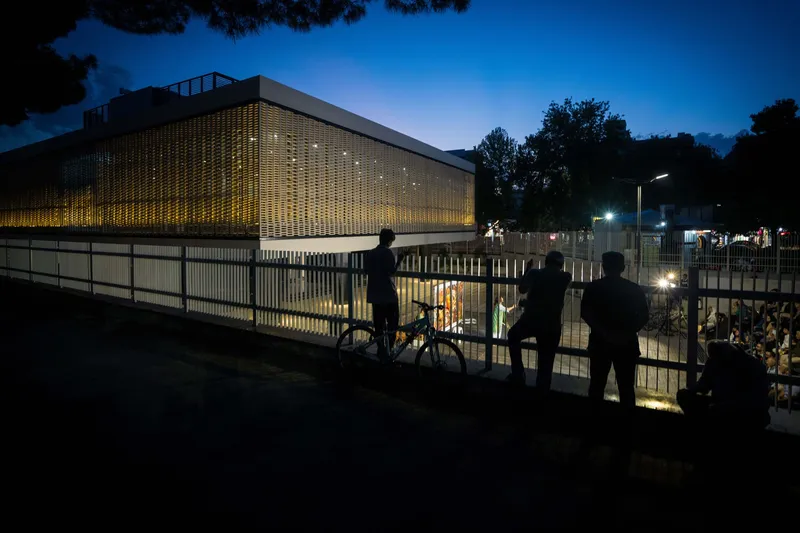
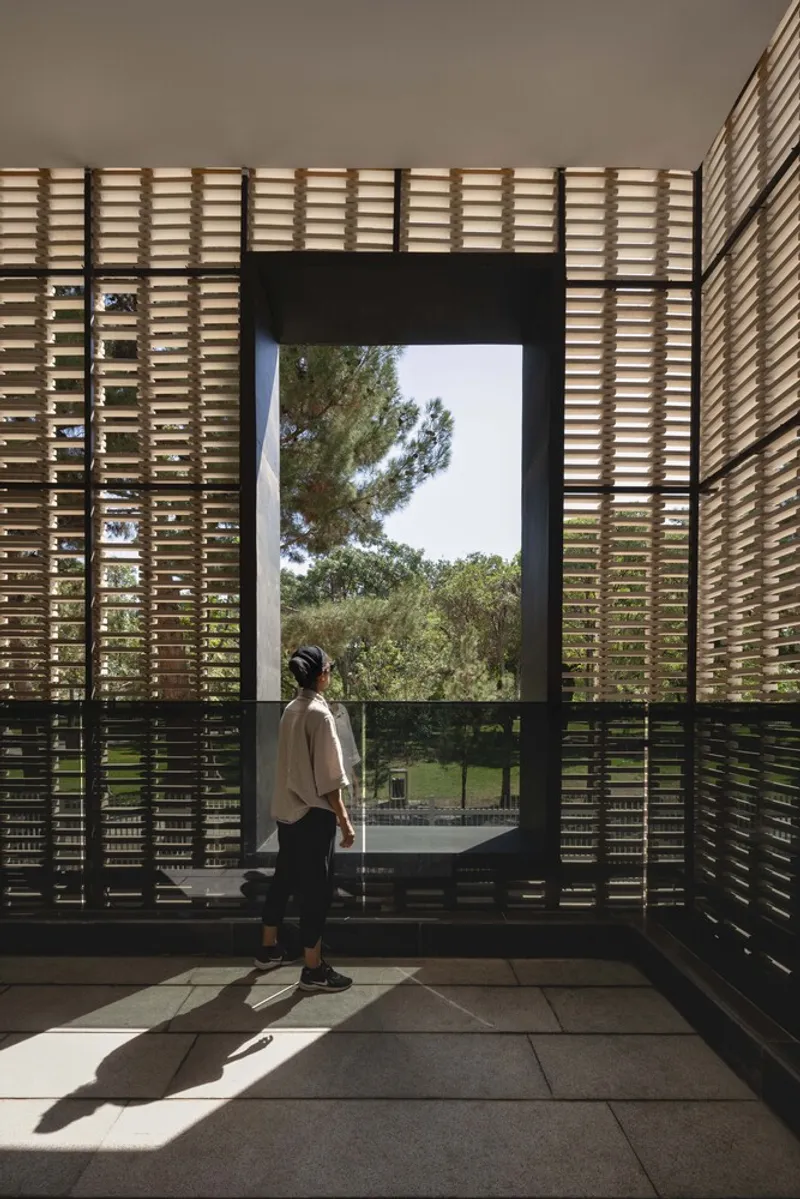
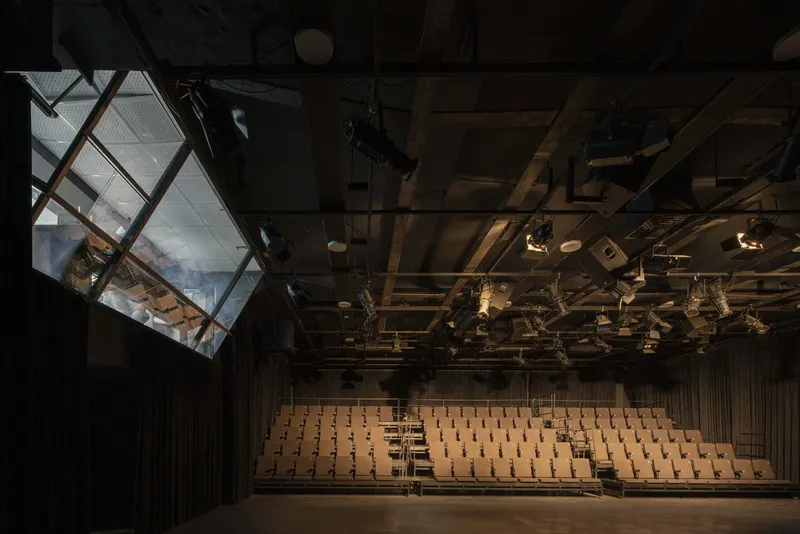
The Black Box theater hall, seating 220 spectators, is located on the first floor to maximize height and acoustics. Its surrounding waiting hall is enclosed by a dry-laid brick curtain wall, fitted with custom Teflon components that diffuse light and allow constant visual connection with the park and street. Visitors experience the natural movement of sunlight, shadows, leaves, and birds, creating a seamless connection between interior and exterior.
The basement level contains restrooms, storage, workshops for set construction, and utility spaces, while the ground floor connects visitors to street-level activities, offering wide staircases and steps that double as seating for street performances. This design encourages community engagement and creates a lively urban theater plaza.
A Cultural Hub for Qazvin
Before this project, Qazvin lacked a professional venue for theater artists. The City Theater of Qazvin now serves as a hub for daily rehearsals, puppet shows, Ta’ziyeh religious performances, and professional productions, fostering cultural growth and social interaction. Children, students, and citizens regularly gather in and around the theater, making it a dynamic center for art, learning, and public life.
All photographs are works of Deed Studio, Erfan Dadkhah




Popular Articles
Popular articles from the community


Hill & Cross Opera: Sculptural Opera House Architecture Shaped by Tallinn’s Landscape and Identity
Hill & Cross Opera reimagines opera house architecture in Tallinn through its sculptural hill, civic plaza, glass wave and a luminous cross.

Play: Fragments of Their World
Familiar architecture becomes modular playground design, creating safe spaces where displaced children can learn, connect, imagine and play.

Co-Life: Senior Housing Design That Reconnects Older Adults With the City
Co-Life reimagines senior housing design through healing gardens, shared streets, workshops, and a sustainable community across generations.

The Earth Pod: 3D Printed Homes for Resilient Refugee Communities
The Earth Pod reimagines refugee housing through 3D printed homes made from clay, combining resilience, self-sufficiency, and rapid shelter.

Similar Reads
You might also enjoy these articles


Hodi-Mandai Geram
Project Function: Preservation and revitalization of the Intangible heritage and socio-spatial identity of the Hodi by Housing, Cultural Memory Center, Sacred Grove, landscape, local tourism economy


Olio Towers: A Mid-Rise for Performers That Fuses Housing, Rehearsal, and Stage
Located blocks from Houston's Theater District, this modular tower stacks living units around a central performance atrium.

Oasis: Modular Green Housing Carved into Dhaka's Urban Fabric
A shortlisted Plugin Housing entry reclaims unauthorized settlements in Dhaka with stepped concrete volumes, green roofs, and ventilation-driven design.

Black Hole: A Floating Megastructure for the Post-Physical Era
Emiliano Mazzarotto envisions a spherical, self-scaling arena where e-sports, digital hotels, and holographic stadiums replace traditional public space.

Explore Persian Architecture Competitions
Discover active competitions in this discipline



Challenge to reimagine the Iron Throne


Photograph architecture without architects


Illustrate the lost glory of Angkor Wat - Render Challenge

Bring back Drive In's
Comments (0)
Please login or sign up to add comments
No comments yet. Be the first to comment!